Nadixa 1% cream
Spain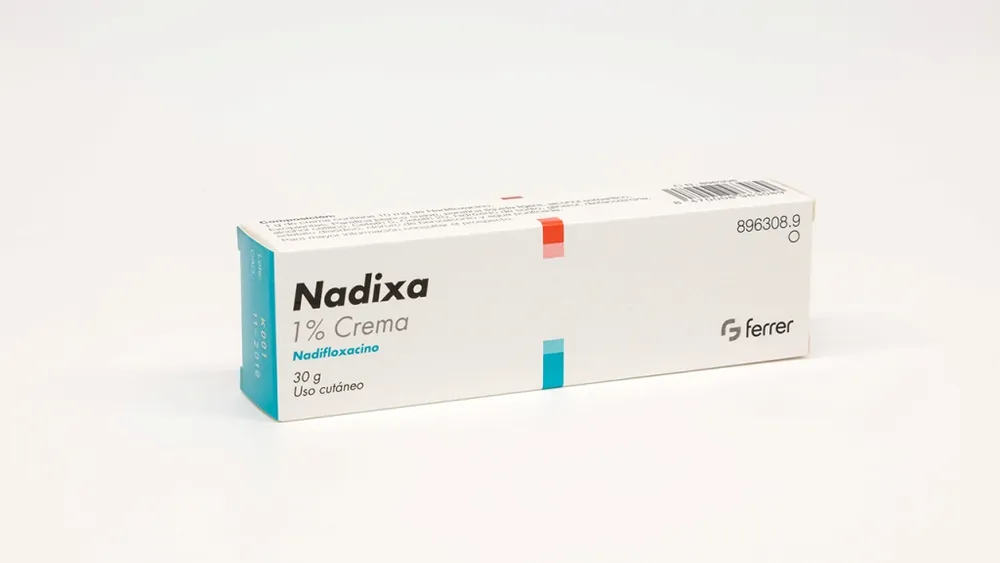
Table of Contents
Package Leaflet: Information for the User
Introduction
Package leaflet: information for the user
Nadixa 1% Cream
nadifloxacin
Read the entire leaflet carefully before you start using this medicine, because it contains important information for you.
- Keep this leaflet, as you may need to read it again.
- If you have any questions, ask your doctor or pharmacist.
- This medicine has been prescribed for you only and must not be given to other people, even if they have the same symptoms as you, because it could harm them.
- If you experience any adverse effects, consult your doctor or pharmacist, even if they are adverse effects not listed in this leaflet. See section 4.
Contents of this leaflet
- What Nadixa cream is and what it is used for
- What you need to know before using Nadixa cream
- How to use Nadixa cream
- Possible side effects
- How to store Nadixa cream
- Contents of the pack and other information
1. What Nadixa cream is and what it is used for
Nadixa is an antimicrobial agent belonging to the quinolone group.
Nadixa is used for the treatment of mild to moderate inflammatory forms of acne vulgaris (papulopustular acne, grade I-II).
2. What you need to know before using Nadixa 1% cream
Do not use Nadixa 1% cream
If you are allergic to Nadifloxacin or to any of the other ingredients of this medicine (listed in section 6).
Warnings and precautions
Consult your doctor or pharmacist before starting to use Nadixa 1% cream.
Avoid contact of Nadixa with the eyes and other mucous membranes (mouth and nose). If, despite precautions, the cream comes into contact with your eyes or other mucous membranes, wash the area thoroughly with plenty of lukewarm water.
After applying Nadixa cream, wash your hands with lukewarm water and soap to prevent accidental application of the medicine to unintended areas.
Photosensitivity reactions are known to occur during systemic treatment with other quinolones. Although various studies in animals and humans have demonstrated that Nadifloxacin lacks phototoxic and photoallergic potential, the cream base may have a photosensitizing effect. Furthermore, there is no clinical experience regarding prolonged exposure to sunlight or artificial UV light during the use of Nadixa. Therefore, patients undergoing treatment with Nadixa should, in principle, avoid exposure to artificial UV radiation (UV lamps, sunbeds, solariums) and should always avoid, whenever possible, exposure to sunlight.
Discontinue use of Nadixa cream if a hypersensitivity reaction (itching, irritation, papules, vesicles) or severe irritation occurs.
Do not apply Nadixa if you have open wounds in the area to be treated.
Children:
The safety and efficacy of Nadixa have not been sufficiently evaluated in children under 14 years of age. Therefore, this medicine should not be used in patients within this age group.
Other medicines and Nadixa 1% cream:
Inform your doctor or pharmacist if you are taking, or have recently taken, any other medicines, including those obtained without a prescription.
The absorption of Nadifloxacin following topical application of Nadixa cream to the skin is very low; therefore, interactions with other drugs administered orally are unlikely. There is no evidence indicating that the efficacy of systemically administered drugs may be affected by the topical use of Nadixa cream.
Nadixa may increase skin irritation if used concurrently with other products having a peeling effect, astringent properties, and/or containing irritant substances (alcohols, aromatic agents).
Pregnancy and breastfeeding:
If you are pregnant or breastfeeding, think you may be pregnant, or are planning to become pregnant, consult your doctor or pharmacist before using this medicine.
There are no clinical study data on the effects of Nadifloxacin in pregnant women.
Animal studies have shown no risk of teratogenesis or other adverse effects on fetal development.
However, Nadixa should only be used during pregnancy after careful evaluation by the physician of the expected benefit to the mother versus the potential risks to the child's development.
It is known that Nadifloxacin is excreted in breast milk; therefore, Nadixa cream should not be used during breastfeeding. Breastfeeding women must under no circumstances apply Nadixa to the breast area.
Driving and using machines:
No special precautions are required.
Nadixa 1% cream contains cetyl alcohol, stearyl alcohol, and benzalkonium chloride:
This medicine may cause local skin reactions (such as contact dermatitis) because it contains cetyl alcohol and stearyl alcohol.
This medicine contains 0.4 mg of benzalkonium chloride per 1 g of cream. Benzalkonium chloride may cause skin irritation. Do not apply on mucous membranes. Do not apply this medicine to the breast during breastfeeding, as it may pass to the infant.
3. How to use Nadixa
Follow exactly the instructions for administration of this medicine as indicated by your doctor or pharmacist. If in doubt, consult your doctor or pharmacist again.
Nadixa is a cream for topical use only. Place a small amount of cream (the size of a pea) onto a cotton swab to avoid infections. Apply a thin layer of the cream to the acne lesions twice daily, once in the morning and once before going to bed. Before applying the cream, carefully clean and dry the affected area. Avoid contact of the cream with the eyes and lips (see also “Warnings and precautions”). Nadixa cream must not be used under occlusive conditions (under a tight bandage).
The usual duration of treatment is 8 weeks.
If you use more Nadixa cream than you should
This may cause redness and discomfort of the skin.
In case of accidental oral ingestion, appropriate gastric decontamination should be considered, unless the amount of Nadixa accidentally ingested is small.
If you forget to use Nadixa cream
If you have forgotten to apply Nadixa, continue using the cream as directed in this leaflet or as instructed by your doctor.
If you stop using Nadixa cream
To achieve the desired effect, carefully follow the instructions regarding the duration of treatment given in the section “How to use Nadixa” or as directed by your doctor. Do not interrupt or stop the treatment without consulting your doctor.
If you have any further questions about the use of this medicine, ask your doctor or pharmacist.
4. Possible adverse effects
Like all medicines, Nadixa can have adverse effects, although not everyone will experience them.
In the list of possible adverse effects provided below, we indicate how frequently they may occur:
Very common: may affect more than 1 in 10 people
Common: may affect up to 1 in 10 people
Uncommon: may affect up to 1 in 100 people
Rare: may affect up to 1 in 1,000 people
Very rare: may affect up to 1 in 10,000 people
Not known: cannot be estimated from the available data
Common:
- Itching
Uncommon:
- Papules, dry skin, contact dermatitis, skin irritation, sensation of warmth in the skin, redness, rash.
- Burning sensation at the application site.
- Redness
Rare:
- Urticaria
Reporting of adverse effects
If you experience any type of adverse effect, consult your doctor or pharmacist, even if it is a possible adverse effect not listed in this leaflet. You may also report them directly through the Spanish Pharmacovigilance System for Human Medicinal Products: www.notificaRAM.es. By reporting adverse effects, you can help provide more information on the safety of this medicine.
5. Storage of Nadixa cream
Keep this medicine out of the sight and reach of children.
Do not use this medicine after the expiry date stated on the carton and tube. The expiry date refers to the last day of the month indicated.
This medicine does not require any special storage conditions. Do not refrigerate or freeze.
Medicines must not be disposed of via wastewater or household waste. Dispose of empty containers and unused medicines at the SIGRE collection point at your pharmacy. If you are unsure, ask your pharmacist how to properly dispose of containers and unused medicines. This will help protect the environment.
6. Contents of the pack and other information
Composition of Nadixa
The active substance is Nadifloxacin (1%). Each gram of Nadixa cream contains 10 mg of nadifloxacin.
The other components are: white soft paraffin, light liquid paraffin, stearic alcohol, cetyl alcohol, macrogol 5 cetostearyl ether, macrogol 20 cetostearyl ether, sodium hydroxide (E-524), sodium bicarbonate (E-500), sodium carbonate (E-500), glycerol (E-422), disodium edetate, benzalkonium chloride, and purified water.
Appearance of the product and contents of the container
White or almost white odourless cream.
Tubes containing 10 g, 20 g, 25 g, 30 g and 50 g.
Tubes containing 5 g (for samples only).
Not all pack sizes may be marketed in all countries.
Marketing Authorization Holder and Manufacturer
FERRER INTERNACIONAL, S.A.
Gran Vía Carlos III, 94
08028 - Barcelona (Spain)
This summary of product characteristics was approved in: December 2023
Detailed and up-to-date information on this medicine is available on the website of the Spanish Agency for Medicines and Health Products (AEMPS) http://www.aemps.gob.es/ .