Mysoline 250 mg tablets
Spain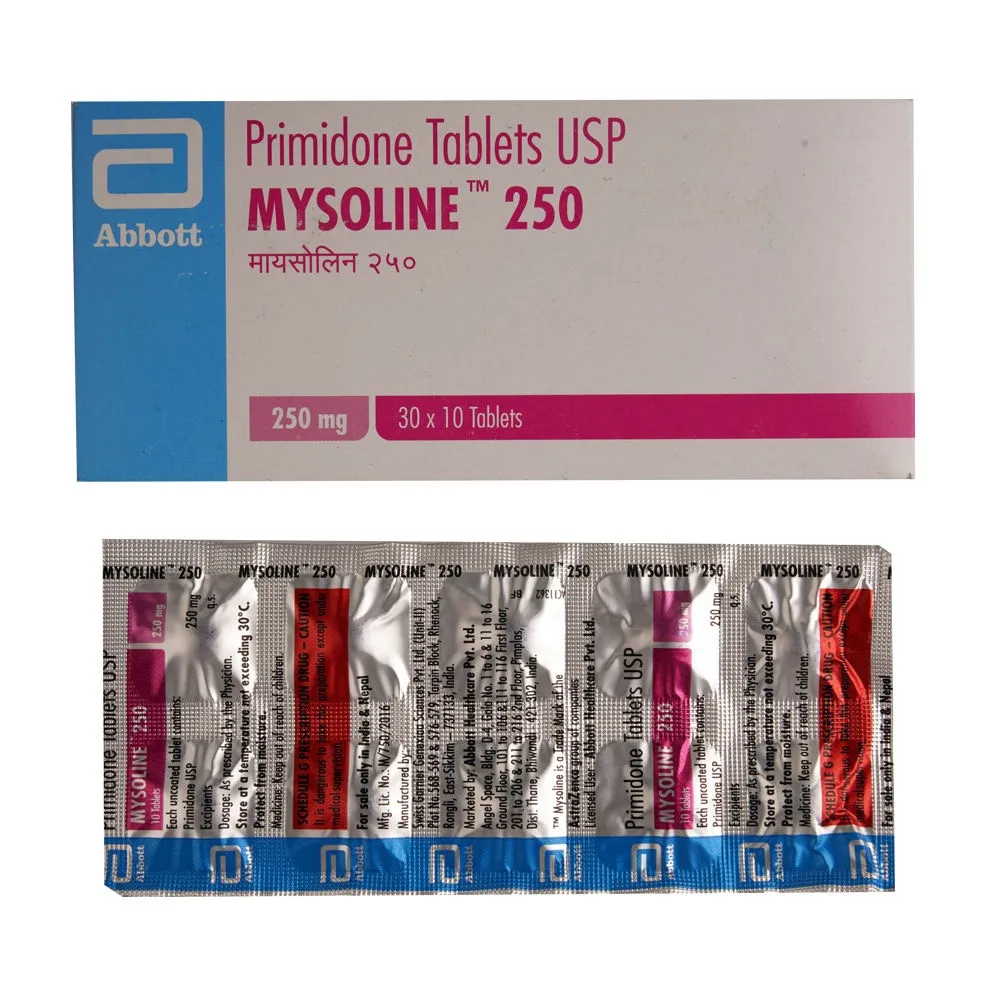
Table of Contents
Package leaflet: Information for the user
Introduction
Package leaflet: information for the user
Mysoline 250 mg tablets
primidone
Read the entire leaflet carefully before you start taking this medicine, because it contains important information for you.
- Keep this leaflet, as you may need to read it again.
- If you have any questions, ask your doctor or pharmacist.
- This medicine has been prescribed for you only, and you should not give it to other people, even if they have the same symptoms as you, because it may harm them.
- If you experience any adverse effects, consult your doctor or pharmacist, even if they are effects not listed in this leaflet. See section 4.
Leaflet contents:
- What Mysoline is and what it is used for
- What you need to know before taking Mysoline
- How to take Mysoline
- Possible side effects
- How to store Mysoline
- Contents of the pack and other information
1. What Mysoline is and what it is used for
Mysoline tablets contain primidone as the active substance, which belongs to a group of medicines called anticonvulsants.
Mysoline is used to treat certain types of epilepsy, seizures, or convulsive attacks.
2. What you need to know before taking Mysoline
Do not take Mysoline
-
If you are allergic (hypersensitive) to primidone, to a substance called phenobarbital, or to any of the other components of this medicine (listed in section 6).
-
If you have porphyria (a rare, inherited metabolic disorder) or if someone in your family has it.
-
If you are simultaneously taking:
-
cholic acid (used to treat congenital bile acid synthesis deficiency),
-
St. John’s wort (an herbal remedy used for depression),
-
isavuconazole or voriconazole (antifungal medicines),
-
cobicistat, nelfinavir, or rilpivirine (used to treat HIV infection),
-
delamanid (used to treat tuberculosis),
-
telaprevir, daclatasvir, dasabuvir, ombitasvir-paritaprevir, ledipasvir (used to treat hepatitis),
-
lurasidone (used to treat schizophrenia),
-
sofosbuvir (used to treat hepatitis C virus infection).
Warnings and precautions
This medicine is not effective in certain types of epilepsy. Your doctor will assess whether this treatment is appropriate for you. Contact your doctor immediately if the frequency of your seizures increases or if new types of seizures occur.
Talk to your doctor or pharmacist before taking Mysoline:
- if you have had respiratory, kidney, or liver problems,
- if you are pregnant or trying to become pregnant (see information below).
If you go to a hospital, inform healthcare staff that you are taking Mysoline.
Your doctor may prescribe vitamin D supplements (in case of long-term treatment).
A small number of people treated with antiepileptic medicines such as primidone have had thoughts of harming themselves or of suicide. If you experience such thoughts at any time, contact your doctor immediately.
Potentially life-threatening skin reactions (Stevens-Johnson syndrome, toxic epidermal necrolysis, or DRESS syndrome) have been reported with the use of Mysoline. These initially appear as red, target-like spots or circular patches, often with blisters, on the trunk.
- Other signs to watch for include mouth, throat, nose, or genital ulcers and conjunctivitis (red, inflamed eyes).
- These potentially life-threatening skin reactions are often accompanied by flu-like symptoms. The rash may progress to widespread blistering or peeling of the skin.
- The highest risk of severe skin reactions occurs during the first few weeks of treatment.
- If you have previously experienced Stevens-Johnson syndrome, toxic epidermal necrolysis, or DRESS syndrome with Mysoline or any other medicine containing phenobarbital, you must never take these medicines again.
If you develop a rash or these skin symptoms, stop using primidone immediately and contact your doctor right away, informing them that you are taking this medicine.
Other medicines and Mysoline
Inform your doctor or pharmacist if you are currently using, have recently used, or might need to use any other medicines.
This is important because some medicines may affect how Mysoline works, or Mysoline may affect how other medicines work.
In particular, inform your doctor if you are taking any of the following:
- other medicines used to treat epilepsy or other types of seizures (such as phenytoin, felbamate, valproic acid, carbamazepine, perampanel, oxcarbazepine, stiripentol, tiagabine, zonisamide),
- anticoagulants used to prevent blood clots (such as acenocoumarol, phenindione, warfarin),
- barbiturates or benzodiazepines (such as sleeping tablets),
- medicines used to treat severe pain, cough, or as opioid substitution therapy (such as methadone, oxycodone, or fentanyl),
- antibiotics (such as metronidazole, doxycycline, telithromycin),
- medicines for asthma (such as theophylline),
- hormone-containing medicines (such as oral contraceptives, estroprogestogens, progestogens, ulipristal),
- thyroid hormones,
- medicines used to treat mental health conditions or depression (such as tricyclic antidepressants, clozapine, lamotrigine, mianserin, quetiapine, sertraline),
- medicines containing steroids,
- medicines used to treat cancer (such as abiraterone, axitinib, eribulin, ifosfamide, bosutinib, crizotinib, dabrafenib, dasatinib, erlotinib, gefitinib, imatinib, lapatinib, nilotinib, pazopanib, ruxolitinib, sorafenib, sunitinib, vandetanib, regorafenib, vemurafenib, vismodegib, cabozantinib, ceritinib, ibrutinib, olaparib, ponatinib, cabazitaxel, docetaxel, irinotecan, procarbazine),
- bedaquiline (used to treat tuberculosis),
- quinine (used to treat malaria),
- medicines used to treat viral infections such as HIV or hepatitis C (such as boceprevir, dolutegravir, lopinavir, maraviroc, ritonavir, simeprevir),
- antifungal medicines (albendazole, itraconazole, posaconazole),
- anticoagulants (such as apixaban, dabigatran, rivaroxaban, or ticagrelor),
- folates (vitamin B9),
- medicines used to suppress the immune system (immunosuppressants such as cyclosporine, tacrolimus, sirolimus, everolimus),
- deferasirox (an iron chelator),
- ivacaftor (a medicine used to treat cystic fibrosis),
- medicines used to treat heart conditions, high blood pressure, or to regulate heart rhythms (such as class IA antiarrhythmics, calcium channel blockers, bosentan, digitoxin, dronedarone, ivabradine, macitentan, nimodipine, propafenone, ranolazine, or beta-blockers (metoprolol, propranolol)),
- antiparasitic agents (albendazole, praziquantel).
Taking Mysoline with food and drinks
Alcohol may interfere with Mysoline. Consumption of alcoholic beverages is not recommended during treatment.
Pregnancy, breastfeeding, and fertility
If you are pregnant, breastfeeding, think you may be pregnant, or are planning to become pregnant, consult your doctor or pharmacist before using this medicine.
Women of childbearing potential must use an effective contraceptive method during treatment. Mysoline may reduce the effectiveness of oral contraceptives. Therefore, you must use another effective contraceptive method while taking Mysoline. Discuss this with your doctor (see "Other medicines and Mysoline").
If you are a woman of childbearing potential, you must use an effective contraceptive method during treatment with Mysoline and for two months after treatment ends. Mysoline may affect the function of hormonal contraceptives, such as the oral contraceptive pill, making them less effective at preventing pregnancy. Talk to your doctor, who will help you choose the most appropriate form of contraception while taking Mysoline.
If you are a woman of childbearing potential and plan to become pregnant, consult your doctor before stopping contraception and becoming pregnant, to discuss the possibility of switching to other suitable treatments to avoid exposing the unborn baby to primidone (and therefore to its main metabolite, phenobarbital).
If taken during pregnancy, primidone—which is largely metabolized into phenobarbital—may cause serious birth defects and affect the child's development as they grow. Birth defects reported in studies include cleft lip (a split in the upper lip) and cleft palate (a split in the roof of the mouth), and heart abnormalities. Other congenital abnormalities have also been reported, such as penile malformation (hypospadias), smaller than normal head size, and facial, nail, and finger abnormalities. Women who take phenobarbital during pregnancy have a higher risk than other women of having a baby with birth defects requiring medical treatment. In the general population, the baseline risk of major malformations is 2–3%. This risk increases approximately threefold in women taking phenobarbital.
Do not stop your treatment suddenly and contact your doctor immediately. Your doctor will consider whether to discontinue treatment or assess the potential benefit of continuing treatment in the absence of a less risky alternative for the fetus. In such cases:
- During pregnancy: your doctor will adjust your dose to the lowest effective dose and arrange for specialized prenatal monitoring appropriate to your individual case and treatment.
- Before delivery: you should take vitamin K to prevent bleeding that this medicine may cause during the first 24 hours of your baby's life.
- After delivery: your baby may also be given an injection of vitamin K at birth to prevent any bleeding.
You must not breastfeed while taking this medicine. Contact your doctor immediately if you are breastfeeding or wish to breastfeed.
Babies born to mothers treated with phenobarbital during pregnancy may also be at risk of being smaller than expected.
Neurodevelopmental disorders (developmental delays due to brain development disorders) have been reported in children exposed to phenobarbital (primidone in Mysoline is mainly converted into phenobarbital) during pregnancy. Studies on the risk of neurodevelopmental disorders are conflicting.
Mysoline must not be used during pregnancy unless no other treatment is effective.
Contact your doctor immediately if you become pregnant. Your doctor must evaluate the potential effects of Mysoline tablets on the unborn child, and the risks and benefits of treatment must be carefully considered. Do not stop treatment with primidone without first discussing it with your doctor, as abrupt discontinuation may increase the risk of seizures, which could be harmful to you and the unborn child.
If you take Mysoline during the last trimester of pregnancy, appropriate monitoring should be carried out to detect potential problems in the newborn, such as seizures, excessive crying, muscle weakness, and feeding difficulties.
Driving and using machines
Primidone may cause symptoms such as drowsiness, dizziness, or visual disturbances, and may reduce reaction ability. These effects, as well as the underlying condition itself, may impair your ability to drive or operate machinery. Therefore, do not drive, operate machinery, or engage in other activities requiring special alertness until your doctor has assessed your response to this medicine.
3. How to take Mysoline
Always follow exactly the instructions for administration of Mysoline given by your doctor.
If in doubt, consult your doctor or pharmacist again.
Swallow the tablets whole with a little water. The tablet may be divided into equal doses.
The dose will be determined by your doctor and gradually adjusted individually.
Mysoline is usually taken twice daily. Try to take the tablets at the same time each day.
Initially, the dose may be as low as half a tablet. Your doctor will adjust it gradually until your condition is controlled. The usual maintenance doses are as follows:
Age group | Number of tablets per day | Daily dose (milligrams) |
Adults and children over 9 years | 3 to 6 | 750 to 1,500 |
Children from 6 to 9 years | 3 to 4 | 750 to 1,000 |
Children from 2 to 5 years | 2 to 3 | 500 to 750 |
Children up to 2 years | 1 to 2 | 250 to 500 |
Elderly patients, debilitated patients, and patients with renal or hepatic disease:
May require lower doses. Please consult your doctor.
If you take more Mysoline than you should
If you take more than the normal dose, contact your doctor or go to the nearest hospital.
If you forget to take Mysoline
If you forget to take a dose, take it as soon as you remember. Do not take a double dose to make up for forgotten doses.
If you stop taking Mysoline
Do not stop treatment with Mysoline, even if you feel well, unless your doctor tells you to. You may have become dependent on Mysoline, and therefore you could experience withdrawal symptoms if treatment is stopped too abruptly. To prevent this, treatment with Mysoline should be gradually reduced.
If you have any further questions about the use of this product, ask your doctor or pharmacist.
4. Possible adverse effects
Like all medicines, this medicine can cause adverse effects, although not everyone experiences them.
Very rare (may affect up to 1 in 10,000 people)
- Potentially life-threatening skin rashes (Stevens-Johnson syndrome, toxic epidermal necrolysis) have been reported (see section 2).
Frequency not known (cannot be estimated from available data)
- Lack of energy (apathy), coordination disorders, visual disturbances, eye oscillations.
- Nausea.
- Headache, dizziness, somnolence.
- Vomiting.
- Allergic skin reaction.
- Exfoliative dermatitis (widespread redness and peeling of the skin).
- Potentially fatal skin rashes have been reported (drug reaction with eosinophilia and systemic symptoms) (see section 2).
- Itching (pruritus).
- Decrease in the number of certain blood cells (red blood cells, white blood cells, or platelets) or development of lymph nodes.
- Changes in mood or behavior, disturbances in libido.
- Joint or bone pain, Dupuytren's contracture (thickening of the fibrous tissue in the palm of the hand causing retraction of one or more fingers).
- Lupus erythematosus (a disease causing inflammation in various parts of the body, including the skin, joints, lungs, kidneys, heart, and liver).
- Elevated liver enzyme levels (gamma GT, alkaline phosphatase).
- Suicidal thoughts.
- Confusion.
- Hallucinations.
- Impaired balance.
- Allergic reactions that may include fever, rash, increased number of certain blood cells (eosinophils), and increased levels of certain liver enzymes.
- There have been reports of bone disorders including osteopenia and osteoporosis (bone thinning) and fractures. Consult your doctor or pharmacist if you are taking antiepileptic medicines long-term, have a history of osteoporosis, or are taking steroids.
- Osteomalacia (softening of the bones due to vitamin D deficiency).
- Decreased appetite, fatigue.
Reporting of adverse effects
If you experience any type of adverse effect, talk to your doctor or pharmacist, even if it is a possible adverse effect not listed in this leaflet. You can also report them directly via the Spanish Pharmacovigilance System for Human Medicines: https://www.notificaram.es. By reporting adverse effects, you can help provide more information on the safety of this medicine.
5. Storage of Mysoline
Keep this medicine out of the sight and reach of children.
Do not store above 25 ºC.
Do not use this medicine after the expiry date which is stated on the pack after EXP. The expiry date refers to the last day of the month indicated.
Medicines should not be disposed of via wastewater or household waste. Dispose of unused containers and medicines at the SIGRE collection point at your pharmacy. If you have any doubts, ask your pharmacist how to dispose of containers and medicines you no longer need. This will help protect the environment.
6. Contents of the pack and other information
Composition of Mysoline
The active substance is primidone. Each tablet contains 250 mg of primidone.
The other components are calcium carmellose, gelatin, magnesium stearate, povidone, and stearic acid.
Appearance of the product and contents of the pack
The tablets are round, white, and uncoated. One side of the tablet has the letter “M” printed on each side of a break line. The other side is flat.
Mysoline is available in packs of 100 tablets.
Marketing Authorization Holder and Manufacturer
Marketing Authorization Holder
SERB
32 rue de Monceau
75008 Paris – FRANCE
Manufacturer
allphamed PHARBIL Arzneimittel GmbH
Hildebrandstrasse 10-12
37081 Göttingen - GERMANY
Local representative
LABORATORIOS RUBIÓ, S.A.
Carrer Indústria 29 - Polígon Industrial Comte de Sert
08755 Castellbisbal, Barcelona – SPAIN
Date of the most recent revision of this leaflet: 07/2024
Detailed and up-to-date information on this medicine is available on the website of the Spanish Agency of Medicines and Medical Devices (AEMPS): http://www.aemps.es/