Mycophenolate mofetil Aurovitas 500 mg film-coated tablets EFG
Spain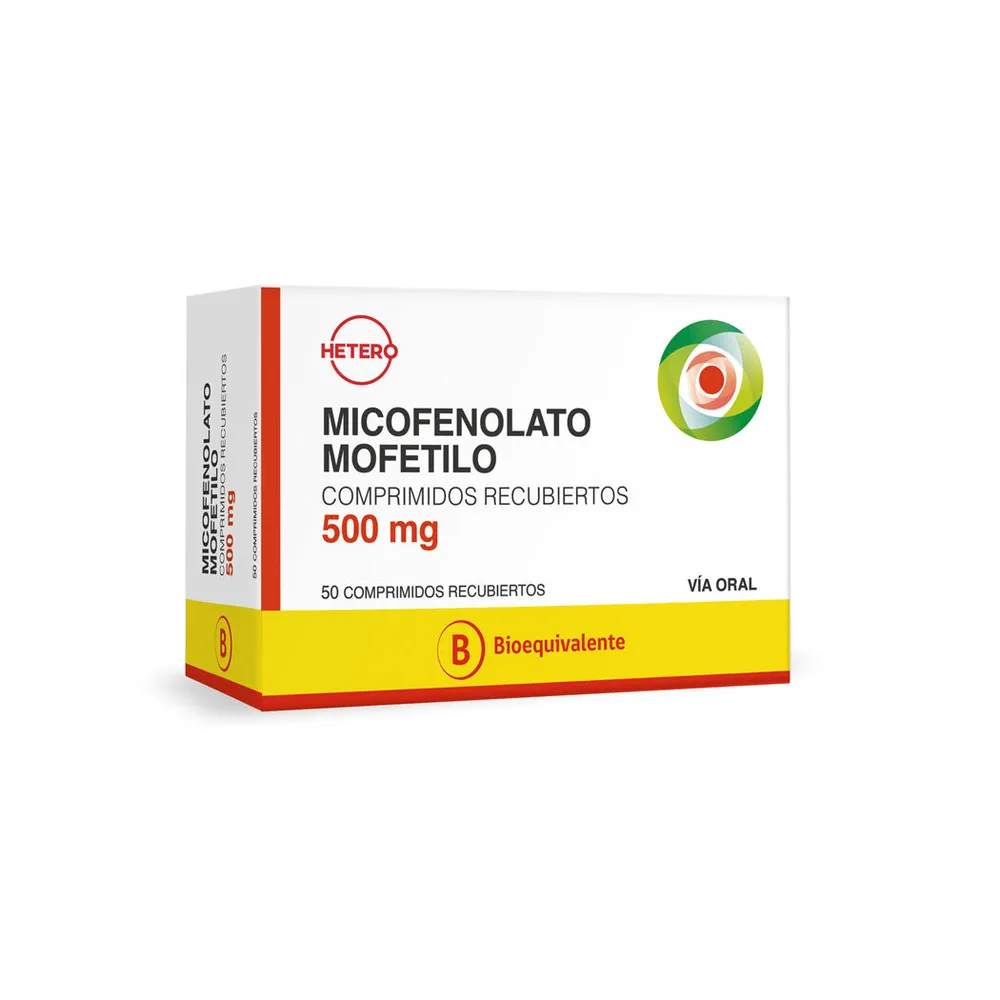
Table of Contents
- Package leaflet: Information for the user
- Introduction
- 1. What Micofenolato de mofetilo Aurovitas is and what it is used for
- 2. What you need to know before starting to take Mycophenolate Mofetil Aurovitas
- 3. How to take Mycophenolate Mofetil Aurovitas
- 4. Possible adverse effects
- 5. Storage of Mycophenolate Mofetil Aurovitas
- 6. Contents of the pack and other information
Package leaflet: Information for the user
Introduction
Package leaflet: information for the user
Micofenolato de mofetilo Aurovitas 500 mg film-coated tablets EFG
Read the entire leaflet carefully before you start taking this medicine, as it contains important information for you.
- Keep this leaflet, as you may need to read it again.
- If you have any questions, ask your doctor or pharmacist.
- This medicine has been prescribed for you only, and you should not give it to other people, even if they have the same symptoms as you, because it may harm them.
- If you experience any adverse effects, consult your doctor or pharmacist, even if they are adverse effects not listed in this leaflet. See section 4.
Leaflet contents
- What Micofenolato de mofetilo Aurovitas is and what it is used for
- What you need to know before taking Micofenolato de mofetilo Aurovitas
- How to take Micofenolato de mofetilo Aurovitas
- Possible side effects
- How to store Micofenolato de mofetilo Aurovitas
- Contents of the pack and other information
1. What Micofenolato de mofetilo Aurovitas is and what it is used for
Micofenolato de mofetilo Aurovitas contains mycophenolate mofetil:
- It belongs to a group of medicines called "immunosuppressants".
Mycophenolate mofetil is used to prevent the body from rejecting a transplanted organ in adults and children:
- Kidney, heart, or liver.
Mycophenolate mofetil must be used together with other medicines:
- Cyclosporine and corticosteroids.
2. What you need to know before starting to take Mycophenolate Mofetil Aurovitas
WARNING
Mycophenolate causes congenital malformations and spontaneous abortions. If you are a woman who could become pregnant, you must have a negative pregnancy test result before starting treatment and must follow your doctor's advice on contraception.
Your doctor will explain and provide you with written information, particularly about the effects of mycophenolate on unborn babies. Read this information carefully and follow the instructions.
If you do not fully understand these instructions, please consult your doctor again for further explanation before taking mycophenolate. See more information below in this section under the headings “Warnings and precautions” and “Pregnancy and breastfeeding”.
Do not take Mycophenolate Mofetil Aurovitas
- If you are allergic to mycophenolate mofetil, mycophenolic acid, or any of the other ingredients of this medicine (listed in section 6).
- If you are a woman who could become pregnant and have not obtained a negative result on a pregnancy test before the first prescription, as mycophenolate may cause congenital malformations and spontaneous abortions.
- If you are pregnant, planning to become pregnant, or think you might be pregnant.
- If you are not using effective contraception (see Contraception, pregnancy and breastfeeding).
- If you are breastfeeding.
Do not take this medicine if any of the above apply to you. If you are unsure, consult your doctor or pharmacist before taking this medicine.
Warnings and precautions
Talk to your doctor or pharmacist before starting to take Mycophenolate Mofetil Aurovitas:
- If you are over 65 years old, as you may have a higher risk of developing adverse reactions such as certain viral infections, gastrointestinal bleeding, and pulmonary edema compared to younger patients.
- If you have any signs of infection such as fever or sore throat.
- If you develop unexpected bruising or bleeding.
- If you have ever had a gastrointestinal disorder such as a stomach ulcer.
- If you plan to become pregnant or become pregnant while you or your partner are taking mycophenolate mofetil.
- If you have a hereditary enzyme deficiency such as Lesch-Nyhan syndrome or Kelley-Seegmiller syndrome.
If any of the above apply to you (or you are unsure), consult your doctor before starting treatment with mycophenolate mofetil.
Effect of sunlight
Mycophenolate mofetil reduces your body's defenses. For this reason, there is an increased risk of developing skin cancer. Limit your exposure to sunlight and UV light by:
- Wearing protective clothing that adequately covers your head, neck, arms, and legs.
- Using sunscreen with a high protection factor.
Children
Children, especially those under 6 years of age, are more likely than adults to experience certain adverse reactions, including diarrhea, vomiting, infections, reduced red blood cells, reduced white blood cells, and an increased risk of lymphoma or skin cancer.
The tablets are only suitable for children who can swallow solid medication without risk of choking. Therefore, the medicine should only be administered as prescribed by the doctor.
If you are unsure about anything related to your child's treatment, speak with your doctor or pharmacist before administering the medicine.
Other medicines and Mycophenolate Mofetil Aurovitas
Inform your doctor or pharmacist if you are taking, have recently taken, or might need to take any other medicines. This includes medicines purchased without a prescription, such as herbal remedies. This is because mycophenolate mofetil may affect how other medicines work, and other medicines may affect how mycophenolate mofetil works. In particular, inform your doctor or pharmacist if you are taking any of the following medicines before starting mycophenolate mofetil:
- Azathioprine or other medicines that suppress your immune system – administered after a transplant surgery
- Cholestyramine – used to treat high cholesterol levels
- Rifampicin – an antibiotic used to prevent and treat infections such as tuberculosis (TB)
- Antacids or proton pump inhibitors – used for stomach problems such as indigestion
- Phosphate binders – used in patients with chronic kidney failure to reduce phosphate absorption in the blood
- Antibiotics – used to treat bacterial infections
- Isavuconazole – used to treat fungal infections
- Telmisartan – used to treat high blood pressure
Vaccines
If you need to receive a vaccine (live organism vaccine) during treatment with this medicine, consult your doctor or pharmacist first. Your doctor will advise you on which vaccines you may receive.
You must not donate blood during treatment with this medicine and for at least 6 weeks after stopping treatment. Men must not donate semen during treatment with mycophenolate mofetil and for at least 90 days after stopping treatment.
Taking Mycophenolate Mofetil Aurovitas with food and drinks
Taking food and drinks does not affect treatment with mycophenolate mofetil.
Contraception in women taking Mycophenolate Mofetil Aurovitas
If you are a woman who could become pregnant, you must use an effective contraceptive method while taking mycophenolate mofetil. This includes:
- Before starting to take mycophenolate mofetil.
- Throughout the entire treatment with mycophenolate mofetil.
- Up to 6 weeks after stopping mycophenolate mofetil.
Consult your doctor to determine the most appropriate contraceptive method for you. This will depend on your personal circumstances. The use of two contraceptive methods is recommended, as this reduces the risk of unintended pregnancy. Consult your doctor as soon as possible if you think your contraceptive method may not have been effective or if you have missed taking your contraceptive pill.
You cannot become pregnant if any of the following apply to you:
- You are postmenopausal, i.e., you are at least 50 years old and your last period occurred more than a year ago (if your periods have stopped due to cancer treatment, you may still be able to become pregnant).
- You have had both fallopian tubes and both ovaries surgically removed (bilateral salpingo-oophorectomy).
- You have had your uterus surgically removed (hysterectomy).
- Your ovaries do not function (premature ovarian failure confirmed by a specialist gynecologist).
- You were born with one of the following rare conditions that make pregnancy impossible: XY genotype, Turner syndrome, or uterine agenesis.
- You are a girl or adolescent who has not yet started menstruating.
Contraception in men taking Mycophenolate Mofetil Aurovitas
Available evidence does not indicate an increased risk of congenital malformations or miscarriage if the father takes mycophenolate. However, the risk cannot be completely ruled out. As a precautionary measure, you or your female partner are advised to use a reliable contraceptive method during treatment and for up to 90 days after stopping this medicine.
If you are planning to have a child, consult your doctor about potential risks and alternative treatments.
Pregnancy and breastfeeding
If you are pregnant or breastfeeding, think you might be pregnant, or plan to become pregnant, consult your doctor or pharmacist before using this medicine. Your doctor will discuss with you the risks and alternative treatments available to prevent rejection of the transplanted organ if:
- You plan to become pregnant.
- You miss a period or think you may have missed a period, have unusual menstrual bleeding, or suspect you might be pregnant.
- You have had sexual intercourse without using effective contraception.
If you become pregnant while taking mycophenolate mofetil, inform your doctor immediately. However, continue taking this medicine until you see your doctor.
Pregnancy
Mycophenolate causes a very high rate of spontaneous abortions (50%) and serious harm to the unborn baby (23–27%). Reported malformations include abnormalities of the ears, eyes, face (cleft lip and palate), finger development, heart, esophagus (the tube connecting the throat to the stomach), kidneys, and nervous system (e.g., spina bifida, where the bones of the spine do not develop properly). Your baby may be affected by one or more of these.
If you are a woman who could become pregnant, you must have a negative pregnancy test result before starting treatment and must follow your doctor's advice on contraception. Your doctor may require more than one pregnancy test to ensure you are not pregnant before starting treatment.
Breastfeeding
Do not take this medicine if you are breastfeeding. This is because small amounts of the medicine may pass into breast milk.
Driving and using machines
The effect of mycophenolate mofetil on the ability to drive and use machines is moderate. If you feel drowsy, dizzy, or confused, speak with your doctor or nurse and do not drive or operate tools or machinery until you feel better.
Mycophenolate Mofetil Aurovitas contains sodium
This medicine contains less than 1 mmol of sodium (23 mg) per tablet; i.e., essentially “sodium-free”.
3. How to take Mycophenolate Mofetil Aurovitas
Follow exactly the administration instructions for this medicine given by your doctor or pharmacist. If in doubt, consult your doctor or pharmacist again.
Dosage
The dose you should take depends on the type of transplant you have received. The usual doses are shown below. Treatment will continue for as long as necessary to prevent rejection of the transplanted organ.
Kidney transplant
Adults
- The first dose should be administered within 3 days after the transplant surgery.
- The daily dose is 4 tablets (2 g of the medicine), given in two separate doses.
- Take 2 tablets in the morning and 2 tablets in the evening.
Children
- The tablets are only suitable for children who can swallow solid medication without risk of choking. Therefore, the medicine should only be given as prescribed by the doctor. If you are unsure, speak with your doctor or pharmacist before taking it.
- The dose varies depending on the child's size.
- Your child's doctor will decide the most appropriate dose based on the child's height and weight (body surface area – measured in square meters or “m²”). The recommended starting dose is 600 mg/m², administered twice daily. The recommended maintenance dose remains at 600 mg/m² twice daily (maximum total daily dose of 2 g). The dose should be individualized based on clinical assessment by the doctor.
Heart transplant
Adults
- The first dose will be administered within 5 days after the transplant surgery.
- The daily dose is 6 tablets (3 g of the medicine), given in two separate doses.
- Take 3 tablets in the morning and 3 tablets in the evening.
Children
- The tablets are only suitable for children who can swallow solid medication without risk of choking. Therefore, the medicine should only be given as prescribed by the doctor. If you are unsure, speak with your doctor or pharmacist before taking it.
- The dose varies depending on the child's size.
- Your child's doctor will decide the most appropriate dose based on the child's height and weight (body surface area measured in square meters “m²”). The recommended starting dose is 600 mg/m², administered twice daily. The dose should be individualized based on clinical assessment by the doctor. If well tolerated, the dose may be increased to 900 mg/m² twice daily if necessary (maximum total daily dose of 3 g).
Liver transplant
Adults
- The first dose of this medicine will be administered orally, at least 4 days after the transplant surgery, and when you are able to swallow oral medication.
- The daily dose is 6 tablets (3 g of the medicine), given in two separate doses.
- Take 3 tablets in the morning and 3 tablets in the evening.
Children
- The tablets are only suitable for children who can swallow solid medication without risk of choking. Therefore, the medicine should only be given as prescribed by the doctor. If you are unsure, speak with your doctor or pharmacist before taking it.
- The dose varies depending on the child's size.
- Your child's doctor will decide the most appropriate dose based on the child's height and weight (body surface area measured in square meters “m²”). The recommended starting dose is 600 mg/m², administered twice daily. The dose should be individualized based on clinical assessment by the doctor. If well tolerated, the dose may be increased to 900 mg/m² twice daily if necessary (maximum total daily dose of 3 g).
How to take this medicine
- Swallow the tablets whole with a glass of water.
- Do not break or crush them.
If you take more Mycophenolate Mofetil Aurovitas than you should
If you take more mycophenolate mofetil than you should, speak to a doctor or go immediately to a hospital. Do the same if someone else accidentally takes your medicine. Take the medicine packaging with you.
In case of overdose or accidental ingestion, contact your doctor or pharmacist immediately or call the toxicology information service at telephone number 91 562 04 20, indicating the medicine and the amount taken.
If you forget to take Mycophenolate Mofetil Aurovitas
If you forget to take your medicine, take it as soon as you remember. Take your next dose at the usual time. Do not take a double dose to make up for a missed dose.
If you stop taking Mycophenolate Mofetil Aurovitas
Do not stop taking this medicine unless instructed by your doctor. If you interrupt treatment, you may increase the risk of rejection of the transplanted organ.
If you have any further questions about the use of this medicine, ask your doctor or pharmacist.
4. Possible adverse effects
Like all medicines, this medicine can cause adverse effects, although not everyone gets them.
Contact your doctor immediately if you notice any of the following serious adverse effects, as you may require urgent medical treatment:
- if you have symptoms of infection such as fever or sore throat
- if you develop bruising or bleeding unexpectedly
- if you develop a rash, swelling of the face, lips, tongue or throat with difficulty breathing. You may be experiencing a severe allergic reaction to the medicine (such as anaphylaxis, angioedema).
Frequent problems
Some of the more common problems include diarrhea, reduced number of white blood cells or red blood cells in the blood, infections, and vomiting. Your doctor will carry out regular blood tests to monitor for any changes in:
- blood cell counts or signs of infection.
Fighting infections
Treatment with mycophenolate mofetil reduces the body's natural defenses. This is intended to prevent transplant rejection. For this reason, the body is also less able to fight infections effectively under normal conditions. This means you may get more infections than usual. These include infections affecting the brain, skin, mouth, stomach and intestine, lungs, and urinary system.
Skin and lymphatic cancer
As with other patients taking this type of medicine (immunosuppressants), a very small number of patients treated with mycophenolate mofetil have developed lymphoid tissue and skin cancers.
General unwanted adverse effects
Various general unwanted adverse effects affecting the whole body may occur. These include severe allergic reactions (such as anaphylaxis, angioedema), fever, extreme tiredness, difficulty sleeping, pains (such as stomach pain, chest pain, joint or muscle pain), headache, flu-like symptoms, and swelling.
Other unwanted adverse effects may include:
Skin problems such as:
- acne, cold sores, shingles, skin growth, hair loss, skin rash, itching.
Urinary problems such as:
- blood in the urine.
Digestive system and mouth problems such as:
- swollen gums and mouth ulcers,
- inflammation of the pancreas, colon, or stomach,
- gastrointestinal disorders including bleeding,
- liver disorders,
- diarrhea, constipation, feeling unwell (nausea), indigestion, loss of appetite, flatulence.
Nervous system problems such as:
- dizziness, drowsiness, or numbness,
- tremor, muscle spasms, seizures,
- feelings of anxiety or depression, changes in mood or thinking.
Heart and blood vessel problems such as:
- changes in blood pressure, rapid heartbeat, widening of blood vessels.
Lung problems such as:
- pneumonia, bronchitis,
- difficulty breathing, cough, which may be due to bronchiectasis (a condition in which the airways are abnormally widened) or pulmonary fibrosis (scarring of the lungs). Consult your doctor if you develop a persistent cough or difficulty breathing, fluid in the lungs or inside the chest,
- sinus problems.
Other problems such as:
- weight loss, gout, high blood sugar levels, bleeding, bruising.
Additional adverse reactions in children and adolescents
Children, especially those under 6 years of age, are more likely than adults to experience certain adverse reactions, including diarrhea, vomiting, infections, lower red blood cell and white blood cell counts, and an increased risk of lymphoma or skin cancer.
Reporting of adverse effects:
If you experience any adverse effect, talk to your doctor or pharmacist, even if it is a possible adverse effect not listed in this leaflet. You can also report them directly via the Spanish Pharmacovigilance System for Human Medicines: www.notificaram.es. By reporting adverse effects, you can help provide more information on the safety of this medicine.
5. Storage of Mycophenolate Mofetil Aurovitas
Keep this medicine out of the sight and reach of children.
Do not use this medicine after the expiry date stated on the carton after EXP. The expiry date refers to the last day of the month indicated.
Store below 30°C.
Medicines should not be disposed of via wastewater or household waste. Dispose of empty containers and unused medicines at the SIGRE collection point at your pharmacy. If you are unsure, ask your pharmacist how to properly dispose of containers and medicines you no longer need. This will help protect the environment.
6. Contents of the pack and other information
Composition of Mycophenolate Mofetil Aurovitas
- The active substance is mycophenolate mofetil. Each film-coated tablet contains 500 mg of mycophenolate mofetil.
- The other components are:
Tablet core: microcrystalline cellulose (grades 101 and 102), sodium croscarmellose, povidone (K-90), colloidal anhydrous silica, and magnesium stearate.
Tablet coating: hypromellose 2910 (3 mPas and 50 mPas), hydroxypropyl cellulose, macrogol 400, talc, iron oxide red, titanium dioxide, indigo carmine aluminum lake (FD & C Blue No. 2).
Appearance of the product and contents of the pack
Film-coated tablet.
Purple, modified capsule-shaped film-coated tablet, embossed with "M1" on one side and smooth on the other.
Mycophenolate Mofetil Aurovitas 500 mg film-coated tablets EFG are available in blister packs.
Pack sizes:
Blister pack: 50, 100, 150, and 300 film-coated tablets.
Only some pack sizes may be marketed.
Marketing Authorization Holder
Aurovitas Spain, S.A.U.
Avda. de Burgos, 16-D
28036 Madrid
Spain
Manufacturer
APL Swift Services (Malta) Limited
HF26, Hal Far Industrial Estate, Hal Far
Birzebbugia, BBG 3000
Malta
Or
Generis Farmacêutica, S.A.
Rua João de Deus, 19 Venda Nova
2700-487 Amadora
Portugal
Or
Arrow Génériques
26 Avenue Tony Garnier
69007 Lyon
France
This medicinal product is authorized in the European Economic Area member states under the following names:
Belgium: | Mycophenolate Mofetil AB 500 mg film-coated tablets/comprimés pelliculés/Filmtabletten |
France: | MYCOPHENOLATE MOFETIL ARROW 500 mg, film-coated tablet |
Italy: | Mycophenolate Mofetil Aurobindo |
Netherlands: | Mycophenolate Mofetil Auro 500 mg, film-coated tablets |
Portugal: | Mycophenolate Mofetil Generis |
Spain | Mycophenolate Mofetil Aurovitas 500 mg film-coated tablets EFG |
Date of the most recent review of this leaflet: January 2026
Detailed information about this medicine is available on the website of the Spanish Agency for Medicines and Health Products (AEMPS) (http://www.aemps.gob.es/)