Myambutol 400 mg film-coated tablets
Spain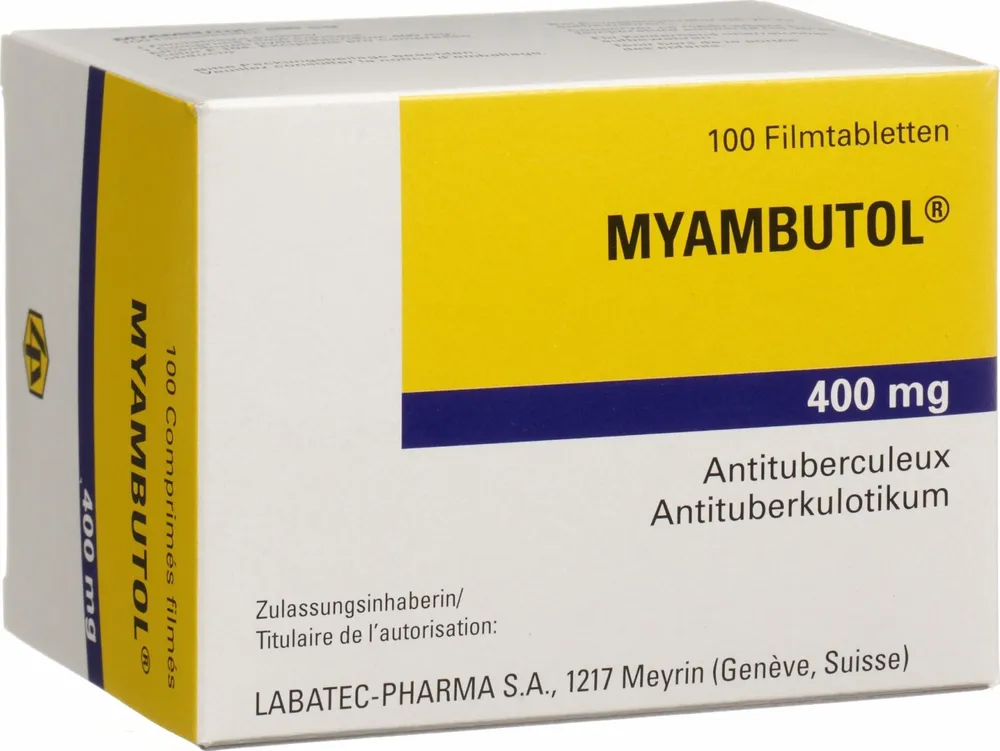
Table of Contents
Package leaflet: Information for the user
Introduction
Package leaflet: Information for the patient
Myambutol 400 mg film-coated tablets
Ethambutol
Read all of this leaflet carefully before you start taking this medicine, because it contains important information for you.
- Keep this leaflet as you may need to read it again.
- If you have any questions, ask your doctor or pharmacist.
- This medicine has been prescribed for you only and must not be given to other people, even if they have the same symptoms as you, because it may harm them.
- If you experience any side effects, consult your doctor or pharmacist, even if they are side effects not listed in this leaflet. See section 4.
Contents of the leaflet:
- What Myambutol is and what it is used for
- What you need to know before taking Myambutol
- How to take Myambutol
- Possible side effects
- How to store Myambutol
- Contents of the pack and other information
1. What Myambutol is and what it is used for
Myambutol contains the active substance ethambutol hydrochloride. It belongs to a group of medicines called antibacterials, specifically antituberculosis agents. Myambutol is used to treat tuberculosis, a bacterial infection affecting the lungs and other parts of the body. It works by stopping the growth of the bacteria that cause this infection (Mycobacterium tuberculosis). Myambutol is always used in combination with other antituberculosis medicines.
Antibiotics are used to treat bacterial infections and are not effective against viral infections such as influenza or the common cold. It is important to follow your doctor's instructions regarding dosage, dosing interval, and duration of treatment. Do not store or reuse this medicine. If you have any antibiotic left after completing the treatment, return it to the pharmacy for proper disposal. Medicines must not be disposed of via wastewater or household waste. |
Myambutol belongs to a group of medicines called antituberculosis agents and is indicated in children over 3 months of age and adults for the treatment of tuberculosis (a lung disease) at all sites, pulmonary or extrapulmonary, as part of standard treatment regimens with two or three drugs, depending on the clinical characteristics and in vitro sensitivity of the microorganism involved in the tuberculosis.
The medicines used differ depending on whether the treatment is initial or retreatment. In the latter case, Myambutol must be used in combination with drugs to which the patient has not developed resistance.
2. What you need to know before taking Myambutol
Do not take Myambutol
- if you are allergic to the active substance or to any of the other ingredients of this medicine (listed in section 6).
- if you have diabetic retinopathy or severe optic neuritis (eye diseases), unless your doctor advises otherwise.
- if you have ever had a severe skin rash, skin peeling, blisters, or mouth sores after taking ethambutol.
Warnings and precautions
Talk to your doctor or pharmacist before starting to take Myambutol.
- If you have any kidney disease, inform your doctor so they can prescribe the most appropriate dose for you.
- Before starting treatment with ethambutol, you must undergo an ophthalmological examination. If you notice any changes in vision while taking ethambutol, inform your doctor immediately.
- Young children or patients with communication difficulties should be closely monitored by parents or caregivers for any signs of vision disturbances. Routine ophthalmological examinations are recommended when treating young children.
- Patients with elevated uric acid levels (gout) should be periodically evaluated during ethambutol treatment.
- Patients with a history of seizures or neurological disorders should be strictly monitored during ethambutol treatment.
- Periodic monitoring of liver function tests is recommended in all patients.
- Serious skin reactions have been reported with Myambutol treatment, such as Stevens-Johnson syndrome (SJS), toxic epidermal necrolysis (TEN), and drug reaction with eosinophilia and systemic symptoms (DRESS). Stop using Myambutol and seek immediate medical advice if you experience any symptoms related to these serious skin reactions described in section 4.
Other medicines and Myambutol
Inform your doctor or pharmacist if you are taking, have recently taken, or might need to take any other medicines, especially those used to treat gout, isoniazid, and pyridoxine.
If you are taking antacids, you should take Myambutol at least one hour before the antacid. In the case of antacids containing aluminium hydroxide, the interval should be at least 4 hours after taking Myambutol.
Due to its effect on renal excretion of uric acid, ethambutol may alter the action of uricosuric agents (medicines used to treat gout).
Concomitant treatment with disulfiram (used to treat chronic alcoholism) may increase the risk of vision problems.
Ethambutol must not be used together with BCG (tuberculosis vaccine).
Concomitant use of ethambutol and ethionamide (a medicine for tuberculosis) may enhance adverse effects.
Concomitant use of ethambutol and delamanid (a medicine for treating tuberculosis) may lead to increased levels of ethambutol in the body.
Pregnancy, breastfeeding, and fertility
If you are pregnant or breastfeeding, think you may be pregnant, or are planning to become pregnant, consult your doctor or pharmacist before using this medicine.
Driving and use of machines
This medicine may cause vision problems, dizziness, malaise, confusion, hallucinations. You should not drive or operate machinery until you know how you react to the treatment.
Myambutol contains sucrose and sorbitol
This medicine contains sucrose. If your doctor has informed you that you have an intolerance to certain sugars, consult with them before taking this medicine.
This medicine contains 22.9 mg of sorbitol per tablet.
3. How to take Myambutol
Follow exactly the instructions for using this medicine as given by your doctor or pharmacist. If in doubt, consult your doctor or pharmacist again.
The recommended dose of ethambutol varies from person to person, depending on age, body weight, and whether it is used for treatment or prevention of tuberculosis. It must not be used as a single antituberculosis agent but should be combined with other drugs to prevent the development of resistance.
Adults
- Primary and latent pulmonary or extrapulmonary tuberculosis
Myambutol should be administered as a single daily oral dose of 15 mg/kg (15–20 mg/kg). Concomitantly administered drugs should be given at their recommended dosing intervals.
- Retreatment
During the first 60 days of treatment, Myambutol should be administered as a single daily oral dose of 25 mg/kg. Afterwards, the dose should be reduced to 15 mg/kg, while concomitantly administered drugs should be maintained at their recommended dosing intervals.
Use in children
- Treatment of primary pulmonary or extrapulmonary tuberculosis and retreatment
Children < 3 months
There are insufficient data to establish a recommendation for children under three months of age.
Children ≥ 3 months
The usual dose is 20 mg/kg (15–25 mg/kg) per day. The maximum dose is recommended for more severe forms of tuberculosis, such as tuberculous meningitis. The maximum daily dose should not exceed the recommended daily dose for adults.
- Treatment of latent tuberculosis
Administer a single daily oral dose of 15 mg/kg, maintaining concomitantly administered drugs at their recommended dosing intervals.
Elderly patients or patients with kidney problems may require blood tests so that your doctor can determine whether dose reduction is necessary.
Method of administration
- Myambutol tablets should be taken once daily, preferably in the morning before a meal.
- The tablets should be swallowed whole with a glass of water; do not chew or crush the tablets.
- If you are unsure how many tablets you should take, or when you should take them, ask your doctor or pharmacist.
If you take more Myambutol than you should
If you have taken more Myambutol than you should, contact your doctor or pharmacist immediately or call the Toxicology Information Service at (91) 562 04 20, stating the medication and the amount ingested.
There is no specific antidote, but gastric lavage should be used if necessary.
If you forget to take Myambutol
Do not take a double dose to make up for forgotten doses.
If you have any other questions about the use of this medicine, ask your doctor or pharmacist.
4. Possible adverse effects
Like all medicines, this medicine may cause adverse effects, although not everyone experiences them.
The following adverse effects may be serious:
- Severe allergic reactions, with difficulty breathing, wheezing, flushing, agitation, or irregular heartbeat. If this occurs, stop taking this medicine and consult your doctor immediately.
- Vision problems, including color blindness. In most cases, vision returns to normal after stopping treatment. However, in exceptional circumstances, the problem may take longer to resolve or may become permanent. If you notice any change or problem with your vision, contact your doctor immediately.
- Kidney problems. If you have pain in the lower back, pain, burning, or difficulty when urinating, or blood in the urine, you must contact your doctor as soon as possible.
- Flat red patches, or circular or coin-shaped patches on the chest, often with central blisters, skin peeling, or ulcers in the mouth, throat, nose, genitals, and eyes. These severe skin rashes may be preceded by fever and flu-like symptoms (Stevens-Johnson syndrome, toxic epidermal necrolysis).
- Generalized erythema, elevated body temperature, and enlarged lymph nodes (DRESS syndrome or drug hypersensitivity syndrome).
Other possible adverse effects are:
Uncommon (may affect up to 1 in 100 people)
- Increased blood uric acid levels
- Decreased visual acuity, vision loss, color blindness, and/or visual defects, eye pain
Rare (may affect up to 1 in 1,000 people)
- Numbness, tingling, weakness, burning sensation, tremor
- Numbness and prickling sensations in the limbs and joints
- Stomach problems such as loss of appetite, discomfort, weight loss, gas, stomach pain, vomiting, and diarrhea
- Liver problems that may cause pale stools, dark urine, or yellowing of the skin or eyes
- Abnormal results in blood tests for liver function
- Allergic reactions including skin rash and itching
Very rare (may affect up to 1 in 10,000 people)
- Reduction in certain types of blood cells, which may increase the risk of infection
- Reduction in blood platelets, which may cause a purple-colored rash, bruising, or bleeding
- Severe allergic skin reactions with blistering of the skin, mouth, eyelids, and genitals, or skin peeling
- Skin problems including hard lumps (wheals) or red spots, often on the backs of the arms and hands
- Gout, whose signs include pain or inflammation in the joints (especially the big toe), with tenderness and warmth of the skin
- Dizziness, vertigo, mental confusion, disorientation, headache, hallucinations
- Lung inflammation, breathing problems
- Liver failure
- Kidney disorders
- Malaise
- Joint pain
- Fever
Reporting of adverse effects
If you experience any type of adverse effect, consult your doctor or pharmacist, even if they are possible adverse effects not listed in this leaflet. You may also report them directly via the Spanish Pharmacovigilance System for Human Medicines: www.notificaram.es. By reporting adverse effects, you can help provide more information on the safety of this medicine.
5. Storage of Myambutol
Keep this medicine out of sight and reach of children.
Do not store above 25°C.
Do not use this medicine after the expiry date stated on the packaging after EXP. The expiry date refers to the last day of the month indicated.
Medicines must not be disposed of via wastewater or household waste. Dispose of unused containers and medicines at the SIGRE collection point at your pharmacy. If in doubt, ask your pharmacist how to dispose of containers and medicines you no longer need. This will help protect the environment.
6. Contents of the pack and other information
Composition of Myambutol
- The active substance is ethambutol. Each tablet contains 400 mg of ethambutol hydrochloride.
- The other components are sucrose, gelatin, sorbitol (E420), magnesium stearate (E470b), stearic acid, polydextrose, hydroxypropylmethylcellulose, titanium dioxide (E171), polyethylene glycol 4000, black iron oxide (E172), yellow iron oxide (E172).
Appearance of the product and contents of the pack
Myambutol are round, film-coated tablets of light grey color, packed in PVC/aluminum blisters. Each pack contains 100 film-coated tablets.
Marketing Authorization Holder and Manufacturer
Teofarma S.r.l.
Via F.lli Cervi, 8
27010 Valle Salimbene (PV)
Italy
Date of the most recent revision of this leaflet: July 2024
Detailed and up-to-date information on this medicinal product is available on the website of the Spanish Agency of Medicines and Medical Devices (AEMPS) http://www.aemps.gob.es/.