Moxifloxacin Kabi 400 mg/250 ml solution for infusion EFG
Spain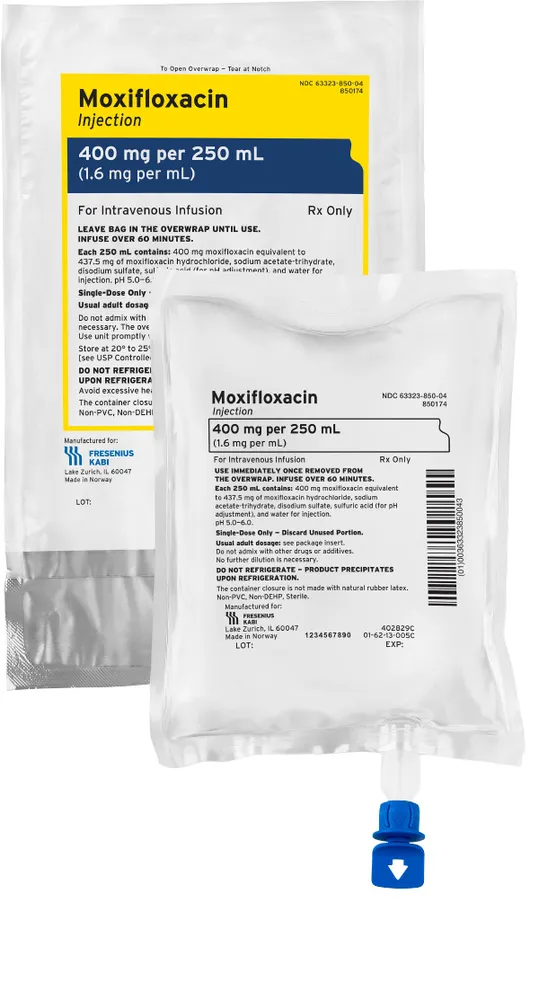
Table of Contents
- Package leaflet: Information for the user
- Introduction
- 1. What Moxifloxacino Kabi is and what it is used for
- 2. What you need to know before using Moxifloxacino Kabi
- 3. How to use Moxifloxacino Kabi
- 4. Possible adverse effects
- 5. Storage of Moxifloxacino Kabi
- 6. Contents of the pack and other information
Package leaflet: Information for the user
Introduction
Package leaflet: Information for the user
Moxifloxacino Kabi 400 mg/250 ml infusion solution EFG
Read all of this leaflet carefully before you start taking this medicine because it contains important information for you.
- Keep this leaflet. You may need to read it again.
- If you have any questions, ask your doctor or pharmacist.
- If you get any side effects, talk to your doctor or pharmacist. This includes any possible side effects not listed in this leaflet. See section 4.
Contents of the leaflet
- What Moxifloxacino Kabi is and what it is used for
- What you need to know before using Moxifloxacino Kabi
- How to use Moxifloxacino Kabi
- Possible side effects
- How to store Moxifloxacino Kabi
- Contents of the pack and other information
1. What Moxifloxacino Kabi is and what it is used for
Moxifloxacino Kabi contains moxifloxacin as the active substance, which belongs to a group of antibiotics called fluoroquinolones. Moxifloxacin works by eliminating bacteria that cause infections, provided these bacteria are susceptible to moxifloxacin.
Antibiotics are used to treat bacterial infections and are not effective against viral infections such as flu or the common cold.
It is important that you follow your doctor's instructions regarding dosage, administration, and duration of treatment.
Do not store or reuse this medicine. If you have any antibiotic left over after finishing your treatment, return it to the pharmacy for proper disposal. Do not dispose of medicines via the wastewater system or household waste.
Moxifloxacin is indicated in adults for the treatment of the following bacterial infections:
- Lung infection (pneumonia) acquired outside the hospital
- Skin and soft tissue infections
Moxifloxacin is used only to treat infections when standard antibiotics are ineffective or cannot be used.
2. What you need to know before using Moxifloxacino Kabi
Consult your doctor if you are unsure whether you belong to any of the patient groups described below.
Do not use Moxifloxacino Kabi
- if you are allergic to moxifloxacin or to other quinolones or to any of the other ingredients of this medicine (listed in section 6),
- if you are pregnant or breastfeeding,
- if you are under 18 years of age,
- if you have a history of tendon disorders or tendon damage related to treatment with quinolone antibiotics (see sections Warnings and precautions and 4. Possible side effects),
- if you have a hereditary condition or have suffered from a disease associated with an abnormal heart rhythm (as seen on ECG, the electrical recording of the heart),
- if you have electrolyte imbalances in the blood (especially low levels of potassium or magnesium in the blood),
- if you have a very slow heart rate (called “bradycardia”), have a weak heart (heart failure), have a history of heart rhythm disturbances, or are taking other medicines that may cause certain ECG abnormalities (see section “Use of Moxifloxacino Kabi with other medicines”). This is because Moxifloxacino Kabi may cause changes in the ECG, such as QT interval prolongation, i.e., delayed electrical conduction in the heart,
- if you have severe liver disease or if your liver enzyme levels (transaminases) are 5 times above the upper limit of normal.
Warnings and Precautions
Before starting this medicine
You must not take antibacterial medicines containing fluoroquinolones or quinolones, including Moxifloxacino Kabi 400 mg/250 ml solution for infusion EFG, if you have previously experienced a serious adverse reaction to a quinolone or fluoroquinolone. If this applies to you, inform your doctor as soon as possible.
Consult your doctor before receiving Moxifloxacino Kabi for the first time. It is important that you know:
- Moxifloxacino Kabi may alter the heart ECG, especially if you are female or elderly.
- If you are currently taking any medication that lowers potassium levels in the blood, consult your doctor before receiving Moxifloxacino Kabi (see also sections Do not use Moxifloxacino Kabi and Use of Moxifloxacino Kabi with other medicines).
- If you have diabetes, because you may be at risk of changes in blood sugar levels with moxifloxacin.
- • If you have ever developed a severe skin rash, skin peeling, blisters and/or mouth sores after taking moxifloxacin.
- If you have epilepsy or another condition that may cause seizures, inform your doctor before receiving Moxifloxacino Kabi.
- If you have or have ever had any mental health problems, consult your doctor before receiving Moxifloxacino Kabi.
- If you have myasthenia gravis (a rare disease causing muscle weakness), because the use of Moxifloxacino Kabi may worsen your symptoms. If you think you are affected, contact your doctor immediately.
- if you have been diagnosed with an enlargement or “bulge” in a large blood vessel (aortic aneurysm or peripheral large vessel aneurysm).
- if you have previously experienced an episode of aortic dissection (tear in the wall of the aorta).
- If you have been diagnosed with heart valve insufficiency (regurgitation of heart valves).
- if you have a family history of aortic aneurysm or aortic dissection, congenital heart valve disease, or other risk factors or predisposing disorders (e.g., connective tissue disorders such as Marfan syndrome or vascular Ehlers-Danlos syndrome, Turner syndrome or Sjögren’s syndrome (an inflammatory autoimmune disease), or vascular disorders such as Takayasu arteritis, giant cell arteritis, Behçet’s disease, known hypertension or atherosclerosis, rheumatoid arthritis (a joint disease), or endocarditis (a heart infection)).
- If you or a family member have glucose-6-phosphate dehydrogenase deficiency (a rare inherited condition), inform your doctor, who will determine whether Moxifloxacino Kabi is suitable for you.
- Moxifloxacino Kabi must only be administered intravenously (into a vein) and must not be injected into arteries.
Treatment with Moxifloxacino Kabi must be stopped immediately in the following cases:
- Rarely, you may experience a sudden, severe allergic reaction (anaphylactic reaction or shock), even with the first dose. Contact your doctor if you experience symptoms such as chest tightness, dizziness, nausea, fainting, or vertigo upon standing.
- Moxifloxacino Kabi may cause rapid and severe liver inflammation, which may lead to life-threatening liver failure (including fatal cases, see section 4 Possible side effects). Consult your doctor before continuing treatment if you suddenly feel unwell or notice yellowing of the whites of the eyes, dark urine, skin itching, bleeding tendency, or changes in thinking or insomnia.
- Quinolone antibiotics, including Moxifloxacino Kabi, may cause seizures. If this occurs, treatment with Moxifloxacino Kabi must be stopped.
- You may experience mental health problems even after the first dose of quinolone antibiotics, including Moxifloxacino Kabi. In very rare cases, mental health problems and depression have progressed to suicidal thoughts and self-harming behaviors such as suicide attempts (see section 4. Possible side effects). If you develop these reactions, treatment with Moxifloxacino Kabi must be discontinued.
- Rarely, joint pain and swelling, or tendon inflammation or rupture may occur. The risk is higher if you are elderly (over 60 years), have had an organ transplant, have kidney problems, or are taking corticosteroids. Tendon inflammation and rupture may occur within the first 48 hours of treatment or even several months after stopping Moxifloxacino Kabi. At the first sign of tendon pain or swelling (e.g., in the ankle, wrist, elbow, shoulder, or knee), stop taking Moxifloxacino Kabi, contact your doctor, and rest the affected area. Avoid unnecessary physical activity, as this may increase the risk of tendon rupture (see sections Do not use Moxifloxacino Kabi and 4. Possible side effects).
During treatment with Moxifloxacino Kabi, inform your doctor immediately:
- If you notice palpitations or irregular heartbeats during treatment. Your doctor may perform an ECG to monitor your heart rhythm.
- Severe skin reactions
Severe skin reactions have been reported with moxifloxacin use, including Stevens-Johnson syndrome (SJS), toxic epidermal necrolysis (TEN), acute generalized exanthematous pustulosis (AGEP), and drug reaction with eosinophilia and systemic symptoms (DRESS syndrome or drug hypersensitivity syndrome).
- SJS/TEN may initially appear on the trunk as red, target-shaped spots or circular lesions, often with central blisters. Mouth, throat, nose, genital, and eye ulcers (red, swollen eyes) may also occur. These severe skin rashes are often preceded by fever and/or flu-like symptoms. The rashes may progress to widespread skin peeling and life-threatening or fatal complications.
- AGEP appears at the beginning of treatment as a widespread, red, scaly rash with bumps under the skin and blisters, accompanied by fever. The most common locations are skin folds, trunk, and upper limbs.
- Drug reaction with eosinophilia and systemic symptoms (DRESS) initially presents with flu-like symptoms and a facial rash, followed by a widespread rash, high body temperature, elevated liver enzyme levels in blood tests, increased levels of a type of white blood cell (eosinophilia), and enlarged lymph nodes.
If you develop a severe rash or any of these skin symptoms, stop taking moxifloxacin and contact your doctor or seek immediate medical attention.
Rarely, you may experience symptoms of nerve damage (neuropathy) such as pain, burning, tingling, numbness, and/or weakness, especially in the feet and legs or hands and arms. If this occurs, stop taking Moxifloxacino Kabi and inform your doctor immediately to prevent potentially irreversible damage.
- You may develop diarrhea during or after taking antibiotics, including Moxifloxacino Kabi. If diarrhea is severe or persistent, or if you notice blood or mucus in your stool, stop taking Moxifloxacino Kabi immediately and consult your doctor. In these situations, do not take medications that stop or slow intestinal movement.
- If you experience sudden, severe pain in the abdomen, chest, or back, which may be symptoms of aortic dissection or aneurysm, go immediately to the emergency department. The risk may be increased if you are receiving systemic corticosteroid treatment.
- If you begin to experience sudden onset of shortness of breath, especially when lying down, or notice swelling in your ankles, feet, or abdomen, or the development of palpitations (sensation of rapid or irregular heartbeat), inform your doctor immediately.
- If your vision worsens or you experience any other eye disturbances during treatment with Moxifloxacino Kabi, consult an ophthalmologist immediately (see sections Driving and use of machines and 4. Possible side effects).
- Fluoroquinolones may cause an increase in blood sugar levels above normal (hyperglycemia) or a decrease below normal (hypoglycemia), which in severe cases may lead to loss of consciousness (hypoglycemic coma) (see section 4. Possible side effects). If you have diabetes, your blood sugar levels should be closely monitored.
When receiving Moxifloxacino Kabi, keep in mind:
- The risk of heart problems may increase with higher doses and faster infusion rates into your veins.
- If you are elderly and have kidney problems, ensure adequate fluid intake, as dehydration may increase the risk of kidney failure.
- Quinolone antibiotics may increase skin sensitivity to sunlight or UV light. Avoid prolonged exposure to sunlight or direct sunlight, and do not use sunbeds or any type of UV lamp during Moxifloxacino Kabi treatment (see section 4. Possible side effects).
- Limited experience is available regarding the use of intravenous/oral sequential Moxifloxacino Kabi in the treatment of community-acquired lung infections (pneumonia).
- The efficacy of Moxifloxacino Kabi has not been established in the treatment of severe burns, deep tissue infections, or diabetic foot infections with osteomyelitis (bone marrow infection).
Severe, disabling, long-lasting, and potentially irreversible adverse effects:
Antibacterial medicines containing fluoroquinolones or quinolones, including Moxifloxacino Kabi, have been associated with very rare but serious adverse effects, some of which were long-lasting (persisting for months or years), disabling, or potentially irreversible. These include tendon, muscle, and joint pain in the upper and lower limbs, difficulty walking, abnormal sensations such as pricking, tingling, "pins and needles," numbness, or burning (paresthesia), sensory disturbances such as reduced vision, taste, smell, or hearing, depression, memory decline, severe fatigue, and serious sleep disorders.
If you experience any of these adverse effects after taking Moxifloxacino Kabi, contact your doctor immediately before continuing treatment. You and your doctor will decide whether to continue treatment, considering also the use of an antibiotic from another class.
Children and adolescents
This medicine must not be given to children and adolescents under 18 years of age, as safety and efficacy have not been established in this age group (see section Do not use Moxifloxacino Kabi).
Use of Moxifloxacino Kabi with other medicines
Inform your doctor or pharmacist if you are currently using, have recently used, or might need to use any other medicines.
When receiving Moxifloxacino Kabi, keep in mind:
If you are taking Moxifloxacino Kabi together with other medicines that affect the heart, there is an increased risk of heart rhythm disturbances. Therefore, you must not take Moxifloxacino Kabi at the same time as the following medicines:
- medicines belonging to the class of antiarrhythmics (e.g., quinidine, hydroquinidine, disopyramide, amiodarone, sotalol, dofetilide, ibutilide),
- antipsychotics (e.g., phenothiazines, pimozide, sertindole, haloperidol, sulpiride),
- tricyclic antidepressants, some antimicrobials (e.g., saquinavir, sparfloxacin, intravenous erythromycin, pentamidine, antimalarials, particularly halofantrine),
- some antihistamines (terfenadine, astemizole, mizolastine),
- other drugs such as cisapride, intravenous vincamine, bepridil, and difemethil.
While being treated with Moxifloxacino Kabi, inform your doctor:
- if you are taking other medicines that may lower potassium levels in the blood (e.g., certain diuretics, some laxatives and enemas (at high doses), or corticosteroids (anti-inflammatory medicines), amphotericin B),
- if you are taking other medicines that may slow the heart rate, as these may also increase the risk of serious heart rhythm disturbances while using Moxifloxacino Kabi,
- if you are currently taking oral anticoagulants (e.g., warfarin), your doctor may need to monitor your blood clotting time.
Use of Moxifloxacino Kabi with food, drinks, and alcohol
The effect of Moxifloxacino Kabi is not affected by food, including dairy products.
Do not drink alcohol while being treated with Moxifloxacino Kabi.
Pregnancy, breastfeeding, and fertility
If you are pregnant or breastfeeding, think you may be pregnant, or plan to become pregnant, consult your doctor or pharmacist before using this medicine.
Do not use Moxifloxacino Kabi if you are pregnant or breastfeeding.
Animal studies do not indicate that fertility is affected by this medicine.
Driving and use of machines
Moxifloxacino Kabi may cause dizziness or vertigo, sudden transient loss of vision, or momentary fainting. If you experience these symptoms, do not drive or operate machinery.
Moxifloxacino Kabi contains sodium
The recommended maximum daily dose of this medicine contains 1206 mg of sodium (the main component of table/cooking salt). This corresponds to 60% of the recommended maximum daily sodium intake for an adult.
3. How to use Moxifloxacino Kabi
Moxifloxacino will always be administered to you by a doctor or healthcare professional.
The recommended dose in adults is one bottle or one bag, once daily.
Moxifloxacino is for intravenous use (into a vein). Your doctor must ensure that the infusion is given at a constant rate over 60 minutes.
Dose adjustment is not required in elderly patients, patients with low body weight, or patients with kidney problems.
Duration of treatment
Your doctor will decide the duration of treatment with moxifloxacino. In some cases, your doctor may start treatment with moxifloxacino solution for infusion and later continue treatment with tablets.
The duration of treatment depends on the type of infection and your response to treatment, but the recommended treatment durations are as follows:
Indication | Duration of treatment |
Community-acquired pulmonary infections (pneumonia) Most patients with pneumonia switch to oral treatment with tablets by day 4. | 7 - 14 days |
Skin and soft tissue infections In patients with severe skin and soft tissue infections, the mean duration of intravenous treatment is about 6 days, and the overall mean duration of treatment (infusion followed by tablets) is 13 days. | 7 – 21 days |
It is important that you complete the full course of treatment, even if you start feeling better after a few days. If you stop treatment too early, the infection may not be completely cured, it may return, your condition may worsen, and bacterial resistance to the antibiotic may also develop.
Do not exceed the recommended dose or duration of treatment.
Siusamás Moxifloxacino Kabi del que debe
If you are concerned that you may have received too much moxifloxacino, consult your doctor immediately.
In case of overdose or accidental ingestion, consult your doctor or pharmacist immediately or call the Toxicology Information Service at telephone number 91 562 04 20, indicating the medication and the amount ingested.
If you forget to use Moxifloxacino Kabi
If you are concerned about possibly missing a dose of moxifloxacino, consult your doctor immediately.
If you interrupt treatment with Moxifloxacino Kabi
If you stop taking this medicine too soon, your infection may not be completely cured. Consult your doctor if you intend to discontinue moxifloxacino treatment before completing the full course.
If you have any further questions about the use of this medicine, ask your doctor or pharmacist.
4. Possible adverse effects
Like all medicines, this medicine can cause adverse effects, although not everyone will experience them.
You must stop treatment and contact your doctor immediately if you experience any of the following adverse effects, as they may be life-threatening:
Rare adverse effects (may affect up to 1 in 1,000 people)
- Severe, sudden and generalized allergic reaction, very rarely including life-threatening shock (e.g., difficulty breathing, drop in blood pressure, rapid pulse), swelling (including possible swelling of the airways that may be life-threatening).
- Depression (in very rare cases leading to self-harm, such as suicidal thoughts/ideation or suicide attempts).
- Severe diarrhoea with blood and/or mucus (antibiotic-associated colitis including pseudomembranous colitis), which in very rare circumstances may progress to potentially fatal complications.
- Increase in blood sugar levels.
- If you are elderly with kidney problems and notice reduced urine output, swelling in the legs, ankles or feet, fatigue, nausea, drowsiness, shortness of breath or confusion (these may be signs and symptoms of kidney failure).
Very rare adverse effects (may affect up to 1 in 10,000 people)
- Feeling of loss of identity (not being oneself), dementia (possibly leading to self-harm, such as suicidal thoughts or ideation, or suicide attempts).
- Irregular heart rate (Torsade de Pointes) that may be life-threatening or lead to cardiac arrest.
- Fulminant (toxic) liver inflammation with possible life-threatening risk due to liver failure (including fatal cases).
- Severe skin rashes including Stevens-Johnson syndrome and toxic epidermal necrolysis. These may appear on the trunk as reddish macules in a target-like pattern or circular spots, often with blisters in the center, skin peeling, mouth, throat, nose, genital and eye ulcers, and may be preceded by fever and flu-like symptoms (potentially life-threatening).
- Syndrome associated with disturbances in water excretion and low sodium levels (SIADH) (very rare adverse effect).
- Inflammation of blood vessels (signs may include red skin spots, usually on the lower legs, or symptoms such as joint pain).
- Tendon rupture, joint inflammation, muscle stiffness.
- Worsening of symptoms of myasthenia gravis has been observed.
- Decreased blood sugar levels.
- Loss of consciousness due to a severe drop in blood sugar levels (hypoglycaemic coma) (very rare adverse effect).
Adverse effects with unknown frequency (frequency cannot be estimated from available data)
- A red, scaly and widespread rash with bumps under the skin and blisters, accompanied by fever at the beginning of treatment (acute generalized exanthematous pustulosis) (frequency of this adverse effect is "not known").
- A widespread rash, high body temperature, elevated liver enzymes, blood abnormalities (eosinophilia), enlarged lymph nodes and involvement of other body organs (drug reaction with eosinophilia and systemic symptoms, also known as DRESS or drug hypersensitivity syndrome) (frequency of this adverse effect is “not known”).
- Muscle weakness, sensitivity or pain, particularly if you also feel unwell, have fever or dark urine. These symptoms may be caused by abnormal muscle breakdown that can be life-threatening and lead to kidney problems (a condition called rhabdomyolysis).
The following adverse effects have been observed during treatment with Moxifloxacino Kabi.
Frequent adverse effects (may affect up to 1 in 10 people)
- Infections caused by resistant bacteria or fungi, e.g., oral and vaginal infections caused by Candida.
- Headache, dizziness.
- Change in heart rhythm (observed on electrocardiogram), in patients with low blood potassium levels (see section 2. What you need to know before you start using Moxifloxacino Kabi).
- Nausea, vomiting, abdominal and stomach pain, diarrhoea.
- Pain or inflammation at the injection site.
Uncommon adverse effects (may affect up to 1 in 100 people)
- Low red blood cell count, low white blood cell count, low levels of certain white blood cells (neutrophils), decrease or increase in certain blood cells necessary for blood clotting (platelets), increase in certain white blood cells (eosinophils), reduced blood clotting.
- Allergic reactions.
- Increase in blood lipids (fats).
- Anxiety, restlessness/agitation.
- Tingling sensation (pins and needles) and/or numbness, taste disturbance (in very rare cases, loss of taste), confusion and disorientation, sleep disorders (mainly insomnia), tremors, dizziness (sensation of spinning and falling), drowsiness.
- Vision disorders, including double or blurred vision.
- Change in heart rhythm (observed on electrocardiogram), palpitations, irregular and rapid heartbeat, serious heart rhythm disturbances, angina (chest pain).
- Dilation of blood vessels.
- Breathing difficulties, including asthmatic states.
- Loss of appetite and reduced food intake, flatulence and constipation, gastric discomfort (indigestion or acid reflux), stomach inflammation, increase in a certain digestive enzyme in the blood (amylase).
- Impaired liver function (including increase in a liver enzyme in blood (LDH), increased bilirubin in blood, increase in a liver enzyme in blood (gamma-glutamyl transferase and/or alkaline phosphatase).
- Itching, rash, hives, dry skin.
- Joint and muscle pain.
- Dehydration.
- Malaise (mainly weakness or fatigue), back, limb, pelvic and chest pain, sweating.
- Inflammation of a vein.
Rare adverse effects (may affect up to 1 in 1,000 people)
- Increased uric acid in blood.
- Emotional instability, hallucinations.
- Skin sensation disorders, smell disturbances (including loss of smell), abnormal dreams, balance disorders and lack of coordination (due to dizziness), seizures, concentration disorders, speech disturbances, total or partial memory loss, nervous system-related problems such as pain, burning, tingling, numbness and/or weakness in the limbs.
- Ringing or noises in the ears, hearing impairments including deafness (usually reversible).
- Fainting.
- Hypertension, hypotension.
- Difficulty swallowing, mouth inflammation, jaundice (yellowing of the whites of the eyes or skin), liver inflammation.
- Tendon pain and inflammation (tendinitis), muscle cramps, muscle spasms, muscle weakness.
- Kidney disorders (including increased results in kidney laboratory tests such as urea and creatinine), kidney failure.
- Swelling (of hands, feet, ankles, lips, mouth and throat).
- Eye discomfort or pain, especially due to light exposure (contact an ophthalmologist immediately).
Very rare adverse effects (may affect up to 1 in 10,000 people)
- Increased blood clotting, significant decrease in certain white blood cells (agranulocytosis).
- Increased skin sensitivity.
- Transient loss of vision (contact an ophthalmologist immediately).
- Heart rhythm disturbances.
- Decrease in the number of red blood cells, white blood cells and platelets (pancytopenia).
The administration of antibiotics containing quinolones and fluoroquinolones has been associated with very rare cases of long-term (even months or years) or permanent adverse reactions, such as tendon inflammation, tendon rupture, joint pain, limb pain, difficulty walking, abnormal sensations such as pricking, tingling, pins and needles, burning, numbness or pain (neuropathy), fatigue, decreased memory and concentration, mental health effects (which may include sleep disorders, anxiety, panic attacks, depression and suicidal ideation), as well as disturbances in hearing, vision, taste and smell, even in some cases independent of pre-existing risk factors.
Cases of enlargement and weakening or tearing of the aortic wall (aneurysms and dissections), which could lead to rupture and potentially be fatal, and heart valve insufficiency have been reported in patients receiving fluoroquinolones. See also section 2.
Frequency not known (cannot be estimated from available data)
- Increased sensitivity of the skin to sunlight or UV radiation (see also section 2, Warnings and precautions).
- Clearly defined erythematous patches with or without blisters appearing within hours after administration of moxifloxacin and disappearing with post-inflammatory hyperpigmentation; these typically recur in the same skin or mucosal site upon subsequent exposure to moxifloxacin.
The following symptoms have been observed more frequently in patients treated intravenously:
Frequent (may affect up to 1 in 10 people)
- Increase in specific liver enzymes in blood (gamma-glutamyl transferase).
Uncommon (may affect up to 1 in 100 people)
- Abnormally rapid heart rate.
- Low blood pressure.
- Swelling (of hands, feet, ankles, lips, mouth, throat).
- Severe diarrhoea with blood and/or mucus (antibiotic-associated colitis), which in very rare circumstances may progress to potentially fatal complications.
- Seizures.
- Hallucinations.
- Kidney failure (including increased results in specific kidney blood tests such as urea and creatinine), kidney failure.
The following adverse effects have been observed after treatment with other quinolone antibiotics and may possibly also occur during treatment with Moxifloxacino Kabi
Very rare (may affect up to 1 in 10,000 people)
- Increased levels of sodium and calcium in blood.
- Reduced count of a certain type of red blood cells (haemolytic anaemia).
Reporting of adverse effects
If you experience any type of adverse effect, consult your doctor or pharmacist before receiving the next dose, even if it is a possible adverse effect not listed in this leaflet. You can also report them directly via the Spanish Pharmacovigilance System for Human Medicines: https://www.notificaram.es. By reporting adverse effects, you can help provide more information on the safety of this medicine.
5. Storage of Moxifloxacino Kabi
As this medicine will be administered by healthcare professionals, they are responsible for the proper storage of the product before and during use, as well as for its proper disposal.
Keep this medicine out of the sight and reach of children.
Do not use this medicine after the expiry date stated on the label of the vial or bag and on the outer packaging following EXP. The expiry date refers to the last day of the month indicated.
Do not refrigerate or freeze.
Store the vial in the outer packaging to protect it from light.
This product is for single use only. Any unused solution must be discarded.
At refrigerator temperatures, precipitation may occur, which will redissolve at room temperature.
Do not use this medicine if you observe visible particles or if the solution is cloudy.
Your doctor or hospital staff will be responsible for storing Moxifloxacino Kabi and for ensuring the quality of the product once it has been opened or when it is not used immediately. They are also responsible for the proper disposal of any unused Moxifloxacino Kabi.
Medicines must not be disposed of via wastewater or household waste. Ask your pharmacist how to dispose of medicines and packaging that you no longer need. This will help protect the environment.
6. Contents of the pack and other information
Composition of Moxifloxacino Kabi vials:
- The active substance is moxifloxacin.
- Each 250 ml vial contains 400 mg of moxifloxacin (as hydrochloride). Each ml contains 1.6 mg of moxifloxacin (as hydrochloride).
- Each 250 ml bag contains 400 mg of moxifloxacin (as hydrochloride). Each ml contains 1.6 mg of moxifloxacin (as hydrochloride).
- The other components are sodium acetate trihydrate, sulfuric acid (for pH adjustment), anhydrous sodium sulfate, and water for injections (see section Moxifloxacino Kabi contains sodium).
Appearance of Moxifloxacino Kabi and contents of the pack
Moxifloxacino Kabi is a clear yellow infusion solution.
Moxifloxacino Kabi is packed in cardboard boxes containing one low-density polyethylene vial of 250 ml (KabiPac) as primary packaging, with a stopper containing a rubber disc to allow needle insertion. The packs contain 1, 10, 20, 25 or 40 vials.
Moxifloxacino Kabi is packed in cardboard boxes containing 250 ml polyolefin bags (freeflex) with an administration port (infusion port) and an addition port (injection port), polypropylene mouth, and aluminum overwrap. The packs contain 1, 10, 20, 25 or 40 bags.
Only certain pack sizes may be marketed.
Marketing Authorization Holder and Manufacturer
Marketing Authorization Holder
Fresenius Kabi España, S.A.U.
Marina 16-18,
08005 Barcelona
Spain
Manufacturer of the vials:
Fresenius Kabi Polska Sp. z o.o.
ul. Sienkiewicza 25, 99-300 Kutno
Poland
Manufacturer of the bags:
HP Halden Pharma AS
Svinesundsveien 80
1788 Halden
Norway
This medicinal product is authorized in the Member States of the European Economic Area under the following names:
Member State | Medicinal product name |
Austria | Moxifloxacin Kabi 400 mg Infusionslösung |
Belgium | Moxifloxacine Fresenius Kabi 400mg/250ml oplossing voor infusie |
Bulgaria | Moxifloxacin Kabi 400 mg/250 ml инфузионен разтвор |
Croatia | Moxifloxacin Kabi 400 mg/250 ml otopina za infuziju |
Czech Republic | Moxifloxacin Kabi |
Denmark | Moxifloxacin Fresenius Kabi |
Germany | Moxifloxacin Kabi 400 mg Infusionslösung |
Finland | Moxifloxacin Fresenius Kabi 400 mg/250 ml infuusioneste, liuos |
Hungary | Moxifloxacin Kabi 400 mg/250 ml oldatos infúzió |
Ireland | Moxifloxacin 400 mg/250 ml solution for infusion |
Luxembourg | Moxifloxacin Kabi 400 mg/250 ml solution pour perfusion |
Netherlands | Moxifloxacine Fresenius Kabi 400mg/250ml oplossing voor infusie |
Romania | Moxifloxacina Kabi 400 mg/250 ml solutie perfuzabila |
Slovakia | Moxifloxacin Kabi 400 mg/250 ml infúzny roztok |
Slovenia | Moksifloksacin Kabi 400 mg/250 ml raztopina za infundiranje |
Spain | Moxifloxacino Kabi 400 mg/250 ml solución para perfusión |
Sweden | Moxifloxacin Fresenius Kabi 400 mg/250 ml, infusionsvätska, lösning |
Date of the most recent review of this summary: March 2025.
Detailed information on this medicine is available on the website of the Spanish Agency of Medicines and Health Products (AEMPS): http://www.aemps.gob.es/
This information is intended for healthcare professionals only:
Moxifloxacino Kabi may be administered via a T-connector together with the following solutions: water for injections, sodium chloride 9 mg/mL (0.9%) solution for injection, 5% and 10% glucose solutions, Ringer's solution, compound sodium lactate solution (Hartmann's solution, Ringer's lactate solution).
Moxifloxacino Kabi must not be co-infused with other medicinal products.
The following solutions are incompatible with Moxifloxacino Kabi:
10% and 20% sodium chloride solutions,
4.2% and 8.4% sodium bicarbonate solutions