Morphine B. Braun 20 mg/ml solution for injection
Spain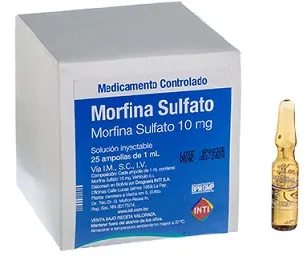
Table of Contents
- Package leaflet: Information for the user
- Introduction
- 1. What Morfina B. Braun is and what it is used for
- 2. What you need to know before using Morfina B. Braun
- 3. How to use Morphine B. Braun
- **If you use more Morfina B. Braun than you should:**
- 4. Possible adverse effects
- 5. Storage of Morphine B. Braun
- 6. Contents of the pack and other information
Package leaflet: Information for the user
Introduction
Package leaflet: Information for the user
Morphine B. Braun 20 mg/ml solution for injection
morphine, hydrochloride
Read the entire leaflet carefully before you start using this medicine, because it contains important information for you.
- Keep this leaflet, as you may need to read it again.
- If you have any questions, ask your doctor, pharmacist or nurse.
- This medicine has been prescribed for you only and must not be given to other people, even if they have the same symptoms as you, because it may harm them.
- If you experience any adverse reactions, consult your doctor, pharmacist or nurse, even if they are adverse reactions not listed in this leaflet. See section 4.
Leaflet contents:
- What Morphine B. Braun is and what it is used for
- What you need to know before using Morphine B. Braun
- How to use Morphine B. Braun
- Possible adverse effects
- How to store Morphine B. Braun
- Contents of the pack and other information
1. What Morfina B. Braun is and what it is used for
Morfina B. Braun belongs to the group of opioid analgesics. It is indicated in the following cases:
- Treatment of severe pain.
- Immediate postoperative pain.
- Malignant chronic pain.
- Pain caused by myocardial infarction.
- When there is difficulty in breathing (dyspnea) associated with left ventricular failure and pulmonary edema.
- Anxiety due to surgical procedures.
2. What you need to know before using Morfina B. Braun
Do not use Morfina B. Braun
- If you have ever had an allergic reaction to morphine hydrochloride or to any other opioid analgesic.
- If you have any of the following conditions:
- Respiratory diseases (respiratory depression or severe obstructive respiratory disease),
- Blood coagulation disorders or infection at the injection site (for epidural and intrathecal administration routes).
Warnings and precautions
Consult your doctor, pharmacist, or nurse before starting to use Morfina B. Braun.
If you have any of the following conditions, your doctor will monitor you closely:
- Increased intracranial pressure,
- Brain injury,
- Chronic asthma,
- Low blood pressure (hypotension),
- Insufficient thyroid secretion (hypothyroidism),
- Rapid heart rate (supraventricular tachycardia),
- Prostatic hypertrophy or narrowing of the urethra (urethral stenosis),
- Gallbladder dysfunction,
- Intestinal disorders such as severe intestinal inflammation,
- History of drug dependence.
Consult your doctor, pharmacist, or nurse if you experience any of the following symptoms while using this medicine:
- Increased sensitivity to pain despite increasing doses (hyperalgesia). Your doctor will decide whether a dose adjustment is needed or if you should switch to a stronger analgesic (see section 2).
- Weakness, fatigue, decreased appetite, nausea, vomiting, or low blood pressure. This could indicate that your adrenal glands are producing insufficient cortisol hormone, and you may need to take hormonal supplements.
- Loss of libido, impotence, cessation of menstruation. This may be due to reduced sex hormone production.
- If you have a history of alcoholism or drug addiction. Also inform your doctor if you think you are becoming dependent on Morfina B. Braun while using it. You may find yourself thinking excessively about when you can take the next dose, even if you do not need it for pain.
- Symptoms of withdrawal or dependence. The most common withdrawal symptoms are described in section 3. If they occur, your doctor may change your medication or adjust the dosing interval.
- If you experience severe upper abdominal pain that may radiate to the back, along with nausea, vomiting, or fever, as these could be symptoms associated with inflammation of the pancreas (pancreatitis) or bile ducts.
Your doctor will exercise special caution when administering this medicine to very young patients, elderly patients, those who are severely weakened, or those with renal or hepatic impairment, as they may be more sensitive to the effects of morphine.
Special caution is advised with morphine:
Acute generalized exanthematous pustulosis (AGEP) has been reported in association with morphine treatment. Symptoms usually occur within the first 10 days of treatment. Inform your doctor if you have ever experienced a severe skin rash, skin peeling, blisters, and/or mouth sores after taking morphine or other opioids. Stop using this medicine and seek immediate medical attention if you notice any of the following symptoms: blisters, widespread skin peeling, or pus-filled spots (pustules), especially if accompanied by fever.
Sleep-related breathing disorders:
This medicine may cause sleep-related breathing disorders, such as sleep apnea (pauses in breathing during sleep) and sleep-related hypoxemia (low blood oxygen levels). Symptoms may include breathing pauses during sleep, waking up at night due to shortness of breath, difficulty maintaining sleep, or excessive daytime sleepiness. If you or someone else notices these symptoms, contact your doctor. Your doctor may consider reducing the dose.
Tolerance, dependence, and addiction
This medicine contains morphine, which is an opioid. Repeated use of opioids may lead to reduced effectiveness of the medicine (becoming accustomed to it, known as tolerance). Repeated use of this medicine may also lead to dependence, abuse, and addiction, which could result in potentially fatal overdose. The risk of these adverse effects may be higher with higher doses and prolonged use.
Dependence or addiction may cause a feeling of loss of control over the amount of medicine you need to take or how often you need to take it.
The risk of dependence or addiction varies from person to person. You may have a higher risk of dependence or addiction to morphine if:
- You or any member of your family has abused or been dependent on alcohol, prescription medicines, or illegal drugs ("addiction").
- You smoke.
- You have ever had mood disorders (depression, anxiety, or a personality disorder) or have been treated by a psychiatrist for other mental illnesses.
If you notice any of the following symptoms while taking morphine, it could be a sign of dependence or addiction:
- You need to take the medicine longer than recommended by your doctor.
- You need to take a higher dose than recommended.
- You are using the medicine for reasons other than prescribed, e.g., "to stay calm" or "to help you sleep".
- You have made repeated unsuccessful attempts to stop or control your use of the medicine.
- You feel unwell when you stop taking the medicine, and feel better once you take it again ("withdrawal effects").
If you notice any of these symptoms, consult your doctor to determine the best course of treatment for you, including when it is appropriate to stop the medicine and how to do so safely (see section 3 "If you stop treatment with Morfina B. Braun").
Abruptly stopping treatment, if you are physically dependent on morphine, may trigger a withdrawal syndrome.
Withdrawal symptoms may also occur after administration of an opioid antagonist (naloxone or naltrexone) or an agonist/antagonist (pentazocine).
This medicine should only be used by experienced physicians, and equipment for artificial respiration as well as an opioid antagonist must be readily available at all times.
Your doctor will consider the following:
- When using the intravenous route, you should remain lying down to reduce adverse effects.
- When using the epidural and intrathecal routes, using a needle of appropriate size and ensuring correct placement of the needle and catheter in the epidural space.
Your doctor will inject slowly into the lumbar region and perform aspiration to reduce the risk of accidental intravascular administration.
Use in athletes
It is reported that this medicine contains a component that may lead to a positive doping test result.
Other medicines and Morfina B. Braun
Tell your doctor or pharmacist if you are taking, have recently taken, or might need to take any other medicines.
Administering morphine together with the following medicines may require dose adjustments.
It is important that you inform your doctor if you are taking any of the following medicines:
- Antidiarrheals,
- Medicines to lower blood pressure (antihypertensives),
- Antimuscarinics (as they may increase the risk of severe constipation),
- Antidepressants of the monoamine oxidase inhibitor (MAOI) group,
- Naltrexone,
- Rifampicin, for example, for the treatment of tuberculosis,
- Gabapentin and pregabalin for the treatment of epilepsy and nerve-related pain (neuropathic pain),
- Concomitant use of morphine and sedatives such as benzodiazepines or other related medicines increases the risk of drowsiness, difficulty breathing (respiratory depression), coma, and may be potentially fatal. For this reason, concomitant use should only be considered when no other treatment options are possible. However, if your doctor prescribes morphine together with sedative medicines, they will limit the dose and duration of concomitant treatment. Inform your doctor of all sedative medicines you are taking and strictly follow your doctor's instructions regarding dosage. It may be helpful to inform friends or family members so they can recognize the signs and symptoms mentioned above. Contact your doctor if you experience these symptoms,
- Some medicines used to treat blood clots (e.g., clopidogrel, prasugrel, ticagrelor) may have delayed and reduced effects when taken with morphine.
There is another group of medicines that may increase the effects of morphine. In such cases, your doctor will adjust the dose of both medicines:
- Medicines that cause central nervous system depression, as they may enhance respiratory depression and hypotension,
- Neuromuscular blockers, as they may prolong respiratory difficulty,
- Analgesic medicines (for pain) that are opioid agonists, as additive effects on respiratory depression and decreased blood pressure may occur,
- Pentazocine, nalbuphine, and butorphanol.
If you are receiving treatment with medicines such as buprenorphine and naloxone, the effects of morphine may be reduced.
If in doubt, consult your doctor or pharmacist.
Pregnancy and breastfeeding
If you are pregnant or breastfeeding, think you may be pregnant, or plan to become pregnant, consult your doctor or pharmacist before using this medicine.
Your doctor will assess the risk-benefit balance, as morphine crosses the placenta. Regular use during pregnancy may cause physical dependence in the fetus, leading to withdrawal symptoms in the newborn such as seizures, irritability, excessive crying, tremors, hyperreflexia, fever, vomiting, diarrhea, sneezing, and yawning, which require medical treatment.
Morphine is excreted in breast milk. Although no problems have been reported in humans, the possible effects on the infant are unknown; therefore, your doctor will decide whether to discontinue or continue breastfeeding.
Driving and using machines
Do not drive or operate tools or machinery, as this medicine may cause drowsiness.
Morfina B. Braun contains sodium
This medicine contains less than 1 mmol (23 mg) of sodium per ampoule; hence, it is essentially "sodium-free".
3. How to use Morphine B. Braun
This medicine will be administered by healthcare professionals only via intravenous, intramuscular, subcutaneous, epidural, and intrathecal routes.
Your doctor will determine the most appropriate dose for you.
The dosage varies depending on the route of administration, the intensity of pain, and other medications that may be administered concomitantly.
Before starting treatment and periodically during treatment, your doctor will explain what you can expect from using Morphine Hydrochloride Trihydrate, when and for how long you need to take it, when to contact your doctor, and when you should discontinue treatment (see also section "If you stop treatment with Morphine B. Braun").
As a general rule, in adults the usual doses are as follows:
- Subcutaneous or intramuscular:
5–20 mg every 4 hours; initial dose 10 mg.
Analgesia during childbirth: 10 mg.
- Intravenous:
2.5–15 mg diluted in 4–5 ml of sterile water for injection or 0.9% sodium chloride solution, administered slowly intravenously over 4–5 minutes.
- Patients with acute myocardial infarction:
2–15 mg of Morphine Hydrochloride Trihydrate, with incremental doses (1–3 mg) administered every 5 minutes if needed.
- Continuous intravenous infusion:
. Initial dose: 0.8–10 mg/h, subsequently increased according to patient response.
. Maintenance dose: 0.8–80 mg/h, although higher doses have sometimes been required (150 mg/h). Very high doses may be needed for several hours or days (275–440 mg/h) to provide relief in cases of severe pain.
- Epidural (lumbar region):
5 mg. If necessary, additional doses of 1 or 2 mg may be administered after one hour, without exceeding a total dose of 10 mg in 24 hours.
- Intrathecal (lumbar region):
0.2–1 mg/24 hours.
Administration of Morphine Hydrochloride Trihydrate via epidural or intrathecal routes during childbirth may cause adverse effects in the neonate, especially if premature. Intrathecal administration of up to 1 mg of morphine has little effect on the first stage of labor, although it may prolong the second stage.
Elderly and debilitated patients may require lower doses.
Use in children and adolescents:
In children, the usual doses are as follows:
- Subcutaneous or intramuscular:
0.1–0.2 mg/kg every 4 hours as needed, without exceeding 15 mg in 24 hours.
- Intravenous:
0.05–0.1 mg/kg administered very slowly, without exceeding 15 mg in 24 hours.
- In children with severe chronic pain:
. Continuous intravenous infusion:
0.04–0.07 mg/kg/h
. Maintenance dose:
0.025–1.79 mg/kg/h.
- For postoperative analgesia, maintenance doses of 0.01–0.04 mg/kg/h by intravenous infusion are required.
In neonates, drug elimination is slower and they are more susceptible to central nervous system effects; it is recommended not to exceed a dose of 0.015–0.02 mg/kg/h by intravenous infusion.
This medicine must not be used by epidural or intrathecal routes in children.
If you have any further questions about the use of this medicine, ask your doctor or pharmacist.
If you use more Morfina B. Braun than you should:
Overdose is characterized by respiratory depression with bradypnea (slow breathing), accompanied or not by central nervous system depression. Individuals who have taken an overdose may also experience difficulty breathing leading to loss of consciousness or even death.
People who have taken an overdose may develop aspiration pneumonia from vomiting or inhalation of foreign particles; symptoms may include shortness of breath, cough, and fever.
The recommended treatment for overdose consists of:
- Maintaining an open airway and ensuring adequate respiration, with oxygen if necessary, including assisted ventilation.
- Administering naloxone (0.4 to 2 mg) as a single dose, preferably intravenously. Naloxone injection may be repeated at intervals of two to three minutes.
- Administering intravenous fluids and/or vasopressors.
- Continuing patient monitoring.
In case of overdose or accidental ingestion, contact your doctor or pharmacist immediately or call the Toxicology Information Service at telephone: 91.562 04 20, indicating the medication and the amount used. Bring this leaflet with you.
If you stop treatment with Morfina B. Braun
Do not stop treatment with morphine unless approved by your doctor. If you wish to discontinue treatment with this medicine, consult your doctor on how to gradually reduce the dose to avoid withdrawal symptoms. Withdrawal symptoms may include generalized pain, tremors, diarrhea, stomach pain, nausea, flu-like symptoms, palpitations, and pupil dilation. Psychological symptoms may include a profound feeling of dissatisfaction, anxiety, and irritability.
If you have any further questions about the use of this medicine, ask your doctor or pharmacist.
4. Possible adverse effects
Like all medicines, this medicine may cause adverse effects, although not everyone experiences them.
Stop using this medicine and seek immediate medical attention if you notice any of the following symptoms:
-
Severe allergic reaction causing difficulty breathing or dizziness.
-
Severe skin reaction with blisters, widespread peeling of the skin, pustules (pus-filled spots) together with fever. This could be a condition called acute generalized exanthematous pustulosis (AGEP).
Other possible adverse effects:
-
Very common (>1/10):
-
Gastrointestinal disorders: nausea, vomiting, constipation.
-
Nervous system disorders: somnolence, disorientation, sweating, euphoria, and with prolonged treatment, tolerance.
-
-
Uncommon (>1/1,000, <1/100):
-
Nervous system disorders: headache, agitation, tremor, seizures, anxiety, depression, muscle rigidity, hallucinations, difficulty sleeping.
-
Gastrointestinal disorders: dry mouth, laryngeal spasm, diarrhea, abdominal cramps, taste disturbances.
-
Cardiac disorders: cardiac arrest, tachycardia and bradycardia, increased blood pressure (hypertension), decreased blood pressure (hypotension), intracranial hypertension, collapse.
-
Respiratory disorders: respiratory depression, breathing difficulty (apnea).
-
Renal and urinary disorders: reduced libido, impotence.
-
Eye disorders: blurred vision, nystagmus, diplopia, miosis.
-
Skin disorders: edema, itching, urticaria, rashes, contact dermatitis, pain at injection site.
-
-
Very rare (<1/10,000): anaphylactic reaction.
-
Frequency not known (cannot be estimated from available data):
-
Increased sensitivity to pain.
-
Symptoms of withdrawal or dependence (for a list of symptoms, see section 3: If you stop taking Morfina B. Braun).
-
Sleep apnea (pauses in breathing during sleep).
-
Symptoms associated with inflammation of the pancreas (pancreatitis) and the biliary tract system, for example, severe upper abdominal pain that may radiate to the back, nausea, vomiting, or fever.
-
Epidural or intrathecal administration does not eliminate the risk of serious adverse effects. Respiratory depression may occur shortly after administration due to direct venous redistribution to the respiratory centers of the central nervous system.
Additionally, delayed respiratory depression may occur up to 24 hours after administration, possibly as a result of rostral spread. After epidural or intrathecal administration of morphine, urinary retention frequently occurs, especially in males, and may persist for 10 to 20 hours after injection, possibly requiring catheterization.
Furthermore, dose-dependent generalized pruritus frequently occurs.
Reporting of adverse effects
If you experience any type of adverse effect, consult your doctor or pharmacist, even if it is a possible adverse effect not listed in this leaflet. You may also report them directly via the Spanish Pharmacovigilance System for Human Medicines: www.notificaRAM.es. By reporting adverse effects, you can help provide more information on the safety of this medicine.
5. Storage of Morphine B. Braun
Store below 25°C and in the original packaging.
Keep this medicine out of the sight and reach of children.
Do not use this medicine after the expiry date stated on the container following EXP. The expiry date refers to the last day of the month indicated.
The contents of the ampoules must be used immediately after opening. After opening the container, discard any unused portion of the solution.
Medicines should not be disposed of via wastewater or household waste. Dispose of containers and unused medicines at the SIGRE collection point at your pharmacy. If in doubt, ask your pharmacist how to dispose of containers and medicines you no longer need. This will help protect the environment.
6. Contents of the pack and other information
Composition of Morfina B. Braun
The active substance is morphine hydrochloride (as trihydrate). Each ampoule contains 40 mg of morphine hydrochloride trihydrate (equivalent to 30.4 mg of morphine base).
The other components (excipients) are sodium chloride and water for injections.
Appearance of Morfina B. Braun and contents of the pack
Clear injectable solution presented in 2 ml amber glass ampoules.
Packs containing 1 and 10 ampoules.
Marketing Authorization Holder:
- Braun Medical, S.A.
Ctra. de Terrassa, 121,
08191 Rubí (Barcelona),
Spain.
Manufacturer:
- Braun Medical, S.A.
Ronda de los Olivares, Parcela 11,
Polígono Industrial Los Olivares,
23009 Jaén (Jaén),
Spain.
Date of the most recent review of this summary: October 2024.
Detailed information on this medicinal product is available on the website of the Spanish Agency of Medicines and Health Products (Agencia Española de Medicamentos y Productos Sanitarios): http://www.aemps.gob.es/
This information is intended for healthcare professionals only:
This medicinal product is incompatible with alkalis, bromides, iodides, potassium permanganate, and tannic acid. It is also incompatible with salts of iron, lead, magnesium, silver, copper, and zinc.
Handle under standard aseptic conditions used for injectable solutions.
Physical-chemical incompatibility (precipitate formation) has been demonstrated between solutions of morphine sulfate and 5-fluorouracil.