Montelukast Teva-Ratiopharm 10 mg film-coated tablets EFG
Spain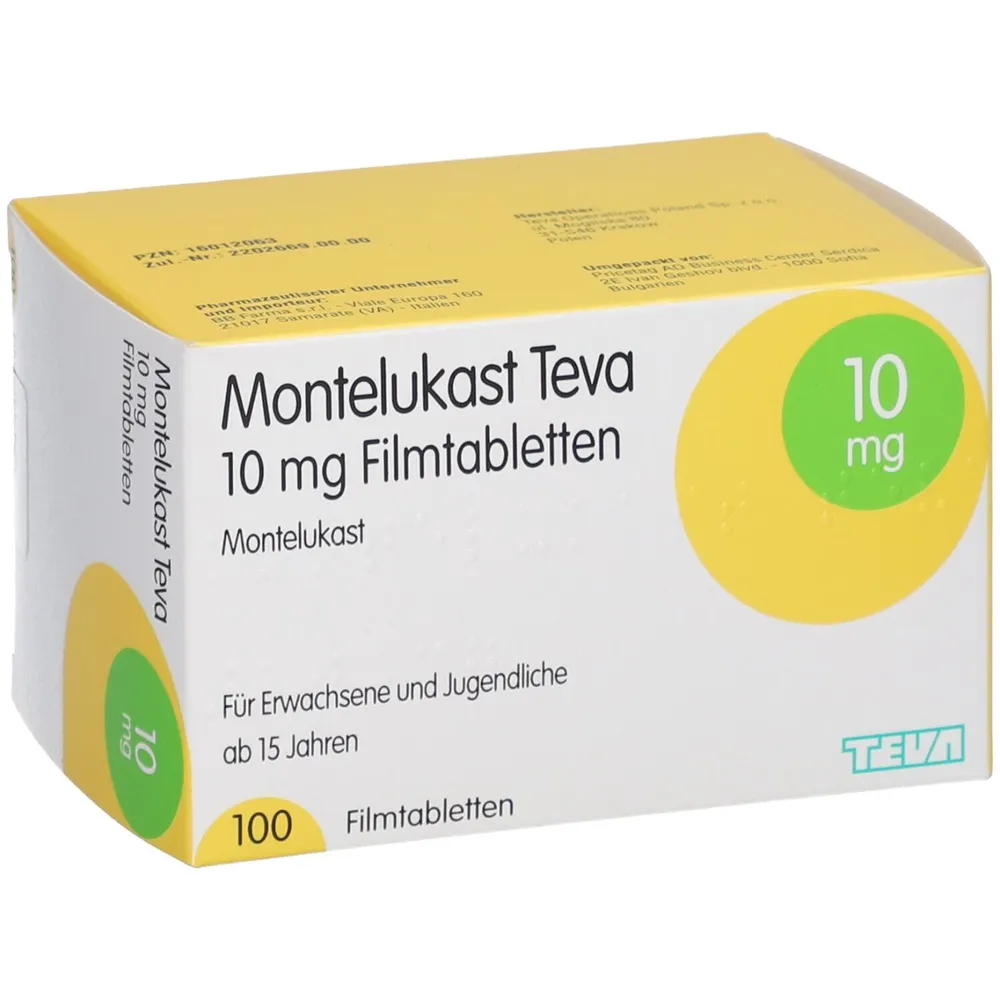
Table of Contents
- Patient Information Leaflet
- Introduction
- 1. What Montelukast Teva-ratiopharm is and what it is used for
- 2. What you need to know before taking Montelukast Teva-ratiopharm
- 3. How to take Montelukast Teva-ratiopharm
- 4. Possible adverse effects
- 5. Storage of Montelukast Teva-ratiopharm
- 6. Contents of the pack and other information
Patient Information Leaflet
Introduction
Patient Information Leaflet
Montelukast Teva-ratiopharm 10 mg film-coated tablets EFG
Read the entire leaflet carefully before you start taking this medicine, as it contains important information for you.
- Keep this leaflet, as you may need to read it again.
- If you have any questions, ask your doctor or pharmacist.
- This medicine has been prescribed for you only, and you should not give it to others, even if they have the same symptoms as you, because it could harm them.
- If you experience any adverse effects, consult your doctor or pharmacist, even if they are adverse effects not listed in this leaflet. See section 4.
Leaflet Contents
- What Montelukast Teva-ratiopharm is and what it is used for
- What you need to know before taking Montelukast Teva-ratiopharm
- How to take Montelukast Teva-ratiopharm
- Possible adverse effects
- How to store Montelukast Teva-ratiopharm
- Contents of the pack and other information
1. What Montelukast Teva-ratiopharm is and what it is used for
Montelukast Teva-ratiopharm belongs to a group of medicines called leukotriene receptor antagonists.
How Montelukast Teva-ratiopharm works
Leukotrienes cause narrowing and inflammation of the airways in the lungs and can trigger allergy symptoms. By blocking leukotrienes, montelukast improves asthma symptoms, helps control asthma, and reduces symptoms of seasonal allergies (also known as seasonal allergic rhinitis or hay fever).
When Montelukast Teva-ratiopharm should be used
Your doctor has prescribed montelukast to treat asthma and to prevent asthma symptoms during the day and night.
- Montelukast is used to treat adults and adolescents 15 years of age and older whose asthma is not adequately controlled with their current asthma medication and who require additional treatment.
- Montelukast also helps prevent airway narrowing caused by exercise in patients 15 years of age and older.
- In asthmatic patients for whom montelukast is indicated for asthma, montelukast may also provide symptomatic relief of seasonal allergic rhinitis.
Depending on your symptoms and the severity of your asthma, your doctor will determine how you should use montelukast.
What is asthma?
Asthma is a chronic disease.
Asthma includes:
- Difficulty breathing due to narrowing of the airways. This narrowing of the airways worsens and improves in response to various triggers.
- Sensitive airways that react to many things, such as cigarette smoke, pollen, cold air, or exercise.
- Swelling (inflammation) of the inner lining of the airways.
Asthma symptoms include: coughing, wheezing, and chest tightness.
What are seasonal allergies?
Seasonal allergies (also known as hay fever or seasonal allergic rhinitis) are an allergic response often caused by airborne pollen from trees, grass, and weeds. Symptoms of seasonal allergies typically include: nasal congestion, runny nose, itchy nose; sneezing; and watery, swollen, red, and itchy eyes.
2. What you need to know before taking Montelukast Teva-ratiopharm
Do not take Montelukast Teva-ratiopharm
- if you are allergic to montelukast or to any of the other ingredients of this medicine (listed in section 6).
Warnings and precautions
Talk to your doctor or pharmacist before taking Montelukast Teva-ratiopharm.
- If your asthma or breathing worsens, inform your doctor immediately.
- Montelukast Teva-ratiopharm tablets are not indicated for the treatment of acute asthma attacks. If an attack occurs, follow the instructions given to you by your doctor. Always have your rescue inhaled medication available for asthma attacks.
- It is important that you or your child use all asthma medications prescribed by your doctor. Montelukast Teva-ratiopharm 10 mg should not replace other asthma medications prescribed by your doctor.
- Any patient being treated with asthma medications should be aware that if they develop a combination of symptoms such as flu-like illness, tingling or numbness in arms or legs, worsening of lung symptoms, and/or skin rash, they should consult their doctor.
- You should not take acetylsalicylic acid (aspirin) or anti-inflammatory medicines (also known as non-steroidal anti-inflammatory drugs or NSAIDs) if they worsen your asthma.
Neuropsychiatric events (for example, behavioral and mood-related changes, depression, and suicidal thoughts) have been reported in patients of all ages treated with montelukast (see section 4). If you or your child develop these symptoms while taking montelukast, you must consult your doctor or your child's doctor.
Children and adolescents
Do not give this medicine to children under 15 years of age.
For pediatric patients aged 6 months to 14 years, other formulations of this medicine are available according to age range.
Taking Montelukast Teva-ratiopharm with other medicines
Tell your doctor or pharmacist if you are taking, have recently taken, or might need to take any other medicines, including those obtained without a prescription.
Some medicines may affect how montelukast works, or montelukast may affect how other medicines you are taking work.
Before taking Montelukast Teva-ratiopharm, inform your doctor if you are taking the following medicines:
- phenobarbital (used for the treatment of epilepsy).
- phenytoin (used for the treatment of epilepsy).
- rifampicin (used for the treatment of tuberculosis and certain other infections).
- gemfibrozil (used for the treatment of elevated plasma lipid levels).
Taking Montelukast Teva-ratiopharm with food and drink
Montelukast Teva-ratiopharm may be taken in the evening with or without food.
Pregnancy, breastfeeding, and fertility
If you are pregnant, breastfeeding, think you may be pregnant, or are planning to become pregnant, consult your doctor or pharmacist before using this medicine.
Pregnancy
Your doctor will assess whether you can take montelukast during this period.
Breastfeeding
It is unknown whether montelukast passes into breast milk. If you are breastfeeding or planning to breastfeed, you should consult your doctor before taking Montelukast Teva-ratiopharm.
Driving and using machines
Montelukast Teva-ratiopharm is not expected to affect your ability to drive a car or operate machinery. However, individual responses to the medicine may vary. Certain adverse effects (such as dizziness and drowsiness) reported with montelukast may affect a patient's ability to drive or operate machinery.
Montelukast Teva-ratiopharm 10 mg contains lactose
If your doctor has informed you of an intolerance to certain sugars, consult with them before taking this medicine.
Montelukast Teva-ratiopharm 10 mg contains sodium
This medicine contains less than 1 mmol of sodium (23 mg) per film-coated tablet; i.e., essentially "sodium-free".
3. How to take Montelukast Teva-ratiopharm
Follow exactly the instructions for use of this medicine provided by your doctor or pharmacist. If in doubt, consult your doctor or pharmacist again.
- You should take only one montelukast tablet per day, as prescribed by your doctor.
- It should be taken even when you do not have symptoms or during an acute asthma attack.
For adults and adolescents aged 15 years and older:
The recommended dose is one 10 mg tablet daily, taken in the evening.
If you are taking this medicine, make sure you do not take any other product containing the same active substance, montelukast.
This medicine is taken orally.
You may take montelukast with or without food.
If you take more Montelukast Teva-ratiopharm than you should
Seek immediate help from your doctor.
In most overdose cases, no adverse effects were reported. The most frequently reported symptoms in cases of overdose in adults and children were abdominal pain, drowsiness, thirst, headache, vomiting, and hyperactivity.
Contact your doctor, pharmacist, or call the Toxicology Information Service immediately at telephone number 91.562.04.20, indicating the medicine and the amount taken. It is recommended to bring the medicine packaging and leaflet to the healthcare professional.
If you forget to take Montelukast Teva-ratiopharm
Try to take montelukast as prescribed. However, if you miss a dose, simply resume your usual regimen of one tablet once daily.
Do not take a double dose to make up for missed doses.
If you stop taking Montelukast Teva-ratiopharm
Montelukast can only treat your asthma if you continue taking it. It is important that you continue taking montelukast for as long as your doctor prescribes it. It will help control your asthma.
If you have any further questions about the use of this medicine, ask your doctor or pharmacist.
For children aged 2 to 5 years, 4 mg chewable tablets are available.
For children aged 2 to 5 years who have difficulty taking a chewable tablet, a 4 mg granule formulation is available.
For children aged 6 to 14 years, 5 mg chewable tablets are available.
4. Possible adverse effects
Like all medicines, this medicine can cause adverse effects, although not everyone experiences them.
In clinical trials with montelukast, the adverse effects related to the administration of the medicine and reported most frequently (may affect more than 1 in 10 people) were:
- abdominal pain
- headache
These adverse effects were generally mild and occurred more frequently in patients treated with montelukast than in those treated with placebo (a pill containing no active medicine).
Serious adverse effects
Consult your doctor immediately if you experience any of the following adverse effects, which may be serious and may require urgent medical treatment.
Uncommon (may affect up to 1 in 100 people):
- allergic reactions including swelling of the face, lips, tongue and/or throat, which may cause difficulty breathing or swallowing
- changes in behaviour and mood: excitation including aggressive behaviour or hostility, depression
- seizures
Rare (may affect up to 1 in 1,000 people):
- increased tendency to bleeding
- tremor
- palpitations
Very rare (may affect up to 1 in 10,000 people):
- a combination of symptoms such as flu-like illness, tingling or numbness in arms and legs, worsening of lung symptoms and/or skin rash (Churg-Strauss syndrome) (see section 2)
- low platelet count
- changes in behaviour and mood: hallucinations, disorientation, suicidal thoughts and actions
- swelling (inflammation) of the lungs
- severe skin reactions (erythema multiforme) which may occur without warning
- inflammation of the liver (hepatitis)
Other adverse effects reported during the marketing of the medicine
Very common (may affect more than 1 in 10 people):
- upper respiratory tract infections
Common (may affect up to 1 in 10 people):
- diarrhoea, nausea and vomiting
- fever
- rash
elevated liver enzymes
Uncommon (may affect up to 1 in 100 people):
- changes in behaviour and mood: sleep disturbances, including nightmares, sleep problems, sleepwalking, irritability, anxiety, restlessness, dizziness, somnolence, tingling/numbness
- nosebleeds
- dry mouth, indigestion
- bruising, itching, urticaria
- muscle or joint pain, muscle cramps
- bed-wetting (in children)
- weakness, fatigue, malaise, swelling
Rare (may affect up to 1 in 1,000 people):
- changes in behaviour and mood: attention disturbance, memory impairment, uncontrolled muscle movements
Very rare (may affect up to 1 in 10,000 people):
- changes in behaviour and mood: obsessive-compulsive symptoms, stuttering
- painful red lumps under the skin, most commonly appearing on the shins (erythema nodosum)
Reporting of adverse effects:
If you experience any adverse effect, talk to your doctor or pharmacist, even if it is a possible adverse effect not listed in this leaflet. You can also report them directly via the Spanish Pharmacovigilance System for Human Medicines: http://www.notificaram.es. By reporting adverse effects, you can help provide more information on the safety of this medicine.
5. Storage of Montelukast Teva-ratiopharm
Keep this medicine out of the sight and reach of children.
Do not use this medicine after the expiry date, which is stated on the packaging and blister after EXP. The expiry date refers to the last day of the month indicated.
This medicine does not require any special storage conditions.
Medicines must not be disposed of via wastewater or household waste. Dispose of unused containers and medicines at the SIGRE point located at your usual pharmacy. Ask your pharmacist how to properly dispose of containers and medicines you no longer need. This will help protect the environment.
6. Contents of the pack and other information
Composition of Montelukast Teva-ratiopharm 10 mg film-coated tablets
- The active substance is montelukast. Each film-coated tablet contains 10.40 mg of montelukast sodium, equivalent to 10 mg of montelukast.
- The other components are:
Core: sodium lauryl sulfate, monohydrate lactose, hydroxypropyl cellulose, pregelatinized corn starch, sodium carboxymethyl starch type A (potato starch), magnesium stearate;
Coating: Opadry Yellow 20A23676 containing hydroxypropyl cellulose, hypromellose, titanium dioxide (E171), yellow iron oxide (E172), red iron oxide (E172).
Appearance of the product and contents of the pack
Montelukast Teva-ratiopharm 10 mg are film-coated tablets, beige in colour, round, marked on one side with “93” and on the other with “7426”.
Montelukast Teva-ratiopharm 10 mg is available in pack sizes of 7, 10, 14, 20, 28, 30, 49, 50, 56, 84, 90, 98, 100, 140 and 200 tablets.
Calendar packs containing 10, 14, 20 and 28 tablets are also available.
Aluminium-aluminium blister packs.
Some pack sizes may not be marketed.
Marketing Authorization Holder and Manufacturer
Marketing Authorization Holder
Teva Pharma, S.L.U.
Anabel Segura 11, Edificio Albatros B, 1st floor
28108 Alcobendas, Madrid (Spain)
Manufacturer
Teva Pharmaceutical Works Private Limited Company
Pallagi út 13, 4042 Debrecen
Hungary
OR
Pharmachemie B.V.
Swensweg 5, 2031 GA Haarlem
The Netherlands
OR
Teva Pharma S.L.U.
C/C, n. 4, Poligono Industrial Malpica, 50016 Zaragoza
Spain
OR
Merckle GmbH
Ludwig-Merckle-Str. 3, 89143 Blaubeuren
Germany
OR
Teva Operations Poland Sp. z.o.o.
Ul. Mogilska 80, 31-546 Krakow
Poland
This medicinal product is authorized in the European Economic Area member states under the following names:
Germany: MonteluBronch 10 mg Filmtabletten
Portugal: Montelucaste ratiopharm
Spain: Montelukast Teva-ratiopharm 10 mg film-coated tablets EFG
Date of the most recent review of this leaflet: January 2026
Detailed information on this medicinal product is available on the website of the Spanish Agency of Medicines and Health Products (AEMPS): http://www.aemps.gob.es/
You can access detailed and up-to-date information about this medicinal product by scanning the QR code included on the outer packaging with your mobile phone (smartphone). You may also access this information at the following internet address: https://cima.aemps.es/cima/dochtml/p/76467/P_76467.html
QR Code + URL