Mitomycin Accord 20 mg powder for intravesical solution and for injection solution
Spain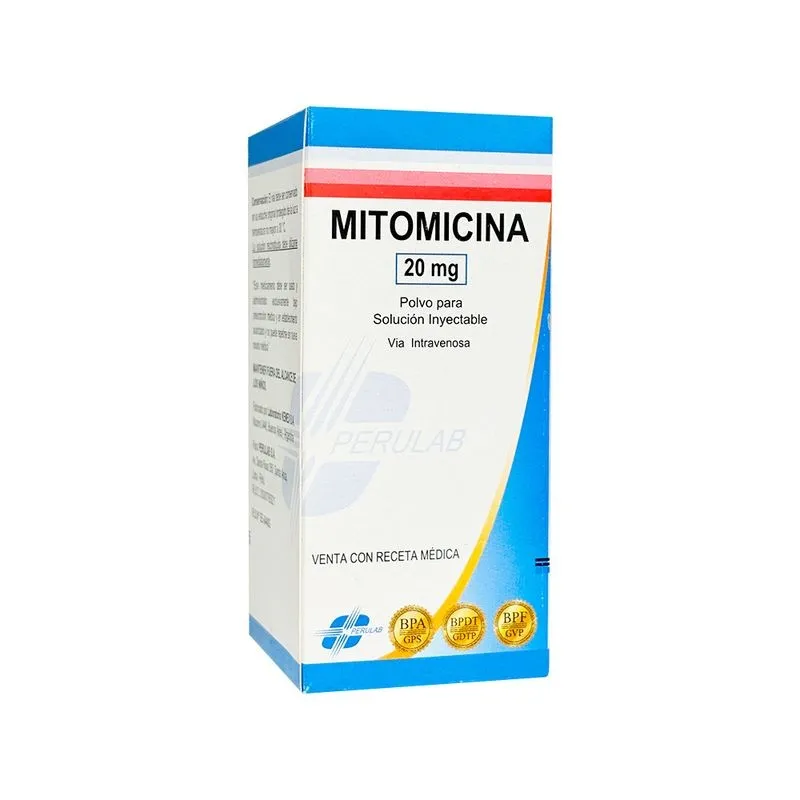
Table of Contents
- Package leaflet: Information for the user
- Introduction
- 1. What Mitomicina Accord is and what it is used for
- 2. What you need to know before using Mitomicina Accord
- 3. How to use Mitomycin Accord
- 4. Possible adverse effects
- 5. Storage of Mitomycin Accord
- 6. Contents of the container and other information
Package leaflet: Information for the user
Introduction
Package leaflet: information for the user
Mitomicin Accord 20 mg powder for intravesical solution and for injectable solution
Read all of this leaflet carefully before you start using this medicine because it contains important information for you.
- Keep this leaflet; you may need to read it again.
- If you have any questions, ask your doctor, pharmacist or nurse.
- If you get any side effects, talk to your doctor, pharmacist or nurse, even if it is not listed in this leaflet. See section 4.
Contents of this leaflet
- What Mitomicin Accord is and what it is used for
- What you need to know before using Mitomicin Accord
- How to use Mitomicin Accord
- Possible side effects
- How to store Mitomicin Accord
- Contents of the pack and other information
1. What Mitomicina Accord is and what it is used for
Mitomycin is a cancer treatment medicine, meaning it inhibits or considerably delays the division of actively dividing cells by affecting their metabolism in several ways. The therapeutic use of anticancer drugs is based on the fact that cancer cells differ from normal body cells by their higher rate of cell division due to uncontrolled growth.
Therapeutic indications
Mitomycin is used in cancer treatment to relieve symptoms (palliative cancer treatment).
Intravenous administration
When administered intravenously, it is used in monotherapy, i.e. treatment with a single active substance, or in combination cytostatic chemotherapy, i.e. treatment with several active substances. Mitomycin is effective in the following tumors in adults:
- Advanced metastatic stomach cancer (gastric carcinoma)
- Advanced and/or metastatic breast cancer (breast carcinoma)
- Respiratory tract cancer (non-small cell bronchial carcinoma)
- Advanced pancreatic cancer (pancreatic carcinoma)
Intravesical administration
Administration into the bladder (intravesical application) for the prevention of recurrence in superficial bladder cancer following resection of tissue via the urethra (transurethral resection) in adults.
2. What you need to know before using Mitomicina Accord
Do not use Mitomicina Accord:
- if you are allergic to mitomycin or to any of the other components of this medicine (listed in section 6).
- during breastfeeding: you must not breastfeed while being treated with mitomycin.
- in case of intravenous administration (injection or infusion into a blood vessel), if you have a significant reduction in the number of all types of blood cells (including both red and white blood cells as well as platelets [pancytopenia]), if you have a marked reduction in white blood cells (leukopenia) or platelets (thrombocytopenia), a tendency to bleed (hemorrhagic diathesis), or acute infections (disease caused by pathogens).
- in case of intravesical administration (application into the bladder).
- if you have a perforation of the bladder wall.
- if you suffer from inflammation of the urinary bladder (cystitis).
Warnings and precautions
Talk to your doctor or pharmacist before starting to use Mitomicina Accord.
Special caution is required when using Mitomicina Accord
- if you have reduced lung, kidney, or liver function.
- if your general health condition is poor.
- if you are undergoing radiation therapy.
- if you are being treated with other cytostatic agents (substances that inhibit cell growth or division).
- if you have bladder inflammation (in case of intravesical administration).
- if you have been told you have myelosuppression (your bone marrow cannot produce the blood cells you need); this may worsen (especially in elderly patients and during long-term treatment with mitomycin); infection may become more severe due to myelosuppression and may lead to life-threatening conditions.
- if you are of reproductive age, as mitomycin may affect your future ability to have children.
- if you have a tendency to bleed or if you develop an infectious disease.
- if you are being vaccinated with a vaccine containing live viruses, as this increases the risk of infection.
Mitomycin is a substance that may cause significant heritable changes in genetic material and may cause cancer in humans.
Intravesical administration
If you experience abdominal pain or pelvic pain immediately after, or weeks or months after, the administration of Mitomicina Accord into the bladder, inform your doctor immediately. Your doctor may need to perform an abdominal ultrasound to determine the cause of your pain.
Avoid contact with skin and mucous membranes.
Read the general hygiene instructions after intravesical instillation into the bladder:
It is recommended to sit down when urinating to avoid urine spills, and to wash your hands and genital area after urination. This is especially important for the first urination after mitomycin administration.
You will receive treatment under the supervision of a healthcare professional experienced in this specific area of medicine to minimize unwanted adverse effects at the injection site.
Children and adolescents
The use of mitomycin is not recommended in children and adolescents.
Use of Mitomicina Accord with other medicines
No interactions with other medicines are known when mitomycin is administered into the bladder (intravesical administration).
Possible interactions during injection or infusion into a blood vessel (intravenous administration).
Inform your doctor if you are taking, have recently taken, or might need to take any other medicine.
When used in combination with other treatments (particularly other anticancer drugs and radiotherapy) that also have harmful effects on you, the adverse effects of mitomycin may be intensified.
Combination with vinca alkaloids or bleomycin (medicines belonging to the cytostatic group) may intensify the harmful effect on the lungs.
An increased risk of a particular form of kidney disease (hemolytic-uremic syndrome) has been reported in patients receiving concomitant intravenous mitomycin and 5-fluorouracil or tamoxifen.
Animal experiments have reported that the effect of mitomycin may be lost if administered together with vitamin B6.
You must not be vaccinated with vaccines containing live microorganisms during treatment with mitomycin, as this may increase the risk of becoming infected with the live vaccine.
The harmful effect on the heart of adriamycin (doxorubicin, a medicine belonging to the cytostatic group) may be intensified by mitomycin.
Please note that the above also applies to medicines you have recently used.
Pregnancy, breastfeeding, and fertility
If you are pregnant or breastfeeding, think you may be pregnant, or plan to become pregnant, consult your doctor or pharmacist before taking this medicine.
Pregnancy
Mitomycin may cause heritable genetic damage and negatively affect embryonic development. You must not become pregnant during treatment with mitomycin. If you become pregnant, you should be offered genetic counseling.
Mitomycin must not be used during pregnancy. If mitomycin treatment is necessary during pregnancy, your doctor must assess the benefit versus the risk of harmful effects on your child.
Fertility/Anticonception in men and women
If you are of reproductive age, as mitomycin may affect your future ability to have children, both men and women should use contraceptive methods during treatment and for at least 6 months after its discontinuation. If you become pregnant during this period, you must inform your doctor immediately.
Mitomycin may cause heritable genetic damage. Therefore, as a man treated with mitomycin, you are advised not to father children during treatment and for 6 months thereafter, and to seek advice on sperm preservation before starting treatment, due to the possibility of irreversible infertility caused by mitomycin therapy.
Breastfeeding
Mitomycin is likely to pass into breast milk. You must stop breastfeeding before starting mitomycin.
Driving and use of machines
Although used according to recommendations, this medicine may cause nausea and vomiting, so reaction times and the ability to drive or operate machinery may be affected. These effects are particularly noticeable when combined with alcohol.
3. How to use Mitomycin Accord
This medicine should only be administered by healthcare professionals experienced in this type of treatment. Mitomycin Accord is intended for use by injection or infusion into a blood vessel (intravenous use) or for instillation into the bladder (intravesical instillation) after being dissolved.
Your doctor will prescribe a dose and dosing schedule appropriate for you.
Before receiving mitomycin as an intravenous injection or infusion, a blood test and assessment of lung, kidney, and liver function are recommended to rule out the presence of diseases that could worsen during treatment with mitomycin.
The needle must remain in the vein while mitomycin is being administered. If the needle becomes dislodged or loosened, or if the medicinal product leaks into the surrounding tissue (you may feel discomfort or pain), inform your doctor or nurse immediately.
Intravesical administration
Mitomycin Accord is introduced into the bladder under low pressure using a catheter. You should empty your bladder before treatment. The medicine must remain in the bladder for a period of 1 to 2 hours. To achieve this, you should not drink excessive fluids before, during, or after treatment. While the solution remains in the bladder, it should have sufficient contact with the entire mucosal surface; moving around helps promote effective treatment. After 2 hours, you should empty your bladder while sitting down to avoid spills.
If you receive more Mitomycin Accord than you should
If you accidentally receive a higher dose, you may experience symptoms such as fever, nausea, vomiting, and blood disorders. Your doctor may provide you with palliative treatment for any symptoms that may occur.
Contact your doctor or pharmacist immediately or call the Toxicology Information Service at 915 620 420.
If you have any further questions about the use of this medicine, ask your doctor or pharmacist.
4. Possible adverse effects
Like all medicines, this medicine can cause adverse effects, although not everyone experiences them.
Possible adverse effects after intravenous administration
Severe allergic reaction (symptoms may include fainting, rash or hives, itching, swelling of the lips, face and airways with difficulty breathing, or in very rare cases, loss of consciousness (may affect 1 in 10,000 people)).
Severe lung disease may occur, presenting as breathing difficulty, dry cough, and crackling sounds during respiration (interstitial pneumonia), as well as severe kidney dysfunction (nephrotoxicity when urinating little or not at all).
If you notice any of the above reactions, inform your doctor immediately, as treatment with mitomycin must be discontinued.
Very common (may affect more than 1 in 10 people)
- Inhibition of blood cell production in the bone marrow (bone marrow suppression);
- Reduction in the number of white blood cells (leucopenia), increasing the risk of infections;
- Reduction in the number of platelets (thrombocytopenia), leading to bruising and bleeding;
- Nausea and vomiting.
Common (may affect up to 1 in 10 people)
- Pulmonary disorders presenting as breathing difficulty, dry cough, and inspiratory crackles (interstitial pneumonia);
- Breathing difficulties (dyspnea), cough, shortness of breath;
- Skin rashes (exanthema);
- Allergic skin rash;
- Skin rash caused by contact with mitomycin (contact dermatitis);
- Numbness, swelling, and painful redness of the palms of the hands and soles of the feet (palmar-plantar erythrodysesthesia);
- Kidney disorders (renal dysfunction, nephrotoxicity, glomerulopathy, increased blood creatinine levels), inability of the kidneys to function;
- Inflammation of connective tissue (cellulitis) and tissue death (tissue necrosis) following accidental injection into adjacent tissue (extravasation).
Uncommon (may affect up to 1 in 100 people)
- Inflammation of a mucous membrane (mucositis);
- Inflammation of the mucous membrane of the mouth (stomatitis);
- Diarrhea;
- Hair loss (alopecia);
- Fever;
- Loss of appetite (anorexia).
Rare (may affect up to 1 in 1,000 people)
- Potentially life-threatening infection;
- Septicemia;
- Decrease in the number of red blood cells, sometimes accompanied by acute kidney dysfunction (hemolytic anemia);
- Bruising (purpura) and red or purple spots (petechiae) on the skin (thrombotic thrombocytopenic purpura);
- A type of hemolytic anemia caused by factors in small blood vessels (microangiopathic hemolytic anemia (MAHA syndrome));
- A particular form of kidney failure (hemolytic uremic syndrome (HUS)), characterized by destruction of red blood cells exceeding bone marrow production (hemolytic anemia), acute kidney failure, and low platelet count;
- Loss of heart function (heart failure) after previous treatment with other anticancer medicines (anthracyclines);
- Increased blood pressure in the lung vasculature, leading to breathing difficulty, dizziness, and fainting (pulmonary hypertension);
- Obstructive disease of the pulmonary veins (pulmonary veno-occlusive disease [PVOD]);
- Liver disease (hepatic dysfunction);
- Increased levels of liver enzymes (transaminases);
- Yellowing of the skin and whites of the eyes (jaundice);
- Blockage of small veins in the liver (hepatic veno-occlusive disease [VOD]), leading to fluid retention, liver enlargement, and increased blood bilirubin levels;
- Generalized rash (generalized exanthema).
Very rare (may affect up to 1 in 10,000 people)
- Severe allergic reaction (symptoms may include fainting, rash or hives, itching, swelling of the lips, face and airways with difficulty breathing, loss of consciousness).
Frequency not known (cannot be estimated from available data)
- Infections;
- Reduction in blood cell count (anemia).
Possible adverse effects after intravesical instillation (intravesical use)
Inform your doctor immediately if you notice any of the following reactions (which have been observed very rarely after intravesical instillation), as treatment with mitomycin will need to be discontinued:
- Severe allergic reaction, with symptoms such as dizziness, skin rash or hives, itching, swelling of the lips, face and airways with difficulty breathing, loss of consciousness;
- Severe lung disease manifesting as breathing difficulty, dry cough, and inspiratory crackles (interstitial pneumonia);
- Severe kidney dysfunction: kidney disease with little or no urination;
- Pelvic or abdominal pain.
Common (may affect up to 1 in 10 people)
- Localized skin rashes (localized exanthema);
- Allergic skin rash;
- Skin rash caused by contact with mitomycin (contact dermatitis);
- Numbness, swelling, and painful redness of the palms of the hands and soles of the feet (palmar-plantar erythrodysesthesia (PPE)/hand-foot syndrome);
- Inflammation of the bladder (cystitis), which may be accompanied by blood in the bladder or urine;
- Painful urination, excessive frequent urination sometimes at night (dysuria, pollakiuria, nocturia);
- Blood in the urine (hematuria);
- Local irritation of the bladder wall.
Rare (may affect up to 1 in 1,000 people)
- Generalized skin rash (generalized exanthema).
Very rare (may affect up to 1 in 10,000 people)
- Severe inflammation of the bladder in which parts of the bladder may undergo tissue death (allergic cystitis, necrotizing cystitis);
- Narrowing (stenosis) of the efferent urinary tract;
- Reduced bladder capacity;
- Calcium deposits in the bladder wall (bladder wall calcification);
- Partial conversion of bladder wall tissue into connective tissue (bladder wall fibrosis);
- Decrease in the number of white blood cells (leucopenia), increasing the risk of infections;
- Decrease in the number of platelets (thrombocytopenia), causing bruising and bleeding;
- Systemic allergic reactions;
- Pulmonary disorder manifesting as breathing difficulty, dry cough, and inspiratory crackles (interstitial lung disease);
- Increased levels of liver enzymes (elevated transaminases);
- Hair loss (alopecia);
- Nausea and vomiting;
- Diarrhea;
- Kidney disease (renal dysfunction) with little or no urination;
- Fever.
Frequency not known (cannot be estimated from available data)
If mitomycin accidentally reaches areas other than the bladder:
- Bladder damage;
- Pus-filled abdominal pocket (abscess);
- Tissue (fatty) death (necrosis) of the surrounding area;
- Bladder fistula.
Reporting of adverse effects
If you experience any adverse effects, consult your doctor or pharmacist, even if they are possible adverse effects not listed in this leaflet. You may also report them directly via the Spanish Pharmacovigilance System for Human Medicines at www.notificaRAM.es. By reporting adverse effects, you can help provide more information on the safety of this medicine.
5. Storage of Mitomycin Accord
Keep this medicine out of the sight and reach of children.
This medicine does not require any special storage conditions.
Use immediately after reconstitution.
Do not use this medicine after the expiry date stated on the label after “EXP”. The expiry date refers to the last day of the month indicated.
Medicines should not be disposed of via wastewater or household waste. Ask your pharmacist how to dispose of medicines and containers you no longer need. This will help protect the environment.
6. Contents of the container and other information
Composition of Mitomycin Accord
- The active substance is mitomycin
- The other component is mannitol
Each vial contains 20 mg of mitomycin
Appearance of the product and contents of the container
Mitomycin Accord is a powder which is mixed before injection. It is supplied in glass vials sealed with a rubber stopper and aluminium cap.
Vials of 20 mg are available in pack sizes containing 1 or 5 vials.
Only certain pack sizes may be marketed.
Marketing Authorization Holder
Accord Healthcare S.L.U.
World Trade Center
Moll de Barcelona, s/n
Edifici Est, 6th floor
08039 Barcelona
Spain
Manufacturer
Accord Healthcare Polska Sp. z o.o.,
ul. Lutomierska 50, 95-200 Pabianice,
Poland
or
Accord Healthcare single member S.A.
64th Km National Road Athens, Lamia,
Schimatari, 32009, Greece
This medicinal product is authorized in the European Economic Area member states and the United Kingdom (Northern Ireland) under the following names:
Member State | Medicinal Product Name |
Belgium | Mitomycin Accord Healthcare 20 mg, Powder for solution for injection/infusion or intravesical use |
Bulgaria | Mitomycin Accord 20 mg Powder for solution for Injection/Infusion or Intravesical use |
Cyprus | Mitomycin Accord 20 mg Powder for solution for Injection/Infusion or Intravesical use |
Czech Republic | Mitomycin Accord 20 mg powder for injection/infusion or intravesical solution |
Estonia | Mitomycin Accord |
Germany | Mitomycin Accord 20 mg Powder for solution for injection/infusion or solution for intravesical use |
Finland | Mitomycin Accord 20 mg for injection/infusion or intravesical use, powder for solution |
France | Mitomycin Accord 20 mg, Powder for solution for injectable use / perfusion or intravesical use |
Italy | Mitomycin Accord |
Netherlands | Mitomycin Accord 20 mg Powder for solution for injection / infusion or intravesical use |
Portugal | Mitomycin Accord |
Poland | Mitomycin Accord |
Spain | Mitomycin Accord 20 mg Powder for solution for injection and for infusion or intravesical use EFG |
Slovenia | Mitomycin Accord 20 mg powder for solution for injection/infusion or intravesical use |
Slovakia | Mitomycin Accord 20 mg |
United Kingdom (Northern Ireland) | Mitomycin 20 mg Powder for solution for Injection/Infusion or Intravesical use |
Date of the most recent review of this summary: February 2026
Detailed and up-to-date information on this medicine is available on the website of the Spanish Agency of Medicines and Medical Devices (AEMPS) http://www.aemps.gob.es/
This information is intended for healthcare professionals only:
General information
It is essential that the injection be administered intravenously. Perivascular administration of the drug will result in extensive necrosis in the affected area. To prevent the occurrence of necrosis, the following recommendations must be followed:
- Always administer the injection into large arm veins.
- Do not administer the injection directly into the vein, but rather through the line of a properly functioning and secure infusion set.
- Before removing the cannula after administration via a central venous catheter, flush the catheter for several minutes using the infusion solution to remove any residual mitomycin.
In the event of extravasation, the affected area should be immediately infiltrated with a solution of 8.4% sodium bicarbonate, followed by administration of a 4 mg injection of dexamethasone. A systemic injection of 200 mg of vitamin B6 may be helpful in stimulating the growth of new tissue following damage to existing tissue.
Contact with skin and mucous membranes must be avoided.
Dosage and method of administration
The recommended dose for intravenous administration is 10–20 mg/m² of body surface area every 6–8 weeks, 8–12 mg/m² of body surface area every 3–4 weeks, or 5–10 mg/m² of body surface area every 1–6 weeks. Doses exceeding 20 mg/m² result in increased toxic manifestations and provide no additional therapeutic benefit. The maximum cumulative dose of mitomycin is 60 mg/m².
The recommended dose for intravesical administration is 20–40 mg of mitomycin instilled weekly into the bladder for a period of 8 to 12 weeks. For prevention of recurrent superficial bladder tumors, the alternative recommended dose is 4–10 mg (0.06–0.15 mg/kg body weight) instilled into the bladder via a urethral catheter 1 to 3 times per week. The solution should be retained in the bladder for 1–2 hours.
Mitomycin is intended for injection or intravenous infusion or intravesical instillation after reconstitution.
Intravenous route:
Mitomicina Accord 20 mg powder for injectable solution must not be reconstituted in water.
The contents of the vial should be reconstituted with 20% saline or dextrose solution in a proportion of:
20 mL for 20 mg of mitomycin.
Reconstitution/ Liquid for dilution | Concentration | pH range | Osmolality |
Sodium chloride solution | 1.0 mg/ml (reconstitution) 0.1 mg/ml (dilution) | 4.5–7.5 | Approx. 290 mOsm/kg |
20% glucose solution | 1.0 mg/ml (reconstitution) 0.1 mg/ml (dilution) | 3.5–7.0 | Approx. 1100 mOsm/kg |
Intravesical route:
The contents of the vial must be reconstituted with saline solution, phosphate buffer pH 7.4, or water for injections, using a ratio of:
20 ml for 20 mg of mitomycin.
Reconstitution Liquid | Concentration | pH Range | Osmolality |
Saline solution | 1.0 mg/mL | 4.5–7.5 | Approx. 290 mOsm/kg |
Phosphate buffer (pH 7.4) | 1.0 mg/mL | 6.0–8.5 | Approx. 185 mOsm/kg |
Water for injectable preparations | 1.0 mg/mL | 5.0–7.5 | 5–15 mOsm/kg |
Pregnant healthcare professionals must not handle or administer the medicinal product. Mitomycin Accord must not be allowed to come into contact with the skin. If contact occurs, the skin must be washed several times with 8.4% sodium bicarbonate solution and then with water and soap. Hand creams or emollients must not be used, as they may enhance drug penetration into the epidermal tissue.
In case of eye contact, rinse repeatedly with saline solution. The eyes must then be observed for several days for any sign of corneal damage. If necessary, appropriate treatment should be administered.
The reconstituted product must be used immediately.
Note:
- Mitomycin Accord must not be used in combined injections.
- Other injectable or infusion solutions must be administered separately.
- It is essential that the injection be administered intravenously.