Minurin 0.1 milligram/milliliter nasal spray solution
Spain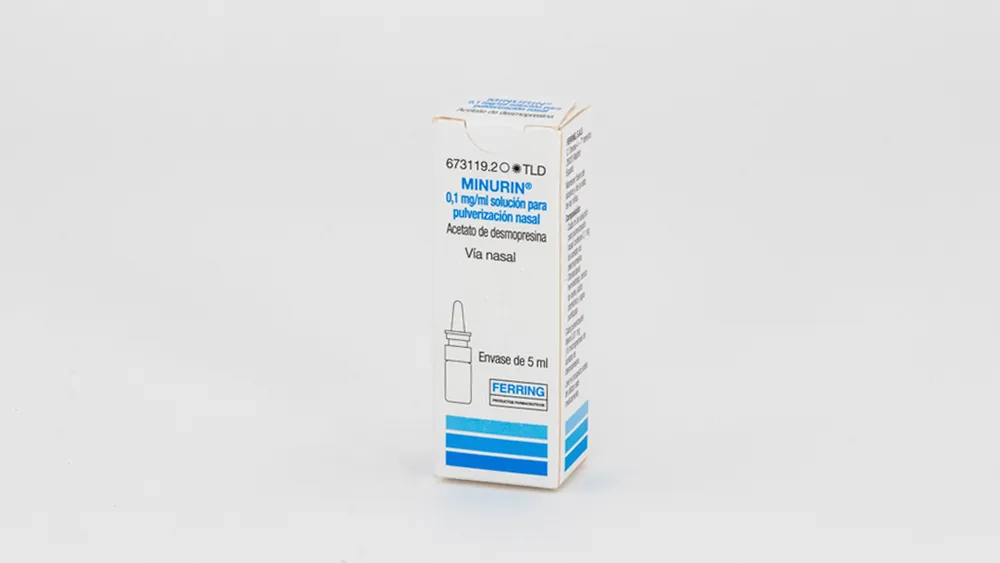
Table of Contents
- Package leaflet: Information for the user
- Introduction
- 1. What Minurin nasal spray solution is and what it is used for
- 2. What you need to know before using Minurin nasal spray solution
- 3. How to use Minurin nasal spray solution
- 4. Possible adverse effects
- 5. Storage of Minurin nasal spray solution
- 6. Contents of the pack and other information
Package leaflet: Information for the user
Introduction
Package leaflet: information for the user
Minurin 0.1 mg/ml nasal spray solution
Desmopressin acetate
Read the entire leaflet carefully before you start using this medicine, because it contains important information for you.
- Keep this leaflet as you may need to read it again.
- If you have any questions, ask your doctor or pharmacist.
- This medicine has been prescribed for you only, and you should not give it to other people, even if they have the same symptoms as you, because it could harm them.
- If you experience any adverse effects, consult your doctor or pharmacist, even if they are adverse effects not listed in this leaflet. See section 4.
Contents of the leaflet:
- What Minurin nasal spray solution is and what it is used for
- What you need to know before using Minurin nasal spray solution
- How to use Minurin nasal spray solution
- Possible adverse effects
- How to store Minurin nasal spray solution
- Contents of the pack and other information
1. What Minurin nasal spray solution is and what it is used for
Minurin belongs to the group of antidiuretic hormone analogues (vasopressin), which temporarily reduces the amount of urine produced by the body.
It is indicated, when oral administration is not possible, for the treatment of:
- Vasopressin-sensitive central diabetes insipidus in infants from 3 months of age, children, adolescents, and adults.
- Short-term symptomatic treatment of primary nocturnal enuresis in patients (over 5 years of age) caused by nocturnal deficiency of ADH (antidiuretic hormone).
Diagnostic test for assessing renal concentrating capacity.
2. What you need to know before using Minurin nasal spray solution
Do not use Minurin:
- if you are allergic to the active substance or to any of the other components of this medicine (listed in section 6).
- if you have prolonged excessive thirst or thirst due to a mental disorder.
- if you suffer from syndrome of inappropriate antidiuretic hormone secretion (ADH).
- if you have heart failure or other conditions requiring treatment with diuretics (medicines that increase urine secretion).
- if you have moderate or severe renal insufficiency.
- if you have low sodium levels in the blood (hyponatremia).
Warnings and precautions
Talk to your doctor or pharmacist before starting to use Minurin.
Minurin nasal spray solution should only be used in patients in whom oral formulations are not feasible.
If you have primary nocturnal enuresis, take special care to restrict fluid intake by not drinking from 1 hour before administration until the following morning (at least 8 hours).
Treatment without concomitant reduction in fluid intake may cause water retention and/or decreased blood sodium levels, with or without warning symptoms or signs (headache, nausea, vomiting, weight gain, and in severe cases, seizures). (See section 4.)
Special care should be taken to avoid low blood sodium levels in the following cases:
- in children, the dose must be administered under strict adult supervision to ensure correct dosing.
- conditions characterized by disturbances in the balance of water and electrolytes (calcium, magnesium, etc.) in the blood.
- children, elderly patients, and patients with blood sodium levels at the lower limit of normal.
- patients at risk of intracranial hypertension.
- systemic infections, fever, and gastroenteritis (syndrome of inappropriate ADH secretion).
Consult your doctor if you belong to any of the above-mentioned patient groups.
Your doctor will monitor your blood sodium levels.
If the medicine is used for primary nocturnal enuresis, you should avoid drinking water while swimming and interrupt Minurin during any episode of vomiting and/or diarrhea until your fluid balance returns to normal. Due to the risk of excessive fluid retention, you should monitor for weight gain and changes in blood pressure during treatment. Treatment must be discontinued if signs of fluid retention/hyponatremia (low blood sodium) occur.
Patients with fluid accumulation (edema), scarring, or other abnormalities of the nasal mucosa may experience irregular absorption. Consult your doctor in such cases.
Consult your doctor even if any of the above-mentioned conditions have occurred in the past.
Use of Minurin with other medicines
Inform your doctor or pharmacist if you are taking, have recently taken, or might need to take any other medicines.
It is known that certain substances such as tricyclic antidepressants, chlorpromazine (a medicine used to treat psychiatric disorders), carbamazepine (a medicine used to prevent seizures), and chlorpropamide (a medicine used to treat diabetes mellitus) may increase the risk of fluid retention.
Non-steroidal anti-inflammatory drugs (NSAIDs) may induce water retention and/or decreased blood sodium levels.
Use of Minurin with food and drinks
During treatment for nocturnal enuresis, fluid intake should be limited to the minimum necessary to quench thirst, from 1 hour before to 8 hours after administration.
When used for diagnostic purposes, fluid intake should be limited to the minimum necessary to quench thirst.
Pregnancy, breastfeeding, and fertility
If you are pregnant or breastfeeding, think you may be pregnant, or plan to become pregnant, consult your doctor or pharmacist before using this medicine.
You should not use Minurin nasal spray solution if you are pregnant or planning to have a baby, as it may be harmful to your baby.
If you are pregnant, your doctor will assess the risks and benefits of treatment.
Desmopressin passes into breast milk in small amounts; therefore, if you are breastfeeding, natural breastfeeding should be replaced.
Due to the presence of benzalkonium chloride, this product may cause bronchospasm.
Driving and using machines
The effect of Minurin on the ability to drive and use machines is none or negligible.
3. How to use Minurin nasal spray solution
Follow exactly the instructions for use of this medicine as given by your doctor or pharmacist. If in doubt, consult your doctor or pharmacist again.
Use in children: In children, the dose must be administered under the strict supervision of an adult to ensure correct dosing and to prevent accidental overdose.
Before using Minurin nasal spray solution for the first time, prime the pump by pressing down 6 times or until a consistent spray is obtained. If the nasal spray has not been used for 3 days, the pump must be re-primed by pressing down twice or until a consistent spray is obtained.
INSTRUCTIONS FOR USE:
Before application, the patient should blow their nose.
- Remove the protective cap from the applicator.
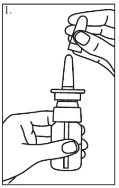
- Check that the end of the tube inside the bottle is immersed in the liquid.
- Re-prime the pump if the spray has not been used in the last 3 days.
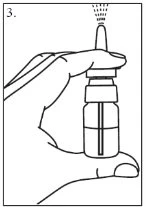
- Once primed, the pump delivers one dose each time pressure is applied.
- Insert the applicator directly into the nostril and spray once. Breathe normally through the nose without sniffing forcefully.
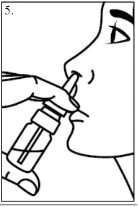
- If a higher dose is required, spray alternately into each nostril.
- Replace the protective cap after use and store the bottle in an upright position.
The bottle must be stored in an upright position.
If there is any doubt about the correct administration of the dose, the spray must not be re-administered before the next scheduled dose.
Use in children:
In young children, administration must be carried out under strict supervision of an adult to ensure correct dosing.
Frequency of administration
- Diabetes insipidus:
Infants from 3 months of age and older, and children (2 years to less than 12 years of age): 5–10 micrograms per day (maximum 20 micrograms), divided into 1–2 doses.
Adolescents (12 years and older) and adults: 10–20 micrograms per day (maximum 40 micrograms/day), divided into 1–2 doses.
For doses of 5 micrograms or less, other formulations are available on the market (Minurin nasal drops solution).
- Nocturnal enuresis in children over 5 years of age, adolescents and adults:
The dose should be individually adjusted. Treatment should be initiated gradually with one spray at bedtime. If no response is achieved, the daily dose may be increased up to the maximum recommended dose of 2 sprays, with a minimum duration of one week between dose increases.
The duration of treatment should not exceed 3 months. The need for continued treatment should be reassessed during a period of at least one week without Minurin.
For information on fluid intake restrictions or possible signs of overdose, see section 2.
- Diagnosis of renal concentrating capacity:
Weight | Intranasal dose | Number of sprays |
< 10 kg | 0.01 mg (10 micrograms) | 1 |
10–30 kg | 0.02 mg (20 micrograms) | 2 |
30–50 kg | 0.03 mg (30 micrograms) | 3 |
> 50 kg | 0.04 mg (40 micrograms) | 4 |
Fluid intake should be limited to a minimum and only taken to satisfy thirst.
Duration of treatment:
Your doctor will advise you on the duration of your treatment with Minurin.
If you use more Minurin than you should
If you have used more Minurin than prescribed, contact your doctor, pharmacist, or call the Toxicology Information Service immediately at telephone number 915 620 420, indicating the medication and the amount used. It is recommended to bring the package leaflet and the medicine container to the healthcare professional.
If you have used more Minurin than prescribed or have accidentally ingested it, symptoms may include those associated with water retention and/or decreased sodium levels in the blood: headache, nausea, vomiting, weight gain, and in severe cases, seizures.
It is recommended to discontinue treatment, restrict fluid intake, and provide symptomatic treatment if necessary.
If you forget to use Minurin
If you miss a dose, apply the next dose at the usual time. Do not use a double dose to
compensate for missed doses.
If you interrupt treatment with Minurin
Your doctor will advise you on the duration of your treatment with Minurin. Do not stop the treatment prematurely, as it may not achieve the intended effect.
If you have any further questions about the use of this medicine, ask your doctor or pharmacist.
4. Possible adverse effects
Like all medicines, Minurin may cause adverse effects, although not everyone experiences them.
The following very common adverse effects may affect more than 1 in 10 people:
- nasal congestion, rhinitis, increased body temperature.
The following common adverse effects may affect up to 1 in 10 people:
- headache, stomach pain, nausea, gastroenteritis, insomnia, emotional instability, nightmares, nervousness, aggressiveness, nosebleeds, respiratory infections.
The following rare adverse effects may affect up to 1 in 100 people:
- hyponatremia (low sodium levels in the blood) and vomiting.
Other adverse effects for which frequency is unknown:
- allergic reaction, dehydration, confusion, seizures, coma, dizziness, somnolence, hypertension, dyspnea, diarrhea, itching, redness, muscle spasms, fatigue, peripheral edema, chest pain, chills, weight gain.
Reporting of adverse effects
If you experience any type of adverse effect, consult your doctor or pharmacist, even if it is a possible adverse effect not listed in this leaflet. You can also report them directly through the Spanish Pharmacovigilance System for Human Medicinal Products: https://www.notificaRAM.es. By reporting adverse effects, you can help provide more information on the safety of this medicine.
5. Storage of Minurin nasal spray solution
Keep out of the sight and reach of children.
Do not store above 25°C.
Store in an upright position.
Period of validity after first opening: 4 weeks.
Do not use Minurin after the expiry date indicated on the packaging after
“EXP”. The expiry date refers to the last day of the month stated.
Medicines must not be disposed of via wastewater drains or in household waste.
Dispose of unused medicines and their packaging at a SIGRE collection point at your pharmacy.
If you are unsure, ask your pharmacist how to dispose of unused medicines and their packaging.
This will help protect the environment.
6. Contents of the pack and other information
Composition of Minurin
The active substance is desmopressin acetate. Each millilitre of Minurin nasal spray solution contains 0.1 mg of desmopressin acetate.
Each spray delivers 0.01 mg (10 micrograms) of desmopressin acetate.
The other components are: sodium chloride, benzalkonium chloride solution, citric acid monohydrate, disodium phosphate dihydrate, and purified water.
Nature of the product and contents of the container
Minurin 0.1 mg/ml nasal spray solution is a clear, particle-free intranasal solution supplied in an aerosol bottle with a nasal applicator and protective cap.
Marketing Authorisation Holder and Manufacturer
Marketing Authorisation Holder
FERRING S.A.U
C/ Arquitecto Sánchez Arcas 3, 1º
28040 Madrid
Spain
Manufacturer
Ferring GmbH
Wittland 11
24109 Kiel
Germany
Date of the most recent revision of this summary: October 2025
Detailed and up-to-date information on this medicine is available on the website of the Spanish Agency of Medicines and Medical Devices (AEMPS):
http://www.aemps.gob.es/