Mifegyne 200 mg tablets
Spain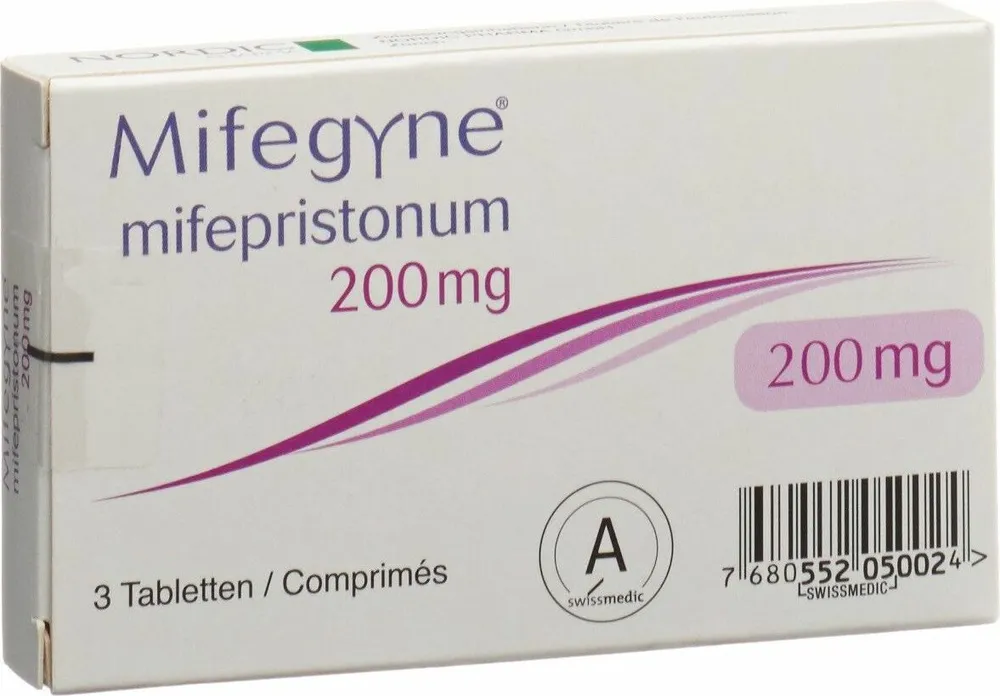
Table of Contents
Patient Information Leaflet
Introduction
Patient Information Leaflet
Mifegyne 200 mg tablets
Mifepristone
Read the entire leaflet carefully before you start taking this medicine, as it contains important information for you.
- Keep this leaflet, as you may need to read it again.
- If you have any questions, consult your doctor or pharmacist.
- This medicine has been prescribed for you only, and you should not give it to other people, even if they have the same symptoms as you, because it may harm them.
- If you experience any adverse effects, consult your doctor, even if they are effects not listed in this leaflet. See section 4.
Leaflet Contents
- What Mifegyne is and what it is used for
- What you need to know before taking Mifegyne
- How to take Mifegyne
- Possible side effects
- How to store Mifegyne
- Contents of the pack and other information
1. What Mifegyne is and what it is used for
Mifegyne tablets contain mifepristone, which is an antihormone that works by blocking the effects of progesterone, a hormone necessary for the continuation of pregnancy. Mifegyne can therefore cause termination of pregnancy. It may also be used to soften and dilate the opening of the womb (cervix).
Mifegyne is recommended for use:
-
For medical termination of pregnancy:
- up to a maximum of 63 days after the first day of your last menstrual period,
- in combination with a second medicine, a prostaglandin (a substance that increases contractions of the womb and softens the cervix), which is taken 36 to 48 hours after taking Mifegyne.
-
To soften and dilate the cervix prior to surgical termination of pregnancy during the first trimester.
-
As a pretreatment before administration of prostaglandins for medical termination of pregnancy after the third month of gestation.
-
To induce labour in cases where fetal death has occurred in the womb and when other medical treatments (prostaglandins or oxytocin) cannot be used.
2. What you need to know before taking Mifegyne
Do not take Mifegyne
-
Under any circumstances,
- if you are allergic to mifepristone or any of the other ingredients of this medicine (listed in section 6),
- if you have adrenal failure,
- if you have severe asthma that cannot be adequately treated with medication,
- if you have hereditary porphyria.
-
Also not,
For termination of pregnancy up to 63 days after your last menstrual period:
-
if your pregnancy has not been confirmed by a biological test or an ultrasound,
-
if more than 63 days have passed since the first day of your last menstrual period,
-
if your doctor suspects an ectopic pregnancy (the egg is implanted outside the uterus),
-
if you cannot take the selected prostaglandin analogue.
For softening and opening the cervix before surgical termination of pregnancy:
- if your pregnancy has not been confirmed by a biological test or an ultrasound,
- if your doctor suspects an ectopic pregnancy,
- if 84 days or more have passed since the first day of your last menstrual period.
For termination of pregnancy after the third month of pregnancy:
- if you cannot take the selected prostaglandin analogue.
Warnings and precautions
Consult your doctor before starting to take Mifegyne
- if you have liver or kidney disease,
- if you have anaemia or malnutrition,
- if you have cardiovascular disease (heart or circulatory disease),
- if you have an increased risk of cardiovascular disease. Risk factors include being over 35 years old and a smoker, or having high blood pressure, high cholesterol levels in the blood, or diabetes,
- if you have a blood clotting disorder,
- if you have asthma.
If you use an intrauterine contraceptive device, it must be removed before taking Mifegyne.
Before taking Mifegyne, you will have a blood test to determine your Rh factor. If you are Rh negative, your doctor will inform you about the standard treatment required.
Serious skin reactions such as toxic epidermal necrolysis and generalized exanthematous pustulosis have been reported with Mifegyne treatment. Stop using Mifegyne and seek immediate medical attention if you experience any of the symptoms described in section 4. If you experience a severe skin reaction, you must not use mifepristone again in the future.
Other medicines and Mifegyne
Tell your doctor or pharmacist if you are taking, have recently taken, or might need to take any other medicines, including those obtained without a prescription.
In particular, inform your doctor if you are taking the following:
-
corticosteroids (used in the treatment of asthma and other anti-inflammatory treatments)
-
ketoconazole, itraconazole (used to treat fungal infections)
-
erythromycin, rifampicin (antibiotics)
-
St. John's wort (a herbal remedy used for the treatment of mild depression)
-
phenytoin, phenobarbital, carbamazepine (used in the treatment of epilepsy)
-
non-steroidal anti-inflammatory drugs (NSAIDs) such as acetylsalicylic acid or diclofenac.
Taking Mifegyne with food and drink
You must not drink grapefruit juice while being treated with Mifegyne.
Pregnancy, breastfeeding and fertility
Pregnancy
Failure of termination of pregnancy (continuation of pregnancy) after taking Mifegyne alone or in combination with prostaglandin, followed by continuation to term, has been associated with congenital malformations.
The risk of failure increases:
- If the prostaglandin is not administered according to the prescribing information (see section 3).
- With the duration of pregnancy.
- With the number of previous pregnancies.
If termination of pregnancy fails after taking this medicine or the combination of medicines, there is an unknown risk to the fetus. If you decide to continue with this pregnancy, you should undergo thorough prenatal monitoring with repeated ultrasounds, paying special attention to the limbs, at a specialized clinic. Your doctor will provide you with further information.
If you decide to proceed with termination of pregnancy, another method must be used. Your doctor will inform you about the available options.
Breastfeeding
If you are breastfeeding, consult your doctor before taking this medicine. You must stop breastfeeding while taking Mifegyne, as the medicine may pass into breast milk.
Fertility
This medicine does not affect fertility. You may become pregnant again as soon as the termination is complete. You should immediately start using a contraceptive method after your doctor confirms that the pregnancy has been terminated.
Driving and use of machines
Dizziness may occur as an adverse effect related to the abortion process. Exercise particular caution when driving or operating machinery after taking this medicine until you know how Mifegyne affects you.
3. How to take Mifegyne
Follow exactly the administration instructions given by your doctor.
If in doubt, consult your doctor or pharmacist again.
- Medical interruption of ongoing intrauterine pregnancy (MIP)
Termination of pregnancy up to 49 days after your last menstrual period
Dosage in adults
- 3 tablets orally.
How to take the tablet
- Swallow the tablet whole with a glass of water in the presence of a doctor or a member of their staff.
- Take the prostaglandin analogue between 36 and 48 hours after Mifegyne. The prostaglandin is administered either as tablets, which must be swallowed with water (misoprostol 400 micrograms), or as vaginal pessaries (gemeprost 1 mg).
- If you vomit within 45 minutes after taking the mifepristone tablet, inform your doctor immediately. You will need to take another tablet.
Termination of pregnancy between 50 and 63 days after your last menstrual period
Dosage in adults
Three tablets should be taken orally.
How to take the tablet
- Swallow the tablet whole with a glass of water in the presence of a doctor or a member of their staff.
- Take the prostaglandin analogue between 36 and 48 hours after Mifegyne. The prostaglandin is a vaginal pessary (gemeprost 1 mg).
- If you vomit within 45 minutes after taking the mifepristone tablet, inform your doctor immediately. You will need to take another tablet.
This method involves your active participation, and therefore you must be aware of the following:
-
You must take the second medication (which contains prostaglandin) to ensure the effectiveness of the treatment.
-
You must attend the follow-up visit (third visit) within 14 to 21 days after taking Mifegyne to confirm that expulsion is complete and that you are well.
The steps for medical termination of pregnancy are as follows:
- At the healthcare center, you will receive Mifegyne, which must be taken orally.
- Between 36 and 48 hours later, the prostaglandin analogue will be administered. You should rest for at least 3 hours after taking the prostaglandin analogue.
- The embryo may be expelled a few hours after taking the prostaglandin analogue or during the following days. After taking Mifegyne, vaginal bleeding will occur, lasting on average 12 days, with the flow becoming lighter over time.
- You must return to the center 14–21 days after taking Mifegyne for a follow-up consultation to ensure that expulsion has been completed.
Contact the center that prescribed the medication immediately if:
- you experience vaginal bleeding lasting longer than 12 days and/or it is very heavy (e.g., you need more than 2 sanitary pads per hour for 2 consecutive hours).
- you have severe abdominal pain.
- you develop a fever or feel cold or have chills.
Another important point to remember:
- Vaginal bleeding does not necessarily mean that expulsion is complete.
Uterine bleeding usually begins 1 to 2 days after taking Mifegyne.
In rare cases, expulsion may occur before taking the prostaglandin. It is essential that you have a check-up to confirm complete expulsion; for this, you must return to the center where you were treated.
If the pregnancy continues or expulsion is incomplete, your doctor will inform you of the options available to complete the termination of pregnancy.
It is recommended that you do not travel far from the center that prescribed the medication until after the follow-up visit.
In case of emergency or if you have any questions, you may contact your center by phone or go there in person. You do not need to wait for your follow-up visit.
- To soften and open the cervix before surgical termination of pregnancy:
Dosage in adults
- 1 tablet orally.
How to take the tablet
-
Swallow the tablet whole with a glass of water.
-
If you vomit within 45 minutes after taking the mifepristone tablet, inform your doctor immediately. You will need to take another tablet.
The steps for medical termination of pregnancy are as follows:
- At the healthcare center, you will receive Mifegyne, which must be taken orally.
- Between 36 and 48 hours later, you must return to the center that prescribed the medication to undergo a surgical procedure.
Your doctor will explain the procedure to you. You may experience bleeding after taking Mifegyne, before the operation.
In rare cases, expulsion may occur before surgery. It is essential that you return to the center to confirm that complete expulsion has occurred.
You must return to the selected center to undergo surgery. In case of emergency or if you have any questions, you may contact your center by phone or go there in person. You do not need to wait for your follow-up visit.
- For termination of pregnancy after the third month of pregnancy:
Dosage in adults
- 3 tablets orally.
How to take the tablet
- Swallow the tablet whole with a glass of water.
- Between 36 and 48 hours after taking this medication, take the prostaglandin analogue; this may be repeated several times at regular intervals until termination of pregnancy is complete.
- If you vomit within 45 minutes after taking the mifepristone tablet, inform your doctor immediately. You will need to take another tablet.
- To induce labour when pregnancy is terminated (intrauterine fetal death).
Dosage in adults
- 3 tablets orally each day for two days.
How to take the tablet
- Swallow the tablet whole with a glass of water.
- If you vomit within 45 minutes after taking the mifepristone tablet, inform your doctor immediately. You will need to take another tablet.
Use in adolescents
Only limited data are available on the use of Mifegyne in adolescents.
If you take more Mifegyne than you should
If you take too many tablets, contact your doctor immediately or go to the nearest hospital emergency department.
Your doctor will administer the exact amount of Mifegyne; therefore, it is unlikely that you will take too many tablets. Taking too many tablets may cause symptoms of adrenal insufficiency. Signs of acute intoxication may require treatment by a specialist, including administration of dexamethasone.
In case of overdose or accidental ingestion, consult your doctor or pharmacist or call the Toxicology Information Service at telephone number 915 620 420, indicating the medication and the amount used.
If you forget to take Mifegyne
If you miss any part of the treatment, the method may not be fully effective. Inform your doctor if you forget to take Mifegyne or any part of the prescribed treatment.
If you have any further questions about the use of this medicine, ask your doctor or pharmacist.
4. Possible adverse effects
Like all medicines, this medicine can cause adverse effects, although not everyone will experience them.
Serious adverse effects:
- Allergic reaction, skin rash, and localized swelling of the face and/or larynx, which may be accompanied by urticaria.
- Reddish patches on the trunk. These patches are macules with a target-like appearance or circular red spots, often with central blisters, skin peeling, and ulcers in the mouth, throat, nose, genitals, and eyes. These severe skin rashes may be preceded by fever and flu-like symptoms (toxic epidermal necrolysis; frequency: rare).
- Generalized exfoliative red rash, with bumps under the skin and blisters accompanied by fever. These symptoms usually occur at the beginning of treatment (generalized acute exanthematous pustulosis; frequency: not known).
Other serious adverse effects:
- Cases of toxic or septic shock, which may be fatal or severe. Fever with muscle pain, rapid heart rate, dizziness, diarrhea, vomiting, or feeling weak. These adverse effects may occur if the second medicine, the misoprostol tablet, is not taken orally.
If you experience any of these adverse effects, contact your doctor IMMEDIATELY or go to the nearest hospital emergency department.
Other adverse effects
Very common (may affect more than 1 in 10 people):
- Uterine contractions or spasms
- Diarrhea
- Feeling unwell (nausea) or being sick (vomiting)
Common (may affect up to 1 in 10 people):
- Heavy bleeding
- Mild to moderate gastrointestinal spasms
- Uterine infection (endometritis or pelvic inflammatory disease)
Uncommon (may affect up to 1 in 100 people):
- Decrease in blood pressure
Rare (may affect up to 1 in 1,000 people):
- Fever
- Headache
- Feeling unwell or tired
- Vagal symptoms (flushing, dizziness, and chills)
- Urticaria and skin disorders, which may be severe
- Uterine rupture following prostaglandin administration during the second and third trimesters of pregnancy, especially in multiparous women or women with a previous caesarean section scar.
Reporting of adverse effects
If you experience any type of adverse effect, consult your doctor or pharmacist, even if it is a possible adverse effect not listed in this leaflet. You may also report them directly via the Spanish Pharmacovigilance System for Human Medicines: https://www.notificaram.es. By reporting adverse effects, you can help provide more information on the safety of this medicine.
5. Storage of Mifegyne
Keep this medicine out of the sight and reach of children.
This medicine does not require any special storage temperature. Store in the original packaging to protect it from light.
Do not use this medicine after the expiry date stated on the carton after "EXP". The expiry date is the last day of the month indicated.
Do not use this medicine if you notice any signs of deterioration in the carton or blisters.
Medicines should not be disposed of via wastewater or household waste. Ask your pharmacist how to dispose of medicines and packaging that you no longer need. This will help protect the environment.
6. Contents of the pack and other information
Composition of Mifegyne
- The active substance is mifepristone.
One tablet of Mifegyne contains 200 mg of mifepristone.
- The other components are colloidal anhydrous silica (E551), corn starch, povidone (E1201), magnesium stearate (E572), microcrystalline cellulose (E460).
Nature and contents of the container
Mifegyne is presented as light yellow, biconvex tablets, 11 mm in diameter, with "167 B" engraved on one side.
Mifegyne is available in pack sizes of 1, 3 x 1, 15 x 1 or 30 x 1 tablets in single-dose precut blisters made of PVC/aluminum.
Not all pack sizes may be marketed.
Marketing Authorization Holder and Manufacturer
Marketing Authorization Holder:
EXELGYN
216 boulevard Saint-Germain
75007 Paris
France
Manufacturer:
Laboratoires MACORS
22 rue des Caillotes
89000 Auxerre
France
For further information about this medicinal product, please contact the local representative of the Marketing Authorization Holder:
Nordic Pharma S.A.U.
Juan Esplandiú 15, 13th floor, AB
28007 Madrid
Spain
+34 916 404 041
This medicinal product is authorized in the Member States of the European Economic Area under the name: MIFEGYNE
Date of the most recent review of this leaflet: 05/2021
Detailed and up-to-date information on this medicinal product is available on the website of the Spanish Agency of Medicines and Health Products (AEMPS) http://www.aemps.gob.es/