Midazolam B. Braun 1 mg/ml solution for injection and infusion EFG
Spain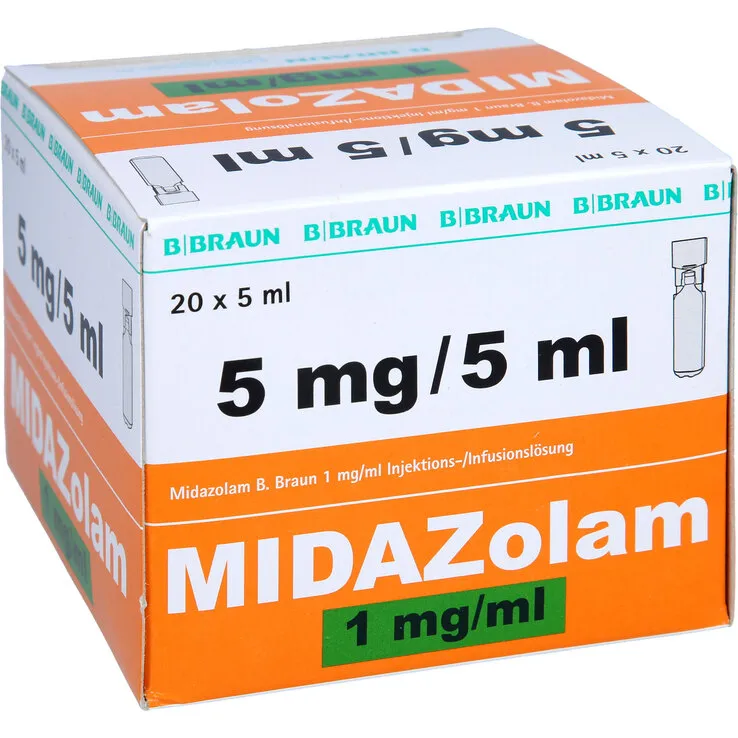
Table of Contents
- Package leaflet: Information for the user
- Introduction
- 1. What Midazolam B. Braun is and what it is used for
- 2. What you need to know before using Midazolam B. Braun
- 3. How to use Midazolam B. Braun
- 4. Possible adverse effects
- 5. Storage of Midazolam B. Braun
- 6. Contents of the pack and other information
Package leaflet: Information for the user
Introduction
Package leaflet: information for the user
Midazolam B. Braun 1 mg/ml solution for injection and infusion EFG
Read all of this leaflet carefully before you start using this medicine, as it contains important information for you.
- Keep this leaflet, as you may need to read it again.
- If you have any questions, ask your doctor or pharmacist.
- If you experience any adverse reactions, consult your doctor or pharmacist, even if they are not listed in this leaflet. See section 4.
Contents of this leaflet
- What Midazolam B. Braun is and what it is used for
- What you need to know before using Midazolam B. Braun
- How to use Midazolam B. Braun
- Possible side effects
- How to store Midazolam B. Braun
- Contents of the pack and other information
1. What Midazolam B. Braun is and what it is used for
Midazolam B. Braun is a short-acting medicine used to induce sedation (a deeply relaxed state of calm, drowsiness, or sleep) and to relieve anxiety and muscle tension. Its active ingredient, midazolam, belongs to a group of substances known as benzodiazepines.
This medicine is used in adults:
- as general anaesthesia to induce sleep in the patient or to maintain sleep,
This medicine is also used in adults and children:
-
to induce a state of relaxation or drowsiness in intensive care. This is known as "sedation".
-
before and during a medical procedure or surgical intervention. In this case, patients remain awake but feel very calm and drowsy. This is known as "conscious sedation".
-
to induce a state of relaxation or drowsiness before administering an anaesthetic.
2. What you need to know before using Midazolam B. Braun
Do not use Midazolam B. Braun:
- if you are hypersensitive (allergic) to midazolam or to any of the other components of this medicine (listed in section 6).
- if you are allergic to benzodiazepines, such as diazepam and nitrazepam.
- if you have severe respiratory problems and require midazolam for conscious sedation.
Warnings and precautions
Talk to your doctor or pharmacist before starting to use Midazolam B. Braun.
You will be closely monitored while receiving this medicine. Your doctor will also ensure that emergency treatment equipment and resuscitation medications are readily available.
Your doctor will take extra precautions and may adjust the dose with special care if:
- you are over 60 years of age,
- you have a chronic illness, such as respiratory, renal, hepatic, or cardiac problems,
- you have a condition that makes you feel weak, fatigued, and lacking in energy,
- you have a disorder called myasthenia gravis (a neuromuscular disease causing muscle weakness),
- you experience breathing interruptions during sleep (sleep apnea),
- you have ever had alcohol addiction,
- you have ever had substance addiction.
If you receive this medicine for a prolonged period, you may:
- develop tolerance to midazolam. The medicine will lose effectiveness and may not work as well.
- become dependent on this medicine and experience withdrawal symptoms (see “If you stop using Midazolam B. Braun” in section 3).
Midazolam will cause memory gaps starting from the time of administration. The duration will depend on the dose received. If you are discharged from hospital or the clinic after a surgical or diagnostic procedure, ensure that someone accompanies you home.
Children
If your child is to receive this medicine:
- Inform your doctor or nurse if any of the above conditions apply to your child.
- This is especially important if your child has a heart condition or breathing problems.
Other medicines and Midazolam B. Braun
Inform your doctor or pharmacist if you are taking, have recently taken, or might need to take any other medicines, including over-the-counter medicines and herbal products.
This is extremely important, as Midazolam B. Braun may affect the action of other medicines. Likewise, other medicines may affect the action of Midazolam B. Braun.
In particular, inform your doctor if you are taking any of the following medicines:
- tranquillizers (medicines used to treat anxiety, stress, and nervousness)
- hypnotics (medicines for sleep)
- sedatives (medicines to make you feel calm or drowsy)
- antidepressants (medicines used to treat depression)
- very strong analgesics (pain medicines)
- antihistamines (medicines to treat allergies)
- azole antifungals (medicines to treat fungal infections) such as ketoconazole, voriconazole, fluconazole, itraconazole, or posaconazole
- macrolide antibiotics (medicines to treat bacterial infections) such as erythromycin, clarithromycin, telithromycin, or roxithromycin
- calcium channel antagonists (medicines to treat high blood pressure) such as diltiazem or verapamil
- protease inhibitors (medicines to treat HIV or hepatitis C infection) such as boceprevir, saquinavir, simeprevir, or telaprevir
- tyrosine-kinase inhibitors (medicines to treat certain cancers) such as idelalisib, imatinib, or lapatinib
- NK1 receptor antagonists (medicines to treat nausea and vomiting) such as aprepitant, netupitant, or casoprepitant
- atorvastatin (a medicine to treat high cholesterol levels)
- rifampicin (a medicine to treat mycobacterial infections such as tuberculosis)
- ticagrelor (a medicine to prevent myocardial infarction)
- everolimus (a medicine used in transplants and to treat certain cancers)
- carbamazepine or phenytoin (medicines to treat epilepsy)
- cyclosporine (a medicine used in transplants)
- propiverine (a medicine to treat overactive bladder)
- mitotane or enzalutamide (medicines to treat certain cancers)
- clobazam (a medicine to treat epilepsy or anxiety)
- efavirenz (a medicine to treat HIV infection)
- vemurafenib (a medicine to treat melanoma)
- St. John’s wort, quercetin, Gingko biloba, or Panax ginseng (herbal products)
- valproic acid (a medicine to treat epilepsy)
Use of Midazolam B. Braun with alcohol
Do not drink alcoholic beverages while receiving midazolam, as alcohol will uncontrollably increase the strength of midazolam’s effects. This could cause serious adverse reactions affecting breathing, heart function, and circulation.
Pregnancy and breastfeeding
If you are pregnant or breastfeeding, think you may be pregnant, or plan to become pregnant, consult your doctor or pharmacist before using this medicine.
If you are pregnant, you will only receive midazolam if your doctor considers it absolutely necessary for your treatment.
If you are breastfeeding, stop breastfeeding for 24 hours after receiving midazolam.
Driving and using machines
Do not drive or operate any tools or machinery until you have fully recovered from the effects of midazolam. Your doctor will advise you when you can resume these activities.
This medicine may cause drowsiness, memory loss, or affect your concentration and coordination. Ensure that someone accompanies you home when you are discharged.
Midazolam B. Braun contains sodium
This medicine contains 17.63 mg of sodium (the main component of table/cooking salt) in each 5 ml ampoule. This corresponds to 0.88% of the maximum daily recommended sodium intake for an adult.
This medicine contains 176.33 mg of sodium (the main component of table/cooking salt) in each 50 ml vial. This corresponds to 8.81% of the maximum daily recommended sodium intake for an adult.
This medicine contains 352.65 mg of sodium (the main component of table/cooking salt) in each 100 ml vial. This corresponds to 17.63% of the maximum daily recommended sodium intake for an adult.
3. How to use Midazolam B. Braun
This medicine will be administered by a doctor or nurse. It will be used in a setting equipped to monitor you and to treat any adverse reactions that may occur. This setting may be a hospital or an outpatient surgical unit. In particular, your breathing, heart function, and circulation will be monitored.
The use of this medicine is not recommended in newborns or children under 6 months of age. However, in intensive care situations, it may be used in newborns and children under 6 months of age if the physician considers it necessary.
Midazolam will be administered with a syringe (as an injection) into a vein (intravenously) or into a muscle (intramuscularly). It may also be given diluted in a larger volume of fluid through a cannula placed in a vein (by infusion). Rectal administration using a special applicator may also be possible if injection or infusion is not feasible.
Dosing:
Your doctor will determine the correct dose for you or your child, depending on the treatment you or your child will receive and on your or your child's condition.
If you use more Midazolam B. Braun than you should
This medicine will be administered by a doctor. If you accidentally receive an excessive amount of midazolam, you may experience the following:
- drowsiness and loss of normal muscle control (coordination) and reflexes;
- speech disturbances and unusual eye movements;
- low blood pressure. In this case, you may feel dizzy or lightheaded;
- slowed or stopped breathing or heartbeat, and loss of consciousness (coma).
Treatment of overdose consists primarily of monitoring your vital functions (heart function, circulation, and respiration). You will receive appropriate supportive care if necessary.
In cases of severe intoxication, you may be given a specific antidote to counteract the effects of midazolam.
If you stop treatment with Midazolam B. Braun
If you stop treatment suddenly after prolonged use, you may experience withdrawal symptoms such as:
- headaches;
- diarrhea;
- muscle pain;
- feelings of anxiety, tension, restlessness, confusion, or irritability;
- sleep disturbances;
- mood changes;
- hallucinations (seeing and possibly hearing things that are not there);
- seizures;
- depersonalization;
- numbness and tingling in the limbs;
- hypersensitivity to light, noise, and physical touch.
Your doctor will gradually reduce your dose toward the end of midazolam treatment to prevent these effects.
If you have any further questions about the use of this medicine, ask your doctor or pharmacist.
4. Possible adverse effects
Like all medicines, this medicine can cause adverse effects, although not everyone will experience them.
The following adverse effects have been reported (frequency not known: cannot be estimated from the available data).
The following adverse effects may be serious. If you experience any of the following, inform your doctor immediately, who will stop administering this medicine:
- Anaphylactic shock (a potentially life-threatening allergic reaction). Signs may include sudden onset of rash, itching or skin rash with hives (urticaria), and swelling of the face, lips, tongue, or other parts of the body (angioedema). You may also experience shortness of breath, wheezing, or difficulty breathing (bronchospasm), or pale skin, weak and rapid pulse, or feeling faint. Additionally, you may experience chest pain, which could be a sign of a potentially serious allergic reaction known as Kounis syndrome.
- Heart attack (cardiac arrest). Signs may include chest pain that may spread to the neck, shoulders, and down the left arm, and breathing problems or complications (which sometimes cause respiratory arrest).
- Suffocation and sudden airway obstruction (laryngospasm).
Potentially life-threatening adverse effects are more likely to occur in adults over 60 years of age and in those who already have breathing difficulties or heart problems, particularly if the injection is administered too quickly or at a high dose.
Other adverse effects:
Immune system disorders:
- General allergic reactions (skin, cardiac, and blood reactions)
Effects on behaviour:
- Agitation
- Restlessness
- Irritability
- Nervousness, anxiety
- Hostility, anger, or aggressiveness
- Episodes of excitement (paroxysmal excitement)
- Hyperactivity
- Offensive behaviour
- Changes in libido
- Inappropriate behaviour and other adverse effects on behaviour
Muscle problems:
- Muscle spasms and tremors (muscle contractions that you cannot control)
Mental and nervous system problems:
-
Confusion, disorientation
-
Psychosis (loss of contact with reality)
-
Emotional and mood disorders
-
Hallucinations (seeing and possibly hearing things that are not there)
-
Drowsiness and prolonged sedation
-
Nightmares, abnormal dreams
-
Decreased level of alertness
-
Headaches
-
Dizziness
-
Difficulty coordinating muscles
-
Seizures, more frequently in premature infants and newborns
-
Temporary memory loss, the duration of which will depend on the amount of midazolam received. This may occur after treatment. In isolated cases, this effect has lasted a long time.
-
Drug dependence, abuse
-
Withdrawal symptoms, which sometimes include seizures
Cardiovascular problems:
- Low blood pressure
- Slow heart rate
- Widening of blood vessels (vasodilation)
Respiratory problems:
- Slow breathing (respiratory depression)
- Difficulty breathing (dyspnea)
- Cessation of breathing (apnea, respiratory arrest)
- Hiccups
Stomach, intestinal, and mouth problems:
- Nausea
- Vomiting
- Constipation
- Dry mouth
Skin problems:
- Rash
- Hives (rash with wheals)
- Itching
Effects at the site of administration:
- Redness
- Skin swelling
- Blood clots or pain
General disorders:
- Tiredness (fatigue)
Injury, poisoning, and therapeutic procedure complications:
- Falls and bone fractures. This risk is higher in patients taking other sedatives (including alcohol) and in elderly individuals.
Reporting of adverse effects
If you experience any adverse effect, talk to your doctor or pharmacist, even if it is a possible adverse effect not listed in this leaflet. You may also report them directly via the Spanish Pharmacovigilance System for Human Medicinal Products: www.notificaRAM.es.
By reporting adverse effects, you can help provide more information on the safety of this medicine.
5. Storage of Midazolam B. Braun
Your doctor or pharmacist is responsible for the storage of this medicine. They are also responsible for the correct disposal of any unused midazolam.
Keep this medicine out of the sight and reach of children.
Do not use this medicine after the expiry date stated on the label and the carton following EXP. The expiry date refers to the last day of the month indicated.
Do not store above 25 °C.
Chemical and physical in-use stability has been demonstrated for 24 hours at room temperature and for 3 days at 5 °C. From a microbiological standpoint, diluted solutions should be used immediately after preparation. If not used immediately, storage times and conditions prior to use are the responsibility of the user and should normally not exceed 24 hours between 2 and 8 °C, unless the dilution method excludes any risk of microbiological contamination.
Keep the containers in the outer packaging to protect them from light.
6. Contents of the pack and other information
Composition of Midazolam B. Braun
- The active substance is midazolam (as midazolam hydrochloride).
Each ml of Midazolam B. Braun 1 mg/ml contains 1 milligram of midazolam.
-
1 vial of 5 ml contains 5 milligrams of midazolam.
-
1 bottle of 50 ml contains 50 milligrams of midazolam.
-
1 bottle of 100 ml contains 100 milligrams of midazolam.
-
The other components are: sodium chloride, hydrochloric acid 10%, and water for injections.
Nature of the product and contents of the container
Midazolam B. Braun is a clear, colourless aqueous solution.
Midazolam B. Braun 1 mg/ml is available in:
- Clear glass vials of 5 ml, in packs of 10 vials.
- Transparent polyethylene vials of 5 ml, in packs of 4, 10 and 20 vials.
- Transparent polyethylene bottles of 50 ml or 100 ml, in packs of 10 bottles.
Only certain pack sizes may be marketed.
Marketing Authorization Holder and Manufacturer
Marketing Authorization Holder:
- Braun Melsungen AG
Carl-Braun-Strasse 1
34212 Melsungen, Germany
Postal address:
34209 Melsungen, Germany
Tel. +495661713383
Manufacturer:
- Braun Medical, S.A.
Carretera de Terrassa 121,
Rubí
08191, Barcelona, Spain
- Braun Melsungen AG, Mistelweg, 2
Berlin
D-12357, Germany
For further information about this medicinal product, please contact the local representative of the Marketing Authorization Holder:
- Braun Medical, S.A.
Carretera de Terrassa 121,
08191,
Rubí, Barcelona, Spain
This medicinal product is authorized in the Member States of the European Economic Area under the following names:
Belgium | Midazolam B. Braun 1 mg/ ml |
Cyprus | Midazolam B. Braun 1 mg/ ml |
Denmark | Midazolam B. Braun 1 mg/ ml |
Estonia | Midazolam B. Braun 1 mg/ ml |
France | Midazolam B. Braun 1 mg/ ml |
Germany | Midazolam B. Braun 1 mg/ ml |
Greece | Midazolam B. Braun 1 mg/ ml |
Italy | Midazolam B. Braun 1 mg/ ml |
Latvia | Midazolam B. Braun 1 mg/ ml |
Lithuania | Midazolam B. Braun 1 mg/ ml |
Luxembourg | Midazolam B. Braun 1 mg/ ml |
Malta | Midazolam B. Braun 1 mg/ ml |
Norway | Midazolam B. Braun 1 mg/ ml |
Poland | Midazolam B. Braun |
Slovenia | Midazolam B. Braun 1 mg/ ml solution for injection/infusion |
Spain | Midazolam B. Braun 1 mg/ ml |
Date of the last review of this leaflet: August 2023
Detailed information on this medicine is available on the website of the Spanish Agency of Medicines and Health Products (AEMPS) http://www.aemps.gob.es/.
This information is intended for healthcare professionals only:
Warnings
Paradoxical reactions
Paradoxical reactions have been reported with midazolam, such as restlessness, agitation, irritability, involuntary movements (including tonic-clonic seizures and muscular tremors), hyperactivity, hostility, delirium, rage, aggressiveness, anxiety, nightmares, hallucinations, psychosis, inappropriate behavior, and other adverse behavioral effects, paroxysmal excitement, and attacks. These reactions may occur with high doses and/or if the injection is administered rapidly. The highest incidence of such reactions has been described in children and elderly patients. If these reactions occur, consideration should be given to discontinuing administration of the drug.
Sleep apnea
Midazolam should be used with extreme caution in patients with sleep apnea syndrome, and patients should be monitored periodically.
Handling
The medicine should be used immediately after opening.
Validity period after dilution according to instructions:
Chemical and physical in-use stability has been demonstrated for 24 hours at room temperature and for 3 days at 5°C.
From a microbiological standpoint, diluted solutions should be used immediately after preparation. If not used immediately, the in-use storage times and conditions prior to use are the responsibility of the user and normally should not exceed 24 hours between 2 and 8°C, unless the dilution has been carried out under controlled and validated aseptic conditions.
The product is supplied in single-dose containers. Unused content from opened containers must be immediately discarded.
Only use if the solution is clear and colorless and the container and its safety closure are undamaged.
Refer to the package insert or summary of product characteristics for instructions on dilution, incompatibilities, and complete prescribing information.