MIBI TechneScan 1 mg radiopharmaceutical preparation kit
Spain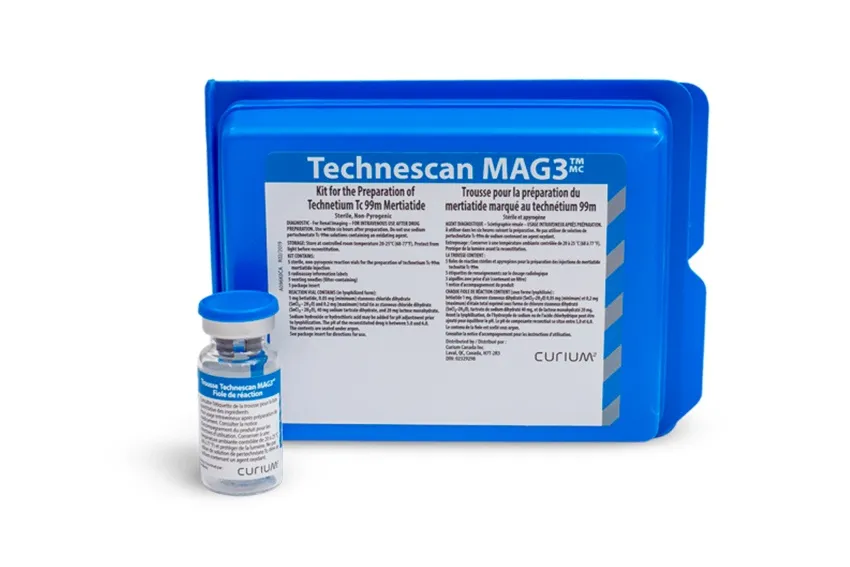
Table of Contents
Package leaflet: Information for the user
Introduction
PACKAGE LEAFLET: INFORMATION FOR THE PATIENT
MIBI Technescan 1 mg kit for radiopharmaceutical preparation.
Tetrafluoroborate of [Tetrakis (2-methoxy-2-methylpropyl-1 isocyanide) copper (I)]
Read the entire leaflet carefully before you are administered this medicine, because it contains important information for you.
- Keep this leaflet, as you may need to read it again.
- If you have any questions, consult your nuclear medicine physician who supervises the procedure.
- If you experience any adverse reactions, consult your nuclear medicine physician, even if they are adverse reactions not listed in this leaflet. See section 4.
Leaflet contents:
- What MIBI Technescan is and what it is used for
- What you need to know before receiving MIBI Technescan
- How to use MIBI Technescan
- Possible side effects
- Storage of MIBI Technescan
- Contents of the pack and other information
1. What MIBI Technescan is and what it is used for
This medicine is a radiopharmaceutical for diagnostic use only.
MIBI Technescan contains a substance called [tetrakis(2-methoxy-2-methylpropyl-1 isocyanide) copper(I)] tetrafluoroborate, which is used to study heart function and blood flow (myocardial perfusion) by generating an image of the heart (scintigraphy), for example, to detect heart attacks (myocardial infarctions) or when a disease causes a reduction in blood supply (ischemia) to the cardiac muscle (or part of it). MIBI Technescan is also used in the diagnosis of breast abnormalities, together with other diagnostic methods when results are inconclusive. MIBI Technescan may also be used to locate the position of hyperactive parathyroid glands (glands that secrete the hormone controlling blood calcium levels).
After injection, MIBI Technescan temporarily accumulates in certain parts of the body. This radiopharmaceutical contains a small amount of radioactivity, which can be detected from outside the body using special cameras. Your nuclear medicine physician will then obtain an image (scintigraphy) of the affected organ, which can provide your doctor with valuable information about the structure and function of that organ, or about the location, for example, of a tumor.
Administration of MIBI Technescan involves exposure to a small amount of radioactivity. Your doctor and the nuclear medicine physician have determined that the clinical benefit you will gain from the radiopharmaceutical scan outweighs the risk from radiation exposure.
2. What you need to know before using MIBI Technescan
MIBI Technescan must not be used
- if you are allergic to tetrafluoroborate tetrakis(2-methoxy-2-methylpropyl-1-isocyanide)copper(I)] or to any of the other ingredients of this medicine (listed in section 6).
Warnings and precautions
Take special care with MIBI Technescan
- If you are pregnant or think you might be pregnant
- If you are breastfeeding
- If you have kidney or liver disease
- If you have abnormal heart rhythms, chest pain when your heart works harder during exercise, and require a stress test.
You must inform your nuclear medicine physician if you are in any of these situations. Your nuclear medicine physician will advise you whether you need to take any special precautions after receiving this medicine. Please consult your nuclear medicine physician if you have any questions.
Before administration of MIBI Technescan, you should
- fast for at least 4 hours if the product is to be used for heart imaging
- drink plenty of water before starting the procedure to ensure frequent urination during the first few hours after completion.
Children and adolescents
Inform your nuclear medicine physician if you are under 18 years of age.
Use of MIBI Technescan with other medicines
Various medicines, foods, and beverages may negatively affect the results of the scheduled study. Therefore, it is recommended to discuss with your referring physician which products should be discontinued before the study and when you should resume taking your medications. Also inform your nuclear medicine physician if you are taking, have recently taken, or might need to take any other medicines, as they may interfere with the interpretation of the images.
In particular, inform your nuclear medicine physician if you are taking:
- medicines that affect heart function and/or blood flow.
- medicines known as proton pump inhibitors. These are used to reduce acid production in the stomach, such as omeprazole, esomeprazole, lansoprazole, rabeprazole, pantoprazole, dexlansoprazole.
Consult your nuclear medicine physician before taking any medicine.
Pregnancy and breastfeeding
You must inform the nuclear medicine physician before administration of MIBI Technescan if there is any possibility you may be pregnant, if you have missed a period, or if you are breastfeeding. If in doubt, it is important to consult the physician supervising the procedure.
If you are pregnant
The nuclear medicine physician will only administer this medicine during pregnancy if the expected benefit outweighs the potential risk.
If you are breastfeeding
Inform your nuclear medicine physician, as they will advise you to interrupt breastfeeding until radioactivity has been eliminated from your body. This takes approximately 24 hours. Breast milk expressed during this time must be discarded. Consult your nuclear medicine physician regarding when you may resume breastfeeding.
If you are pregnant or breastfeeding, think you may be pregnant, or plan to become pregnant, consult your nuclear medicine physician before receiving this medicine.
Driving and use of machines
MIBI Technescan is considered unlikely to affect your ability to drive or operate machinery.
MIBI Technescan contains sodium
This medicine contains less than 1 mmol of sodium (23 mg) per vial, i.e., essentially "sodium-free".
3. How to use MIBI Technescan
There are strict regulations regarding the use, handling, and disposal of radiopharmaceuticals. This product will only be handled and administered by trained and qualified personnel who are skilled in its safe use. These individuals will take special care in ensuring the safe use of this product and will inform you of their actions.
The nuclear medicine physician supervising the procedure will determine the amount of MIBI Technescan required for your specific case. This will be the minimum amount necessary to obtain the desired diagnostic information.
The recommended administered activity for adults generally varies, depending on the type of examination, between 150 and 1,600 MBq (megabecquerels, the unit used to express radioactivity).
Use in children and adolescents
In children and adolescents, the administered amount will be adjusted according to body weight.
Administration of MIBI Technescan and performance of the procedure
MIBI Technescan is administered into a vein in the arm or foot (intravenous administration).
One or two injections are sufficient to perform the procedure required by your physician.
After the injection, you will be offered a drink and asked to urinate immediately before the procedure begins.
The nuclear medicine physician will inform you if you need to take any special precautions after receiving this medication. Please consult your nuclear medicine physician if you have any questions.
The ready-to-use solution will be injected intravenously before the scintigraphy is performed. Images will be acquired between 5 and 10 minutes or up to six hours after injection, depending on the procedure.
For cardiac studies, two injections may be necessary—one during stress (e.g., physical exercise or pharmacological stress) and, if needed, another at rest. The two injections will be given at least two hours apart, and a total activity exceeding 1,600 MBq will not be administered (one-day protocol). A two-day protocol is also an option.
For breast scintigraphy to detect abnormalities, an injection of 700 to 1,000 MBq is administered into a vein in the arm opposite the affected breast or into a vein in the foot.
To locate hyperactive parathyroid glands, the administered activity ranges between 400 and 900 MBq, depending on the method used.
If the medication is to be used for cardiac imaging, you will be asked not to eat anything for at least four hours before the test. After the injection, but before image acquisition (scintigraphy), you will be asked to eat a low-fat meal, if possible, or to drink one or two glasses of milk, in order to reduce radioactivity in your liver and improve image quality.
Duration of the procedure
Your nuclear medicine physician will inform you about the usual duration of the procedure.
After administration of MIBI Technescan, you should:
- avoid direct contact with young children and pregnant women during the 24 hours following the injection.
- urinate frequently to help eliminate the product from your body.
The nuclear medicine physician will inform you if you need to take any special precautions after receiving this medication. Please consult your nuclear medicine physician if you have any questions.
If you have been given more MIBI Technescan than you should
An overdose is unlikely, as you will only receive a single precisely controlled dose of MIBI Technescan, administered under the supervision of the nuclear medicine physician. However, in the event of an overdose, appropriate treatment will be provided. In particular, the supervising nuclear medicine physician may advise you to drink plenty of water to facilitate the elimination of MIBI Technescan from your body.
If you have any further questions about the use of this medicine, please ask the nuclear medicine physician supervising the procedure.
4. Possible adverse effects
Like all medicines, this medicine may cause adverse effects, although not everyone experiences them.
Allergic reactions have rarely been observed, which may manifest as difficulty breathing, extreme fatigue, nausea (usually within 2 hours after administration), and swelling under the skin that may appear in areas such as the face and limbs (angioedema), potentially obstructing the airways, causing a dangerous drop in blood pressure (hypotension), or leading to a slowing of heart rate (bradycardia). Physicians are aware of this possibility and have emergency treatments available for use in such cases. Rarely, local skin reactions have also been observed, including itching, hives, rash, swelling, and redness. Other types of allergic reactions have very rarely been observed in predisposed patients. If you experience any of these symptoms, consult your nuclear medicine physician immediately.
Other possible adverse effects are listed below according to their frequency:
Frequency | Possible adverse effects |
Frequent: may affect up to 1 in 10 people | Metallic taste or bitter taste, altered sense of smell, and dry mouth immediately after injection. |
Uncommon: may affect up to 1 in 100 people | Headache, chest pain, abnormal electrocardiogram, and nausea. |
Rare: may affect up to 1 in 1,000 people | Heart rhythm abnormality, local reactions at the injection site, stomach pain, stomach discomfort (dyspepsia), fever, fainting, seizures, dizziness, hot flushes, numbness or tingling of the skin, fatigue, transient joint pain. |
Frequency not known: frequency cannot be estimated from available data | Erythema multiforme, a widespread rash affecting the skin and mucous membranes. |
The administration of this radiopharmaceutical involves receiving a small amount of ionizing radiation, with a very low risk of developing cancer and hereditary defects.
Reporting of Adverse Effects
If you experience any adverse effects, please consult your nuclear medicine physician, even if they are adverse effects not listed in this leaflet. You may also report them directly through the Spanish Pharmacovigilance System for Human Medicinal Products: https://www.notificaram.es
By reporting adverse effects, you can help provide more information on the safety of this medicine.
5. Storage of MIBI Technescan
You will not have to store this medicine. This medicine is stored under the responsibility of a specialist in appropriate facilities. Storage of radiopharmaceuticals must comply with national regulations concerning radioactive materials.
The following information is intended for specialists only.
Do not use MIBI Technescan after the expiry date stated on the label following EXP.
6. Contents of the pack and other information
Composition of MIBI Technescan
- The active substance is tetrafluoroborate [Tetrakis(2-methoxy-2-methylpropyl-1-isocyanide) copper(I)].
One vial contains 1 mg of tetrafluoroborate [Tetrakis(2-methoxy-2-methylpropyl-1-isocyanide) copper(I)].
- The other components are stannous chloride dihydrate, monohydrate L-cysteine hydrochloride, sodium citrate, mannitol, hydrochloric acid and sodium hydroxide.
Appearance of the product and contents of the pack
The product is a kit for radiopharmaceutical preparation.
MIBI Technescan consists of beads or white or almost white powder, which must be dissolved in a solution and combined with radioactive technetium prior to use as an injectable. Once the radioactive substance sodium pertechnetate (99mTc) is added to the vial, technetium (99mTc) sestamibi is formed. This solution is ready for injection.
Pack size
5 multidose vials
Marketing Authorization Holder and Manufacturer
Curium Netherlands B.V.
Westerduinweg 3
1755 LE PETTEN
The Netherlands
This medicinal product is authorized in the Member States of the European Economic Area and in the United Kingdom (Northern Ireland) under the following names:
Austria | Technescan Sestamibi |
Belgium | Technescan Sestamibi |
Bulgaria | Technescan Sestamibi |
Cyprus | Technescan Sestamibi |
Czech Republic | Technescan Sestamibi |
Germany | Technescan Sestamibi |
Denmark | Technescan Sestamibi |
Estonia | Technescan Sestamibi |
Greece | Technescan Sestamibi |
Spain | MIBI Technescan |
Finland | Technescan Sestamibi |
France | Technescan Sestamibi |
Hungary | Technescan Sestamibi |
Ireland | Technescan MIBI |
Italy | Technemibi |
Lithuania | Technescan Sestamibi |
Luxembourg | Technescan Sestamibi |
Latvia | Technescan Sestamibi |
Netherlands | Technescan Sestamibi |
Norway | Technescan Sestamibi |
Portugal | Technescan Sestamibi |
Romania | Technescan Sestamibi |
Sweden | Technescan Sestamibi |
Slovenia | Technescan Sestamibi |
Slovak Republic | Technescan Sestamibi |
United Kingdom (Northern Ireland) | Technescan MIBI |
They can request further information about this medicinal product by contacting the local representative of the marketing authorization holder:
Curium Pharma Spain S. A.
Avenida Doctor Severo Ochoa Nº 29
28100, Alcobendas, Madrid
Spain
Date of the most recent review of this leaflet: October 2025.
Detailed and up-to-date information on this medicinal product is available on the website of the Spanish Agency of Medicines and Medical Devices (AEMPS) http://www.aemps.gob.es/
<---------------------------------------------------------------------------------------------------------------
This information is intended only for healthcare professionals:
The summary of product characteristics for MIBI Technescan is included as a separate document in the product package, providing healthcare professionals with additional scientific and practical information on the administration and use of this radiopharmaceutical.
Please consult the summary of product characteristics [the summary of product characteristics must be included in the package].