Metronidazole Serraclinics 5 mg/ml solution for infusion EFG
Spain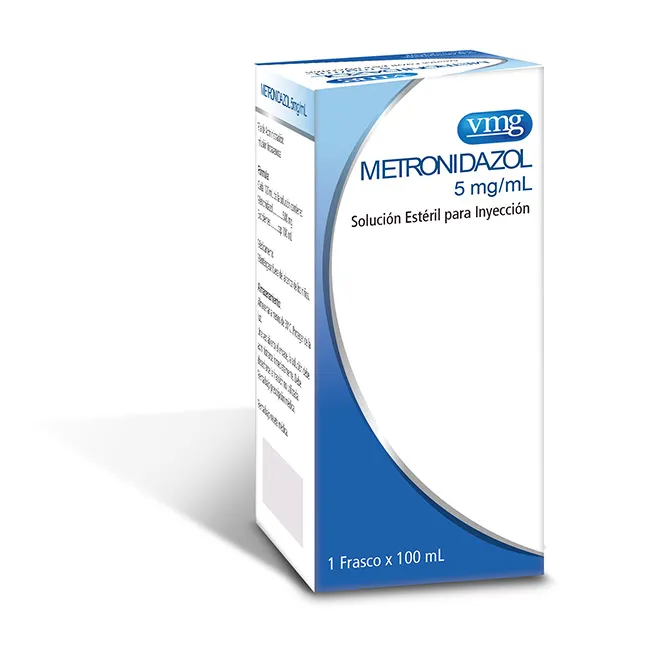
Table of Contents
- Package leaflet: Information for the user
- Introduction
- 1. What Metronidazol Serraclincs 5 mg/ml, solution for infusion EFG is and what it is used for
- 2. Before using Metronidazol Serraclinics 5 mg/ml, solution for infusion EFG
- 3. How to use Metronidazol Korhispana 5 mg/ml, solution for infusion EFG
- 4. Possible adverse effects
- 5. Storage of Metronidazole Serraclinics 5 mg/ml, solution for infusion EFG
- 6. Additional information for healthcare professionals
Package leaflet: Information for the user
Introduction
PACKAGE LEAFLET
Read the entire leaflet carefully before you start using this medicine.
- Keep this leaflet. You may need to read it again.
- If you have any questions, ask your doctor or pharmacist.
- This medicine has been prescribed for you personally and must not be given to other people. It could harm them, even if their symptoms are the same as yours.
In this leaflet:
- What METRONIDAZOL SERRACLINICS 5 mg/ml, solution for infusion EFG is and what it is used for
- Before you use METRONIDAZOL SERRACLINICS 5 mg/ml, solution for infusion EFG
- How to use METRONIDAZOL SERRACLINICS 5 mg/ml, solution for infusion EFG
- Possible side effects
- How to store METRONIDAZOL SERRACLINICS 5 mg/ml, solution for infusion EFG
- Additional information for healthcare professionals
1. What Metronidazol Serraclincs 5 mg/ml, solution for infusion EFG is and what it is used for
METRONIDAZOL SERRACLINICS 5 mg/ml, solution for infusion EFG is supplied in vials containing 100 ml of solution.
METRONIDAZOL SERRACLINICS 5 mg/ml, solution for infusion EFG, is an anti-infective medicine belonging to the group of nitroimidazoles, which prevents the growth and development of certain bacteria and parasites.
It is used for the treatment of infections caused by anaerobic bacteria, especially Bacteroides fragilis and other Bacteroides species and non-Bacteroides species such as fusobacteria, eubacteria, clostridium, and anaerobic streptococci.
Injectable metronidazole has been successfully used in:
- Septicaemia, bacteraemia (infection in the blood)
- Surgical wound infections
- Brain abscess (localized accumulation of pus in the brain)
- Postoperative intra-abdominal infections (infections following surgical procedures)
- Pelvic abscess, pelvic cellulitis (inflammation of tissues around the uterus)
- Septic thrombophlebitis (vein inflammation caused by infection)
- Puerperal sepsis (infectious condition occurring after childbirth)
- Osteomyelitis (bone infection)
- Purulent meningitis (inflammation of the membranes covering the brain and spinal cord with pus formation)
- Gas gangrene (localized death of subcutaneous tissue with gas production)
- Necrotizing pneumonia (lung inflammation associated with gangrene or localized tissue death)
- Acute ulcerative gingivitis (inflammation of the gums with ulcer formation), in which one or more of the aforementioned anaerobic bacteria have been isolated.
It is also indicated for the prevention of post-surgical infections caused by anaerobic bacteria, particularly Bacteroides species and anaerobic streptococci.
2. Before using Metronidazol Serraclinics 5 mg/ml, solution for infusion EFG
Do not use METRONIDAZOL SERRACLINICS 5 mg/ml
- If you are allergic to metronidazole, to medicines in the group of imidazoles, or to any of the other components of METRONIDAZOL SERRACLINICS 5 mg/ml.
Take special care with METRONIDAZOL SERRACLINICS 5 mg/ml
- If you suffer from severe liver disorders.
- If your treatment is prolonged. Your doctor may ask you to have regular blood tests, especially to monitor your white blood cell count. You will also be closely monitored for the risk of neurological disorders such as paresthesia (tingling in hands or feet), ataxia (lack of coordination), dizziness, and seizures.
- If you have serious acute or chronic diseases of the central or peripheral nervous system, due to the possible risk of worsening.
- If you have severe kidney disorders. In this case, your doctor may reduce your dose when you are not undergoing dialysis or when blood levels of this drug are not monitored.
- Your urine may become darker in color.
Cases of severe hepatic toxicity/acute liver failure, some with fatal outcome, have been reported in patients with Cockayne syndrome receiving medications containing metronidazole.
If you have Cockayne syndrome, your doctor must frequently monitor your liver function during and after treatment with metronidazole.
Inform your doctor immediately and stop taking metronidazole if you experience: stomach pain, anorexia, nausea, vomiting, fever, malaise, fatigue, jaundice, dark urine, clay-colored stools, or itching.
Pregnancy
Consult your doctor or pharmacist before using any medicine.
Since metronidazole passes through the placenta and there are insufficient data to establish its safety during pregnancy, your doctor will carefully assess whether the use of METRONIDAZOL SERRACLINICS 5 mg/ml during pregnancy is advisable.
Breast-feeding
Consult your doctor or pharmacist before using any medicine.
Metronidazole passes into breast milk; therefore, administration should be avoided during the breastfeeding period.
Driving and use of machines:
If you experience any of the following adverse effects after administration of METRONIDAZOL SERRACLINICS 5 mg/ml, such as confusion, dizziness, hallucinations, seizures, or transient visual disturbances, you should refrain from driving vehicles or operating machinery.
Important information about some of the components of METRONIDAZOL SERRACLINICS 5 mg/ml:
This medicine contains 326 mg of sodium per 100 ml, which should be taken into account in patients on low-sodium diets.
Use of other medicines:
Inform your doctor or pharmacist if you are using or have recently used any other medicines, including those obtained without a prescription, homeopathic remedies, herbal medicines, and other health-related products, as it may be necessary to interrupt treatment or adjust the dose of one or more of them.
There is no known therapeutic incompatibility with any of the anti-infective agents commonly used. It may be administered simultaneously, but separately (i.e., not in the same container), with other anti-infective agents.
Concomitant administration of metronidazole and disulfiram is not recommended, as cases of mental disturbances have been reported.
Alcoholic beverages and medications containing alcohol should not be consumed during treatment with metronidazole and for at least one day after treatment, due to the possibility of developing the so-called Antabuse effect, a reaction characterized by flushing, vomiting, and tachycardia.
Concomitant administration of metronidazole and oral anticoagulants (such as warfarin) may increase the risk of bleeding. If metronidazole is administered together with these medicines, you must be closely monitored by your doctor.
There is a risk of increased blood levels of lithium (a medicine used for depression) and cyclosporine (a medicine that suppresses the immune system) when these are administered together with metronidazole. Therefore, if used concomitantly, treatment must be under strict medical supervision.
Phenytoin and phenobarbital (antiepileptic medicines) increase the elimination of metronidazole, thereby reducing its blood levels.
Metronidazole increases the toxicity of fluorouracil.
3. How to use Metronidazol Korhispana 5 mg/ml, solution for infusion EFG
Your doctor will determine your daily dose and the duration of your treatment. Do not stop your treatment prematurely. The dosage is individualized for you and may be adjusted by your doctor depending on your response to treatment.
- Treatment:
In adults and children over 12 years of age: 100 ml (500 mg of metronidazole) by intravenous infusion every 8 hours, to be switched to oral treatment as soon as possible. Under no circumstances should the treatment last longer than seven days, unless circumstances indicate otherwise.
In children under 12 years of age: same as for adults, but at a dose of 20–30 mg/kg/day administered in two or three intravenous infusions.
- Prophylaxis:
Metronidazole injection should be administered by intravenous infusion at a rate of 5 ml per minute.
In adults and children over 12 years of age: 300 ml (1,500 mg of metronidazole) by intravenous infusion immediately before, during, or after surgery as a single dose.
In children under 12 years of age: same as for adults, but at a dose of 4.5 ml (2.5 mg of metronidazole) per kg of body weight, as a single dose.
Use in the elderly: Dose adjustment is not considered necessary in these patients, unless there is evidence of renal impairment.
Patients with renal impairment: A reduction in the dose of metronidazole may be recommended in patients with renal impairment who are not undergoing dialysis, along with monitoring of serum metabolite levels.
If you think that the effect of METRONIDAZOL SERRACLINICS 5 mg/ml is too strong or too weak, inform your doctor or pharmacist.
If you are given more METRONIDAZOL SERRACLINICS 5 mg/ml than you should:
Your doctor or nurse will ensure that you receive the correct intravenous dose.
Accidental overdose could result in vomiting, incoordination of movements, and mild disorientation.
There is no known specific antidote for metronidazole overdose. In cases where massive ingestion is suspected, treatment will be based on the symptoms presented.
In case of overdose or accidental ingestion, contact the Toxicology Information Service. Telephone: 91 562 04 20.
4. Possible adverse effects
Like all medicines, METRONIDAZOL SERRACLINICS 5 mg/ml may have adverse effects:
-
Gastrointestinal reactions: upper abdominal pain, nausea, vomiting, diarrhoea, inflammation of the oral mucosa, disturbances of taste, loss of appetite; and very rarely (<1/10,000), reversible cases of inflammation of the pancreas (pancreatitis) have been reported.
-
Allergic reactions: skin rash, itching, fever, generalized urticaria (irritation and itching of the skin) accompanied by swelling of feet, hands, throat, lips, and respiratory tract (angioedema); and very rarely (<1/10,000), severe allergic reactions such as anaphylactic shock.
-
Nervous system reactions: peripheral sensory neuropathy, headache, seizures, dizziness, and lack of coordination of movements (ataxia).
-
Mental disorders including confusion and hallucinations.
-
Transient visual disturbances such as double vision (diplopia) and myopia.
-
Haematological and lymphatic system disorders: very rare reports (<1/10,000) of agranulocytosis or neutropenia (reduction in a type of white blood cells, granulocytes or neutrophils, respectively), and thrombocytopenia (reduction in the number of platelets).
-
Hepatobiliary disorders: very rare reports (<1/10,000) of reversible cases of abnormal liver function tests and cholestatic hepatitis.
A very rare, serious adverse reaction is brain disease (encephalopathy). Symptoms vary, but may include fever, neck stiffness, headache, or seeing or hearing non-existent things. You may also experience difficulty using your arms and legs or speaking, or feel confused. Contact your doctor immediately if you notice any of these adverse reactions.
Reporting of adverse effects
If you experience any type of adverse effect, consult your doctor or pharmacist, even if it is a possible adverse effect not listed in this leaflet. You may also report them directly through the Spanish Pharmacovigilance System for Human Medicines: https://www.notificaram.es. By reporting adverse effects, you can help provide more information on the safety of this medicine.
5. Storage of Metronidazole Serraclinics 5 mg/ml, solution for infusion EFG
Store below 25°C and protect from light.
Keep METRONIDAZOLE SERRACLINICS 5 mg/ml out of the reach and sight of children.
Expiry:
Do not use METRONIDAZOLE SERRACLINICS 5 mg/ml after the expiry date stated on the container.
6. Additional information for healthcare professionals
The active substance is Metronidazole (D.O.E.).
The other components are disodium hydrogen phosphate anhydrous, citric acid monohydrate, sodium chloride and water for injection.
METRONIDAZOL SERRACLINICS 5 mg/ml is an infusion solution, colorless and translucent.
METRONIDAZOL SERRACLINICS 5 mg/ml, infusion solution EFG: Container containing a 100 ml vial and a package leaflet. Clinical pack containing 20 single units of 100 ml.
Marketing Authorization Holder
Laboratorios SERRA PAMIES, S.A.
Ctra. Castellvell, 24
43206 REUS (Tarragona)
Manufacturer
INSTITUTO FARMACOLOGICO ESPAÑOL
Ramallosa s/n.
15883 Teo (La Coruña), Spain
Additional information for healthcare professionals.
Preparation prior to administration
The solution must be clear and free from precipitates.
If leakage, particles or cloudiness are observed, discard the container.
WARNING: DO NOT ADD SUPPLEMENTARY MEDICATION
Administration
- Hang the vial by the plastic ring located at the bottom of the vial.
- Remove the "Flip-Off" cap and pierce the rubber stopper with the administration set spike.
- Follow the instructions provided on the administration set packaging.
Precautions
- Do not use an air vent.
- Do not connect in series, as this may cause gas embolism due to residual air carried over from the first container before administration of the solution from the second container begins.
This leaflet was last reviewed in July 2017.