Metronidazole B. Braun 5 mg/ml solution for infusion
Spain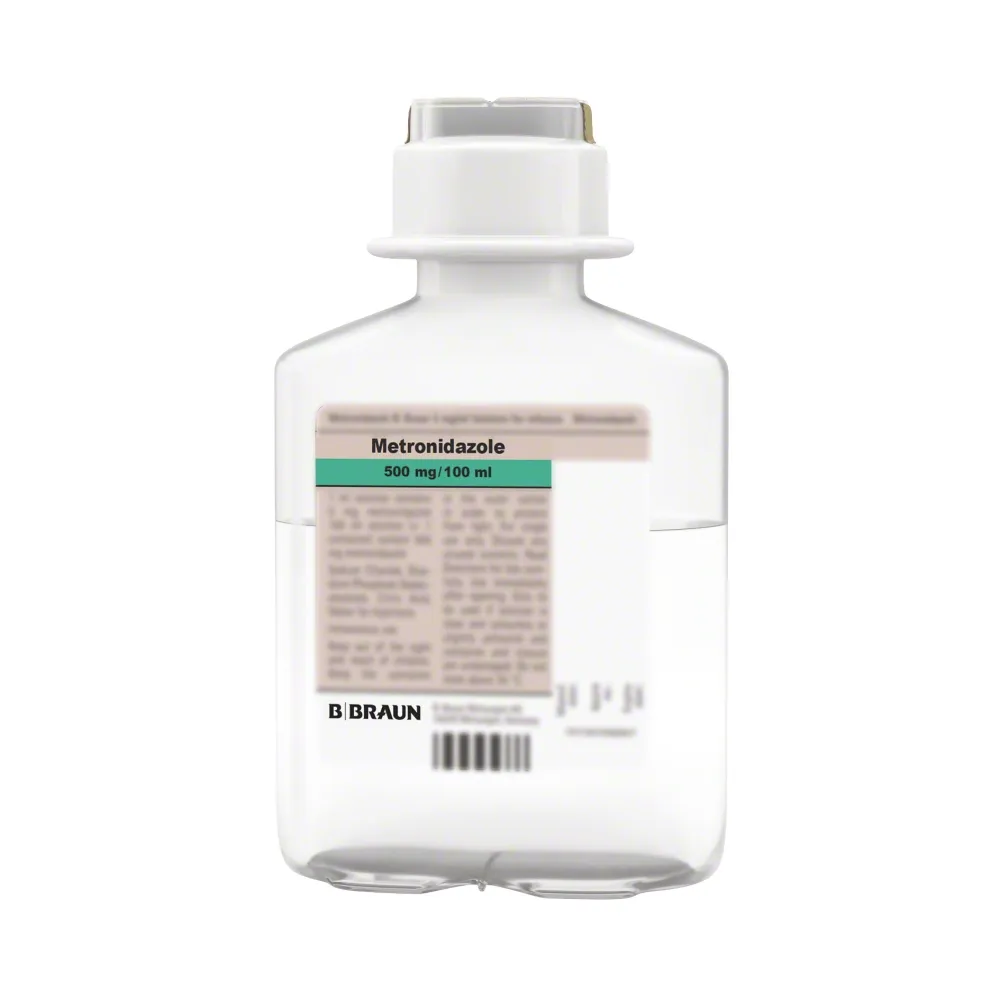
Table of Contents
- Package leaflet: Information for the user
- Introduction
- 1. What Metronidazol B. Braun 5 mg/ml is and what it is used for
- 2. What you need to know before using Metronidazole B. Braun 5 mg/ml
- 3. How to use Metronidazol B. Braun 5 mg/ml
- 4. Possible adverse effects
- 5. Storage of Metronidazole B. Braun 5 mg/ml
- 6. Contents of the pack and other information
Package leaflet: Information for the user
Introduction
Package leaflet: information for the user
Metronidazole B. Braun 5 mg/ml solution for infusion
metronidazole

Read all of this leaflet carefully before using this medicine because it contains important information for you.
-
Keep this leaflet. You may need to read it again.
-
If you have any questions, ask your doctor, pharmacist or nurse.
-
If you get any side effects, talk to your doctor, pharmacist or nurse. This includes any side effects not listed in this leaflet. See section 4.
Contents of this leaflet:
- What Metronidazole B. Braun 5 mg/ml is and what it is used for
- What you need to know before you are given Metronidazole B. Braun 5 mg/ml
- How to use Metronidazole B. Braun 5 mg/ml
- Possible side effects
- How to store Metronidazole B. Braun 5 mg/ml
- Contents of the pack and other information
1. What Metronidazol B. Braun 5 mg/ml is and what it is used for
Metronidazol B. Braun 5 mg/ml belongs to a group of medicines known as antibiotics and is used to treat serious infections caused by bacteria that can be eliminated by the active substance metronidazol.
Metronidazol B. Braun 5 mg/ml can be administered to adults and children for the treatment of any of the following conditions:
- Central nervous system infections such as brain abscesses (pus-filled infections in the brain), inflammation of the meninges (lining of the brain).
- Lung and pleural lining infections, such as pneumonia accompanied by tissue destruction, pneumonia following aspiration of stomach contents into the lungs, lung abscesses.
- Gastrointestinal tract infections, such as inflammation of the inner lining of the abdomen and pelvic walls, liver abscesses, surgery of the large intestine or rectum, pus-filled infections in the abdomen and pelvis.
- Female genital organ infections, such as inflammation inside the uterus, following hysterectomy, caesarean section, spontaneous abortion accompanied by blood poisoning (sepsis), puerperal fever.
- Ear, nose and throat, and dental, jaw and mouth infections, such as Vincent's angina.
- Inflammation of the inner lining of the heart.
- Bone and joint infections, such as inflammation of the bone marrow.
- Gas gangrene.
- Blood poisoning due to thrombosis and inflamed veins.
Your treatment may be supplemented with other antibiotics, if necessary.
Metronidazol B. Braun 5 mg/ml may also be given as a preventive measure before surgeries associated with a higher risk of infection with so-called anaerobic bacteria, primarily in gynaecology or gastrointestinal surgery.
2. What you need to know before using Metronidazole B. Braun 5 mg/ml
Do not use Metronidazole B. Braun 5 mg/ml
- If you are allergic to metronidazole or to other similar substances or to any of the other ingredients of this medicine (listed in section 6).
Warnings and precautions
Talk to your doctor before receiving Metronidazole B. Braun 5 mg/ml.
Take special care with Metronidazole B. Braun 5 mg/ml if you have:
- Severe liver dysfunction.
- Blood disorders.
- Diseases of the brain, spinal cord, or nerves.
Your doctor will carefully determine whether you should be treated with Metronidazole B. Braun 5 mg/ml.
If seizures or any other neurological condition (such as numbness in the limbs) occur during treatment, the continuation of treatment will be reviewed.
Treatment with Metronidazole B. Braun 5 mg/ml should not exceed 10 days; the treatment period will only be extended under exceptional circumstances and if absolutely necessary. Repeated treatment with metronidazole will be limited to cases where it is absolutely essential. In such cases, you will be monitored particularly closely.
Especially with prolonged treatment with metronidazole or if you are immunocompromised, an imbalance in the intestinal flora may occur. Treatment must be stopped or reviewed immediately if you develop severe diarrhea, which may be due to a condition called "pseudomembranous colitis" (see also section 4).
Cases of severe hepatotoxicity/acute liver failure, some with fatal outcomes, have been reported in patients with Cockayne syndrome treated with metronidazole-containing medicines.
If you have Cockayne syndrome, your doctor must frequently monitor your liver function during and after treatment with metronidazole.
Inform your doctor immediately and stop taking metronidazole if you experience:
- Stomach pain, anorexia, nausea, vomiting, fever, general malaise, fatigue, jaundice, dark urine, clay-colored stools, or itching.
- Serious skin reactions have been reported, including Stevens-Johnson syndrome, toxic epidermal necrolysis, drug reaction with eosinophilia and systemic symptoms (DRESS), and acute generalized exanthematous pustulosis (AGEP), associated with treatment with Metronidazole B. Braun 5 mg/ml. Discontinue use of Metronidazole B. Braun 5 mg/ml and seek immediate medical attention if you notice any symptoms related to these serious skin reactions described in section 4.
Since prolonged use of metronidazole may impair blood cell formation (see section "Possible side effects"), your blood count will be monitored during treatment.
Other medicines and Metronidazole B. Braun 5 mg/ml:
Tell your doctor or pharmacist if you are taking, have recently taken, or might need to take any other medicines, including those obtained without a prescription.
- Medicines that may cause disturbances in heart rhythm
Inform your doctor if you are taking any medicine that may cause a disturbance in heart rhythm (called QT interval prolongation, which can be seen on an ECG), such as certain antiarrhythmics (medicines used to treat heart rhythm disorders, e.g., amiodarone) and certain antibiotics (e.g., ciprofloxacin).
Your heart function should be monitored when you receive these medicines. You should consult your doctor if you notice any abnormalities in heart function, dizziness, or fainting.
- Barbiturates (active ingredient in sleeping medications):
Phenobarbital may reduce the duration of metronidazole's effect; the dose of metronidazole should be increased.
- Busulfan:
Metronidazole must not be administered to patients being treated with busulfan, as toxic effects are more likely to occur in such cases.
- Carbamazepine (medicine used to treat epilepsy):
This combination also requires caution, as metronidazole may increase the duration of carbamazepine's action.
- Cyclosporine (medicine used to reduce unwanted immune reactions):
When cyclosporine is administered together with metronidazole, blood levels of cyclosporine may increase; therefore, your doctor will need to adjust the dose of cyclosporine accordingly.
- Cimetidine (medicine used to treat stomach disorders):
Cimetidine may reduce the elimination of metronidazole in isolated cases, thereby leading to increased blood concentrations of metronidazole.
- Cumarin derivatives (medicines that inhibit blood coagulation):
Metronidazole may enhance the blood coagulation inhibition caused by cumarins. Therefore, if you are taking a medicine that inhibits blood coagulation (e.g., warfarin), you may need to reduce your dose during treatment with metronidazole.
- Disulfiram (used in the treatment of alcohol dependence):
If you are taking disulfiram, you must not be given metronidazole, or you must stop disulfiram treatment. The combined use of these two medicines may lead to confusion and even result in a serious mental disorder (psychosis).
- Fluorouracil (anticancer medicine):
The daily dose of fluorouracil may need to be reduced when administered together with metronidazole, as metronidazole may lead to increased blood levels of fluorouracil.
- Lithium (used to treat mental illnesses):
Treatment with lithium preparations requires particularly careful monitoring during treatment with metronidazole, and it may be necessary to readjust the dose of the lithium preparation. Treatment with lithium should be reduced or stopped before administration of metronidazole.
- Mycophenolate mofetil (used to prevent organ transplant rejection):
Its effect may be reduced by metronidazole; careful monitoring of its effect is recommended.
- Phenytoin (medicine used to treat epilepsy):
If you are taking phenytoin, your doctor will treat you with metronidazole only with caution, as it could increase the duration of phenytoin's effect. On the other hand, phenytoin may reduce the effect of metronidazole.
- Tacrolimus (medicine used to reduce unwanted immune reactions):
Blood levels of this medicine and your kidney function should be monitored when starting and stopping treatment with metronidazole.
Use of Metronidazole B. Braun 5 mg/ml with alcohol
You must not consume any alcoholic beverages while receiving metronidazole, as this may cause intolerance reactions such as dizziness and vomiting.
Pregnancy, breastfeeding, and fertility
If you are pregnant or breastfeeding, think you may be pregnant, or are planning to become pregnant, consult your doctor or pharmacist before using this medicine.
Pregnancy
If you are pregnant, your doctor will not treat you with metronidazole unless absolutely necessary.
Breastfeeding
Breastfeeding is not recommended during treatment with metronidazole. After completion of metronidazole treatment, breastfeeding should not be resumed until at least 2–3 days later, as metronidazole passes into breast milk.
Fertility
Animal studies indicate a possible negative effect of metronidazole on the male reproductive system only at high doses far exceeding the maximum recommended human dose.
Driving and using machines
You must not drive or operate machinery while undergoing treatment with metronidazole, as metronidazole may affect your alertness. This is especially true at the beginning of treatment or if you have consumed alcohol.
Metronidazole B. Braun 5 mg/ml contains sodium:
This medicine contains 322 mg of sodium (main component of table/cooking salt) in each 100 ml. This corresponds to 16% of the maximum daily sodium intake recommended for an adult.
3. How to use Metronidazol B. Braun 5 mg/ml
Follow exactly the administration instructions for this medicine provided by your doctor or pharmacist. If in doubt, consult your doctor or pharmacist again.
The dose depends on the nature and severity of the illness, age and body weight, and the individual response to treatment.
The recommended dose in adults and adolescents (over 12 years of age) is:
Treatment of infections
500 mg (100 ml) every 8 hours.
Alternatively, a single dose of 1500 mg (300 ml) may be administered on the first day of treatment, followed by single doses of 1000 mg (200 ml) on subsequent days. At the beginning of your treatment, your doctor may give you a higher initial dose of metronidazole.
In most cases, a 7–10 day treatment course is sufficient. If clinically indicated, treatment may continue beyond this duration. The duration of metronidazole therapy should not exceed 10 days. The maximum daily dose must not exceed 1500 mg/day.
The same dose applies to patients with renal disease.
For patients with liver disease, lower doses may be required.
If you are treated with an artificial kidney machine (dialysis), your doctor will adjust the dose on your treatment days.
Prevention of infections that may occur after surgery
When used for prevention of infection in surgery, you will be given 500 mg before surgery. The dose will be repeated 8 and 16 hours after the operation.
Use in children:
Dosing in children is based on body weight.
Treatment of infections:
-
Children > 8 weeks and up to 12 years: 20–30 mg per kg of body weight per day as a single dose or 7.5 mg per kg of body weight every 8 hours. The daily dose may be increased to 40 mg per kg of body weight, depending on the severity of the infection.
-
Children < 8 weeks: 15 mg per kg of body weight as a single dose or 7.5 mg per kg of body weight every 12 hours.
-
Newborns with a gestational age < 40 weeks: Since metronidazole may accumulate during the first week of life, blood concentrations of metronidazole should preferably be monitored a few days after starting treatment.
The duration of treatment is usually 7–10 days.
Prevention of infections that may occur after surgery:
-
Children < 12 years: 20–30 mg per kg of body weight as a single dose administered 1–2 hours before surgery.
-
Newborns with a gestational age < 40 weeks: 10 mg per kg of body weight as a single dose before surgery.
Method of administration
Metronidazol B. Braun 5 mg/ml is administered by intravenous route. The infusion from one bottle usually lasts 60 minutes, but must not be administered in less than 20 minutes.
This medicine may be diluted in a suitable vehicle solution for perfusion.
If you are simultaneously receiving other antibiotics, your doctor will administer those separately.
If you use more Metronidazol B. Braun 5 mg/ml than you should:
Signs and symptoms of overdose may include the adverse effects described in section 4, “Possible side effects.”
There is no known specific antidote or symptomatic treatment for massive overdose, but metronidazole can be removed from the body by dialysis (i.e., treatment with an artificial kidney machine).
In case of overdose or accidental ingestion, contact the Toxicology Information Service. Telephone: 915 620 420, indicating the product and the amount administered.
4. Possible adverse effects
Like all medicines, this medicine can cause adverse effects, although not everyone experiences them.
Adverse reactions are mainly related to the dose and duration of treatment and usually disappear when the dose is reduced or therapy is discontinued.
Stop using Metronidazol B.Braun 5 mg/ml and seek immediate medical attention if you notice any of the following symptoms:
Rare (may affect up to 1 in 1,000 people)
- Severe, persistent diarrhoea (possibly a sign of a serious intestinal infection called pseudomembranous colitis).
- Severe acute hypersensitivity reactions up to anaphylactic shock.
Very rare (may affect up to 1 in 10,000 people)
- Decrease during treatment in white blood cell and platelet counts (granulocytopenia, agranulocytosis, pancytopenia, thrombocytopenia).
- Hepatitis (inflammation of the liver), jaundice, inflammation of the pancreas.
- Brain disorders, lack of coordination.
Frequency not known (cannot be estimated from available data)
- Reduction in white blood cell count (leucopenia), severe anaemia (aplastic anaemia).
- Hypersensitivity reactions from mild to moderate, swelling of the face, mouth, throat and/or tongue (angioedema).
- Deviation of gaze, damage or inflammation of the eye nerves.
- Seizures, neurological disorders such as numbness, pain, tingling or "pins and needles" sensations in arms or legs.
- Non-bacterial brain fever (aseptic meningitis).
- Acute liver failure in patients with Cockayne syndrome (see section 2 "Warnings and precautions").
- Hearing impairment, hearing loss.
- Ringing in the ears (tinnitus).
- Skin rash, blisters, fever or other signs and symptoms of hypersensitivity reactions.
- Red, flat, target-shaped or circular spots on the trunk, often with central blisters, skin peeling, and ulcers in the mouth, throat, nose, genitals, and eyes. These serious skin rashes may be preceded by fever and flu-like symptoms (Stevens-Johnson syndrome, toxic epidermal necrolysis).
- Generalized skin rash, high body temperature, and enlarged lymph nodes (DRESS syndrome or drug hypersensitivity syndrome).
- Generalized red, scaly, and widespread rash, with bumps under the skin and blisters, accompanied by fever. Symptoms usually appear at the beginning of treatment (acute generalized exanthematous pustulosis).
Other adverse effects
Common (may affect up to 1 in 100 people)
- Fungal and bacterial superinfections
Uncommon (may affect up to 1 in 1,000 people)
- Dark urine (caused by metronidazole metabolites).
Rare (may affect up to 1 in 1,000 people)
- Changes in the electrocardiogram (ECG).
Very rare (may affect up to 1 in 10,000 people)
- Psychotic disorders, including confusion, hallucinations.
- Headache, dizziness, drowsiness, fever, visual and movement disturbances, vertigo, speech defects, seizures.
- Visual disturbances, e.g., double vision, myopia.
- Liver function disorders (such as elevated serum levels of certain enzymes and bilirubin).
- Joint and muscle pain.
Frequency not known (cannot be estimated from available data)
- Anorexia.
- Depressed mood (depression).
- Drowsiness or insomnia, muscle spasms.
- Nausea, malaise, diarrhoea, inflammation of the tongue or mouth, belching, bitter taste, metallic taste, epigastric pressure, furry tongue, difficulty swallowing.
- Skin redness and itching (erythema multiforme).
- Irritation of the vein wall (up to and including phlebitis and thrombosis) following intravenous administration, weakness, fever.
Treatment of pseudomembranous enterocolitis in emergency situations
If you experience severe, persistent diarrhoea, you must inform your doctor immediately, as this may be due to pseudomembranous colitis, a serious condition requiring immediate treatment. Your doctor will stop treatment with metronidazole and provide appropriate therapy. If you consider any of the adverse effects you experience to be severe or if you notice any adverse effects not listed in this leaflet, please inform your doctor.
Reporting of adverse effects
If you experience any adverse effects, talk to your doctor, pharmacist, or nurse, even if they are possible adverse effects not listed in this leaflet. You can also report them directly via the Spanish Pharmacovigilance System for Human Medicines: www.notificaRAM.es. By reporting adverse effects, you can help provide more information on the safety of this medicine.
5. Storage of Metronidazole B. Braun 5 mg/ml
Keep this medicine out of the sight and reach of children.
Do not use this medicine after the expiry date stated on the container and carton. The expiry date refers to the last day of the month indicated.
Keep in the outer packaging to protect from light.
This medicine is for single use only. Discard any unused portions.
From a microbiological standpoint, diluted solutions should be used immediately. If not used immediately, storage times and conditions prior to use are the responsibility of the user and normally should not exceed 24 hours at a temperature of 2 to 8°C, unless the dilution has been carried out under controlled and validated aseptic conditions.
This medicine should only be used if the solution is clear and free from visible particles, and if the container and closure show no visible signs of damage.
Medicines must not be disposed of via wastewater or household waste. Ask your pharmacist how to dispose of medicines and packaging that you no longer need. This will help protect the environment.
6. Contents of the pack and other information
Composition of Metronidazole B. Braun 5 mg/ml
- The active substance is metronidazole.
1 ml of Metronidazole B. Braun 5 mg/ml solution for infusion contains 5 mg of metronidazole.
A 100 ml polyethylene bottle contains 500 mg of metronidazole. A 300 ml polyethylene bottle contains 1500 mg of metronidazole.
- The other components are sodium chloride, disodium phosphate dodecahydrate, citric acid monohydrate and water for injection.
Appearance of the product and contents of the container
Metronidazole B. Braun 5 mg/ml is a clear, colourless or slightly yellowish aqueous solution.
Metronidazole B. Braun 5 mg/ml is supplied in polyethylene bottles (Ecoflac Plus®) containing 100 ml and 300 ml, in single packs and clinical packs of 20 units.
Only certain pack sizes may be marketed.
Marketing Authorization Holder and Manufacturer
- Braun Medical, S.A.
Ctra. Terrassa, 121 Rubí
08191 Barcelona (Spain)
Date of the most recent revision of this leaflet: 03/2025
Detailed and up-to-date information on this medicinal product is available on the website of the Spanish Agency for Medicines and Health Products (AEMPS) http://www.aemps.es/
<---------------------------------------------------------------------------------------------------------------->
This information is intended for healthcare professionals only:
For intravenous use.
The contents of one vial must be infused slowly intravenously, i.e., a maximum of 100 ml over not less than 20 minutes, but usually over more than one hour.
Metronidazole B. Braun 5 mg/ml may also be diluted prior to administration by adding the medicinal product to an intravenous vehicle solution such as 0.9% sodium chloride or 5% glucose infusion solution.
For single use only. Dispose of the container and any unused contents after use.
Should only be used if the solution is clear and colourless or slightly yellowish, and if the container and closure show no visible signs of damage.
In patients with severe hepatic impairment or hematopoietic disorders (such as granulocytopenia), metronidazole should only be administered if the anticipated benefits clearly outweigh the potential risks.
Due to the risk of worsening, metronidazole should be used in patients with severe, active or chronic diseases of the central or peripheral nervous system only if the anticipated benefits clearly outweigh the potential risks.
Seizures, myoclonus and peripheral neuropathy—mainly characterized by numbness or paresthesia of a limb—have been reported in patients treated with metronidazole. The appearance of abnormal neurological signs requires prompt reassessment of the benefit-risk balance of continuing treatment.
In case of severe hypersensitivity reactions (such as anaphylactic shock), treatment with Metronidazole B. Braun 5 mg/ml must be immediately discontinued and emergency treatment should be initiated by healthcare professionals.