Methylphenidate Sandoz 54 mg prolonged-release tablets EFG
Spain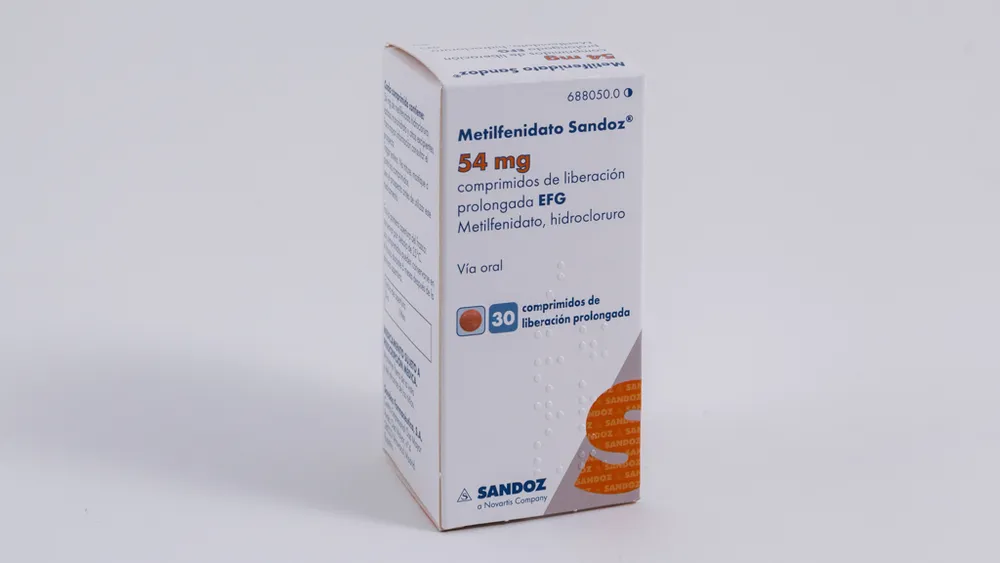
Table of Contents
- Package leaflet: Information for the user
- Introduction
- 1. What Metilfenidato Sandoz is and what it is used for
- 2. What you need to know before your child starts taking Methylphenidate Sandoz
- 3. How to take Metilfenidato Sandoz
- 4. Possible adverse effects
- 5. Storage of Methylphenidate Sandoz
- 6. Contents of the pack and other information
Package leaflet: Information for the user
Introduction
Package leaflet: information for the patient
Methylphenidate Sandoz 18 mg prolonged-release tablets EFG
Methylphenidate Sandoz 36 mg prolonged-release tablets EFG
Methylphenidate Sandoz 54 mg prolonged-release tablets EFG
methylphenidate hydrochloride
Read the entire leaflet carefully before your child starts taking this medicine, because it contains important information for you.
- Keep this leaflet, as you may need to read it again.
- If you have any questions, ask your doctor or pharmacist.
- This medicine has been prescribed for your child only; do not give it to other people, even if they have the same symptoms as your child, as it may harm them.
- If your child experiences any side effects, consult your doctor or pharmacist, even if the side effects are not listed in this leaflet. See section 4.
Leaflet contents:
- What Methylphenidate Sandoz is and what it is used for
- What you need to know before your child takes Methylphenidate Sandoz
- How to take Methylphenidate Sandoz
- Possible side effects
- How to store Methylphenidate Sandoz
- Contents of the pack and other information
1. What Metilfenidato Sandoz is and what it is used for
What it is used for
Metilfenidato Sandoz is used to treat "attention deficit hyperactivity disorder" (ADHD):
- it is used in children and adolescents aged between 6 and 18 years,
- it is used only after trying non-medication treatments first, such as behavioral therapy and counseling.
Metilfenidato is not indicated for the treatment of ADHD in children under 6 years of age or for initiating treatment in adults. When treatment is started at a young age, it may be appropriate to continue taking this medicine into adulthood. Your doctor will advise you regarding your child.
How it works
Metilfenidato improves the activity of certain areas of the brain that are underactive. This medicine can help improve attention (attention span), concentration, and reduce impulsive behavior.
This medicine is administered as part of a comprehensive treatment program, which typically includes:
- psychological therapy,
- educational therapy, and
- social therapy.
It is prescribed only by physicians experienced in managing behavioral problems in children and adolescents. Although ADHD cannot be cured, it can be managed through comprehensive treatment programs.
About ADHD
Children and adolescents with ADHD have:
- difficulty staying still and
- difficulty concentrating.
It is not their fault that they cannot do these things.
Many children and adolescents struggle with these tasks. However, patients with ADHD may experience problems in daily life. Children and adolescents with ADHD may have difficulties learning and completing homework. They may have trouble behaving appropriately at home, at school, and in other settings.
Not all patients with ADHD require treatment with medication.
ADHD does not affect intelligence.
2. What you need to know before your child starts taking Methylphenidate Sandoz
Do not take Methylphenidate Sandoz if your child:
-
is allergic to methylphenidate or to any of the other ingredients of this medicine (listed in section 6),
-
has a thyroid problem,
-
has high eye pressure (glaucoma),
-
has a tumour of the adrenal glands (phaeochromocytoma),
-
has an eating disorder, no appetite, or does not want to eat, as in "anorexia nervosa",
-
has very high blood pressure or narrowing of blood vessels, which may cause pain in the arms and legs,
-
has ever had heart problems such as a heart attack, irregular heartbeat, chest pain or discomfort, heart failure, heart disease, or a congenital heart problem,
-
has ever had a blood vessel problem in the brain such as a stroke, dilation or weakness of part of a blood vessel (aneurysm), narrowing or blockage of blood vessels, or inflammation of blood vessels (vasculitis),
-
is taking or has taken within the last 14 days any antidepressant medicine (known as a monoamine oxidase inhibitor); see "Other medicines and Methylphenidate Sandoz",
-
has mental health problems such as:
-
a "psychopathic" disorder or "borderline personality disorder",
-
abnormal thoughts or hallucinations or a condition called "schizophrenia",
-
signs of a serious mood disorder such as:
-
suicidal thoughts,
-
severe depression, feeling very sad, worthless, and hopeless,
-
mania, feeling unusually elated, more active than normal, and disinhibited.
Do not take methylphenidate if your child has any of the above conditions. If you are unsure, inform your doctor or pharmacist before your child starts taking methylphenidate. This is because methylphenidate may worsen these conditions.
Warnings and precautions
Talk to your doctor before starting Methylphenidate Sandoz if your child:
- has liver or kidney problems,
- has difficulty swallowing or problems swallowing whole tablets,
- has a narrowing or blockage in the throat or digestive tract,
- has ever had seizures (fits, convulsions, epilepsy) or any abnormalities on an electroencephalogram (EEG),
- has had high pressure in the eye (intraocular pressure),
- has ever abused or been dependent on alcohol, prescription medicines, or drugs,
- is a girl who has already started her periods (see section "Pregnancy and breastfeeding" below),
- has difficulty controlling repetitive movements of parts of the body or repeats sounds and words,
- has high blood pressure,
- has a heart problem not listed in the previous section "Do not take Methylphenidate Sandoz",
- has a mental health problem not listed in the previous section "Do not take Methylphenidate Sandoz".
Other mental health problems include:
- mood changes (shifting from mania to depression, known as "bipolar disorder"),
- experiencing aggressive or hostile behaviour, or worsening of aggression,
- seeing, hearing, or feeling things that are not there (hallucinations),
- believing things that are not true (delusions),
- feeling unusually suspicious (paranoia),
- feeling restless, anxious, or tense,
- feeling depressed or guilty.
Inform your doctor or pharmacist if your child experiences any of the above before starting treatment. This is because methylphenidate may worsen these problems. Your doctor will want to monitor how the medicine affects your child.
During treatment, children and adolescents may unexpectedly experience prolonged erections. These erections may be painful and can occur at any time. It is important to contact the doctor immediately if an erection lasts longer than 2 hours, especially if it is painful.
Checks your doctor will carry out before starting treatment with Methylphenidate Sandoz
These checks are to determine whether methylphenidate is the right medicine for your child. Your doctor will discuss with you:
- the medicines your child is taking,
- whether there is a family history of unexplained sudden death,
- other illnesses that may run in the family (such as heart problems),
- how your child is feeling, whether they have mood swings, strange thoughts, or have previously had such feelings,
- whether there have been cases of tics in the family (difficulty controlling repetitive movements of parts of the body or repeated sounds and words),
- any possible behavioural or mental health problems your child or other family members may have had. Your doctor will specifically explain whether your child may be at risk of mood changes (from mania to depression, known as bipolar disorder). Your doctor will review your child's mental health history and check whether any family members have a history of suicide, bipolar disorder, or depression.
It is important to provide as much information as possible. This will help your doctor decide whether methylphenidate is the right medicine for your child. Your doctor may decide that your child needs further medical tests before starting this medicine.
Other medicines and Methylphenidate Sandoz
Inform your doctor or pharmacist if your child is taking, has recently taken, or might need to take any other medicines.
Do not take methylphenidate if your child:
- is taking a medicine called a "monoamine oxidase inhibitor" (MAOI) used for depression, or has taken an MAOI within the last 14 days. Using an MAOI with methylphenidate may cause a sudden increase in blood pressure (see "Do not take Methylphenidate Sandoz").
Inform your doctor or pharmacist if your child is taking any of the following medicines for depression or anxiety:
- tricyclic antidepressant,
- selective serotonin reuptake inhibitor (SSRI),
- serotonin-noradrenaline reuptake inhibitor (SNRI).
Taking methylphenidate with these types of medicines may cause a potentially fatal increase in "serotonin" in the brain (serotonin syndrome), which may lead to confusion or restlessness, sweating, chills, muscle spasms, or rapid heartbeat. If your child experiences these side effects, seek medical help immediately.
If your child is taking other medicines, methylphenidate may affect how these medicines work or cause side effects. If your child is taking any of the following medicines, consult your doctor or pharmacist before taking methylphenidate:
- medicines for serious mental health conditions,
- medicines for Parkinson's disease (such as levodopa),
- medicines for epilepsy,
- medicines used to lower or raise blood pressure,
- some cough and cold remedies containing medicines that may affect blood pressure. It is important to consult your pharmacist when purchasing any of these medicines,
- medicines that thin the blood to prevent blood clots.
If you have any doubts about whether any of the medicines your child is taking are included in the list above, consult your doctor or pharmacist for advice before taking methylphenidate.
Inform your doctor or pharmacist if your child is currently using or has recently used any other medicines, including those obtained without a prescription.
Before surgery
Inform your doctor if your child is scheduled for surgery. Methylphenidate should not be taken on the day of surgery when certain types of anaesthetics are used. This is because a sudden increase in blood pressure and heart rate may occur during the procedure.
Use in athletes
This medicine may give a positive result in drug tests, including those used in sports.
Taking Methylphenidate Sandoz with alcohol
Do not drink alcohol while taking this medicine. Alcohol may worsen the side effects of this medicine. Remember that some foods and medicines contain alcohol.
Pregnancy and breastfeeding
If you are pregnant or breastfeeding, think you may be pregnant, or plan to become pregnant, consult your doctor before using this medicine.
Available data do not suggest an increased risk of overall congenital malformations, although a small increased risk of cardiac malformations during use in the first three months of pregnancy cannot be ruled out. Your doctor will provide further information about this risk. Consult your doctor or pharmacist before using methylphenidate if your daughter:
- is sexually active. Your doctor will discuss contraception with you,
- is pregnant or thinks she may be pregnant. Your doctor will decide whether she should take methylphenidate,
- is breastfeeding or plans to breastfeed. Methylphenidate passes into breast milk. Therefore, your doctor will decide whether your daughter should breastfeed while using methylphenidate.
Driving and using machines
Your child may experience dizziness, difficulty focusing, or blurred vision when taking methylphenidate. If this occurs, it may be dangerous to carry out certain activities such as driving, operating machinery, riding a bicycle or horse, or climbing trees.
Methylphenidate Sandoz contains lactose and sodium
This medicine contains lactose. If your doctor has informed you that your child has an intolerance to certain sugars, consult with him before taking this medicine.
This medicine contains less than 1 mmol of sodium (23 mg) per prolonged-release tablet; hence, it is essentially "sodium-free".
3. How to take Metilfenidato Sandoz
How much to take
Your child must follow exactly the dosing instructions for this medicine as given by their doctor. If you are unsure, consult your doctor or pharmacist again.
Your doctor will usually start treatment with a low dose and may increase the daily dose by 18 mg no more frequently than once a week, if necessary.
The goal is the lowest dose that is effective for your child. Your doctor will decide the maximum daily dose for your child.
Your child must take extended-release methylphenidate once daily in the morning with a glass of water.
The tablet should be swallowed whole and not chewed, broken, or crushed. The tablet may be taken with or without food.
The tablet does not dissolve completely after all the active ingredient has been released, and sometimes the tablet may appear in the stools. This is normal.
Use in children aged 6 years and older
- The recommended initial dose of extended-release methylphenidate is 18 mg once daily for children who are not currently taking methylphenidate, or for children switching from another stimulant to methylphenidate.
- The maximum daily dose is 54 mg.
If your child does not feel better after 1 month of treatment
If your child does not feel better after 1 month of treatment, inform your doctor. They may decide whether your child needs a different treatment.
Improper use of Metilfenidato Sandoz
If this medicine is not used properly, it may cause abnormal behavior. This could also mean that your child may start to become dependent on the medicine. Inform your doctor if your child has ever abused or been dependent on alcohol, prescription medicines, or drugs.
This medicine is for your child only. Do not give this medicine to anyone else, even if they have similar symptoms.
If your child takes more Metilfenidato Sandoz than they should
If your child takes too many tablets or in case of accidental ingestion, contact your doctor or pharmacist immediately, call an ambulance, or go to the nearest hospital emergency department, and tell them how many tablets have been taken. Medical treatment may be necessary. You may also call the Toxicology Information Service at telephone number: 91 562 04 20, stating the medicine and the amount ingested.
Signs of overdose may include: feeling sick, agitation, tremors, increased uncontrolled movements, muscle twitching, seizures (which may be followed by coma), feeling extremely happy, confusion, seeing, feeling, or hearing things that are not real (hallucinations), sweating, flushing, headache, high fever, changes in heart rate (slow, fast, or irregular), high blood pressure, dilated pupils, dryness of the nose and mouth.
If your child forgets to take Metilfenidato Sandoz
Do not take a double dose to make up for missed doses. If your child forgets a dose, they should wait and take the next dose at the scheduled time.
If your child stops taking Metilfenidato Sandoz
If your child stops taking this medicine suddenly, symptoms of ADHD or unwanted effects such as depression may reappear. Your doctor may require gradually reducing the daily dose before stopping completely. Consult your doctor before stopping treatment with this medicine.
What your doctor will do while your child is on treatment
Your doctor will perform some tests
- before your child starts treatment, to ensure this medicine is safe and beneficial,
- once your child has started treatment, at least every 6 months, and even more frequently if needed.
These tests will also be performed whenever the dose is changed.
- These tests will include:
- monitoring of appetite,
- measurement of height and weight,
- measurement of blood pressure and heart rate,
- assessment of mood-related problems, mental state, or any other unusual feelings, or whether these have worsened while taking methylphenidate.
Long-term treatment
Methylphenidate does not need to be taken indefinitely. If your child takes methylphenidate for more than one year, your doctor should interrupt treatment for a short period, such as during school holidays. This allows assessment of whether your child still needs the medicine.
If you have any further questions about the use of this medicine, ask your doctor or pharmacist.
4. Possible adverse effects
Like all medicines, this medicine can cause adverse effects, although not everyone will experience them. Although some people may experience adverse effects, methylphenidate helps most people. Your doctor will inform you about these adverse effects.
Some adverse effects may be serious. If your child has any of the following adverse effects, contact your doctor immediately:
Frequent (may affect up to 1 in 10 people)
- irregular heartbeat (palpitations),
- changes or disturbances in mood or changes in personality.
Uncommon (may affect up to 1 in 100 people)
- suicidal thoughts or feelings,
- seeing, feeling or hearing things that are not real, symptoms of psychosis,
- uncontrolled speech and body movements (Tourette’s syndrome),
- signs of allergy such as rash, itching or hives on the skin, swelling of the face, lips, tongue or other parts of the body, shortness of breath, difficulty or problems breathing.
Rare (may affect up to 1 in 1,000 people)
- feeling unusually elated, more active than normal and disinhibited (mania).
Very rare (may affect up to 1 in 10,000 people)
- heart attack,
- sudden death,
- suicide attempts,
- seizures (fits, convulsions, epilepsy),
- skin peeling or purplish-red skin spots,
- inflammation or blockage of the brain arteries,
- temporary paralysis or movement and vision problems, speech difficulties (these signs may indicate problems with blood vessels in the brain),
- uncontrolled muscle spasms affecting the eyes, head, neck, body and nervous system,
- decreased number of blood cells (red blood cells, white blood cells and platelets), which may increase the risk of infections and lead to easier bleeding and bruising,
- sudden increase in body temperature, very high blood pressure and severe convulsions (“Neuroleptic Malignant Syndrome”). It is not entirely certain whether this adverse effect is caused by methylphenidate or by other medicines taken in combination with methylphenidate.
Not known (frequency cannot be estimated from available data)
- unwanted thoughts that recur,
- unexplained fainting, chest pain, shortness of breath (these may be signs of heart problems),
- prolonged erections, sometimes painful, or increased number of erections.
If your child experiences any of the adverse effects listed above, contact your doctor immediately.
The following additional adverse effects are listed. If they become severe, please inform your doctor or pharmacist:
Very common (may affect more than 1 in 10 people)
- headache,
- feeling nervous,
- difficulty sleeping,
- nausea,
- dry mouth.
Frequent (may affect up to 1 in 10 people)
- joint pain,
- blurred vision,
- tension-type headache,
- thirst,
- difficulty falling asleep,
- elevated temperature (fever),
- changes in sexual desire,
- hair loss for no usual reason or thinning of hair,
- muscle weakness, muscle cramps,
- loss of appetite or decreased appetite,
- inability to achieve or maintain an erection,
- itching, rash or worsening of itching in red rashes (urticaria),
- drowsiness or unusual drowsiness, feeling tired,
- excessive teeth grinding (bruxism),
- feeling of panic,
- tingling, itching or numbness of the skin,
- increased blood levels of alanine aminotransferase (a liver enzyme),
- cough, sore throat, throat or nasal irritation, upper respiratory tract infection, sinus infection,
- high blood pressure, rapid heartbeat (tachycardia),
- dizziness, tiredness, uncontrolled movements, unusual activity,
- aggression, agitation, anxiety, depression, irritability, tension, nervousness and altered behaviour,
- feeling of fullness in the stomach or indigestion, stomach pain, diarrhoea, stomach discomfort and nausea,
- excessive sweating,
- weight loss.
Uncommon (may affect up to 1 in 100 people)
- dry eyes,
- constipation,
- chest discomfort,
- blood in urine,
- lack of interest,
- restlessness or tremor,
- increased need to urinate,
- muscle pain, muscle jerks,
- shortness of breath or chest pain,
- feeling of warmth,
- increased liver test results (seen in blood tests),
- angry outbursts, restlessness or crying, excessive talking, excessive awareness of surroundings, difficulty sleeping.
Rare (may affect up to 1 in 1,000 people)
- changes in sexual desire,
- feeling disoriented or confused,
- vision problems or double vision,
- breast swelling in males,
- skin redness, increased redness of skin rashes.
Very rare (may affect up to 1 in 10,000 people)
- muscle cramps,
- small red spots on the skin,
- abnormal liver function including sudden liver failure and coma,
- changes in test results, including liver and blood tests,
- abnormal thinking, lack of feelings or emotions, repetitive actions, obsession with something,
- numbness, tingling and colour changes (from white to blue, then red) in fingers and toes in cold conditions (“Raynaud’s phenomenon”).
Not known (frequency cannot be estimated from available data)
- migraine,
- dilated pupils,
- very high fever,
- slow, fast or irregular heartbeat,
- major epileptic seizure (“generalized tonic-clonic seizures”),
- increased eye pressure,
- damage to the optic nerve caused by high pressure due to blocked drainage channels of fluid,
- damage to the optic nerve caused by a rapid increase in intraocular pressure due to inability to drain fluid,
- believing things that are not true,
- severe stomach pain sometimes with nausea and vomiting,
- problems with blood vessels in the brain (stroke, cerebral arteritis or cerebral occlusion),
- inability to control urination (incontinence),
- spasm of jaw muscles making it difficult to open the mouth (trismus),
- stuttering,
- nosebleeds.
Effects on growth
When used for more than one year, methylphenidate may reduce growth in some children. This affects fewer than 1 in 10 children.
- it may prevent weight gain or height increase,
- your doctor will carefully monitor your child’s height, weight and nutrition,
- if your child does not grow as expected, treatment with methylphenidate may be interrupted for a short period.
Reporting of adverse effects
If your child experiences any adverse effect, consult your doctor or pharmacist, even if it is a possible adverse effect not listed in this leaflet. You may also report them directly via the Spanish Pharmacovigilance System for Human Medicines: https://www.notificaram.es. By reporting adverse effects, you can help provide more information on the safety of this medicine.
5. Storage of Methylphenidate Sandoz
Keep this medicine out of the sight and reach of children.
Do not use this medicine after the expiry date stated on the label and packaging after CAD/EXP. The expiry date refers to the last day of the month indicated.
This medicine does not require special storage conditions.
Storage conditions after first opening of the bottle:
Store below 25°C.
Shelf life after first opening of the bottle:
6 months.
The container contains a desiccant. The desiccant is used to keep the prolonged-release tablets dry and must not be ingested.
Medicines must not be disposed of via wastewater or household waste. Dispose of containers and unused medicines at the SIGRE collection point at your pharmacy. If in doubt, ask your pharmacist how to dispose of unused containers and medicines. This will help protect the environment.
6. Contents of the pack and other information
Composition of Methylphenidate Sandoz
The active substance is methylphenidate hydrochloride.
Methylphenidate Sandoz 18 mg: Each prolonged-release tablet contains 18 mg of methylphenidate hydrochloride.
Methylphenidate Sandoz 36 mg: Each prolonged-release tablet contains 36 mg of methylphenidate hydrochloride.
Methylphenidate Sandoz 54 mg: Each prolonged-release tablet contains 54 mg of methylphenidate hydrochloride.
The other components are:
Medication layer: polyethylene oxide, succinic acid, povidone (K 25), butylhydroxytoluene, and stearic acid.
Release layer: polyethylene oxide, sodium chloride, povidone (K 25), butylhydroxytoluene, red iron oxide (E 172), and stearic acid.
Membrane layer: cellulose acetate and poloxamer 188.
Active substance coating: hypromellose and succinic acid.
Film coating: film coating mixture: white (lactose monohydrate, hypromellose, titanium dioxide (E 171), and macrogol 4000).
The 18 mg tablets also contain:
Yellow iron oxide (E 172).
The 54 mg tablets also contain:
Red iron oxide (E 172).
Yellow iron oxide (E 172).
Appearance of the product and contents of the pack
Methylphenidate Sandoz 18 mg: light yellow film-coated tablets, rounded in shape (8 mm diameter), with a small orifice (small, visible round hole) on one side.
Methylphenidate Sandoz 36 mg: white film-coated tablets, rounded in shape (10 mm diameter), with a small orifice (small, visible round hole) on one side.
Methylphenidate Sandoz 54 mg: red film-coated tablets, rounded in shape (10 mm diameter), with a small orifice (small, visible round hole) on one side.
The prolonged-release tablets are packed in high-density polyethylene (HDPE) bottles with child-resistant polypropylene (PP screw cap) closures and desiccant.
Pack sizes:
28, 30 prolonged-release tablets, or
Multipacks: 60 (2 x 30) or 90 (3 x 30) prolonged-release tablets.
Only certain pack sizes may be marketed.
Marketing Authorization Holder and Manufacturer
Marketing Authorization Holder
Sandoz Farmacéutica, S.A.
Parque Norte Business Park
Roble Building
C/ Serrano Galvache, 56
28033 Madrid
Spain
Manufacturer
Lek Pharmaceuticals d.d.
Verovškova 57
1526 Ljubljana
Slovenia
Or
Lek Pharmaceuticals d.d.
Trimlini 2D
9220 Lendava
Slovenia
Or
Salutas Pharma GmbH
Otto-von-Guericke-Allee 1
39179 Barleben
Germany
This medicinal product is authorized in the Member States of the European Economic Area under the following names:
Germany: Methylphenidathydrochlorid - 1 A Pharma 18 mg Retardtabletten
Methylphenidathydrochlorid - 1 A Pharma 36 mg Retardtabletten
Methylphenidathydrochlorid - 1 A Pharma 54 mg Retardtabletten
Belgium: Methylfenidaat Retard Sandoz 18 mg tabletten met verlengde afgifte
Methylfenidaat Retard Sandoz 36 mg tabletten met verlengde afgifte
Methylfenidaat Retard Sandoz 54 mg tabletten met verlengde afgifte
Cyprus: Methylphenidate Sandoz
Denmark: Methylphenidate Sandoz
Finland: Methylphenidate Sandoz 18 mg depottabletit
Methylphenidate Sandoz 36 mg depottabletit
Methylphenidate Sandoz 54 mg depottabletit
Iceland: Methylphenidate Sandoz, 18 mg, forðatöflur
Methylphenidate Sandoz, 36 mg, forðatöflur
Methylphenidate Sandoz, 54 mg, forðatöflur
Netherlands: Methylfenidaat HCl Sandoz retard 18 mg, tabletten met verlengde afgifte
Methylfenidaat HCl Sandoz retard 36 mg, tabletten met verlengde afgifte
Methylfenidaat HCl Sandoz retard 54 mg, tabletten met verlengde afgifte
Norway: Methylphenidate Sandoz 18 mg depottabletter
Methylphenidate Sandoz 36 mg depottabletter
Methylphenidate Sandoz 54 mg depottabletter
Portugal: Metilfenidato Sandoz 18 mg prolonged release tablets
Metilfenidato Sandoz 36 mg prolonged release tablets
Metilfenidato Sandoz 54 mg prolonged release tablets
Sweden: Methylphenidate Sandoz 18 mg depottabletter
Methylphenidate Sandoz 36 mg depottabletter
Methylphenidate Sandoz 54 mg depottabletter
United Kingdom: Matoride XL 18 mg Prolonged-release Tablets
Matoride XL 36 mg Prolonged-release Tablets
Matoride XL 54 mg Prolonged-release Tablets
Date of the most recent review of this leaflet: May 2025.
Detailed information on this medicinal product is available on the website of the Spanish Agency of Medicines and Health Products (AEMPS) http://www.aemps.gob.es/