Methotrexate weekly Wyeth 2.5 mg tablets
Spain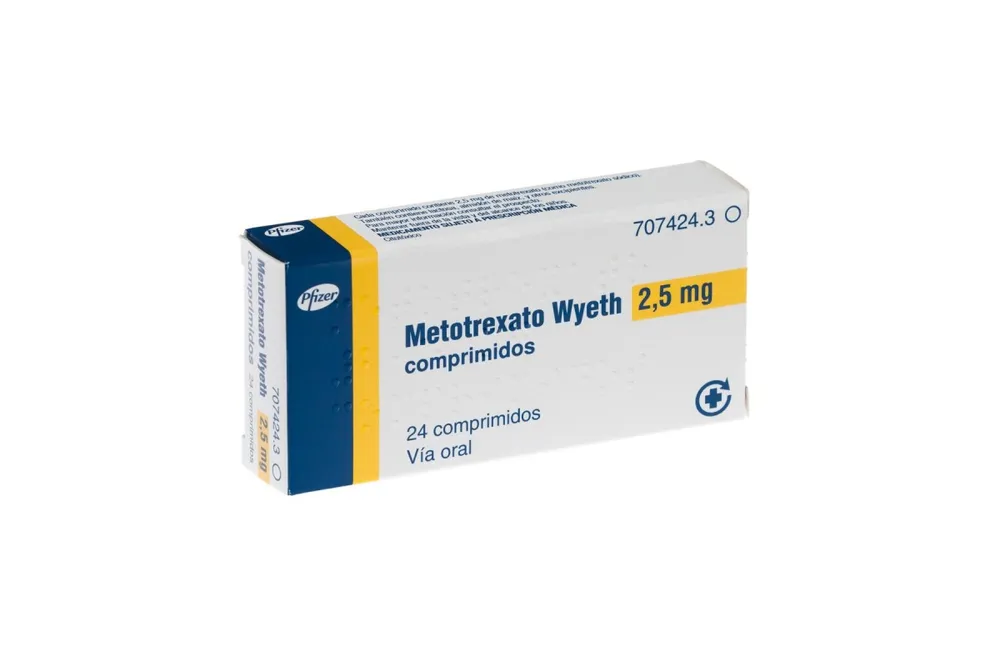
Table of Contents
- Patient Information Leaflet
- Introduction
- 1. What Metotrexato semanal Wyeth is and what it is used for
- 2. What you need to know before starting to take Metotrexate weekly Wyeth
- 3. How to take Metotrexato semanal Wyeth
- 4. Possible adverse effects
- 5. Storage of Metotrexate Weekly Wyeth
- 6. Contents of the pack and other information
Patient Information Leaflet
Introduction
Patient Information Leaflet
Metotrexate Weekly Wyeth 2.5 mg Tablets
DO NOT EXCEED THE DOSE PRESCRIBED BY YOUR DOCTOR. THE DOSE FOR RHEUMATOID ARTHRITIS, JUVENILE IDIOPATHIC ARTHRITIS, PSORIASIS, PSORIATIC ARTHRITIS, REACTIVE ARTHRITIS, ACUTE LYMPHOBLASTIC LEUKAEMIA AND LYMPHOMAS IS ADMINISTERED ONCE WEEKLY. CASES OF DEATH ASSOCIATED WITH DAILY ADMINISTRATION OF THIS MEDICINE, INSTEAD OF WEEKLY, HAVE BEEN REPORTED. CONSULT YOUR DOCTOR OR PHARMACIST IF YOU ARE UNSURE ABOUT THE AMOUNT AND FREQUENCY WITH WHICH YOU SHOULD TAKE THIS MEDICINE.
Read all of this leaflet carefully before you start taking this medicine, as it contains important information for you.
- Keep this leaflet, as you may need to read it again.
- If you have any questions, ask your doctor, pharmacist or nurse.
- This medicine has been prescribed for you only and must not be given to other people, even if they have the same symptoms as you, because it could harm them.
- If you experience any adverse effects, consult your doctor, pharmacist or nurse, even if they are effects not listed in this leaflet. See section 4.
Contents of this leaflet
- What Metotrexate Weekly Wyeth is and what it is used for
- What you need to know before taking Metotrexate Weekly Wyeth
- How to take Metotrexate Weekly Wyeth
- Possible side effects
- How to store Metotrexate Weekly Wyeth
- Contents of the pack and other information
1. What Metotrexato semanal Wyeth is and what it is used for
Metotrexato semanal Wyeth belongs to a group of medicines called antifolate antimetabolites.
High-dose methotrexate is indicated for the treatment of certain types of cancer such as leukemias and lymphomas.
Low-dose methotrexate is indicated for:
- The treatment of various types of arthritis, such as active and severe rheumatoid arthritis in adults, and active and severe polyarticular juvenile idiopathic arthritis, when the response to non-steroidal anti-inflammatory drugs (NSAIDs) has been inadequate.
- The treatment of psoriasis and psoriatic arthritis when other treatments have failed.
- The treatment of reactive arthritis when other treatments have failed.
2. What you need to know before starting to take Metotrexate weekly Wyeth
Before starting to use this medicine, you should consult your doctor about the risks and benefits of treatment with methotrexate. It is very important that you use methotrexate exactly as prescribed by your doctor. If you use methotrexate more frequently or in higher doses than prescribed, you may experience serious adverse reactions, including death.
Do not take Metotrexate weekly Wyeth
-
If you are allergic to methotrexate or to any of the other components of this medicine (listed in section 6).
-
If you have impaired liver function (hepatic insufficiency).
-
If you have severe impairment of kidney function (severe renal insufficiency).
-
If you have liver damage due to excessive alcohol consumption (alcoholic liver disease), chronic liver damage (chronic hepatopathy), or if you are an alcoholic.
-
If your blood levels of red blood cells, white blood cells, or platelets are abnormal.
-
If you have an immune system disorder (immunodeficiency syndromes).
-
In cases of serious, acute, or chronic infections such as tuberculosis and HIV.
-
If you have ulcers in the mouth, stomach, or intestines.
-
If you are due to be vaccinated.
-
If you are breastfeeding.
Additionally, in non-oncological indications (treatment not related to cancer):
- If you are pregnant (see section "Pregnancy, breastfeeding and fertility").
Warnings and precautions
Important warning regarding the dose of Metotrexate weekly Wyeth 2.5 mg tablets:
Take Metotrexate weekly Wyeth only once a week for the treatment of rheumatoid arthritis, juvenile idiopathic arthritis, psoriasis, psoriatic arthritis, reactive arthritis, acute lymphoblastic leukemia, and lymphomas.
Taking too much methotrexate can be fatal. Read section 3 of this leaflet carefully. If you have any questions, consult your doctor or pharmacist before taking this medicine.
Consult your doctor, pharmacist, or nurse before starting to take this medicine.
- Take Metotrexate weekly Wyeth once a week.
- Accidental daily intake of the medicine may result in severe, life-threatening toxicity.
Your doctor will inform you about the benefits and risks of treatment with methotrexate, as well as the symptoms that may indicate possible drug-related toxicity.
If you are in any of the following situations, consult your doctor before using this medicine.
- If you develop signs or symptoms of possible drug toxicity affecting the gastrointestinal tract and/or nervous system, liver, kidneys, lungs, blood, or skin, contact your doctor.
- Strictly follow the dose prescribed by your doctor; for example, a weekly prescribed dose mistakenly taken daily may lead to toxicity, even fatal.
- Its use is not recommended in the treatment of neoplastic diseases in women of childbearing potential unless there is clear medical evidence that expected benefits outweigh the risks.
- If you have folate deficiency, as this may increase methotrexate toxicity.
- If you experience vomiting, diarrhea, or mouth inflammation (stomatitis), inform your doctor, as you may become dehydrated. If this occurs, your doctor may interrupt your treatment until you fully recover. Also inform your doctor if you have peptic ulcer or any type of colitis.
- If you have abnormal blood levels of white blood cells, red blood cells, or platelets. Methotrexate may reduce the number of white blood cells in the blood. If this occurs, you should take certain precautions, including: avoiding contact with people who have infections; contacting your doctor if you suspect you have an infection due to fever or chills, cough, back pain, or difficulty urinating; consulting your doctor before undergoing dental procedures. Additionally, methotrexate may reduce the number of platelets in the blood, which are necessary for blood clotting. Therefore, it is important to consult your doctor if you notice prominent bruising or bleeding from gums or nose, red spots on the skin, blood in urine, or black stools, and to inform your dentist that you are being treated with methotrexate.
- If you are being treated with NSAIDs (non-steroidal anti-inflammatory drugs).
- If you have liver problems, as methotrexate may cause acute hepatitis and chronic liver disorders. Mild liver abnormalities may occur, requiring closer monitoring by your doctor but not necessarily leading to treatment discontinuation. Alcohol, obesity, advanced age, or use of products containing arsenic may increase the risk of liver problems.
- If you have kidney problems, as methotrexate may cause kidney damage.
- If you have any type of infectious process.
- If you are due to be vaccinated, as this could lead to a serious infection or reduced response to the vaccine.
- If neurological toxicity symptoms such as headache, back pain, neck stiffness, fever, confusion, irritability, drowsiness, lack of coordination, dementia, seizures, transient blindness, abnormal reflexes, behavioral changes, or localized movement and sensory disturbances appear during or after treatment.
- If you develop dry cough, fever, chest pain, and/or difficulty breathing during treatment, inform your doctor.
- If you develop skin changes during or after treatment, consult your doctor. Skin lesions in patients with psoriasis may worsen with exposure to sunlight. Previous skin lesions and sunburns may reappear with methotrexate use. Methotrexate may make your skin more sensitive to sunlight. Avoid intense sunlight and do not use tanning beds or ultraviolet lamps without medical advice. To protect your skin from intense sunlight, wear appropriate clothing or use a high-protection sunscreen.
- Acute pulmonary hemorrhage has been reported with methotrexate in patients with underlying rheumatic disease. If you notice blood when spitting or coughing, contact your doctor immediately.
- Methotrexate temporarily affects the production of sperm and ova. Methotrexate may cause miscarriages and severe birth defects. If you are a woman, you must avoid pregnancy during treatment with methotrexate and for at least 6 months after treatment ends. If you are a man, you must avoid fathering a child while receiving methotrexate and for at least 3 months after treatment ends. See also section "Pregnancy, breastfeeding and fertility".
- If you, your partner, or your caregiver notice the onset or worsening of neurological symptoms such as general muscle weakness, vision disturbances, changes in thinking, memory, and orientation leading to confusion and personality changes, contact your doctor immediately, as these may be symptoms of a very rare but serious brain infection called progressive multifocal leukoencephalopathy (PML).
Precautions and recommended additional tests
Even when methotrexate is used at low doses, serious adverse effects may occur. To detect them early, your doctor should perform regular check-ups and laboratory tests.
Before starting treatment:
Before starting treatment, your blood will be analyzed to check if you have sufficient blood cells. Your blood will also be tested to assess liver function and to determine if you have hepatitis. Additionally, serum albumin (a blood protein), hepatitis status (liver infection), and kidney function will be checked. Your doctor may also decide to perform other liver tests, some of which may include imaging of your liver, and others may require a small tissue sample from the liver for closer examination. Your doctor may also check for tuberculosis and take a chest X-ray or perform a lung function test.
During treatment:
Your doctor may perform the following checks:
- Examination of the oral cavity and pharynx to detect mucosal changes such as inflammation or ulceration;
- Blood tests/hematological analysis including blood cell counts and measurement of serum methotrexate levels;
- Blood tests to monitor liver function;
- Diagnostic imaging tests to monitor liver status;
- Liver biopsy (a small tissue sample taken from the liver for closer examination);
- Blood tests to monitor kidney function;
- Respiratory tract monitoring and, if necessary, pulmonary function testing.
It is very important that you attend these scheduled check-ups.
If any of these test results are abnormal, your doctor will adjust your treatment accordingly.
Elderly patients
Elderly patients receiving methotrexate should be closely monitored by a doctor so that possible adverse effects can be detected as early as possible.
Age-related decline in liver and kidney function, as well as low body reserves of folic acid in older age, require a relatively low dose of methotrexate.
Your doctor will regularly monitor your condition to ensure the medicine is having the intended effect.
Children, adolescents, and elderly patients
Children, adolescents, and elderly patients treated with methotrexate should be under close medical supervision to identify possible adverse effects as early as possible.
The use of this medicine is not recommended in children under 3 years of age, as experience with this medicine is insufficient in this age group.
Other medicines and Metotrexate weekly Wyeth
Inform your doctor or pharmacist if you are taking, have recently taken, or might need to take any other medicines.
It is especially important that you inform your doctor if you are taking any of the following medicines:
- Medicines used to treat certain types of cancer, such as cisplatin, mercaptopurine, cytarabine, and L-asparaginase.
- Non-steroidal anti-inflammatory drugs (NSAIDs), such as aspirin and other salicylates, and particularly ketoprofen.
- Proton pump inhibitors (used to treat gastrointestinal ulcers).
- Leflunomide (a medicine for the treatment of arthritis).
- Metamizole (synonyms: novaminsulfone and dipyrone) (a medicine for severe pain and/or fever).
- Medicines with high plasma protein binding (such as salicylates, phenylbutazone, phenytoin, sulfonamides, sulfonylureas, para-aminobenzoic acid, some antibiotics, and medicines for treating abnormal cholesterol and lipid levels such as cholestyramine).
- Probenecid (a medicine used to reduce uric acid levels).
- Antibiotics (ciprofloxacin, penicillins, sulfonamides, tetracyclines, chloramphenicol, pyrimethamine, trimethoprim/sulfamethoxazole) and non-absorbable broad-spectrum antibiotics in the gastrointestinal tract.
- Medicines that cause liver toxicity (such as leflunomide, azathioprine, sulfasalazine, and retinoids).
- Theophylline (a medicine for the treatment of asthma).
- Vitamins or vitamin preparations containing folic acid or its derivatives.
- Nitrous oxide (an anesthetic).
- Amiodarone (a medicine for the treatment of heart rhythm disorders).
- Diuretics (such as triamterene).
Additionally, certain therapies may interact with methotrexate. This includes PUVA therapy (psoralen and ultraviolet light) in patients with psoriasis or a condition called mycosis fungoides, as well as radiotherapy.
During treatment with methotrexate, caution should be exercised when receiving red blood cell transfusions.
Use of Metotrexate weekly Wyeth with food, drinks, and alcohol
While taking methotrexate, you should avoid alcohol consumption, as this may increase the likelihood of adverse effects, especially on the liver. You should also avoid excessive consumption of coffee, caffeinated soft drinks, and black tea. Your doctor may advise you to drink more fluids than usual. This will help eliminate the medicine and prevent kidney problems.
Pregnancy, breastfeeding, and fertility
If you are pregnant or breastfeeding, think you may be pregnant, or plan to become pregnant, consult your doctor or pharmacist before using this medicine.
Consult your doctor or pharmacist before using any medicine.
- Pregnancy:
Do not use this medicine during pregnancy except if prescribed by your doctor as oncological treatment (cancer therapy). Methotrexate may cause birth defects, harm the fetus, or cause miscarriage. It is associated with malformations of the skull, face, heart and blood vessels, brain, and limbs. Therefore, it is very important that it is not administered to pregnant women or women planning to become pregnant, except when used as oncological treatment.
For non-oncological indications (not related to cancer) in women of childbearing age, any possibility of pregnancy must be ruled out, for example, by a pregnancy test, before starting treatment.
Do not use this medicine if you are trying to become pregnant. You must avoid becoming pregnant while taking methotrexate and for at least 6 months after treatment ends. To achieve this, you must ensure you are using reliable contraceptive methods throughout this period (see also section "Warnings and precautions").
If you become pregnant during treatment or suspect you may be pregnant, consult your doctor as soon as possible. If you become pregnant during treatment, you must receive information about the risk of harmful effects on the child during treatment.
If you wish to become pregnant, consult your doctor, who may refer you to a specialist for counseling before the planned start of treatment.
- Breastfeeding:
Do not breastfeed during treatment, as methotrexate passes into breast milk. If your doctor considers it absolutely necessary to continue methotrexate treatment during breastfeeding, you must stop breastfeeding.
- Male fertility:
Available data do not indicate an increased risk of malformations or miscarriages if the father takes a methotrexate dose below 30 mg/week. However, this risk cannot be completely ruled out, and there is no information regarding higher doses of methotrexate. Methotrexate may be genotoxic, meaning it may cause genetic mutations. Methotrexate may affect sperm production, which is associated with the possibility of birth defects.
For this reason, you should avoid fathering a child or donating semen during treatment with methotrexate and for at least 3 months after treatment ends. Since methotrexate treatment at higher doses, commonly used in cancer therapy, may cause infertility and genetic mutations, men receiving methotrexate doses above 30 mg/week are advised to consider sperm preservation before starting treatment (see also section "Warnings and precautions").
Driving and using machines
Driving vehicles or operating machinery is not recommended after administration of Metotrexate weekly Wyeth, as some possible adverse effects such as dizziness and fatigue may impair your ability to drive or operate machinery.
Metotrexate weekly Wyeth contains lactose
This medicine contains lactose. If your doctor has informed you that you have an intolerance to certain sugars, consult with him before taking this medicine.
3. How to take Metotrexato semanal Wyeth
Follow exactly the instructions given by your doctor or pharmacist for taking this medicine, and take only the number of tablets prescribed to treat your condition. If in doubt, consult your doctor or pharmacist again. If you use methotrexate more frequently or in higher doses than prescribed by your doctor, you may experience serious adverse reactions, including death.
Recommended dose:
Dose for arthritis, psoriasis, and reactive arthritis:
Take Metotrexato semanal Wyeth 2.5 mg tablets once weekly only.
The initial dose for rheumatoid arthritis in adults is 3 tablets (7.5 mg) once per week. Depending on your response to treatment, your doctor may consider increasing the dose by 1 tablet every 6–8 weeks, up to a maximum weekly dose of 8 tablets (20 mg).
The recommended initial dose for polyarticular juvenile idiopathic arthritis is 10–15 mg/m² once weekly, administered orally.
The initial dose for adults with psoriasis and psoriatic arthritis is 3 tablets (7.5 mg) once per week. Depending on your response to treatment, your doctor may consider increasing the dose by 1 tablet every 4–6 weeks, up to a maximum weekly dose of 10 tablets (25 mg).
The recommended dose for reactive arthritis is 3 tablets (7.5 mg) once per week. Depending on your response to treatment, your doctor may consider increasing the dose up to a maximum of 8 tablets (20 mg) per week.
Dose for leukemias and lymphomas:
Your doctor will indicate the dose you should take for your condition and when to take it. Take exactly that prescribed dose.
It may take several months before you experience the full benefits of this medicine. Do not increase your dose, take this medicine more frequently, or for longer than prescribed. Your condition will not improve more quickly, and instead you may increase your risk of experiencing adverse effects, which could be potentially fatal.
Graphical information on tablet intake for inflammatory indications in adults
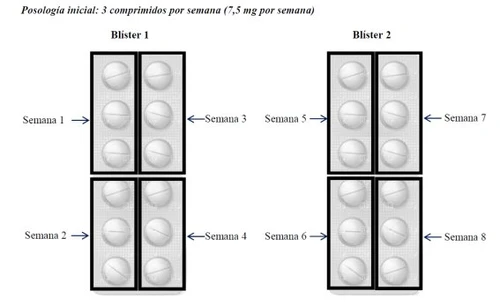
Each package of Metotrexato semanal Wyeth contains 24 tablets, divided into 2 blister packs of 12 tablets each. Each tablet contains 2.5 mg of methotrexate. Below are graphical illustrations showing the recommended number of tablets to take for each of the inflammatory indications described above. It is very important that you follow your doctor’s instructions and take only the exact number of tablets prescribed for your condition. Remember that the tablets prescribed by your doctor must be taken once weekly. Please note the day chosen for your weekly dose in the space provided for this purpose on the package.
RHEUMATOID ARTHRITIS, PSORIASIS, AND PSORIATIC ARTHRITIS
The initial dose for adults is 3 tablets (7.5 mg) once per week. Therefore, a package of Metotrexato semanal Wyeth containing 24 tablets provides an 8-week supply, with tablets distributed as follows:
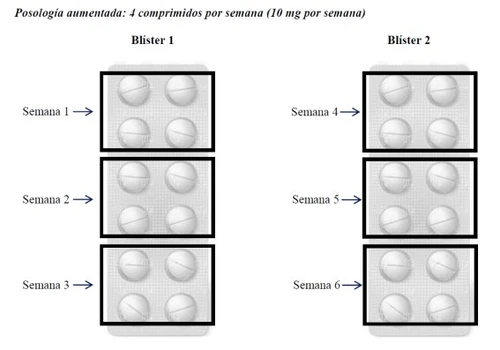
If the dose needs to be increased, 1 additional tablet (2.5 mg) per week will be added, i.e., 4 tablets per week. In this case, a package of Metotrexato semanal Wyeth with 24 tablets will cover 6 weeks of treatment, as follows:
REACTIVE ARTHRITIS
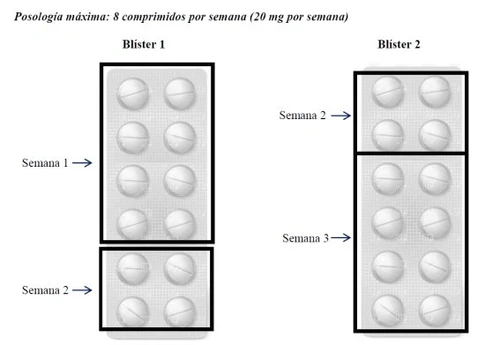
The recommended dose is 3 tablets (7.5 mg) to 8 tablets (20 mg) once per week. Therefore, a package of Metotrexato semanal Wyeth containing 24 tablets covers 8 weeks of treatment at the initial dose of 3 tablets (7.5 mg), with tablets distributed as follows:

If your doctor increases your dose, they will add 1 additional tablet (2.5 mg) per week, up to a maximum of 8 tablets (20 mg) per week. Only if your doctor prescribes the maximum dose will a package of Metotrexato semanal Wyeth with 24 tablets cover 3 weeks of treatment, as follows:
Use in elderly patients
Elderly patients should receive a relatively low dose due to age-related decreases in hepatic and renal function and reduced folate reserves.
Use in patients with kidney or liver problems
Consult your doctor, as dose adjustment may be necessary and in some cases the medicine may be contraindicated.
Use in children
The doctor will calculate the required dose based on the child's body surface area (m²), and the dose is expressed in mg/m².
If you take more Metotrexato semanal Wyeth than you should
If you have taken more Metotrexato semanal Wyeth than you should, contact your doctor or pharmacist immediately.
In case of overdose or accidental ingestion, contact the Toxicology Information Service at telephone number 91 562 04 20, indicating the medicine and the amount ingested.
An overdose of methotrexate may cause severe toxic reactions. Symptoms of overdose may include rapid bruising or bleeding, unusual weakness, mouth sores, nausea, vomiting, black or bloody stools, coughing up blood or vomiting material that looks like coffee grounds, and decreased urination (emptying of urine from the bladder). See also section 4.
If you have received more methotrexate than you should have, administration of leucovorin (folinic acid) is recommended as soon as possible, along with hydration and urinary alkalinization.
If you forget to take Metotrexato semanal Wyeth
Do not take a double dose to make up for missed doses. Take the next dose at the scheduled time.
If you stop taking Metotrexato semanal Wyeth
Do not interrupt treatment unless instructed by your doctor. If you have any further questions about the use of this medicine, ask your doctor, pharmacist, or nurse.
If you have any further questions about the use of this medicine, ask your doctor or pharmacist.
4. Possible adverse effects
Like all medicines, this medicine can cause adverse effects, although not everyone experiences them.
If you consider any of the adverse effects you experience to be severe, or if you notice any adverse effects not listed in this leaflet, inform your doctor or pharmacist.
Contact your doctor immediately if you experience wheezing, difficulty breathing, swelling of the eyelids, face or lips, skin rash or itching (especially if it affects your whole body).
Contact your doctor immediately if you notice any of the following adverse effects:
- breathing problems (symptoms may include general feeling of discomfort, dry and irritating cough, shortness of breath, difficulty breathing, chest pain or fever)
- coughing up blood*
- severe peeling or blisters on the skin
- bleeding (including blood in vomit) or unusual bruising or nosebleeds
- nausea, vomiting, stomach discomfort or severe diarrhea
- mouth sores
- black or tarry stools
- blood in urine or stools
- red spots on the skin
- fever, sore throat, flu-like symptoms
- yellowing of the skin (jaundice) or dark-colored urine
- pain or difficulty urinating
- thirst and/or frequent need to urinate
- seizures (convulsions)
- loss of consciousness
- restricted vision or blurred vision
- extreme tiredness
*Reported with methotrexate when used in patients with underlying rheumatological disease.
The following adverse effects have also been reported:
Very common (may affect more than 1 in 10 people):
- loss of appetite, nausea (feeling sick), vomiting, abdominal pain, indigestion, inflammation and ulcers in the mouth and throat
- blood tests indicating increased liver enzymes.
Common (may affect up to 1 in 10 people):
- infections
- reduced production of red blood cells, white blood cells or platelets (leucopenia, anemia, thrombocytopenia)
- headache, fatigue, dizziness
- lung inflammation (pneumonitis) with dry cough, difficulty breathing and fever
- diarrhea
- skin rash, redness of the skin and itching.
Uncommon (may affect up to 1 in 100 people):
- lymphoma (lump in neck, groin or armpits, accompanied by back pain, weight loss or night sweats)
- severe allergic reactions
- diabetes
- depression
- dizziness, confusion, seizures
- lung damage
- ulcers and bleeding in the digestive tract
- liver disease, decreased blood proteins
- urticaria, sunburn-like reactions due to increased skin sensitivity to sunlight
- brown discoloration of the skin, hair loss, increase in number of rheumatoid nodules, herpes zoster, painful psoriasis, slow wound healing
- joint or muscle pain, osteoporosis (decreased bone strength)
- kidney disease, inflammation or ulcers of the bladder (possibly with blood in urine), painful urination
- inflammation and ulcers in the vagina.
Rare (may affect up to 1 in 1,000 people):
- blood disorder characterized by the presence of very large red blood cells (megaloblastic anemia)
- mood disturbances
- weakness in movements, sometimes affecting only the right or left side of the body
- significant visual disturbances
- inflammation of the sac surrounding the heart, fluid accumulation in the sac surrounding the heart
- low blood pressure, blood clots
- tonsillitis, respiratory arrest, asthma
- pancreatitis, inflammation of the digestive tract, blood in stools, inflammation of the gums, digestive problems
- acute hepatitis (liver inflammation)
- nail discoloration, acne, red or purple spots due to bleeding in blood vessels
- worsening of psoriasis during UV irradiation treatment
- sunburn-like skin lesions or radiation therapy-induced dermatitis
- bone fractures
- kidney failure, decreased or absent urine production, abnormal levels of electrolytes in the blood
- defective sperm formation, menstrual disorders.
Very rare (may affect up to 1 in 10,000 people):
- systemic viral, fungal or bacterial infections
- serious bone marrow disorder (anemia), gland inflammation
- lymphoproliferative disorders (excessive growth of white blood cells)
- insomnia
- pain, muscle weakness, changes in taste sensation (metallic taste), inflammation of the membrane covering the brain with paralysis or vomiting, numbness or tingling sensation/reduced sensitivity to stimuli
- impaired movement of muscles used for speech, difficulty speaking, language impairment, drowsiness or fatigue, confusion, abnormal sensations in the head, brain inflammation, ringing in the ears (tinnitus)
- eye redness, damage to the retina of the eye
- fluid accumulation in the lungs, lung infections
- vomiting blood, serious complications in the digestive tract
- liver failure
- nail infections, nail detachment from the nail bed, boils, dilation of small blood vessels, damage to blood vessels in the skin, allergic inflammation of blood vessels
- protein in the urine
- decreased libido, erectile dysfunction, vaginal discharge, infertility, breast enlargement in men (gynecomastia)
- fever.
Frequency not known (cannot be estimated from available data):
- pathological changes in the white matter of the brain (leukoencephalopathy)
- bleeding
- pulmonary hemorrhage*
- redness and peeling of the skin
- jaw bone injury (secondary to excessive increase in white blood cells)
- swelling
*Reported with methotrexate when used in patients with underlying rheumatological disease.
Reporting of adverse effects
If you experience any type of adverse effect, talk to your doctor, pharmacist or nurse, even if it is a possible adverse effect not listed in this leaflet. You may also report them directly via the Spanish Pharmacovigilance System for Human Medicines: https://www.notificaram.es. By reporting adverse effects, you can help provide more information on the safety of this medicine.
5. Storage of Metotrexate Weekly Wyeth
Keep this medicine out of the sight and reach of children.
Do not store above 25°C.
Do not use this medicine after the expiry date stated on the packaging after EXP. The expiry date refers to the last day of the month indicated.
Medicines must not be disposed of via wastewater or household waste. Dispose of unused medicines and their containers at the SIGRE collection point at your pharmacy. If you are unsure, please ask your pharmacist how to dispose of medicines and containers you no longer need. This will help protect the environment.
6. Contents of the pack and other information
Composition of Metotrexate Weekly Wyeth
- The active substance is methotrexate.
- The other components are: maize starch, monohydrate lactose, magnesium stearate and sodium hydroxide.
Appearance of the medicinal product and contents of the pack
Metotrexate Weekly Wyeth 2.5 mg tablets are presented in PVC/aluminum blisters containing 24 tablets for oral administration.
Marketing Authorization Holder
WYETH FARMA, S.A.
Ctra. Burgos, Km. 23
San Sebastián de los Reyes
28700 – Madrid
Spain
Manufacturer responsible for manufacturing
Excella GmbH & Co. KG
Nürnberger Strasse 12,
90537 Feucht,
Germany
For further information on this medicinal product, please contact the local representative of the Marketing Authorization Holder:
Pfizer, S.L.
Avda. de Europa, 20-B
Parque Empresarial La Moraleja
28108 Alcobendas (Madrid)
Spain
Date of the most recent review of this leaflet: March 2025.
Detailed and up-to-date information on this medicinal product is available on the website of the Spanish Agency for Medicines and Health Products (AEMPS) http://www.aemps.gob.es/