Methotrexate Pfizer 25 mg/ml solution for injection EFG
Spain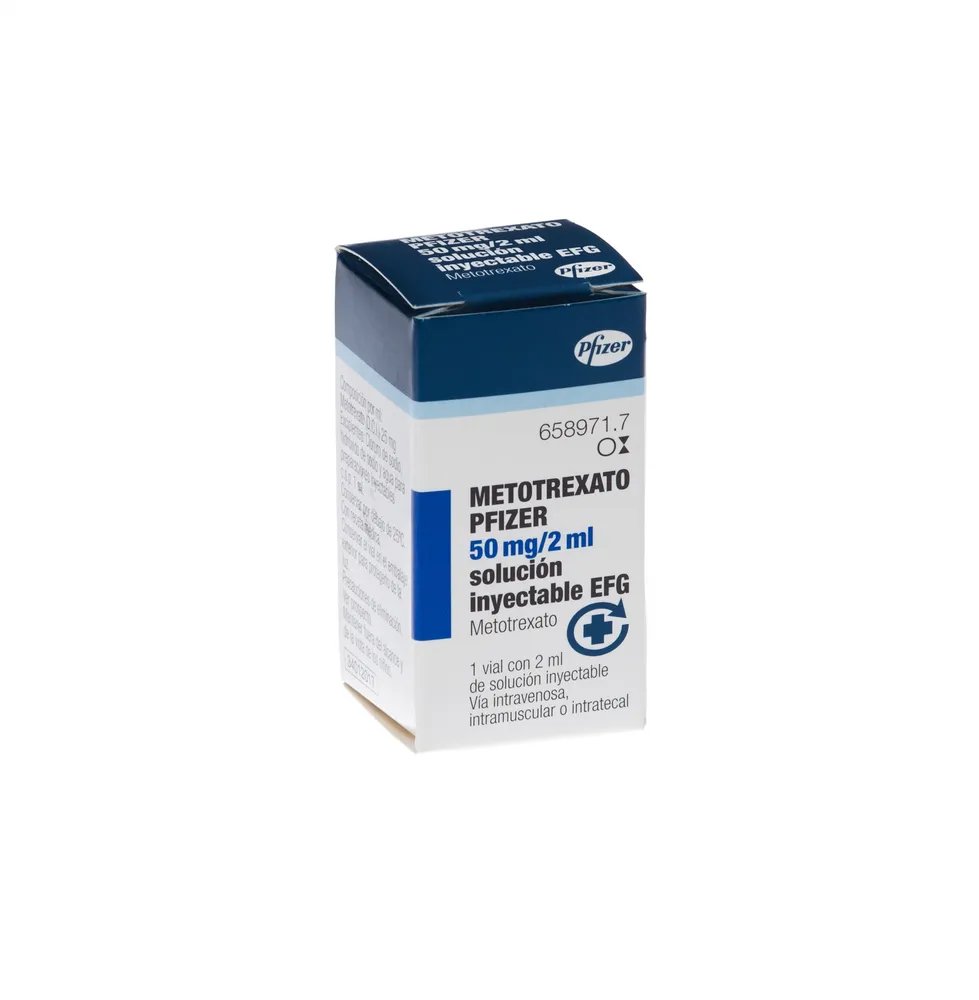
Table of Contents
- Package leaflet: Information for the user
- Introduction
- 1. What Metotrexate Pfizer is and what it is used for
- 2. What you need to know before using Metotrexate Pfizer
- 3. How to use Metotrexate Pfizer
- 4. Possible adverse effects
- 5. Storage of Methotrexate Pfizer
- 6. Package contents and other information
Package leaflet: Information for the user
Introduction
Package leaflet: information for the user
Metotrexate Pfizer 25 mg/ml injection solution EFG
Read all of this leaflet carefully before you start using this medicine, because it contains important information for you.
- Keep this leaflet, as you may need to read it again.
- If you have any questions, ask your doctor, pharmacist or nurse.
- This medicine has been prescribed for you only, and you should not give it to other people, even if they have the same symptoms as you, because it may harm them.
- If you experience any adverse effects, consult your doctor, pharmacist or nurse, even if these are adverse effects not listed in this leaflet. See section 4.
Contents of the leaflet
- What Metotrexate Pfizer is and what it is used for
- What you need to know before using Metotrexate Pfizer
- How to use Metotrexate Pfizer
- Possible adverse effects
- Keeping (storage) of Metotrexate Pfizer
- Contents of the pack and other information
1. What Metotrexate Pfizer is and what it is used for
Metotrexate belongs to a group of medicines known as antifolate antimetabolites.
Metotrexate is used in high doses to treat many types of cancer. At lower doses, it may also be used to treat psoriasis and rheumatoid arthritis.
Metotrexate is indicated for the treatment of various malignant diseases such as choriocarcinoma (a tumour directly associated with pregnancy), acute leukaemia, breast cancer, head and neck cancer, urinary bladder cancer, osteogenic sarcoma (bone cancer), and malignant lymphomas. It is also indicated for the prevention and treatment of meningeal leukaemia (leukaemic infiltration of the central nervous system).
Additionally, it is used in the treatment of severe rheumatoid arthritis; in the treatment of juvenile idiopathic arthritis, psoriasis, and psoriatic arthritis (only when severity warrants it and other treatments have failed).
It is also indicated for the prevention of graft-versus-host disease in allogeneic bone marrow transplantation.
2. What you need to know before using Metotrexate Pfizer
Before starting to use this medicine, you should consult your doctor about the risks and benefits of using methotrexate. It is very important that you use methotrexate exactly as prescribed by your doctor. If you use methotrexate more frequently or in higher doses than prescribed, you may suffer serious illness, including death.
Do not use Metotrexate Pfizer:
- If you are allergic to methotrexate or to any of the other components of this medicine (listed in section 6).
- If you have impaired liver function (hepatic insufficiency).
- If you have severe impairment of kidney function (severe renal insufficiency).
- If you have liver damage due to excessive alcohol consumption (alcoholic hepatopathy), chronic liver damage (chronic hepatopathy), or if you are an alcoholic.
- If you have abnormal blood levels of red blood cells, white blood cells, or platelets.
- If you have an immune system disorder (immunodeficiency syndromes).
- In cases of severe, acute, or chronic infections such as tuberculosis and HIV.
- If you have mouth, stomach, or intestinal ulcers.
- If you are due to be vaccinated.
- If you are breastfeeding.
Additionally, for non-oncological indications (not related to cancer):
- If you are pregnant (see section "Pregnancy, breastfeeding, and fertility").
Warnings and precautions
Talk to your doctor, pharmacist, or nurse before starting to use Metotrexate Pfizer.
Your doctor will inform you about the benefits and risks of methotrexate treatment, as well as symptoms that may indicate possible drug-related toxicity.
If you are in any of the situations listed below, consult your doctor before using this medicine.
- If you develop signs or symptoms of possible gastrointestinal and/or neurological, liver, kidney, lung, blood, or skin toxicity, contact your doctor.
- If you do not strictly follow the prescribed dose—for example, if a weekly dose is mistakenly taken daily—this may lead to toxicity, even fatal toxicity.
- Its use is not recommended in the treatment of neoplastic diseases (cancer) in women of childbearing potential unless there is clear medical evidence that expected benefits outweigh the risks.
- If you have folate deficiency, as this may increase methotrexate toxicity.
- If you experience vomiting, diarrhea, or mouth inflammation (stomatitis), inform your doctor, as you may become dehydrated. In such cases, your doctor may temporarily interrupt treatment until you fully recover. Also inform your doctor if you have peptic ulcer or any type of colitis.
- If you have abnormal blood levels of white blood cells, red blood cells, or platelets. Methotrexate may reduce white blood cells in the blood. If this occurs, you should take certain precautions, including: avoiding contact with people who have infections; contacting your doctor if you suspect an infection (fever or chills, cough, back pain, or difficulty urinating); and consulting your doctor before undergoing dental procedures. Methotrexate may also reduce platelet count, which are necessary for blood clotting. Therefore, it is important to contact your doctor if you experience unusual bruising or bleeding from gums or nose, red spots on the skin, blood in urine, or black stools. Inform your dentist that you are receiving methotrexate treatment.
- If you are taking NSAIDs (non-steroidal anti-inflammatory drugs).
- If you have liver problems, as methotrexate may cause acute hepatitis and chronic liver disorders. Mild liver abnormalities may occur, requiring closer monitoring by your doctor but not necessarily leading to treatment discontinuation. Alcohol, obesity, advanced age, and use of products containing arsenic may increase the risk of liver problems.
- If you have kidney problems, as methotrexate may cause kidney damage.
- If you have any type of infectious process.
- If you are due to be vaccinated, as this may lead to a serious infection or reduced response to the vaccine.
- If during or after treatment you develop neurological toxicity symptoms such as headache, back pain, neck stiffness, fever, confusion, irritability, drowsiness, lack of coordination, dementia, seizures, transient blindness, abnormal reflexes, behavioral changes, or localized movement and sensory disturbances.
- If during treatment you develop dry cough, fever, chest pain, and/or difficulty breathing, inform your doctor.
- If during treatment or days afterward you develop skin abnormalities, consult your doctor. Skin lesions in patients with psoriasis may worsen with sun exposure. Previous skin lesions or sunburns may reappear during methotrexate treatment. Methotrexate may make your skin more sensitive to sunlight. Avoid intense sunlight and do not use sunbeds or ultraviolet lamps without medical advice. To protect your skin from strong sunlight, wear appropriate clothing or use a high-protection sunscreen.
- Acute pulmonary hemorrhage has been reported with methotrexate in patients with underlying rheumatic disease. If you cough up blood or experience hemoptysis, contact your doctor immediately.
- Methotrexate temporarily affects sperm and egg production. Methotrexate may cause miscarriages and severe birth defects. Women must avoid pregnancy during methotrexate treatment and for at least 6 months after treatment ends. Men must avoid fathering a child during methotrexate treatment and for at least 3 months after treatment ends. See also section "Pregnancy, breastfeeding, and fertility."
- If you, your partner, or caregiver notice the onset or worsening of neurological symptoms such as generalized muscle weakness, vision disturbances, changes in thinking, memory, and orientation leading to confusion, or personality changes, contact your doctor immediately, as these may be symptoms of a very rare but serious brain infection called progressive multifocal leukoencephalopathy (PML).
Precautions and recommended monitoring tests
Even when methotrexate is used at low doses, serious adverse effects may occur. To detect them early, your doctor should perform regular check-ups and laboratory tests.
Before starting treatment:
Before beginning treatment, your blood will be tested to ensure you have adequate blood cell counts. Your blood will also be tested to assess liver function and to check for hepatitis. Serum albumin (a blood protein), hepatitis status (liver infection), and kidney function will also be evaluated. Your doctor may decide to perform additional liver tests, some of which may include liver imaging and others requiring a small liver tissue sample for closer examination. Your doctor may also screen for tuberculosis and may order a chest X-ray or pulmonary function test.
During treatment:
Your doctor may perform the following monitoring procedures:
-
- Examination of the oral cavity and pharynx to detect mucosal changes such as inflammation or ulceration;
-
- Blood tests/hematological analysis including blood cell counts and measurement of serum methotrexate levels;
-
- Blood tests to monitor liver function;
-
- Imaging diagnostic tests to monitor liver status;
-
- Liver biopsy (small tissue sample for closer examination);
-
- Blood tests to monitor kidney function;
-
- Respiratory tract monitoring and, if necessary, pulmonary function testing.
It is very important that you attend these scheduled check-ups.
If any of these test results are abnormal, your doctor will adjust your treatment accordingly.
Elderly patients
Elderly patients receiving methotrexate should be closely monitored by a doctor so that potential adverse effects can be detected as early as possible.
Age-related decline in liver and kidney function, as well as reduced body stores of folic acid in older age, require a relatively low dose of methotrexate.
Other medicines and Metotrexate Pfizer
Inform your doctor or pharmacist if you are currently using, have recently used, or might need to use any other medicines.
Certain medicines may interact with methotrexate:
- Medicines used to treat certain types of cancer, such as cisplatin, mercaptopurine, cytarabine, and L-asparaginase.
- Non-steroidal anti-inflammatory drugs (NSAIDs), such as aspirin and other salicylates, and especially ketoprofen.
- Proton pump inhibitors (used to treat gastrointestinal ulcers).
- Leflunomide (a medicine for the treatment of arthritis).
- Metamizole (synonyms: novaminsulfone and dipyrone) (a medicine for severe pain and/or fever).
- Medicines with high plasma protein binding (such as salicylates, phenylbutazone, phenytoin, sulfonamides, sulfonylureas, para-aminobenzoic acid, certain antibiotics, and lipid-lowering medicines such as cholestyramine).
- Probenecid (a medicine used to lower uric acid levels).
- Antibiotics (ciprofloxacin, penicillins, sulfonamides, tetracyclines, chloramphenicol, pyrimethamine, trimethoprim/sulfamethoxazole) and broad-spectrum antibiotics not absorbed in the gastrointestinal tract.
- Medicines causing liver toxicity (such as leflunomide, azathioprine, sulfasalazine, and retinoids).
- Theophylline (a medicine for asthma treatment).
- Vitamins or vitamin preparations containing folic acid or its derivatives.
- Nitrous oxide (anesthetic).
- Amiodarone (a medicine for cardiac arrhythmias).
- Diuretics (such as triamterene).
The administration of certain types of vaccines is not recommended during methotrexate treatment.
Additionally, certain therapies may interact with methotrexate, such as PUVA therapy (psoralen and ultraviolet light) in patients with psoriasis or mycosis fungoides, as well as radiotherapy.
During methotrexate treatment, caution is required when receiving red blood cell transfusions.
Use of Metotrexate with food, drinks, and alcohol
While using methotrexate, you should avoid alcohol consumption, as this may increase the likelihood of adverse effects, especially on the liver. Your doctor may advise you to drink more fluids than usual. This will help eliminate the medicine and prevent kidney problems.
Pregnancy, breastfeeding, and fertility
If you are pregnant or breastfeeding, think you may be pregnant, or plan to become pregnant, consult your doctor or pharmacist before using this medicine.
Consult your doctor or pharmacist before using any medicine.
- Pregnancy:
Do not use this medicine during pregnancy except if prescribed by your doctor as oncological treatment (cancer therapy). Methotrexate may cause birth defects, harm the fetus, or cause miscarriage. It is associated with malformations of the skull, face, heart and blood vessels, brain, and limbs. Therefore, it is very important that it is not administered to pregnant women or women planning pregnancy, except when used as oncological treatment.
For non-oncological indications (not related to cancer) in women of childbearing age, pregnancy must be ruled out before starting treatment, for example, by a pregnancy test.
Do not use this medicine if you are trying to become pregnant. You must avoid pregnancy while taking methotrexate and for at least 6 months after stopping treatment. For this reason, you must ensure you are using reliable contraception throughout this period (see also section "Warnings and precautions").
If you become pregnant during treatment or suspect you may be pregnant, contact your doctor immediately. If you become pregnant during treatment, you must receive information about the risk of harmful effects on the child.
If you wish to become pregnant, consult your doctor, who may refer you to a specialist for counseling before starting treatment.
- Male fertility:
Available data do not indicate an increased risk of birth defects or miscarriages if the father takes a methotrexate dose below 30 mg/week. However, this risk cannot be completely ruled out, and there is no information regarding higher methotrexate doses. Methotrexate may be genotoxic, meaning it may cause genetic mutations. Methotrexate may affect sperm production, which is associated with the possibility of birth defects.
For this reason, you must avoid fathering a child or donating semen during methotrexate treatment and for at least 3 months after treatment ends. Since methotrexate treatment at higher doses, commonly used in cancer therapy, may cause infertility and genetic mutations, men receiving methotrexate doses above 30 mg/week are advised to consider sperm preservation before starting treatment (see also section "Warnings and precautions").
- Breastfeeding:
Methotrexate has been detected in breast milk and is therefore contraindicated during breastfeeding.
Driving and operating machinery
Driving vehicles or operating machinery is not recommended after administration of Metotrexate Pfizer, as some possible adverse effects such as dizziness and fatigue may impair your ability to drive or operate machinery.
Metotrexate Pfizer contains sodium
This medicine contains less than 1 mmol of sodium (23 mg) per milliliter (mL), i.e., it is essentially "sodium-free."
3. How to use Metotrexate Pfizer
Metotrexate Pfizer is a medication that should be used exactly as prescribed by your doctor. Follow the dosage and administration instructions provided carefully.
-
Dosage: The dose of Metotrexate Pfizer depends on the condition being treated and individual patient factors such as body weight, kidney function, and response to therapy. Never change the dose without consulting your doctor.
-
Administration:
- Metotrexate Pfizer is usually taken once a week, not daily. Taking it more frequently can lead to serious side effects.
- It can be taken with or after food to reduce stomach upset.
- Swallow the tablets whole with a full glass of water.
-
Missed Dose: If you forget to take a dose, take it as soon as you remember, but only if it is still within the same day. If you miss the entire day, skip the missed dose and take the next dose at your regular scheduled time the following week. Do not take a double dose to make up for a missed one.
-
Important Precautions:
- Regular blood tests are required to monitor your blood counts, liver and kidney function while taking Metotrexate Pfizer.
- Avoid alcohol consumption, as it may increase the risk of liver damage.
- Avoid becoming pregnant or fathering a child while using this medicine, as it may harm the unborn baby. Use effective contraception during treatment and for some time after stopping the medication, as directed by your doctor.
- Inform any healthcare provider about your use of Metotrexate Pfizer before undergoing surgery or receiving any other medications, including over-the-counter drugs and vaccines.
-
Avoid Live Vaccines: Do not receive live vaccines while taking Metotrexate Pfizer, as they may not be effective or could cause infection.
Always consult your doctor or pharmacist if you have any questions about how to use Metotrexate Pfizer.
Important warning about the dose of Metotrexato Pfizer 25 mg/ml injectable solution (methotrexate): Use Metotrexato Pfizer only once a week for the treatment of rheumatoid arthritis, juvenile idiopathic arthritis, psoriasis, and psoriatic arthritis. Overuse of methotrexate can be fatal. Read this section of the leaflet very carefully. If you have any doubts, consult your doctor or pharmacist before using this medicine. |
Methotrexate must only be prescribed by physicians experienced in the use of methotrexate and fully aware of the risks associated with methotrexate treatment.
Always follow exactly the administration instructions for this medicine as indicated by your doctor or pharmacist. If in doubt, consult your doctor or pharmacist again.
Your doctor will determine the dose, duration of treatment, and the most appropriate route of administration for you, based on your condition and response to treatment.
When high doses of methotrexate are administered, your doctor may prescribe a vitamin called folic acid to be taken on subsequent days to help prevent adverse effects of the medicine. It is very important that you take the folic acid doses exactly as directed by your doctor. Likewise, your doctor may emphasize the need to drink plenty of fluids to prevent possible kidney problems.
If you use more Metotrexato Pfizer than you should
Although unlikely, if you were to receive more methotrexate than intended, administration of folinic acid as soon as possible is recommended, along with hydration and urinary alkalinization. In addition, you might experience some of the known adverse effects of the medicine.
If you have any further questions about the use of this medicine, ask your doctor, pharmacist, or nurse.
4. Possible adverse effects
Like all medicines, this medicine may cause adverse effects, although not everyone experiences them.
If you consider any of the adverse effects you experience to be severe, or if you notice any adverse effects not listed in this leaflet, inform your doctor or pharmacist.
Inform your doctor immediately if you experience whistling sounds when breathing, difficulty breathing, swelling of the eyelids, face or lips, skin rash or itching (especially if it affects your entire body).
Inform your doctor immediately if you notice any of the following adverse effects:
- breathing problems (symptoms may include general feeling of discomfort, dry and irritating cough, shortness of breath, difficulty breathing, chest pain or fever)
- coughing up blood*
- severe peeling or blistering of the skin
- bleeding (including blood in vomit) or unusual bruising or nosebleeds
- nausea, vomiting, abdominal discomfort or severe diarrhea
- mouth sores
- black or tarry stools
- blood in the urine or stools
- red spots on the skin
- fever, sore throat, flu-like symptoms
- yellowing of the skin (jaundice) or dark-colored urine
- pain or difficulty urinating
- excessive thirst and/or frequent need to urinate
- seizures
- loss of consciousness
- restricted vision or blurred vision
- extreme tiredness
*reported with methotrexate when used in patients with underlying rheumatological disease.
The following adverse effects have also been reported:
Very common (may affect more than 1 in 10 people):
- loss of appetite, nausea, vomiting, abdominal pain, indigestion, inflammation and ulcers in the mouth and throat
- blood tests indicating increased liver enzymes.
Common (may affect up to 1 in 10 people):
- infections
- reduced production of red blood cells, white blood cells or platelets (leucopenia, anemia, thrombocytopenia)
- headache, fatigue, dizziness
- lung inflammation (pneumonitis) with dry cough, difficulty breathing and fever
- diarrhea
- skin rash, skin redness and itching.
Uncommon (may affect up to 1 in 100 people):
- lymphoma (lump in the neck, groin or armpits, accompanied by back pain, weight loss or night sweats)
- severe allergic reactions
- diabetes
- depression
- dizziness, confusion, seizures
- lung damage
- ulcers and bleeding in the digestive tract
- liver disease, decreased blood proteins
- hives, sunburn-like reactions due to increased skin sensitivity to sunlight
- brown skin discoloration, hair loss, increase in number of rheumatoid nodules, shingles (herpes zoster), painful psoriasis, slow wound healing
- joint or muscle pain, osteoporosis (reduced bone density)
- kidney disease, inflammation or ulcers of the bladder (possibly also with blood in the urine), pain when urinating
- inflammation and ulcers in the vagina.
Rare (may affect up to 1 in 1,000 people):
- blood disorder characterized by the presence of very large red blood cells (megaloblastic anemia)
- mood disturbances
- weakness in movement, sometimes limited only to the right or left side of the body
- significant visual disturbances
- inflammation of the sac surrounding the heart, fluid accumulation in the sac surrounding the heart
- low blood pressure, blood clots
- tonsillitis, respiratory arrest, asthma
- pancreatitis, inflammation of the digestive tract, blood in the stools, gum inflammation, digestive problems
- acute hepatitis (liver inflammation)
- change in nail color, acne, red or purple spots due to bleeding in blood vessels
- worsening of psoriasis during UV irradiation treatment
- sunburn-like skin lesions or radiation-induced dermatitis
- bone fractures
- kidney failure, reduced or absent urine production, abnormal blood electrolyte levels
- defective sperm formation, menstrual disorders.
Very rare (may affect up to 1 in 10,000 people):
- systemic viral, fungal or bacterial infections
- severe bone marrow disorder (anemia), gland inflammation
- lymphoproliferative disorders (excessive growth of white blood cells)
- insomnia
- muscle pain, muscle weakness, changes in taste (metallic taste), inflammation of the membrane covering the brain with paralysis or vomiting, numbness or tingling sensation, reduced sensitivity to stimuli
- movement disorders of muscles used for speech, difficulty speaking, language impairment, drowsiness or fatigue, feeling confused, abnormal sensations in the head, brain inflammation, ringing in the ears (tinnitus)
- eye redness, damage to the retina of the eye
- fluid accumulation in the lungs, lung infections
- vomiting with blood, serious complications in the digestive tract
- liver failure
- nail infections, nail detachment from the nail bed, boils, dilation of small blood vessels, damage to blood vessels in the skin, allergic inflammation of blood vessels
- protein in the urine
- decreased libido, erectile dysfunction, vaginal discharge, infertility, breast enlargement in men (gynecomastia)
- fever.
Frequency not known (cannot be estimated from available data):
- pathological changes in the white matter of the brain (leukoencephalopathy)
- bleeding
- pulmonary hemorrhage*
- redness and peeling of the skin
- damage to jaw bones (secondary to excessive growth of white blood cells)
- swelling, reaction at injection site, tissue destruction at injection site (injection site necrosis).
*reported with methotrexate when used in patients with underlying rheumatological disease.
Reporting of adverse effects
If you experience any type of adverse effect, talk to your doctor, pharmacist or nurse, even if it is a possible adverse effect not listed in this leaflet. You may also report them directly via the Spanish Pharmacovigilance System for Human Medicinal Products: https://www.notificaram.es. By reporting adverse effects, you can help provide more information on the safety of this medicine.
5. Storage of Methotrexate Pfizer
Keep this medicine out of the sight and reach of children.
Do not store above 25°C.
Keep the vial in the outer packaging to protect it from light.
Do not use this medicine after the expiry date stated on the packaging after EXP. The expiry date is the last day of the month indicated.
Medicines should not be disposed of via wastewater or household waste. Ask your pharmacist how to dispose of medicines and packaging you no longer need. This will help protect the environment.
6. Package contents and other information
Composition of Metotrexate Pfizer
- The active substance is methotrexate.
- The other components are sodium chloride, sodium hydroxide, hydrochloric acid (for pH adjustment), and water for injections.
Appearance of the medicinal product and contents of the container
Metotrexate Pfizer 25 mg/ml solution for injection EFG is supplied in polypropylene vials with stoppers made of halogenated butyl rubber, sealed with an aluminum cap and a plastic "flip-off" closure, containing 2 ml and 20 ml.
Marketing Authorization Holder
Pfizer, S.L.
Avda. de Europa, 20 B
Parque Empresarial La Moraleja
28108 Alcobendas (Madrid)
Spain
Manufacturer
Pfizer Service Company BV
Hoge Wei 10
1930 Zaventem
Belgium
or
Bridgewest Perth Pharma Pty Ltd
15 Brodie Hall Drive
Technology Park
BENTLEY, WA 6102
Australia
Date of the most recent review of this summary: March 2025
Other sources of information
Detailed information on this medicinal product is available on the website of the Spanish Agency of Medicines and Health Products (AEMPS): http://www.aemps.gob.es/
This information is intended for healthcare professionals only
The use of Metotrexate Pfizer should be restricted to specialized units experienced in administering chemotherapy and must be administered only under the supervision of a physician experienced in the use of antineoplastic chemotherapy.
Method of administration
If dilution of Metotrexate Pfizer 25 mg/ml solution for injection EFG is required, it may be diluted in 0.9% sodium chloride, 5% dextrose, 10% dextrose, Ringer's lactate, or Ringer's solution.
Metotrexate Pfizer may be administered by intravenous, intramuscular, and intrathecal routes.
For intrathecal administration, preservative-free methotrexate must be diluted to a concentration of 1 mg/ml in an appropriate sterile, preservative-free vehicle such as 0.9% sodium chloride for injections.
Methotrexate must not be mixed with other medicinal products in the same infusion bottle when administered intravenously. In particular, it must not be mixed with ranitidine, droperidol, or metoclopramide, as precipitation may occur. Incompatibility of methotrexate with fluorouracil and prednisolone has also been reported.
Metotrexate Pfizer contains no preservative. Therefore, vials are for single use only, and any unused portion must be discarded after use.
When methotrexate is used at high doses or for intrathecal administration, formulations or solvents containing preservatives are contraindicated.
As with other cytotoxic drugs:
- Preparation of methotrexate should be carried out by trained healthcare personnel.
- Pregnant women must not handle methotrexate.
- Preparation should be performed in a designated area (preferably in a cytotoxic laminar airflow cabinet). The work surface should be protected with disposable absorbent, plastic-backed paper.
- Protective clothing must be worn while handling methotrexate: safety goggles, gown, disposable gloves, and face mask.
- If the solution comes into accidental contact with skin or mucous membranes, the affected area must be washed immediately with water or a sodium bicarbonate solution. Medical advice should be sought.
- Luer-Lock syringes are recommended. Large-bore needles are also recommended to minimize pressure and the potential for aerosol formation. Aerosols may also be reduced by using a vented needle during preparation.
- Equipment used to dilute methotrexate and waste materials (e.g., bodily waste) should be placed in a polyethylene bag and incinerated at 1100°C.
Disposal procedure
In case of spillage, access to the affected area must be restricted. Use of rubber gloves, face mask, protective gown, and safety goggles is recommended. Limit the spread of the spill by covering it with absorbent material (e.g., paper). Spills may be treated with 5% sodium hypochlorite. Collect all absorbent or other materials used in spill cleanup, place them in a plastic bag, and label appropriately. Cytotoxic waste must be clearly labeled with the statement: "Cytotoxic waste for incineration at 1100°C". The material must be incinerated at 1100°C for at least one second. Clean the area thoroughly with abundant water.
Disposal of unused medicinal product and of all materials that have come into contact with it must be carried out in accordance with local regulations.
Recommended treatment in case of overdose
In the event of inadvertent overdose of methotrexate, leucovorin (folinic acid) is indicated to reduce and counteract its immediate toxic effects. Administration of leucovorin should be initiated as soon as possible. The longer the interval between methotrexate and leucovorin administration, the lower the effectiveness of leucovorin in counteracting methotrexate toxicity. Monitoring of serum methotrexate concentration is essential to determine the optimal dose and duration of leucovorin treatment. In cases of massive overdose, hydration and urinary alkalinization are necessary to prevent precipitation of methotrexate or its metabolites in the renal tubules. Standard hemodialysis and peritoneal dialysis have not shown clear improvement in methotrexate elimination. However, effective clearance of methotrexate has been reported with acute intermittent dialysis using a high-flux dialyzer.
In case of accidental intrathecal overdose, intensive systemic support is required, including high-dose systemic leucovorin (not intrathecal), alkaline diuresis, rapid drainage of cerebrospinal fluid, and ventriculolumbar perfusion.
In general, the leucovorin dose should be administered by IV infusion, up to 75 mg within the first 12 hours, followed by 15 mg of leucovorin orally or intravenously every 6 hours for at least 4 doses, until serum methotrexate levels fall below 5 x 10⁻⁷ M.