Methotrexate Cipla 2.5 mg tablets EFG
Spain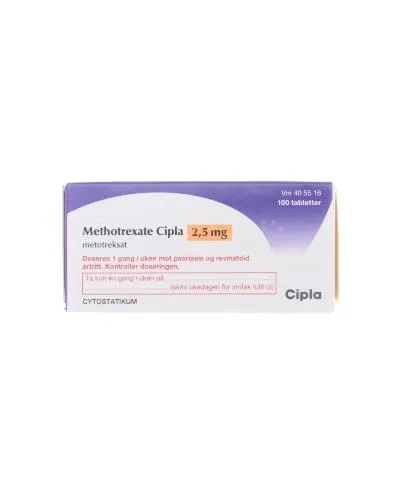
Table of Contents
- Patient Information Leaflet
- Introduction
- 1. What Metotrexato Semanal Cipla 2.5 mg Tablets EFG is and what it is used for
- 2. What you need to know before starting to take Metotrexato Semanal Cipla 2.5 mg tablets EFG
- **Warnings and precautions**
- 3. How to take Metotrexate Weekly Cipla tablets
- 4. Possible adverse effects
- 5. Storage of Methotrexate Cipla 2.5 mg Weekly Tablets EFG
- 6. Contents of the pack and other information
- Composition of Methotrexate Cipla tablets
Patient Information Leaflet
Introduction
Patient Information Leaflet
Metotrexato Semanal Cipla 2.5 mg Tablets EFG
Read the entire leaflet carefully before you start taking this medicine, because it contains important information for you.
- Keep this leaflet, as you may need to read it again.
- If you have any questions, ask your doctor, pharmacist, or nurse.
- This medicine has been prescribed for you only. Do not give it to other people, even if they have the same symptoms as you, since it may harm them.
- If you experience any adverse effects, consult your doctor, pharmacist, or nurse, even if they are adverse effects not listed in this leaflet. See section 4.
Leaflet Contents
-
What Metotrexato Semanal Cipla 2.5 mg Tablets are and what they are used for
-
What you need to know before taking Metotrexato Semanal Cipla 2.5 mg Tablets
-
How to take Metotrexato Semanal Cipla 2.5 mg Tablets
-
Possible side effects
-
How to store Metotrexato Semanal Cipla 2.5 mg Tablets
-
Contents of the pack and other information
1. What Metotrexato Semanal Cipla 2.5 mg Tablets EFG is and what it is used for
Metotrexato Cipla tablets contain the active substance methotrexate. Methotrexate is an antimetabolite and immunosuppressant (a medicine that affects the reproduction of body cells and reduces the activity of the immune system).
Methotrexate is indicated for the treatment of:
- active rheumatoid arthritis in adult patients
- severe, disabling, and resistant psoriasis that has not responded adequately to other treatments, such as phototherapy, UVA, and retinoids.
- severe psoriatic arthritis in adult patients.
Your doctor will advise you on how Metotrexato Cipla tablets can help in your particular condition.
2. What you need to know before starting to take Metotrexato Semanal Cipla 2.5 mg tablets EFG
Do not take Metotrexato Semanal Cipla tablets
- If you are allergic to methotrexate or to any of the other ingredients of this medicine (listed in section 6).
- If you are pregnant or breastfeeding (see section “Pregnancy, breastfeeding and fertility”).
- If you have severe impairment of liver function (your doctor will determine the severity of your condition).
- If you have severe impairment of kidney function (your doctor will determine the severity of your condition).
- If you have or have had bone marrow disorders or severe blood disorders.
- If you consume large amounts of alcohol.
- If you have an immune system disorder.
- If you have severe, acute or pre-existing infections, such as tuberculosis or HIV.
- If you have mouth ulcers or inflammation in the mouth.
- If you have active gastrointestinal ulceration (e.g., peptic ulcer or ulcerative colitis).
Vaccination with live vaccines must not be performed while you are being treated with methotrexate.
Warnings and precautions
Important warning about the dose of Metotrexate Cipla 2.5 mg Weekly Tablets Take Metotrexate 2.5 mg tablets only once a week for the treatment of rheumatic disease or psoriasis. Excessive use of Metotrexate Cipla 2.5 mg Weekly Tablets (methotrexate) can be fatal. Please read section 3 of this leaflet carefully. If you have any doubts, consult your doctor or pharmacist before taking this medicine. |
Consult your doctor, pharmacist, or nurse before starting to take Metotrexate Weekly Cipla tablets if you have or have had any of the following conditions:
- If you have or have had any liver or kidney disease.
- If you are taking any other medicine or vitamin product (see section “Use of Metotrexate Weekly Cipla tablets with other medicines”).
- If you have gastric or intestinal ulcers (peptic ulcer or ulcerative colitis).
- If you have a poor general condition.
- If you have recently been vaccinated or if you plan to be vaccinated.
- If you have any prolonged or inactive infection (e.g., tuberculosis, hepatitis B or C, infection with varicella-zoster virus).
- If you have diabetes mellitus and are being treated with insulin.
- If you have problems with lung function.
- If you have severe overweight.
- If you have fluid accumulation in the abdomen or in the cavity between the lungs and the chest wall (ascites, pleural effusions).
- If you are dehydrated or suffer from any illness that causes dehydration (e.g., dehydration caused by vomiting, diarrhea, or inflammation of the mouth or lips).
Acute pulmonary hemorrhage has been reported with methotrexate in patients with underlying rheumatological disease. If you notice blood when coughing or spitting, contact your doctor immediately.
If you have skin problems after radiation therapy (radiation causes dermatitis) or sunburns, as these conditions may reappear when taking methotrexate.
Methotrexate may make your skin more sensitive to sunlight. Avoid strong sunlight and do not use sunbeds or ultraviolet lamps without medical advice. To protect your skin from strong sunlight, wear appropriate clothing or use a sunscreen with a high protection factor.
Diarrhea may be a possible adverse effect of methotrexate and requires discontinuation of treatment. If you experience diarrhea, please speak with your doctor.
Special precautionary measures for treatment with Metotrexate Weekly Cipla
Methotrexate temporarily affects the production of sperm and ova, which is reversible in most cases. Methotrexate may cause miscarriages and serious birth defects. If you are a woman, you must avoid becoming pregnant while using methotrexate and for at least six months after stopping treatment. If you are a man, you must avoid fathering a child while receiving methotrexate and for at least 3 months after stopping treatment. See also section “Pregnancy, breastfeeding and fertility”.
Psoriasis-related skin changes may worsen during methotrexate treatment if exposed to ultraviolet radiation.
Brain disease (encephalopathy/leukoencephalopathy) has been reported as an adverse effect in patients receiving methotrexate for cancer treatment; it cannot be ruled out that this may also occur when taking methotrexate tablets for the treatment of rheumatoid arthritis or psoriasis.
If you, your partner, or caregiver notice the onset or worsening of neurological symptoms such as general muscle weakness, visual disturbances, changes in thinking, memory, and orientation leading to confusion, or personality changes, contact your doctor immediately, as these may be symptoms of a very rare serious brain infection called progressive multifocal leukoencephalopathy (PML).
Precautions and recommended additional tests
Even when methotrexate is used at low doses, serious adverse effects may occur. To detect them early, your doctor must perform regular check-ups and laboratory tests.
Before starting treatment:
Before starting treatment, your blood will be tested to see if you have sufficient blood cells. Your blood will also be tested to check liver function and to determine whether you have hepatitis. Additionally, serum albumin (a protein in the blood), hepatitis status (liver infection), and kidney function will be checked. Your doctor may also decide to perform other liver tests, some of which may include imaging of your liver, and others may require a small tissue sample from the liver for closer examination. Your doctor may also check for tuberculosis and take a chest X-ray or perform a lung function test.
During treatment:
Your doctor may perform the following checks:
- Examination of the oral cavity and pharynx to detect mucosal changes such as inflammation or ulceration;
- Blood tests/hematological analysis including blood cell count and measurement of serum methotrexate levels;
- Blood tests to monitor liver function;
- Imaging diagnostic tests to monitor liver status;
- A small tissue sample taken from the liver for closer examination;
- Blood tests to monitor kidney function;
- Monitoring of the respiratory tract and, if necessary, pulmonary function testing.
It is very important that you attend these scheduled check-ups.
If any of these test results are abnormal, your doctor will adjust your treatment accordingly.
Elderly patients
Elderly patients receiving methotrexate should be closely monitored by a doctor so that possible adverse effects can be detected as early as possible.
Age-related decline in liver and kidney function, as well as low body reserves of folic acid in the elderly, require a relatively low dose of methotrexate.
Children and adolescents
Metotrexate tablets are not indicated for children or adolescents for the treatment of rheumatoid arthritis and psoriasis.
Use of Metotrexate Weekly Cipla tablets with other medicines
Inform your doctor or pharmacist if you are taking, have recently taken, or might need to take any other medicine.
Concurrent use of other medications may affect the efficacy and safety of this medicine.
Remember to tell your doctor that you are being treated with methotrexate tablets if another medicine is prescribed while you are still on treatment. It is especially important that you inform your doctor if you are using:
-
metamizole (also known as novaminsulfone and dipyrone) (a medicine for severe pain and/or fever);
-
certain antibiotics (chloramphenicol, penicillins, glycopeptides, sulfonamides, ciprofloxacin, cephalothin, trimethoprim/sulfamethoxazole, and tetracyclines);
-
diuretics (triamterene);
-
blood sugar-lowering medicines such as metformin;
-
anticonvulsant medicines such as phenytoin or levetiracetam (medicines for the treatment of epilepsy);
-
a medicine that binds bile acids and may be used to lower cholesterol levels (cholestyramine);
-
probenecid (a medicine for the treatment of gout);
-
folic acid (a vitamin preparation);
-
omeprazole or pantoprazole (medicines for stomach acidity);
-
medicines that cause liver and kidney toxicity [such as sulfasalazine and leflunomide (medicines for the treatment of rheumatic diseases) and alcohol];
-
anticancer agents (e.g., doxorubicin, cisplatin, mercaptopurine);
-
medicines used for pain and/or inflammation known as non-steroidal anti-inflammatory drugs (NSAIDs) (e.g., diclofenac and ibuprofen, salicylates such as acetylsalicylic acid (aspirin), and pyrazoles such as metamizole);
-
other medicines for rheumatoid arthritis or psoriasis such as azathioprine, leflunomide, sulfasalazine (a medicine which, in addition to treating arthritis and psoriasis, is also used to treat ulcerative colitis), phenylbutazone, or amidopyrine;
-
theophylline (a medicine for the treatment of respiratory diseases);
-
cyclosporine (an immune system suppressant or preventive agent);
-
barbiturates (injections for sleep);
-
tranquilizers;
-
oral contraceptives;
-
retinoids (used to treat psoriasis and other skin disorders);
-
pyrimethamine (used to prevent or treat malaria);
-
any type of vaccination with live vaccines (should be avoided), such as measles, mumps, influenza virus, or yellow fever.
Inform your doctor about the use of Metotrexate Weekly Cipla tablets during future visits.
Use of Metotrexate Weekly Cipla tablets with food, drinks, and alcohol
Alcohol consumption should be avoided, as well as excessive intake of coffee, caffeinated soft drinks, and black tea, as they may increase adverse effects or interfere with the efficacy of methotrexate during treatment. In addition, you should ensure that you drink an adequate amount of fluids during methotrexate treatment, as dehydration (reduction of body water) may increase the risk and thereby increase methotrexate toxicity.
Pregnancy, breastfeeding and fertility
If you are pregnant or breastfeeding, think you might be pregnant, or plan to become pregnant, consult your doctor or pharmacist before using this medicine.
Pregnancy
Do not use Metotrexate Weekly Cipla during pregnancy or if you are trying to become pregnant. Methotrexate may cause birth defects, harm the fetus, or cause miscarriages. It is associated with malformations of the skull, face, heart and blood vessels, brain, and limbs. Therefore, it is very important that methotrexate not be administered to pregnant patients or those planning to become pregnant. In women of childbearing potential, any possibility of pregnancy must be excluded by appropriate measures, for example, a pregnancy test before starting treatment. You must avoid becoming pregnant while taking methotrexate and for at least 6 months after stopping treatment, using reliable contraceptive methods throughout this time (see also section “Warnings and precautions”).
If you become pregnant during treatment or suspect you may be pregnant, consult your doctor as soon as possible. You should be provided with information about the risk of harmful effects on the child during treatment.
If you wish to become pregnant, consult your doctor, who may refer you to a specialist for counseling before the planned start of treatment.
Breastfeeding
Do not breastfeed during treatment with methotrexate, as methotrexate has been detected in breast milk. If your doctor considers taking the medicine absolutely necessary, stop breastfeeding your baby.
Fertility
Male fertility
Available data do not indicate an increased risk of malformations or miscarriages if the father takes a dose of methotrexate below 30 mg/week. However, this risk cannot be completely ruled out. Methotrexate may be genotoxic, meaning it may cause genetic mutations. Methotrexate may affect sperm production and cause birth defects. Therefore, you must avoid fathering a child or donating semen while taking methotrexate and for at least 3 months after stopping treatment.
Consult your doctor or pharmacist before starting treatment.
Driving and use of machines
During treatment with methotrexate, you may experience fatigue and dizziness. Do not drive or operate machinery if you have these symptoms.
Metotrexate Weekly Cipla tablets contain lactose and sodium
If your doctor has informed you that you have an intolerance to certain sugars, consult him before taking this medicine.
This medicine contains less than 1 mmol of sodium (23 mg) per tablet; this is essentially “sodium-free”.
3. How to take Metotrexate Weekly Cipla tablets
Follow exactly the instructions given by your doctor or pharmacist for taking this medicine. If in doubt, consult your doctor or pharmacist again.
- Take methotrexate tablets once a week.
- Patients with rheumatoid arthritis, psoriatic arthritis, or psoriasis should take their tablets orally once a week, on the same day each week.
- Do not take the tablets more frequently than prescribed by your doctor.
- Daily administration may cause serious toxic effects, including death.
- Take the tablets with a glass of water while sitting or standing.
Recommended dose
Rheumatoid arthritis
The recommended dose is 7.5 to 15 mg orally, once a week.
Psoriasis
The recommended dose is 7.5 to 15 mg orally, once a week.
Take methotrexate only once a week
Information on tablet intake for rheumatic or skin diseases in adults.
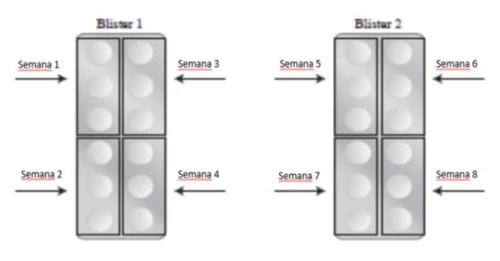
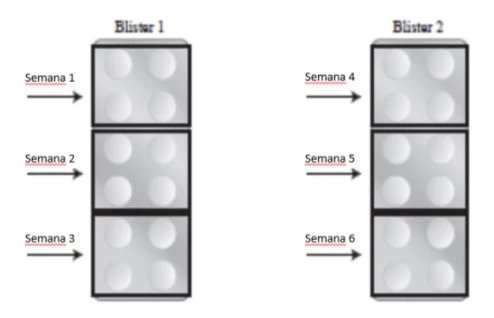
Each pack of methotrexate 2.5 mg tablets contains 24 tablets. Each tablet contains a dose of 2.5 mg of methotrexate. Below are graphical schemes showing the recommended number of tablets to be taken for each of the above-mentioned inflammatory conditions. These diagrams are examples only; your doctor may adjust the dose if necessary. It is very important that you take the exact number of tablets prescribed by your doctor. Remember that the tablets prescribed by your doctor must be taken once a week. This medicine MUST NOT BE TAKEN DAILY for the treatment of rheumatoid arthritis and psoriasis.
Rheumatoid arthritis and psoriasis
The initial dose in adults is 3 tablets (7.5 mg) once a week. Therefore, the methotrexate pack containing 24 tablets covers 8 weeks of treatment, with tablets distributed as follows:
Initial dosage: 3 tablets of 2.5 mg per week (7.5 mg per week)
Increased dosage: 4 tablets of 2.5 mg per week (10 mg per week)
The dose should be adjusted according to your response to treatment and any adverse effects.
Appropriate procedures must be followed for the safe use of cytotoxic agents. Anyone who must handle methotrexate should wash their hands after administering a dose. Gloves should be worn when handling methotrexate tablets. Women who are pregnant, planning to become pregnant, or breastfeeding must not come into contact with methotrexate.
Use in children
Administration to children is not recommended.
If you take more Metotrexate Cipla tablets than you should
If you (or someone else) have taken more medicine than you should, contact a doctor immediately or go immediately to the nearest hospital. In case of overdose or accidental ingestion, contact the Toxicology Information Service, telephone 91 562 04 20.
An overdose of methotrexate may cause serious toxic reactions, including death. Symptoms of overdose may include: bruising or bleeding, unusual weakness, mouth sores, nausea, vomiting, black or bloody stools, coughing up blood or vomiting blood that looks like coffee grounds, and decreased urine output. See section 4.
Take the medicine with you if you go to the doctor or hospital.
If you forget to take Metotrexate Cipla tablets
If you forget to take your dose, take it as soon as you remember, provided it is within the following two days. However, if you forgot to take your dose for more than two days, contact your doctor for advice. Do not take a double dose to make up for missed doses.
Ensure before traveling or going on holiday that you have enough medication.
If you stop taking Metotrexate Cipla tablets
Do not stop treatment with methotrexate unless instructed by your doctor. If you need to discontinue treatment, your doctor will decide the best approach for you.
If you have any further questions about the use of this medicine, ask your doctor or pharmacist.
4. Possible adverse effects
Like all medicines, this medicine can cause adverse effects, although not everyone will experience them.
In general, the incidence and severity of methotrexate adverse effects are related to the dose and frequency of administration. Most adverse effects are reversible if detected early.
Serious adverse effects
If you experience any of the following symptoms, contact your doctor or go to hospital immediately.
Uncommon (may affect up to 1 in 100 people)
- A cough producing thick mucus, difficulty breathing, fever, or shortness of breath. You may have pulmonary fibrosis or pneumonia.
- Chest pain, difficulty breathing, swelling of the face, throat, or hands, dizziness or fainting. These could be signs of a severe allergic reaction.
- Severe skin reactions such as peeling and blistering in the mouth, eyes, and genitals, along with numerous pustular rashes and fever. You may be experiencing Stevens-Johnson syndrome or toxic epidermal necrolysis.
- Sunburn-like reactions due to increased sensitivity of the skin to sunlight.
- Fever and general deterioration, or fever with localized infections such as in the throat or mouth. You may have a reduced number of white blood cells (possibly due to bone marrow suppression), which can lower your resistance to infections.
- Pain or difficulty urinating.
- Kidney impairment.
Rare (may affect up to 1 in 1,000 people)
- Loss of appetite, nausea, skin itching, yellowing of the skin or eyes, fever, swelling or bloating of the stomach. You may be experiencing liver damage or inflammation.
- Vomiting blood, black tarry stools, and stomach pain. You may be experiencing gastrointestinal bleeding or a stomach ulcer.
- Cramp-like pain, sharp pain or swelling in the leg, redness, difficulty breathing, chest pain, or sudden collapse. You may have a blood clot.
- Reduced or no urine production.
- Fever, shaking, chills, rapid heartbeat, rapid breathing, confusion, or dizziness. You may have sepsis as a result of an infection.
Very rare (may affect up to 1 in 10,000 people)
- Blood in the urine.
- Difficulty speaking or communicating.
- Seizures.
Not known (frequency cannot be estimated from available data)
- Blood when spitting or coughing.
- Certain brain disorders (encephalopathy/leukoencephalopathy).
Other adverse effects
Very common (may affect more than 1 in 10 people)
- inflammation of the throat or pain in the mouth or lips,
- dyspepsia,
- loss of appetite,
- nausea,
- vomiting,
- stomach pain,
- increased liver enzymes
Common (may affect 1 in 10 people)
- infections
- diarrhea
- exhaustion
- fatigue
- headache
- dizziness
- redness or large red patches on the skin
- hair loss
- drowsiness
- rash
- mouth ulcers
Uncommon (may affect 1 in 100 people)
- reduced blood clotting
- change in your blood count
- anemia
- skin itching
- Swelling of the lymph nodes which may be a sign of lymphatic system cancer (lymphoma)
- Vaginal inflammation and ulcers
- vertigo
- fatty liver
- decreased levels of serum albumin
- herpes-like skin eruptions
- increased skin pigmentation
- osteoporosis
- muscle and joint pain
- appearance of local lumps in tissues
- bladder ulcers
- chills
Rare (may affect 1 in 1,000 people)
- depression
- confusion
- hemiparesis (weakness affecting only one side of the body)
- diabetes
- low blood pressure (hypotension)
- shortness of breath
- gum inflammation
- sore throat
- acne
- skin lightening
- itchy skin rash
- burning sensation in psoriatic skin lesions
- skin ulcers
- herpes or painful rashes
- menstrual disorders
- impotence
- reduced sexual desire
- Blood disorder characterized by the appearance of very large red blood cells (megaloblastic anemia)
- Mood fluctuations
- Inflammation of the sac around the heart, fluid accumulation in the cardiac sac
- Inflammation of the small intestine
- Blood in stools
- Nail detachment
- Dark areas on the nails
- Red or purple spots due to bleeding from blood vessels
- Allergic-type inflammation of blood vessels
- Skin lesions resembling sunburn or radiation dermatitis
- Stress fractures
- Abnormal levels of electrolytes in blood
- Physical weakness
- Fever
- Slow wound healing
- Respiratory arrest
Very rare (may affect 1 in 10,000 people)
- immune deficiency (hypogammaglobulinemia)
- irritation
- drowsiness, fatigue (lethargy)
- vision disturbances
- redness and irritation of the thin membrane covering the eye (conjunctivitis)
- fluid or swelling in the sac surrounding the heart or in the lungs.
- inflammation of blood vessels, often with skin rash (vasculitis)
- lung infection
- dry cough
- vomiting blood
- boils
- bruising or capillaries visible on the skin surface
- fertility problems
- decreased sperm count
- infertility
- vaginal bleeding or discharge
- enlargement of male breast tissue
- lymphoproliferative disorders (excessive increase in white blood cells)
- Severe bone marrow disorders
- Increased susceptibility to infections
- Insomnia
- Psychosis
- Low antibody levels
- Temporary mild intellectual function disorder (“mental fog”)
- Experiencing unusual sensations in the head
- Brain inflammation
- Ringing in the ears
- Pain
- Muscle weakness
- Tingling
- Changes in taste sensation (metallic taste)
- Inflammation of the membranes covering the brain
- Paralysis
- Inflammation of the membranes covering the lungs
- Liver failure
- Inflammation of blood vessels
- Chronic obstructive pulmonary disease
- Inflammation of sweat glands
- Nail infections
- Numbness or tingling sensation/reduced sensitivity to stimuli
Not known (frequency cannot be estimated from available data)
- abnormally low blood cell counts
- sepsis resulting in death
- fetal death
- fetal damage
- increased risk of toxicity during radiotherapy
- increase in white blood cells and inflammation of lung tissue
- worsening of red, scaly patches associated with psoriasis when exposed to ultraviolet light, such as sunlight, while taking metotrexate.
- Pulmonary hemorrhage
- Jaw bone damage (secondary to excessive increase in white blood cells)
- Reactivation of inactive chronic infections
- Vision problems
- Damage to the retina of the eye
- Colon enlargement due to inflammation/infection
- Pancreatitis
- Pathological change in the brain's white matter (leukoencephalopathy)
- Nosebleeds
- Asthma
- Presence of protein in urine
- Redness and peeling of the skin
- Swelling
Reporting of adverse effects
If you experience any type of adverse effect, talk to your doctor, pharmacist, or nurse, even if it is a possible adverse effect not listed in this leaflet. You can also report them directly via the Spanish Pharmacovigilance System for Human Medicines: https://www.notificaram.es. By reporting adverse effects, you can help provide more information on the safety of this medicine.
5. Storage of Methotrexate Cipla 2.5 mg Weekly Tablets EFG
Keep this medicine out of the sight and reach of children.
This medicine does not require any special storage temperature.
Blister: Keep the blister in the outer packaging to protect it from light.
HDPE bottle: Store in the original packaging to protect it from light.
Do not use this medicine after the expiry date stated on the packaging after EXP. The expiry date refers to the last day of the month indicated.
Medicines should not be disposed of via wastewater or household waste. Dispose of unused medicines and their containers at the SIGRE collection point in your pharmacy. If you are unsure, ask your pharmacist how to dispose of medicines and containers you no longer need. This will help protect the environment.
6. Contents of the pack and other information
Composition of Methotrexate Cipla tablets
- The active substance is methotrexate.
- Methotrexate Cipla 2.5 mg tablets: each tablet contains 2.5 mg of methotrexate.
- The other components are: calcium hydrogen phosphate anhydrous, lactose monohydrate, sodium starch glycolate, microcrystalline cellulose, talc and magnesium stearate.
Appearance of the medicinal product and contents of the container
Methotrexate Cipla 2.5 mg tablets are yellow, circular, biconvex and smooth on both sides, with dimensions of 4.50 mm ± 0.2 mm.
Methotrexate 2.5 mg tablets are available in HDPE bottles containing 25 or 100 tablets and in blister packs of 10, 24, 25, 28, 30, 50 or 100 tablets.
Only certain pack sizes may be marketed.
Marketing Authorization Holder and Manufacturer
Marketing Authorization Holder
Cipla Europe NV
De Keyserlei 60C, Bus-1301,
2018 Antwerp, Belgium
Manufacturer
Cipla Europe NV
De Keyserlei 60C, Bus-1301,
2018 Antwerp, Belgium
S&D Pharma CZ
spol. s.r.o, Theodor 28
Pchery (Pharmos a.s. facility), 27308
Czech Republic
Local Representative
Cipla Europe NV, Spanish Branch
C/ Guzmán el Bueno, 133, Edif. Britannia
28003 Madrid, Spain
This medicinal product is authorized in the European Economic Area member states under the following names:
Croatia | Metotreksat Cipla 2.5 mg tablets |
Spain | Methotrexate Weekly Cipla 2.5 mg tablets EFG |
Norway | Methotrexate Cipla |
Date of last revision of this leaflet: October 2024
Detailed information about this medicine is available on the website of the Spanish Agency of Medicines and Health Products (AEMPS) http://www.aemps.gob.es/
Patient card
THIS PATIENT CARD IS INTENDED ONLY FOR PATIENTS USING MEDICINES CONTAINING METHOTREXATE FOR ARTHRITIS AND PSORIASIS.
IF YOU ARE USING METHOTREXATE FOR ANY OF THE CONDITIONS MENTIONED ABOVE, YOU MUST TAKE METHOTREXATE ONLY ONCE A WEEK.
Write here completely the day of the week on which the dose is administered: ______________
Do not take a higher dose than the one prescribed for you.
Overdose may cause serious adverse effects and can be fatal. Symptoms of overdose include, for example: sore throat, fever, mouth ulcers, diarrhoea, vomiting, skin rash, bleeding, or unusual weakness. If you think you have exceeded the prescribed dose, seek medical attention immediately.
Always show this card to healthcare professionals who are not familiar with your methotrexate treatment to warn them about its weekly use (for example, upon hospital admission, change of caregiver).
For further information, read the package leaflet included in the pack.
Information on risk prevention authorised by the Spanish Agency of Medicines and Health Products (AEMPS). April 2020.
Available on the AEMPS website www.aemps.gob.es