Methotrexate Accord 25 mg/ml solution for injection EFG
Spain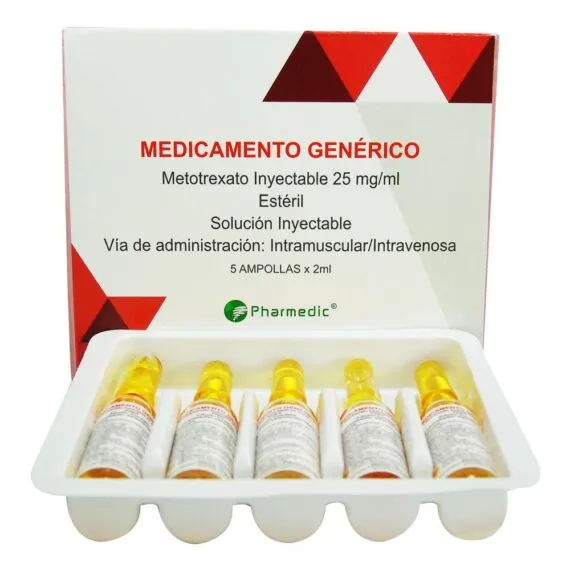
Table of Contents
- Package leaflet: Information for the user
- Introduction
- 1. What Metotrexato Accord is and what it is used for
- 2. What you need to know before using Metotrexato Accord
- 3. How to use Methotrexate Accord
- 4. Possible adverse effects
- 5. Storage of Methotrexate Accord
- 6. Contents of the package and other information
Package leaflet: Information for the user
Introduction
PACKAGE LEAFLET: INFORMATION FOR THE USER
Metotrexate Accord 25 mg/ml injectable solution EFG
methotrexate
Read all of this leaflet carefully before you start using this medicine, as it contains important information for you.
- Keep this leaflet, as you may need to read it again.
- If you have any questions, ask your doctor, pharmacist, or nurse.
- This medicine has been prescribed for you only. Do not give it to others, even if they have the same symptoms as you, as it may harm them.
- If you experience any adverse reactions, consult your doctor, pharmacist, or nurse, even if they are adverse reactions not listed in this leaflet.
Contents of this leaflet
- What Metotrexate Accord is and what it is used for
- What you need to know before using Metotrexate Accord
- How to use Metotrexate Accord
- Possible side effects
- How to store Metotrexate Accord
- Contents of the pack and other information
1. What Metotrexato Accord is and what it is used for
Metotrexato Accord contains the active substance methotrexate. Methotrexate is a cytostatic agent that inhibits cell growth. Methotrexate has its greatest effect on rapidly dividing cells, such as cancer cells, bone marrow cells, and skin cells.
Metotrexato Accord is used in the treatment of the following types of cancer:
- Acute lymphoblastic leukemia
- Prophylaxis of meningeal leukemia
- Non-Hodgkin lymphoma
- Osteogenic sarcoma
- Adjuvant treatment of advanced breast cancer
- Metastatic or recurrent head and neck cancer
- Choriocarcinoma and similar trophoblastic diseases
- Advanced bladder cancer
2. What you need to know before using Metotrexato Accord
Do not use Metotrexato Accord
- If you are allergic to methotrexate or to any of the other ingredients of this medicine (listed in section 6).
- If you have significant liver disease (your doctor will determine the severity of your condition).
- If you have significant kidney disease (your doctor will determine the severity of your condition).
- If you have disorders of the blood-forming system.
- If you have a serious or pre-existing infection, such as tuberculosis or HIV.
- If you have mouth, throat, or gastrointestinal ulcers.
- If you are breastfeeding, and additionally, for non-oncological indications (treatment not related to cancer), if you are pregnant (see section Pregnancy, breastfeeding and fertility).
- If you consume large amounts of alcohol.
You should not receive live attenuated vaccines during treatment with Metotrexato Accord.
Inform your doctor before using Metotrexato Accord if you think any of the above symptoms apply to you.
Warnings and precautions
- Methotrexate may cause serious adverse reactions and, in some cases, potentially fatal reactions. Your doctor will discuss the benefits and risks of treatment, as well as the early signs and symptoms of adverse reactions.
- Methotrexate may reduce the number of cells responsible for immunity, oxygen transport, and normal blood clotting, thereby increasing the risk of infections (e.g., pneumonia) or bleeding.
- Acute pulmonary hemorrhage has been reported with methotrexate in patients with underlying rheumatological disease. If you experience symptoms of coughing up blood or spitting blood, contact your doctor immediately.
- Methotrexate temporarily affects the production of sperm and ova. Because methotrexate treatment may lead to infertility, male patients are advised to consider sperm preservation before starting treatment.
- Methotrexate may cause miscarriages and severe birth defects. If you are a woman, you must avoid pregnancy during treatment with methotrexate and for at least 6 months after treatment ends. If you are a man, you must avoid fathering a child during treatment with methotrexate and for at least 3 months after treatment ends. See also section "Pregnancy, breastfeeding and fertility".
- Methotrexate may make your skin more sensitive to sunlight. Avoid strong sunlight and do not use sunbeds or sunlamps without medical advice. To protect your skin from strong sunlight, wear appropriate clothing or use a high-protection sunscreen.
Talk to your doctor, pharmacist, or nurse before taking Metotrexato Accord:
- If you are receiving radiotherapy at the same time as methotrexate treatment. The risk of tissue and bone damage may increase with simultaneous treatment.
- If you are receiving treatment via the spinal cord (intrathecal) or through a vein (intravenous), as this may cause potentially fatal brain inflammation.
- If you have a condition causing fluid retention in the body, for example in the lungs or abdomen.
- If you have impaired kidney function.
- If you have impaired liver function.
- If you have an infection.
- If you need to be vaccinated, as methotrexate may reduce the effectiveness of vaccines.
- If you have insulin-dependent diabetes, methotrexate treatment should be closely monitored.
If you, your partner, or your caregiver notice the onset or worsening of neurological symptoms such as general muscle weakness, vision disturbances, changes in thinking, memory, and orientation leading to confusion, or personality changes, contact your doctor immediately, as these may be symptoms of a very rare but serious brain infection called progressive multifocal leukoencephalopathy (PML).
Recommended precautions and follow-up examinations:
Even when methotrexate is used at low doses, serious side effects may occur. To detect them early, your doctor should perform regular check-ups and laboratory tests.
Before starting treatment:
Before starting treatment, your doctor may perform blood tests and check the function of your kidneys and liver. A chest X-ray may also be performed. Additional tests may be carried out during and after treatment. Do not miss your scheduled blood test appointments.
Other medicines and Metotrexato Accord
Inform your doctor or pharmacist if you are taking, have recently taken, or might take any other medicines, as methotrexate may interact with or be affected by certain medicines used for:
- Pain and inflammation (so-called NSAIDs and salicylates)
- Cancer (cisplatin, cytarabine, mercaptopurine, fluorouracil)
- Infections (antibiotics such as penicillins, tetracycline, and chloramphenicol)
- Asthma (theophylline)
- Vitamin preparations containing folic acid or similar substances
- Rheumatism (leflunomide)
- High blood pressure (furosemide)
- Gout (probenecid)
- Radiotherapy
- Stomach ulcers, heartburn, reflux (such as omeprazole, pantoprazole, lansoprazole)
- Epilepsy (phenytoin)
- Psoriasis or severe acne (retinoids, such as acitretin or isotretinoin)
- Rheumatoid arthritis or inflammatory bowel disease (sulfasalazine)
- Organ transplant rejection (azathioprine)
- If you need to receive a live vaccine
- Nitrous oxide ("laughing gas" inhaled for pain relief)
- Barbiturates (a group of medicines used as hypnotics, sedatives, anesthetics, or anticonvulsants)
- Tranquilizers
- Hypoglycemics (used to treat diabetes)
- Pyrimethamine (used to prevent and treat malaria)
- Oral contraceptives
- Metamizole (synonyms: novaminsulfone and dipyrone) (a medicine for severe pain and/or fever).
Metotrexato Accord with food, drinks, and alcohol
During treatment with Metotrexato Accord, you must not drink alcohol and should avoid excessive consumption of coffee, caffeinated soft drinks, and black tea. Also, ensure you drink plenty of fluids during treatment with Metotrexato Accord, as dehydration (reduction in body water) may increase the toxicity of Metotrexato Accord.
Pregnancy, breastfeeding, and fertility
Pregnancy
If you are pregnant or breastfeeding, think you may be pregnant, or plan to become pregnant, consult your doctor before taking this medicine.
Do not use Metotrexato Accord during pregnancy except if your doctor has prescribed it as cancer treatment. Methotrexate may cause birth defects, harm the fetus, or lead to miscarriage. It is associated with malformations of the skull, face, heart and blood vessels, brain, and limbs. Therefore, it is very important that it is not given to pregnant women or women who plan to become pregnant, unless used as cancer treatment.
For non-oncological indications in women of childbearing age, any possibility of pregnancy must be ruled out, for example by a pregnancy test, before starting treatment.
Do not use Metotrexato Accord if you are trying to become pregnant. You must avoid becoming pregnant while taking methotrexate and for at least 6 months after treatment ends. To ensure this, you must use reliable contraceptive methods throughout this period (see also section "Warnings and precautions").
If you become pregnant during treatment or suspect you may be pregnant, consult your doctor as soon as possible. If you become pregnant during treatment, you should receive information about the risk of harmful effects on the child during treatment.
If you wish to become pregnant, consult your doctor, who may refer you to a specialist for counseling before the planned start of treatment.
Male fertility
Available data do not indicate an increased risk of birth defects or miscarriages if the father takes methotrexate at a dose below 30 mg/week. However, this risk cannot be completely ruled out, and there is no information regarding higher doses of methotrexate. Methotrexate may be genotoxic, meaning it can cause genetic mutations. Methotrexate may affect sperm production, which is associated with the possibility of birth defects.
For this reason, you must avoid fathering a child or donating semen during methotrexate treatment and for at least 3 months after treatment ends. Since high-dose methotrexate treatment, commonly used in cancer therapy, may cause infertility and genetic mutations, it is recommended that men receiving methotrexate doses above 30 mg/week consider sperm preservation before starting treatment (see also section "Warnings and precautions").
Breastfeeding
Methotrexate is excreted in breast milk in amounts that pose a risk to the infant. Therefore, breastfeeding must be discontinued before starting methotrexate treatment.
Driving and using machines
Side effects such as fatigue and dizziness may occur. If you feel tired or dizzy, do not drive or operate machinery.
Metotrexato Accord contains sodium
This medicine contains 345.59 mg of sodium (the main component of table/cooking salt) in its maximum recommended daily dose. This corresponds to 17.27% of the maximum daily sodium intake recommended for an adult.
3. How to use Methotrexate Accord
Methotrexate Accord is provided by healthcare professionals.
The dose you receive and the frequency of administration will depend on the disease being treated, your health status, age, weight, and body surface area. Methotrexate Accord may be taken orally or injected into a muscle (intramuscular), into a vein (intravenous), into an artery (intra-arterial), or into the spinal cord (intrathecal).
Methotrexate must not come into contact with the skin surface or mucous membranes. In case of contamination, the affected area should be immediately washed with abundant water.
Your doctor may instruct you to take sodium bicarbonate or acetazolamide tablets while receiving the medicine to help prevent methotrexate from concentrating in the kidneys. If you receive high-dose methotrexate, you will also receive calcium folinate to reduce methotrexate's side effects.
If you use more Methotrexate Accord than you should
Your doctor determines the dose, which is administered by healthcare staff. Therefore, overdose is unlikely. However, an overdose of methotrexate may cause severe toxic reactions. Symptoms of overdose may include easy bruising or bleeding, unusual weakness, mouth sores, nausea, vomiting, vomiting blood, or black or bloody stools. The antidote in case of overdose is calcium folinate.
If you forget or stop using Methotrexate Accord
Do not interrupt or discontinue treatment with Methotrexate Accord unless advised by your doctor. If you miss your appointment for the next dose, contact your doctor as soon as possible to schedule a new appointment. If you suspect the presence of serious side effects, contact your doctor immediately for advice.
If you have any further questions about the use of this medicine, ask your doctor or pharmacist.
4. Possible adverse effects
Like all medicines, this medicine can cause adverse effects, although not everyone will experience them. Metotrexato Accord may cause adverse effects that can be dangerous or potentially fatal. During treatment, you should remain alert for signs of adverse effects and report them to your doctor.
Contact a doctor immediately if you experience any of the following adverse reactions. Immediate medical attention may be required.
- Unexplained shortness of breath, dry cough, or wheezing (symptoms of lung problems).
- Sudden itching, skin rash (urticaria); swelling of the hands, feet, ankles, face, lips, mouth, or throat (which may make breathing or swallowing difficult). You may also feel as if you are about to faint (symptoms of a severe allergic reaction).
- Vomiting, diarrhea, or stomatitis and peptic ulcers (symptoms of effects on the digestive tract).
- Yellowing of the skin or eyes, dark-colored urine (symptoms of effects on the liver).
- Fever, chills, body pain, and sore throat (symptoms of infection).
- Unexpected bleeding (e.g., bleeding gums, dark urine, blood in urine or vomit) or unexpected bruising, black tarry stools (may be due to reduced blood clotting ability or gastrointestinal bleeding).
- Skin rash with scaling or blisters and effects on mucous membranes, e.g., in the nose (symptoms of Stevens-Johnson syndrome, toxic epidermal necrolysis, and erythema multiforme).
- Abnormal behavior, transient blindness, and generalized seizures (symptoms of effects on the central nervous system).
- Paralysis (paresis).
The following is a list of adverse reactions reported during treatment with methotrexate, categorized by frequency.
Very common (may affect more than 1 in 10 people):
- Loss of appetite, nausea, vomiting, abdominal pain, and digestive disturbances
- Inflammation and ulceration of the mouth and throat
- Increased activity of liver enzymes
Common (may affect more than 1 in 100 people):
- Herpes zoster
- Blood-related effects, e.g., anemia, leucopenia, thrombocytopenia
- Headache, fatigue, drowsiness
- Dry cough, difficulty breathing, chest pain, fever
- Diarrhea
- Skin rashes, redness, and itching
Uncommon (may affect up to 1 in 100 people):
- Pancytopenia, agranulocytosis
- Inflammation of blood vessels
- Anaphylactoid reactions and allergic vasculitis
- Dizziness, confusion, depression
- Seizures, encephalopathy
- Lymphoma (tumor in lymphatic tissue)
- Pulmonary fibrosis
- Bleeding and ulcers in the stomach and intestine
- Pancreatitis
- Liver fibrosis and cirrhosis, hepatic steatosis
- Diabetic complications
- Reduced albumin levels
- Sunburn-like reactions due to increased skin sensitivity to sunlight
- Urticaria
- Increased skin pigmentation
- Hair loss, herpes zoster, painful scaly plaques due to psoriasis
- Increase in rheumatoid nodules (lumps in tissues)
- Effects on the skin and mucous membranes, which may be severe (Stevens-Johnson syndrome, toxic epidermal necrolysis)
- Inflammation and ulceration of the bladder, hematuria, dysuria
- Vaginal inflammation and ulcers
- Brittle bones (osteoporosis), arthralgia, myalgia
Rare (may affect up to 1 in 1,000 people):
- Pericarditis, pericardial effusion, pericardial tamponade
- Megaloblastic anemia
- Mood disturbances
- Paresis
- Speech disorders, including dysarthria and aphasia
- Myelopathy
- Visual disturbances, blurred vision
- Thrombosis (cerebral, deep vein, and retinal vein thrombosis)
- Hypotension
- Pharyngitis, apnea, bronchial asthma
- Gingivitis
- Inflammation of the small intestine
- Blood in stools
- Malabsorption
- Liver damage
- Acne, skin sores, nail pigment changes, bruising
- Fractures
- Renal failure, oliguria, azotemia, and anuria
- Hyperuricemia
- Increased serum creatinine and urea concentration
- Abnormal development of mammary glands
- Elevated blood sugar levels (diabetes mellitus)
Very rare (may affect up to 1 in 10,000 people):
- Infections, sepsis, opportunistic infections
- Severe bone marrow failure, aplastic anemia (due to the bone marrow's inability to produce blood cells), lymphadenopathy, lymphoproliferative disorders (excessive increase in white blood cells), eosinophilia, and neutropenia
- Immunosuppression
- Hypogammaglobulinemia
- Insomnia
- Impairment of intellectual functions such as thinking, memory, or reasoning
- Joint or muscle pain, lack of strength
- Myasthenia (muscle weakness)
- Abnormal sensations, taste disturbances (metallic taste)
- Meningism (paralysis, vomiting), acute aseptic meningitis
- Conjunctivitis, retinopathy, vision loss, swollen eye
- Inflammation, eye follicles, epiphora, and photophobia
- Tumor lysis syndrome
- Lung function problems, difficulty breathing, pneumonia
- Pulmonary infections
- Pleural effusion
- Colon dilation (toxic megacolon)
- Reactivation of chronic hepatitis, acute hepatic degeneration, herpes simplex, hepatitis, liver failure
- Painful swelling of the skin around the nails
- Expansion of small blood vessels in the skin (paronychia)
- Allergic vasculitis, hidradenitis
- Proteinuria
- Loss of libido, impotence
- Menstrual disorders
- Vaginal discharge
- Infertility
- Fever, impaired wound healing
Frequency not known (frequency cannot be estimated from available data):
- Bleeding, blood escaping from vessels
- Psychosis
- Fluid accumulation in the brain and lungs
- Metabolic disorder
- Skin necrosis, exfoliative dermatitis
- Jaw bone damage (secondary to excessive increase in white blood cells)
- Redness and peeling of the skin
If you receive Metotrexato Accord intrathecally (into the spinal cord), the following adverse reactions are common (may affect up to 1 in 100 people):
- Headache
- Fever
- Inflammation of the arachnoid membrane of the brain and spinal cord, which may cause back pain, neck stiffness, vomiting, fever, and general deterioration in health. These symptoms may occur within hours after receiving the methotrexate injection but usually resolve within a few days.
- Hemiplegia or complete paralysis, weakness in one or all limbs, and cramp attacks (which usually occur after repeated intrathecal methotrexate injections)
- Effects on the nervous system that may begin with confusion, irritability, and fatigue. These may worsen over time and lead to dementia (increased memory loss, disorientation, and confusion), speech disorders, coordination and balance difficulties, increased muscle rigidity, cramps, and coma. This condition may develop several months or years after starting intrathecal methotrexate treatment. It can be potentially fatal and occurs mainly when high doses of intrathecal methotrexate are administered in combination with cranial radiotherapy or other forms of methotrexate.
Reporting of adverse effects:
If you experience any adverse effect, consult your doctor or pharmacist, even if it is a possible adverse effect not listed in this leaflet. You may also report them directly via the Spanish Pharmacovigilance System for Human Medicines: https://www.notificaRAM.es. By reporting adverse effects, you can help provide more information on the safety of this medicine.
5. Storage of Methotrexate Accord
Keep this medicine out of the sight and reach of children.
Do not use this medicine after the expiry date stated on the container after EXP. The expiry date refers to the last day of the month indicated.
Store below 25°C.
Vial after first opening – Use immediately after opening.
After dilution – 24 hours
The physical and chemical stability of the diluted solution has been demonstrated for 24 hours. From a microbiological standpoint, the diluted solution should be used immediately. If not used immediately, the conditions and duration of storage prior to use shall be the responsibility of the user and normally should not exceed 24 hours at 2-8°C, unless reconstitution/dilution has been carried out under controlled and validated aseptic conditions.
Do not dispose of medicines via wastewater or household waste. Ask your pharmacist how to dispose of medicines no longer in use. This will help protect the environment.
6. Contents of the package and other information
Composition of Metotrexate Accord
- The active substance is methotrexate. 1 ml of solution contains 25 mg of methotrexate.
- The other components are sodium chloride, sodium hydroxide/hydrochloric acid (to adjust pH), and water for injections.
Appearance of the product and contents of the container
The medicine is a yellow, clear solution.
Container size: 1 vial for container sizes of 2 ml, 20 ml and 40 ml
10 vials for container sizes of 20 ml and 40 ml
Only certain container sizes may be marketed.
Marketing Authorization Holder
Accord Healthcare S.L.U.
World Trade Center
Moll de Barcelona, s/n
Edifici Est, 6th floor
08039 Barcelona
Spain
Manufacturer
Accord Healthcare Limited,
Sage House, 319 Pinner Road,
North Harrow, Middlesex
HA1 4HF,
United Kingdom
or
Accord Healthcare Polska Sp.z o.o.,
ul. Lutomierska 50, 95-200 Pabianice, Poland
or
Accord Healthcare Single Member S.A.,
64th Km National Road Athens Lamia,
Schimatari, 32009,
Greece
This medicinal product is authorized in the EEA Member States under the following names
Member State | Medicinal product name |
Sweden | Metotrexat Accord 25 mg/ml solution for injection |
Austria | Methotrexat Accord 25 mg/ml injection solution |
Belgium | Methotrexate Accord Healthcare 25 mg/ml solution for injection |
Bulgaria | Methotrexate Accord 25 mg/ml solution for injection |
Cyprus | Methotrexate Accord 25 mg/ml, solution for injection |
Czech Republic | Methotrexat Accord 25 mg/ml concentrate for solution for injection |
Germany | Methotrexat Accord 25 mg/ml injection solution |
Denmark | Methotrexat Accord |
Estonia | Methotrexate Accord 25 mg/ml solution for injection |
Spain | Metotrexato Accord 25 mg/ml solution for injection |
Finland | Methotrexat Accord 25 mg/ml solution for injection |
France | METHOTREXATE ACCORD 25 mg/ml, solution for injection |
Hungary | Methotrexat Accord 25 mg/ml solution for injection |
Ireland | Methotrexate 25 mg/ml solution for injection |
Italy | Metotrexato Accord 25 mg/ml solution for injection |
Latvia | Methotrexate Accord 25 mg/ml solution for injection |
Lithuania | Methotrexate Accord 25 mg/ml solution for injection |
Malta | Methotrexate 25 mg/ml solution for injection |
Poland | Methotrexat Accord |
Netherlands | Methotrexaat Accord 25 mg/ml, solution for injection |
Norway | Methotrexat Accord 25 mg/ml solution for injection |
Portugal | Methotrexat Accord |
Romania | Methotrexat Accord 25 mg/ml solution for injection |
Slovakia | Methotrexat Accord 25 mg/ml solution for injection |
Slovenia | Metotreksat Accord 25 mg/ml solution for injection |
United Kingdom | Methotrexate 25 mg/ml solution for injection |
Date of the last review of this leaflet: January 2025
Detailed information on this medicinal product is available on the website of the Spanish Agency for Medicines and Health Products (AEMPS): http://www.aemps.gob.es/
Information intended exclusively for medical or healthcare professionals:
WARNINGS The dose must be adjusted carefully according to body surface area when methotrexate is used for the treatment of malignant diseases. Fatal cases of intoxication have been reported following the administration of incorrectly calculated doses. |
Instructions for preparation, handling, and disposal of Methotrexate Accord 25 mg/ml injection solution
The solution should be inspected visually before use. It should only be used if the solution is clear and practically free of particles.
Methotrexate injection may be diluted with an appropriate preservative-free diluent such as glucose (5%) solution or sodium chloride (0.9%).
The following general recommendations should be considered regarding handling: The product should be handled and administered only by experienced personnel; mixing of the solution should take place in designated areas designed to protect personnel and the environment (e.g., safety cabinets); protective clothing must be worn (including gloves, eye protection, and masks if necessary).
Pregnant healthcare professionals must not handle and/or administer Methotrexate Accord.
Methotrexate must not come into contact with skin or mucous membranes. In case of contamination, the affected area should be immediately rinsed with copious amounts of water for at least ten minutes.
For single use only. Any unused solution must be discarded. Waste must be carefully disposed of in separate, properly labeled containers according to their contents (such as patient body fluids or excretions, which may also contain significant amounts of antineoplastic agents, and it is recommended that such materials, as well as bedding contaminated with them, also be treated as hazardous waste). Disposal of unused medication must be carried out in accordance with local regulations by incineration.
Appropriate procedures must be in place for accidental contamination or spillage. Exposure of personnel to antineoplastic agents should be monitored and documented.