Metformin Sandoz 850 mg film-coated tablets EFG
Spain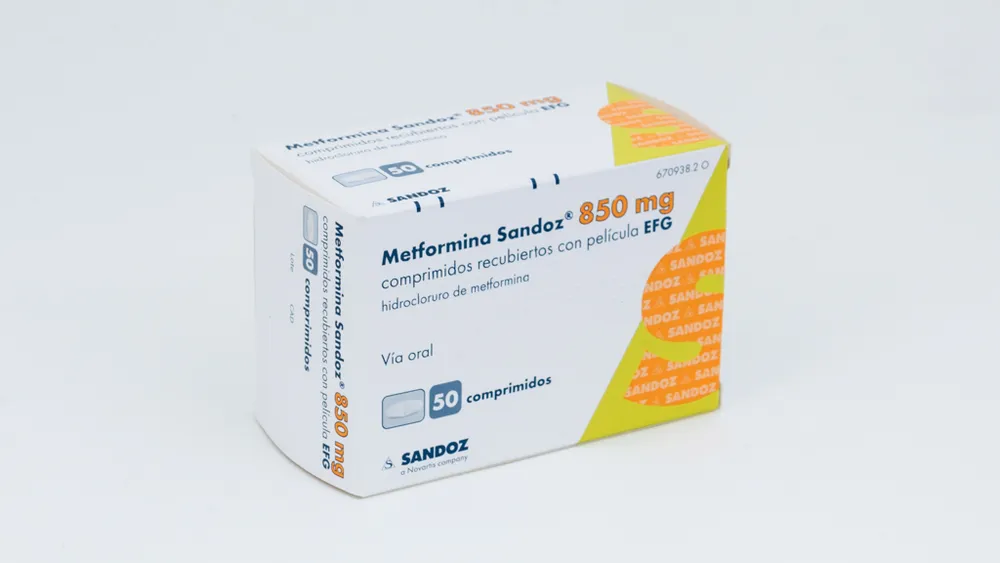
Table of Contents
- Package leaflet: Information for the user
- Introduction
- 1. What Metformin Sandoz is and what it is used for
- 2. What you need to know before taking Metformina Sandoz
- 3. How to take Metformina Sandoz
- 4. Possible adverse effects
- 5. Storage of Metformin Sandoz
- 6. Contents of the pack and other information
Package leaflet: Information for the user
Introduction
Package leaflet: information for the patient
Metformin Sandoz 850 mg film-coated tablets EFG
metformin hydrochloride
Read the entire leaflet carefully before you start taking this medicine because it contains important information for you.
- Keep this leaflet, as you may need to read it again.
- If you have any questions, consult your doctor or pharmacist.
- This medicine has been prescribed for you only and must not be given to other people, even if they have the same symptoms as you, because it could harm them.
- If you experience any adverse effects, consult your doctor or pharmacist, even if they are adverse effects not listed in this leaflet. See section 4.
Leaflet contents:
- What Metformin Sandoz is and what it is used for
- What you need to know before taking Metformin Sandoz
- How to take Metformin Sandoz
- Possible side effects
- How to store Metformin Sandoz
- Contents of the pack and other information
1. What Metformin Sandoz is and what it is used for
Metformin Sandoz contains metformin, a medicine used to treat diabetes. It belongs to a group of medicines called biguanides.
Insulin is a hormone produced by the pancreas that helps your body take up glucose (sugar) from the blood. Your body uses glucose to produce energy or stores it for future use.
If you have diabetes, your pancreas does not produce enough insulin or your body cannot properly use the insulin it produces. This leads to high levels of glucose in the blood. Metformin helps lower your blood glucose to as near normal levels as possible.
If you are an overweight adult, taking metformin over a prolonged period also helps reduce the risk of diabetes-related complications. Metformin is associated with maintenance of body weight or a slight reduction in body weight.
Metformin is used to treat patients with type 2 diabetes (also called "non-insulin-dependent diabetes") when diet and exercise alone are not sufficient to control blood glucose levels. It is especially used in overweight patients.
Adults may take metformin alone or in combination with other antidiabetic medicines (oral medications or insulin).
Children aged 10 years and older, and adolescents, may take metformin alone or together with insulin.
2. What you need to know before taking Metformina Sandoz
Do not take Metformina Sandoz
-
If you are allergic to metformin or any of the other ingredients of this medicine (listed in section 6),
-
if you have severely reduced kidney function,
-
if you have uncontrolled diabetes with, for example, severe hyperglycemia (high blood glucose), nausea, vomiting, diarrhea, rapid weight loss, lactic acidosis (see “Risk of lactic acidosis” below), or ketoacidosis. Ketoacidosis is a disorder in which substances called “ketone bodies” accumulate in the blood, potentially leading to diabetic pre-coma. Symptoms include stomach pain, rapid and deep breathing, drowsiness, or fruity-smelling breath,
-
if you have liver problems,
-
if you regularly consume large amounts of alcohol,
-
if you have lost a significant amount of fluid from your body (dehydration), for example due to
- prolonged or severe diarrhea, or
- repeated vomiting.
Dehydration may trigger kidney problems, which could put you at risk of developing lactic acidosis (see “Warnings and precautions”).
- if you are being treated for acute heart failure or have recently had a heart attack, have serious circulation problems (such as shock), or have difficulty breathing. These conditions may lead to tissue hypoxia (lack of oxygen in tissues), increasing your risk of lactic acidosis (see “Warnings and precautions” below),
- if you have a serious infection, such as those affecting the lungs, airways, or kidneys. Serious infections may cause kidney problems, increasing your risk of lactic acidosis (see “Warnings and precautions”).
If any of the above conditions apply to you, consult your doctor before starting this medicine.
Make sure to consult your doctor if:
- you require an imaging procedure such as an X-ray or scan involving the injection of iodine-containing contrast agents into your blood,
- you require major surgery.
You must stop taking metformin for a certain period before and after the procedure or surgery. Your doctor will decide whether you need alternative treatment during this time. It is important that you follow your doctor’s instructions precisely.
Warnings and precautions
Risk of lactic acidosis
Metformin may cause a very rare but serious adverse effect called lactic acidosis, especially if your kidneys are not functioning properly. The risk of developing lactic acidosis is also increased in cases of uncontrolled diabetes, serious infections, prolonged fasting or alcohol consumption, dehydration (see further information below), liver problems, and any medical condition involving reduced oxygen supply to body tissues (such as severe and acute heart conditions).
Contact your doctor immediately for advice if:
- You are known to have a genetic mitochondrial disorder (components responsible for energy production within cells), such as MELAS syndrome (mitochondrial encephalopathy, myopathy, lactic acidosis, and stroke-like episodes) or maternally inherited diabetes and deafness (MIDD).
- You experience any of the following symptoms after starting metformin treatment: seizures, cognitive decline, difficulty with body movements, symptoms indicating nerve damage (e.g., pain or numbness), migraine, or hearing loss.
If any of the above apply to you, consult your doctor for further instructions.
Temporarily stop taking metformin if you develop an illness that may lead to dehydration (significant loss of body fluids), such as severe vomiting, diarrhea, fever, heat exposure, or reduced fluid intake. Consult your doctor for further instructions.
Stop taking metformin immediately and contact a doctor or the nearest hospital without delay if you experience any symptoms of lactic acidosis, as this condition may lead to coma.
Symptoms of lactic acidosis include:
- vomiting,
- stomach pain (abdominal pain),
- muscle cramps,
- general feeling of discomfort with extreme fatigue,
- difficulty breathing,
- decreased body temperature and heart rate.
Lactic acidosis is a medical emergency and must be treated in a hospital.
Metformin alone does not cause hypoglycemia (blood glucose levels too low). However, if you take metformin together with other antidiabetic medicines that can cause hypoglycemia (such as sulfonylureas, insulin, or meglitinides), there is a risk of hypoglycemia. If you experience symptoms of hypoglycemia, such as weakness, dizziness, increased sweating, rapid heartbeat, vision disturbances, or difficulty concentrating, it is generally helpful to eat or drink something containing sugar.
If you need to undergo major surgery, you must stop taking metformin during the procedure and for a period afterward. Your doctor will decide when to interrupt and restart metformin treatment.
Consult your doctor before starting metformin if you are in any of the following situations:
- if you have symptoms of low blood glucose levels, such as:
- weakness,
- dizziness,
- increased sweating,
- rapid heartbeat,
- vision disturbances,
- difficulty concentrating.
If this occurs, eat or drink something containing sugar. Metformin alone does not typically cause a significant drop in blood sugar levels, but other diabetes medications can.
- overweight,
Follow your low-calorie diet.
- if you are taking other medicines,
See section “Taking Metformina Sandoz with other medicines”.
- During treatment with metformin, your doctor will check your kidney function at least once a year, or more frequently if you are elderly and/or if your kidney function is deteriorating.
Children under 10 years of age
Metformin is not recommended in this age group.
Other medicines and Metformina Sandoz
If you need to receive an injection of an iodine-containing contrast agent into your bloodstream, for example during an X-ray or scan, you must stop taking metformin before or at the time of the injection. Your doctor will decide when to interrupt and restart metformin treatment.
Inform your doctor or pharmacist if you are taking, have recently taken, or might need to take any other medicines.
You may require more frequent blood glucose and kidney function tests, or your doctor may need to adjust your metformin dose. It is especially important to mention the following:
- Medicines containing alcohol,
- glucocorticoids, medicines used to prevent organ transplant rejection, reduce skin inflammation, or treat asthma;
- bronchodilator medicines such as salbutamol, fenoterol, and terbutaline;
- medicines that increase urine production (diuretics),
- medicines used to treat pain and inflammation (NSAIDs and COX-2 inhibitors, such as ibuprofen and celecoxib),
- certain medicines for treating hypertension (ACE inhibitors and angiotensin II receptor antagonists),
- medicines that may alter metformin blood levels, especially if you have reduced kidney function (such as verapamil, rifampicin, cimetidine, dolutegravir, ranolazine, trimethoprim, vandetanib, isavuconazole, crizotinib, olaparib),
- medicines to lower blood sugar levels, such as insulin or other oral antidiabetics.
Taking these medicines together with metformin may cause blood sugar levels to drop too low. See “Warnings and precautions”.
Taking Metformina Sandoz with alcohol
Avoid excessive alcohol consumption while taking metformin, as this may increase the risk of lactic acidosis (see section “Warnings and precautions”).
Pregnancy and breastfeeding
If you are pregnant, think you may be pregnant, or plan to become pregnant, talk to your doctor about whether changes to your treatment are needed or whether your blood glucose levels should be monitored.
This medicine is not recommended if you are breastfeeding or planning to breastfeed.
Driving and using machines
Metformin alone does not cause hypoglycemia (blood glucose levels too low). This means it will not affect your ability to drive or operate machinery.
However, take special care if you take metformin together with other diabetes medicines that may cause hypoglycemia (such as sulfonylureas, insulin, meglitinides). Symptoms of hypoglycemia include weakness, dizziness, increased sweating, rapid heartbeat, vision disturbances, or difficulty concentrating. Do not drive or operate machinery if you begin to experience these symptoms.
3. How to take Metformina Sandoz
Follow exactly the instructions given by your doctor or pharmacist for taking this medicine. If in doubt, consult your doctor or pharmacist again. If you have reduced kidney function, your doctor may prescribe you a lower dose.
If you are also being administered insulin, your doctor will advise you on how to start taking metformin.
Metformin cannot replace the benefits of a healthy lifestyle. Continue to follow any dietary advice given by your doctor and exercise regularly.
*Tablets of 500 mg and 1000 mg of metformin hydrochloride as the active substance are also available for individualized dose adjustment.
Adults
- Normal dose: 1 tablet of metformin 850 mg, 2 or 3 times daily.
- After taking metformin for approximately 2 weeks, your doctor will measure your blood sugar levels and adjust your dose accordingly.
- Maximum dose: 3,000 mg* of metformin hydrochloride per day, divided into 3 doses.
Children aged 10 years or older
- Normal starting dose: 500 mg* of metformin hydrochloride or 1 tablet of Metformina Sandoz 850 mg once daily.
- After the child has taken metformin for approximately 2 weeks, your doctor will measure blood sugar levels and adjust the dose accordingly.
- Maximum dose: 2,000 mg* of metformin hydrochloride per day, divided into 2 or 3 doses.
Patients aged 65 years or older
Since the likelihood of kidney impairment is higher in this age group, your doctor will determine the metformin dose based on your kidney function.
See also section 2 “Warnings and precautions”.
Method of administration
Swallow the tablets with a glass of water during or after meals. This will help reduce gastrointestinal side effects. The score line is intended only for breaking the tablet if you have difficulty swallowing it whole.
Do not crush or chew the tablets. Swallow each tablet with a glass of water.
- If you take one dose per day, take it in the morning (with breakfast),
- If you take two doses per day, take them in the morning (with breakfast) and in the evening (with dinner),
- If you take three doses per day, take one in the morning (with breakfast), one at midday (with lunch), and one in the evening (with dinner).
If after some time you think that the effect of metformin is too strong or too weak, consult your doctor or pharmacist.
Monitoring
- Your doctor will regularly perform blood glucose tests and adjust your metformin dose according to your blood glucose levels. Be sure to speak regularly with your doctor. This is particularly important for children, adolescents, or elderly patients.
- Your doctor will also check your kidney function at least once a year. You may require more frequent monitoring if you are elderly or if your kidneys do not function normally.
Duration of treatment
Your doctor will decide how long you should take this medicine.
If you take more Metformina Sandoz than you should
If you have taken more metformin than you should, you may develop lactic acidosis.
Symptoms of lactic acidosis are nonspecific and may include vomiting, stomach pain (abdominal pain) with cramps, a general feeling of discomfort with severe fatigue, and difficulty breathing. Additional symptoms may include a drop in body temperature and heart rate. If you experience any of these symptoms, you must seek immediate medical attention, as lactic acidosis can lead to coma. Stop taking metformin immediately and contact your doctor or go to the nearest hospital right away.
If you have taken more metformin than prescribed, consult your doctor or go to the nearest hospital immediately, or call the Toxicology Information Service at: 91 562 04 20, stating the name of the medicine and the amount ingested.
If you forget to take Metformina Sandoz
If you forget to take a dose, skip that dose and take the next one at the usual scheduled time.
Do not take a double dose to make up for missed doses. If you have any further questions about the use of this medicine, ask your doctor or pharmacist.
If you stop taking Metformina Sandoz
If you stop treatment with metformin without your doctor's consent, your blood sugar levels may rise uncontrollably. This increases the risk of long-term complications, for example, in the eyes, kidneys, or blood vessels.
If you have any further questions about the use of this medicine, ask your doctor or pharmacist.
If you have any further questions about the use of this medicine, ask your doctor or pharmacist.
4. Possible adverse effects
Like all medicines, this medicine can cause adverse effects, although not everyone experiences them.
Metformin may cause a very rare (may affect up to 1 in 10,000 people), but very serious adverse effect called lactic acidosis (see section “Warnings and precautions”). If this occurs, you must stop taking metformin and contact a doctor or the nearest hospital immediately, as lactic acidosis can lead to coma.
Other possible adverse effects
Very common – may affect more than 1 in 10 people:
- nausea,
- vomiting,
- diarrhea,
- abdominal pain,
- loss of appetite.
These adverse effects occur more frequently at the beginning of treatment with metformin. Spreading the doses throughout the day and taking metformin during or immediately after a meal may help reduce these effects. If symptoms persist, stop taking metformin and consult your doctor.
Common – may affect up to 1 in 10 people:
- changes in taste sensation,
- low or decreased levels of vitamin B12 in the blood (symptoms may include extreme tiredness (fatigue), red and painful tongue (glossitis), tingling (paraesthesia), or yellowish or pale skin). Your doctor may schedule some tests to determine the cause of your symptoms, as some of them may be caused by diabetes or other unrelated health problems.
Very rare – may affect up to 1 in 10,000 people:
- lactic acidosis. This is a very rare but serious complication, especially if your kidneys are not functioning properly.
The symptoms of lactic acidosis are nonspecific (see section “Warnings and precautions”).
-
skin redness,
-
itching,
-
itchy skin rash (urticaria),
-
abnormalities in liver function tests or inflammation of the liver; this may cause:
- tiredness,
- loss of appetite,
- weight loss,
- with or without yellowing of the skin or whites of the eyes.
Stop taking metformin and inform your doctor immediately if this occurs.
Children and adolescents
Limited data in children and adolescents have shown that adverse effects were similar in nature and severity to those observed in adults.
If you consider any of the adverse effects you experience to be severe, or if you notice any adverse effect not listed in this leaflet, inform your doctor or pharmacist.
Reporting of adverse effects
If you experience any type of adverse effect, consult your doctor or pharmacist, even if it is a possible adverse effect not listed in this leaflet. You may also report them directly through the national reporting system: Spanish Pharmacovigilance System for Human Medicines: www.notificaram.es.
By reporting adverse effects, you can help provide more information on the safety of this medicine.
5. Storage of Metformin Sandoz
Keep this medicine out of the sight and reach of children. If a child is being treated with metformin, parents and caregivers are advised to supervise how this medicine is used.
Do not use this medicine after the expiry date which is stated on the carton, blister pack or bottle after CAD/EXP. The expiry date refers to the last day of the month indicated.
This medicine does not require any special storage conditions.
Medicines must not be disposed of via wastewater or household waste. Dispose of containers and unused medicines at the SIGRE Point in your pharmacy. If in doubt, ask your pharmacist how to dispose of containers and medicines you no longer need. This will help protect the environment.
6. Contents of the pack and other information
Composition of Metformin Sandoz
-
The active substance is metformin hydrochloride. Each film-coated tablet contains 850 mg of metformin hydrochloride, equivalent to 662.9 mg of metformin base.
-
The other components are:
povidone K 90, magnesium stearate, hypromellose, macrogol 4000, and titanium dioxide.
Nature of the product and contents of the container
White, oval, film-coated tablets, scored on one side and printed with “M 850” on the other. Dimensions: 19 mm x 6.5 mm.
Metformin Sandoz 850 mg is available in:
- HDPE bottles with LDPE cap or PP cap, with a desiccant container, containing 30, 60, 100, 200, 250, 500 film-coated tablets,
- PVC/aluminum blisters with 20, 28, 30, 40, 50, 56, 60, 84, 90, 100, 120, 180, 250, 300
film-coated tablets.
Keep the desiccant container inside the bottle.
Only some pack sizes may be marketed.
Marketing Authorization Holder and Manufacturer
Marketing Authorization Holder
Sandoz Farmacéutica, S.A.
Parque Norte Business Park
Roble Building
C/ Serrano Galvache, 56
28033 Madrid
Spain
Manufacturer
Salutas Pharma GmbH
Otto-von-Guericke-Allee, 1
39179 Barleben
Germany
or
Lek S.A.
Ul. Domaniewska, 50 C
02-672 Warszawa
Poland
or
Lek Pharmaceuticals d.d.
Verovskova, 57
1526 Ljubljana
Slovenia
or
Lek S.A.
16 Podlipie Str
95-010 Strykow
Poland
or
Lek Pharmaceuticals d.d.
Trimlini 2D
9220 Lendava
Slovenia
This medicinal product is authorized in the Member States of the European Economic Area and in the United Kingdom (Northern Ireland) under the following names:
Belgium: Metformine Sandoz 850 mg filmomhulde tabletten
Bulgaria: ???????? 850 MG ????????? ????????
Denmark: Metformin Sandoz
Slovenia: Metforminijev klorid Lek 850 mg filmsko obložene tablete
Estonia: Glucoral 850mg
Finland: Oramet 850 mg tabletti, kalvopäällysteinen
France: METFORMINE SANDOZ 850 MG, COMPRIMÉ PELLICULÉ
Norway: Metformin Sandoz 850 mg tabletter, filmdrasjerte
Poland: Etform 850 , 850 MG, TABLETKI POWLEKANE
Portugal: METFORMINA ROMAC
Netherlands: Metformine HCl Sandoz 850 mg , filmomhulde tabletten
United Kingdom: Metformin hydrochloride 850 mg film-coated tablets
Czech Republic: Metformin Sandoz
Sweden: Metformin Sandoz 850 mg filmdragerad tablett
This leaflet has been reviewed in: April 2025.
Detailed and up-to-date information on this medicinal product is available on the website of the Spanish Agency of Medicines and Health Products (AEMPS) http://www.aemps.gob.es/