Mercaptopurine Silver 50 mg tablets
Spain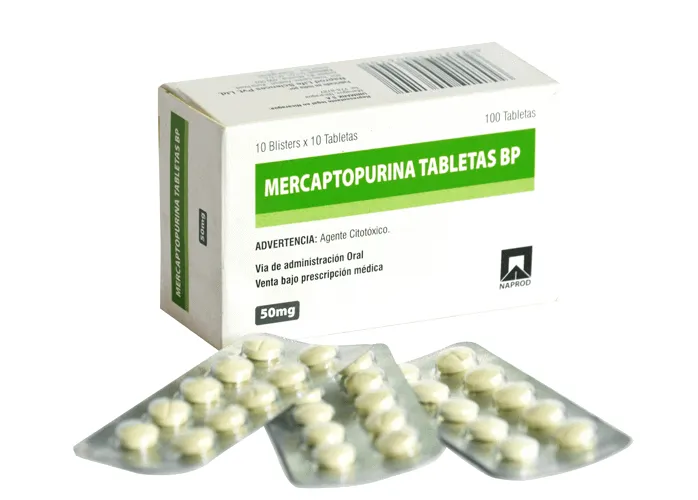
Table of Contents
- Package Leaflet: Information for the user
- Introduction
- 1. What Mercaptopurina Silver is and what it is used for
- 2. What you need to know before taking Mercaptopurine Silver
- 3. How to take Mercaptopurina Silver
- 4. Possible adverse effects
- 5. Storage of MERCAPTOPURINE SILVER
- 6. Contents of the pack and other information
Package Leaflet: Information for the user
Introduction
Package leaflet: information for the patient
Mercaptopurine Silver 50 mg tablets
Read the entire leaflet carefully before starting to take this medicine, because it contains important information for you.
-
Keep this leaflet, as you may need to read it again.
-
If you have any questions, consult your doctor or pharmacist.
-
This medicine has been prescribed for you only, and you should not give it to other people, even if they have the same symptoms as you, because it may harm them.
- If you experience adverse effects, consult your doctor or pharmacist, even if these are adverse effects not listed in this leaflet. See section 4.
Leaflet contents
- What Mercaptopurine Silver is and what it is used for
- What you need to know before taking Mercaptopurine Silver
- How to take Mercaptopurine Silver
- Possible side effects
- How to store Mercaptopurine Silver
- Contents of the pack and other information
1. What Mercaptopurina Silver is and what it is used for
Mercaptopurina Silver contains an active substance called mercaptopurine monohydrate. It belongs to a group of medicines known as cytotoxic agents (also called chemotherapy). Mercaptopurine is used to treat leukemia (blood cancer). It works by reducing the number of new blood cells produced by your body.
Mercaptopurine is used for:
- Acute myeloid leukemia (also called acute myelogenous leukemia or AML) – a rapidly growing disease that increases the number of white blood cells produced by the bone marrow. This can lead to infections and bleeding.
- Acute lymphoblastic leukemia (also called acute lymphocytic leukemia or ALL) – a rapidly growing disease that increases the number of immature white blood cells. These immature white blood cells are unable to grow and function properly. Therefore, they cannot fight infections and may cause bleeding.
2. What you need to know before taking Mercaptopurine Silver
Do not take Mercaptopurine Silver:
- if you are allergic to mercaptopurine or to any of the other ingredients of this medicine (listed in section 6).
- if you have recently received the yellow fever vaccine while taking mercaptopurine, as this may be fatal.
Warnings and precautions
Talk to your doctor or pharmacist before taking Mercaptopurine Silver if:
- you have been vaccinated against yellow fever
- you have kidney or liver problems; your doctor will monitor your renal and hepatic function
- you have a condition in which your body produces insufficient amounts of an enzyme called TPMT (thiopurine methyltransferase), as your doctor may need to adjust your dose.
- you are planning to have a child. This applies to both men and women. Mercaptopurine may be harmful to sperm or ova (see 'Pregnancy, breastfeeding and fertility' – below).
An uncommon and aggressive type of cancer called hepatosplenic T-cell lymphoma has been reported in some patients with inflammatory bowel disease who have received treatment with 6-mercaptopurine (see section 4).
If you are receiving immunosuppressive therapy, taking Mercaptopurine Silver may increase your risk of:
-
tumors, including skin cancer. Therefore, when taking Mercaptopurine Silver, avoid excessive sun exposure, wear protective clothing, and use high-protection sunscreens.
-
lymphoproliferative disorders
-
treatment with Mercaptopurine Silver increases your risk of developing a type of cancer called lymphoproliferative disorder. When treatment includes multiple immunosuppressants (including thiopurines), this may lead to death.
-
the combination of multiple immunosuppressants administered simultaneously increases the risk of lymphatic system disorders due to viral infection (Epstein-Barr virus (EBV)-associated lymphoproliferative disorders).
Infections
When receiving treatment with Mercaptopurine Silver, the risk of viral, fungal, and bacterial infections is higher, and these infections may be more severe. See also section 4.
Before starting treatment, inform your doctor if you have ever had chickenpox, herpes, or hepatitis B (a liver disease caused by a virus).
NUDT15 gene mutation
If you have an inherited mutation in the NUDT15 gene (a gene involved in the breakdown of Mercaptopurine Silver in the body), you have an increased risk of infections and hair loss, and in this case your doctor may prescribe a lower dose.
Vitamin B3 deficiency (pellagra)
Inform your doctor immediately if you experience diarrhea, pigmented skin rashes (dermatitis), or impaired memory, reasoning, and thinking ability (dementia), as these symptoms may indicate vitamin B3 deficiency. Your doctor will prescribe vitamin supplements (niacin/ nicotinamide) to improve your condition.
Taking Mercaptopurine Silver may increase your risk of:
- developing a serious condition called macrophage activation syndrome (excessive activation of white blood cells associated with inflammation), which usually occurs in people with certain types of arthritis.
If you are unsure whether any of the above situations apply to you, speak with your doctor, nurse, or pharmacist before taking mercaptopurine.
Taking Mercaptopurine Silver with other medicines
Tell your doctor or pharmacist if you are taking, have recently taken, or might need to take any other medicines, including those obtained without a prescription.
In particular, inform your doctor or pharmacist if you are taking any of the following medicines:
- other cytotoxic drugs (chemotherapy) – when used with mercaptopurine, there is an increased likelihood of side effects, such as respiratory problems
- other medicines whose primary or secondary toxicity is myelosuppression
- allopurinol, oxipurinol, thiopurinol (used to treat gout)
- warfarin (used to thin the blood)
- olsalazine or mesalazine (used for an intestinal condition called ulcerative colitis)
- sulfasalazine (used for rheumatoid arthritis or ulcerative colitis)
- antiepileptic drugs such as phenytoin or carbamazepine. Blood levels of antiepileptics may need to be monitored and the dose adjusted if necessary.
- 6-thioguanine (antineoplastic), as cross-resistance exists between both medicines
- ribavirin – cases of severe myelosuppression have been reported following concomitant administration with mercaptopurine
- methotrexate (used to treat cancer, rheumatoid arthritis, or skin conditions [severe psoriasis]). Oral administration of methotrexate increases blood levels of mercaptopurine
- infliximab (used to treat certain intestinal diseases [Crohn's disease and ulcerative colitis], rheumatoid arthritis, ankylosing spondylitis, or skin conditions [severe psoriasis])
If you are due to be vaccinated while taking mercaptopurine, it is important to consult your doctor or nurse first. This is because some vaccines (such as those for polio, measles, mumps, and rubella) may cause you to develop an infection if administered while you are taking mercaptopurine.
Taking Mercaptopurine Silver with food and drinks
Mercaptopurine Silver may be taken with food or on an empty stomach. However, the chosen method should be consistent every day.
Do not take mercaptopurine with milk or dairy products, as they may reduce the effectiveness of the medicine. Mercaptopurine Silver should be taken at least 1 hour before or 3 hours after consuming milk or dairy products.
Pregnancy, breastfeeding and fertility
If you are pregnant or breastfeeding, think you may be pregnant, or plan to become pregnant, consult your doctor or pharmacist before using this medicine.
Pregnancy:
If you are planning to have a baby, do not take mercaptopurine. This applies to both men and women. Mercaptopurine may be harmful to sperm or ova. Effective contraceptive precautions should be taken to avoid pregnancy while you or your partner are taking this medicine. Consult your doctor.
If you are already pregnant, inform your doctor before taking mercaptopurine.
Taking Mercaptopurine Silver during pregnancy may cause intense and excessive itching without a skin rash. You may also experience nausea and loss of appetite at the same time, which may indicate a condition called intrahepatic cholestasis of pregnancy (a liver disorder during pregnancy). Speak with your doctor immediately, as this condition may harm the fetus.
Breastfeeding:
Breastfeeding is not recommended while taking mercaptopurine. Consult your doctor, pharmacist, or midwife.
Driving and using machines
Mercaptopurine is not expected to affect your ability to drive or operate machinery, although no studies have been conducted to confirm this.
Mercaptopurine Silver contains lactose and sodium
This medicine contains lactose. If your doctor has informed you that you have an intolerance to certain sugars, consult him before taking this medicine.
This medicine contains less than 23 mg of sodium (1 mmol) per tablet; this is essentially "sodium-free".
3. How to take Mercaptopurina Silver
Follow exactly the instructions given by your doctor or pharmacist for taking this medicine. If in doubt, consult your doctor or pharmacist again.
Mercaptopurina should only be administered by a specialist doctor experienced in the treatment of blood disorders.
- Swallow the tablets whole with a glass of water.
- If you need to split the tablet in half, do not inhale the tablet powder. Wash your hands afterwards.
- While taking Mercaptopurina Silver, your doctor will periodically perform blood tests to monitor the number and types of blood cells and to check that your liver is functioning properly.
- Your doctor may also request additional blood and urine tests to monitor your uric acid levels. Uric acid is a natural chemical substance in the body, but its levels may increase during treatment with Mercaptopurina Silver.
- Your doctor may adjust your dose of Mercaptopurina Silver depending on the results of these tests.
The usual initial dose in adults, adolescents, and children is 25–75 mg/m² of body surface area per day. Your doctor will prescribe the correct dose for you. Occasionally, your doctor may change your dose of Mercaptopurina Silver depending, for example, on the results of various tests. Consult your doctor or nurse if you have any doubts about the dose you should take.
It is important that you take Mercaptopurina Silver at night, as this will make the medicine more effective.
You may take the medicine with food or on an empty stomach, but you should use the same method every day. The medicine should be taken at least 1 hour before or 2 hours after consuming milk or dairy products.
If you take more Mercaptopurina Silver than you should
If you take more Mercaptopurina Silver than you should, inform your doctor or go to a hospital immediately. You may experience nausea, vomiting, or diarrhea. Bring the medicine packaging and this leaflet with you.
In case of overdose, call the Toxicology Information Service at telephone number: 91 562 04 20, indicating the medicine and the amount ingested.
If you forget to take Mercaptopurina Silver
Inform your doctor.
Do not take a double dose to make up for forgotten doses.
If you stop taking Mercaptopurina Silver
Do not stop taking your medicine unless instructed by your doctor, as you may experience a relapse of your disease.
If you have any further questions about the use of this medicine, ask your doctor, pharmacist, or nurse.
4. Possible adverse effects
Like all medicines, this medicine may cause adverse effects, although not everyone experiences them.
If you experience any of the following side effects, consult your specialist doctor or go to a hospital immediately:
Allergic reaction, which may include the following signs:
- skin rash
- high temperature
- joint pain
- facial swelling
- skin nodules (erythema nodosum)
Any sign of fever or infection (sore throat, mouth ulcers, or urinary problems).
Any unexpected bruising or bleeding, as this could indicate that your body is producing an insufficient number of certain types of blood cells.
If you feel suddenly unwell (even if your temperature is normal), with abdominal pain and nausea or vomiting, as this could be a sign of inflammation of the pancreas.
Yellowing of the whites of the eyes or the skin (jaundice).
If you have diarrhoea.
Consult your doctor if you experience any of the following side effects, which may also occur with this medicine:
Very common: may affect more than 1 in 10 people
- decrease in the number of white blood cells and platelets (can be detected in blood tests)
Common: may affect up to 1 in 10 people
- nausea or vomiting
- liver damage – may be detected in blood tests
- decrease in red blood cells, which may cause tiredness, dizziness, or shortness of breath – a condition called anaemia
- loss of appetite
- diarrhoea
- inflammation of the mouth (stomatitis)
Uncommon: may affect up to 1 in 100 people
- mouth ulcers
- inflammation of the pancreas
- joint pain
- skin rash
- fever
- permanent liver damage (hepatic necrosis)
Rare: may affect up to 1 in 1,000 people
- hair loss
- in men: temporary decrease in sperm count
- facial swelling
- various types of cancer, including blood, lymphatic, and skin cancers
Very rare: may affect up to 1 in 10,000 people
- a different type of leukaemia than the one being treated
- intestinal ulcers
Other adverse effects (frequency not known)
- a rare type of cancer (hepatosplenic T-cell lymphoma) (see Section 2)
- skin nodules (erythema nodosum)
- burning or tingling sensation in the mouth or lips (mucosal inflammation, stomatitis)
- cracked or swollen lips (cheilitis)
- vitamin B3 deficiency (pellagra) with pigmented skin rash, diarrhoea, or decreased memory, reasoning, or other thinking abilities
- decreased levels of blood clotting factors
Other adverse effects in children
- low blood sugar (hypoglycaemia); frequency not known
If you consider any of the adverse effects you experience to be severe, or if you notice any adverse effects not listed in this leaflet, inform your doctor or pharmacist.
Reporting of adverse effects
If you experience any type of adverse effect, talk to your doctor or pharmacist, even if it is a possible adverse effect not listed in this leaflet. You can also report them directly via the Spanish Pharmacovigilance System for Human Medicinal Products: https://www.notificaram.es. By reporting adverse effects, you can help provide more information on the safety of this medicine.
5. Storage of MERCAPTOPURINE SILVER
Keep this medicine out of sight and reach of children, preferably in a locked cabinet. Accidental ingestion may be fatal to children.
Do not use this medicine after the expiry date which is stated on the blister pack and on the carton after EXP:. The expiry date refers to the last day of the month indicated.
Medicines should not be disposed of via wastewater or household waste. Dispose of unused containers and medicines at the SIGRE Point  at your pharmacy. Ask your pharmacist how to dispose of containers and medicines you no longer need. This will help protect the environment.
6. Contents of the pack and other information
Composition of Mercaptopurina Silver
-
The active substance is mercaptopurine (as monohydrate). Each tablet contains 50 mg of mercaptopurine monohydrate.
-
The other components (excipients) are: microcrystalline cellulose, povidone, sodium croscarmellose, monohydrate lactose, magnesium stearate and stearic acid.
Appearance of the medicinal product and contents of the pack
Mercaptopurina Silver are yellowish circular tablets.
Pack sizes: 24 or 25 tablets.
Only certain pack sizes may be marketed.
For the 24-tablet presentation, Mercaptopurina Silver is packaged in two Alu-PVC or ALU/PVC-PVDC blisters containing 12 tablets each, inside a cardboard carton.
For the 25-tablet presentation, Mercaptopurina Silver is packaged in one Alu-PVC or ALU/PVC-PVDC blister containing 25 tablets, inside a cardboard carton.
Marketing Authorization Holder
SILVER PHARMA S.L.
Avda. Camino de lo Cortao 16
28703 San Sebastian de los Reyes, (Madrid)
Spain
Manufacturer responsible
Ardena Pamplona, S.L. Pol Mocholi C/ Noáin, 1 31110 Noáin (Navarra) Spain Laboratori Fundació DAU Calle Lletra C, 12-14, Pol. Ind. Zona Franca, 08040 Barcelona, Spain Prasfarma, S.L.U. C/ Sant Joan, 11-15, Manlleu, 08560, Barcelona, Spain |
Date of last review of this package leaflet: December 2025
Detailed and up-to-date information on this medicinal product is available on the website of the Spanish Agency for Medicines and Health Products (AEMPS) http://www.aemps.gob.es/