Mepsevii 2 mg/ml concentrate for solution for infusion
Spain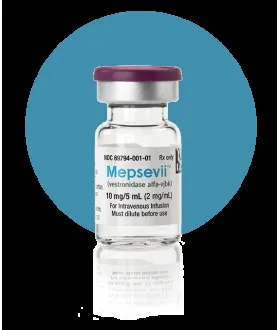
Table of Contents
Package leaflet: Information for the user
Introduction
Package leaflet: information for the user
Mepsevii 2 mg/ml concentrate for solution for infusion
vestronidase alfa
This medicinal product is subject to additional monitoring, which will allow for rapid identification of new information on its safety. You can help by reporting any side effects you may experience. Information on how to report side effects is provided at the end of section 4.
Read the entire leaflet carefully before starting to use this medicine, as it contains important information for you.
- Keep this leaflet, as you may need to read it again.
- If you have any further questions, consult your doctor.
- This medicine has been prescribed for you only; do not give it to other people, even if they have the same symptoms as you, since it may harm them.
- If you experience any side effects, consult your doctor, even if they are side effects not listed in this leaflet (see section 4).
Leaflet contents
- What Mepsevii is and what it is used for
- What you need to know before receiving Mepsevii
- How Mepsevii is administered
- Possible side effects
- How to store Mepsevii
- Contents of the pack and other information
1. What Mepsevii is and what it is used for
What Mepsevii is
Mepsevii contains a recombinant human enzyme called vestronidase alfa. It belongs to a group of medicines known as "enzyme replacement therapies". It is administered to adults and children of all ages with MPS VII to treat the non-neurological manifestations of the disease (mucopolysaccharidosis VII, also known as Sly syndrome).
What MPS VII is
MPS VII is a hereditary genetic disorder in which the body does not produce enough of an enzyme known as beta-glucuronidase.
- This enzyme breaks down mucopolysaccharides, which are a type of sugar.
- Mucopolysaccharides are produced by the body and help form bones, cartilage, skin, and tendons.
- These sugars are constantly recycled: new ones are made and old ones are broken down.
- If there is insufficient beta-glucuronidase, some of these sugars accumulate in cells, causing damage to the body.
How Mepsevii works
This medicine replaces beta-glucuronidase, facilitating the breakdown of sugars that accumulate in the tissues of people with MPS VII, thereby preventing their accumulation and the resulting disease symptoms.
- Treatment may improve certain signs and symptoms of the disease, such as walking difficulties and fatigue.
If treatment is started early in childhood, disease progression may be slowed and permanent damage reduced.
2. What you need to know before starting Mepsevii
Do not receive Mepsevii
- if you are allergic to vestronidase alfa or to any of the other ingredients of this medicine (listed in section 6).
Warnings and precautions
Talk to your doctor before receiving Mepsevii.
The effects of treatment with vestronidase alfa will be evaluated periodically, and if clear beneficial effects (including stabilization of the clinical manifestations of the disease) are not observed, permanent discontinuation of treatment will be considered. Discontinuation of treatment may lead to a significant worsening of the patient's clinical condition.
You should know that administration of vestronidase alfa does not correct irreversible complications of the disease (e.g., bone deformities).
Monitor for adverse effects during or shortly after Mepsevii infusion
- You may experience a reaction to the drug administration known as an "infusion reaction." This includes any adverse event occurring during or the day after infusion, including an allergic reaction (see section 4 "Possible side effects"). If you experience an infusion reaction, inform your doctor immediately.
- If you have an allergic reaction during the infusion, your doctor may slow down or stop the infusion. Your doctor may also administer (or may have already administered) other medications to treat the allergic reaction, such as an antihistamine, a corticosteroid, or an antipyretic (a medicine that reduces fever).
Other symptoms to monitor
- If you experience neck or back pain, numbness in the arms or legs, or loss of bladder or bowel control, inform your doctor immediately. These symptoms could be signs of a condition caused by spinal cord compression.
Other medicines and Mepsevii
Tell your doctor if you are taking, have recently taken, or might need to take any other medicines.
Pregnancy and breastfeeding
If you are pregnant or breastfeeding, think you might be pregnant, or are planning to become pregnant, consult your doctor before using this medicine.
Unless absolutely necessary, Mepsevii will not be administered if you are pregnant. Discuss with your doctor whether the benefits of Mepsevii outweigh the potential risks to the unborn baby, as there is no experience with the use of Mepsevii during pregnancy.
It is unknown whether Mepsevii passes into breast milk, but it is not expected that the medicine would pass to your baby. Discuss with your doctor whether the benefits of Mepsevii during breastfeeding outweigh the potential risks to the baby.
Driving and using machines
Mepsevii is unlikely to affect your ability to drive or operate machinery.
Mepsevii contains sodium
This medicine contains 17.8 mg of sodium (the main component of table/cooking salt) per 5 ml vial and is administered with a solution of 9 mg/ml sodium chloride as diluent. Therefore, each dosed vial corresponds to 1.8% of the maximum daily recommended sodium intake for an adult. Take this into account if you are on a sodium-restricted diet.
3. How Mepsevii is administered
Your doctor will initiate and monitor your treatment with Mepsevii.
- Your doctor or nursing staff will administer Mepsevii into a vein by infusion (intravenous drip).
- This medicine must be diluted before administration.
- Your doctor may give you (or may have already given you) additional medications to manage potential allergic reactions, such as an antihistamine, a corticosteroid, or an antipyretic (a medicine that reduces fever).
Dosage
The dose you will receive depends on your body weight.
- The recommended dose is 4 mg per kg of body weight.
- This dose is administered every two weeks via intravenous infusion (drip).
- Each infusion will last approximately 4 hours.
If you receive more Mepsevii than you should
Mepsevii administration will be supervised and monitored by your doctor to ensure the correct dose is given and to take any necessary measures if required.
If you have any further questions about the use of this medicine, ask your doctor.
4. Possible adverse effects
Like all medicines, this medicine can cause adverse effects, although not everyone will experience them.
Adverse effects were mainly observed while patients were receiving the infusion or throughout the following day (infusion-related reactions).
Serious adverse effects
Severe allergic reaction (very common: affects more than 1 in 10 people):
If you experience any of the following symptoms of a severe allergic reaction (anaphylactoid reaction), you must contact your doctor or nursing staff immediately. The infusion will be stopped immediately, and your doctor may administer (or may have already administered) other medicines to treat the allergic reaction, such as an antihistamine, a corticosteroid, or an antipyretic (a medicine that reduces fever). Symptoms of a severe allergic reaction include, among others, shortness of breath, wheezing, difficulty breathing, and swelling of the face and tongue.
Other adverse effects
If you experience any such reaction, you must contact your doctor immediately, as you may require urgent treatment.
Very common adverse effects (affect more than 1 in 10 people):
- Urticaria
- Rash
- Swelling at the infusion site, including leakage of fluid into the surrounding tissues (swelling at the infusion site or extravasation at the infusion site).
Common adverse effects (may affect up to 1 in 10 people):
- Itching of the skin (pruritus)
- Loose stools (diarrhea)
- Fever with involuntary muscle contractions in the face or limbs (febrile convulsion)
- Swelling around the infusion site
Reporting of adverse effects
If you experience any adverse effects, consult your doctor, even if they are possible adverse effects not listed in this leaflet. You may also report them directly through the national reporting system detailed in Appendix V. By reporting adverse effects, you can help provide more information on the safety of this medicine.
5. Storage of Mepsevii
Keep this medicine out of the sight and reach of children.
Do not use this medicine after the expiry date ("EXP") stated on the carton. The expiry date is the last day of the month indicated.
Unopened vials:
- Store in a refrigerator (between 2°C and 8°C).
- Do not freeze.
- Keep in the original packaging to protect from light.
- Do not use this medicine if you see particles inside.
Medicines should not be disposed of via wastewater or household waste. Ask your pharmacist how to properly dispose of unused medicines and their packaging. This will help protect the environment.
6. Contents of the container and other information
What Mepsevii contains
- The active substance is called vestronidase alfa. Each ml of concentrate contains 2 mg of vestronidase alfa. Each 5 ml vial of concentrate contains 10 mg of vestronidase alfa.
- The other ingredients are: sodium dihydrogen phosphate dihydrate, sodium chloride, histidine, polysorbate 20, and water for injections (regarding sodium, see section 2 "Mepsevii contains sodium").
What Mepsevii looks like and contents of the container
Mepsevii is supplied as a concentrate for solution for infusion (sterile concentrate). The concentrate, ranging from colourless to slightly yellow, must not contain visible particles. It is supplied in a clear glass vial with a rubber stopper and an aluminium seal with a plastic cap.
Pack size: 1 vial of 5 ml
Marketing Authorisation Holder
Ultragenyx Germany GmbH
Rahel-Hirsch-Str. 10
10557 Berlin
Germany
Manufacturer
Ultragenyx Netherlands B.V.
Evert van de Beekstraat 1, Unit 104
1118 CL Schiphol
The Netherlands
Further information on this medicinal product is available by contacting the local representative of the Marketing Authorisation Holder:
BE, BG, CZ, DK, DE, EE, IE, EL, ES, HR, IT, CY, LV, LT, LU, HU, MT, NL, AT, PL, PT, RO, SI, SK, FI, SE, UK(NI)
Ultragenyx Germany GmbH, DE
Tel/Tél /Te?./Tlf/Τηλ/Puh/Sími: + 49 30 20179810
FR
Ultragenyx France SAS, FR
Tél: + 33 185 653761 or 0800 91 79 24 (toll-free number)
Date of the most recent review of this leaflet:
This medicine has been authorised under "exceptional circumstances". This type of approval means that, due to the low prevalence of this disease, it has not been possible to obtain complete information on this medicine.
The European Medicines Agency will review any new information on this medicine that becomes available on an annual basis, and this leaflet will be updated as necessary.
Other sources of information
Detailed information on this medicine is available on the website of the European Medicines Agency: http://www.ema.europa.eu. Links to other websites on rare diseases and orphan medicinal products are also provided.