Mepact 4 mg powder for suspension for infusion
Spain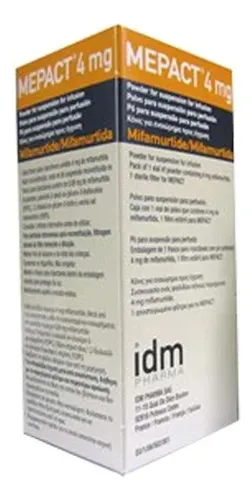
Table of Contents
Package leaflet: Information for the user
Introduction
Package leaflet: information for the user
MEPACT 4 mg powder for concentrate for dispersion for infusion.
mifamurtide
Read the entire leaflet carefully before you start using this medicine because it contains important information for you.
-
Keep this leaflet as you may need to read it again.
-
If you have any questions, ask your doctor.
-
If you experience any adverse reactions, consult your doctor, even if they are adverse reactions not listed in this leaflet. See section 4.
Contents of the leaflet
-
What MEPACT is and what it is used for
-
What you need to know before using MEPACT
-
How to use MEPACT
-
Possible adverse effects
-
How to store MEPACT
-
Contents of the pack and other information
1. What MEPACT is and what it is used for
MEPACT contains the active substance mifamurtide, which is similar to a component of the cell wall of certain bacteria. It stimulates the immune system to help your body destroy tumour cells.
MEPACT is used for the treatment of osteosarcoma (a type of bone cancer) in children, adolescents, and young adults (between 2 and 30 years of age). It is used after surgery to remove the tumour and following chemotherapy treatment to destroy any remaining cancer cells and thereby reduce the risk of cancer recurrence.
2. What you need to know before starting to use MEPACT
Do not use MEPACT:
-
if you are allergic (hypersensitive) to mifamurtide or to any of the other components of this medicine (listed in section 6).
-
if you are taking medicines containing cyclosporine or other calcineurin inhibitors or high doses of non-steroidal anti-inflammatory drugs (NSAIDs) (see below “Use of other medicines”).
Warnings and precautions
Talk to your doctor before starting to use MEPACT:
-
if you have or have had heart or blood vessel problems, such as blood clots (thrombosis), bleeding (haemorrhage), or inflammation of the veins (vasculitis). You will be closely monitored during MEPACT treatment. If your symptoms do not go away over time or worsen, you must contact your doctor, as it may be necessary to delay or discontinue treatment with MEPACT.
-
if you have a history of asthma or other respiratory disorders. Before using MEPACT, consult your doctor about whether you should continue using asthma medications while taking MEPACT.
-
if you have a history of inflammatory or autoimmune disease or have been treated with corticosteroids or other medicines that may affect your immune system.
-
if you have had allergic reactions to medicines, including rash, shortness of breath, and high blood pressure. If your symptoms worsen, you should contact your doctor, as these may have been caused by MEPACT.
-
if you have stomach problems such as nausea, vomiting, and loss of appetite. If these problems increase, you should contact your doctor, as they may have been caused by MEPACT when used in combination with chemotherapy.
-
if you develop chills or rigors, or feel hot. You should take your temperature, as you may have a fever. The presence of fever together with a low white blood cell count (neutropenia) may be a sign of a serious infection.
Section 4 includes detailed information on warnings and precautions related to adverse effects that may occur while taking this medicine.
Children
Do not give this medicine to children under 2 years of age, as there is no information available on its safety and efficacy in this age group.
Other medicines and MEPACT
Inform your doctor if you are taking, have recently taken, or might need to take any other medicines, including those obtained without a prescription. It is very important that you inform your doctor if you are taking medicines containing any of the following substances:
- cyclosporine, tacrolimus, used after transplantation to prevent rejection of transplanted organs, and other immunosuppressants used, for example, to treat psoriasis (a skin disease).
- non-steroidal anti-inflammatory drugs (NSAIDs), such as acetylsalicylic acid, ibuprofen, or diclofenac, used to treat headaches, fever, or pain. Do not use MEPACT if you are taking high-dose non-steroidal anti-inflammatory drugs (NSAIDs).
- corticosteroids, used to treat inflammation, allergies, or asthma. Regular use of corticosteroids should be avoided when MEPACT is being used, as it may affect how these medicines work.
It is recommended to separate the administration times of MEPACT and doxorubicin or other medicines if they are combined within the same chemotherapy regimen.
Pregnancy, breastfeeding, and fertility
If you are pregnant or breastfeeding, think you might be pregnant, or plan to become pregnant, consult your doctor before using this medicine.
MEPACT has not been studied in pregnant women. Therefore, MEPACT must not be used during pregnancy, nor in women of childbearing age who do not use an effective method of contraception. Use an effective method of contraception if you are receiving treatment with MEPACT.
It is not known whether MEPACT passes into breast milk. If you are breastfeeding, consult your doctor.
Driving and using machines
Some very common or common adverse effects of MEPACT treatment (such as dizziness, vertigo, fatigue, and blurred vision) may affect your ability to drive and use machines.
MEPACT contains sodium
This medicine contains less than 23 mg of sodium (1 mmol) per dose unit; hence, it is essentially “sodium-free”.
3. How to use MEPACT
Dosage and duration of treatment
MEPACT will only be administered under the supervision of a specialist doctor. Always follow exactly the administration instructions for this medicine given by your doctor. If in doubt, consult your doctor again.
The recommended dose of MEPACT is 2 mg/m² of body surface area. It will be administered twice weekly (with at least three days between doses) for the first 12 weeks, followed by once weekly for an additional 24 weeks.
The treatment schedule may be adjusted to align with your chemotherapy schedule. You do not need to interrupt the MEPACT treatment schedule if your chemotherapy is delayed; you must complete 36 weeks (9 months) of treatment with MEPACT without interruptions.
How MEPACT is administered
The lyophilized powder must be reconstituted into a liquid suspension, filtered using the filter provided, and then diluted before use. MEPACT infusion is given directly into a vein (intravenously) over approximately 1 hour. This will be performed by your doctor or a nurse, who will also monitor you during this time. Hospitalization is not required to receive MEPACT. It may also be administered to outpatient patients.
If you use more MEPACT than you should
You may experience more severe adverse effects, such as fever, chills, fatigue, nausea, vomiting, headache, high blood pressure, or low blood pressure. In case of overdose, contact your doctor or go to the nearest hospital immediately.
If you interrupt treatment with MEPACT
You must not interrupt treatment with MEPACT before completing the full treatment course without first consulting your doctor. If you have any further questions about the use of this product, ask your doctor.
4. Possible adverse effects
Like all medicines, MEPACT may cause adverse effects, although not everybody gets them.
Most patients experienced chills, fever and fatigue, especially during the first administration of MEPACT. These effects are usually mild to moderate and transient, and can be managed by your doctor; for example, with paracetamol for fever. When used in combination with chemotherapy, treatment with MEPACT often causes stomach problems such as nausea, vomiting and loss of appetite.
Consult your doctor immediately:
- if fever or chills persist for more than 8 hours after receiving the MEPACT dose, as this could indicate an infection, or
- if you develop a rash or experience other breathing problems (wheezing), or
- if you experience any stomach problems.
Very common adverse effects (may affect more than 1 in 10 people):
- fever, chills/shivering, weakness, tiredness or general malaise
- nausea and/or vomiting, diarrhoea or constipation
- headache or dizziness
- rapid heartbeat (tachycardia)
- high or low blood pressure
- loss of appetite
- sweating
- pain, which may be general pain, muscle and/or joint pain, and back, chest, abdominal, arm or leg pain
- cough, breathing difficulties or shortness of breath
- low body temperature
- low red blood cell count
Common adverse effects (may affect up to 1 in 10 people):
- bluish discoloration of tissues such as skin or gums, due to lack of oxygen
- noticeable increase in the rate or force of heartbeat
- swelling in arms or legs, or other sites (oedema)
- chest discomfort
- stomach upset, loss of appetite or weight loss
- redness, swelling, infection or other local reaction at the injection site or catheter insertion site
- erythema or redness, skin inflammation, itching, dryness, paleness or transient redness
- inflammation of the skin, tendons, muscles or similar supporting tissues of the body structure
- inflammation of a vein
- upper abdominal or chest wall pain; abdominal distension or pain; indigestion or liver pain
- other types of pain, including in the neck, shoulder, groin, bones or throat; postoperative pain
- muscle spasms or stiffness
- feeling cold
- tiredness, dizziness or drowsiness
- burning, itching or tingling sensation, reduced sensitivity to sensations, or sensation of sensitivity without stimuli
- involuntary jerking movements
- dehydration
- low potassium levels in blood
- inflammation of mucous membranes
- congestion or inflammation of the nose, throat or sinuses
- infections of the upper respiratory tract (such as a cold) or urinary tract (such as a bladder infection)
- systemic infection
- Herpes simplex virus infection
- productive cough, wheezing or exertional or aggravated breathing difficulty
- runny or bleeding nose
- fluid in the lung cavity
- blood in urine, difficulty or pain when urinating, or frequent urination
- difficulty sleeping, depression, anxiety or confusion
- dizziness
- ringing in the ears
- blurred vision
- hair loss
- difficult, painful menstruation
- hearing loss
- low white blood cell count with or without fever, low platelet count
Frequency not known (cannot be estimated from available data):
- excessive accumulation of fluid around the heart (pericardial effusion)
Reporting of adverse effects
If you experience any type of adverse effect, talk to your doctor, even if it is a possible adverse effect not listed in this leaflet. You may also report them directly through the national reporting system listed in Appendix V.
By reporting adverse effects, you can help provide more information on the safety of this medicine.
5. Storage of MEPACT
Keep this medicine out of the sight and reach of children.
Do not use this medicine after the expiry date stated on the container after "EXP".
The expiry date refers to the last day of the month indicated.
Unopened vial:
Store in a refrigerator (between 2°C and 8°C). Do not freeze.
Keep the vial in the outer packaging to protect it from light.
Reconstituted suspension:
After reconstitution with sodium chloride 9 mg/ml (0.9%) solution, store at room temperature (approximately 20°C - 25°C) and use within a maximum of 6 hours. Do not use this medicine if visible signs of deterioration are observed.
Medicines must not be disposed of via wastewater or household waste. Doing so helps protect the environment.
6. Contents of the pack and other information
What MEPACT contains
-
The active substance is mifamurtide. Each vial contains 4 mg of mifamurtide. After reconstitution, each ml contains 0.08 mg of mifamurtide.
-
The other components are palmitoyl-2-oleoyl-sn-glycero-3-phosphocholine (POPC) and
1,2-dioleoyl-sn-glycero-3-phospho-L-serine monosodium salt (OOPS). See section 2 “MEPACT contains sodium”.
What MEPACT looks like and contents of the pack
MEPACT is a white to off-white powder or mass for concentrate for dispersion for perfusion.
MEPACT is supplied in a cardboard box containing:
-
One 50 ml vial with a grey butyl rubber stopper, aluminium seal and plastic flip-off cap.
-
One sterile filter supplied in a blister.
Marketing Authorisation Holder:
Esteve Pharmaceuticals, S.A.
Passeig de la Zona Franca 109, 4th floor
08038
Barcelona
Spain
Manufacturer responsible for manufacturing:
Kymos S.L.
Ronda de Can Fatjó 7b, Parc Tecnològic del Vallès
08290 Cerdanyola del Vallès
Spain
For further information on this medicinal product, please contact the local representative of the Marketing Authorisation Holder:
Belgium/Belgium/Belgium Esteve Pharmaceuticals BV/SRL Belgium /Belgium/Belgium | Lithuania Esteve Pharmaceuticals S.A. Tel: +34 93 446 60 00 |
| Luxembourg/Luxembourg Esteve Pharmaceuticals BV/SRL Belgium /Belgium/Belgium |
Czech Republic Akacia Group, s.r.o. Tel: +420 220 610 491 | Hungary Esteve Pharmaceuticals S.A. Tel: +34 93 446 60 00 |
Denmark Esteve Pharmaceuticals S.A. Tlf: +34 93 446 60 00 | Malta Esteve Pharmaceuticals S.A. Tel: +34 93 446 60 00 |
Germany Esteve Pharmaceuticals GmbH Germany Tel.: +49 30 338427-100 | Netherlands Esteve Pharmaceuticals S.A. Tel: +34 93 446 60 00 |
Estonia Esteve Pharmaceuticals S.A. Tel: +34 93 446 60 00 | Norway Esteve Pharmaceuticals S.A. Tlf: +34 93 446 60 00 |
Greece SPECIALTY THERAPEUTICS IKE Tel.: +30 2130233913 | Austria Esteve Pharmaceuticals GmbH Germany Tel.: +49 30 338427-100 |
Spain Esteve Pharmaceuticals S.A. Tel: +34 93 446 60 00 | Poland IMED Poland Sp. z o.o. Tel: (+48) 22 663 43 10 |
France Esteve Pharmaceuticals S.A.S Tél: +33 1 42 31 07 10 | Portugal Esteve Pharmaceuticals – Laboratório Farmacêutico Lda. Tel: +351 91 422 4766 |
Croatia Makpharm d.o.o. Tel: +385 1 4678 688 | Romania Esteve Pharmaceuticals S.A. Tel: +34 93 446 60 00 |
Ireland Esteve Pharmaceuticals S.A. Tel: +34 93 446 60 00 | Slovenia Esteve Pharmaceuticals S.A. Tel: +34 93 446 60 00 |
Iceland Esteve Pharmaceuticals S.A. Sími: +34 93 446 60 00 | Slovakia Medis Pharma Slovakia s.r.o Tel: +421 2 32 39 3403 |
Italy Esteve Pharmaceuticals SRL Tel: +39 345 9214959 | Finland/Suomi Esteve Pharmaceuticals S.A. Puh/Tel: +34 93 446 60 00 |
Cyprus SPECIALTY THERAPEUTICS IKE Tel.: +30 2130233913 | Sweden Esteve Pharmaceuticals S.A. Tel: +34 93 446 60 00 |
Latvia Esteve Pharmaceuticals S.A. Tel: +34 93 446 60 00 |
Date of the most recent review of this summary:
Other sources of information
Detailed information on this medicine is available on the European Medicines Agency website: http://www.ema.europa.eu.
The following information is intended exclusively for healthcare professionals:
Instructions for the preparation of MEPACT for intravenous infusion
Materials supplied in each pack -
-
1 vial of MEPACT (mifamurtide)
-
1 filter for MEPACT
Materials required but not supplied -
-
100 ml bag of sodium chloride 9 mg/ml (0.9%) injectable solution
-
Single-use sterile syringe of 60 or 100 ml with luer lock
-
2 sterile medium gauge (18) needles for injection
Reconstitution of the liposomal suspension should be carried out in a laminar flow cabinet using sterile gloves and aseptic techniques.
Allow the lyophilized powder to reach a temperature of approximately 20°C – 25°C before reconstitution, filtration using the provided filter, and dilution. This takes about 30 minutes.
- Remove the seal from the vial and clean the stopper using an alcohol-impregnated swab.
- Remove the filter from its blister pack and remove the cap from the filter with needle.
Then insert the needle into the vial, firmly piercing the stopper until securely in place. At this point, do not remove the cap from the luer connector of the filter.
- Unpack the 100 ml bag of sodium chloride 9 mg/ml (0.9%) injectable solution, the needle, and the syringe (not supplied in the pack).
- Clean with an alcohol-impregnated swab the site on the sodium chloride 9 mg/ml (0.9%) injectable solution bag where the needle will be inserted.
- Using the needle and syringe, withdraw 50 ml of sodium chloride 9 mg/ml (0.9%) injectable solution from the bag.
- After removing the needle from the syringe, attach the syringe to the filter by removing the cap from the luer connector of the filter (Figure 1).
|
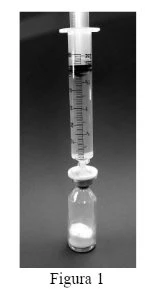
- Add the 9 mg/ml (0.9%) sodium chloride injectable solution slowly but firmly by pushing the syringe plunger. Do not remove the filter or the syringe from the vial.
- Let the vial stand for 1 minute to ensure thorough hydration of the dry substance.
- Next, shake the vial vigorously for 1 minute while keeping the filter and syringe attached. During this time, liposomes form spontaneously (Figure 2).
|
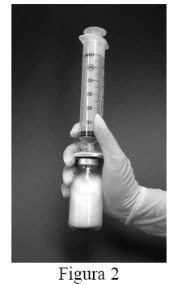
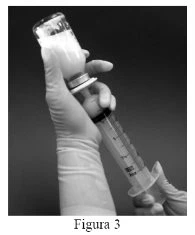
- You can withdraw the required dose from the vial by inverting it and slowly pulling back the syringe plunger (Figure 3). After reconstitution, each mL of suspension contains 0.08 mg of mifamurtide. The volume of suspension to be withdrawn according to the dose is calculated as follows:
Volume to be withdrawn = [12.5 x calculated dose (mg)] mL
For convenience, the following conversion table is provided:
Dose | Volume |
1.0 mg | 12.5 ml |
2.0 mg | 25 ml |
3.0 mg | 37.5 ml |
4.0 mg | 50 ml |
|
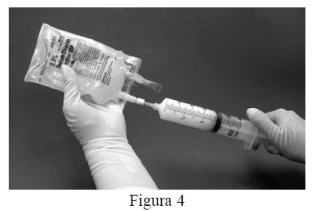
- Next, remove the syringe from the filter and attach a new needle to the syringe containing the suspension. Clean the injection site of the bag with an alcohol-soaked cotton swab and inject the suspension from the syringe into the original bag containing the remaining 50 ml of 9 mg/ml (0.9%) sodium chloride injectable solution (Figure 4).
|
- Gently rotate the bag several times to mix the solution.
- Add to the label of the bag containing the reconstituted and diluted liposomal suspension the patient's identification, time, and date.
- Chemical and physical in-use stability has been demonstrated for 6 hours at room temperature (approximately 20°C – 25°C).
- From a microbiological standpoint, the product should be used immediately. If not used immediately, the storage times and conditions after opening are the responsibility of the user and normally should not exceed 6 hours at room temperature.
No special requirements for disposal.