Meloxicam Stada 7.5 mg tablets EFG
Spain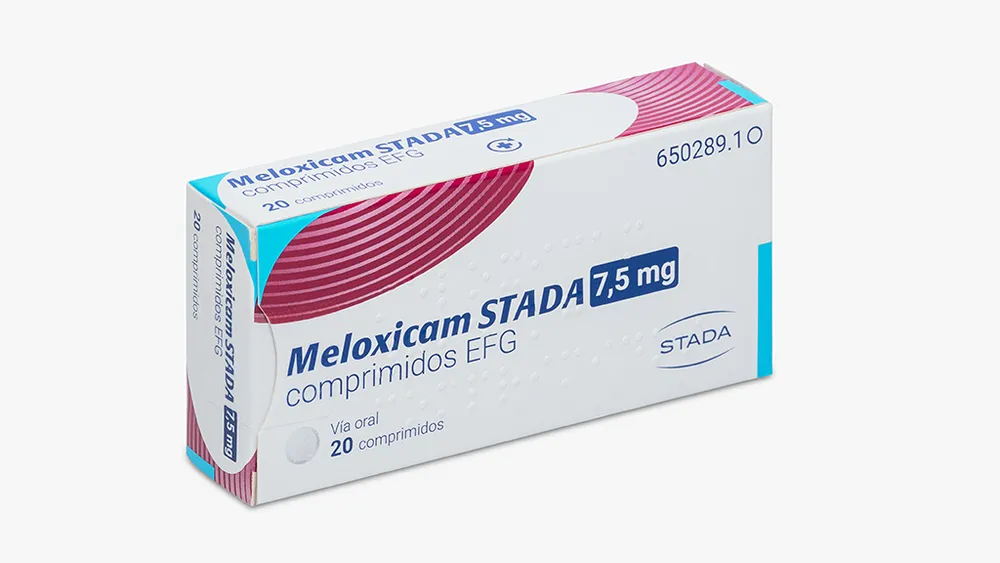
Table of Contents
Package leaflet: Information for the user
Introduction
Package leaflet: information for the patient
Meloxicam Stada 7.5 mg tablets EFG
Read the entire leaflet carefully before you start taking this medicine because it contains important information for you.
-
Keep this leaflet as you may need to read it again.
-
If you have any questions, ask your doctor or pharmacist.
-
This medicine has been prescribed for you only, and you should not give it to other people, even if they have the same symptoms as you, because it may harm them.
-
If you experience any adverse effects, consult your doctor or pharmacist, even if they are adverse effects not listed in this leaflet. See section 4.
Contents of the leaflet
-
What Meloxicam Stada is and what it is used for
-
What you need to know before taking Meloxicam Stada
-
How to take Meloxicam Stada
-
Possible side effects
-
How to store Meloxicam Stada
-
Contents of the pack and other information
1. What Meloxicam Stada is and what it is used for
Meloxicam Stada is an anti-inflammatory medicine used to treat pain, belonging to a group of medicines called non-steroidal anti-inflammatory drugs (NSAIDs), which are used to reduce inflammation and pain in muscles and joints.
Meloxicam is used for:
- Short-term symptomatic treatment of acute episodes of osteoarthritis (degenerative joint disease).
- Long-term symptomatic treatment of rheumatoid arthritis or ankylosing spondylitis (chronic inflammation of the joints that may lead to loss of mobility).
2. What you need to know before taking Meloxicam Stada
DO NOT take Meloxicam Stada:
-
During the last three months of pregnancy (see section 2 Pregnancy and breastfeeding).
-
In children and adolescents under 16 years of age.
-
If you are allergic to meloxicam or to any of the other components of this medicine (listed in section 6) or to other substances with similar action (e.g., NSAIDs, acetylsalicylic acid). Meloxicam must not be taken by patients who have developed asthma symptoms (respiratory disturbance with difficulty breathing), nasal polyps (swelling in the nasal mucosa), tissue swelling, or urticaria after taking acetylsalicylic acid or other NSAIDs.
-
If you currently have active gastrointestinal ulcer (peptic ulcer: inflammation and ulcers in the stomach and intestine) or bleeding in the stomach or intestine (causing, for example, black stools).
-
If you have a history of recurrent gastrointestinal ulcers or bleeding in the stomach or intestine (two or more separate episodes of ulcer or bleeding).
-
If you have experienced a hemorrhagic stroke (bleeding from blood vessels in the brain).
-
If you have any type of bleeding disorder.
-
 History of bleeding in the stomach or intestine or perforation of the stomach or intestine related to previous treatment with a medicine belonging to the group of non-steroidal anti-inflammatory drugs (NSAIDs).
 -
If you have severe liver disease.
-
If you have severe kidney disease and are not undergoing dialysis.
-
If you have severe congestive heart failure (when your heart does not function properly).
Warnings and precautions
If you have a history of esophagitis (inflammation of the esophagus), gastritis (inflammation of the stomach), and/or peptic ulcer, inform your doctor so that healing of your digestive problems can be ensured before starting treatment with meloxicam.
Gastrointestinal bleeding / ulceration or perforation
If you have ever had certain intestinal diseases (ulcerative colitis, Crohn's disease), your doctor will prescribe meloxicam with special caution, as your condition may worsen (see section 4 Possible side effects).
Meloxicam and other medicines in the same group (NSAIDs) may cause gastrointestinal bleeding, ulcers, or perforations at any time during treatment, sometimes fatal, with or without warning symptoms or prior history.
If you have ever experienced gastrointestinal symptoms (stomach and intestinal symptoms) or have a history of gastrointestinal disorders (ulcerative colitis, Crohn's disease (chronic inflammation and recurrent intestinal disturbances)), your doctor will monitor your digestive conditions, especially gastrointestinal bleeding (bleeding from the stomach and intestine causing black stools).
The risk of gastrointestinal bleeding, ulcer, or perforation is higher in:
-
Patients treated with high doses of NSAIDs.
-
Patients who have previously had an ulcer, particularly combined with bleeding or perforation (see section 2 DO NOT take Meloxicam Stada).
-
Elderly patients.
These patients should start treatment with the lowest available dose. In these patients, the doctor should consider combination therapy with stomach-protecting agents (medicines that help protect the stomach). The same precautions should be followed in patients receiving concomitant treatment with low-dose acetylsalicylic acid or other medicines that may increase gastrointestinal risk. Consult your doctor.
If you have ever experienced adverse reactions in the stomach or intestine, especially elderly patients, inform your doctor of any unusual gastrointestinal symptoms (especially black or bloody stools, or vomiting blood), particularly during the first month of treatment.
Take special care if you are taking any medicine that may increase the risk of ulcers or bleeding:
-
Oral corticosteroids (medicines for treating inflammation such as rheumatism).
-
Anticoagulants such as warfarin.
-
Selective serotonin reuptake inhibitors (medicines for treating depression).
-
Antiplatelet medicines such as acetylsalicylic acid (medicines that prevent blood clots).
(See section 2 Other medicines and Meloxicam Stada)
 If you experience bleeding in the stomach or intestine (causing black or bloody stools or vomiting blood), or ulcers during treatment with meloxicam, inform your doctor immediately and stop taking this medicine.
Concomitant use of meloxicam and other medicines belonging to the group of non-steroidal anti-inflammatory drugs (NSAIDs), including COX-2 inhibitors (cyclooxygenase-2 inhibitors; medicines for treating inflammation), should be avoided.
Cardiovascular and cerebrovascular effects
Medicines such as meloxicam may be associated with a small increased risk of heart attack ("myocardial infarction") or stroke. Any risk is increased with higher doses and prolonged treatment. Do not exceed the recommended dose or duration of treatment.
If you have heart problems, have had a stroke, or believe you are at risk (for example, if you have high blood pressure, diabetes, high cholesterol levels, or are a smoker), consult your doctor or pharmacist about your treatment.
If you have a history of hypertension (high blood pressure) or heart failure (the heart's inability to pump sufficient blood throughout the body), your doctor will monitor you carefully.
Severe skin reactions / hypersensitivity reactions
With the use of meloxicam, potentially life-threatening skin rashes have been reported (exfoliative dermatitis, Stevens-Johnson syndrome, toxic epidermal necrolysis; see section 4), initially appearing on the trunk as reddish spots or red patches, often with blisters in the center.
Other signs to watch for include mouth ulcers, throat, nose, genital ulcers, and conjunctivitis (red and swollen eyes).
Potentially severe skin rashes frequently appear with flu-like symptoms. The rash may progress to widespread blisters or skin peeling. The highest risk of severe skin reactions occurs during the first weeks of treatment.
If you have developed Stevens-Johnson syndrome or toxic epidermal necrolysis while using meloxicam, you must never take meloxicam again.
If you develop rashes, skin symptoms, or any other sign of hypersensitivity (such as difficulty breathing, throat tightness, swelling of lips, tongue, face, or hives), stop taking meloxicam, seek medical help urgently, and inform your doctor that you are taking this medicine.
Consult your doctor or pharmacist before starting to take meloxicam:
- If you have ever experienced a fixed drug eruption (round or oval patches with skin redness and swelling that usually reappear in the same location, blister formation, urticaria, and itching) after taking meloxicam or other oxicams (e.g., piroxicam).
Other precautions
Meloxicam has a delayed onset of action. Inform your doctor if the effect of meloxicam is very weak or if you need rapid pain relief.
Meloxicam may cause an increase in laboratory parameters. These changes are mostly mild and transient. If any laboratory test abnormality persists or becomes significant, your doctor should advise you to stop taking the medicine and perform appropriate investigations.
At the beginning of treatment or after a dose increase, urine output and kidney function should be carefully monitored in the following patients:
-
Elderly patients.
-
Patients receiving concomitant treatment with ACE inhibitors, angiotensin-II antagonists, sartans, and diuretics (medicines for treating high blood pressure).
-
Patients with reduced blood volume.
-
Patients with congestive heart failure.
-
Patients with kidney impairment (renal insufficiency, nephrotic syndrome, lupus nephropathy).
-
 Patients with severe liver disease.
In patients with diabetes or those receiving medicines that increase potassium levels, careful monitoring of potassium levels is required.
Meloxicam may mask the symptoms of an underlying infection.
The use of meloxicam may reduce fertility. Inform your doctor if you intend to become pregnant or if you have difficulty becoming pregnant.
Adverse effects may be reduced by using the lowest effective dose for the shortest duration necessary to control symptoms.
The recommended maximum daily dose must not be exceeded if therapeutic effect is insufficient, nor should an additional NSAID be added to the treatment. If no improvement is observed after several days, consult your doctor.
Elderly patients
The risk of adverse reactions (particularly gastrointestinal bleeding or perforation), which may even be fatal, is higher in elderly patients. Gastrointestinal bleeding or ulcers/perforations generally have more serious consequences in elderly patients. Therefore, your doctor should monitor you carefully.
Your doctor will monitor you carefully, especially if you have kidney, liver, or heart failure (the heart's inability to pump sufficient blood throughout the body).
Other medicines and Meloxicam Stada
Inform your doctor or pharmacist if you are taking, have recently taken, or might need to take any other medicine.
The following medicines may increase the risk of adverse gastrointestinal reactions:
-
Other non-steroidal anti-inflammatory drugs (NSAIDs) (e.g., ibuprofen).
-
Selective cyclooxygenase-2 inhibitors (medicines for treating inflammation).
-
Corticosteroids (medicines for treating inflammation or allergies).
-
Antiplatelet medicines such as acetylsalicylic acid.
-
Certain antidepressants (selective serotonin reuptake inhibitors, SSRIs).
Interactions may also occur with the following medicines:
-
Oral anticoagulants. NSAIDs may enhance the effect of anticoagulants such as warfarin. Concomitant use of NSAIDs, such as meloxicam, and oral anticoagulants is not recommended. Consult your doctor if you are taking oral anticoagulants.
-
Heparin (an injectable anticoagulant).
-
Medicines that inhibit the body's immune response or immune reactions after organ transplantation (cyclosporine, tacrolimus). These may increase adverse kidney reactions (nephrotoxicity) when used together with meloxicam.
-
Medicines to lower blood pressure (e.g., diuretics, ACE inhibitors, angiotensin-II antagonists, beta-blockers). Meloxicam may reduce the antihypertensive effect of these medicines.
-
Intrauterine devices (IUDs), which are small, flexible devices made of metal and/or plastic that prevent pregnancy when placed in a woman's uterus. Meloxicam may reduce the effectiveness of these devices.
-
Certain medicines used to treat psychiatric disorders and depression (lithium).
-
 Certain medicines used to treat rheumatic diseases and tumors (methotrexate).
Meloxicam may increase the blood levels of these medicines.
- Medicines to lower cholesterol (cholestyramine). These decrease the blood levels of meloxicam and thus reduce its effect.
Taking Meloxicam Stada with food and drink
Tablets should be taken during meals with water or another liquid.
Pregnancy and breastfeeding
If you are pregnant or breastfeeding, think you may be pregnant, or plan to become pregnant, consult your doctor or pharmacist before using this medicine.
Pregnancy
During the first 6 months of pregnancy, your doctor may prescribe meloxicam if considered necessary.
You must NOT take meloxicam during the last three months of pregnancy because meloxicam may cause serious effects on your baby, particularly cardiopulmonary and renal effects (see section 2 DO NOT take Meloxicam Stada).
Meloxicam may make it more difficult to become pregnant (see section 2 Warnings and precautions).
Breastfeeding
This medicine is not recommended during breastfeeding.
Driving and using machines
Meloxicam does not appear to affect the ability to drive or use machines. However, when taking meloxicam, some central nervous system disturbances (e.g., visual disturbances, drowsiness, dizziness, or other symptoms) may occur. If affected, do not drive or operate machinery.
Meloxicam Stada contains lactose and sodium
If your doctor has informed you that you have an intolerance to certain sugars, consult with him before taking this medicine.
This medicine contains less than 1 mmol of sodium (23 mg) per tablet; therefore, it is essentially “sodium-free”.
3. How to take Meloxicam Stada
Follow exactly the instructions for use of this medicine given by your doctor. If in doubt, consult your doctor or pharmacist again.
The recommended dose is:
Acute flare-ups of osteoarthritis
1 tablet per day (7.5 mg of meloxicam).
If necessary, in the absence of effect or if a stronger effect is desired, the dose may be increased to 2 tablets per day (15 mg of meloxicam).
Rheumatoid arthritis or ankylosing spondylitis
2 tablets per day (15 mg of meloxicam) (see section “Special populations”).
Depending on the therapeutic response, your doctor may reduce your dose to 1 tablet per day (7.5 mg of meloxicam).
Under no circumstances should the dose exceed 2 tablets of meloxicam 7.5 mg (equivalent to 15 mg of meloxicam) per day.
 Route of administration
Oral use.
Take the tablets once daily with sufficient liquid (e.g., a glass of water) during a meal.
Since the risks of meloxicam may increase with dose and duration of exposure, your doctor will choose the shortest possible duration and the lowest daily dose effective for you. Therefore, you should visit your doctor regularly.
Special populations
Elderly patients and patients at high risk of adverse reactions
The recommended dose for long-term treatment in elderly patients is 1 tablet of meloxicam 7.5 mg (7.5 mg of meloxicam) per day.
Patients at high risk of adverse reactions should start treatment with 1 tablet of meloxicam 7.5 mg (7.5 mg of meloxicam) per day.
Patients with kidney impairment
In patients on hemodialysis with severe renal impairment, the dose should not exceed 1 tablet of meloxicam 7.5 mg (7.5 mg of meloxicam) per day.
Meloxicam must not be taken by patients with severe renal impairment who are not on dialysis (see “DO NOT take Meloxicam Stada”).
Patients with liver impairment
Dose reduction is not required in patients with mild to moderate hepatic impairment. Meloxicam must not be taken by patients with severe hepatic impairment (see “DO NOT take Meloxicam Stada”).
Children and adolescents (< 16 years)
This medicine must not be used in children under 16 years of age.
If you take more Meloxicam Stada than you should
If you have taken more tablets than you should, consult your doctor or pharmacist immediately.
In case of overdose or accidental ingestion, contact the Toxicology Information Service. Telephone 915 620 420.
Symptoms of meloxicam overdose include:
- nausea
- vomiting
- somnolence
- lack of energy (lethargy)
- epigastric pain (pain in the upper abdomen), usually reversible with supportive treatment
- gastrointestinal bleeding
Severe poisoning may lead to serious reactions:
-
high blood pressure (hypertension)
-
acute renal failure
-
hepatic dysfunction
-
reduction/decrease or respiratory arrest (respiratory depression)
-
seizures
-
loss of consciousness (coma)
-
circulatory collapse (cardiovascular collapse)
-
cardiac arrest
-
immediate allergic reactions (hypersensitivity), including:
-
 fainting
 -
difficulty breathing
-
skin reactions
If you forget to take Meloxicam Stada
Do not take a double dose to make up for missed doses, but continue taking it as directed by your doctor.
If you stop taking Meloxicam Stada
Do not stop treatment without consulting your doctor.
If you have any further questions about the use of this medicine, ask your doctor or pharmacist.
4. Possible adverse effects
Like all medicines, this medicine can cause adverse effects, although not everyone will experience them.
Stop taking meloxicam and contact your doctor immediately or go to the nearest hospital if you notice:
Any allergic reaction (hypersensitivity), which may appear as:
-
difficulty breathing; throat closure; swelling of the lips, tongue, or face; or hives
-
swelling or rapid weight gain (fluid retention)
-
ulcers (open sores) in the mouth
-
yellowing of the skin or eyes
-
severe itching
-
flu-like symptoms
-
muscle cramps, numbness, or tingling
-
seizures
-
decreased hearing or ringing in the ears
-
unusual fatigue or weakness
Any side effect affecting the digestive tract, especially:
-
abdominal cramps, heartburn, or indigestion
-
softening or pain in the abdomen
-
bloody or black stools
-
blood in vomit
These symptoms may indicate adverse effects that can sometimes be serious (e.g., peptic ulcer, bleeding or perforation of the stomach or intestine), particularly in elderly patients. These adverse effects may occur at any time during treatment, with or without warning signs or previous history of serious gastrointestinal disorders, and consequences may be more severe in elderly patients.
Most common adverse effects of non-steroidal anti-inflammatory drugs (NSAIDs)
The use of certain non-steroidal anti-inflammatory drugs (NSAIDs) may be associated with a slight increase in the risk of arterial blockage (arterial thrombotic events), for example, heart attack (myocardial infarction) or stroke (cerebrovascular accident), especially at high doses and with long-term treatment.
Cases of fluid retention (edema), high blood pressure (hypertension), and heart failure (cardiac failure) have been reported with NSAID treatment.
 The most commonly observed adverse effects affect the stomach or intestine. Gastrointestinal ulcers (peptic ulcers), perforation, or bleeding may occur, which in some cases can be fatal, particularly in elderly patients. (See section 2 Warnings and precautions).
The following adverse effects have been reported after administration of NSAIDs:
-
nausea and vomiting
-
loose stools (diarrhea)
-
flatulence
-
constipation
-
indigestion (dyspepsia)
-
abdominal pain
-
dark stools due to gastrointestinal bleeding (melena)
-
vomiting blood (hematemesis)
-
inflammation with development of mouth ulcers (ulcerative stomatitis)
-
worsening of intestinal inflammation (exacerbation of colitis)
-
worsening of gastrointestinal tract inflammation (exacerbation of Crohn's disease)
Less frequently, inflammation of the stomach (gastritis) has been observed.
Adverse effects of meloxicam – active substance in Meloxicam Stada
Very common (may affect more than 1 in 10 people):
-
gastrointestinal disorders such as:
-
indigestion (dyspepsia)
-
feeling of nausea and vomiting
-
abdominal pain
-
constipation
-
gas (flatulence)
-
diarrhea
-
minor gastrointestinal blood loss, which may very rarely lead to a reduction in red blood cells (anemia)
Common (may affect 1 in 10 people):
- headache
Uncommon (may affect 1 in 100 people):
-
low number of red blood cells (anemia)
-
sensation of dizziness or spinning (vertigo)
-
dizziness
-
drowsiness (somnolence)
-
increased blood pressure (hypertension)
-
flushing
-
bleeding in the stomach or intestine and ulcers (may result in black stools or vomiting blood)
-
inflammation of the stomach (gastritis)
-
belching
-
mouth pain, inflammation of the mucous membrane of the mouth (stomatitis)
-
skin and mucous membrane swelling (angioedema)
-
allergic reactions
-
hives (pruritus)
-
skin rash
-
retention of water and sodium
-
increased blood potassium levels (hyperkalemia)
-
transient abnormalities in kidney and liver function tests
-
formation of clots or thrombi in blood vessels, which may lead to heart disease or affect the brain (cardiovascular or cerebrovascular thromboembolic events)
-
 fluid retention (edema), for example, with swelling of the lower limbs
Rare (may affect 1 in 1,000 people):
-
blistering skin rashes, potentially fatal, with redness and blisters (e.g., Stevens-Johnson syndrome and toxic epidermal necrolysis/Lyell's syndrome) (see section 2)
-
hives
-
awareness of heartbeat (palpitations)
-
mood disturbances
-
nightmares and insomnia
-
visual disturbances including blurred vision
-
eye irritation (conjunctivitis)
-
ringing or buzzing in the ears (tinnitus)
-
asthma attacks in certain individuals allergic to acetylsalicylic acid (e.g., aspirin) or other NSAIDs
-
inflammation of the intestine (colitis)
-
inflammation of the throat (esophagitis)
-
blood disorders (changes in blood cell counts, such as leukopenia, thrombocytopenia)
Very rare (may affect 1 in 10,000 people):
-
perforation of the walls of the stomach and intestine (gastrointestinal perforation). This causes peritonitis (inflammation inside the abdomen) and requires immediate surgery
-
severe decrease in white blood cells leading to increased risk of infections (agranulocytosis)
-
inflammation of the liver (hepatitis)
-
blistering skin reactions (bullous reactions) and erythema multiforme. Erythema multiforme is a serious skin allergic reaction causing spots, red rashes or purple areas with blisters. It may also affect the mouth, eyes, and other moist areas of the body
-
acute kidney failure, particularly in patients with risk factors
Not known (frequency cannot be estimated from available data):
-
anaphylactic reactions (acute allergic reactions), including symptoms such as skin swelling or burning, swelling of the lips or tongue, difficulty breathing, low blood pressure, and fainting. If you experience any of these symptoms, contact your doctor immediately
-
worsening of gastrointestinal disease (colitis and Crohn's disease; see section 2 (Warnings and precautions))
-
formation of clots or thrombi in veins, obstructing blood flow through the circulatory system (peripheral venous thrombotic disorders)
-
lung inflammation probably due to an allergic reaction (pulmonary eosinophilia)
-
confusion
-
disorientation
-
photosensitivity reactions
-
pancreatitis (inflammation of the pancreas)
-
a characteristic drug-related skin allergic reaction known as fixed drug eruption, which usually reappears in the same location upon re-exposure to the medicine and may present as round or oval-shaped patches with redness and swelling of the skin, blister formation (urticaria), and itching.
Adverse effects caused by non-steroidal anti-inflammatory drugs (NSAIDs) that have not yet been observed after taking meloxicam
Changes in kidney structure leading to acute kidney failure:
-
very rare cases of kidney inflammation (interstitial nephritis)
-
death of some kidney cells (acute tubular necrosis or papillary necrosis)
-
protein in the urine (nephrotic syndrome with proteinuria)
Reporting of adverse effects
If you experience any type of adverse effect, consult your doctor or pharmacist, even if it is a possible adverse effect not listed in this leaflet. You can also report them directly via the Spanish Pharmacovigilance System for Human Medicines:  https://www.notificaram.es. By reporting adverse effects, you can help provide more information on the safety of this medicine.
5. Storage of Meloxicam Stada
Keep this medicine out of the sight and reach of children.
Do not use this medicine after the expiry date stated on the packaging and on the blister after EXP. The expiry date is the last day of the month indicated.
This medicine requires no special storage conditions.
Medicines should not be disposed of via wastewater or household waste. Return unused containers and medicines to the SIGRE collection point at your pharmacy. Ask your pharmacist how to dispose of containers and medicines you no longer need. This will help protect the environment.
6. Contents of the pack and other information
Composition of Meloxicam Stada
- The active substance is meloxicam.
One tablet contains 7.5 mg of meloxicam.
- The other components are microcrystalline cellulose, pregelatinized starch (from corn), corn starch, sodium citrate, colloidal anhydrous silica, magnesium stearate, monohydrate lactose (see section 2 Meloxicam Stada contains lactose).
Appearance of the product and contents of the pack
Pale yellow, flat, bevelled tablets, with a central groove on one side and plain on the other, in PVC/PVDC/Aluminum blisters. Pack sizes of 7, 10, 14, 15, 20, 28, 30, 50, 60, 100, 140, 280, 300, 500 or 1,000 tablets.
Only certain pack sizes may be marketed.
Marketing Authorization Holder and Manufacturer
Marketing Authorization Holder
Laboratorio STADA, S.L.
Frederic Mompou, 5
08960 Sant Just Desvern (Barcelona)
Spain
Manufacturer
Chanelle Medical Ltd.
Loughrea, Co. Galway
Ireland
or
STADA Arzneimittel AG
Stadastrasse 2-18,
61118 Bad Vilbel
Germany
or
STADA Arzneimittel GmbH
Muthgasse 36/2
1190 Wien
Austria
or
Clonmel Healthcare Ltd.
Waterford Road, Clonmel
Co. Tipperary
Ireland
or
Doppel Farmaceutici S.r.L.
Via Volturno, 48
20089 Quinto de' Stampi, Rozzano - MI
Italy
or
Cosmo S.p.A.
Via C. Colombo, 1
20045 Lainate-Milano
Italy
or
Genus Pharmaceuticals Limited
View House, 65 London Road, Newbury
Berkshire, RG141JN
United Kingdom
or
Sanico N.V.
Veedijk 59, Industriezone 4
2300 Turnhout
Belgium
This medicinal product has been authorised in the EEA Member States under the following names:
DE: Meloxicam AL 7.5 mg Tabletten
DK: Meloxicam STADA
EE: MELOXISTAD 7.5 mg tabletid
ES: Meloxicam STADA 7.5 mg comprimidos EFG
IT: Meloxicam EG 7.5 mg Compresse
LT: MELOXISTAD 7.5 mg tabletės
LV: MELOXISTAD 7.5 mg tabletes
PT: Meloxicam Ciclum 7.5 mg comprimidos
Date of latest revision of this leaflet: June 2023
Detailed and up-to-date information on this medicinal product is available on the website of the Spanish Agency of Medicines and Health Products (AEMPS) http://www.aemps.gob.es/