Mag3 TechneScan 1 mg radiopharmaceutical preparation kit
Spain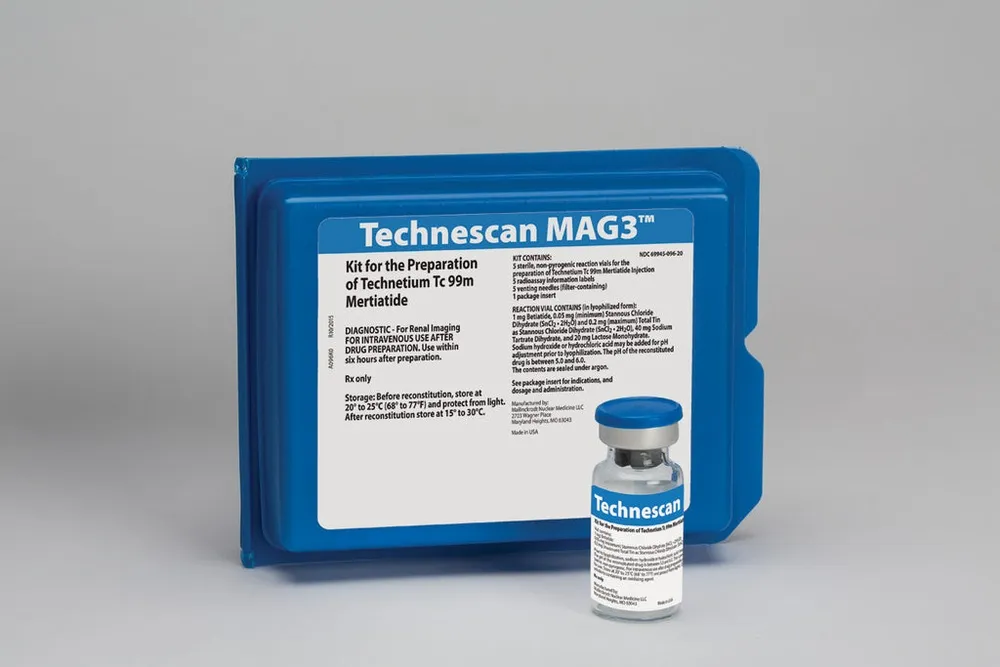
Table of Contents
Package leaflet: Information for the user
Introduction
Package leaflet: information for the user
MAG3 Technescan 1 mg kit for radiopharmaceutical preparation
Betiatide
Read the entire package leaflet carefully before you are given this medicine, because it contains important information for you.
|
Contents of the leaflet:
-
What MAG3 Technescan is and what it is used for
-
What you need to know before using MAG3 Technescan
-
How to use MAG3 Technescan
-
Possible side effects
-
Storage of MAG3 Technescan
-
Contents of the pack and other information
1. What MAG3 Technescan is and what it is used for
This medicine is for diagnostic use only.
MAG3 Technescan is used with a gamma camera to examine:
- the kidneys
- urine production
- the bladder
This medicine is a powder. When qualified personnel mix it with a solution containing the radioactive substance sodium pertechnetate (99mTc), it forms technetium (99mTc) mertiatide. When injected into the body, it accumulates in certain organs, such as the kidneys.
The radioactive substance can be imaged from outside the body using special cameras in a procedure called a scintigraphy. This scintigraphy shows the distribution of radioactivity within the organ and body. It also provides your doctor with valuable information about the structure and function of the organ.
Administration of MAG3 Technescan in combination with sodium pertechnetate (99mTc) involves exposure to a small amount of radiation. Your nuclear medicine physician has determined that the clinical benefit you will receive from this radiopharmaceutical procedure outweighs the radiation risk.
2. What you need to know before using MAG3 Technescan
Do not use MAG3 Technescan
If you are allergic to the active substance or to any of the other components of this medicine (listed in section 6).
Warnings and precautions
Before being administered MAG3 Technescan, consult your Nuclear Medicine specialist physician:
- If you are pregnant or think you might be pregnant
- If you are breastfeeding.
Before administration of MAG3 Technescan, you must:
- Drink plenty of water prior to starting the procedure, so that you can urinate very frequently during the first few hours after completion.
Children and adolescents
Inform your nuclear medicine physician if you are under 18 years of age.
Other medicines and MAG3 Technescan
Inform your physician if you are taking, have recently taken, or might need to take any other medicines, as they may interfere with the interpretation of images.
It is known that MAG3 Technescan may influence or be influenced by other medications, such as acetylsalicylic acid, contrast media, probenecid, hydrochlorothiazide, NSAIDs such as diclofenac, sulfonamides, and calcium antagonists.
Pregnancy and breastfeeding
If you are pregnant or breastfeeding, think you may be pregnant, or plan to become pregnant, consult your nuclear medicine physician before receiving this medicine.
You must inform the nuclear medicine physician before administration of MAG3 Technescan if there is any possibility you could be pregnant, if you have missed your period, or if you are breastfeeding. In case of doubt, it is important to consult your nuclear medicine physician, who will supervise the procedure.
If you are pregnant
The nuclear medicine physician will only administer this medicine during pregnancy if the expected benefit outweighs the potential risk.
If you are breastfeeding
The physician may delay treatment until after breastfeeding has ended. If this is not possible, your physician may instruct you to interrupt breastfeeding for 4 hours and to discard breast milk expressed during that period.
There is no need to avoid close contact with your baby after the procedure.
Driving and use of machines
MAG3 Technescan is considered unlikely to affect the ability to drive or operate machinery.
MAG3 Technescan contains sodium
This medicine contains less than 1 mmol of sodium (23 mg) per vial; essentially "sodium-free".
3. How to use MAG3 Technescan
There are strict regulations regarding the use, handling, and disposal of radiopharmaceuticals. MAG3 Technescan will only be handled in special controlled areas. This product will only be manipulated and administered by personnel trained and qualified in its safe use. These individuals will take special care to use this product safely and will keep you informed of their actions.
The nuclear medicine physician supervising the procedure will determine the amount of MAG3 Technescan to be used in your case. This will be the minimum amount necessary to obtain the required information.
The amount generally recommended for administration to an adult ranges between 40 and 200 MBq (Megabecquerel, the unit used to express radioactivity).
Use in children
In children and adolescents, the administered amount will be adjusted according to body weight.
Administration of MAG3 Technescan and performance of the procedure
MAG3 Technescan is administered by intravenous injection.
A single injection of MAG3 Technescan is sufficient to perform the procedure required by your physician.
Duration of the procedure
Your nuclear medicine physician will inform you about the typical duration of the procedure.
After administration of MAG3 Technescan, you should:
- Drink plenty of water to urinate frequently and eliminate the product from your body.
The nuclear medicine physician will inform you if you need to take any special precautions after receiving this medicine. If you have any questions, consult your nuclear medicine physician.
If you have been given more MAG3 Technescan than you should have
An overdose is unlikely, as you will receive a single, precisely controlled dose of MAG3 Technescan determined by the nuclear medicine physician supervising the procedure. However, in the event of an overdose, appropriate treatment will be provided. In particular, the physician in charge of the procedure may recommend that you drink plenty of water and urinate frequently to eliminate residual radioactivity from your body.
If you have any further questions about the use of MAG3 Technescan, ask the nuclear medicine physician supervising the procedure.
4. Possible adverse effects
Like all medicines, this medicine may produce adverse effects, although not everyone will experience them.
Adverse effects of unknown frequency (cannot be estimated from available data):
- Allergic reactions, including severe and sudden allergic reaction with symptoms such as itchy rash, eyelid swelling, cough, nausea, vomiting.
- Vasovagal reactions with symptoms such as seizures, difficulty breathing, skin redness, headache, facial swelling, pain, abnormal sensation, feeling of instability, low blood pressure, rapid heartbeat.
- Reactions at the injection site with symptoms such as skin rash, pain, swelling.
Administration of this radiopharmaceutical involves exposure to a small amount of ionizing radiation, carrying a very low risk of developing cancer and hereditary defects.
Reporting of adverse effects
If you experience any type of adverse effect, consult your nuclear medicine physician, even if it is a possible adverse effect not listed in this leaflet. You may also report them directly through the Spanish Pharmacovigilance System for Human Medicines: https://www.notificaram.es. By reporting adverse effects, you can help provide more information on the safety of this medicine.
5. Storage of MAG3 Technescan
You will not be required to store this medicine. This medicine is stored by the specialist in appropriate facilities under their responsibility.
Storage of radiopharmaceuticals must comply with national regulations regarding radioactive materials.
The following information is intended for specialists only.
Do not use MAG3 Technescan after the expiry date stated on the label following EXP.
Do not use MAG3 Technescan if there are any visible signs of deterioration.
6. Contents of the container and other information
Composition of MAG3 Technescan
- The active substance is betiatide. Each vial contains 1 mg of betiatide.
- The other components are sodium tartrate dihydrate, stannous chloride dihydrate, hydrochloric acid.
Appearance of the medicine and contents of the container
MAG3 Technescan contains a powder, supplied in a 10 ml type I glass vial with a rubber stopper and sealed with an aluminium cap. Package size: 5 vials.
Marketing Authorization Holder and Manufacturer
Marketing Authorization Holder:
Curium Pharma Spain S. A.
Avenida Doctor Severo Ochoa, nº 29, 3º-2
28100, Alcobendas, Madrid, Spain
Manufacturer:
Curium Netherlands B.V.
Westerduinweg 3
1755 LE Petten
(The Netherlands)
Date of the most recent review of this leaflet: 12/2023
Detailed information on this medicine is available on the website of the Spanish Agency for Medicines and Health Products (AEMPS) (http://www.aemps.gob.es/).
This information is intended for healthcare professionals only:
The full Summary of Product Characteristics for MAG3 Technescan is included as a separate document in the product package, providing healthcare professionals with additional scientific and practical information on the administration and use of this radiopharmaceutical.