Lutrate Depot Trimestral 22.5 mg powder and solvent for prolonged-release injectable suspension
Spain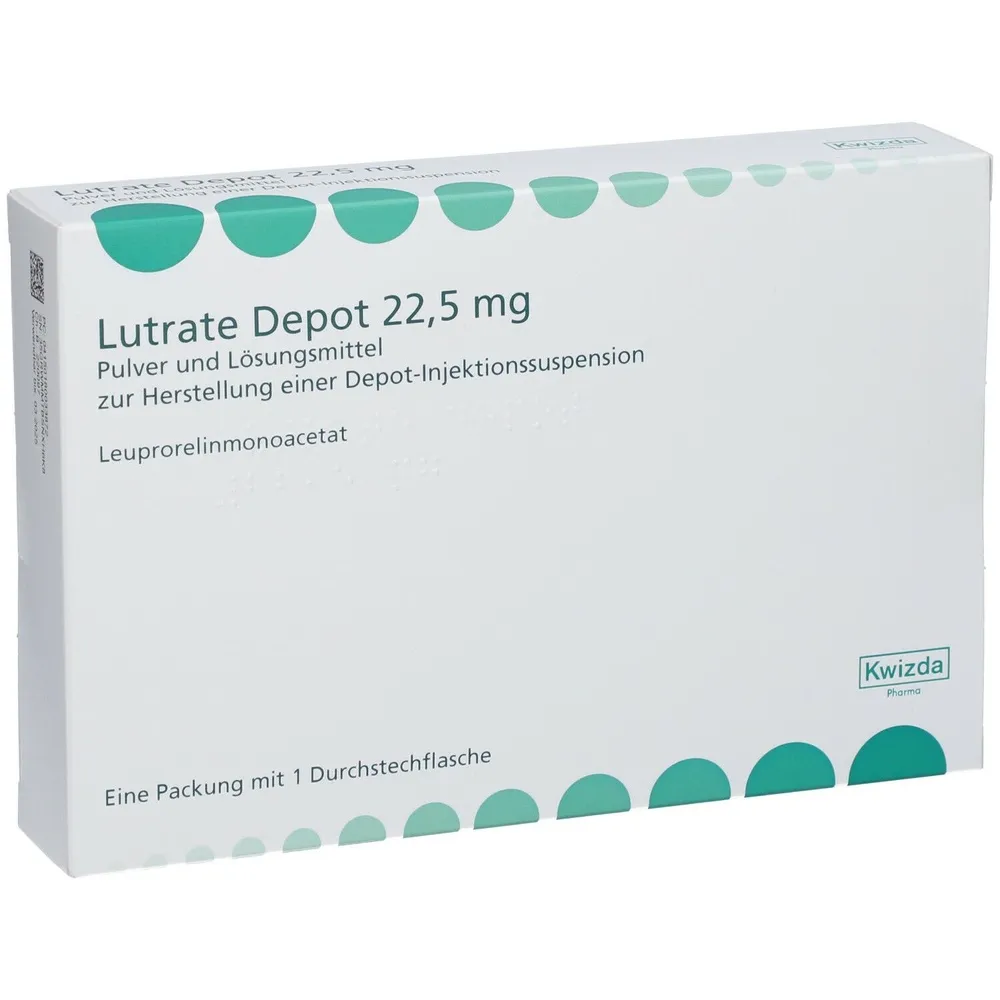
Table of Contents
- Package leaflet: Information for the user
- Introduction
- 1. What Lutrate Depot Trimestral is and what it is used for
- 2. What you need to know before using Lutrate Depot Trimestral
- 3. How to use Lutrate Depot Trimestral.
- 4. Possible adverse effects
- 5. Storage of Lutrate Depot Trimestral
- 6. Package contents and other information
Package leaflet: Information for the user
Introduction
Package leaflet: information for the user
Lutrate Depot Trimestral 22.5 mg powder and solvent for prolonged-release injectable suspension
Leuprorelin acetate
Read the entire leaflet carefully before you start using this medicine, because it contains important information for you.
- Keep this leaflet, as you may need to read it again.
- If you have any questions, ask your doctor or pharmacist.
- This medicine has been prescribed for you only, and you should not give it to other people, even if they have the same symptoms as you, because it may harm them.
- If you experience any adverse effects, consult your doctor or pharmacist, even if they are adverse effects not listed in this leaflet. See section 4.
Leaflet contents
- What Lutrate Depot Trimestral is and what it is used for
- What you need to know before using Lutrate Depot Trimestral
- How to use Lutrate Depot Trimestral
- Possible adverse effects
- How to store Lutrate Depot Trimestral
- Contents of the pack and other information
1. What Lutrate Depot Trimestral is and what it is used for
Lutrate Depot Trimestral is a vial containing a white powder, which is reconstituted into a suspension for intramuscular injection. Lutrate Depot Trimestral contains the active substance leuprorelin (also known as leuprolide), which belongs to a group of medicines called gonadotropin-releasing hormone (GnRH) agonists, which are drugs that reduce testosterone (a sex hormone).
Your doctor has prescribed Lutrate Depot Trimestral for the treatment of advanced prostate cancer.
Lutrate Depot Trimestral is also used for the treatment of locally advanced and localized hormone-dependent prostate tumors, in combination with radiotherapy.
2. What you need to know before using Lutrate Depot Trimestral
Do not use Lutrate Depot Trimestral:
- If you are allergic (hypersensitive) to LHRH, LHRH agonists, or any of the other components of this medicine (listed in section 6). An allergic reaction may present as rash, itching, difficulty breathing, or swelling of the face, lips, throat, or tongue.
- If you have undergone orchiectomy (surgical removal of the testes).
- If you are a woman or a child.
- Lutrate Depot Trimestral must not be used alone (as monotherapy) for the treatment of prostate cancer when the spinal cord is compressed or the cancer has spread to the spinal cord.
Warnings and precautions
Talk to your doctor or pharmacist before starting Lutrate Depot Trimestral:
-
Inform your doctor if you have any heart or blood vessel condition or are being treated for such conditions, including medications to control heart rhythm (arrhythmias). The risk of heart rhythm problems may increase when leuprorelin acetate is used.
-
Your condition may worsen during the first few weeks of treatment, but should improve with continued therapy. Signs and symptoms may include: a temporary rise in testosterone (male hormone), hot flushes, bone pain, nervous system disorders (including depression), or urinary obstruction.
-
If you suspect you are experiencing an allergic reaction (shortness of breath, asthma, rhinitis, facial swelling, hives, skin rash), stop taking this medicine and inform your doctor immediately.
-
Inform your doctor if you are at risk of or already have any of the following conditions, as you may require more frequent monitoring:
- Unexplained bruising or bleeding, or if you feel generally unwell. Although rare, these may be signs of changes in the number of red or white blood cells.
- Metabolic disorders
- Heart problems or palpitations
- Diabetes
-
Your doctor must be informed of any personal history of pituitary adenoma (a benign tumor of the pituitary gland). Cases of pituitary apoplexy (partial loss of pituitary tissue) have been reported after initial administration of this type of medicine in patients with pituitary adenoma. Pituitary apoplexy may present as sudden headache, meningism, visual disturbances or altered vision, including blindness, and occasionally decreased level of consciousness.
-
Inform your doctor if you have a coagulation disorder, thrombocytopenia, or if you are taking anticoagulants. Your liver function may need to be monitored, as liver abnormalities and jaundice (yellowing of the eyes and skin) have been reported with leuprorelin administration.
-
Spinal fracture, paralysis, low blood pressure, and high blood pressure have been reported during treatment with leuprorelin.
-
Cases of depression, which may be severe, have been reported in patients receiving leuprorelin acetate. If you feel depressed while taking leuprorelin acetate, inform your doctor.
-
Reduced bone density (fragile or thinner bones) has been reported following leuprorelin administration. Your doctor may consider adding an antiandrogen to leuprorelin acetate therapy. In such cases, your doctor will monitor you closely for signs of vein inflammation (thrombophlebitis), other signs of coagulation disorders, and edema (swelling of hands, feet, or ankles), which are more likely when antiandrogen therapy is added to leuprorelin acetate.
-
Inform your doctor if you experience spinal cord pressure and/or urinary disorders and/or hematuria (blood in urine); in such cases, your doctor will discuss the need for additional treatments to prevent neurological complications (e.g., tingling in hands and feet, paralysis) or urethral obstruction (the duct connecting the bladder to the outside of the body). You will be closely monitored during the first weeks of treatment.
-
Patients may experience metabolic changes (e.g., glucose intolerance or worsening of existing diabetes), weight changes, and cardiovascular disorders.
-
Patients with metabolic or cardiovascular disease, and especially those with a history of congestive heart failure (a condition in which the heart cannot pump enough blood to the body), should be closely monitored during treatment with leuprorelin.
-
Consult your doctor, pharmacist, or nurse if you have fatty liver.
-
Blood tests should be performed during treatment to monitor the effectiveness of leuprorelin acetate.
-
You may experience reduced interest in sexual activity, hot flushes, and occasionally a reduction in the size and function of the testes.
-
Fertility may return after stopping leuprorelin acetate treatment.
-
Leuprorelin acetate may interfere with certain laboratory tests; ensure your doctor knows you are taking leuprorelin acetate.
-
Seizures may occur in predisposed patients (those with a history of seizures, epilepsy, cerebrovascular disorders, or abnormalities or tumors of the central nervous system), in patients taking drugs that may cause seizures, and, to a lesser extent, in patients without these risk factors.
-
Contact your doctor immediately if you experience severe or recurrent headaches, visual disturbances, tinnitus, or ringing in the ears.
-
Serious skin reactions, including Stevens-Johnson syndrome/toxic epidermal necrolysis (SJS/TEN), have been reported with leuprorelin. Discontinue leuprorelin and seek immediate medical attention if you notice any symptoms related to these serious skin reactions described in section 4.
Use of Lutrate Depot Trimestral with other medicines
Inform your doctor or pharmacist if you are taking, have recently taken, or might need to take any other medicines. Treatment with leuprorelin acetate may still be appropriate; your doctor will decide what is suitable for you.
Leuprorelin acetate may interfere with certain medicines used to treat heart rhythm problems (e.g., quinidine, procainamide, amiodarone, and sotalol), or may increase the risk of heart rhythm problems when used with other medicines (e.g., methadone (used for pain relief and drug detoxification), moxifloxacin (an antibiotic), antipsychotics used to treat serious mental illnesses).
Pregnancy and breastfeeding
Leuprorelin acetate is not indicated for use in women.
This medicine is contraindicated during pregnancy. Spontaneous abortions may occur if this medicine is administered during pregnancy.
Driving and use of machines
Visual disturbances and dizziness may occur during treatment. If affected, do not drive or operate machinery.
Lutrate Depot Trimestral contains less than 23 mg of sodium (1 mmol) per dose; this is essentially “sodium-free”.
Lutrate Depot Trimestral contains Polysorbate 80
This medicine contains 3.8 mg of polysorbate 80 per dose. Polysorbates may cause allergic reactions. Inform your doctor if you have any known allergies.
3. How to use Lutrate Depot Trimestral.
Dosage
Lutrate Depot Trimestral must only be administered by your doctor or nurse. They will be responsible for preparing the product.
Adults and elderly:
The recommended dose of Lutrate Depot Trimestral is one injection every three months. The powder is reconstituted to form a suspension that is administered as an intramuscular injection (into a muscle) once every three months.
The injection site should be rotated at regular intervals.
Lutrate Depot Trimestral must only be administered by intramuscular route. It must not be administered by any other route.
The treatment schedule will be determined by your doctor.
Use in children: Lutrate Depot Trimestral is not indicated in children.
If you use more Lutrate Depot Trimestral than you should
This is unlikely, as your doctor or nurse will know the correct dose. However, if you suspect that you have received more medication than you should have, inform your doctor immediately so that necessary measures can be taken.
In case of overdose or accidental ingestion, contact the Toxicology Information Service at telephone number 91 562 04 20, indicating the medication and the amount used.
If you forget to use Lutrate Depot Trimestral
It is important not to miss a dose of Lutrate Depot Trimestral. As soon as you realize that you have missed an injection, contact your doctor, who will administer the next injection.
If you stop using Lutrate Depot Trimestral
Since medical treatment involves long-term administration of Lutrate Depot Trimestral, interrupting the treatment may result in a worsening of symptoms related to the disease. Therefore, you must not discontinue treatment prematurely without your doctor's permission.
If you have any further questions about the use of this medicine, ask your doctor or pharmacist.
4. Possible adverse effects
Like all medicines, this medicine may cause adverse effects, although not everyone will experience them.
Tell your doctor immediately if you notice any of the following symptoms:
- You experience wheezing, difficulty breathing, swelling of the eyelids, face or lips, skin rash or itching (especially if affecting your whole body) suddenly.
- Frequency not known (frequency cannot be estimated from available data):
- If you notice circular or target-shaped, reddish, non-elevated skin lesions on your trunk, often with central blisters, skin peeling, or ulcers in the mouth, throat, nose, genitals, and eyes. These serious skin reactions may be preceded by fever and flu-like symptoms (Stevens-Johnson syndrome/toxic epidermal necrolysis).
- Skin redness and rash with itching (toxic skin eruption).
- A skin reaction causing pimples or red spots on the skin, which may resemble a target, with a dark red center surrounded by rings of lighter red (erythema multiforme).
The following adverse effects have been reported:
Very common (may affect more than 1 in 10 people):
Hot flushes and reactions at the injection site.
Common (may affect up to 1 in 10 people):
Cold sweats, hyperhidrosis (increased sweating), pruritus (itching), fatigue, insomnia (difficulty sleeping), decreased libido, dizziness, flushing, sensation of dizziness (nausea), diarrhea, decreased appetite, erectile dysfunction, asthenia (lack or loss of strength), bone pain, joint pain, and injection site reactions such as pain, irritation, erythema (redness of the skin). Urinary tract pain, reduced urine flow, need to urinate frequently, mood changes and depression during prolonged treatment with leuprorelin, changes in liver enzymes, hyperlipidemia (elevated blood lipid levels), increased blood sugar.
Uncommon (may affect up to 1 in 100 people):
Elevated cholesterol, sleep disorders, restlessness, taste disturbances, tingling (altered skin sensation), headache, lethargy (drowsiness), blurred vision, pleuritis, tinnitus (ringing in the ears), upper abdominal pain, constipation, papule, rash, generalized pruritus (itching), night sweats, back pain, muscle pain, neck pain, breast pain, pelvic pain, testicular atrophy, testicular disorder, feeling of warmth, mood changes and depression during short-term treatment with leuprorelin. Changes in blood values and electrocardiogram (ECG) (prolongation of the QT interval). Reactions at the injection site such as urticaria, warmth, and bleeding.
Frequency not known (frequency cannot be estimated from available data):
Lung inflammation, pulmonary disease.
Idiopathic intracranial hypertension (increased intracranial pressure around the brain characterized by headaches, diplopia and other visual symptoms, tinnitus or ringing in one or both ears).
Reporting of adverse effects:
If you experience any adverse effects, consult your doctor or pharmacist, even if they are adverse effects not listed in this leaflet. You may also report them directly via the Spanish Pharmacovigilance System for Human Medicinal Products: www.notificaRAM.es. By reporting adverse effects, you can help provide more information on the safety of this medicine.
5. Storage of Lutrate Depot Trimestral
Your doctor or pharmacist will know how to store Lutrate Depot Trimestral.
Keep this medicine out of the sight and reach of children.
Do not store above 25°C. Do not freeze.
Do not use this medicine after the expiry date stated on the packaging, vial, and syringe after “EXP”. The syringe has the same expiry date as the vial. The expiry date refers to the last day of the month indicated.
Medicines must not be disposed of via wastewater or household waste. Dispose of unused containers and medicines at the SIGRE collection point at your pharmacy. Ask your pharmacist how to dispose of any containers and medicines you no longer need. This will help protect the environment.
6. Package contents and other information
Composition of Lutrate Depot Trimestral
The active substance is leuprorelin acetate. Each vial contains 22.5 mg of leuprorelin acetate.
The other components are: polysorbate 80, mannitol (E-421), sodium carmellose (E-466), triethyl citrate, and poly(lactic acid) (PLA).
The solvent (pre-filled syringe) contains: mannitol, water for injections, sodium hydroxide (for pH adjustment), and hydrochloric acid (for pH adjustment).
Appearance of the product and contents of the pack
Each pack contains one vial with 22.5 mg of leuprorelin acetate, one pre-filled syringe with 2 ml of solvent, one adapter system, and one sterile 20G needle.
Marketing Authorization Holder and Manufacturer
GP-PHARM, S.A.
Pol. Ind. Els Vinyets – Els Fogars Sector 2
Carretera comarcal 244, km22
08777 Sant Quintí de Mediona
Spain
This medicinal product is authorized in the Member States of the European Economic Area under the following names:
Spain: Lutrate Depot Trimestral 22.5 mg powder and solvent for prolonged-release injectable suspension
France: Zeulide 22.5 mg powder and solvent for prolonged-release injectable suspension
Date of the most recent review of this leaflet: March 2025.
Other sources of information
Detailed information on this medicinal product is available on the website of the Spanish Agency of Medicines and Health Products (AEMPS) (http://www.aemps.gob.es/)
This information is intended for healthcare professionals only.
How to prepare the injection?
IMPORTANT: Read carefully before administering the product (the Instructions for Use are also included in the tray containing the kit components).
An aseptic technique must be followed during the reconstitution procedure.
Use only the solvent supplied in the commercial kit.
Once mixed, the product must be administered immediately by a single intramuscular injection.
This medicine is for single use only. Any remaining suspension must be discarded.
Check the contents of the kit and ensure that all items listed in the leaflet are included.
The pack contains:
1 (one) vial of Lutrate Depot Trimestral 22.5 mg (leuprorelin acetate) powder for injectable suspension.
1 (one) pre-filled syringe containing the solvent for the suspension (injectable 0.8% mannitol solution).
1 (one) single-use sterile reconstitution device, including 1 (one) single-use sterile needle.
1 |
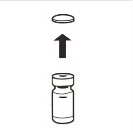
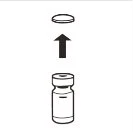
| Completely remove the snap-off cap from the top of the vial so that the rubber stopper is exposed. Confirm that no parts of the snap-off cap remain on the vial. |
2 |
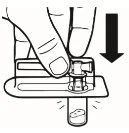
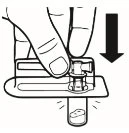
| Place the vial upright on a flat surface. Remove the blister cover protecting the vial adapter (MIXJECT). Do not remove the vial adapter from the blister. Firmly place the blister containing the vial adapter onto the top of the vial, puncturing the rubber stopper while keeping the blister in a completely vertical position. Gently press downward until you feel it snap into place. |
3 |
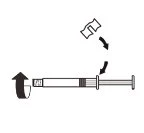
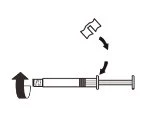
| Attach the white piece to the syringe until you feel it click into place. Unscrew the syringe's rigid cap counterclockwise. Then, remove the blister from the MIXJECT adapter system. |
4 |
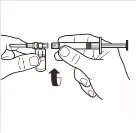
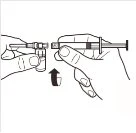
| Connect the syringe to the adapter system by screwing it clockwise into the side opening of the adapter. To ensure a tight seal, gently screw the syringe until it stops. |
5 |
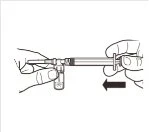
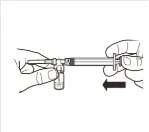
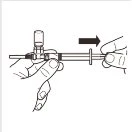
| While holding the syringe and vial firmly together in an upright position, slowly push the syringe plunger to transfer all the solvent into the vial. |
6 |
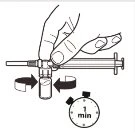
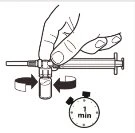
| With the syringe still attached to the vial, gently shake the vial for approximately one minute until a uniform milky suspension is obtained. To prevent separation of the suspension, proceed with the following steps without interruption. |
7 |
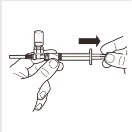
| Rotate the MIXJECT adapter system so that the vial is on top. Hold the MIXJECT adapter system firmly by the syringe and slowly pull back the plunger to transfer the contents of the vial into the syringe. Some product may accumulate or deposit on the vial wall. This is normal. |
8 |
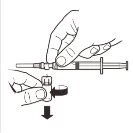
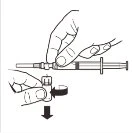
| Disconnect the syringe from the MIXJECT adapter system by firmly holding the syringe and rotating the vial clockwise (grasping the plastic cap of the adapter system). |
9 |
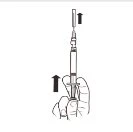
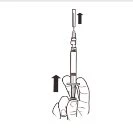
| Keep the syringe IN AN UPRIGHT POSITION. With the other hand, remove the needle cap by pulling it upward. Gently press the plunger to expel any air from the syringe. The syringe containing the product is now ready for immediate administration. |
10 |
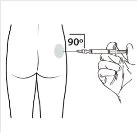
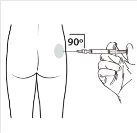
| Administer the intramuscular injection by inserting the needle at a 90-degree angle into the gluteal muscle. Ensure that the entire dose is injected. Injection sites should be alternated. |
Instructions for Use
To be included on the lid of the tray containing the components of the Medication Kit
Lutrate Depot – Instructions for Use
Read carefully before administering the product
Reconstitute immediately before administration by single intramuscular injection.
Use only the solvent provided in the commercial kit.
This product is intended for single injection only.
Any remaining suspension must be discarded.
1 |
| Completely remove the snap-off cap from the top of the vial so that the rubber stopper is fully exposed. Confirm that no parts of the snap-off cap remain on the vial. |
2 |
| Place the vial upright on a flat surface. Remove the blister cover protecting the vial adapter (MIXJECT). Do not remove the vial adapter from the blister. Firmly place the blister containing the vial adapter onto the top of the vial, piercing the stopper in a completely vertical position. Gently press downward until you feel it click into place. |
3 |
| Attach the white piece to the syringe until you feel it click into place. Unscrew the syringe cap counterclockwise. Then, remove the blister from the MIXJECT adapter system. |
4 |
| Connect the syringe to the adapter system by screwing it clockwise into the side opening of the adapter. To ensure a tight seal, gently screw the syringe until it stops. |
5 |
| While holding the syringe and vial firmly together in an upright position, slowly push the syringe plunger to transfer all the solvent into the vial. |
6 |
| With the syringe still attached to the vial, gently shake the vial for approximately one minute until a uniform milky suspension is obtained. To prevent separation of the suspension, proceed with the following steps without interruption. |
7 |
| Rotate the MIXJECT adapter system so that the vial is on top. Firmly hold the MIXJECT adapter system by the syringe and slowly pull back the plunger to transfer the contents of the vial into the syringe. Some of the product may accumulate or deposit on the vial wall. This is normal. |
8 |
| Disconnect the syringe from the MIXJECT adapter system. To do this, firmly hold the syringe and rotate the vial clockwise (holding the plastic cap of the adapter system). |
9 |
| Keep the syringe IN AN UPRIGHT POSITION. With the other hand, remove the needle cap by pulling it upward. Gently press the plunger to expel air from the syringe. The syringe containing the product is now ready for immediate administration. |
10 |
| Administer the intramuscular injection by inserting the needle at a 90-degree angle into the gluteal muscle. Ensure that the entire dose is injected. Injection sites should be alternated. |