Luramon 20 mg hard capsules
Spain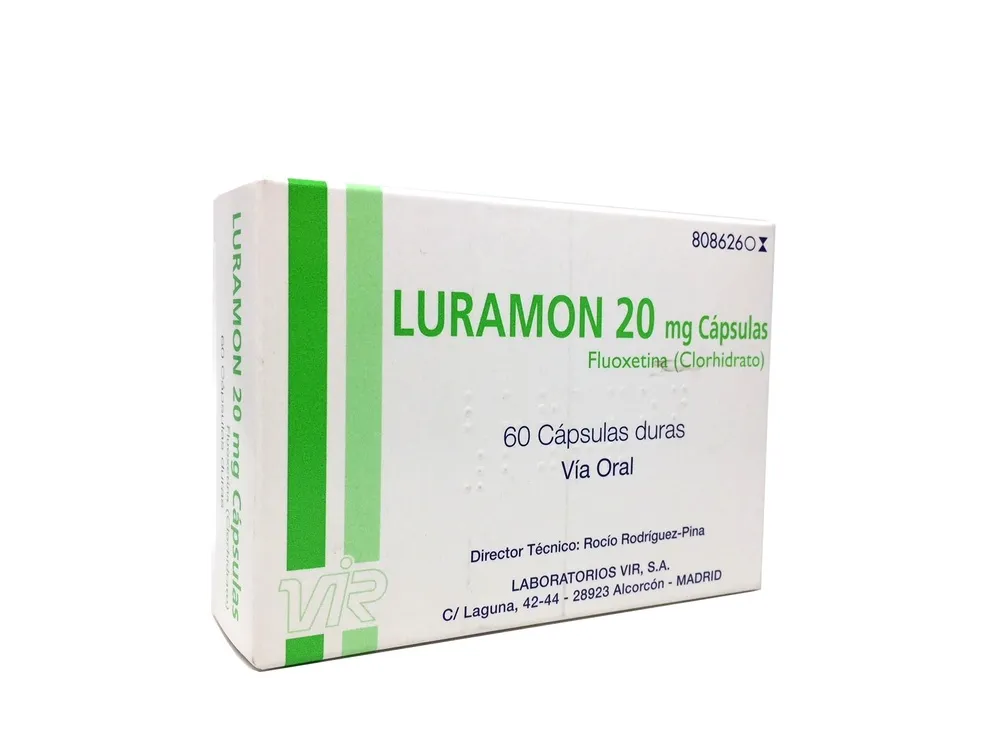
Table of Contents
Package leaflet: Information for the user
Introduction
Package leaflet: information for the user
LURAMON 20 mg hard capsules
Fluoxetine hydrochloride
Read the entire leaflet carefully before you start taking the medicine.
|
In this leaflet:
- What LURAMON is and what it is used for
- Before taking LURAMON
- How to take LURAMON
- Possible side effects
- Storage of LURAMON
- Additional information
1. What Luramon is and what it is used for
LURAMON belongs to a group of medicines known as selective serotonin reuptake inhibitors (SSRIs).
This medicine is indicated for the treatment of:
Adults:
- Major depressive episodes
- Obsessive-compulsive disorder
- Bulimia nervosa: LURAMON is indicated as an adjunct to psychotherapy for the reduction of binge eating and purging.
Children over 8 years of age and adolescents:
- For moderate to severe depressive episodes, when there is no response to psychological therapy after 4 to 6 sessions. LURAMON should be offered to children or young people with moderate to severe depression only in combination with psychological therapy.
2. Before taking LURAMON
Do not take LURAMON and inform your doctor or pharmacist:
If you are allergic (hypersensitive) to fluoxetine or any of the other components of LURAMON. An allergic reaction may include rash, itching, swelling of the face or lips, or difficulty breathing.
- If you are taking any medication belonging to another class of drugs also used to treat depression, known as non-selective monoamine oxidase inhibitors or reversible inhibitors of monoamine oxidase type A (also called MAO-A inhibitors or MAOIs), a serious or even fatal adverse reaction may occur.
Treatment with fluoxetine may only be started at least two weeks after stopping treatment with an irreversible MAO inhibitor (e.g., tranylcypromine).
However, treatment with fluoxetine may be started the day after discontinuing treatment with certain reversible MAO inhibitors, known as reversible MAO-A inhibitors (e.g., moclobemide).
Do not take any MAOI for at least five weeks after stopping LURAMON. If you have been prescribed LURAMON for a long period of time and/or at a high dose, your doctor may consider a longer interval before starting an MAOI. Examples of MAOIs include: nialamide, iproniazid, selegiline, moclobemide, phenelzine, tranylcypromine, isocarboxazid, and toloxatone.
An increased risk of bone fractures has been observed in patients treated with this type of medication.
Take special care with LURAMON and inform your doctor or pharmacist if:
-
You develop skin rashes or other allergic reactions (such as itching, facial or lip swelling, or difficulty breathing). Stop taking the capsules and contact your doctor immediately.
-
You have epilepsy or have previously experienced seizures. If you have a seizure or notice an increase in their frequency, contact your doctor immediately; you may need to discontinue fluoxetine treatment.
-
You have previously experienced mania. If you have a manic episode, contact your doctor immediately; you may need to discontinue fluoxetine.
-
You have diabetes. Your doctor may need to adjust your insulin or other antidiabetic treatment.
-
You have liver problems (your doctor may need to adjust your dose).
-
You have heart disease.
-
You are taking diuretics, especially if you are elderly.
-
You are receiving electroconvulsive therapy (ECT).
-
You have a history of bleeding disorders, develop unusual bruising or bleeding, or are pregnant (see "Pregnancy").
-
You are taking medications that affect blood clotting (see "Taking other medicines").
-
You develop fever, muscle stiffness or twitching, or changes in mental status such as confusion, irritability, or extreme agitation. You may be experiencing a condition called serotonin syndrome or neuroleptic malignant syndrome. Although rare, these conditions can be life-threatening; contact your doctor immediately, as fluoxetine treatment may need to be discontinued.
-
You have suicidal or self-harming thoughts. Depression is associated with an increased risk of suicidal thoughts, self-harm, and suicide (suicide-related events). This risk may persist until your condition improves. Since improvement may take 3 to 4 weeks after starting fluoxetine treatment, your doctor will closely monitor you at the beginning of treatment. Other psychiatric conditions for which LURAMON is prescribed may also be associated with an increased risk of suicide-related events. Therefore, the same precautions should be taken when treating patients with other psychiatric disorders. You may be more likely to have these thoughts:
-
If you have previously had thoughts of suicide or self-harm.
-
If you are a young adult. Clinical trial data have shown an increased risk of suicidal behavior in young adults (under 25 years of age) with psychiatric disorders treated with antidepressants.
If at any time you have thoughts of self-harm or suicide, contact your doctor or go directly to a hospital.
It may be helpful to inform a close family member or friend that you are depressed or have an anxiety disorder and ask them to read this leaflet. You may ask them whether they think your depression or anxiety disorder has worsened or if they are concerned about changes in your behavior.
Some medications in the class to which LURAMON belongs (called SSRIs/SNRIs) can cause sexual dysfunction symptoms (see section 4). In some cases, these symptoms may persist after stopping treatment.
Use in children and adolescents aged 8 to 18 years:
Patients under 18 years of age have an increased risk of adverse effects such as suicide attempts, suicidal ideation, and hostility (predominantly aggression, oppositional behavior, and irritability) when taking this type of medication. LURAMON should only be used in children and adolescents aged 8 to 18 years for the treatment of moderate to severe depressive episodes in combination with psychological therapy, and should not be used for other indications in this age group.
Additionally, there is limited long-term safety data regarding the effects of LURAMON on growth, puberty, and cognitive, emotional, and behavioral development in this age group. However, your doctor may prescribe LURAMON to patients under 18 years of age for the treatment of moderate to severe depressive episodes in combination with psychological therapy if they consider it appropriate. If your doctor prescribes LURAMON to a patient under 18 years of age and you wish to discuss this decision, please consult your doctor again. Inform your doctor if any of the symptoms listed above appear or worsen while patients under 18 years of age are taking LURAMON.
LURAMON must not be used in the treatment of children under 8 years of age.
Taking other medicines with LURAMON
Inform your doctor or pharmacist if you are taking or have recently taken (within the last 5 weeks) any other medicines, including those obtained without a prescription. This medicine may affect the action of other medicines (interaction). Interactions may occur with:
-
Monoamine oxidase inhibitors (MAOIs) (medications used to treat depression). Non-selective MAO inhibitors or MAO-A inhibitors (such as moclobemide) must not be used with LURAMON, as they may cause serious or even fatal reactions (serotonin syndrome); see section "Do not take LURAMON". MAO-B inhibitors (e.g., selegiline) may be used with LURAMON provided your doctor carefully monitors your treatment.
-
Lithium, tryptophan: there is an increased risk of serotonin syndrome if these medicines are taken with LURAMON. When fluoxetine is administered with lithium, your doctor should monitor you more frequently.
-
Phenytoin (a medication used for epilepsy): LURAMON may increase blood levels of this medicine, so your doctor must carefully adjust the phenytoin dose when administered with LURAMON and monitor you more frequently.
-
Clozapine (used to treat certain mental disorders), tramadol (for pain treatment), or tryptophans (for migraine treatment): increased risk of hypertension.
-
Flecainide or encainide (for heart problems), carbamazepine (for epilepsy), tricyclic antidepressants (e.g., imipramine, desipramine, amitriptyline), because LURAMON may alter blood levels of these medicines, so your doctor may need to reduce their doses when co-administered with LURAMON.
-
Warfarin or other medicines affecting blood clotting: LURAMON may alter the effect of these medicines on blood. Your doctor may need to perform certain blood tests if you start or stop LURAMON while taking warfarin.
-
Do not start taking herbal remedies containing St. John's wort (Hypericum perforatum) while taking LURAMON, as this may increase the risk of adverse effects. If you are taking St. John's wort when starting LURAMON, stop taking it and inform your doctor at your next visit.
Taking LURAMON with food and drinks
-
LURAMON can be taken with or without food, as preferred.
-
Alcohol consumption is not recommended while taking this medicine.
Pregnancy and breastfeeding
Consult your doctor or pharmacist before taking any medicine.
Pregnancy
Available data to date do not indicate an increased risk when this medicine is used during pregnancy. However, caution should be exercised, especially during the third trimester or shortly before delivery, as the following adverse effects have been reported in newborns: irritability, tremor, muscle weakness, persistent crying, difficulty feeding or sleeping.
Reports suggest an increased risk of congenital heart defects in infants whose mothers took fluoxetine during early pregnancy. In the general population, approximately 1 in 100 babies is born with a heart defect. This risk increased to about 2 in 100 in babies whose mothers took fluoxetine. You and your doctor may decide it is best to gradually discontinue fluoxetine during pregnancy. However, depending on your individual circumstances, your doctor may recommend continuing fluoxetine.
Ensure your midwife and/or doctor knows you are taking LURAMON. Medications such as LURAMON, when taken during pregnancy, particularly in the last three months, may increase the risk of a serious condition in newborns called persistent pulmonary hypertension of the newborn (PPHN), causing the baby to breathe faster and appear bluish. These symptoms usually begin within the first 24 hours after birth. If this occurs with your baby, contact your midwife and/or doctor immediately.
If you take LURAMON late in pregnancy, there may be an increased risk of heavy vaginal bleeding shortly after delivery, especially if you have a history of bleeding disorders. Your doctor or midwife should be aware you are taking LURAMON so they can provide appropriate advice.
Breastfeeding
Fluoxetine is excreted in breast milk and may cause adverse effects in infants. You should continue breastfeeding only if absolutely necessary. If breastfeeding is continued, your doctor may prescribe a lower dose of fluoxetine.
Animal studies have shown that fluoxetine reduces sperm quality. Theoretically, this could affect fertility, but no impact on human fertility has been observed to date.
Driving and using machines
This medicine may impair judgment or coordination. Do not drive or operate machinery without consulting your doctor or pharmacist.
3. How to take Luramon
Follow exactly the administration instructions for LURAMON provided by your doctor. Consult your doctor or pharmacist if you have any questions. The usual dose is:
-
Depression: The recommended initial dose is 20 mg. Your doctor may review and adjust your dose as necessary within the first 3 to 4 weeks after starting treatment. When needed, the dose may be gradually increased up to a maximum of 60 mg. The dose should be carefully increased to ensure you receive the lowest effective dose. You may not feel immediate improvement when starting your antidepressant medication. This is common, as symptom improvement typically does not occur until after the first few weeks of treatment. Patients with depression should be treated for a period of at least 6 months.
-
Bulimia nervosa: The recommended dose is 60 mg per day.
-
Obsessive-compulsive disorder: The recommended dose is 20 mg per day. Your doctor may review and adjust the dose after two weeks of treatment. When necessary, the dose may be gradually increased up to a maximum of 60 mg. If no improvement is observed within 10 weeks, treatment with LURAMON should be reconsidered.
-
Children and adolescents aged 8 to 18 years with depression: Treatment should be initiated and supervised by a specialist. The initial dose is 10 mg/day. After one or two weeks, your doctor may increase the dose to 20 mg/day. The dose should be carefully increased to ensure the patient remains on the lowest effective dose. Children with low body weight may require lower doses. Your doctor should reevaluate the need to continue treatment after 6 months. If you have not improved, treatment should be reconsidered.
If you are elderly, dose increases should be made more cautiously, and the daily dose generally should not exceed 40 mg. The maximum dose is 60 mg per day.
If you have liver problems or are taking other medications that may affect fluoxetine, your doctor will decide whether to prescribe a lower dose or advise you to take LURAMON on alternate days.
Method of administration
Swallow the capsules with water. Do not chew them.
If you take more LURAMON than you should
-
If you take too many capsules, go immediately to the nearest hospital emergency department or contact your doctor right away.
-
If possible, bring the LURAMON packaging with you.
In case of overdose or accidental ingestion, contact your doctor or pharmacist immediately or call the Toxicology Information Service at 91 562 04 20, indicating the medication and the amount ingested.
Symptoms of overdose include: nausea, vomiting, seizures, cardiac problems (such as irregular heartbeat or cardiac arrest), respiratory problems, and changes in mental status ranging from agitation to coma.
If you forget to take LURAMON
-
Do not worry if you forget a dose. Take the next dose the following day at the usual time. Do not take a double dose to make up for missed doses.
-
Taking your medication at the same time each day may help you remember to take it regularly.
If you stop taking LURAMON
Do not stop taking LURAMON unless your doctor has instructed you to do so. It is important that you continue taking your medication.
-
Do not stop taking your medication without first consulting your doctor, even if you start to feel better.
-
Make sure you do not run out of medication.
You may experience the following symptoms when stopping treatment with LURAMON: dizziness, tingling sensations like pins and needles, sleep disturbances (vivid dreams, nightmares, insomnia), feelings of restlessness or agitation, unusual tiredness or weakness, anxiety, nausea and/or vomiting, tremors (shakiness), and headache.
Most people find that symptoms occurring when stopping LURAMON are mild and resolve spontaneously within a few weeks. If you experience these symptoms when stopping treatment, consult your doctor.
When discontinuing treatment with LURAMON, your doctor will help you gradually reduce the dose over one to two weeks—this will help reduce the likelihood of withdrawal effects.
If you have any further questions about the use of LURAMON, ask your doctor or pharmacist.
4. Possible adverse effects
Like all medicines, LURAMON can have adverse effects, although not everyone experiences them.
-
If you develop a skin rash or allergic reactions such as itching, swelling of the face or lips, or difficulty breathing, stop taking the capsules and tell your doctor immediately.
-
If you feel restless and have an urge to keep moving or an inability to sit still, you may be experiencing a condition called akathisia. Increasing your dose of LURAMON might worsen this. If you feel this way, consult your doctor.
-
Contact your doctor immediately if your skin becomes red and then blisters or starts peeling off. This is very rare.
Some patients have experienced:
-
A combination of symptoms (known as serotonin syndrome), including fever of unknown cause with increased heart rate, sweating, muscle stiffness or tremor, confusion, extreme agitation, or drowsiness (only very rare);
-
Feeling weak, drowsy, or confused, mainly in elderly patients and in those treated with diuretics (elderly);
-
Prolonged and painful erection;
-
Irritability and extreme agitation.
If you experience any of the side effects listed above, contact your doctor immediately.
If you experience any of the following symptoms and they bother you or persist over time, inform your doctor:
-
General disorders: chills, sensitivity to light, weight loss.
-
Gastrointestinal disorders: diarrhoea and stomach discomfort, vomiting, indigestion, difficulty swallowing, altered sense of taste, or dry mouth. Rarely, abnormalities in liver function tests have been reported, with very rare cases of hepatitis.
-
Nervous system disorders: headache, sleep disturbances or abnormal dreams, dizziness, loss of appetite, fatigue, euphoria, uncontrollable movements, seizures, extreme restlessness, hallucinations, unusually reckless behaviour, confusion, agitation, anxiety, nervousness, difficulty concentrating and thinking clearly, panic attacks, or thoughts of suicide or self-harm.
-
Genitourinary and reproductive system disorders: difficulty urinating, increased frequency of urination, sexual dysfunction, prolonged erections, and milk production (galactorrhoea). Frequency not known: heavy vaginal bleeding shortly after childbirth (postpartum haemorrhage); see «Pregnancy» in section 2 for more information.
-
Respiratory system disorders: sore throat, difficulty breathing. Pulmonary disorders (including inflammatory processes and histopathological changes and/or fibrosis) have been reported rarely.
-
Other: hair loss, yawning, blurred vision, unexplained bruising or bleeding, sweating, hot flushes, dizziness upon standing, muscle or joint pain, low levels of sodium in the blood.
Most of these adverse effects tend to disappear with continued treatment.
In addition, in children and adolescents (8 to 18 years of age) – fluoxetine may decrease growth or delay sexual maturation.
If you notice any adverse effects not listed in this leaflet, or if you experience any of the described side effects severely, inform your doctor or pharmacist.
5. Storage of Luramon
No special storage conditions are required.
Keep out of the reach and sight of children.
Do not use LURAMON after the expiry date stated on the packaging or on the blister, after EXP. The expiry date refers to the last day of the month indicated.
Medicines must not be disposed of via wastewater or household waste. Dispose of unused containers and medicines at the SIGRE collection point at your pharmacy. If in doubt, ask your pharmacist how to dispose of unused containers and medicines. This will help protect the environment.
6. Additional Information
Composition of LURAMON:
The active substance is fluoxetine; each hard capsule contains 20 mg of fluoxetine. The other components (excipients) are: pregelatinized corn starch and dimethicone. The capsule components are: quinoline yellow (E-104), erythrosine (E-127), indigo carmine (E-132), and gelatin.
Appearance of the product and contents of the pack
LURAMON is presented as hard capsules with a yellow body and blue cap. It is available in packs of 14, 28, 30, or 56 hard capsules. Clinical pack containing 500 hard capsules.
Marketing Authorization Holder and Manufacturer
INDUSTRIA QUÍMICA Y FARMACÉUTICA VIR, S.A.
C/. Laguna 66-68-70. Polígono Industrial Urtinsa II.
28923 Alcorcón (Madrid)
Spain
This leaflet was approved in December 2020
Detailed and up-to-date information on this medicinal product is available on the website of the Spanish Agency of Medicines and Health Products (AEMPS) http://www.aemps.gob.es