LuminAletas 15 mg tablets
Spain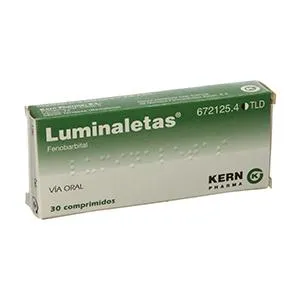
Table of Contents
- Patient Information Leaflet
- Introduction
- 1. What Luminaletas tablets are and what they are used for
- 2. What you need to know before taking Luminaletas tablets
- 3. How to take Luminaletas tablets
- 4. Possible adverse effects
- 5. Storage of Luminaletas tablets
- 6. Contents of the pack and other information
Patient Information Leaflet
Introduction
Package leaflet: Information for the patient
Luminaletas 15 mg tablets
phenobarbital
Read this entire leaflet carefully before you start taking this medicine, as it contains important information for you.
- Keep this leaflet, as you may need to read it again.
- If you have any questions, ask your doctor or pharmacist.
- This medicine has been prescribed for you only, and you should not give it to others, even if they have the same symptoms as you, because it could harm them.
- If you experience any adverse effects, consult your doctor or pharmacist, even if they are adverse effects not listed in this leaflet. See section 4.
Leaflet contents
- What Luminaletas tablets are and what they are used for
- What you need to know before taking Luminaletas tablets
- How to take Luminaletas tablets
- Possible adverse effects
- How to store Luminaletas tablets
- Contents of the pack and other information
1. What Luminaletas tablets are and what they are used for
Luminaletas belongs to a group of medicines called barbiturate antiepileptic drugs.
This medicine is indicated for the treatment of the following types of epilepsy:
generalized tonic-clonic seizures and simple partial seizures.
2. What you need to know before taking Luminaletas tablets
Do not take Luminaletas tablets:
- If you are allergic to phenobarbital, barbiturates, or any of the other ingredients of this medicine (listed in section 6).
- If you have acute alcohol intoxication.
- If you suffer from a respiratory disease in which breathing difficulty or obstruction is evident.
- If you are simultaneously taking hypnotics or analgesics.
- If you have intoxication due to stimulants or sedative psychotropic drugs.
- If you have porphyria, liver or kidney function disorders, or severe heart lesions.
- If you are taking atazanavir, saquinavir, daclatasvir, dasabuvir, dolutegravir, paritaprevir, ombitasvir, ledipasvir, simeprevir, or sofosbuvir.
Warnings and precautions
Consult your doctor or pharmacist before starting to take this medicine:
- If long-term treatment (for 3 months) is required, as you may develop dependence syndrome,
- If you are taking vitamin D, because it may affect the metabolism of this vitamin,
- If you are elderly, as your biological functions may be reduced and a dose reduction may be necessary (see section “3. How to take Luminaletas”),
- If your liver or kidneys do not function properly, your doctor must reduce the dose and perform frequent monitoring, due to the risk of hepatic encephalopathy (see section “3. How to take Luminaletas”),
- If you are an alcoholic, your doctor should reduce the dose,
- If administered to children, as the dose will need to be adjusted (see section “3. How to take Luminaletas”). If treatment is prolonged, consult your doctor. In this case, preventive treatment for rickets should be initiated,
- In some patients (elderly patients, children, etc.), excitement, restlessness, mental confusion, irritability, and hyperactivity in children may occur,
- A small number of patients treated with antiepileptic medicines such as Luminaletas have experienced thoughts of self-harm or suicide. If you have such thoughts at any time, contact your doctor immediately,
- If symptoms of allergic reaction or liver problems occur, treatment must be discontinued according to your doctor’s instructions,
- Serious skin problems have been reported with the use of this medicine, including Stevens-Johnson syndrome (SJS), toxic epidermal necrolysis (TEN), drug reaction with eosinophilia and systemic symptoms (DRESS), and acute generalized exanthematous pustulosis (AGEP):
- These skin rashes (Stevens-Johnson syndrome and toxic epidermal necrolysis) initially appear as red spots or circular patches, often with a central blister.
- Symptoms of SJS/TEN may include blistering, peeling, or bleeding on any part of the skin (including lips, eyes, mouth, nose, genitals, hands, or feet), with or without rash.
- Other additional signs that may occur include sores in the mouth, throat, nose, genitals, and conjunctivitis (swollen, red eyes).
- These skin rashes are often accompanied by flu-like symptoms such as fever, chills, or muscle pain.
- The period of highest risk for the occurrence of severe skin reactions is during the first weeks of treatment.
- If you have developed Stevens-Johnson syndrome or toxic epidermal necrolysis while using Luminaletas, you must never use the medicine again.
- If you develop rashes with signs of swelling and/or color change or symptoms such as skin itching, stop taking Luminaletas, seek immediate medical attention, and inform the doctor that you are taking this medicine.
- Signs and symptoms of DRESS may include flu-like symptoms and a widespread rash with high body temperature and enlarged lymph nodes. Abnormal blood test results may include elevated liver enzymes, increased levels of a type of white blood cells (eosinophilia), and enlarged lymph nodes.
- Symptoms of AGEP appear at the beginning of treatment and may include a red, scaly, widespread rash with bumps under the skin (including skin folds, chest, abdomen (including stomach), back, and arms) and blisters accompanied by fever.
- If you develop severe skin reactions or any of the reactions mentioned above, contact your doctor or healthcare professional immediately.
- Inform your doctor if you notice an increase in seizure frequency or the appearance of new types of convulsive seizures at the beginning of your treatment.
- Treatment must not be stopped abruptly, as this may trigger convulsive seizures.
- Alcohol must not be consumed with this medicine to avoid increasing the sedative effect.
Women of childbearing potential/Contraception
If you are a woman of childbearing potential and do not plan to become pregnant, you must use an effective method of birth control (contraception) throughout treatment with phenobarbital and for two months after stopping treatment. Phenobarbital may affect the effectiveness of hormonal contraceptives, such as the birth control pill, making them less effective in preventing pregnancy. Speak with your doctor, who will advise you on the most appropriate type of contraception while taking phenobarbital.
If you are a woman of childbearing potential and plan to become pregnant, talk to your doctor before stopping contraception and before becoming pregnant about the possibility of switching to other suitable treatments to avoid fetal exposure to phenobarbital.
There is a risk of harm to the fetus if this medicine is used during pregnancy. Women of childbearing potential must use effective contraceptive methods during treatment with this medicine (see “Pregnancy and breastfeeding”).
Other medicines and Luminaletas
Inform your doctor or pharmacist if you are taking, have recently taken, or might need to take any other medicines.
Certain medicines may interact with Luminaletas; in such cases, it may be necessary to adjust the dose or discontinue treatment.
- Alcoholic beverages or medicines containing alcohol,
- Antidepressants (treatment of depression),
- Methadone,
- Other central nervous system depressants: morphine derivatives (analgesics, antitussives, and replacement therapies), benzodiazepines and other medicines for treating anxiety, sedative antidepressants, hypnotics, neuroleptics, sedative H1 antihistamines, central antihypertensives, baclofen, and thalidomide,
- Methotrexate (treatment of arthritis),
- Oral contraceptives (see section “Women of childbearing potential/Contraception”)
Do not take Luminaletas with:
- Atazanavir, saquinavir (protease inhibitors used to treat HIV infection), daclatasvir, dasabuvir, dolutegravir, paritaprevir, ombitasvir, ledipasvir, simeprevir, sofosbuvir (medicines used to treat hepatitis C in adults).
Caution should be exercised when combining with the following medicines:
- Ifosfamide (used in chemotherapy), if Luminaletas is used for the treatment of epilepsy,
- Oral anticoagulants (used to prevent or delay blood clotting),
- Antiproteases: antivirals such as amprenavir, indinavir, and nelfinavir,
- Cyclosporine, tacrolimus (reduce immune response),
- Corticosteroids,
- Digitoxin (medicines acting on the cardiovascular system),
- Dihydropyridines (treatment of high blood pressure),
- Disopyramide (medicine for the treatment of tachycardias),
- Doxycycline (treatment of bacterial infections),
- Thyroid hormones (treatment of hypothyroidism),
- Hydroquinidine, quinidine (treatment of heart arrhythmias),
- Itraconazole (treatment of fungal infections),
- Montelukast (preventive treatment for asthma),
- Theophylline and its derivatives such as aminophylline (used as diuretics, vasodilators, or anti-asthmatics),
- Zidovudine (treatment of viral infections),
- Estrogens and progestogens (not used as contraceptives).
The following combinations should be taken into consideration:
- Estrogen-progestogen and progestogen contraceptives, as their efficacy may be reduced; therefore, alternative contraceptive methods should be considered (see section “Women of childbearing potential/Contraception”),
- Ritonavir, simeprevir, dolutegravir, as antiretroviral protease inhibitors, as they may reduce antiprotease efficacy,
- Anticancer medicines, as this may lead to a risk of reduced exposure to these cancer treatments,
- Lamotrigine (antiepileptic),
- Beta-blocker medicines: alprenolol, metoprolol, and propranolol (used for the treatment of vascular disorders, anxiety, extrapyramidal disorders, or tremors),
- Carbamazepine (antiepileptic),
- Procarbazine (used in chemotherapy),
- Amitriptyline/amitriptyline-N-oxide (antidepressants),
- Apixaban, ticagrelor (antithrombotics), as their efficacy may be reduced.
Effect of other medicines on Luminaletas:
- Folic acid derivatives (treatment of certain vitamin deficiencies) reduce the efficacy of phenobarbital.
Other interactions of medicines with Luminaletas:
- Valproic acid (treatment of epilepsy and bipolar disorder),
- Phenytoin (antiepileptic).
Use of Luminaletas tablets with food, drinks, and alcohol
During treatment with this medicine, alcoholic beverages must not be consumed.
Pregnancy and breastfeeding
If you are pregnant or breastfeeding, think you might be pregnant, or plan to become pregnant, consult your doctor or pharmacist before using this medicine.
Neurodevelopmental disorders (developmental delays due to brain development disorders) have been reported in children exposed to phenobarbital during pregnancy. Studies on the risk remain contradictory.
Pregnancy
Phenobarbital crosses the placenta.
If taken during pregnancy, phenobarbital may cause serious birth defects and affect the child's development as they grow. Birth defects reported in studies include cleft lip (a split in the upper lip) and cleft palate (a split in the roof of the mouth), and cardiac abnormalities. Other congenital abnormalities have also been reported, such as penile malformation (hypospadias), head size smaller than normal, and facial, nail, and finger abnormalities. Babies born to mothers who used phenobarbital during pregnancy may also have a higher risk of being smaller than expected.
Neurodevelopmental disorders (developmental delays due to brain development disorders) have been reported in children exposed to phenobarbital during pregnancy. Studies on the risk remain contradictory.
If you take phenobarbital during pregnancy, you have a higher risk than other women of having a child with birth defects requiring medical treatment. In the general population, the baseline risk of major malformations is 2-3%. This risk increases approximately 3-fold in women who take Luminaletas.
You should not use phenobarbital during pregnancy unless no other treatment works.
Contact your doctor immediately if you are pregnant. Your doctor must explain to you the possible effects of phenobarbital treatment on your baby, and the risks and benefits must be carefully evaluated. Do not stop taking phenobarbital without consulting your doctor first, as abrupt discontinuation of the medicine may increase the risk of seizures, which could have harmful effects on you and the fetus.
If you have taken Luminaletas during the last trimester of pregnancy, appropriate monitoring should be carried out to detect possible disorders in the newborn, such as seizures, excessive crying, muscle weakness, and sucking difficulties.
Luminaletas may, in some cases, cause bleeding in newborns within the first 24 hours of life if the mother has been treated with this medicine.
As a preventive measure, it is recommended to administer vitamin K1 orally to the mother before and at the time of delivery, and appropriate supplements to the newborn.
A dependence condition, withdrawal syndrome (with seizures, hyperreactivity), and rarely, a moderate withdrawal syndrome (with abnormal movements, sucking difficulties, and bone mineralization problems) may also occur.
Breastfeeding
If you are breastfeeding, administration of phenobarbital is not recommended, as it passes into breast milk, which may affect the newborn.
Driving and use of machines
This medicine may cause symptoms such as drowsiness, dizziness, or visual disturbances, and may reduce reaction ability. These effects, as well as the underlying disease itself, may impair your ability to drive vehicles or operate machinery. Therefore, do not drive, operate machinery, or engage in other activities requiring special attention until your doctor evaluates your response to this medicine.
Luminaletas contains lactose and sodium
This medicine contains lactose. If your doctor has informed you that you have an intolerance to certain sugars, consult with them before taking this medicine.
This medicine contains less than 1 mmol of sodium (23 mg) per tablet, i.e., essentially “sodium-free”.
3. How to take Luminaletas tablets
Follow exactly the instructions for use of this medicine provided in this leaflet or those given by your doctor or pharmacist. If in doubt, consult your doctor or pharmacist again.
Do not stop treatment abruptly, as this may trigger seizures (see section "Warnings and precautions"); treatment should be discontinued gradually.
The tablets should be taken without chewing, with a sufficient amount of lukewarm liquid.
Adults
The recommended starting dose is 50–100 mg per day. This dose should be divided into two daily doses.
The dose should be progressively adjusted until the appropriate individual maintenance dose is reached.
The recommended maintenance dose is 50–250 mg per day.
Use in children
The recommended starting and maintenance doses are 3 to 5 mg per kg of body weight per day, which may be administered in two doses.
If treatment is prolonged, your doctor may recommend preventive therapy against rickets.
Patients with impaired liver or kidney function
If your liver or kidneys are not functioning properly, your doctor must assess the benefits and risks of administering this medicine and adjust the dose according to your condition.
Elderly patients
Your doctor will adjust the dose, and clinical monitoring and plasma level checks will be necessary.
If you take more Luminaletas than you should
In case of overdose or accidental ingestion, contact your doctor, pharmacist, or call the Toxicology Information Service immediately. Telephone: 91 562 04 20.
Within the first hour after massive ingestion, symptoms such as nausea, vomiting, headache, obsession, mental confusion, and possibly coma may appear, accompanied by a characteristic neurovegetative state (with decreased respiratory rate (irregular bradypnea), obstruction of the trachea and bronchi, and reduced blood pressure).
The recommended treatment in such cases includes forced diuresis, alkalization, respiratory support, antibiotic treatment, potassium supplementation, and even hemodialysis or peritoneal dialysis if necessary.
If you forget to take Luminaletas tablets
Do not take a double dose to make up for missed doses.
4. Possible adverse effects
Like all medicines, this medicine can cause adverse effects, although not everyone will experience them.
These adverse effects can be classified according to their frequency of occurrence as:
Very common (may affect more than 1 in 10 people)
Common (may affect up to 1 in 10 people)
Uncommon (may affect up to 1 in 100 people)
Rare (may affect up to 1 in 1,000 people)
Very rare (may affect up to 1 in 10,000 people)
Frequency not known (cannot be estimated from the available data).
Common adverse effects (may affect up to 1 in 10 patients):
- Hand tendon disorders (Dupuytren's contracture),
- Allergic dermatitis, particularly rashes with spots or red-colored lesions ending in peeling (scarlatiniform or morbilliform maculopapular rashes),
- Increased gamma-glutamyltransferase, transaminases, and alkaline phosphatase in blood,
- Nausea, vomiting,
- Somnolence (difficulty waking up, sometimes associated with speech difficulties),
- Disorders in thinking and memory,
- Memory impairment,
- Behavioral disturbances (such as agitation or aggressiveness).
Uncommon adverse effects (may affect up to 1 in 100 patients):
- Mood changes,
- Sleep disorders/insomnia,
- Coordination and balance problems,
- Joint pain (arthralgia).
Rare adverse effects (may affect up to 1 in 1,000 patients):
- Impaired attention.
Frequency not known (cannot be estimated from the available data):
- Condition in which the number of red blood cells, white blood cells, and platelets in the blood is lower than normal (pancytopenia),
- Aplastic anemia,
- Agranulocytosis,
- Anemia (reduction in number and increase in size of red blood cells) due to folic acid deficiency,
- Decreased neutrophil count in blood (neutropenia),
- Leukopenia and thrombocytopenia (blood cell disorders),
- Loss of memories (amnesia),
- Abnormal muscle movements such as tics, tremors (dyskinesia),
- Hepatitis,
- Bone abnormalities, including osteopenia and osteoporosis (bone demineralization) and fractures in patients receiving long-term phenobarbital treatment. Consult your doctor or pharmacist if you are on long-term antiepileptic therapy, have a history of osteoporosis, or are taking steroids.
- The treatment should be discontinued if serious adverse reactions affecting liver function and/or the skin occur, or if hypersensitivity reactions develop.
- Decreased thyroid hormones in serum,
- Fixed drug eruption,
- Exfoliative dermatitis,
- Dependence.
If treatment is prolonged, you may develop psychological or physical dependence. Therefore, if you abruptly stop treatment, you may experience headache, muscle pain, anxiety, tension, restlessness, confusion, and irritability. In severe cases, other symptoms may occur such as depersonalization, increased sensitivity to sound, tingling and cramps in the limbs, intolerance to light, sounds, and physical contact, hallucinations, or seizures.
Possible serious skin reactions, including extremely rare cases such as Stevens-Johnson syndrome (SJS), toxic epidermal necrolysis (TEN), and exfoliative dermatitis. Symptoms of SJS/TEN may include blisters, peeling, or bleeding on any part of your skin (including lips, eyes, mouth, nose, genitals, hands, or feet), with or without a rash. You may also experience flu-like symptoms such as fever, chills, or muscle pain.
Drug reaction with eosinophilia and systemic symptoms (DRESS): Signs and symptoms of DRESS may include flu-like symptoms and a widespread rash accompanied by high body temperature and enlarged lymph nodes. Abnormal blood test results may include elevated liver enzymes, increased levels of a type of white blood cells (eosinophilia), and enlarged lymph nodes.
Early symptoms of PEGA may include a red, scaly, and widespread rash with lumps under the skin (including skin folds, chest, abdomen (including stomach), back, and arms) and blisters accompanied by fever.
Caution should be exercised when replacing phenobarbital with another antiepileptic such as phenytoin or carbamazepine, as cross-reactions between phenobarbital and either of these two medicines may rarely occur.
The treatment should be discontinued if serious adverse reactions affecting liver function and/or the skin occur, or if hypersensitivity reactions develop.
Reporting of adverse effects
If you experience any adverse effect, talk to your doctor or pharmacist, even if it is a possible adverse effect not listed in this leaflet. You can also report them directly via the Spanish Pharmacovigilance System for Human Medicines: www.notificaram.es. By reporting adverse effects, you can help provide more information on the safety of this medicine.
5. Storage of Luminaletas tablets
Keep this medicine out of the sight and reach of children.
Do not use this medicine after the expiry date stated on the packaging. The expiry date refers to the last day of the month indicated.
This medicine does not require any special storage conditions.
Medicines must not be disposed of via wastewater or household waste. Dispose of unused medicines and their packaging at a SIGRE point at your pharmacy. If you are unsure, ask your pharmacist how to dispose of medicines and packaging you no longer need. This will help protect the environment.
6. Contents of the pack and other information
Composition of Luminaletas tablets
The active substance is phenobarbital.
The other excipients are: maize starch, lactose, talc, sodium carboxymethyl potato starch (Type A) and magnesium stearate.
Appearance of the medicinal product and contents of the pack
PVC/aluminum blister pack containing 30 tablets.
Marketing Authorization Holder and Manufacturer
Kern Pharma, S.L.
Venus, 72 - Pol. Ind. Colón II
08228 Terrassa - Barcelona
Spain
Date of the most recent revision of this leaflet: March 2025
Detailed information on this medicinal product is available on the website of the Spanish Agency for Medicines and Health Products (AEMPS) http://www.aemps.gob.es/