Lumigan 0.1 mg/ml eye drops solution
Spain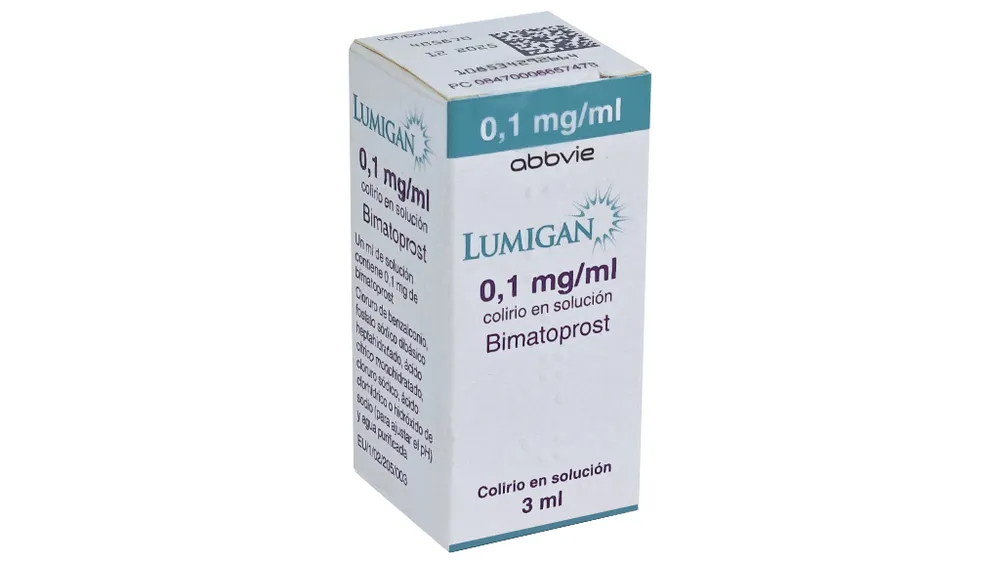
Table of Contents
- Package leaflet: Information for the user
- Introduction
- 1. What LUMIGAN 0.1 mg/ml is and what it is used for
- 2. What you need to know before using LUMIGAN 0.1 mg/ml
- 3. How to use LUMIGAN 0.1 mg/ml
- 4. Possible adverse effects
- Effects on the eye
- 5. Storage of LUMIGAN 0.1 mg/ml
- 6. Contents of the pack and other information
Package leaflet: Information for the user
Introduction
Package leaflet: information for the user
LUMIGAN 0.1 mg/ml, eye drops solution
bimatoprost
Read the entire leaflet carefully before you start using this medicine, because it contains important information for you.
- Keep this leaflet, as you may need to read it again.
- If you have any questions, ask your doctor or pharmacist.
- This medicine has been prescribed for you only and must not be given to other people, even if they have the same symptoms as you, because it could harm them.
- If you experience any adverse effects, consult your doctor or pharmacist, even if they are effects not listed in this leaflet. See section 4.
Contents of the leaflet:
- What LUMIGAN 0.1 mg/ml is and what it is used for
- What you need to know before using LUMIGAN 0.1 mg/ml
- How to use LUMIGAN 0.1 mg/ml
- Possible adverse effects
- How to store LUMIGAN 0.1 mg/ml
- Contents of the pack and other information
1. What LUMIGAN 0.1 mg/ml is and what it is used for
LUMIGAN is a medication for glaucoma. LUMIGAN belongs to a group of medicines called prostamides.
LUMIGAN eye drops are used to reduce elevated eye pressure. LUMIGAN can be used alone or in combination with other eye drops called beta-blockers, which also reduce pressure.
The eye contains a clear, aqueous fluid that maintains the internal structure of the eye. This fluid continuously drains out of the eye, and new fluid is produced to replace it. If the fluid does not drain quickly enough, pressure inside the eye increases. LUMIGAN works by increasing the drainage of this fluid, thereby reducing the pressure within the eye. If this pressure is not reduced, it may lead to a condition called glaucoma and cause damage to your vision.
2. What you need to know before using LUMIGAN 0.1 mg/ml
Do not use LUMIGAN 0.1 mg/ml:
- if you are allergic to bimatoprost or to any of the other ingredients of this medicine (listed in section 6).
- if you have previously discontinued use of eye drops due to a side effect from the preservative benzalkonium chloride.
Warnings and precautions:
Talk to your doctor or pharmacist before starting to use LUMIGAN 0.1 mg/ml.
- Talk to your doctor if:
- you have any respiratory problems.
- you have liver or kidney problems.
- you have previously undergone cataract surgery.
- you suffer from dry eye.
- you have or have had any corneal problems (the transparent front part of the eye).
- you wear contact lenses (see “LUMIGAN 0.1 mg/ml contains benzalkonium chloride”).
- you have or have had low blood pressure or a slow heart rate.
- you have had a viral infection or inflammation of the eye.
During treatment, LUMIGAN may cause loss of fat around the eye, which can lead to deepening of the eyelid sulcus, sunken eyes (enophthalmos), drooping of the upper eyelids (ptosis), stretching of the skin around the eye (dermatocalasis involution), and increased visibility of the lower white part of the eye (inferior scleral show). These changes are usually mild, but if they worsen, they may affect your field of vision. The changes may resolve if you stop using LUMIGAN. LUMIGAN may also cause darkening and growth of eyelashes, as well as darkening of the skin around the eyelid. The color of the iris may darken. These changes may be permanent and more noticeable if only one eye is being treated.
Children and adolescents
LUMIGAN has not been studied in individuals under 18 years of age and should therefore not be used in patients under 18 years of age.
Other medicines and LUMIGAN:
Inform your doctor or pharmacist if you are taking, have recently taken, or might need to take any other medicines.
Pregnancy and breastfeeding
If you are pregnant or breastfeeding, think you may be pregnant, or are planning to become pregnant, consult your doctor or pharmacist before using this medicine.
LUMIGAN may pass into breast milk; therefore, you should not use it during breastfeeding.
Driving and using machines:
Blurred vision may occur for a short period after instillation of LUMIGAN. Do not drive or operate machinery until you see clearly.
LUMIGAN 0.1 mg/ml contains benzalkonium chloride
This medicine contains 0.6 mg of benzalkonium chloride in each 3 ml of solution, equivalent to 0.2 mg/ml.
Do not use the eye drops while wearing contact lenses. Benzalkonium chloride, the preservative in Lumigan, can be absorbed by soft contact lenses and may alter the color of the lenses. Remove contact lenses before using this medicine and wait 15 minutes before reinserting them. Benzalkonium chloride may cause eye irritation, particularly if you have dry eye or other corneal diseases (the transparent layer at the front of the eye). Consult your doctor if you experience a foreign body sensation, stinging, or pain in the eye after using this medicine.
3. How to use LUMIGAN 0.1 mg/ml
Follow exactly the instructions for use given by your doctor or pharmacist. If in doubt, consult your doctor or pharmacist.
LUMIGAN must be used only in the eye. The recommended dose is one drop of LUMIGAN in each affected eye, once daily, in the late afternoon.
If you are using LUMIGAN together with other eye medication, wait at least five minutes between using LUMIGAN and the other eye medication.
Do not use the medicine more than once a day, as this may reduce the effectiveness of treatment.
Instructions for use:
Do not use the container if the protective seal is broken before first use.

- Wash your hands. Tilt your head backward and look toward the ceiling.
- Gently pull down the lower eyelid until a small pocket is formed.
- Invert the container and squeeze it to instill one drop into each affected eye.
- Release the lower eyelid and keep the eye closed for 30 seconds.
Wipe away any excess liquid running down your cheek.
If the drop misses the eye, try again.
To help prevent infections and avoid eye injury, do not let the tip of the container touch the eye or any other surface. Replace the cap and close the container immediately after use.
If you use more LUMIGAN 0.1 mg/ml than you should
If you use more LUMIGAN than recommended, it is unlikely to cause you any serious harm. Apply the next dose at the usual time. If you are concerned, speak to your doctor or pharmacist.
If you forget to use LUMIGAN 0.1 mg/ml
If you forget to apply LUMIGAN, use a single drop as soon as you remember, and then return to your usual routine. Do not apply a double dose to make up for the missed dose.
If you stop using LUMIGAN 0.1 mg/ml
LUMIGAN should be used every day for it to work properly. If you stop using LUMIGAN, the pressure inside the eye may increase; therefore, consult your doctor before stopping treatment.
If you have any further questions about the use of this medicine, ask your doctor or pharmacist.
4. Possible adverse effects
Like all medicines, this medicine can cause adverse effects, although not everyone will experience them.
Very common adverse effects
These may affect 1 or more patients out of 10
Effects on the eye
- Mild eye redness (up to 29% of people)
- Loss of fat in the eye area, which may lead to deepening of the eyelid groove, sunken eyes (enophthalmos), drooping eyelids (ptosis), stretching of the skin around the eye (dermatocalasis involution), and increased visibility of the lower white part of the eye (inferior scleral show).
Common adverse effects
These may affect between 1 and 9 out of 100 patients
Effects on the eye
-
Small epithelial erosions in the eye, with or without inflammation
-
Irritation
-
Itching of the eyes
-
Longer eyelashes
-
Irritation upon instillation of the eye drop
-
Eye pain
Effects on the skin
-
Red, itchy eyelids
-
Darker skin pigmentation around the eye
-
Increased hair growth around the eye
Uncommon adverse effects
These may affect between 1 and 9 out of 1,000 patients
Effects on the eye
- Darkening of the iris
- Eye fatigue
- Inflammation of the eye surface
- Blurred vision
- Loss of eyelashes
Effects on the skin
-
Dry skin
-
Flaking of the eyelid margin
-
Eyelid swelling
-
Itching
Effects on the body
- Headache
- Feeling unwell
Adverse effects of unknown frequency
Effects on the eye
- Macular edema (swelling of the retina at the back of the eye, which may lead to worsening of vision)
- Darker eyelid
- Dryness
- Sticky eyes
- Foreign body sensation in the eye
- Eye inflammation
- Increased tearing
- Eye discomfort
- Light sensitivity
Effects on the body
- Asthma
- Worsening of asthma
- Worsening of the lung disease known as chronic obstructive pulmonary disease (COPD)
- Breathing difficulty
- Symptoms of allergic reaction (swelling, eye redness, skin rash)
- Dizziness
- Elevated blood pressure
- Skin discoloration (periocular)
In addition to the adverse effects of LUMIGAN 0.1 mg/ml, the following adverse effects have been observed with another medicine containing a higher concentration of bimatoprost (0.3 mg/ml):
- Eye burning
- Allergic reaction in the eye
- Swollen eyelids
- Difficulty seeing clearly
- Worsening of vision
- Inflammation of the transparent layer covering the eye
- Tearing
- Darker eyelashes
- Retinal hemorrhage
- Intraocular inflammation
- Cystoid macular edema (retinal swelling inside the eye leading to worsening of vision)
- Eyelid fasciculations
- Eyelid contraction and separation from the eye surface
- Redness of the skin around the eye
- Weakness
- Increased liver enzyme blood test results indicating hepatic activity
Other adverse effects reported with eye drops containing phosphate
Very rarely, some patients with severe damage to the transparent layer at the front of the eye (the cornea) have developed cloudy spots in the cornea due to calcium deposits during treatment.
Reporting of adverse effects
If you experience any adverse effect, consult your doctor or pharmacist, even if it is a possible adverse effect not listed in this leaflet. You can also report them directly via the national reporting system listed in Appendix V. By reporting adverse effects, you can help provide more information on the safety of this medicine.
5. Storage of LUMIGAN 0.1 mg/ml
Keep this medicine out of the sight and reach of children.
Do not use this medicine after the expiry date stated on the container label and on the box after EXP. The expiry date refers to the last day of the month indicated.
The container must be discarded no later than four weeks after first opening, even if some drops remain, to help prevent infections. To help you remember, write the date you opened the container in the space provided on the box.
Medicines should not be disposed of via wastewater or household waste. Ask your pharmacist how to dispose of medicines and containers you no longer need. This will help protect the environment.
6. Contents of the pack and other information
Composition of LUMIGAN 0.1 mg/ml
- The active substance is bimatoprost. One ml of solution contains 0.1 mg of bimatoprost.
- The other components are benzalkonium chloride (preservative), sodium chloride, sodium dibasic phosphate heptahydrate, citric acid monohydrate, and purified water. Small amounts of hydrochloric acid or sodium hydroxide may be added to maintain a normal acidity level (pH levels).
Appearance of LUMIGAN 0.1 mg/ml and contents of the pack
LUMIGAN is a colourless, transparent eye drop solution, supplied in a pack containing 1 or 3 plastic bottles, each fitted with a screw cap. The bottle is filled only up to approximately half its capacity, and each bottle contains 3 ml of solution. The content is sufficient for 4 weeks of treatment. Only certain pack sizes may be marketed.
Marketing Authorisation Holder and Manufacturer:
AbbVie Deutschland GmbH & Co. KG
Knollstraße
67061 Ludwigshafen
Germany
For further information about this medicinal product, you may contact the local representative of the Marketing Authorisation Holder.
Belgium/Belgium/Belgium Luxembourg/Luxembourg/Netherlands Allergan n.v. Tel/Tel: +32 (0)2 351 24 24 | Iceland Actavis Pharmaceuticals Iceland ehf. Sími: +354 550 3300 |
Bulgaria Allergan Bulgaria EOOD Tel.: +359 (0) 800 20 280 | Italy Allergan S.p.A Tel: +39 06 509 562 90 |
Czech Republic Allergan CZ s.r.o. Tel: +420 800 188 818 | Latvia Allergan Baltics UAB Tel: +371 676 60 831 |
Denmark/Norway/Finland/Finland/Sweden Allergan Norden AB Tlf/Puh/Tel: 4580884560 (DK) +47 80 01 04 97 (NO) +358 800 115 003 (FI) +46 (0)8 594 100 00 (SE) | Lithuania Allergan Baltics UAB Tel: +37 052 072 777 |
Germany Pharm-Allergan GmbH Tel: +49 69 92038 1050 | Hungary Allergan Hungary Kft. Tel: +36 80 100 101 |
Estonia Allergan Baltics UAB Tel: +37 2 634 6109 | Austria Pharm-Allergan GmbH Tel: +43 1 99460 6355 |
Greece/Cyprus Allergan Hellas Pharmaceuticals S.A. Tel: +30 210 74 73 300 | Poland Allergan Sp. z o.o. Tel: +48 22 256 37 00 |
Spain Allergan S.A.Tel: +34 91 807 6130 | Portugal Profarin Lda. Tel: +351 21 425 3242 |
France Allergan France SAS Tel: +33 (0)1 49 07 83 00 | Romania Allergan S.R.L. Tel.: +40 21 301 53 02 |
Croatia Ewopharma d.o.o. Tel: +385 1 6646 563 | Slovenia Ewopharma d.o.o. Tel: +386 (0) 590 848 40 |
Ireland/Malta Allergan Pharmaceuticals Ireland Tel: +353 1800 931 787 (IE) +356 27780331 (MT) | Slovak Republic Allergan SK s.r.o. Tel: +421 800 221 223 United Kingdom Allergan Ltd Tel: +44 (0) 1628 494026 |
Date of the most recent review of this leaflet:
Detailed information on this medicine is available on the website of the European Medicines Agency http://www.ema.europa.eu//