Lubrilax 7.5 mg/ml oral drops in solution
Spain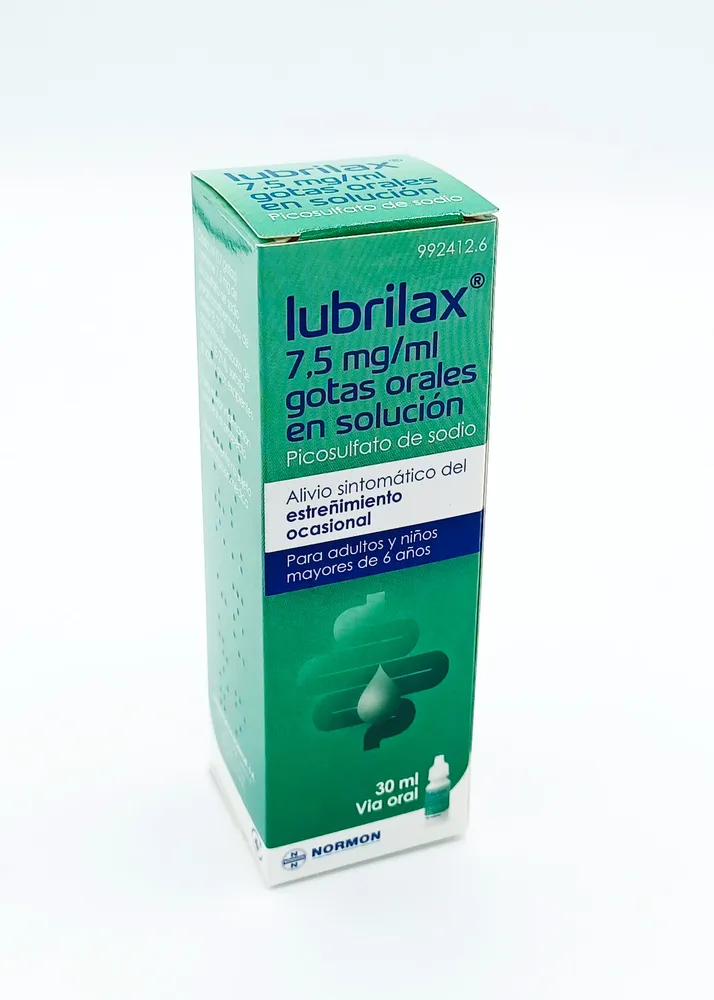
Table of Contents
Package leaflet: Information for the user
Introduction
Package leaflet: information for the patient
Lubrilax 7.5 mg/ml oral drops solution
Sodium picosulfate
Read all of this leaflet carefully before you start taking this medicine , because it contains important information for you.
Follow exactly the instructions for administration of this medicine as described in this leaflet or as provided by your doctor, pharmacist, or nurse.
- Keep this leaflet, as you may need to read it again.
- If you need advice or further information, consult your pharmacist.
- If you experience any adverse effects, consult your doctor or pharmacist, even if they are adverse effects not listed in this leaflet.
- You should consult a doctor if your condition worsens, if no bowel movement occurs within 12 hours after taking the maximum daily dose, or if there is no improvement after 6 days of treatment.
Contents of this leaflet :
- What Lubrilax is and what it is used for
- What you need to know before taking Lubrilax
- How to take Lubrilax
- Possible side effects
- How to store Lubrilax
- Contents of the pack and other information
1. What Lubrilax is and what it is used for
The active substance in this medicine, sodium picosulfate, belongs to a group of medicines called stimulant laxatives.
Lubrilax is a medicine indicated for the symptomatic relief of occasional constipation in adults and children over 6 years of age.
If symptoms worsen, if no bowel movement occurs within 12 hours after the maximum daily dose, or if symptoms persist after 6 days of treatment, you should consult your doctor.
2. What you need to know before taking Lubrilax
It is recommended to drink 6 to 8 glasses of liquid daily when using any type of laxative, in order to help soften the stools.
Do not take Lubrilax
- If you are allergic to sodium picosulfate or to any of the other ingredients of this medicine (listed in section 6).
- If you experience symptoms such as nausea, vomiting, cramps, stomach pain or lower abdominal pain, which may indicate appendicitis or other abdominal problems.
- If you suffer from acute inflammatory bowel disease, intestinal obstruction (ileus), gastrointestinal perforation, severe or undiagnosed abdominal pain, severe dehydration, or if you notice blood in your stools.
- If you experience sudden changes in bowel habits (frequency and consistency of stools) that persist for more than 2 weeks.
Warnings and precautions
Talk to your doctor, pharmacist, or nurse before starting to take Lubrilax.
- Like all laxatives, Lubrilax should not be taken continuously for prolonged periods, as this may lead to dependence, as well as loss of water and electrolytes (diarrhea).
- When administered to elderly patients over prolonged periods, it may worsen fatigue and/or weakness, or cause a decrease in blood pressure and impaired coordination of movements.
- Cases of dizziness and/or syncope have been reported in patients using sodium picosulfate. Based on available information, these may be due to vasovagal syncope caused by straining during defecation or a reflex response to abdominal pain related to constipation, and not necessarily to the use of sodium picosulfate.
Consult your doctor or pharmacist before taking Lubrilax:
- If, in addition to constipation, you have symptoms of appendicitis such as nausea, vomiting, or abdominal cramps, you are advised to see a doctor to determine whether or not you have appendicitis.
- If you suffer from chronic constipation, as the underlying cause should be investigated in such cases.
Children
In children under 6 years of age, administer only under medical supervision.
Taking Lubrilax with other medicines
Inform your doctor or pharmacist if you are taking, have recently taken, or might need to take any other medicines.
Concomitant use of diuretics (medicines used to increase urine elimination) or adrenocorticoids may increase the risk of electrolyte imbalance if excessive doses of Lubrilax are taken. An electrolyte imbalance may increase sensitivity to cardiac glycosides (medicines used for heart conditions).
Concomitant administration of antibiotics may reduce the laxative effect of Lubrilax.
Interference with diagnostic tests:
Taking this medicine may also interfere with laboratory test results, as prolonged use of laxatives may lead to decreased blood potassium levels (hypokalemia).
Taking Lubrilax with food and drink
The drops can be taken alone or dissolved in any type of drink (water, milk, fruit juice, etc.) or food (purees, porridge, etc.).
Pregnancy, breastfeeding and fertility
If you are pregnant or breastfeeding, think you may be pregnant, or are planning to become pregnant, consult your doctor or pharmacist before using this medicine.
No studies have been conducted on the effect on fertility in humans.
Driving and using machines
There are no specific studies on the ability to drive or operate machinery.
During treatment with this medicine, dizziness and/or syncope may occur due to a vasovagal response (e.g., to abdominal spasms). If you experience abdominal spasms, you should avoid potentially hazardous tasks such as driving or operating machinery.
Lubrilax contains propyl parahydroxybenzoate (E-216) and methyl parahydroxybenzoate (E-218)
It may cause allergic reactions (possibly delayed), as it contains propyl parahydroxybenzoate (E-216) and methyl parahydroxybenzoate (E-218).
Lubrilax contains sorbitol
This medicine contains 350 mg of sorbitol per ml.
Sorbitol is a source of fructose. If your doctor has diagnosed you (or your child) with an intolerance to certain sugars, or with hereditary fructose intolerance (HFI), a rare genetic disorder in which the patient cannot metabolize fructose, consult your doctor (or your child’s doctor) before taking this medicine.
Lubrilax contains sodium
This medicine contains less than 23 mg (1 mmol) of sodium per dose, which means it is essentially “sodium-free”.
3. How to take Lubrilax
Follow exactly the instructions for use provided in this leaflet or those given by your doctor or pharmacist. If in doubt, consult your doctor or pharmacist.
Recommended dose:
Use in adults and children over 12 years of age:
9 to 13 drops per day (4 to 6 mg of sodium picosulfate), taken as a single dose.
This corresponds to a maximum daily dose of 13 drops (6 mg of sodium picosulfate).
Use in children aged 6 to 12 years:
2 to 9 drops per day (1 to 4 mg of sodium picosulfate), taken as a single dose.
This corresponds to a maximum daily dose of 9 drops (4 mg of sodium picosulfate).
By increasing or decreasing the dosage, the optimal individual dose can be established.
Method of administration:
Lubrilax must be taken orally.
The drops may be taken alone or dissolved in any beverage (water, milk, fruit juice, etc.) or food (purees, porridge, etc.).
Lubrilax should be taken at night to produce bowel evacuation the following morning. It must be administered as a single daily dose.
If symptoms worsen or no bowel movement occurs within 12 hours after taking the maximum daily dose, consult your doctor. Do not use for more than 6 consecutive days without consulting your doctor.
If you feel that the effect of Lubrilax is too strong or too weak, inform your doctor or pharmacist.
If you take more Lubrilax than you should
Gastrointestinal spasms, mucous and diarrheal stools, fluid loss, potassium loss, and loss of other electrolytes may occur.
At doses much higher than recommended, cases of ischemia (reduced blood supply) in the colonic mucosa have been reported.
Like all laxatives, prolonged use of high doses of laxatives may lead to chronic diarrhea, abdominal pain, decreased blood potassium levels, secondary hyperaldosteronism (excessive production of the hormone aldosterone by the adrenal gland), and kidney stones (renal calculi). Renal tubule injury, metabolic alkalosis (increased bicarbonate levels in blood), and muscle weakness due to decreased blood potassium levels have also been reported.
If you have taken more Lubrilax than you should, go immediately to a medical center or call the Toxicology Information Service at 91 562 04 20, indicating the medication and the amount ingested.
If you forget to take Lubrilax
Do not take a double dose to make up for a missed dose.
If you have any further questions about the use of this medicine, ask your doctor or pharmacist.
4. Possible adverse effects
Like all medicines, Lubrilax may produce adverse effects, although not everyone experiences them.
Very common adverse effects (may affect at least 1 in 10 patients):
- diarrhoea
Common adverse effects (may affect more than 1 in 10 people):
- colic
- abdominal pain
- abdominal discomfort
Uncommon adverse effects (may affect up to 1 in 100 people):
- vomiting
- nausea
- dizziness
Adverse effects with unknown frequency (cannot be estimated from the available data):
- hypersensitivity (allergic reactions)
- angioedema (swelling beneath the skin surface)
- skin reactions
- syncope
Long-term use of medicines containing sodium picosulfate, the active substance in this medicine, may lead to increased loss of water, potassium salts, and other salts. This may result in disturbances of heart function, muscle weakness, and fatigue, particularly if taken concomitantly with diuretics and corticosteroids.
In addition, cases of dizziness and syncope have been reported. Dizziness and syncope occurring after taking medicines containing sodium picosulfate may be due to a vasovagal response (e.g. abdominal spasm, defecation).
Reporting of adverse effects
If you experience any type of adverse effect, consult your doctor, pharmacist, or nurse, even if it is a possible adverse effect not listed in this leaflet. You can also report them directly via the Spanish Pharmacovigilance System for Human Medicinal Products (Website: www.notificaram.es).
By reporting adverse effects, you can help provide more information on the safety of this medicine.
5. Storage of Lubrilax
Keep this medicine out of the sight and reach of children.
No special storage conditions are required.
Do not use this medicine after the expiry date stated on the carton after EXP. The expiry date is the last day of the month indicated.
Medicines should not be disposed of via wastewater or household waste. Ask your pharmacist how to dispose of medicines and packaging that you no longer need. This will help protect the environment.
6. Contents of the pack and other information
Composition of Lubrilax
- The active substance is sodium picosulfate. Each ml (17 drops) contains 7.5 mg.
- The other components (excipients) are: sorbitol (E-420), methylparaben (E-218), propylparaben (E-216), and purified water.
Nature of the product and pack contents
Lubrilax is supplied in 30 ml dropper bottles containing a clear, colourless and odourless solution.
Marketing Authorization Holder and Manufacturer
LABORATORIOS NORMON, S.A.
Ronda de Valdecarrizo, 6 – 28760 Tres Cantos – Madrid (Spain)
Date of the most recent revision of this leaflet: November 2009
Detailed and up-to-date information on this medicinal product is available on the website of the Spanish Agency for Medicines and Health Products (AEMPS) http://www.aemps.gob.es/