Losartan Silanes 50 mg film-coated tablets EFG
Spain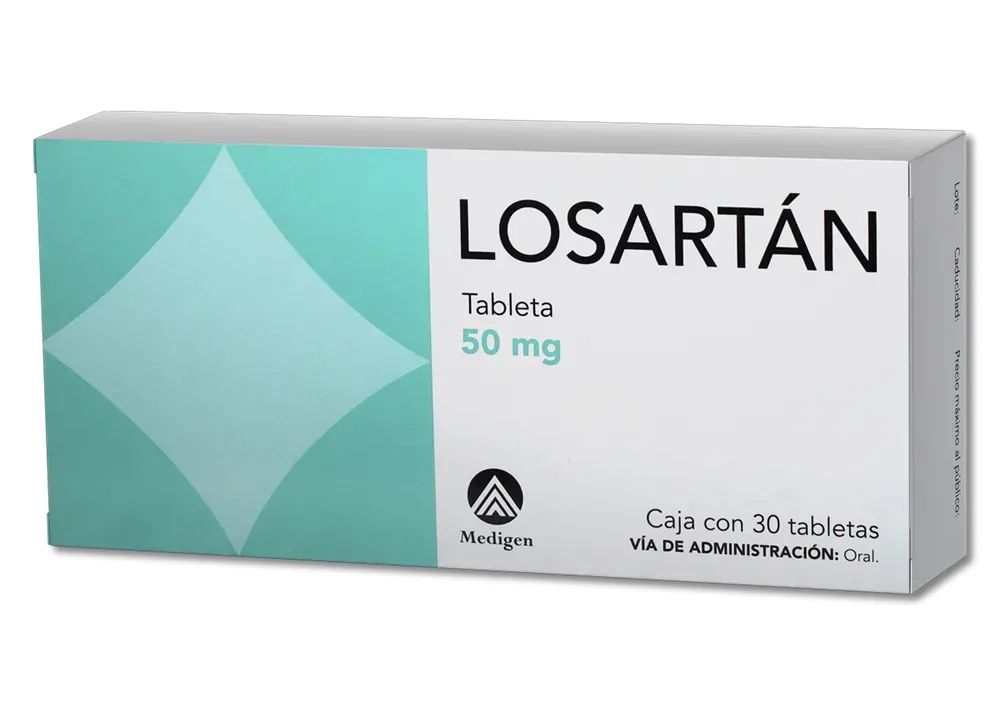
Instructions for Use
Package leaflet: Information for the user
Introduction
PACKAGE LEAFLET: INFORMATION FOR THE USER
Losartan SILANES 50 mg film-coated tablets EFG
Read the entire leaflet carefully before you start taking this medicine, because it contains important information for you.
- Keep this leaflet, as you may need to read it again.
- If you have any questions, ask your doctor or pharmacist.
- This medicine has been prescribed for you only and must not be given to other people, even if they have the same symptoms, as it may harm them.
- If you consider any of the side effects you experience to be serious, or if you notice any side effects not listed in this leaflet, inform your doctor or pharmacist.
Package leaflet:
- What Losartán Silanes is and what it is used for
- What you need to know before taking Losartán Silanes
- How to take Losartán Silanes
- Possible side effects
- Storage of Losartán Silanes
- Contents of the pack and other information
1. What LOSARTAN SILANES is and what it is used for
Losartan belongs to a group of medicines known as angiotensin II receptor antagonists.
Angiotensin II is a substance produced in the body that binds to receptors present in blood vessels, causing them to narrow. This leads to an increase in blood pressure. Losartan blocks angiotensin II from binding to these receptors, resulting in relaxation of the blood vessels, which in turn lowers blood pressure. Losartan slows the worsening of kidney function in patients with high blood pressure and type 2 diabetes.
Losartán Silanes is used
- to treat patients with high blood pressure (hypertension).
- to protect the kidney in hypertensive patients with type 2 diabetes and laboratory test results indicating renal impairment and proteinuria ≥ 0.5 g per day (a condition in which the urine contains an abnormally high amount of protein).
- to treat patients with chronic heart failure, when your doctor considers that treatment with specific medicines called angiotensin-converting enzyme (ACE) inhibitors (medicines used to lower high blood pressure) is not suitable. If your heart failure has been stabilized with an ACE inhibitor, you should not switch to losartan.
- in patients with high blood pressure and thickening of the left ventricle of the heart, losartan has been shown to reduce the risk of stroke (LIFE indication).
You should consult a doctor if your condition worsens or does not improve.
2. BEFORE TAKING LOSARTAN SILANES
Do not take Losartán Silanes
- if you are allergic (hypersensitive) to losartan or to any of the other components of Losartán Silanes,
- if your liver function is severely impaired,
- if you are more than 3 months pregnant. (It is also advisable to avoid Losartán Silanes during the first months of pregnancy – see Pregnancy section).
- if you have diabetes or renal insufficiency and are being treated with a blood pressure-lowering medicine containing aliskiren.
Warnings and precautions
Inform your doctor if you are pregnant (or suspect you might be). The use of Losartán Silanes is not recommended at the beginning of pregnancy, and under no circumstances should it be administered after the third month of pregnancy, as it may cause serious harm to your baby when used from that stage onward (see Pregnancy section).
Consult your doctor before starting Losartán Silanes:
- if you have a history of angioedema (swelling of the face, lips, tongue, and/or throat) (see also section 4. Possible adverse effects),
- if you are experiencing excessive vomiting or diarrhea, leading to excessive loss of fluid and/or salt from your body,
- if you are taking diuretics (medicines that increase the amount of fluid passing through your kidneys) or are on a low-salt diet that may cause excessive loss of fluids or salt from your body (see section 3. Dosage in special patient groups),
- if you know you have narrowing or blockage of the blood vessels supplying your kidneys or if you have recently undergone a kidney transplant,
- if your liver function is impaired (see sections 2. Do not take Losartán Silanes and 3. Dosage in special patient groups),
- if you have heart failure with or without renal insufficiency or potentially life-threatening concomitant cardiac arrhythmias. Special attention is required if you are also being treated with a beta-blocker,
- if you have heart valve problems or heart muscle disorders,
- if you have coronary heart disease (caused by reduced blood flow in the heart's blood vessels) or cerebrovascular disease (caused by reduced blood circulation in the brain),
- if you have primary hyperaldosteronism (a syndrome associated with excessive secretion of the hormone aldosterone by the adrenal gland due to a disorder of this gland),
- if you are taking any of the following medicines used to treat high blood pressure (hypertension):
- an angiotensin-converting enzyme (ACE) inhibitor (e.g., enalapril, lisinopril, ramipril), particularly if you have kidney problems related to diabetes,
- aliskiren.
Your doctor may monitor your kidney function, blood pressure, and blood levels of electrolytes (e.g., potassium) at regular intervals.
See also the information under the heading “Do not take Losartán Silanes”.
Use of Losartán Silanes with other medicines
Inform your doctor or pharmacist if you are taking, have recently taken, or might take any other medicines, including over-the-counter medicines, herbal and natural products.
While being treated with Losartán Silanes, take particular care if you are taking any of the following medicines:
- other medicines that lower blood pressure, as they may cause an additional decrease in blood pressure. Blood pressure may also be lowered by some of the following medicines/classes of medicines: tricyclic antidepressants, antipsychotics, baclofen, amifostine,
- medicines that retain potassium or may increase potassium levels (e.g., potassium supplements, potassium-containing salt substitutes, or potassium-sparing medicines such as certain diuretics [amiloride, triamterene, spironolactone] or heparin),
- non-steroidal anti-inflammatory drugs (NSAIDs), such as indomethacin, including COX-2 inhibitors (medicines that reduce inflammation and may be used to relieve pain), as they may reduce the blood pressure-lowering effect of losartan.
If you have impaired kidney function, concomitant use of these medicines may lead to worsening of kidney function.
Medicines containing lithium should not be used in combination with losartan unless your doctor performs careful monitoring. Special precautionary measures (e.g., blood tests) may be appropriate.
Your doctor may need to adjust your dose and/or take other precautions:
If you are taking an angiotensin-converting enzyme (ACE) inhibitor or aliskiren (see also the information under the headings “Do not take Losartán Silanes” and “Warnings and precautions”).
Taking Losartán Silanes with food and drink
Losartán Silanes may be taken with or without food.
Pregnancy and breastfeeding
Pregnancy
Inform your doctor if you are pregnant (or suspect you might be). Your doctor will usually advise you to stop taking Losartán Silanes before becoming pregnant or as soon as you know you are pregnant, and will recommend an alternative medicine instead of Losartán Silanes. The use of Losartán Silanes is not recommended at the beginning of pregnancy, and it must not be administered from the third month of pregnancy onward, as it may cause serious harm to your baby when administered from that point.
Breastfeeding
Inform your doctor if you are breastfeeding or plan to breastfeed. The use of Losartán Silanes is not recommended during breastfeeding, and your doctor will choose an alternative treatment for you if you wish to breastfeed, especially if your baby is a newborn or premature.
Consult your doctor or pharmacist before using any medicine.
Use in children and adolescents
Losartan has been studied in children. For further information, speak with your doctor.
Driving and using machines
No studies on the effects on the ability to drive and use machines have been conducted.
It is unlikely that Losartán Silanes will affect your ability to drive or use machines. However, like many medicines used to treat high blood pressure, losartan may cause dizziness or drowsiness in some people. If you experience dizziness or drowsiness, consult your doctor before engaging in such activities.
3. How to take LOSARTAN SILANES
Follow exactly the dosing instructions for Losartan Silanes provided by your doctor. If in doubt, consult your doctor again.
Your doctor will determine the appropriate dose of Losartan Silanes based on your condition and whether you are taking other medications. It is important to continue taking Losartan Silanes as prescribed by your doctor to maintain consistent blood pressure control.
Patients with high blood pressure
Treatment usually starts with 50 mg of losartan (one tablet of Losartan Silanes 50 mg) once daily. The maximum blood pressure-lowering effect is achieved within 3–6 weeks after starting treatment. Afterwards, in some patients, the dose may be increased to 100 mg of losartan (two tablets of Losartan Silanes 50 mg) once daily.
If you feel that the effect of Losartan is too strong or too weak, please inform your doctor or pharmacist.
Patients with high blood pressure and type 2 diabetes
Treatment usually starts with 50 mg of losartan (one tablet of Losartan Silanes 50 mg) once daily. Afterwards, the dose may be increased to 100 mg of losartan (two tablets of Losartan Silanes 50 mg) once daily, depending on your blood pressure response.
Losartan tablets may be taken together with other medications that lower blood pressure (e.g., diuretics, calcium antagonists, alpha or beta blockers, and centrally-acting agents), as well as with insulin and other commonly used medications to reduce blood glucose levels (e.g., sulfonylureas, glitazones, and glucosidase inhibitors).
Patients with heart failure
Treatment usually starts with 12.5 mg of losartan once daily. Typically, the dose is gradually increased on a weekly basis (i.e., 12.5 mg daily during the first week, 25 mg daily during the second week, and 50 mg daily during the third week) to a maintenance dose of 50 mg of losartan (one tablet of Losartan Silanes 50 mg) once daily, depending on your condition.
In the treatment of heart failure, losartan is usually combined with a diuretic (a medication that increases the amount of fluid passing through your kidneys) and/or digitalis (a medication that helps make your heart stronger and more efficient) and/or a beta-blocker.
Dosage in special patient groups
Your doctor may recommend a lower dose, especially when starting treatment in certain patients, such as those receiving high-dose diuretics, patients with hepatic impairment, or patients over 75 years of age. The use of losartan is not recommended in patients with severe hepatic impairment (see section "Do not take Losartan Silanes").
Administration
Follow exactly the administration instructions for this medicine provided in this leaflet or as directed by your doctor. If in doubt, consult your doctor.
The tablets should be taken with a glass of water. You should try to take your daily dose at approximately the same time each day. It is important that you continue taking Losartan Silanes until your doctor tells you otherwise.
If you take more Losartan Silanes than you should
If you accidentally take too many tablets, or if a child swallows any, contact your doctor immediately. Symptoms of overdose include low blood pressure, increased heart rate, and possibly decreased heart rate.
In case of overdose or accidental ingestion, contact your doctor or pharmacist immediately, or call the Toxicology Information Service at telephone number 91 562 04 20, indicating the medication and the amount ingested.
If you forget to take Losartan Silanes
If you accidentally miss a dose, simply take the next dose as scheduled. Do not take a double dose to make up for the missed tablet.
If you stop taking Losartan Silanes
If you have any further questions about the use of this medicine, ask your doctor or pharmacist.
4. Possible adverse effects
Like all medicines, Losartán Silanes may cause adverse effects, although not everyone experiences them.
If you experience the following, stop taking losartan tablets immediately and contact your doctor or go to the nearest hospital emergency department:
A severe allergic reaction (skin rash, itching, swelling of the face, lips, mouth or throat, which may cause difficulty swallowing or breathing).
This is a rare but serious adverse effect, affecting more than 1 in 10,000 patients but less than 1 in 1,000. It may require urgent medical attention or hospitalization.
Adverse effects of medicines are classified as follows:
Very common: affects 1 in 10 patients.
Common: affects 1 to 10 in 100 patients.
Uncommon: affects 1 to 10 in 1,000 patients.
Rare: affects 1 to 10 in 10,000 patients.
Very rare: affects fewer than 1 in 10,000 patients.
Not known: frequency cannot be estimated from available data.
The following adverse effects have been reported with losartan:
Common:
- dizziness,
- low blood pressure,
- weakness,
- fatigue,
- low blood sugar (hypoglycaemia),
- high potassium levels in the blood (hyperkalaemia).
Uncommon:
- drowsiness,
- headache,
- sleep disorders,
- sensation of very rapid heartbeat (palpitations),
- severe chest pain (angina pectoris),
- low blood pressure (especially after excessive loss of fluid from the blood vessels, e.g. in patients with severe heart failure or receiving high doses of diuretics),
- dose-related orthostatic effects, such as drop in blood pressure upon standing up from a lying or sitting position,
- difficulty breathing (dyspnoea),
- abdominal pain,
- chronic constipation,
- diarrhoea,
- nausea,
- vomiting,
- hives (urticaria),
- itching (pruritus),
- skin rash,
- localized swelling (oedema).
Rare:
- inflammation of blood vessels (vasculitis, Schönlein-Henoch purpura),
- numbness or tingling sensation (paraesthesia),
- fainting (syncope),
- very rapid and irregular heartbeat (atrial fibrillation),
- stroke (cerebrovascular accident),
- liver inflammation (hepatitis),
- increased blood levels of alanine aminotransferase (ALT), which usually resolves upon discontinuation of treatment.
Not known:
- reduced number of red blood cells (anaemia),
- reduced number of platelets,
- migraine,
- cough,
- liver function abnormalities,
- muscle and joint pain,
- changes in kidney function (may be reversible upon discontinuation of treatment), including renal failure,
- flu-like symptoms,
- increased blood urea, creatinine and plasma potassium levels in patients with heart failure,
- back pain and urinary tract infection.
Reporting of adverse effects
If you experience any type of adverse effect, consult your doctor, pharmacist or nurse, even if it is a possible effect not listed in this leaflet. You may also report them directly via the Spanish Pharmacovigilance System for Human Medicines: www.notificaRAM.es.
By reporting adverse effects, you can help provide more information on the safety of this medicine.
5. Storage of LOSARTAN SILANES
Keep out of the reach and sight of children.
Do not use Losartán Silanes after the expiry date stated on the packaging after EXP. The expiry date is the last day of the month indicated.
No special storage conditions are required. Store Losartán Silanes in the original container.
Do not open the blister pack until ready to take the medicine.
Medicines should not be disposed of via wastewater or household waste. Dispose of unused medicines and their containers at the SIGRE collection point at your pharmacy. Ask your pharmacist how to properly dispose of medicines and containers you no longer need. This helps protect the environment.
6. ADDITIONAL INFORMATION
Composition of Losartán Silanes
The active substance in Losartán Silanes is potassium losartan.
Each Losartán Silanes 50 mg tablet contains 50 mg of potassium losartan.
The other components of the core are microcrystalline cellulose, stearic fumarate and sodium, sodium croscarmellose, anhydrous colloidal silica.
Losartán Silanes 50 mg contains potassium in the following amount: 4.24 mg (0.108 mEq).
The other components of the coating are microcrystalline cellulose, hypromellose, polyoxyl 40 stearate, and titanium dioxide (E171).
Appearance of the product and contents of the container
Losartán Silanes 50 mg is supplied as white, oval, biconvex, film-coated tablets with a score line.
Losartán Silanes is available in the following pack sizes:
PVC/PE/PVDC/Al blisters, packs containing 28 film-coated tablets.
Marketing Authorization Holder and Manufacturer
Marketing Authorization Holder:
SILANES I.D.F., S.L.
Calle Retamar, 11,
28043 Madrid
Spain
Manufacturer:
Sofarimex Lda.
Av. Indústrias, Alto do Colaride
Agualva 2735-213 Cacém – Portugal
Or
Industria Química y Farmacéutica VIR, S.A.
C/ Laguna 66-68-70
Polígono Industrial Urtinsa II
28923 Alcorcón-Madrid (Spain)
This leaflet was approved in July 2017
Detailed and up-to-date information on this medicinal product is available on the website of the Spanish Agency of Medicines and Health Products (AEMPS) http://www.aemps.gob.es
Similar Medications
-
Cozaar 100 mg film-coated tablets
Form: tablets, film-coated
Active substance Dosage LOSARTAN POTASSICUM 100,0 mg Manufacturer: Organon Salud S.L.
-
Cozaar 12.5 mg Start film-coated tablets
Form: tablets, film-coated
Active substance Dosage LOSARTAN POTASSICUM 12,5 mg Manufacturer: Organon Salud S.L.
-
Cozaar 50 mg film-coated tablets
Form: tablets, film-coated
Active substance Dosage LOSARTAN POTASSICUM 50,0 mg Manufacturer: Organon Salud S.L.
-
Losartan Almus 100 mg film-coated tablets EFG
Form: tablets, film-coated
Active substance Dosage LOSARTAN POTASSICUM 100,00 mg Manufacturer: Almus Farmaceutica S.A.U.
-
Losartan Almus 50 mg film-coated tablets EFG
Form: tablets, film-coated
Active substance Dosage LOSARTAN POTASSICUM 50,00 mg Manufacturer: Almus Farmaceutica S.A.U.
-
Losartan Alter 100 mg film-coated tablets EFG
Form: tablets, film-coated
Active substance Dosage LOSARTAN POTASSICUM 100 mg Manufacturer: Laboratorios Alter S.A.
-
Losartan Alter 50 mg film-coated tablets EFG
Form: tablets, film-coated
Active substance Dosage LOSARTAN POTASSICUM 50 mg Manufacturer: Laboratorios Alter S.A.
-
Losartan Aurovitas 100 mg film-coated tablets EFG
Form: tablets, film-coated
Active substance Dosage LOSARTAN POTASSICUM 100 mg Manufacturer: Aurovitas Spain, S.A.U.
-
Losartan Aurovitas 50 mg film-coated tablets EFG
Form: tablets, film-coated
Active substance Dosage LOSARTAN POTASSICUM 50 mg Manufacturer: Aurovitas Spain, S.A.U.
-
Losartan CINFA 12.5 mg starting film-coated tablets EFG
Form: tablets, film-coated
Active substance Dosage LOSARTAN POTASSICUM 12,50 mg Manufacturer: Laboratorios Cinfa S.A.
-
Losartan CINFA 50 mg film-coated tablets EFG
Form: tablets, film-coated
Active substance Dosage LOSARTAN POTASSICUM 50 mg Manufacturer: Laboratorios Cinfa S.A.
-
Losartan Cinfa 100 mg film-coated tablets EFG
Form: tablets, film-coated
Active substance Dosage LOSARTAN POTASSICUM 100,00 mg Manufacturer: Laboratorios Cinfa S.A.
This page has been machine-translated and may contain inaccuracies. The original data is available in the manufacturing country's language.
Last data check: May 18, 2026 · Data source: CIMA — AEMPS