Lopresor 100 mg film-coated tablets
Spain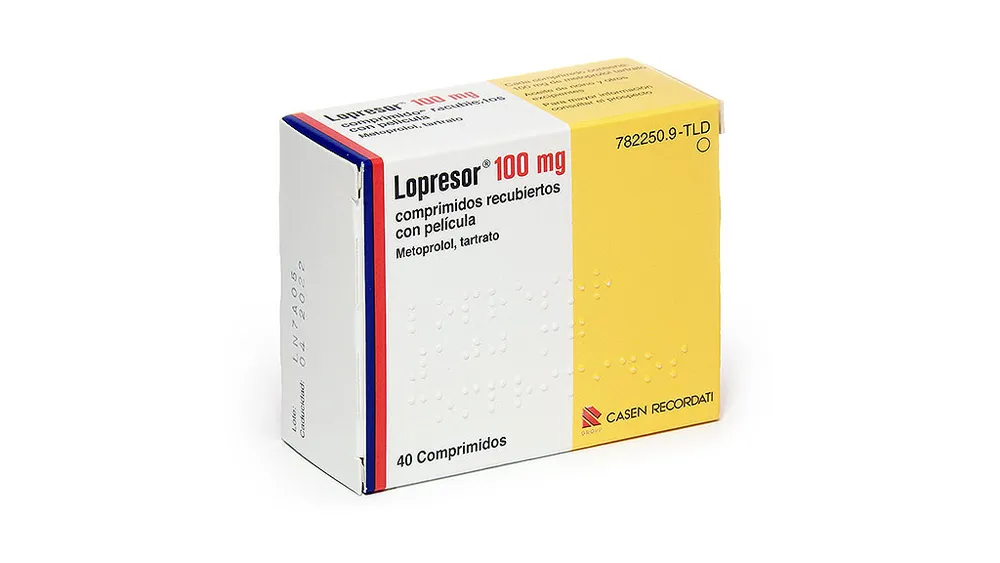
Table of Contents
Package leaflet: Information for the user
Introduction
PACKAGE LEAFLET: INFORMATION FOR THE PATIENT
Lopresor 100 mg film-coated tablets
Metoprolol tartrate
Read the entire leaflet carefully before you start taking this medicine, because it contains important information for you.
- Keep this leaflet; you may need to read it again.
- If you have any questions, ask your doctor or pharmacist.
- This medicine has been prescribed for you only, and you should not give it to other people, even if they have the same symptoms as you, because it may harm them.
- If you experience any adverse effects, consult your doctor or pharmacist, even if such effects are not listed in this leaflet. See section 4.
Leaflet contents:
- What Lopresor is and what it is used for
- What you need to know before taking Lopresor
- How to take Lopresor
- Possible side effects
- How to store Lopresor
- Contents of the pack and other information
1. What Lopresor is and what it is used for
Lopresor is used for:
- lowering blood pressure
- treating angina (chest pain)
- treating abnormal heart rhythms
- treating overactivity of the thyroid gland
- preventing migraine (a type of headache)
How Lopresor works:
Lopresor belongs to a group of medicines called beta-blockers. It reduces blood pressure in your blood vessels by causing the blood vessels to widen.
2. What you need to know before taking Lopresor
Do not take Lopresor:
- if you are allergic to metoprolol tartrate or to any of the other ingredients of this medicine (listed in section 6).
- if you experience difficulty breathing when lying down or have swelling in your feet or legs due to heart disease
- if you have irregular heartbeats
- if your pulse is very slow
- if you have sudden, severe chest pain as a sign of a heart attack
- if you have poor circulation in the limbs (for example, pale and very cold hands or feet, or leg muscle pain while walking)
- if your blood pressure is unusually low
- if you have asthma or have ever had difficulty breathing with wheezing (whistling sounds in the chest when breathing) or coughing
- if you have untreated pheochromocytoma (a tumor of the adrenal gland)
- if you suffer from low blood pressure, dizziness, rapid heartbeat, fast and shallow breathing, or signs of cold, sweaty skin due to a heart condition called cardiogenic shock.
Warnings and precautions:
Talk to your doctor or pharmacist before starting Lopresor:
- if you have heart disease
- if you have high blood sugar levels (diabetes)
- if you have liver disease
- if you are at risk of severe allergic reactions
- if you have chest pain while at rest
- if you have poor circulation in your limbs (for example, pale and very cold hands or feet, or leg muscle pain while walking)
- if you have a tumor of the adrenal medulla (pheochromocytoma)
- if you have been told that your thyroid gland activity is increased
- if you are undergoing surgery requiring anesthesia
- if you suffer from a serious condition known as Stevens-Johnson syndrome, whose symptoms include severe conjunctivitis, skin rash, and ear infections
If you experience any of the above symptoms, tell your doctor as soon as possible.
- If you notice spontaneous bleeding or bruising during treatment with Lopresor
- If you notice your heartbeat becoming slow during treatment with Lopresor
- If you notice yellowing of your skin or eyes, nausea, loss of appetite, or darkened urine during treatment with Lopresor
- If you notice your heartbeat becoming irregular during treatment with Lopresor
- If you experience hallucinations during treatment with Lopresor
Monitoring during treatment with Lopresor:
- If you have heart problems, your doctor will perform blood tests and monitor your heart function.
- If you have high blood sugar levels (diabetes), your doctor will regularly monitor your blood sugar levels.
- If you have overactive thyroid gland, your doctor will regularly monitor your heart and thyroid function.
- If you are taking or have recently taken other medicines, your doctor may perform blood tests and monitor your heart function.
Other medicines and Lopresor
Tell your doctor or pharmacist if you are taking, have recently taken, or might need to take any other medicines. Other medicines may interact with Lopresor, for example:
- other medicines for high blood pressure (e.g., prazosin, clonidine, verapamil, monoamine oxidase inhibitors (MAOIs), diltiazem, and hydralazine)
- medicines for chest pain (angina) (e.g., nitroglycerin)
- medicines for heart rhythm disorders (e.g., amiodarone, propafenone, quinidine, disopyramide, tocainide, procainamide, ajmaline, amiodarone, flecainide, digitalis glycosides such as digoxin, lidocaine)
- inhaled anesthetics used during surgical procedures
- adrenaline or similar substances found in some nasal drops or eye drops or in some cough and cold medicines
- insulin or medicines for high blood sugar (diabetes)
- medicines used to relieve pain or inflammation (non-steroidal anti-inflammatory drugs such as COX-2 inhibitors)
- some antibiotics (e.g., rifampicin)
- some antiretrovirals (e.g., ritonavir)
- some medicines for malaria (e.g., hydroxychloroquine or quinidine)
- some antifungal medicines (e.g., terbinafine)
- some antipsychotic medicines (e.g., thioridazine, chlorpromazine, fluphenazine, haloperidol)
- some antidepressants (e.g., fluoxetine, paroxetine, fluvoxamine, sertraline, clomipramine, desipramine, or bupropion)
- some antihistamines used for hay fever (e.g., diphenhydramine)
- ergot alkaloids, medicines used in the prevention and treatment of migraines
- dipyridamole, a medicine used to reduce the risk of blood clots
Use in patients with liver problems
Lopresor should be used with caution in patients with liver problems.
Use in elderly patients
Patients over 65 years of age may take Lopresor. If you are over 65, you will receive the same dose as other adults, but you should be monitored more closely by your doctor.
Use in children
Lopresor is not recommended for use in children.
Use in athletes
Athletes should be aware that this medicine contains a component that may result in a positive doping test.
Taking Lopresor with food, drinks, and alcohol
Lopresor tablets should be swallowed whole with a glass of water.
If your doctor has advised you to take Lopresor with or without food, you should continue taking it in the same way throughout the duration of treatment.
Avoid drinking alcohol, as alcohol may further lower blood pressure and/or increase the likelihood of dizziness and weakness.
Pregnancy, breastfeeding, and fertility
If you are pregnant or breastfeeding, think you may be pregnant, or are planning to become pregnant, consult your doctor or pharmacist before using this medicine.
Lopresor should not be used during pregnancy unless clearly necessary. Your doctor will advise you of the potential risks of taking Lopresor during pregnancy.
If you are breastfeeding, inform your doctor. Lopresor should be used with caution during breastfeeding.
Driving and using machines
Lopresor may cause dizziness, fatigue, and blurred vision. If this occurs, do not drive or operate machinery or perform any activity requiring concentration while taking this medicine.
Lopresor contains polyoxyl 40 hydrogenated castor oil (macrogol glycerol hydroxystearate)
This medicine may cause stomach discomfort and diarrhea because it contains polyoxyl 40 hydrogenated castor oil.
Lopresor contains sodium
This medicine contains less than 23 mg of sodium (1 mmol) per tablet; this is essentially “sodium-free”.
3. How to take Lopresor
Follow exactly the instructions for use of this medicine as given by your doctor. If in doubt, consult your doctor or pharmacist again.
Adults:
Your doctor will determine the duration of your treatment with Lopresor.
When Lopresor is used to treat high blood pressure and angina pectoris, the usual recommended dose is 100 to 200 mg daily, taken once daily (one tablet in the morning) or divided into two separate doses (one tablet in the morning and one at night). Your doctor may increase this dose up to 400 mg (four tablets) or prescribe another medicine if necessary.
When Lopresor is used to treat overactivity of the thyroid gland, the usual recommended dose is 150 to 200 mg daily, divided into three or four separate doses (half a tablet three or four times a day).
When Lopresor is used to treat heart rhythm disorders, the usual recommended dose is 100 to 150 mg daily, divided into two or three doses (half a tablet in the morning and half at night, and if necessary, half a tablet at midday). Your doctor may increase this dose up to 300 mg (three tablets) if needed.
When Lopresor is used for migraine prevention, the usual recommended dose is 100 mg daily, taken once daily (one tablet in the morning); if necessary, your doctor may increase your daily dose to 200 mg in two separate doses (one tablet in the morning and one at night).
The tablets are to be taken orally. The tablets should be swallowed whole, without chewing, with a glass of water.
Taking the tablets at the same time every day will help you remember when to take them.
Use in children and adolescents:
This medicine should not be given to children under 18 years of age.
Use in elderly patients:
No adjustment of the daily dose is required. However, special care may be needed at the start of treatment.
Patients with liver problems:
Special care is needed at the beginning of treatment in these patients, and the dose should be gradually increased according to the response to treatment.
If you have any doubts about how to use this medicine, ask your doctor or pharmacist.
If you take more Lopresor than you should
In case of Lopresor overdose, inform your doctor immediately. You may require medical attention.
Some effects of Lopresor overdose include: slow or irregular pulse, very low blood pressure, difficulty breathing especially when lying down, swelling of the feet, loss of consciousness, nausea, vomiting, bluish discoloration of the lips, tongue, or skin, seizures, sudden chest pain and tightness, and death.
In cases of overdose or accidental ingestion, contact the Toxicology Information Service. Telephone: 91 562 04 20.
If you forget to take Lopresor
If you accidentally miss a dose, simply take your usual dose as soon as you remember. However, if it is almost time for your next dose, skip the missed dose and continue with your regular schedule. Do not take a double dose to make up for a missed dose.
If you stop taking Lopresor
Do not change or stop your dose without your doctor's consent. If you stop Lopresor treatment abruptly, your condition may temporarily worsen. If treatment needs to be discontinued, your doctor will advise you on how to do so.
If you have any further questions about the use of this product, ask your doctor or pharmacist.
4. Possible adverse effects
Like all medicines, this medicine may cause adverse effects, although not everyone experiences them.
Some of the following adverse effects could be serious and require medical attention:
-
Common adverse effects (affects between 1 and 10 in every 100 patients)
-
Slowing of the heart rate
-
Rare adverse effects (affects between 1 and 10 in every 10,000 patients)
-
Difficulty breathing, especially when lying down, swelling of feet or legs due to heart problems
-
Numbness or cold fingertips as signs of Raynaud's syndrome
-
Irregular heartbeat
-
Very rare adverse effects (affects less than 1 in every 10,000 patients)
-
Spontaneous bleeding or appearance of bruises as a sign of low platelet levels in the blood (thrombocytopenia)
-
Hallucinations
Seek immediate medical advice if you experience any of the following symptoms: yellowing of the skin or eyes, nausea, loss of appetite, darker urine, liver pain, or abnormal curvature of the penis, as these may be signs of liver disorder.
Some of the following effects are common:
-
Common adverse effects (affects between 1 and 10 in every 100 patients)
-
Dizziness
-
Headache
-
Dizziness, fainting upon standing as a sign of orthostatic hypotension (sometimes with loss of consciousness)
-
Difficulty breathing
-
Nausea
-
Vomiting
-
Abdominal pain
-
Fatigue
If any of the symptoms listed above affect you severely, contact your doctor.
Some of the following effects are rare:
-
Rare adverse effects (affects between 1 and 10 in every 10,000 patients)
-
Muscle cramps
-
Skin rash (rash with itching, signs of psoriasis on the skin as thickened red patches)
-
Diarrhea
-
Constipation
-
Difficulty breathing, noisy breathing or cough
-
Swelling
-
Palpitations
-
Decreased alertness, drowsiness or insomnia (sleep disturbances)
-
Signs of paresthesia in limbs such as numbness, tingling in the limbs
-
Depression
-
Nightmares
If you experience any of the symptoms listed above, consult your doctor.
Some of the following effects are very rare:
-
Very rare adverse effects (affects less than 1 in every 10,000 patients)
-
Change in personality
-
Vision disturbances (e.g., blurred vision)
-
Dry or irritated eyes
-
Noises (e.g., ringing) in the ears
-
Hearing disorders (e.g., reduced hearing or hearing loss) at doses exceeding the recommended ones
-
Chest pain
-
Gangrene in patients with pre-existing peripheral circulatory disorders
-
Stuffy or runny nose as signs of rhinitis
-
Dry mouth
-
Increased skin sensitivity to sunlight
-
Abnormal increase in sweating
-
Hair loss
-
Worsening of psoriasis signs such as thickening and redness of plaques
-
Pain and stiffness as signs of arthritis
-
Alteration of sexual desire
-
Changes in the ability to achieve or maintain erection
-
Weight gain
-
Abnormal liver function test results in blood tests
-
Lower back pain, kidney disturbances, increased blood pressure, blood clots as possible signs of fibrous tissue proliferation in an area of the body (called retroperitoneum) located between the kidneys, aorta, renal tract, and other structures
-
Disturbances in cardiac conduction
-
Changes in blood cell counts
If you experience any of the symptoms listed above, consult your doctor.
Other reported adverse effects:
- Confusion
- Abnormal blood triglyceride levels
- Abnormal blood cholesterol levels
Reporting of adverse effects
If you experience any adverse effects, consult your doctor or pharmacist, even if they are possible adverse effects not listed in this leaflet. You can also report them directly via the Spanish Pharmacovigilance System for Human Medicines: www.notificaRAM.es. By reporting adverse effects, you can help provide more information on the safety of this medicine.
5. Storage of Lopresor
Do not store at temperatures above 30°C.
Keep in the original packaging to protect from moisture.
Keep this medicine out of the sight and reach of children.
Do not use this medicine after the expiry date stated on the container. The expiry date refers to the last day of the month indicated.
Do not use this medicine if there are visible signs of deterioration.
Medicines must not be disposed of via wastewater or household waste. Dispose of unused medicines and their containers at the SIGRE collection point at your pharmacy. Ask your pharmacist how to dispose of medicines and containers you no longer need. This will help protect the environment.
6. Contents of the pack and other information
Composition of Lopresor
- The active substance is metoprolol tartrate. Each film-coated tablet contains 100 mg of metoprolol tartrate.
- The other components are:
Core: anhydrous colloidal silica, microcrystalline cellulose, magnesium stearate, sodium carboxymethylstarch (type A) (from potato)
Coating: hypromellose, polyoxyl 40 hydrogenated castor oil (macrogol glyceryl hydroxystearate), talc, titanium dioxide (E 171).
Appearance of the product and contents of the pack
Lopresor is presented as film-coated tablets.
Each pack contains 40 tablets.
Marketing Authorization Holder and Manufacturer
Marketing Authorization Holder
Casen Recordati, S.L.
Autovía de Logroño, km. 13,300
50180 Utebo (Zaragoza)
Spain
Manufacturer
Recordati Industria Chimica e Farmaceutica S.p.A.
Via Matteo Civitali 1, 28148 Milan, Italy.
This leaflet was approved in July 2024
Detailed information on this medicine is available on the website of the Spanish Agency for Medicines and Health Products (AEMPS) (http://www.aemps.gob.es/)