Logimax 5 mg/50 mg prolonged-release tablets
Spain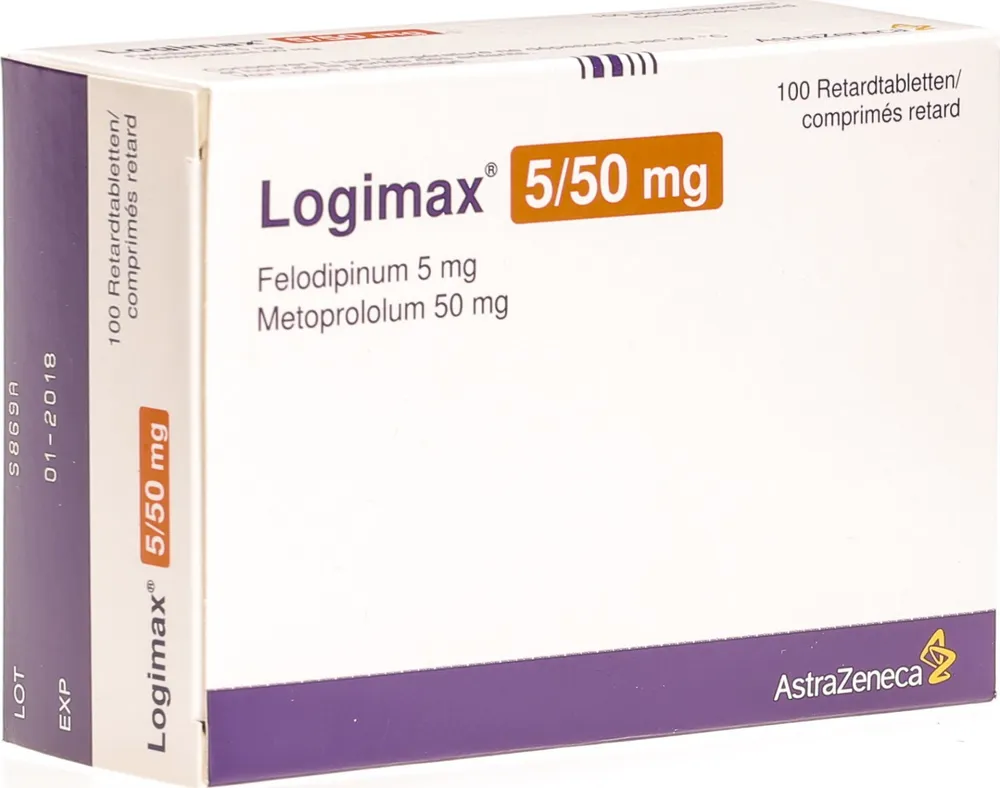
Table of Contents
Package leaflet: Information for the user
Introduction
Package leaflet: information for the patient
Logimax 5 mg/50 mg prolonged-release tablets
felodipine/metoprolol succinate
Read the entire leaflet carefully before you start taking this medicine, because it contains important information for you.
- Keep this leaflet, as you may need to read it again.
- If you have any questions, ask your doctor or pharmacist.
- This medicine has been prescribed for you only, and you should not give it to others, even if they have the same symptoms as you, because it could harm them.
- If you experience any adverse reactions, consult your doctor or pharmacist, even if they are adverse reactions not listed in this leaflet. See section 4.
Leaflet contents:
- What Logimax is and what it is used for
- What you need to know before taking Logimax
- How to take Logimax
- Possible adverse effects
- How to store Logimax
- Contents of the pack and other information
1. What Logimax is and what it is used for
Logimax works through two distinct mechanisms, as it contains two active substances:
- Felodipine belongs to a class of medicines called calcium antagonists. Felodipine lowers blood pressure by dilating the small blood vessels.
- Metoprolol belongs to another class of medicines called beta-blockers. Metoprolol reduces blood pressure by decreasing the effects of hormones released during stress, resulting in a reduction of heart rate.
Logimax is available as prolonged-release tablets that control the rate at which the drug is released into the body, ensuring consistent effects throughout the day.
Logimax is indicated for the treatment of high blood pressure (hypertension) in adults.
2. What you need to know before taking Logimax
Do not take Logimax:
-
if you are allergic to felodipine, metoprolol, or any of the other components of this medicine (listed in section 6). Inform your doctor if you have had allergic reactions to another medicine that is a calcium antagonist or a beta-blocker. Therefore, inform your doctor if you have had any unusual reaction to other medicines, and always mention any other health conditions you may have, especially those related to the heart, blood circulation, lungs, liver, or kidneys. Remember to mention conditions such as allergic reactions to insect stings, food, or other substances.
-
if you have uncompensated heart failure, acute myocardial infarction, or angina pectoris lasting continuously for 15 minutes or more, or if it is worse than usual.
-
if you have a heart valve obstruction disorder or an obstruction of the outflow from the heart.
-
if you are pregnant.
-
Also inform your doctor if you experience symptoms of low blood sugar (hypoglycemia) or if you are taking insulin.
-
Do not administer Logimax to children.
Warnings and precautions
Consult your doctor or pharmacist before starting to take Logimax.
Logimax, like other medicines that lower blood pressure, may rarely cause markedly low blood pressure, which in some patients may lead to insufficient blood supply to the heart.
If during treatment with Logimax your heart rate becomes progressively slower, inform your doctor as soon as possible. Your doctor may reduce the dose of Logimax or gradually discontinue the medication.
If you undergo general anesthesia or require hospitalization for a surgical procedure, inform your doctor or dentist that you are taking Logimax.
Inform your doctor if you have previously had chronic health problems.
If you forgot to mention any of these conditions to your doctor or if you have any doubts, consult your doctor or pharmacist before starting treatment with Logimax.
Logimax has been prescribed only for the treatment of your current condition. Do not take this medicine for other conditions unless specifically instructed by your doctor.
Children
Logimax must not be used in children. See "Do not take Logimax".
Taking Logimax with other medicines
Inform your doctor or pharmacist if you are taking, have recently taken, or might need to take any other medicines, including eye drops, injectables, or those purchased without a prescription, homeopathic remedies, herbal medicines—including St. John's wort—and other health-related products, as it may be necessary to interrupt treatment or adjust the dose of one or more of them. This also includes medicines used in the past. Some medicines can influence the action of other medicines. In particular, inform your doctor if you are using any of the following medicines:
- Medicines used in cardiac treatments (for treating heart diseases) and blood vessels (such as digitalis/digoxin, calcium antagonists (verapamil, diltiazem), antiarrhythmic agents (quinidine or amiodarone), ganglionic blocking agents, hydralazine).
- Other medicines such as protease inhibitors (ritonavir) or reverse transcriptase inhibitors (efavirenz, nevirapine) (for treating HIV infection), monoamine oxidase inhibitors (MAOIs) (for treating depression) and other antidepressants (paroxetine, fluoxetine, sertraline), inhaled anesthetics, antibiotics (rifampicin, erythromycin), antifungals (itraconazole, ketoconazole, terbinafine), hypnotics (barbiturates), antiulcer drugs (cimetidine), anti-inflammatory drugs (indomethacin, celecoxib), antiepileptic drugs (phenytoin, carbamazepine), St. John's wort (for treating depression), antipsychotics, antihistamines, beta-blockers in the form of eye drops, and other substances (e.g., alcohol, certain hormones) may also influence the effect of treatment with Logimax.
- Treatment with Logimax may affect blood levels of tacrolimus (a medicine given to prevent the body from rejecting a transplanted organ, e.g., kidney or liver). Your doctor may need to adjust the dose.
- If you are taking clonidine and Logimax together and need to discontinue clonidine, you should stop taking Logimax several days before stopping clonidine. For discontinuation of Logimax, see section "If you stop taking Logimax".
- If you are taking oral antidiabetics (medicines to control blood sugar), your doctor may need to adjust the dose.
Taking Logimax with food and drinks:
Logimax may be taken with or without food, but must not be taken with grapefruit juice or after a high-fat meal.
Pregnancy and breastfeeding
Pregnancy
If you are pregnant or breastfeeding, think you might be pregnant, or plan to become pregnant, consult your doctor or pharmacist before using this medicine.
If you become pregnant during treatment with Logimax, inform your doctor as soon as possible. Logimax must not be administered during pregnancy.
Breastfeeding
Consult your doctor or pharmacist before using any medicine.
Before taking Logimax, inform your doctor if you are breastfeeding. The effect of Logimax on the infant during breastfeeding is negligible if the mother is treated with the normally recommended doses.
Driving and using machines
Observe your response to the medication, as dizziness or fatigue may occur at normal doses in some cases. If so, do not drive or operate dangerous machinery.
Logimax contains lactose and castor oil
This medicine contains lactose. If your doctor has informed you of an intolerance to certain sugars, consult him before taking this medicine.
This medicine may cause stomach discomfort and diarrhea because it contains castor oil.
Logimax contains sodium
This medicine contains less than 23 mg of sodium (1 mmol) per tablet; hence, it is essentially "sodium-free".
Use in athletes
This medicine contains metoprolol, which may result in a positive outcome in doping control tests.
3. How to take Logimax
Follow exactly the instructions for using this medicine as given by your doctor. If in doubt, consult your doctor or pharmacist again.
Remember to take your medicine.
Your doctor will tell you how long to take Logimax. Do not stop treatment before your doctor tells you to do so. Do not take more than the prescribed dose.
Treatment is usually started with one Logimax tablet once daily. If necessary, your doctor will increase the dose to two Logimax tablets once daily.
Logimax should be taken in the morning with some liquid. The tablets must not be divided, crushed, or chewed. The tablets may be taken alone or with a light meal (low in fat and carbohydrates).
Use in children
The use of Logimax is not recommended in children due to limited experience available.
Use in elderly patients
Logimax is also indicated in elderly patients. Lower doses may be sufficient in elderly patients.
If you take more Logimax than you should
If you have taken more Logimax than you should, contact your doctor or pharmacist immediately.
If this overdose is high enough, you may experience poisoning with one or more of the following symptoms: slow or irregular heartbeat, difficulty breathing, ankle swelling, palpitations, dizziness, fainting, chest pain, cold skin, weak pulse, mental confusion, anxiety, sensation of breathlessness, total or partial loss of consciousness/coma, nausea, vomiting, bluish discoloration of the skin. In extreme cases, cardiac arrest may occur. Therefore, it is very important not to take more than the prescribed dose.
If alcohol, antihypertensive drugs, quinidine, or sedatives (barbiturates) are taken together with an overdose of Logimax 5/50 mg, symptoms may worsen.
The first signs of overdose may appear between 20 minutes and 2 hours after taking the medicine. If you experience any of these symptoms, contact your doctor, pharmacist, or nearest hospital immediately.
In case of overdose or accidental ingestion, contact your doctor or pharmacist immediately or call the Toxicology Information Service at telephone number 91 562 04 20, indicating the medicine and the amount ingested.
If you forget to take Logimax
Do not take a double dose to make up for forgotten doses. If there are 12 hours or more until your next dose, take the missed dose immediately, then take the next dose at the usual time.
If you stop taking Logimax
Do not stop treatment before your doctor tells you to do so. Treatment must not be stopped abruptly. When it is necessary to discontinue treatment, your doctor may reduce the dose and/or switch to administering the medicine every other day for a period of 10–14 days.
If you have heart failure, your doctor may monitor you during this period, as there may be an increased risk of coronary (heart) problems.
4. Possible adverse effects
Like all medicines, this medicine can cause adverse effects, although not everyone will experience them.
If you experience any adverse effects, consult your doctor or pharmacist, even if they are adverse effects not listed in this leaflet.
The unwanted effects that may occur are generally mild and disappear when treatment is discontinued. Some adverse effects occur only at the beginning of treatment or after a dose increase.
If you experience any of the following symptoms persistently, inform your doctor.
Very common (may affect more than 1 in 10 people)
C Fatigue, peripheral edema.
Common (may affect up to 1 in 10 people)
R Flushing or hot flush, dizziness, headache, slowing of the heart rate, dizziness upon changing position (occasionally with fainting), cold hands and feet, nausea, abdominal pain, diarrhea, constipation, sensation of breathlessness during exertion, palpitations.
Uncommon (may affect up to 1 in 100 people)
S Sensation of burning, prickling, or numbness, muscle cramps, symptoms of heart disease such as breathlessness, fatigue, and ankle swelling may temporarily worsen, minor changes in electrocardiogram without affecting heart function, swelling, chest pain, depression, impaired concentration, drowsiness, difficulty falling asleep, nightmares, skin rash or itching, sensation of breathlessness, vomiting, increased sweating, weight gain, and very low blood pressure (hypotension).
Rare (may affect up to 1 in 1,000 people)
D Fainting, disturbances in cardiac conduction on electrocardiogram, irregular heartbeat, nervousness, anxiety, abnormal results in liver function tests, hair loss, appearance of skin rashes, runny nose or tearing/redness of eyes due to an allergic reaction, visual disturbances, dryness and/or irritation of eyes, dry mouth, impotence/sexual dysfunction, muscle pain, joint pain.
Very rare (may affect up to 1 in 10,000 people)
Worsening of circulatory problems in the extremities in patients with severe circulatory disorders, memory loss or impairment, confusion, hallucinations, hypersensitivity reactions such as fever and swelling, skin reaction due to increased sensitivity to sunlight, worsening of psoriasis, tinnitus, taste disturbances, increased need to urinate, blood disorders (reduction in the number of platelets in blood), and hepatitis.
As with other calcium antagonists, inflammation of the mouth together with slight hypertrophy of the gums (gingivitis/periodontitis) has been reported. This gum hypertrophy can be prevented with careful dental hygiene.
Other adverse effects may occur. If you notice any disturbing or unusual reaction during your treatment with Logimax, consult your doctor or pharmacist immediately.
Reporting of adverse effects
If you experience any adverse effect, consult your doctor or pharmacist, even if they are possible adverse effects not listed in this leaflet. You may also report them directly via the Spanish Pharmacovigilance System for Human Medicines: https://www.notificaram.es/. By reporting adverse effects, you can help provide more information on the safety of this medicine.
5. Storage of Logimax
Keep the blisters in the original packaging until the time of use.
Do not store above 30°C.
Keep this medicine out of the sight and reach of children.
Do not use this medicine after the expiry date stated on the packaging after EXP. The expiry date is the last day of the month indicated.
Medicines must not be disposed of via wastewater or household waste. Dispose of empty containers and unused medicines at the SIGRE collection point at your pharmacy. If in doubt, ask your pharmacist how to dispose of containers and medicines you no longer need. This will help protect the environment.
6. Contents of the pack and other information
Composition of Logimax
-
The active substances in Logimax are: 5 mg felodipine and 47.5 mg metoprolol succinate (equivalent to 50 mg metoprolol tartrate).
-
The other components (excipients) are: ethylcellulose, hypromellose, hydroxypropylcellulose, anhydrous lactose, microcrystalline cellulose (E460), polyoxyl 40 hydrogenated castor oil, paraffin, polyethylene glycol, propyl gallate, silicon dioxide, sodium aluminosilicate, sodium stearyl fumarate, titanium dioxide (E171), yellow iron oxide (E172), red-brown iron oxide (E172).
Appearance of the product and contents of the pack
Logimax tablet is apricot-colored, round, 10 mm in diameter, biconvex, film-coated, with the imprint A/FG on one side.
Each pack contains 30 prolonged-release tablets.
Marketing Authorization Holder and Manufacturer
Marketing Authorization Holder:
Recordati Industria Chimica e Farmaceutica S.p.A.
Via Matteo Civitali, 1
20148 Milan
Italy
Manufacturer:
Recordati Industria Chimica e Farmaceutica S.p.A.
Via Matteo Civitali, 1
20148 Milano
Italy
or
Savio Industrial S.r.l.
Via Emilia, 21
27100 Pavia
Italy
For further information about this medicinal product, please contact the local representative of the Marketing Authorization Holder:
Casen Recordati, S.L.
Autovía de Logroño, km 13,300
50180 Utebo - Zaragoza
Spain
Date of the most recent review of this leaflet: January 2021
Detailed and up-to-date information on this medicinal product is available on the website of the Spanish Agency for Medicines and Health Products (AEMPS) http://www.aemps.gob.es/