Lobivon Plus 5 mg/25 mg film-coated tablets
Spain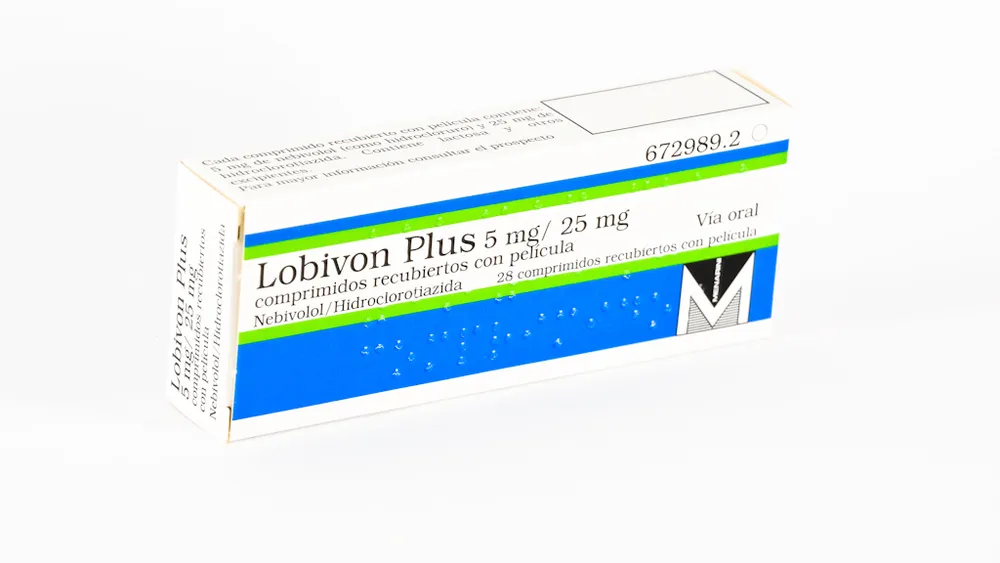
Table of Contents
- Package leaflet: Information for the user
- Introduction
- 1. What Lobivon Plus is and what it is used for
- 2. What you need to know before taking Lobivon Plus
- 3. How to take Lobivon Plus
- **If you forget to take Lobivon Plus**
- **If you discontinue treatment with Lobivon Plus**
- 4. Possible adverse effects
- 5. Storage of Lobivon Plus
- 6. Contents of the pack and other information
Package leaflet: Information for the user
Introduction
Package leaflet: Information for the user
LOBIVON PLUS 5 mg/25 mg film-coated tablets
Nebivolol/Hydrochlorothiazide
Read the entire leaflet carefully before you start using this medicine, as it contains important information for you.
- Keep this leaflet. You may need to read it again.
- If you have any questions, ask your doctor or pharmacist.
- This medicine has been prescribed for you only, and you should not give it to others, even if they have the same symptoms as you, because it could harm them.
- If you experience any adverse effects, consult your doctor, pharmacist, or nurse, even if the effects are not listed in this leaflet. See section 4.
Leaflet contents:
- What Lobivon Plus is and what it is used for
- What you need to know before taking Lobivon Plus
- How to take Lobivon Plus
- Possible adverse effects
- How to store Lobivon Plus
- Contents of the pack and other information
1. What Lobivon Plus is and what it is used for
Lobivon Plus contains nebivolol and hydrochlorothiazide as active substances.
- Nebivolol is a cardiovascular medicine belonging to the group of selective beta-blocking agents (with selective activity in the cardiovascular system). It prevents the increase in heart rate and controls the force of the heart's pumping action. It also works by widening blood vessels, which helps reduce blood pressure.
- Hydrochlorothiazide is a diuretic that works by increasing urine production.
Lobivon Plus is a fixed-dose combination of nebivolol and hydrochlorothiazide in a single tablet and is used for the treatment of high blood pressure (hypertension). It is used in patients who are already being treated with both medicines separately.
2. What you need to know before taking Lobivon Plus
Do not take Lobivon Plus
-
If you are allergic to nebivolol, hydrochlorothiazide, or any of the other components of this medicine (listed in section 6).
-
If you are allergic (hypersensitive) to other sulfonamide-derived substances (such as hydrochlorothiazide, which is a sulfonamide-derived medicine).
-
If you have one or more of the following conditions:
-
Very slow heart rate (less than 60 beats per minute).
-
Other serious heart rhythm disorders (e.g., sick sinus syndrome, sinoatrial block, second- or third-degree atrioventricular block).
-
Recent episode of heart failure or worsening of heart failure, or receiving intravenous treatment to support heart function after circulatory collapse due to acute heart failure.
-
Low blood pressure.
-
Severe circulation problems in arms or legs.
-
Pheochromocytoma, a tumor located in the adrenal glands (on top of the kidneys) that is not being treated.
-
Severe kidney problems, complete absence of urine (anuria).
-
Metabolic disorders characterized by metabolic acidosis (e.g., diabetic ketoacidosis).
-
Asthma or difficulty breathing (currently or in the past).
-
Liver function disorders.
-
Persistently high levels of calcium in the blood and persistently low levels of potassium and sodium in the blood that are resistant to treatment.
-
High levels of uric acid with symptoms of gout.
Warnings and precautions
Talk to your doctor or pharmacist before starting Lobivon Plus.
-
Inform your doctor if you have or develop any of the following conditions:
-
A type of chest pain caused by spontaneous spasm of the heart arteries, called Prinzmetal's angina.
-
First-degree heart block (a mild conduction disorder affecting heart rhythm).
-
Abnormally slow heart rate.
-
Chronic heart failure that is not being treated.
-
Lupus erythematosus (an immune system disorder, which is your body’s defense system).
-
Psoriasis (a skin disease characterized by scaly pink patches), or if you have ever had psoriasis.
-
Overactive thyroid gland: this medicine may mask signs of this condition, such as abnormally high heart rate.
-
Poor circulation in arms or legs, such as Raynaud’s disease or syndrome, or cramp-like pain when walking.
-
Allergies: this medicine may intensify your reaction to pollen or other substances you are allergic to.
-
Chronic respiratory problems.
-
Diabetes: this medicine may mask warning signs of low blood sugar (e.g., palpitations, rapid heartbeat) and may increase the risk of severe hypoglycemia when used with certain antidiabetic medicines called sulfonylureas (e.g., gliquidone, gliclazide, glibenclamide, glipizide, glimepiride, or tolbutamide); your doctor will advise you to monitor your blood sugar more frequently while taking Lobivon Plus, as adjustment of your antidiabetic medication may be necessary.
-
Kidney problems: your doctor will check your kidney function to ensure it does not worsen. Do not take Lobivon Plus if you have severe kidney problems (see section “Do not take Lobivon Plus”).
-
If you tend to have low potassium levels in the blood, especially if you have long QT syndrome (a type of ECG abnormality) or are taking digitalis (to help the heart beat); you are more likely to have low blood potassium if you have hepatic cirrhosis, have experienced excessive fluid loss due to strong diuretic treatment, or if your dietary intake of potassium is inadequate.
-
If you are due to undergo surgery, always inform your anesthesiologist that you are taking Lobivon Plus before being anesthetized.
-
If you have had skin cancer or develop an unexpected skin lesion during treatment. Treatment with hydrochlorothiazide, particularly long-term use at high doses, may increase the risk of certain types of non-melanoma skin and lip cancer. Protect your skin from exposure to sunlight and UV rays while taking Lobivon Plus.
-
If you experience vision loss or eye pain, which could be symptoms of fluid accumulation in the vascular layer of the eye (choroidal effusion) or increased eye pressure, occurring within hours to weeks after taking Lobivon Plus. This may lead to permanent vision loss if untreated. If you have previously had an allergy to penicillins or sulfonamides, you may be at higher risk.
-
If you have had respiratory or lung problems (such as inflammation or fluid in the lungs) after taking hydrochlorothiazide in the past. If you develop dyspnea or severe breathing difficulty after taking Lobivon Plus, seek medical attention immediately.
-
Lobivon Plus may increase blood fat levels and uric acid levels. It may affect levels of certain chemicals in the blood called electrolytes: your doctor will monitor these periodically with blood tests.
-
The hydrochlorothiazide in Lobivon Plus may cause skin hypersensitivity to sunlight or artificial UV light. If you develop a rash, itching, or skin sensitivity during treatment, stop taking Lobivon Plus and inform your doctor (see also section 4).
-
Anti-doping tests: Lobivon Plus may produce a positive analytical result in anti-doping tests.
Children and adolescents
Lobivon Plus is not recommended for use in children and adolescents due to lack of data on use of this medicine in this patient group.
Taking Lobivon Plus with other medicines
Tell your doctor or pharmacist if you are taking, have recently taken, or might need to take any other medicines.
Always inform your doctor if, in addition to Lobivon Plus, you are taking or receiving any of the following medicines:
-
Medicines that, like Lobivon Plus, may affect blood pressure and/or heart function:
-
Medicines to control blood pressure or treat heart problems (e.g., amiodarone, amlodipine, cibenzoline, clonidine, digoxin, diltiazem, disopyramide, dofetilide, felodipine, flecainide, guanfacine, hydroquinidine, ibutilide, lacidipine, lidocaine, mexiletine, methyldopa, moxonidine, nicardipine, nifedipine, nimodipine, nitrendipine, propafenone, quinidine, rilmenidine, sotalol, verapamil).
-
Sedatives and medicines for psychosis (a mental illness), e.g., amisulpride, barbiturates (also used for epilepsy), chlorpromazine, ciamemazine, droperidol, haloperidol, levomepromazine, narcotic derivatives, phenothiazines (also used for nausea and vomiting), pimozide, sulpiride, sultopride, thioridazine, tiapride, trifluoperazine.
-
Medicines for depression, e.g., amitriptyline, paroxetine, fluoxetine.
-
Medicines used for anesthesia during surgery.
-
Medicines for asthma, nasal congestion, or to treat certain eye conditions such as glaucoma (increased eye pressure) or pupil dilation (enlargement).
-
Medicines for diabetes, such as insulin or oral antidiabetic agents.
-
Baclofen (a muscle relaxant medicine).
-
Amifostine (a protective medicine used during cancer treatment).
-
Medicines whose effect or toxicity may be increased by Lobivon Plus:
-
Lithium (used as a mood stabilizer).
-
Cisapride (used for digestive problems).
-
Bepridil (used for angina).
-
Difemanil (used to treat excessive sweating).
-
Medicines for infections: erythromycin administered by infusion or injection, pentamidine, sparfloxacin, amphotericin, sodium penicillin G, halofantrine (used for malaria).
-
Vincamine (used for cerebral circulation problems).
-
Mizolastine and terfenadine (used for allergies).
-
Diuretics and laxatives.
-
Medicines for acute inflammation: steroids (e.g., cortisone and prednisone), ACTH (adrenocorticotropic hormone), and medicines derived from salicylic acid (e.g., acetylsalicylic acid/aspirin and other salicylates).
-
Carbenoxolone (used for stomach burning and stomach ulcers).
-
Calcium salts (used as bone health supplements).
-
Medicines used to relax muscles (e.g., tubocurarine).
-
Diazoxide (used to treat low blood sugar and high blood pressure).
-
Amantadine, an antiviral medicine.
-
Cyclosporine, used to suppress the body’s immune response.
-
Iodinated contrast media, used in X-ray imaging scans.
-
Anticancer medicines (e.g., cyclophosphamide, fluorouracil, methotrexate).
-
Medicines whose effect may be reduced by Lobivon Plus:
-
Medicines that lower blood sugar (insulin and oral antidiabetic medicines, metformin).
-
Medicines for gout (e.g., allopurinol, probenecid, sulfinpyrazone).
-
Medicines such as noradrenaline, used to treat low blood pressure and slow heart rate.
-
Non-steroidal anti-inflammatory drugs (NSAIDs) for pain and inflammation, as they may reduce blood pressure and thereby reduce the effectiveness of Lobivon Plus.
-
Medicines for stomach acidity or ulcers (antacids): take Lobivon Plus with food, and antacids between meals.
Taking Lobivon Plus with alcohol
Be cautious when drinking alcohol while taking Lobivon Plus, as you may feel faint or dizzy. If this occurs, avoid alcohol, including wine, beer, or alcoholic beverages.
Pregnancy and breastfeeding
Inform your doctor if you are pregnant or think you may be pregnant. Your doctor will advise you to take another medicine instead of Lobivon Plus, as it is not recommended during pregnancy. This is because the active ingredient hydrochlorothiazide crosses the placenta, and its use after the third month of pregnancy may cause potentially harmful fetal and neonatal effects.
Inform your doctor if you are breastfeeding or about to start breastfeeding. Lobivon Plus is not recommended for breastfeeding mothers.
If you are pregnant or breastfeeding, think you may be pregnant, or plan to become pregnant, consult your doctor or pharmacist before using this medicine.
Driving and using machines
This medicine may cause dizziness or fatigue. If so, do not drive or operate machinery.
Lobivon Plus contains lactose and sodium
This medicine contains lactose. If your doctor has informed you of an intolerance to certain sugars, consult him/her before taking this medicine.
This medicine contains less than 1 mmol of sodium (23 mg) per film-coated tablet; essentially “sodium-free”.
3. How to take Lobivon Plus
Follow exactly the instructions for use provided by your doctor. If in doubt, consult your doctor again.
Take one tablet daily with some water, preferably at the same time each day.
Lobivon Plus may be taken before, during, or after meals, or independently of meals.
Use in children and adolescents
Do not administer Lobivon Plus to children or adolescents.
If you take more Lobivon Plus than you should
If you have accidentally taken an overdose of this medicine, consult your doctor, pharmacist, or call the Toxicology Information Service immediately at 91 562 04 20, indicating the medicine and the amount taken.
You are advised to bring the medicine's packaging and leaflet to the healthcare professional.
The most frequent symptoms and signs of overdose are very slow heartbeat (bradycardia), low blood pressure with possible fainting, breathing difficulty resembling asthma, acute heart failure, excessive urination with consequent dehydration, nausea and drowsiness, muscle spasms, and disturbances in heart rhythm (especially if you are taking digitalis or medications for heart rhythm disorders).
If you forget to take Lobivon Plus
If you forget to take a dose of Lobivon游戏副本
If you discontinue treatment with Lobivon Plus
Always consult your doctor before stopping treatment with Lobivon Plus.
If you have any further questions about using this product, ask your doctor or pharmacist.
4. Possible adverse effects
Like all medicines, this medicine can have adverse effects, although not everyone experiences them.
- The following adverse effects have been reported with the use of nebivolol:
Frequent adverse effects (may affect up to 1 in 10 people):
- Headache.
- Dizziness.
- Fatigue.
- Unusual sensation of burning, tingling, or prickling on the skin.
- Diarrhea.
- Constipation.
- Nausea.
- Difficulty breathing, shortness of breath.
- Sweating of hands and feet.
Uncommon adverse effects (may affect up to 1 in 100 people):
- Slow heartbeat or other heart disturbances.
- Low blood pressure.
- Leg pain resembling cramps when walking.
- Abnormal vision.
- Sexual impotence.
- Difficulty digesting, stomach or intestinal gas, vomiting.
- Skin rash, itching.
- Difficulty breathing as in asthma, due to sudden contraction of the muscles around the airways (bronchospasm).
- Nightmares.
Very rare adverse effects (may affect up to 1 in 10,000 people):
- Fainting.
- Worsening of psoriasis, a skin disease characterized by scaly pink patches.
The following adverse effects have been reported only in a few isolated cases:
-
Systemic allergic reactions with generalized skin rash (hypersensitivity reactions).
-
Sudden swelling, especially around the lips, eyes, or tongue, possibly with acute breathing difficulty (angioedema).
-
Skin rash characterized by raised, itchy, pink wheals, due to either allergic or non-allergic causes (urticaria).
-
The following adverse effects have been reported with the use of hydrochlorothiazide:
Frequency not known: Skin and lip cancer (non-melanoma skin cancer)
Allergic reactions
- Systemic allergic reaction (anaphylactic reaction).
Heart and circulation
- Heart rhythm disturbances, palpitations.
- Changes in electrocardiogram.
- Sudden fainting upon standing, formation of blood clots in veins (thrombosis) and embolism, circulatory collapse (shock).
Blood
- Changes in blood cell counts, such as: decreased white blood cells, decreased platelets, decreased red blood cells; disturbance in the production of new blood cells in the bone marrow.
- Disturbance in body fluid levels (dehydration) and in levels of chemicals in the blood, particularly decreased levels of potassium, sodium, magnesium, chloride, and increased levels of calcium.
- Increased levels of uric acid, gout, increased blood glucose, diabetes, metabolic alkalosis (a metabolic disorder), increased cholesterol and/or triglycerides in the blood.
Stomach and intestine
- Loss of appetite, dry mouth, nausea, vomiting, stomach discomfort, abdominal pain, diarrhea, decreased intestinal movements (constipation), absence of intestinal movements (paralytic ileus), flatulence.
- Inflammation of the salivary glands, inflammation of the pancreas, increased levels of amylase in the blood (a pancreatic enzyme).
- Yellowing of the skin (jaundice), inflammation of the gallbladder.
Chest
- Respiratory failure, inflammation of the lungs (pneumonitis), fibrous tissue formation in the lungs (interstitial lung disease), accumulation of fluid in the lungs (pulmonary edema).
- Very rare frequency: Acute breathing difficulty (signs include severe shortness of breath, fever, weakness, and confusion).
Nervous system
- Dizziness (sensation of spinning).
- Seizures, decreased level of consciousness, coma, headache, dizziness.
- Apathy, confusion, depression, nervousness, agitation, sleep disturbances.
- Unusual sensation of burning, tingling, or prickling on the skin.
- Muscle weakness (paresis).
Skin and hair
- Itching, purple spots on the skin (purpura), urticaria, increased skin sensitivity to light, rash, facial rash and/or red patches that may leave scars (cutaneous lupus erythematosus), inflammation of blood vessels leading to tissue death (necrotizing vasculitis), skin peeling, redness, shedding, and blister formation (toxic epidermal necrolysis).
Eyes and ears
- Yellow vision, blurred vision, worsening of myopia, decreased tear production.
- Decreased vision or eye pain due to elevated pressure (possible signs of fluid accumulation in the vascular layer of the eye (choroidal effusion) or acute angle-closure glaucoma).
Joints and muscles
- Muscle spasms, muscle pain.
Urinary system
- Kidney dysfunction, acute kidney failure (decreased urine production and accumulation of fluids and waste in the body), inflammation of the connective tissue of the kidneys (interstitial nephritis), presence of sugar in the urine.
Sexual
- Erectile dysfunction.
General/Other
- General weakness, fatigue, fever, thirst.
Reporting of adverse effects
If you experience any type of adverse effect, consult your doctor, pharmacist, or nurse, even if it is a possible adverse effect not listed in this leaflet. You may also report them directly through the Spanish Pharmacovigilance System for Human Medicines: https://www.notificaram.es. By reporting adverse effects, you can help provide more information on the safety of this medicine.
5. Storage of Lobivon Plus
Keep this medicine out of the sight and reach of children.
This medicine does not require any special storage conditions.
Do not use this medicine after the expiry date stated on the carton and blister after 'EXP.:'. The expiry date refers to the last day of the month indicated.
Medicines should not be disposed of via wastewater or household waste. Dispose of empty containers and any unused medicines at the SIGRE collection point at your pharmacy. If you are unsure, ask your pharmacist how to dispose of containers and medicines you no longer need. This will help protect the environment.
6. Contents of the pack and other information
Composition of Lobivon Plus
The active substances are nebivolol and hydrochlorothiazide. Each tablet contains 5 mg of nebivolol (as nebivolol hydrochloride) (2.5 mg of d-nebivolol and 2.5 mg of l-nebivolol) and 25 mg of hydrochlorothiazide.
The other components are:
- Core: monohydrate lactose, polysorbate 80 (E-433), hypromellose (E-464), corn starch, sodium croscarmellose (E-468), microcrystalline cellulose (E-460(i)), anhydrous colloidal silica (E-551), magnesium stearate (E-470b).
- Coating: macrogol stearate type I 40 (E-431), titanium dioxide (E-171), carmines (carmine lake of aluminic acid, E-120), hypromellose (E-464), microcrystalline cellulose (E-460(i)).
Appearance of the product and contents of the pack
Lobivon Plus is presented as film-coated tablets, violet in colour, round, slightly biconvex, with the engraved mark “5/25” on one side. Available in packs containing 7, 14, 28, 30, 56 and 90 film-coated tablets.
The tablets are packaged in blisters made of (PP/COC/PP/Aluminium).
Not all pack sizes may be marketed.
Marketing Authorization Holder
Menarini International Operations Luxembourg S.A.,
1, Avenue de la Gare L-1611, Luxembourg
Local representative:
Laboratorios Menarini, S.A.
Alfons XII, 587 - Badalona (Barcelona), Spain
Manufacturer responsible
Berlin-Chemie AG
Glienicker Weg 125 - 12489 Berlin, Germany
or
Menarini - Von Heyden GMBH
Leipziger Strasse 7-13, 01097 – Dresden, Germany
or
- Menarini Manufacturing Logistics and Services S.r.l.
Via Sette Santi 3, 50131 Florence, Italy
This medicinal product is authorized in the European Economic Area (EEA) member states under the following names:
Belgium: Nobiretic
Cyprus: Lobivon plus
Denmark: Hypoloc Comp
Slovakia: Nebilet HCTZ
Slovenia: Co-Nebilet
Spain: Lobivon Plus
Estonia: Nebilet Plus
France: Temeritduo
Greece: Lobivon-plus
Hungary: Nebilet Plus
Ireland: Hypoloc Plus
Italy: Aloneb
Latvia: Nebilet Plus
Lithuania: Nebilet Plus
Luxembourg: Nobiretic
Malta: Nebilet Plus
Poland: Nebilet HCT
Netherlands: Nebiretic
Portugal: Nebilet Plus
Czech Republic: Nebilet Plus H 5 mg/ 25 mg film-coated tablets
Romania: Co-Nebilet 5 mg/ 25 mg
Date of the most recent revision of this leaflet: April 2025
Detailed and up-to-date information on this medicinal product is available on the website of the Spanish Agency of Medicines and Health Products (AEMPS) http://www.aemps.gob.es/