Lipoflex Special without electrolytes emulsion for infusion EFG
SpainTable of Contents
- Package leaflet: Information for the user
- Introduction
- 1. What Lipoflex special without electrolytes is and what it is used for
- 2. What you need to know before using Lipoflex special without electrolytes
- 3. How to use Lipoflex special without electrolytes
- 4. Possible adverse effects
- 5. Storage of Lipoflex special without electrolytes
- 6. Contents of the package and other information
Package leaflet: Information for the user
Introduction
Package leaflet: information for the user
Lipoflex special without electrolytes emulsion for infusion EFG
Read all of this leaflet carefully before you start using this medicine, because it contains important information for you.
- Keep this leaflet, as you may need to read it again. If you have any questions, ask your doctor, pharmacist or nurse.
- This medicine has been prescribed for you only, and you should not give it to other people even if they have the same symptoms as you, because it may harm them.
- If you experience any adverse effects, consult your doctor, pharmacist or nurse, even if they are adverse effects not listed in this leaflet. See section 4.
Contents of the leaflet
- What Lipoflex special without electrolytes is and what it is used for
- What you need to know before using Lipoflex special without electrolytes
- How to use Lipoflex special without electrolytes
- Possible side effects
- How to store Lipoflex special without electrolytes
- Contents of the pack and other information
1. What Lipoflex special without electrolytes is and what it is used for
Lipoflex special without electrolytes contains fluids and substances called amino acids and fatty acids that are essential for growth or recovery of the body. It also provides calories in the form of carbohydrates and fats.
This electrolyte-free medication is administered when there is an inability to take food normally. There are many situations in which this may occur, for example, during recovery phases following surgical procedures, trauma, or burns, or when there is an inability to absorb nutrients in the stomach and intestine.
This emulsion can be administered to adults, adolescents, and children over 2 years of age.
2. What you need to know before using Lipoflex special without electrolytes
Do not use Lipoflex special without electrolytes
• if you are allergic to any of the active substances, to egg, peanut, or soy, or to any of the other ingredients of this medicine (listed in section 6),
• this medicine must not be administered to newborns, infants, or children under two years of age.
Also, do not use this medicine if you have any of the following conditions:
• potentially life-threatening circulatory disorders, such as those occurring in cases of collapse or shock,
• myocardial infarction or stroke,
• severe coagulation disorders, risk of bleeding (severe coagulopathy, worsening hemorrhagic diathesis),
• blockage of blood vessels due to blood clots or fat (embolism),
• severe liver failure,
• impaired bile flow (intrahepatic cholestasis),
• severe renal failure when dialysis equipment is not available,
• disturbances in the body's electrolyte composition,
• fluid deficiency or excess water in your body,
• fluid in your lungs (pulmonary edema),
• severe heart failure,
• certain metabolic disorders such as:
- excessive lipids (fats) in the blood,
- congenital amino acid metabolism disorders,
- abnormally high blood sugar levels requiring more than 6 units of insulin per hour to be controlled,
- metabolic disturbances that may occur after surgery or trauma,
- coma of unknown origin,
- inadequate oxygen supply to tissues,
- abnormally high levels of acid in the blood.
Warnings and precautions
Consult your doctor, pharmacist, or nurse before starting treatment with Lipoflex special without electrolytes.
Inform your doctor if:
• you have heart, liver, or kidney problems,
• you have certain types of metabolic disorders such as diabetes, abnormal blood lipid levels, or disturbances in the body's fluid, electrolyte, or acid-base balance.
You will be closely monitored for early signs of an allergic reaction (such as fever, chills, rash, or shortness of breath) while receiving this medicine.
Additional monitoring and tests, such as various blood tests, will be performed to ensure your body is properly utilizing the administered nutrients.
This medicine is an electrolyte-free solution. Healthcare professionals may take additional measures to ensure your body's fluid and electrolyte needs are met. In addition to Lipoflex special without electrolytes, you may receive supplementary nutrients (food) to fully meet your requirements.
Children
This medicine must not be administered to newborns, infants, or children under two years of age.
Use of Lipoflex special without electrolytes with other medicines
Inform your doctor, pharmacist, or nurse if you are taking, have recently taken, or might need to take any other medicines.
Lipoflex special without electrolytes may interact with certain medicines. Inform your doctor, pharmacist, or nurse if you are taking or receiving any of the following:
• insulin,
• heparin,
• medications that prevent unwanted blood clotting, such as warfarin or other coumarin derivatives.
Pregnancy and breastfeeding
If you are pregnant or breastfeeding, think you may be pregnant, or are planning to become pregnant, consult your doctor or pharmacist before using this medicine. If you are pregnant, you will only receive this medicine if your doctor or pharmacist considers it absolutely necessary for your recovery. There are no available data on the use of Lipoflex special without electrolytes in pregnant women.
Breastfeeding is not recommended in mothers receiving parenteral nutrition.
Driving and using machines
This medicine is normally administered to immobilized patients, e.g., in a hospital or clinic, which excludes the possibility of driving or operating machinery. However, this medicine itself has no effect on the ability to drive or use machines.
Lipoflex special without electrolytes contains sodium.
This medicine contains less than 1 mmol of sodium (23 mg) per multi-chamber bag; hence, it is essentially "sodium-free".
3. How to use Lipoflex special without electrolytes
This medicine is administered by intravenous infusion (drop by drop), i.e. through a small tube directly into a vein. This medicine will only be administered through one of your large (central) veins.
Your doctor or pharmacist will determine the amount of this medicine you require and how long you will need treatment with it.
Use in children
This medicine must not be administered to newborns, infants, and young children under two years of age.
Your doctor will determine the amount of this medicine your child requires and how long your child will need treatment with this medicine.
If you use more Lipoflex special without electrolytes than you should
If you have received too much of this medicine, you may experience the so-called "overload syndrome" and the following symptoms:
? fluid overload and electrolyte imbalances,
? fluid in the lungs (pulmonary edema),
? loss of amino acids through urine and disturbances in amino acid balance,
? vomiting, nausea,
? chills,
? high blood sugar levels,
? glucose in urine,
? fluid deficit,
? abnormally high concentration of blood (hyperosmolality),
? impaired or loss of consciousness due to extremely high blood sugar levels,
? enlargement of the liver (hepatomegalia), with or without jaundice,
? enlargement of the spleen (splenomegalia),
? fat deposition in internal organs,
? abnormal liver function test results,
? reduced red blood cell count (anemia),
? reduced white blood cell count (leukopenia),
? reduced platelet count (thrombocytopenia),
? increased immature red blood cells (reticulocytosis),
? breakdown of blood cells (hemolysis),
? bleeding or tendency to bleed,
? disturbances in blood coagulation (as evidenced by changes in bleeding time, coagulation time, prothrombin time, etc.),
? fever,
? high levels of fats in the blood,
? loss of consciousness.
If any of the following occur, the infusion must be stopped immediately.
If you have any further questions about the use of this medicine, ask your doctor or pharmacist.
4. Possible adverse effects
Like all medicines, this medicine may cause adverse effects, although not everyone will experience them.
The following adverse effects may be serious. If you experience any of the following, inform your doctor immediately, who will stop administering this medicine to you:
Rare (may affect up to 1 in 1,000 people):
? allergic reactions such as skin reactions, dyspnea, swelling of the lips, mouth and throat, difficulty breathing,
Other adverse effects include:
Uncommon (may affect up to 1 in 100 people):
? nausea, vomiting, loss of appetite,
Rare (may affect up to 1 in 1,000 people):
? increased tendency for blood to coagulate,
? bluish discoloration of the skin,
? dyspnea,
? headache,
? flushing,
? redness of the skin (erythema),
? sweating,
? chills,
? feeling cold,
? high body temperature,
? somnolence,
? chest, back, bone or lumbar pain,
? decrease or increase in blood pressure.
Very rare (may affect up to 1 in 10,000 people):
? abnormally high levels of sugar or fat in the blood,
? elevated levels of acidic substances in the blood,
? excess lipids may cause overload syndrome; for further information, refer to the section “If you use more Lipoflex special without electrolytes than you should” in section 3. Symptoms usually resolve when the infusion is stopped.
Frequency not known (cannot be estimated from available data):
? decrease in white blood cell count (leukopenia),
? decrease in platelet count (thrombocytopenia),
? disturbances in bile flow (cholestasis).
Reporting of adverse effects
If you experience any type of adverse effect, consult your doctor, pharmacist or nurse, even if it is a possible adverse effect not listed in this leaflet.
You may also report them directly via the Spanish Pharmacovigilance System for Human Medicines (www.notificaRAM.es).
5. Storage of Lipoflex special without electrolytes
Keep this medicine out of the sight and reach of children.
Do not store above 25 °C.
Do not freeze. Discard the bag if it has been accidentally frozen.
Store the bag in the outer packaging to protect it from light.
Do not use this medicine after the expiry date stated on the label. The expiry date refers to the last day of the month indicated.
6. Contents of the package and other information
Composition of Lipoflex special without electrolytes
The active substances in the ready-to-use mixture are:
From the upper chamber (glucose solution) | in 1,000 ml | in 625 ml | in 1,250 ml | in 1,875 ml |
Glucose monohydrate | 158.4 g | 99.00 g | 198.0 g | 297.0 g |
equivalent to glucose | 144.0 g | 90.00 g | 180.0 g | 270.0 g |
From the middle chamber (fat emulsion) | in 1,000 ml | in 625 ml | in 1,250 ml | in 1,875 ml |
Refined soybean oil | 20.00 g | 12.50 g | 25.00 g | 37.50 g |
Medium-chain triglycerides | 20.00 g | 12.50 g | 25.00 g | 37.50 g |
From the lower chamber (amino acid solution) | in 1,000 ml | in 625 ml | in 1,250 ml | in 1,875 ml |
Isoleucine | 3.284 g | 2.053 g | 4.105 g | 6.158 g |
Leucine | 4.384 g | 2.740 g | 5.480 g | 8.220 g |
Lysine monohydrate | 3.576 g | 2.235 g | 4.470 g | 6.705 g |
Methionine | 2.736 g | 1.710 g | 3.420 g | 5.130 g |
Phenylalanine | 4.916 g | 3.073 g | 6.145 g | 9.218 g |
Threonine | 2.540 g | 1.588 g | 3.175 g | 4.763 g |
Tryptophan | 0.800 g | 0.500 g | 1.000 g | 1.500 g |
Valine | 3.604 g | 2.253 g | 4.505 g | 6.758 g |
Arginine | 3.780 g | 2.363 g | 4.725 g | 7.088 g |
Histidine | 1.752 g | 1.095 g | 2.190 g | 3.285 g |
Alanine | 6.792 g | 4.245 g | 8.490 g | 12.73 g |
Aspartic acid | 2.100 g | 1.313 g | 2.625 g | 3.938 g |
Glutamic acid | 4.908 g | 3.068 g | 6.135 g | 9.203 g |
Glycine | 2.312 g | 1.445 g | 2.890 g | 4.335 g |
Proline | 4.760 g | 2.975 g | 5.950 g | 8.925 g |
Serine | 4.200 g | 2.625 g | 5.250 g | 7.875 g |
in 1,000 ml | in 625 ml | in 1,250 ml | in 1,875 ml | |
Amino acid content | 56.0 g | 35.0 g | 70.1 g | 105.1 g |
Nitrogen content | 8 g | 5 g | 10 g | 15 g |
Carbohydrate content | 144 g | 90 g | 180 g | 270 g |
Lipid content | 40 g | 25 g | 50 g | 75 g |
Energy from lipids | 1,590 kJ (380 kcal) | 995 kJ (240 kcal) | 1,990 kJ (475 kcal) | 2,985 kJ (715 kcal) |
Energy from carbohydrates | 2,415 kJ (575 kcal) | 1,510 kJ (360 kcal) | 3,015 kJ (720 kcal) | 4,520 kJ (1,080 kcal) |
Energy from amino acids | 940 kJ (225 kcal) | 585 kJ (140 kcal) | 1,170 kJ (280 kcal) | 1,755 kJ (420 kcal) |
Non-protein energy | 4,005 kJ (955 kcal) | 2,505 kJ (600 kcal) | 5,005 kJ (1,195 kcal) | 7,505 kJ (1,795 kcal) |
Total energy | 4,945 kJ (1,180 kcal) | 3,090 kJ (740 kcal) | 6,175 kJ (1,475 kcal) | 9,260 kJ (2,215 kcal) |
Osmolality | 1,840 mOsm/kg | 1,840 mOsm/kg | 1,840 mOsm/kg | 1,840 mOsm/kg |
Theoretical osmolarity | 1,330 mOsm/l | 1,330 mOsm/l | 1,330 mOsm/l | 1,330 mOsm/l |
pH | 5.0 – 6.0 | 5.0 – 6.0 | 5.0 – 6.0 | 5.0 – 6.0 |
The other components are citric acid monohydrate (for pH adjustment), injectable egg phospholipids, glycerol, sodium oleate, all-rac-alpha-tocopherol and water for preparations for injection.
Appearance of the product and contents of the pack
The ready-to-use product is an infusion emulsion, i.e. it is administered through a small tube into a vein.
Lipoflex special without electrolytes is supplied in flexible multi-chamber bags containing:
- 625 ml (250 ml amino acid solution + 125 ml fat emulsion + 250 ml glucose solution),
- 1.250 ml (500 ml amino acid solution + 250 ml fat emulsion + 500 ml glucose solution),
- 1.875 ml (750 ml amino acid solution + 375 ml fat emulsion + 750 ml glucose solution).
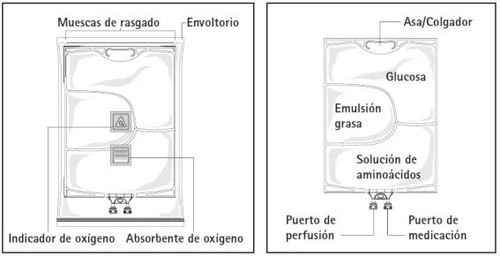
Figure A Figure B
Figure A: The multi-chamber bag is enclosed in a protective overwrap. An oxygen absorber and an oxygen indicator are located between the bag and the overwrap; the oxygen absorber sachet is made of an inert material and contains iron hydroxide.
Figure B: The upper chamber contains a glucose solution, the middle chamber contains a fat emulsion and the lower chamber contains an amino acid solution.
The glucose and amino acid solutions are clear and colourless to pale yellow in appearance. The fat emulsion is milky white in colour.
The upper and middle chambers can be connected to the lower chamber by opening the intermediate seals (peelable seals).
The bag design allows mixing of amino acids, glucose and lipids into a single chamber. Opening the peelable seals creates a sterile mixture forming an emulsion.
Different pack sizes are presented in cartons containing five bags.
Pack sizes: 5 x 625 ml, 5 x 1.250 ml and 5 x 1.875 ml.
Only certain pack sizes may be marketed.
Marketing Authorisation Holder:
- Braun Melsungen AG
Carl-Braun-Str. 1 Postal address:
34212 Melsungen, Germany 34209 Melsungen, Germany
Tel.: +49-(0)-5661-71-0
Fax: +49-(0)-5661-71-4567
Manufacturer:
- BRAUN MELSUNGEN AG
Am Schwerzelshof 1
34212 Melsungen, Germany
Further information on this medicine can be requested from the local representative of the Marketing Authorisation Holder
- Braun Medical, S.A.
Ctra. de Terrassa, 121
08191 Rubí, Spain
This medicine is authorised in the Member States of the European Economic Area and in the United Kingdom (Northern Ireland) under the following names:
Austria Nutriflex Lipid special ohne Elektrolyte B.Braun
Belgium Nutriflex Lipid special EF, 56 g/l AA + 144 g/l G, emulsie voor infusie
France LIPOFLEX LIPIDE G144/N8, émulsion pour perfusion
Germany Nutriflex Lipid 56/144 special ohne Elektrolyte
Italy Lipoflex, AA56/G144 senza elettroliti
Luxembourg Nutriflex Lipid 56/144 special without electrolytes
Netherlands Nutriflex Lipid special zonder elektrolyten, 56 g/l + 144 g/l, emulsie voor infusie
Spain Lipoflex special sin electrolitos emulsión para perfusión
United Kingdom
(Northern Ireland) Lipoflex special without electrolytes emulsion for infusion
Date of the most recent revision of this leaflet:
09/2023
Detailed information on this medicine is available on the website of the Spanish Agency of Medicines and Health Products (AEMPS) (http://www.aemps.gob.es/)
______________________________________________________________________________
This information is intended for healthcare professionals only:
No special requirements for disposal.
Parenteral nutrition products must be visually inspected before use for signs of damage, colour changes and emulsion instability.
Do not use bags showing damage. The overwrap, main bag and peelable seals between chambers must be intact. Use only if the amino acid and glucose solutions are clear and colourless to pale yellow and if the lipid emulsion is homogeneous and milky white in colour. Do not use if the solutions contain particles.
After mixing the three chambers, do not use if the emulsion shows a colour change or signs of phase separation (oil droplets, oil layer). Immediately stop the infusion in case of colour change of the emulsion or signs of phase separation.
Before opening the overwrap, check the colour of the oxygen indicator (see Figure A). Do not use if the oxygen indicator has turned pink. Use only if the oxygen indicator is yellow.
Preparation of the mixed emulsion
Strict adherence to aseptic handling principles must be observed.
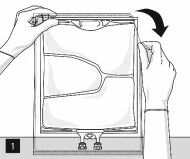
For opening: open the overwrap starting at the tear notches (Fig. 1). Remove the bag from its protective overwrap. Discard the overwrap, oxygen indicator and oxygen absorber.
Visually inspect the main bag for leaks. Bags with leaks must be discarded, as sterility cannot be guaranteed.
Mixing the bag and addition of additives
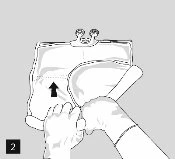
To open and mix the chambers sequentially, roll the bag with both hands, first opening the peelable seal separating the upper chamber (glucose) from the lower chamber (amino acids) (Fig. 2).
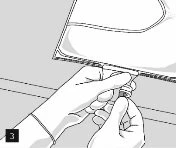
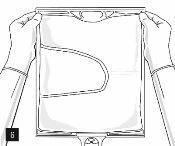
After removal of the aluminium seal (Fig. 3), compatible water-soluble additives may be added via the medication port (Fig. 4) to the clear aqueous solutions. Mix the contents of the bag thoroughly (Fig. 5) and visually inspect the mixture for precipitates (Fig. 6). The solution should only be used if it is transparent.
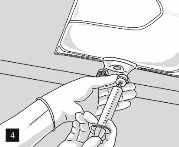
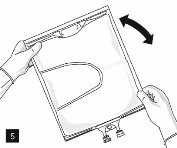
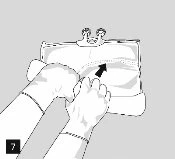
Next, continue applying pressure so that the peelable seal separating the middle chamber (lipids) from the lower chamber opens (Fig. 7). The mixture is a homogeneous oil-in-water emulsion with a milky white appearance. Once all chambers have been mixed, compatible additives may be added via the medication port (Fig. 4). Mix the contents of the bag thoroughly (Fig. 8) and visually inspect the mixture (Fig. 9).
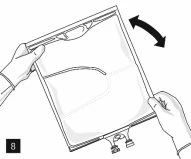
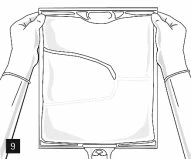
The manufacturer can provide, upon request, compatibility data for various additives (e.g., electrolytes, trace elements, vitamins) and the corresponding shelf lives of such mixtures.
Preparation for infusion
The emulsion must always be brought to room temperature before infusion.
Remove the aluminium film (Fig. 10) from the infusion port and connect the infusion set (Fig. 11). Use an infusion set without an air vent or close the air vent if using a vented set. Hang the bag on an infusion hook (Fig. 12) and perform the infusion according to standard technique.
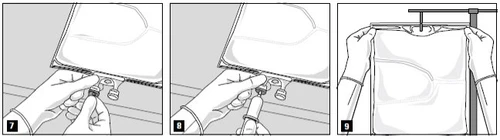
For single use only. The container and unused waste must be disposed of after use.
Do not reconnect partially used containers.
If filters are used, they must be lipid-permeable (pore size ≥ 1.2 µm).
Shelf life after removal of the protective overwrap and after mixing the bag contents
Chemical and physicochemical stability of the mixture of amino acids, glucose and lipids has been demonstrated for 7 days at 2–8 °C and for an additional 2 days at 25 °C.
Shelf life after additional mixing of compatible additives
From a microbiological standpoint, the product should be used immediately after additional mixing of additives. Otherwise, the in-use storage times and conditions prior to use are the responsibility of the user.
The emulsion must be used immediately after opening the container.
The recommended duration for infusion of one bag of parenteral nutrition is a maximum of 24 hours.
This medicine must not be mixed with other medicinal products whose compatibility has not been documented.
This medicine must not be administered simultaneously with blood through the same infusion set due to the risk of pseudoagglutination.