Lioresal 0.05 mg/ml solution for injection
Spain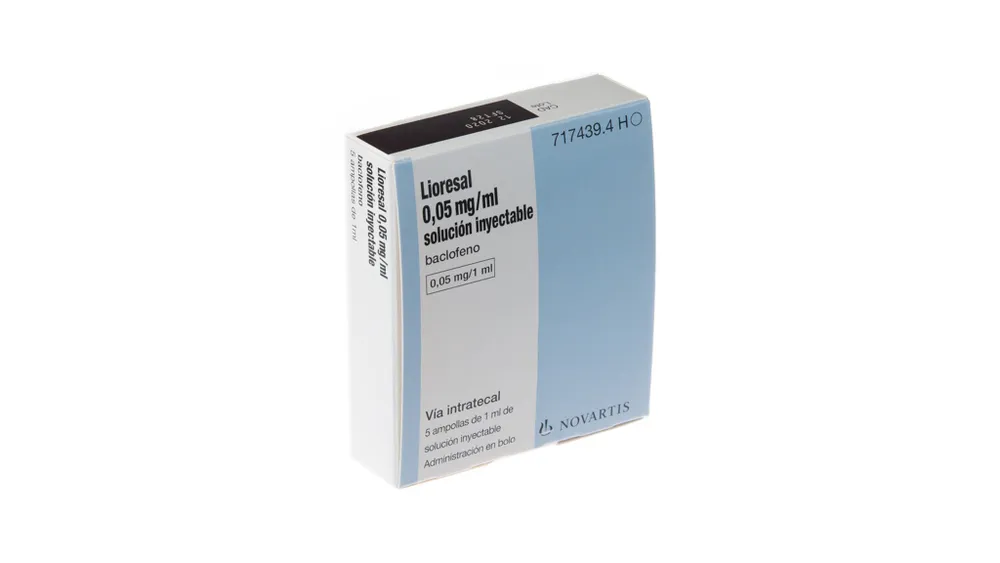
Table of Contents
- Package leaflet: Information for the user
- Introduction
- 1. What Lioresal 0.05 mg/ml injectable solution is and what it is used for
- 2. What you need to know before Lioresal 0.05 mg/ml injectable solution is administered to you
- 3. How to use Lioresal 0.05 mg/ml injectable solution
- 4. Possible adverse effects
- 5. Storage of Lioresal 0.05 mg/ml injection solution
- 6. Contents of the pack and other information
- **Marketing Authorization Holder**
- **Manufacturer**
Package leaflet: Information for the user
Introduction
Package leaflet: information for the user
Lioresal 0.05 mg/ml injection solution
baclofen
Read the entire leaflet carefully before you are given this medicine, because it contains important information for you.
- Keep this leaflet, as you may need to read it again.
- If you have any questions, ask your doctor or pharmacist.
- If you experience any side effects, talk to your doctor or pharmacist, even if they are not listed in this leaflet. See section 4.
Leaflet contents
- What Lioresal 0.05 mg/ml injection solution is and what it is used for
- What you need to know before you are given Lioresal 0.05 mg/ml injection solution
- How to use Lioresal 0.05 mg/ml injection solution
- Possible side effects
- How to store Lioresal 0.05 mg/ml injection solution
- Contents of the pack and other information
1. What Lioresal 0.05 mg/ml injectable solution is and what it is used for
The active substance in Lioresal is baclofen.
Lioresal for intrathecal administration is used in adults and children from the age of 4 years to reduce and relieve excessive muscle stiffness (spasms) caused by certain conditions such as cerebral palsy, multiple sclerosis, stroke, spinal cord diseases, and certain disorders of the nervous system.
Due to its muscle-relaxing effect and consequent pain relief, Lioresal improves mobility, helps patients become more independent in daily activities, and facilitates physiotherapy.
It is used in individuals who have not responded to oral medications, including baclofen, or who have developed unacceptable side effects when taking baclofen orally.
The ampoules contain a solution that is injected or infused into the back (around the spinal cord) via a special pump implanted under the skin of the abdomen. The medication is continuously delivered to the spinal cord through a thin tube.
2. What you need to know before Lioresal 0.05 mg/ml injectable solution is administered to you
Do not be given Lioresal by intrathecal route:
- if you are allergic to baclofen or to any of the other ingredients of this medicine (listed in section 6).
Warnings and precautions
Seek urgent medical help if you notice that the implanted device is not working and you experience any symptoms of withdrawal (see “If you stop Lioresal intrathecal treatment”).
Talk to your doctor or pharmacist before Lioresal is administered to you by intrathecal route if you have:
-
- any infection,
- reduced circulation of the fluid surrounding the brain and spinal cord due to an obstruction in its flow caused, for example, by inflammation or injury,
- inadequate blood flow to the brain (cerebrovascular insufficiency),
- acute or chronic confusional states,
- a psychotic disorder or schizophrenia (mental illness),
- Parkinson’s disease,
- epilepsy (seizures),
- any history of heart problems,
- if you have acute stomach (ulcer) or intestinal pain, breathing difficulties, liver disease, or disorders of cerebral circulation,
- if you have kidney disease. Your doctor will decide whether Lioresal is the appropriate treatment for you,
- before taking Lioresal, inform your doctor if you are taking medications for arthritis or pain (see section: Use of Lioresal with other medicines),
- if you have difficulty urinating,
- if you are diabetic,
- if you have experienced sudden increase in blood pressure, anxiety, excessive sweating, chills, severe headaches, and abnormally slow heart rate due to overstimulation of your nervous system caused by a full bladder or bowel, skin irritation, or pain,
- if you have suffered a head injury: in patients with spasticity due to head injury, it is recommended not to initiate long-term intrathecal Lioresal therapy until spasticity symptoms are stable (i.e., at least one year after the injury),
- it is essential to closely monitor cardiorespiratory function during the initial test phase, especially if you have respiratory or cardiac problems,
- before undergoing any surgical procedure (including dental procedures) or emergency treatment, inform the doctor that you are receiving Lioresal by intrathecal route.
If you are in any of these situations, inform your doctor before Lioresal is administered by intrathecal route.
After the pump has been implanted, you will be closely monitored in a properly equipped setting with trained personnel during the test phase and dose selection. You will undergo regular assessments for adverse effects or suspected infections as needed. The system’s function will be evaluated periodically. It is important to ensure that there are no problems with the pump.
Contact your doctor immediately if you experience any of the following symptoms during treatment with intrathecal Lioresal:
- if you develop back, shoulder, neck, or buttock pain during treatment (a type of spinal deformity called scoliosis).
- if at any time you think about harming yourself or suicide, speak to your doctor or go to a hospital immediately. Also, ask a close family member or friend to inform you if they notice any worrying changes in your behaviour, and ask them to read this leaflet.
Children and adolescents
The intrathecal formulation of baclofen is indicated in children aged 4 years or older.
The use of Lioresal by intrathecal route is not recommended in children under 4 years of age.
Children must have sufficient body mass to allow implantation of the chronic infusion pump.
Intrathecal administration of Lioresal in the paediatric population should only be performed by specialist physicians.
Elderly patients
During clinical trials, some patients over 65 years of age were treated with intrathecal baclofen without specific problems being observed. However, experience with baclofen tablets indicates that this patient group may be more prone to adverse effects. Therefore, elderly patients should be carefully monitored for the emergence of adverse effects.
Use of Lioresal with other medicines
Inform your doctor or pharmacist if you are taking, have recently taken, or might need to take any other medicines.
Concomitant treatment with intrathecal Lioresal requires special attention in the following cases:
- other medications for treating muscle spasms – if possible, your doctor will gradually discontinue other medications used to treat muscle spasms
- medications for treating depression,
- medications that lower blood pressure, including those used to treat high blood pressure (hypertension),
- levodopa, carbidopa: medications for treating Parkinson’s disease,
- strong analgesics, such as morphine,
- medications that depress central nervous system function, such as those used to induce sleep,
- other medications administered into the spinal column,
- administration of other medications into the spinal column is not recommended during treatment with Lioresal infusion solution.
Concomitant use of general anaesthetics may increase the risk of cardiac disturbances and seizures.
Your doctor may decide to adjust the dose, or sometimes discontinue one of the medicines, or take other precautions if deemed necessary.
Use of Lioresal with food, drinks and alcohol
Avoid drinking alcohol during treatment with Lioresal, as this may lead to an undesirable intensification or unpredictable change in the medicine’s effects.
Pregnancy, breastfeeding and fertility
If you are pregnant or breastfeeding, think you may be pregnant, or are planning to become pregnant, consult your doctor before using this medicine.
Pregnancy
There are no data or data are limited regarding the use of baclofen in pregnant women.
Your doctor will assess the potential risk of using intrathecal Lioresal during pregnancy.
As a precautionary measure, it is preferable to avoid the use of intrathecal Lioresal during pregnancy.
Breastfeeding
Intrathecal Lioresal passes into breast milk in very small amounts.
Effects in breastfed infants/children are not expected, as systemic exposure to baclofen in breastfeeding mothers is negligible. You may breastfeed your baby if your doctor permits, while closely monitoring the infant for possible adverse effects.
Baclofen may reduce breast milk production if used long-term.
Fertility
Animal studies have shown that intrathecal baclofen is unlikely to produce adverse effects on fertility.
Driving and using machines
Intrathecal Lioresal may cause drowsiness, dizziness, vision problems, clumsiness, or instability in some people. If this happens to you, do not drive or operate tools or dangerous machinery.
Lioresal contains sodium
This medicine contains less than 1 mmol of sodium (23 mg) per ampoule (1 ml), i.e., essentially “sodium-free”.
If your doctor needs to dilute Lioresal with a saline solution, the amount of sodium received would be higher.
3. How to use Lioresal 0.05 mg/ml injectable solution
Only a specially qualified physician may administer Lioresal intrathecally.
Intrathecal Lioresal is administered only in a hospital setting via a pump implanted under the skin of the abdomen. It must be administered solely into the spinal canal (intrathecal route). It must not be administered intravenously, intramuscularly, epidurally, or subcutaneously.
Lioresal is intended for chronic administration by continuous intrathecal infusion via an implanted pump located in the abdomen. Prior to chronic administration, a test phase will determine the appropriate Lioresal dose for this chronic phase. During this test phase, the Lioresal 0.05 mg/ml formulation is administered as a single bolus dose via intrathecal spinal catheter or lumbar puncture. Determination of an appropriate dose for you may take several days and must be performed under medical supervision.
If your muscle spasms improve with the test dose, a pump will be implanted under the skin of your abdomen to allow continuous release of small amounts of the medication to control your symptoms.
After the pump has been implanted, the reservoir must be monitored regularly to prevent it from becoming empty. Refilling must always be performed under sterile conditions to avoid possible microbial contamination.
It is very important that your physician regularly monitors the proper functioning of the pump.
It is essential that you keep your scheduled appointments for pump refills, as failure to do so may result in the return of muscle spasms due to insufficient Lioresal dosing.
As a result, muscle spasticity may fail to improve or may even worsen.
The duration of treatment will be determined by your physician. During long-term treatment, some patients may experience a gradual decrease in baclofen efficacy. Your physician may recommend occasional treatment breaks to counteract this phenomenon.
If muscle spasticity does not improve or if you begin experiencing spasms again—either gradually or suddenly—contact your physician immediately.
If you receive more intrathecal Lioresal than prescribed
You may experience an overdose. It is very important that you and your caregivers are able to recognize the symptoms of overdose. These may appear suddenly or gradually, for example, due to a malfunctioning pump.
Main symptoms of overdose include:
- excessive muscle weakness (muscle tone too low),
- drowsiness,
- dizziness or vertigo,
- excessive salivation,
- nausea or vomiting,
- difficulty breathing,
- seizures,
- loss of consciousness,
- abnormally low body temperature,
- rapid heart rate (tachycardia),
- ringing in the ears (tinnitus).
If you experience any of these symptoms, notify your physician immediately.
If you discontinue treatment with intrathecal Lioresal
If you need to discontinue treatment with this medication for any reason, your physician will gradually reduce your dose to avoid the occurrence of adverse effects.
Sudden interruption or abrupt reduction of intrathecal Lioresal may cause withdrawal symptoms, which in some cases have been fatal. It is very important that you and your caregivers are able to recognize the symptoms of intrathecal Lioresal withdrawal. These may appear suddenly or gradually, for example, due to pump malfunction caused by battery issues, catheter problems, alarm failure, or device malfunction.
For this reason:
- Attend your scheduled appointments with your physician for pump refills.
- Do not stop taking Lioresal suddenly.
Withdrawal symptoms include:
- severe, uncontrolled muscle spasms (muscle tone too high),
- difficulty performing muscular movements,
- rapid heart rate (tachycardia),
- low blood pressure,
- numbness or tingling in hands or feet,
- anxiety,
- high fever,
- altered mental status such as agitation, confusion, hallucinations, abnormal thoughts or seizures,
- persistent and painful penile erection (priapism),
- infection (sepsis).
If you experience any of the above symptoms, seek medical attention immediately. These symptoms may progress to more serious adverse effects (including death) if not treated promptly.
If you have any further questions about the use of this medication, ask your physician or nurse.
4. Possible adverse effects
Like all medicines, this medicine can cause adverse effects, although not everyone experiences them.
Adverse effects occur more frequently at the beginning of treatment during your hospital stay, but they could also occur later. Many of these adverse effects are associated with the medical condition for which you are being treated.
If you experience any of the following adverse effects, you should consult your doctor:
Some adverse effects may be serious
If you experience any of the adverse effects listed below, inform your doctor immediately:
- malfunction of the implanted device or infusion system, which may cause withdrawal symptoms including death (see “If you stop intrathecal Lioresal treatment”)
- suicidal thoughts or suicide attempts,
- confusion, disorientation,
- feeling of extreme happiness (euphoria),
- mood disturbances or mental disturbances (paranoia),
- feeling of sadness,
- impaired muscle coordination (ataxia),
- hallucinations (seeing or hearing things that are not real),
- blurred vision, visual disturbances,
- shortness of breath, abnormally slow breathing, or breathing difficulties,
- pneumonia,
- fever,
- sedation and lethargy (excessive drowsiness),
- low blood pressure (hypotension),
- high blood pressure (hypertension),
- seizures,
- muscle tone too low or too high.
If you experience any of these adverse effects, tell your doctor immediately.
Some adverse effects are very common (may affect more than 1 in 10 patients):
- drowsiness,
- muscle tone too low.
If you experience any of the above effects severely, inform your doctor.
Some adverse effects are common (may affect up to 1 in 10 patients):
- feeling of sadness,
- anxiety,
- sedation or exhaustion (tiredness),
- dizziness or vertigo,
- headache,
- tingling in hands and feet,
- insomnia,
- blurred vision, visual disturbances, double vision,
- low blood pressure,
- pneumonia,
- rapid or very slow breathing, or breathing difficulties,
- weakness, sedation, fatigue,
- pain,
- excessive muscle tone,
- dry mouth,
- skin rash or itching,
- swelling of ankles, feet, lower legs, or face,
- unusual nervousness or restlessness,
- speech disorders,
- confusion, disorientation,
- nausea and/or vomiting,
- constipation,
- diarrhea,
- decreased appetite,
- excessive salivation,
- fever/chills,
- urinary problems,
- sexual disorders.
If you experience any of the above effects severely, inform your doctor.
Some adverse effects are uncommon (may affect up to 1 in 100 patients):
- suicidal ideation, suicide attempts,
- hallucinations (seeing or hearing things that are not real),
- mood or mental changes (paranoia),
- feeling of extreme happiness (euphoria),
- impaired muscle coordination (ataxia),
- abnormally low body temperature,
- memory disorders,
- continuous, uncontrolled eye movements,
- unusually slow heart rate,
- reduced sense of taste,
- difficulty swallowing,
- abdominal pain,
- hair loss,
- increased sweating.
Some adverse effects have unknown frequency:
- agitation (restlessness),
- abnormally slow breathing rate (bradypnea),
- increased curvature of the spine (scoliosis),
- inability to achieve or maintain an erection (erectile dysfunction),
- allergic reaction (hypersensitivity).
Some of these adverse effects may be related to the pump delivery system.
For a description of withdrawal symptoms, see “If you stop intrathecal Lioresal treatment”.
For a description of overdose symptoms, see “If you are given more intrathecal Lioresal than you should”.
Reporting of adverse effects:
If you experience any type of adverse effect, consult your doctor or nurse, even if they are possible adverse effects not listed in this leaflet. You may also report them directly via the Spanish Pharmacovigilance System for Human Medicinal Products: https://www.notificaRAM.es. By reporting adverse effects, you can help provide more information on the safety of this medicine.
5. Storage of Lioresal 0.05 mg/ml injection solution
Keep this medicine out of the sight and reach of children.
Do not use this medicine after the expiry date stated on the packaging after EXP. The expiry date refers to the last day of the month indicated.
Store below 30°C. Do not freeze.
Medicines should not be disposed of via wastewater or household waste. Ask your pharmacist how to dispose of any unused medicine and its packaging. This will help protect the environment.
6. Contents of the pack and other information
Composition of Lioresal 0.05 mg/ml injectable solution
- The active substance is baclofen. Each 1 ml ampoule contains 0.05 mg of baclofen. Each ml contains 0.05 mg (50 micrograms) of baclofen.
- The other components (excipients) are: sodium chloride and water for injections.
Appearance of the medicinal product and contents of the pack
Lioresal 0.05 mg/ml is presented as a clear, colourless solution for bolus administration.
Each pack contains 5 ampoules.
Other pack sizes available
Lioresal 0.5 mg/ml solution for infusion. Pack containing 1 ampoule.
Lioresal 2 mg/ml solution for infusion. Pack containing 1 ampoule.
Marketing Authorization Holder
Novartis Farmacéutica, S.A.
Gran Vía de les Corts Catalanes 764
08013 Barcelona
Spain
Manufacturer
Novartis Farmacéutica, S.A.
Gran Vía de les Corts Catalanes, 764
08013 Barcelona
Spain
Date of the most recent review of this leaflet: August 2024
Detailed and up-to-date information on this medicine is available on the website of the Spanish Agency of Medicines and Medical Devices (AEMPS): http://www.aemps.gob.es
<------------------------------------------------------------------------------------------------------------------------>
This information is intended for healthcare professionals only: Refer to the Summary of Product Characteristics for further details on the medicine, dosage, and administration.
Dosage
Recommended dose:
Test phase:
Adults
In adults, the initial test dose is 25 or 50 micrograms, which may be increased by 25 micrograms every 24 hours until a response lasting approximately 4–8 hours is observed. The dose will be delivered via pump over at least 1 minute. Ampoules containing 0.05 mg/mL are available for this test dose.
Pediatric population
The initial lumbar puncture test dose in patients aged 4 years and older up to less than 18 years should be 25 to 50 micrograms per day, depending on the child's age and size. Patients who do not respond to this dose may receive dose increments of 25 micrograms every 24 hours. The maximum test phase dose should not exceed 100 micrograms/day in pediatric patients.
Dose determination phase:
The initial daily dose of Lioresal Intrathecal to be administered via pump is determined by doubling the effective test dose and administering it over a 24-hour period. If the effect of the test dose lasted longer than 12 hours, the initial dose should equal the test dose but administered over 24 hours. Dose increases should not be made during the first 24 hours of treatment. After the initial 24 hours, the dose should be adjusted gradually on a daily basis until the desired clinical effect is achieved. Experience with doses exceeding 1,000 micrograms/day is limited.
Maintenance phase:
The lowest effective dose achieving an adequate response should be used. Many patients require gradual dose increases to maintain an optimal response during chronic therapy, due to diminished response to treatment or disease progression.
Preparation and handling of the product
Lioresal Intrathecal is intended for intrathecal injection and continuous infusion, as specified by the infusion system manufacturer's administration guidelines.
The specific concentration to be used depends on the total daily dose required and the pump's delivery rate. Refer to the manufacturer's manual for specific recommendations.
For patients requiring concentrations other than 50 micrograms/mL, 500 micrograms/mL, or 2,000 micrograms/mL, Lioresal Intrathecal must be diluted under aseptic conditions with sterile preservative-free sodium chloride for injection.
As a general rule, ampoules of Lioresal 0.05 mg/mL for intrathecal administration should not be mixed with other infusion or injectable solutions.
Glucose (dextrose) has been shown to be incompatible due to a chemical reaction occurring with baclofen.
Administration devices
Various delivery systems have been used for prolonged intrathecal administration of Lioresal. These include the Medtronic SynchroMed® Programmable Infusion System, an implantable drug delivery system with refillable reservoirs, implanted under general or local anesthesia into a subcutaneous cavity, usually in the abdominal wall.
This device is connected to an intrathecal catheter that runs subcutaneously into the subarachnoid space. Further details are available from the manufacturer.
Before using other systems, it must be confirmed that technical specifications—including the chemical stability of baclofen in the reservoir—meet the requirements for intrathecal use of Lioresal.
Each ampoule is for single use only. Discard any unused portion. Do not freeze. Do not sterilize by heat.
Stability
Lioresal Intrathecal has been shown to be stable in the SynchroMed® Programmable Infusion System for 11 weeks. Stability data for Lioresal Intrathecal with other infusion systems are not available.