Linezolid Sandoz 600 mg film-coated tablets EFG
Spain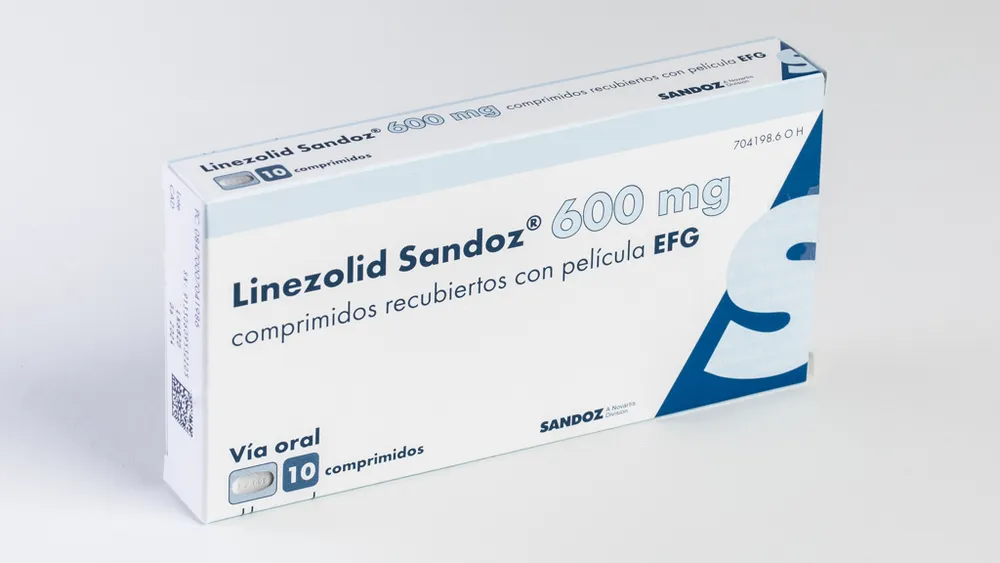
Table of Contents
Package leaflet: Information for the user
Introduction
Package leaflet: Information for the patient
Linezolid Sandoz 600 mg film-coated tablets EFG
Read all of this leaflet carefully before you start taking this medicine because it contains important information for you.
- Keep this leaflet. You may need to read it again.
- If you have any further questions, ask your doctor, pharmacist or nurse.
- This medicine has been prescribed for you only. Do not pass it on to other people, even if they have the same symptoms as you, because it may harm them.
- If you get any side effects, talk to your doctor, pharmacist or nurse. This includes any side effects not listed in this leaflet. See section 4.
Contents of the leaflet
-
What Linezolid Sandoz is and what it is used for.
-
What you need to know before taking Linezolid Sandoz.
-
How to take Linezolid Sandoz.
-
Possible side effects.
-
How to store Linezolid Sandoz.
-
Contents of the pack and other information.
1. What Linezolid Sandoz is and what it is used for
Linezolid Sandoz is an antibiotic belonging to the oxazolidinone group, which works by preventing the growth of certain bacteria (germs) that cause infections.
Antibiotics are used to treat bacterial infections and are not effective against viral infections such as flu or the common cold.
It is important that you follow your doctor's instructions regarding dosage, administration, and duration of treatment.
Do not store or reuse this medicine. If you have any antibiotic left after completing your treatment, return it to the pharmacy for proper disposal. Medicines must not be disposed of via wastewater or household waste.
It is used to treat pneumonia and certain skin or soft tissue infections. Your doctor will have decided whether Linezolid Sandoz is appropriate for treating your infection.
2. What you need to know before taking Linezolid Sandoz
Do not take Linezolid Sandoz if:
- you are allergic to linezolid or any of the other ingredients of this medicine (listed in section 6),
- you are taking or have taken within the last 2 weeks any medicines known as monoamine oxidase inhibitors (MAOIs such as phenelzine, isocarboxazid, selegiline, moclobemide). These medicines are usually used to treat depression or Parkinson's disease,
- you are breastfeeding. This medicine passes into breast milk and could affect the baby.
Warnings and precautions
Talk to your doctor, pharmacist or nurse before starting to take linezolid.
Linezolid may not be suitable for you if you answer yes to any of the following questions. In such cases, inform your doctor, as they may need to monitor your general health and blood pressure before and during treatment, or may decide that another treatment is more appropriate for you.
Ask your doctor if you are unsure whether any of these categories apply to you.
- Do you have high blood pressure, whether or not you are taking medication for it?
- Have you been diagnosed with hyperactive thyroid?
- Do you have a tumour of the adrenal glands (pheochromocytoma) or carcinoid syndrome (caused by tumours in the hormonal system, associated with symptoms such as diarrhoea, skin flushing, and wheezing)?
- Do you suffer from manic depression, schizophrenia, confusion, or other mental disorders?
- Do you have a history of hyponatraemia (low sodium levels in the blood) or are you taking medicines that reduce sodium levels in the blood, such as certain diuretics like hydrochlorothiazide?
- Are you taking opioids?
- Are you taking any of the following medicines?
- decongestants for colds containing pseudoephedrine or phenylpropanolamine,
- medicines to treat asthma such as salbutamol, terbutaline, fenoterol,
- antidepressants known as tricyclics or SSRIs (selective serotonin reuptake inhibitors) such as: amitriptyline, cipramil, clomipramine, dosulepin, doxepin, fluoxetine, fluvoxamine, imipramine, lofepramine, paroxetine, sertraline,
- medicines used to treat migraines such as sumatriptan or zolmitriptan,
- medicines used to treat sudden severe allergic reactions such as adrenaline (epinephrine),
- medicines that increase blood pressure such as noradrenaline (norepinephrine), dopamine and dobutamine,
- medicines used to treat moderate to severe pain such as meperidine, buprenorphine,
- medicines used to treat anxiety disorders such as buspirone,
- an antibiotic called rifampicin.
Take special care with Linezolid Sandoz
Talk to your doctor, pharmacist or nurse before starting to take this medicine if:
- you are elderly,
- you bruise easily or bleed easily,
- you have anaemia (low red blood cell count),
- you are prone to infections,
- you have a history of seizures,
- you have liver or kidney problems, especially if you are undergoing dialysis,
- you have diarrhoea.
Inform your doctor immediately if, during treatment, you experience:
- vision problems such as blurred vision, changes in colour vision, difficulty seeing clearly, or if you notice a reduction in your field of vision,
- loss of sensation in arms or legs, or a tingling or burning sensation in your arms or legs,
- diarrhoea may occur while taking or after taking antibiotics, including linezolid. If diarrhoea becomes severe, persists for a long time, or if you notice blood or mucus in your stools, stop taking linezolid immediately and consult your doctor. In this situation, do not take medicines that stop or reduce intestinal movements,
- repeated nausea or vomiting, abdominal pain or hyperventilation,
- muscle pain, tenderness or weakness and/or dark urine. These may be signs of a serious condition called rhabdomyolysis (muscle breakdown), which can lead to kidney damage,
- malaise and dizziness with muscle weakness, headache, confusion and memory impairment, which may indicate hyponatraemia (low sodium levels in the blood).
Children and adolescents
Linezolid is not normally used to treat children and adolescents (under 18 years of age).
Other medicines and Linezolid Sandoz
There is a risk that linezolid may interact with certain medicines and cause adverse effects such as changes in blood pressure, body temperature or heart rate.
Tell your doctor or pharmacist if you are taking or have recently taken any other medicine.
Inform your doctor if you are taking or have taken any of the following medicines within the last 2 weeks, as you must not take linezolid if you are still taking them or have recently taken them (see also section 2 above “Do not take Linezolid Sandoz”):
- monoamine oxidase inhibitors (MAOIs, such as phenelzine, isocarboxazid, selegiline, moclobemide).
These medicines are usually used to treat depression or Parkinson's disease.
Also inform your doctor if you are taking the following medicines. Your doctor may decide to treat you with linezolid, but will need to assess your general condition and blood pressure before and during treatment. In other cases, your doctor may decide that another treatment is more suitable for you.
- Decongestants for colds containing pseudoephedrine or phenylpropanolamine,
- certain medicines to treat asthma such as salbutamol, terbutaline, fenoterol,
- certain antidepressants known as tricyclics or SSRIs (selective serotonin reuptake inhibitors). There are many medicines in this group, including amitriptyline, citalopram, clomipramine, dosulepin, doxepin, fluoxetine, fluvoxamine, imipramine, lofepramine, paroxetine or sertraline,
- medicines used to treat migraines such as sumatriptan or zolmitriptan,
- medicines used to treat sudden severe allergic reactions such as adrenaline (epinephrine),
- medicines that increase blood pressure such as noradrenaline (norepinephrine), dopamine and dobutamine,
- medicines used to treat moderate or severe pain,
- opioids such as meperidine, buprenorphine,
- medicines used to treat anxiety disorders such as buspirone,
- medicines that prevent blood clotting such as warfarin,
- an antibiotic called rifampicin.
Taking Linezolid Sandoz with food, drinks and alcohol
- You may take linezolid before, during or after meals.
- Avoid eating large amounts of mature cheese, yeast extracts or soya extracts, for example soya sauce, and alcoholic drinks, especially draught beer and wine. The reason is that this medicine can react with a substance called tyramine, which occurs naturally in some foods. This interaction can cause a rise in your blood pressure.
- If you develop a headache after eating or drinking, inform your doctor, pharmacist or nurse immediately.
See also section 3 “How to take Linezolid Sandoz” for further information.
Pregnancy, breastfeeding and fertility
The effect of linezolid in pregnant women is unknown. Therefore, pregnant women should not take linezolid unless advised by their doctor.
If you are pregnant or breastfeeding, think you may be pregnant or are planning to become pregnant, consult your doctor or pharmacist before using this medicine.
You should not breastfeed while taking linezolid because this medicine passes into breast milk and could affect your baby.
Driving and using machines
Linezolid may cause dizziness or vision problems. If this happens, do not drive or operate machinery. Remember that if you do not feel well, your ability to drive or use machines may be impaired.
Linezolid Sandoz contains sodium
This medicine contains less than 1 mmol of sodium (23 mg) per film-coated tablet; this is essentially “sodium-free”.
3. How to take Linezolid Sandoz
Adults
Follow exactly the instructions for using this medicine as described in this leaflet or as directed by your doctor, pharmacist, or nurse. If in doubt, consult your doctor, pharmacist, or nurse again.
The recommended dose for adults is one tablet (600 mg of linezolid) twice daily (every twelve hours).
The usual duration of treatment is 10 to 14 days, but may be extended up to 28 days.
The safety and efficacy of this medicine have not been established for treatment periods longer than 28 days. Your doctor will decide the duration of your treatment.
While you are taking linezolid, your doctor will perform periodic blood tests to monitor your blood count.
If you take linezolid for more than 28 days, your doctor should monitor your vision.
Use in children and adolescents
Linezolid is not normally used in children or adolescents (under 18 years of age).
Method of administration
Swallow the tablet whole with a glass of water.
You may take this medicine before, during, or after meals.
If you are on a dialysis regimen, you should take linezolid after each dialysis session.
If you take more Linezolid Sandoz than you should
Inform your doctor or pharmacist immediately.
In case of overdose or accidental ingestion, contact your doctor or pharmacist immediately or call the Toxicology Information Service at telephone number: 91 562 04 20, stating the medicine and the amount ingested.
If you forget to take Linezolid Sandoz
Take the missed tablet as soon as you remember.
Then take the next tablet 12 hours after the missed dose, and continue taking the tablets every 12 hours.
Do not take a double dose to make up for a forgotten dose.
If you stop taking Linezolid Sandoz
It is important to continue taking linezolid unless your doctor tells you to stop.
If your initial symptoms return after stopping treatment, inform your doctor or pharmacist immediately.
If you have any further questions about the use of this medicine, ask your doctor, pharmacist, or nurse.
4. Possible adverse effects
Like all medicines, this medicine can cause adverse effects, although not everyone will experience them.
Immediately inform your doctor, pharmacist or nurse if you notice any of the following adverse effects while being treated with linezolid:
The most serious adverse effects of linezolid (frequency in parentheses) are:
- severe skin reactions (uncommon), swelling particularly around the face and neck (uncommon), wheezing and/or difficulty breathing (rare). These may be signs of an allergic reaction and treatment with linezolid may need to be stopped. Skin reactions such as raised purple rash due to inflammation of blood vessels (rare), red, sore and scaly skin (dermatitis) (uncommon), skin rash (common), itching (common),
- vision problems (uncommon), such as blurred vision (uncommon), changes in color perception (not known), difficulty seeing clearly (not known), or if you notice a reduction in your field of vision (rare),
- severe diarrhoea containing blood and/or mucus (antibiotic-associated colitis including pseudomembranous colitis), which in rare circumstances could lead to complications that may become life-threatening (uncommon),
- repeated nausea or vomiting, abdominal pain or rapid breathing (rare),
- epileptic seizures or convulsions have been reported (uncommon),
- serotonin syndrome (frequency not known): inform your doctor if you experience agitation, confusion, delirium, stiffness, tremor, incoordination, convulsions, rapid heartbeat, severe breathing problems and diarrhoea (suggestive of serotonin syndrome), especially if you are also being treated with antidepressants called SSRIs and opioids (e.g., buprenorphine) (see section 2),
- unexplained bleeding or bruising, which may be due to a disturbance in the number of certain blood cells that can affect blood clotting or cause anaemia (common),
- reduction in the number of blood cells that can affect the ability to fight infections (uncommon). Some signs of infection include: fever (common), sore throat (uncommon), mouth ulcers (uncommon), and tiredness (uncommon),
- rhabdomyolysis (uncommon): signs and symptoms include unexplained muscle pain, tenderness or weakness and/or dark urine. These may be signs of a serious condition called rhabdomyolysis (muscle breakdown), which can lead to kidney damage,
- inflammation of the pancreas (uncommon),
- seizures (uncommon),
- transient ischaemic attacks (temporary disruption of blood flow causing short-term symptoms such as loss of vision, weakness in arms and legs, difficulty speaking and loss of consciousness),
- “ringing” in the ears (tinnitus) (uncommon).
Cases of numbness, tingling or blurred vision have been reported in patients who have taken linezolid for more than 28 days. If you experience vision problems, consult your doctor as soon as possible.
Other adverse effects include:
Common (may affect up to 1 in 10 people):
- fungal infections, especially in the vagina or mouth,
- headache,
- metallic taste,
- diarrhoea, nausea or vomiting,
- changes in certain blood test results, including tests for proteins, salts or enzymes measuring liver or kidney function or blood sugar levels,
- difficulty sleeping,
- increased blood pressure,
- anaemia (reduction in the number of red blood cells),
- dizziness,
- localized or generalized abdominal pain,
- constipation,
- indigestion,
- localized pain,
- reduction in the number of platelets,
Uncommon (may affect up to 1 in 100 people):
- inflammation of the vagina or female genital area,
- tingling or numbness sensation,
- swelling, discomfort, changes in tongue color,
- dry mouth,
- need to urinate more frequently,
- chills,
- feeling thirsty,
- increased sweating,
- hyponatremia (low sodium levels in blood),
- kidney failure,
- abdominal swelling,
- increased creatinine,
- stomach pain,
- changes in heart rate (e.g., increased heart rate),
- decrease in blood cell count,
- weakness and/or sensory changes.
Rare (may affect up to 1 in 1,000 people):
- change in the color of the tooth surface, which disappears with professional dental cleaning procedures.
The following adverse effects have also been reported (frequency not known, frequency cannot be estimated from available data):
- alopecia (hair loss).
Reporting of adverse effects
If you experience any type of adverse effect, talk to your doctor or pharmacist, even if it is a possible adverse effect not listed in this leaflet. You may also report them directly via the Spanish Pharmacovigilance System for Human Medicines: www.notificaram.es. By reporting adverse effects, you can help provide more information on the safety of this medicine.
5. Storage of Linezolid Sandoz
Keep this medicine out of the sight and reach of children.
Do not use this medicine after the expiry date stated on the packaging and blister after EXP/CAD. The expiry date refers to the last day of the month indicated.
This medicine does not require any special storage conditions.
Medicines should not be disposed of via wastewater or household waste. Ask your pharmacist how to dispose of medicines and packaging that you no longer need. This will help protect the environment.
6. Contents of the pack and other information
Composition of Linezolid Sandoz
- The active substance is linezolid. Each film-coated tablet contains 600 mg of linezolid.
- The other components are microcrystalline cellulose, colloidal anhydrous silica, sodium carboxymethyl starch type A, hydroxypropylcellulose, and magnesium stearate in the core; hypromellose (E464), titanium dioxide (E171), and macrogol (E1521) in the film coating.
Appearance of the product and contents of the pack
Linezolid Sandoz 600 mg film-coated tablets are white to off-white, biconvex, oval-shaped film-coated tablets, 18.8 mm in length, 9.9 mm in width and 6.4 mm thick, with the imprint “LZ600” on one side and smooth on the other.
Linezolid Sandoz 600 mg film-coated tablets are available in blisters in packs containing:
10, 10 (10 x 1), 20, 28, 30, 50, 60 or 100 film-coated tablets.
Only certain pack sizes may be marketed.
Marketing Authorization Holder and Manufacturer
Marketing Authorization Holder
Sandoz Farmacéutica, S.A.
Centro Empresarial Parque Norte
Edificio Roble
C/ Serrano Galvache, 56
28033 Madrid
Spain
Manufacturer
Novartis Pharmaceuticals S.R.L
Str. Livezeni nr. 7ª,
RO-540472 Târgu-Mureș
Romania
or
Salutas Pharma GmbH
Otto-von-Guericke-Allee, 1,
39179 Barleben
Germany
or
Lek Pharmaceuticals d.d.
Verovškova 57,
1526 Ljubljana
Slovenia
Date of the most recent revision of this leaflet: January 2025
Detailed information on this medicine is available on the website of the Spanish Agency of Medicines and Medical Devices (AEMPS) http://www.aemps.gob.es/