Linelle 0.1 mg/0.02 mg film-coated tablets EFG
Spain
Table of Contents
- Patient Information Leaflet
- Introduction
- 1. What Linelle 0.1 mg/0.02 mg film-coated tablets EFG is and what it is used for
- 2. What you need to know before you start taking Linelle 0.1 mg/0.02 mg film-coated tablets EFG
- Bleeding between periods
- **What to do if there is no bleeding during the treatment-free week**
- If you have taken all the tablets correctly, have not vomited or had severe diarrhea, and have not taken other medications, it is very unlikely that you are pregnant.
- Some medicines can affect the blood levels of Linelle and may make it less effective in preventing pregnancy, or may cause unexpected bleeding. These include:
- ? Medications for the treatment of:
- **Analytical tests**
- 3. How to take Linelle 0.1 mg/0.02 mg film-coated tablets EFG
- 4. Possible adverse effects
- 5. Storage of Linelle 0.1 mg/0.02 mg Film-coated Tablets EFG
- 6. Contents of the pack and other information
Patient Information Leaflet
Introduction
Patient Information Leaflet
Linelle 0.1 mg/0.02 mg film-coated tablets EFG
Levonorgestrel / Ethinylestradiol
Read the entire patient information leaflet carefully before you start taking this medicine, as it contains important information for you.
Important things you should know about combined hormonal contraceptives (CHCs):
Leaflet contents: |
-
What Linelle 0.1 mg/0.02 mg film-coated tablets EFG is and what it is used for
-
What you need to know before starting to take Linelle 0.1 mg/0.02 mg film-coated tablets EFG
-
How to take Linelle 0.1 mg/0.02 mg film-coated tablets EFG
-
Possible side effects
-
Storage of Linelle 0.1 mg/0.02 mg film-coated tablets EFG
-
Contents of the pack and other information
1. What Linelle 0.1 mg/0.02 mg film-coated tablets EFG is and what it is used for
- Linelle 0.1 mg/0.02 mg is a contraceptive pill used to prevent pregnancy.
- Each pink tablet contains a small amount of two different female hormones, called levonorgestrel and ethinylestradiol.
- Contraceptive pills that contain two hormones are known as "combined pills".
Linelle 0.1 mg/0.02 mg contains only a small amount of hormones and is therefore referred to as a "low-dose" contraceptive pill.
2. What you need to know before you start taking Linelle 0.1 mg/0.02 mg film-coated tablets EFG
General considerations
Before starting Linelle 0.1 mg/0.02 mg, you should read the information about blood clots in section 2. It is particularly important that you read about the symptoms of a blood clot (see section 2 “Blood clots”).
Before you can start taking Linelle 0.1 mg/0.02 mg, your doctor will ask you some questions about your medical history and that of your close relatives. Your doctor will also measure your blood pressure and, depending on your personal situation, may carry out other tests.
Several situations are described in this leaflet in which you should stop using Linelle 0.1 mg/0.02 mg or in which the reliability of Linelle 0.1 mg/0.02 mg may be reduced. In these situations, you should not have sexual intercourse or, otherwise, should use additional non-hormonal contraceptive precautions, e.g., use a condom or another barrier method. Do not use rhythm or temperature methods. These methods are unreliable because Linelle 0.1 mg/0.02 mg alters the monthly changes in body temperature and cervical mucus.
Like other hormonal contraceptives, Linelle 0.1 mg/0.02 mg does not protect against HIV (AIDS) infection or any other sexually transmitted disease.
When not to use Linelle 0.1 mg/0.02 mg film-coated tablets EFG:
Do not use Linelle 0.1 mg/0.02 mg if you have any of the conditions listed below. Inform your doctor if you have any of the conditions listed below. Your doctor will discuss with you which other form of contraception would be more suitable.
Do not use Linelle 0.1 mg/0.02 mg film-coated tablets EFG:
-
If you have (or have had in the past) a blood clot (deep vein thrombosis, DVT) in a blood vessel of the leg, lungs (pulmonary embolism, PE), or other organs
-
If you have (or have had in the past) a heart attack or stroke
-
If you have (or have ever had) angina pectoris (a condition causing severe chest pain and may be the first sign of a heart attack) or transient ischaemic attack (TIA – temporary stroke-like symptoms)
-
If you have (or have had) a certain type of migraine called “migraine with aura”
-
If you have a disease that could increase the risk of arterial thrombosis:
- severe diabetes with blood vessel damage
- very high blood pressure
- very high levels of fat in the blood (cholesterol or triglycerides)
- a condition known as hyperhomocysteinemia
- If you have or have had liver disease and your liver function is still not normal
- If you have or have had a liver tumour
- If you have (or have had) or if there is suspicion of breast cancer or cancer of the genital organs
- If you have vaginal bleeding of unknown cause
- If you have not had a period for several months without a known cause
- If you are allergic to levonorgestrel or ethinylestradiol, or to any of the other ingredients of this medicine (listed in section 6). This may cause itching, rash, or swelling.
- If you have hepatitis C and are taking medicines containing ombitasvir/paritaprevir/ritonavir, dasabuvir, glecaprevir/pibrentasvir, or sofosbuvir/velpatasvir/voxilaprevir (see also section “Taking Linelle 0.1 mg/0.02 mg with other medicines”)
Additional information on special populations
Use in children
Linelle 0.1 mg/0.02 mg is not indicated for use in women who have not yet started menstruating.
Use in elderly women
Linelle 0.1 mg/0.02 mg is not intended for use after menopause.
Women with hepatic impairment
Do not take Linelle 0.1 mg/0.02 mg if you have liver disease. See also sections “Do not use Linelle 0.1 mg/0.02 mg” and “Warnings and precautions”.
Women with renal impairment
Consult your doctor. Available data do not suggest a need to change the use of Linelle 0.1 mg/0.02 mg.
When should you consult your doctor? Seek urgent medical attention
For a description of the symptoms of these serious side effects, see “How to recognize a blood clot”. |
Tell your doctor if you have any of the following conditions
In certain situations, you must take special precautions when using Linelle 0.1 mg/0.02 mg or any other combined hormonal contraceptive, and your doctor may need to monitor you regularly. If any of these conditions develop or worsen while you are using Linelle 0.1 mg/0.02 mg, you must also inform your doctor.
- If a close relative has or has had breast cancer.
- If you have a liver or gallbladder disease.
- If you have diabetes.
- If you have depression. Some women using hormonal contraceptives such as Linelle have reported depression or depressed mood. Depression can be severe and may sometimes lead to suicidal thoughts. If you experience mood changes or depressive symptoms, contact your doctor for additional medical advice as soon as possible.
- If you have Crohn's disease or ulcerative colitis (inflammatory bowel disease).
- If you have SLE (systemic lupus erythematosus, an immune system disorder).
- If you have HUS (hemolytic uremic syndrome), a blood disorder causing kidney damage.
- If you have sickle cell anemia (an inherited red blood cell disorder).
- If you have high levels of fat in the blood (hypertriglyceridemia) or a family history of this condition. Hypertriglyceridemia has been associated with an increased risk of developing pancreatitis (inflammation of the pancreas).
- If you require surgery or will be unable to stand/walk for long periods (see section 2 "Blood clots").
- If you have recently given birth, you are at increased risk of developing blood clots. You should ask your doctor when you may start taking Linelle 0.1 mg/0.02 mg after childbirth.
- If you have inflammation in the veins beneath the skin (superficial thrombophlebitis).
- If you have varicose veins.
- If you have epilepsy (see "Taking Linelle 0.1 mg/0.02 mg with other medicines").
- If you have or have ever had a condition that first occurred during pregnancy or previous use of sex hormones (e.g., hearing loss, porphyria [a blood disorder], herpes gestationis [a blistering skin rash occurring during pregnancy], Sydenham's chorea [a nerve disorder causing sudden, jerky movements of the body]).
- If you have or have ever had chloasma (golden-brown pigmented patches known as “pregnancy mask,” especially on the face). If so, avoid direct exposure to sunlight or ultraviolet light.
- If you experience symptoms of angioedema such as swelling of the face, tongue, and/or throat, and/or difficulty swallowing, or hives with possible breathing difficulties, contact a doctor immediately. Products containing estrogens may cause or worsen symptoms of hereditary or acquired angioedema.
BLOOD CLOTS
Using a combined hormonal contraceptive such as Linelle 0.1 mg/0.02 mg increases your risk of developing a blood clot compared to not using one. Rarely, a blood clot may block blood vessels and cause serious complications.
Blood clots may form:
- In the veins (known as “venous thrombosis,” “venous thromboembolism,” or VTE).
- In the arteries (known as “arterial thrombosis,” “arterial thromboembolism,” or ATE).
Recovery from blood clots is not always complete. Rarely, there may be long-lasting serious effects, and very rarely, they may be fatal.
It is important to remember that the overall risk of a harmful blood clot due to Linelle 0.1 mg/0.02 mg is small.
HOW TO RECOGNIZE A BLOOD CLOT
Seek urgent medical attention if you notice any of the following signs or symptoms.
Are you experiencing any of these signs? | What might you be suffering from? |
Swelling in one leg or foot, or along a vein in the leg or foot, especially when accompanied by:
| Deep vein thrombosis |
If you are unsure, consult a doctor, as some of these symptoms such as cough or shortness of breath may be mistaken for a milder condition like a respiratory infection (e.g., a "common cold"). | Pulmonary embolism |
Symptoms occurring more frequently in one eye:
| Retinal vein thrombosis (blood clot in the eye). |
• a feeling of tightness or fullness in the chest, arm, or under the breastbone.
| Heart attack |
Sometimes stroke symptoms may be brief, with almost immediate and complete recovery, but you must still seek urgent medical attention as you may be at risk of another stroke. | Stroke |
| Blood clots blocking other blood vessels. |
BLOOD CLOTS IN A VEIN
What can happen if a blood clot forms in a vein?
- The use of combined hormonal contraceptives has been associated with an increased risk of blood clots in veins (venous thrombosis). However, these adverse effects are rare. They occur more frequently during the first year of using a combined hormonal contraceptive.
- If a blood clot forms in a vein in the leg or foot, it may cause deep vein thrombosis (DVT).
- If a blood clot travels from the leg and lodges in the lung, it may cause a pulmonary embolism.
- Very rarely, a clot may form in a vein of another organ, such as the eye (retinal vein thrombosis).
When is the risk of developing a blood clot in a vein higher?
The risk of developing a blood clot in a vein is highest during the first year of taking a combined hormonal contraceptive for the first time. The risk may also be increased if you restart taking a combined hormonal contraceptive (the same medication or a different one) after a break of 4 weeks or more.
After the first year, the risk decreases, but it remains somewhat higher than if you were not taking a combined hormonal contraceptive.
When you stop taking Linelle 0.1 mg/0.02 mg, your risk of developing a blood clot returns to normal within a few weeks.
What is the risk of developing a blood clot?
The risk depends on your natural risk of venous thromboembolism (VTE) and the type of combined hormonal contraceptive you are taking.
The overall risk of developing a blood clot in the leg or lung (DVT or PE) with Linelle 0.1 mg/0.02 mg is small.
- Among 10,000 women who do not use a combined hormonal contraceptive and who are not pregnant, about 2 will develop a blood clot in one year.
- Among 10,000 women who use a combined hormonal contraceptive containing levonorgestrel, norethisterone, or norgestimate, about 5–7 will develop a blood clot in one year.
- Your risk of developing a blood clot will depend on your personal medical history (see “Factors that increase your risk of a blood clot” below).
Risk of developing a blood clot in one year | |
Women who do not use a combined hormonal pill and who are not pregnant | About 2 out of 10,000 women |
Women who use a combined oral contraceptive pill containing levonorgestrel, norethisterone, or norgestimate | About 5 to 7 out of 10,000 women |
Women who use Linelle 0.1 mg/0.02 mg | About 5 to 7 out of 10,000 women |
Factors that increase your risk of a blood clot in a vein
The risk of having a blood clot with Linelle 0.1 mg/0.02 mg is small, but certain conditions increase the risk. Your risk is higher:
- If you are overweight (body mass index or BMI above 30 kg/m²).
- If any of your close relatives have had a blood clot in the leg, lung, or another organ at an early age (i.e., before approximately 50 years). In this case, you may have an inherited blood clotting disorder.
- If you need surgery or if you are immobile for a long time due to injury or illness, or if your leg is in a cast. You may need to stop taking Linelle 0.1 mg/0.02 mg several weeks before surgery or while you are less mobile. If you need to stop taking Linelle 0.1 mg/0.02 mg, ask your doctor when you can start taking it again.
- With increasing age (especially over about 35 years).
- If you have given birth less than a few weeks ago.
The risk of developing a blood clot increases the more of these conditions you have.
Air travel (more than 4 hours) may temporarily increase the risk of a blood clot, especially if you have any of the other listed risk factors.
It is important to inform your doctor if you have any of the above conditions, even if you are unsure. Your doctor may decide that you need to stop taking Linelle 0.1 mg/0.02 mg.
If any of the above conditions change while you are using Linelle 0.1 mg/0.02 mg, for example, a close relative experiences thrombosis without a known cause or you gain a significant amount of weight, inform your doctor.
BLOOD CLOTS IN AN ARTERY
What can happen if a blood clot forms in an artery?
Like a blood clot in a vein, a clot in an artery can cause serious problems. For example, it can cause a heart attack or stroke.
Factors that increase your risk of a blood clot in an artery
It is important to note that the risk of heart attack or stroke while using Linelle 0.1 mg/0.02 mg is very small, but it may increase:
- With age (over about 35 years);
- If you smoke. When using a combined hormonal contraceptive such as Linelle 0.1 mg/0.02 mg, you are advised to stop smoking. If you are unable to stop smoking and are over 35 years old, your doctor may advise you to use a different type of contraceptive:
- if you are overweight;
- if you have high blood pressure;
- if a close relative has had a heart attack or stroke at an early age (under about 50 years). In this case, you may also have an increased risk of heart attack or stroke;
- if you or any of your close relatives have high levels of fat in the blood (cholesterol or triglycerides);
- if you suffer from migraines, especially migraines with aura;
- if you have a heart condition (valve disorder, cardiac rhythm disorder called atrial fibrillation);
- if you have diabetes;
If you have one or more of these conditions, or if any of them are particularly severe, the risk of developing a blood clot may be further increased.
If any of the above conditions change while you are using Linelle 0.1 mg/0.02 mg, for example, you start smoking, a close relative experiences thrombosis without a known cause, or you gain a significant amount of weight, inform your doctor.
Linelle 0.1 mg/0.02 mg coated tablets and cancer
Cervical cancer has been reported in long-term users, but the effect of sexual behavior or other factors such as human papillomavirus (HPV) is not clear.
Breast cancer has been observed slightly more frequently in women taking combined oral contraceptives, but it is unknown whether this is due to the treatment. For example, it may be that more tumors are detected in women taking combined pills because they are examined by their doctor more frequently. The occurrence of breast tumors has gradually decreased after stopping combined hormonal contraceptives. It is important to periodically examine your breasts, and you should contact your doctor if you notice any lump.
In rare cases, benign liver tumors and even rarer cases of malignant liver tumors have been reported in users of oral contraceptives. Contact your doctor if you experience unusual severe abdominal pain.
Bleeding between periods
During the first months of treatment with Linelle 0.1 mg/0.02 mg, you may experience unexpected bleeding (bleeding occurring outside the week without treatment). If this bleeding lasts for more than three months, or if it starts after several months, your doctor should investigate the cause.
What to do if there is no bleeding during the treatment-free week
If you have taken all the tablets correctly, have not vomited or had severe diarrhea, and have not taken other medications, it is very unlikely that you are pregnant.
If the expected bleeding does not occur in two consecutive cycles, you might be pregnant. Contact your doctor immediately. Do not start taking tablets from the next blister pack until you are certain that you are not pregnant.
Use of Linelle 0.1 mg/0.02 mg with other medicines
Consult your doctor or pharmacist if you are taking, have recently taken, or might need to take any other medicine, including herbal remedies. Also, inform any other doctor or dentist who prescribes medicines for you (or your pharmacist) that you are taking Linelle 0.1 mg/0.02 mg. They can advise you whether you need to use additional contraceptive precautions (for example, condoms), and if so, for how long. |
The input is empty. Please provide the text you would like me to translate.
Do not use Linelle if you have Hepatitis C and are taking medications containing ombitasvir/paritaprevir/ritonavir, dasabuvir, glecaprevir/pibrentasvir, or sofosbuvir/velpatasvir/voxilaprevir, as these medications may cause increases in liver function tests (elevated liver enzyme ALT).
Your doctor will prescribe another type of contraceptive before starting treatment with these medications.
You can restart treatment with Linelle approximately 2 weeks after finishing this treatment. See section "Do not use Linelle"
Some medicines can affect the blood levels of Linelle and may make it less effective in preventing pregnancy, or may cause unexpected bleeding. These include:
? Medications for the treatment of:
-
gastrointestinal motility (e.g., metoclopramide);
-
epilepsy (e.g., primidone, phenytoin, barbiturates, carbamazepine, oxcarbazepine, topiramate, or felbamate);
- tuberculosis (e.g., rifampicin);
- HIV and hepatitis C infection (called protease inhibitors and non-nucleoside reverse transcriptase inhibitors, such as ritonavir, nevirapine, efavirenz);
- fungal infections (griseofulvin);
- arthritis, osteoarthritis (etoricoxib);
- high blood pressure in the pulmonary blood vessels (bosentan);
-
the herbal remedy known as St. John's wort.
Linelle may affect the action of other medicines, for example:
- medicines containing cyclosporine.
- the antiepileptic lamotrigine (this could lead to an increased frequency of seizures).
- theophylline (used to treat breathing problems).
- tizanidine (used to treat muscle pain and/or muscle spasms).
Taking Linelle 0.1 mg/0.02 mg with food and drink
Linelle 0.1 mg/0.02 mg can be taken with or without food, if necessary with a small amount of water.
Analytical tests
If you require a blood test, inform your doctor or laboratory staff that you are taking the pill, as hormonal contraceptives may affect the results of certain tests.
Pregnancy and breastfeeding
Pregnancy
If you are pregnant, you must not take Linelle 0.1 mg/0.02 mg. If you become pregnant while taking Linelle 0.1 mg/0.02 mg, you should stop taking it immediately and contact your doctor. If you wish to become pregnant, you may discontinue Linelle 0.1 mg/0.02 mg at any time (see also “If you stop taking Linelle 0.1 mg/0.02 mg”).
Consult your doctor or pharmacist before taking any medicine.
Breastfeeding
Linelle 0.1 mg/0.02 mg is generally not recommended while breastfeeding. You should consult your doctor if you wish to take the pill while breastfeeding.
Driving and use of machines
There is no information indicating that the use of Linelle 0.1 mg/0.02 mg affects the ability to drive or operate machinery.
Linelle 0.1 mg/0.02 mg contains lactose
This medicine contains lactose. If your doctor has informed you that you have an intolerance to certain sugars, consult him before taking this medicine.
3. How to take Linelle 0.1 mg/0.02 mg film-coated tablets EFG
Follow exactly the instructions for use provided in this leaflet or as directed by your doctor or pharmacist. If in doubt, consult your doctor or pharmacist.
Each blister contains 21 tablets. Each tablet is marked with the day of the week on which it should be taken. For example, if you start taking the tablets on a Tuesday, press the tablet through the aluminum foil in a blister marked "TUE". Take the tablets every day in the order indicated by the arrows.
Take one Linelle 0.1 mg/0.02 mg tablet daily for 21 days, with a small amount of water if necessary. The tablets may be taken with or without food, but should be taken at approximately the same time each day.
After completing the 21 tablets, you will not take any tablets for the following 7 days. Your period (withdrawal bleeding) will usually begin during these 7 days, typically 2 to 3 days after taking the last Linelle 0.1 mg/0.02 mg tablet.
Start the next blister on the 8th day, even if your period continues. In this way, you will always start a new pack on the same day of the week, and withdrawal bleeding will occur on approximately the same days each month.
When to start the first blister
- If you have not used a hormonal contraceptive in the previous month
Start Linelle 0.1 mg/0.02 mg on the first day of your cycle (i.e., the first day of your menstruation). If you start taking Linelle 0.1 mg/0.02 mg on the first day of your period, you are immediately protected against pregnancy. You may also start between days 2–5 of the cycle; however, in this case, you must use additional contraceptive protection (e.g., a condom) for the first 7 days.
- Switching from another combined hormonal contraceptive, vaginal ring, or combined contraceptive patch
Start taking Linelle 0.1 mg/0.02 mg the day after the last active tablet of your previous pill, or at the latest, the day after the usual tablet-free interval or the last placebo tablet of your previous hormonal contraceptive. If switching from a vaginal ring or patch, start Linelle 0.1 mg/0.02 mg on the day the last ring or patch of the cycle pack is removed, or at the latest, when the next application would normally occur.
- Switching from a progestogen-only method (progestogen-only pill, progestogen injection, implant, or progestogen-releasing IUD)
You may switch on any day from the progestogen-only pill (if using an implant or IUD, on the day of removal; if receiving progestogen injections, on the date the next injection would be due). However, in all cases, you must use additional contraceptive protection (e.g., a condom) for the first 7 days of taking the new pills.
- After a spontaneous abortion or first-trimester termination of pregnancy
Follow your doctor's advice.
- After childbirth or after a second-trimester spontaneous abortion or termination of pregnancy
Start Linelle 0.1 mg/0.02 mg between 21 and 28 days after childbirth, spontaneous abortion, or second-trimester termination of pregnancy. If you start after day 28, you must use an additional barrier method (e.g., a condom) for the first 7 days of using Linelle 0.1 mg/0.02 mg.
If you have had sexual intercourse after childbirth before starting Linelle 0.1 mg/0.02 mg (again), you must first confirm that you are not pregnant or wait until your next menstrual bleeding.
Consult your doctor if you are unsure when to start.
- If you are breastfeeding and wish to start taking Linelle 0.1 mg/0.02 mg (again) after childbirth
Please read the section on “Breast-feeding”.
If you take more Linelle 0.1 mg/0.02 mg film-coated tablets than you should
There are no reports of harmful effects from taking too many Linelle 0.1 mg/0.02 mg tablets. If you take several tablets at once, you may experience symptoms such as nausea and vomiting. Young girls may experience vaginal bleeding.
If you have taken too many Linelle 0.1 mg/0.02 mg tablets, or if you discover that your child has taken some, consult your doctor or pharmacist.
In case of overdose or accidental ingestion, contact your doctor or pharmacist immediately or call the Toxicology Information Service at: 91 562 04 20, indicating the medication and the amount ingested.
If you forget to take Linelle 0.1 mg/0.02 mg film-coated tablets
-
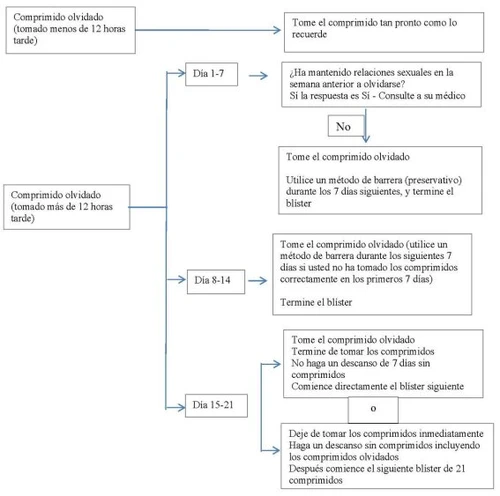
If less than 12 hours have passed since you missed the tablet, protection against pregnancy is not reduced. Take the missed tablet as soon as you remember, and then continue taking the following tablets at your usual time.
-
If more than 12 hours have passed since you missed the tablet, protection against pregnancy may be reduced. The more tablets you miss, the higher the risk of pregnancy.
-
Therefore, observe the following rules:
-
Tablet intake must never be interrupted for more than 7 days.
-
The effectiveness of Linelle 0.1 mg/0.02 mg depends on taking tablets continuously for 7 days.
-
If more than 12 hours have passed since you missed a tablet during days 1–7 (see also the diagram)
Take the last missed tablet as soon as you remember, even if this means taking two tablets at the same time. Then continue taking the following tablets at your usual time. In addition, you must use a barrier method, such as a condom, for the next 7 days. If you had sexual intercourse in the 7 days before missing the tablet, consider the possibility of pregnancy. The more tablets you have missed and the closer they are to the usual tablet-free interval, the higher the risk of pregnancy. Consult your doctor if this has happened to you.
- If more than 12 hours have passed since you missed a tablet during days 8–14 (see also the diagram)
Take the last missed tablet as soon as you remember, even if this means taking two tablets at the same time. Then continue taking the following tablets at your usual time. If you have taken all tablets correctly in the 7 days before the first missed tablet, no additional contraceptive precautions are necessary. If you have not taken the tablets correctly or have missed more than one tablet, you must use additional contraceptive precautions for the next 7 days.
- If more than 12 hours have passed since you missed a tablet during days 15–21 (see also the diagram)
The risk of pregnancy increases the closer you are to the 7-day tablet-free break. However, pregnancy can still be prevented by adjusting the dosing.
If you follow the advice below, additional contraceptive precautions are not necessary, provided all tablets were taken correctly in the 7 days before the first missed tablet. If this is not the case, follow the first of the two options below and use additional contraceptive precautions for the next 7 days.
-
Take the missed tablet as soon as you remember, even if this means taking two tablets at the same time. Then continue taking the remaining tablets at your usual time. Instead of taking a 7-day tablet-free break, immediately start the next 21-tablet pack. You will likely not have withdrawal bleeding until the end of the second pack, but you may experience spotting or intermenstrual bleeding during tablet intake.
-
Alternatively, you may stop taking tablets from the current pack and take a 7-day tablet-free break (including the days when you missed tablets), then continue with the next pack.
-
If you missed any tablets in a blister and do not have bleeding during the first tablet-free interval, this may indicate that you are pregnant.
What to do in case of vomiting or severe diarrhea
If you vomit within 3–4 hours after taking a tablet or have severe diarrhea, there is a risk that the active ingredients are not fully absorbed into your body. This situation is similar to missing a tablet. After vomiting or diarrhea, take another tablet from a spare blister as soon as possible. If possible, take it within 12 hours of when you would normally take your tablet. If this is not possible, or if more than 12 hours have passed, follow the advice under “If you forget to take Linelle 0.1 mg/0.02 mg”.
If you wish to maintain your normal tablet-taking routine, you may take the extra tablet from another pack.
If vomiting or diarrhea persists, contact your doctor. You should use additional contraceptive methods.
Delayed menstrual period: what you should know
Although not recommended, it is possible to delay your menstrual period (withdrawal bleeding) by starting a new blister of Linelle 0.1 mg/0.02 mg immediately, without taking the tablet-free break, continuing until the end of the second blister. You may experience spotting (drops or streaks of blood) or intermenstrual bleeding during use of the second blister. After the usual 7-day tablet-free break, continue with the next blister.
You may need to consult your doctor before deciding to delay your menstrual cycle.
Changing the first day of your menstrual period: what you should know
If you wish to change the starting day or have your period on a different day of the week, you may shorten your next tablet-free break by as many days as desired. The shorter the break, the higher the risk of no withdrawal bleeding and of experiencing intercurrent bleeding or spotting during the second pack. Never extend your tablet-free break.
If you are unsure what to do, consult your doctor.
If you stop taking Linelle 0.1 mg/0.02 mg
You may stop taking Linelle 0.1 mg/0.02 mg at any time. If you do not wish to become pregnant, consult your doctor about other reliable methods of contraception. If you wish to become pregnant, stop taking Linelle 0.1 mg/0.02 mg and wait for your menstrual period before trying to conceive. This will make it easier to calculate the expected date of delivery.
If you have any further questions about the use of this medicine, ask your doctor or pharmacist.
4. Possible adverse effects
Like all medicines, this medicine may cause adverse effects, although not everyone experiences them. If you experience any adverse effect, especially if it is severe and persistent, or if you have any change in your health that you think may be due to Linelle 0.1 mg/0.02 mg, consult your doctor.
Serious adverse effects
Contact a doctor immediately if you experience any of the following symptoms of angioedema: swelling of the face, tongue and/or throat, and/or difficulty swallowing, or hives with possible difficulty breathing (see also section “Warnings and precautions”).
All women who take combined hormonal contraceptives have an increased risk of developing blood clots in veins (venous thromboembolism (VTE)) or blood clots in arteries (arterial thromboembolism (ATE)). For more detailed information on the different risks associated with taking combined hormonal contraceptives, see section 2 “What you need to know before starting Linelle 0.1 mg/0.02 mg”.
Below is a list of adverse effects that have been associated with the use of Linelle 0.1 mg/0.02 mg.
Common: may affect up to 1 in 10 people
- headache
- mood changes (including depression)
- nausea, abdominal pain
- painful or tender breasts
- weight gain
Uncommon: may affect up to 1 in 100 people
- loss of sexual desire
- skin rash
- migraine
- vomiting, diarrhoea
- itching or skin lumps
- increase in breast size
- fluid retention
Rare: may affect up to 1 in 1,000 people
-
intolerance to contact lenses
-
allergic reactions
-
increased libido
-
breast or vaginal discharge
-
red lesions on the skin or nodules
-
redness or skin spots
-
weight loss
-
Harmful blood clots in a vein or artery, for example:
-
In a leg or foot (i.e., DVT).
-
In a lung (i.e., PE).
-
Heart attack
-
Stroke
-
Mini-stroke or temporary stroke-like symptoms, known as transient ischaemic attack (TIA).
-
Blood clots in the liver, stomach/intestines, kidneys or eye.
The likelihood of developing a blood clot may be higher if you have any other condition that increases this risk (see section 2 for more information about conditions that increase the risk of blood clots and symptoms of a blood clot).
The following serious adverse effects have been reported slightly more frequently in women using contraceptive pills, but it is not known whether this is due to the treatment (see section 2 “Warnings and precautions”):
- increase in blood pressure
- liver tumours or breast cancer
The following conditions have also been associated with combined hormonal contraceptives:
Crohn’s disease, ulcerative colitis, epilepsy, migraine, cervical cancer, porphyria (a metabolic disorder causing abdominal pain and mental disturbances), systemic lupus erythematosus (a condition in which the body attacks and damages its own organs and tissues), herpes at the end of pregnancy, Sydenham's chorea (rapid, involuntary jerky movements or spasmodic movements), haemolytic uraemic syndrome (a condition occurring after diarrhoea caused by E. coli), liver problems presenting with jaundice, gallbladder disorders or kidney stone formation.
In women with hereditary angioedema, estrogens in contraceptive pills may trigger or worsen angioedema symptoms (see section 2 “Warnings and precautions”).
Reporting of adverse effects
If you experience any type of adverse effect, talk to your doctor, pharmacist or nurse, even if they are possible adverse effects not listed in this leaflet. You can also report them directly via the Spanish Pharmacovigilance System for Human Medicines: https://www.notificaram.es. By reporting adverse effects, you can help provide more information on the safety of this medicine.
5. Storage of Linelle 0.1 mg/0.02 mg Film-coated Tablets EFG
Keep this medicine out of the sight and reach of children.
Do not store above 30°C.
Expiry date
Do not use this medicine after the expiry date stated on the outer packaging of Linelle 0.1 mg/0.02 mg and on the blister after EXP. The expiry date refers to the last day of the month indicated.
Medicines must not be disposed of via wastewater or household waste. Return empty containers and any unused medicines to the SIGRE point at your usual pharmacy. Ask your pharmacist how to dispose of containers and medicines you no longer need. This will help protect the environment.
6. Contents of the pack and other information
Composition of Linelle 0.1 mg/0.02 mg coated tablets
The active substances are levonorgestrel and ethinylestradiol.
Each tablet contains 0.1 mg of levonorgestrel and 0.02 mg of ethinylestradiol. The other components (excipients) are lactose, povidone K-30 (E1201), magnesium stearate (E572) and Opadry II pink [polyvinyl alcohol, talc (E553b), titanium dioxide (E171), polyethylene glycol 3350, red aluminium lake (E129), soy lecithin (E322), red iron oxide (E172) and blue aluminium lake (E132)].
Appearance of Linelle 0.1 mg/0.02 mg coated tablets and contents of the pack
-
Each film-coated tablet is round and pink in colour.
-
Linelle 0.1 mg/0.02 mg is available in blisters of 21 tablets.
-
Packs of 1, 3, 6 or 13 blisters, each blister containing 21 tablets.
Only certain pack sizes may be marketed.
Marketing Authorization Holder
Theramex Ireland Limited
3rd Floor, Kilmore House,
Park Lane, Spencer Dock,
Dublin 1
D01 YE64
Ireland
Manufacturer
Laboratorios León Farma, S.A.
Calle La Vallina s/n, Polígono Industrial Navatejera;
Villaquilambre – 24193 – Spain
Local Representative
Theramex Healthcare Spain, S.L.
Calle Martínez Villergas 52, Edificio C, planta 2ª izquierda.
28027 Madrid
Spain
This medicinal product is authorized in the Member States of the European Economic Area under the following names:
Belgium: Lavinia
Germany: Asumate 20 0.10 mg/0.02 mg Filmtabletten
Ireland: Vonodiol 100 mcg/20 mcg Film-coated tablets
Netherlands: Ethinylestradiol/Levonorgestrel 0.02 mg/0.10 mg Focus, filmomhulde tabletten
Spain: Linelle 0.1 mg/0.02 mg film-coated tablets EFG
Date of the most recent revision of this leaflet: November 2022
“Detailed information on this medicinal product is available on the website of the Spanish Agency of Medicines and Health Products (AEMPS) http://www.aemps.gob.es/”