Limovan 7.5 mg film-coated tablets
Spain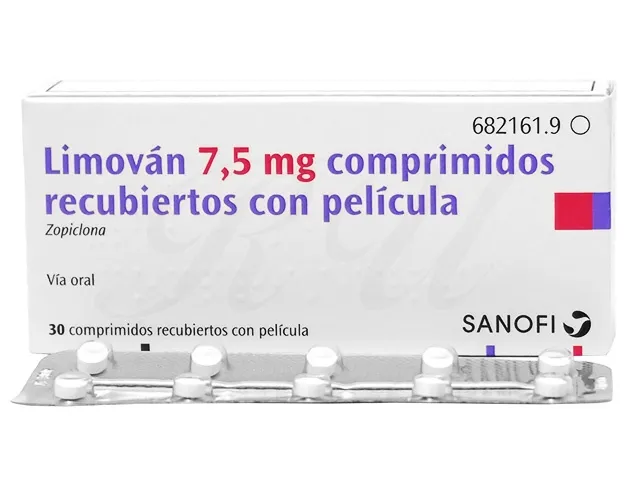
Table of Contents
Package leaflet: Information for the user
Introduction
Package leaflet: information for the user
Limován 7.5 mg film-coated tablets
zopiclone
Read the entire leaflet carefully before you start taking this medicine, because it contains important information for you.
- Keep this leaflet, as you may need to read it again.
- If you have any questions, ask your doctor or pharmacist.
- This medicine has been prescribed for you only, and you should not give it to others, even if they have the same symptoms as you, because it could harm them.
- If you experience any adverse effects, consult your doctor or pharmacist, even if they are adverse effects not listed in this leaflet. See section 4.
Leaflet contents:
- What Limován is and what it is used for
- What you need to know before taking Limován
- How to take Limován
- Possible adverse effects
- How to store Limován
- Contents of the pack and other information
1. What Limován is and what it is used for
Zopiclone is a sleep-inducing agent. It has been shown to shorten sleep onset time and reduce the frequency of nocturnal awakenings, thereby improving sleep quality and morning alertness.
In addition, zopiclone is a drug with sedative properties, anxiolytic effects, anticonvulsant activity, and muscle relaxant effects.
Limován is used for the short-term treatment of insomnia in patients over 18 years of age.
Do not take this medicine for a long time. Treatment should be as short as possible, because the risk of dependence increases with the duration of treatment.
2. What you need to know before taking Limován
Do not take Limován
- If you are allergic to zopiclone, to the benzodiazepine group in general, or to any of the other components of this medicine (listed in section 6).
- If you suffer from muscle weakness caused by your immune system (myasthenia gravis).
- If you have respiratory problems (respiratory failure).
- If you have sleep-related breathing difficulties (severe sleep apnea syndrome).
- If you have severe liver problems (severe hepatic insufficiency).
- As a long-term treatment. Treatment should be as short as possible, since the risk of dependence increases with the duration of treatment.
- If you have experienced sleepwalking or any other unusual behavior (such as driving, eating, making phone calls, or engaging in sexual activity, etc.) while not fully awake after taking Limován.
Warnings and precautions
Talk to your doctor or pharmacist before starting to take Limován.
Before starting treatment, make sure your doctor knows if you:
-
have any liver or kidney disorders,
-
suffer from muscle weakness,
-
have other illnesses,
-
have allergies.
-
Special precautions should be taken if you have respiratory problems, as this medicine may depress respiratory function.
-
Psychomotor impairment: Like other sedative/hypnotic drugs, zopiclone has central nervous system depressant effects.
The risk of psychomotor problems, including impaired ability to drive, increases if:
- you take zopiclone within 12 hours before performing activities requiring mental alertness,
- you take a higher dose than recommended, or
- it is taken together with other central nervous system depressants, alcohol, or other medicines that increase zopiclone blood levels.
You should consider this risk when performing hazardous tasks such as operating machinery or driving motor vehicles, which require full mental alertness or motor coordination after taking this medicine, especially during the 12 hours following administration.
-
Do not take Limován together with opioids (medicines used to relieve severe pain, such as morphine or codeine) unless prescribed by your doctor, due to the possible risk of sedation, respiratory depression, coma, or even death (see “Taking Limován with other medicines”).
-
The use of zopiclone may lead to dependence or abuse. This mainly occurs after prolonged, uninterrupted use of the medicine. To minimize the risk of dependence, the following precautions should be observed:
-
zopiclone should only be taken under medical prescription (never because it worked for another patient) and should never be recommended to others,
-
do not increase the prescribed dose or extend treatment beyond the recommended duration,
-
consult your doctor regularly to determine whether treatment should continue.
-
If you have ever had a mental disorder or problems with alcohol or drug abuse or dependence.
The use of zopiclone may lead to the development of abuse and/or physical and psychological dependence. The risk of dependence increases with dose and duration of treatment and is higher when zopiclone is used for more than 4 weeks. The risk of abuse and dependence is higher in patients with a history of mental disorders and/or alcohol, illicit substances, or drug abuse.
If you are dependent on drugs or alcohol, you should not take Limován unless formally instructed by your doctor. If you have any doubts, consult your doctor.
-
When stopping treatment with this medicine, withdrawal symptoms may occur (see section “If treatment with Limován is interrupted”).
-
In some cases, a transient syndrome may occur in which the symptoms that led to starting treatment reappear, but in an intensified form. This may be accompanied by other reactions such as mood changes, anxiety, sleep disturbances, and restlessness. It is important that you are aware of the possibility of this rebound effect to minimize the anxiety that may arise when these effects appear after stopping treatment.
-
Treatment should be discontinued if reactions such as restlessness, agitation, irritability, delirium, rage attacks, nightmares, hallucinations, psychosis, abnormal behavior, or other behavioral effects occur. Inform your doctor if these symptoms appear. These types of reactions are more likely in elderly patients.
-
If you have a history of sleepwalking or other unusual behaviors (such as driving while sleepwalking, eating, making phone calls, or engaging in sexual activity, etc.) while not fully awake after taking Limován.
Limován may cause sleepwalking or other unusual behaviors (such as driving, eating, making phone calls, or engaging in sexual activity, etc.) while not fully awake. The following morning, you may not remember anything you did during the night. These activities can occur whether or not you have taken Limován with alcohol or other medicines that cause drowsiness. If you experience any of the above symptoms, stop treatment with Limován immediately and contact your doctor or healthcare provider.
- Extreme caution should be exercised if you have suicidal tendencies or depression.
Some studies have shown an increased risk of suicidal thoughts, suicide attempts, and suicide in patients taking certain sedatives and hypnotics, including this medicine. However, it has not been established whether this is caused by the medicine or if there may be other reasons. If you have suicidal thoughts, contact your doctor as soon as possible for further medical advice.
Consult your doctor before using this medicine, as it may mask symptoms of depression.
-
The administration of zopiclone may induce anterograde amnesia. This occurs more frequently several hours after taking the medicine, so you should take the tablet just before going to bed at night and ensure you can rest undisturbed for 7–8 hours (a full night’s sleep).
-
After prolonged use of hypnotics, their effectiveness may decrease. Inform your doctor if you notice reduced effect after repeated use.
-
If you are an elderly patient, your doctor may prescribe a lower dose and monitor your response to treatment. Please follow your doctor’s instructions carefully.
-
If you have liver or kidney problems, chronic respiratory problems, or muscle weakness, your doctor will decide whether you should take a lower dose of Limován or not take it at all.
Paediatric population
Zopiclone should not be used in children and adolescents under 18 years of age. The safety and efficacy of zopiclone have not been established in children and adolescents under 18 years of age.
Taking Limován with other medicines
Inform your doctor or pharmacist if you are taking, have recently taken, or might need to take any other medicines.
This is extremely important because taking more than one medicine simultaneously may increase or decrease their effects. Therefore, you should not use other medicines together with Limován unless your doctor is informed and has approved it beforehand.
Associations not recommended:
- Alcohol (see section “Taking Limován with food, drinks, and alcohol”).
Associations to consider:
- Taking Limován together with central nervous system depressants such as sleep-inducing medicines, medicines for mental disorders (antidepressants, antipsychotics), anxiety treatments (anxiolytics, sedatives), strong pain relievers (anaesthetics), antiepileptic medicines for seizures/epileptic attacks, or sedating antihistamines may increase central depressive effects.
When narcotic analgesics are used, an increased feeling of euphoria may occur, which could increase psychological dependence.
- Concurrent administration of erythromycin, clarithromycin, ketoconazole, itraconazole, ritonavir (medicines for infections), and Limován may increase the effect of the latter.
- Conversely, concurrent administration of rifampicin (medicine for infections), carbamazepine, phenobarbital, phenytoin (medicine for epilepsy), or St. John’s wort with Limován may reduce its effect.
- Opioid medicines: Using Limován together with opioids (strong analgesics, medicines for substitution therapy, and some cough medicines) increases the risk of drowsiness, breathing difficulties (respiratory depression), coma, and may be potentially fatal. Therefore, concomitant use should only be considered when no other treatment options are possible.
However, if your doctor prescribes Limován together with opioids, the dose and duration of concomitant treatment must be limited by your doctor.
Inform your doctor about all opioid medicines you are taking and closely follow your doctor’s dosing recommendations. It may be helpful to inform friends or relatives so they are aware of the signs and symptoms mentioned above. Contact your doctor if you experience such symptoms.
Taking Limován with food, drinks, and alcohol
During treatment, avoid alcoholic beverages. Alcohol may enhance sedation, which could affect your ability to drive or operate machinery. If you need further information on this, consult your doctor.
Pregnancy, breastfeeding, and fertility
If you are pregnant, breastfeeding, think you may be pregnant, or plan to become pregnant, consult your doctor or pharmacist before using any medicine.
Pregnancy
The use of Limován during pregnancy is not recommended.
If you are pregnant, think you may be pregnant, or plan to become pregnant, consult your doctor.
If used during pregnancy, there is a risk that the baby may be affected. Some studies have shown an increased risk of cleft lip and palate (sometimes called “hare lip”) in newborns.
Reduced fetal movement and decreased fetal heart rate variability may occur after taking Limován during the second and/or third trimester of pregnancy.
If Limován is taken towards the end of pregnancy or during delivery, your baby may show muscle weakness, lowered body temperature, feeding difficulties, and breathing problems (respiratory depression).
If this medicine is taken regularly towards the end of pregnancy, your baby may develop physical dependence and may be at risk of developing withdrawal symptoms such as agitation or tremors. In such cases, the newborn should be closely monitored during the postnatal period.
Breastfeeding
Zopiclone passes into breast milk; therefore, Limován should not be used during breastfeeding.
Driving and using machines
Limován is a medicine that causes drowsiness. Do not drive or operate machinery if you feel sleepy or notice that your attention and reaction ability are reduced. Pay special attention at the beginning of treatment or if the dose is increased.
Like other sedative/hypnotic medicines, zopiclone has central nervous system depressant effects.
The risk of psychomotor problems, including impaired ability to drive, increases if:
- you take zopiclone within 12 hours before performing activities requiring mental alertness,
- you take a higher dose than recommended, or
- it is taken together with other central nervous system depressants, alcohol, or other medicines that increase zopiclone blood levels.
You should consider this risk when performing hazardous tasks such as operating machinery or driving motor vehicles, which require full mental alertness or motor coordination after taking this medicine, especially during the 12 hours following administration.
This risk may increase with alcohol consumption.
Limován contains gluten
This medicine contains very low levels of gluten (from wheat starch), and it is very unlikely to cause problems if you have coeliac disease.
One tablet contains no more than 6 micrograms of gluten.
If you have a wheat allergy (different from coeliac disease), you should not take this medicine.
Limován contains lactose
This medicine contains lactose. If your doctor has informed you that you have an intolerance to certain sugars, consult with them before taking this medicine.
This medicine contains less than 1 mmol of sodium (23 mg) per tablet; that is, essentially “sodium-free”.
3. How to take Limován
Follow exactly the administration instructions for Limován given by your doctor.
If in doubt, consult your doctor or pharmacist.
Depending on the nature of your illness, your age and weight, your doctor will prescribe the appropriate dose. In most cases, only a short-term treatment with Limován is needed (generally not exceeding two weeks). The maximum treatment duration is four weeks, including gradual withdrawal of the medicine. Prolonging the treatment will not be done without re-evaluation of the patient's condition, as the risk of abuse and dependence increases with the duration of treatment (see section 2).
Treatment should start with the lowest dose. The maximum dose must not be exceeded.
Use the lowest effective dose.
Take as a single dose and do not repeat another dose during the same night.
Each individual dose must not exceed the limits indicated, nor should the total daily dose, unless your doctor prescribes a higher dose.
The recommended doses are as follows:
-
In adults: 1 tablet (7.5 mg of zopiclone),
-
In elderly patients, and patients with liver or kidney disease, or with chronic respiratory insufficiency, treatment should start with half a tablet (3.75 mg of zopiclone), increasing if necessary to 1 tablet.
-
Pediatric population: zopiclone should not be used in children and adolescents under 18 years of age. The safety and efficacy of zopiclone have not been established in children and adolescents under 18 years of age.
Never change the dose prescribed to you on your own.
Limován should be administered orally only. Take Limován just before going to bed and swallow the tablet without chewing, with water or another non-alcoholic drink.
The tablet may be divided into equal doses.
Under normal conditions, you should fall asleep within 20 minutes after taking Limován, and it is advisable to ensure you will be able to rest undisturbed for at least 7–8 hours. Otherwise, although this occurs rarely, you may not remember what happened while you were awake.
To avoid withdrawal symptoms, do not stop treatment with Limován abruptly, especially if you have been taking it for a long time.
If you feel that the effect of Limován is too strong or too weak, inform your doctor or pharmacist.
If you take more Limován than you should
Overdose with zopiclone generally manifests as varying degrees of central nervous system depression, ranging from drowsiness to coma, depending on the amount ingested. In moderate cases, symptoms include drowsiness, confusion, and lethargy; in more severe cases, motor incoordination, hypotonia, hypotension, elevated blood methemoglobin levels, respiratory depression, and coma may occur. Overdose is not life-threatening unless combined with other central depressants (including alcohol).
Other risk factors may include pre-existing diseases and the patient's weakened condition, which can increase the severity of symptoms and, very rarely, may result in a fatal outcome.
In case of overdose or accidental ingestion, contact your doctor or pharmacist immediately or call the Toxicology Information Service at telephone number 91 562 04 20, indicating the medicine and the amount ingested.
If you forget to take Limován
Do not take a double dose to make up for forgotten doses. Continue with your normal dose.
If you stop taking Limován
When stopping treatment, the following symptoms may occur: restlessness, anxiety, rebound insomnia, tremor, sweating, palpitations, tachycardia, tension, confusion, irritability, agitation, delirium, nightmares, headache, or muscle pain.
In severe cases, the following symptoms may occur: loss of sense of reality, depersonalization, decreased tolerance to usual sounds, numbness and tingling in the extremities, hypersensitivity to light, noise, and physical contact, hallucinations, and, in very rare cases, seizures.
Abrupt discontinuation of the medication is generally not recommended; instead, the dose should be gradually reduced according to your doctor's instructions.
If you have any further questions about the use of this medicine, ask your doctor or pharmacist.
4. Possible adverse effects
Like all medicines, this medicine may cause adverse effects, although not everyone experiences them.
Most patients tolerate this medicine well, but some, especially at the beginning of treatment, may feel tired or drowsy during the day.
Frequencies are defined as follows:
- Frequent: may affect up to 1 in 10 patients,
- Uncommon: may affect up to 1 in 100 patients,
- Rare: may affect up to 1 in 1,000 patients,
- Very rare: may affect up to 1 in 10,000 patients,
- Frequency not known: cannot be estimated from available data.
The following adverse effects have been observed in patients treated with zopiclone:
Immune system disorders
Very rare: allergic inflammation that may affect feet, hands, throat, lips, and respiratory tract (angioedema), severe allergic reactions (anaphylactic reactions)
Psychiatric disorders
Uncommon: nightmares, agitation
Rare: confusion, changes in sexual desire, irritability, aggression, hallucinations
Frequency not known: restlessness, delirium, rage attacks, behavioural disturbances (possibly associated with amnesia) and sleepwalking, dependence and withdrawal syndrome upon discontinuation of treatment (see “Withdrawal syndrome” at the end of section “Possible adverse effects”).
Limován may cause sleepwalking or other unusual behaviours (such as driving, eating, making phone calls, or engaging in sexual activity, etc.) while not fully awake.
Limován may cause delirium (a sudden and severe change in mental status that may cause a combination of confusion, disorientation, and/or impaired attention).
Nervous system disorders
Frequent: bitter taste, daytime drowsiness
Uncommon: dizziness, headache
Rare: anterograde amnesia (inability to recall events that occurred after taking the medicine; therefore, you must ensure you can rest undisturbed for at least 7–8 hours)
Frequency not known: reduced motor coordination (ataxia), tingling sensations (paraesthesia), cognitive disturbances such as memory impairment, attention disturbances, speech disorders.
Eye disorders
Frequency not known: double vision
Respiratory, thoracic and mediastinal disorders
Rare: difficulty in breathing (dyspnoea)
Frequency not known: respiratory depression
Gastrointestinal disorders
Frequent: dry mouth
Uncommon: nausea
Frequency not known: stomach pain (dyspepsia)
Hepatobiliary disorders
Very rare: increased liver enzymes (transaminases) and/or blood levels (alkaline phosphatase)
Skin and subcutaneous tissue disorders
Rare: itching, skin rash
Musculoskeletal and connective tissue disorders
Frequency not known: muscle weakness
General disorders and administration site conditions
Uncommon: fatigue
Injury, poisoning and procedural complications
Rare: falls (predominantly in elderly patients)
Dependence
Administration of this product may lead to physical and psychological dependence. Cases of abuse of hypnotics, including zopiclone, have been reported.
Withdrawal syndrome
Discontinuation of treatment may lead to the occurrence of adverse effects after stopping the medicine (see section “If you stop taking Limován”).
Depression
Use of this medicine may unmask pre-existing depression. Since insomnia may be a symptom of depression, if insomnia persists, inform your doctor so that your condition can be evaluated.
Reporting of adverse effects
If you experience any type of adverse effect, consult your doctor or pharmacist, even if it is a possible adverse effect not listed in this leaflet. You may also report them directly via the Spanish Pharmacovigilance System for Human Medicinal Products: https://www.notificaram.es. By reporting adverse effects, you can help provide more information on the safety of this medicine.
5. Storage of Limován
Keep this medicine out of sight and reach of children.
No special storage conditions required.
Expiry date
Do not use this medicine after the expiry date stated on the packaging, following EXP. The expiry date refers to the last day of the month indicated.
Medicines must not be disposed of via wastewater drains or in household waste. Please deliver unused medicines and their packaging to the SIGRE Point at your pharmacy. If you are unsure, ask your pharmacist how to properly dispose of unused medicines and their packaging. This will help protect the environment.
6. Contents of the pack and other information
Composition of Limován
- The active substance is zopiclone. Each tablet contains 7.5 mg of zopiclone.
- The other components are wheat starch (contains gluten), lactose, calcium hydrogen phosphate dihydrate, sodium carboxymethyl starch (potato type A), magnesium stearate.
Coating: hypromellose, titanium dioxide (E-171), macrogol 6000.
Appearance of the product and contents of the pack
The tablets are film-coated, oblong, white tablets, scored on one side.
Limován is available in packs of 28 tablets.
Marketing Authorization Holder and Manufacturer
Marketing Authorization Holder
sanofi-aventis, S.A.
C/ Rosselló i Porcel, 21
08016 Barcelona
Spain
Manufacturer
Opella Healthcare International SAS
56 route de Choisy
60200 Compiègne
France
or
Sanofi Winthrop Industrie
Avenue Gustave Eiffel, 30-36
37100 Tours
France
Date of the most recent revision of this leaflet: October 2022
Detailed information on this medicinal product is available on the website of the Spanish Agency of Medicines and Medical Devices (AEMPS) http://www.aemps.gob.es/