Libtayo 350 mg concentrate for solution for infusion
Spain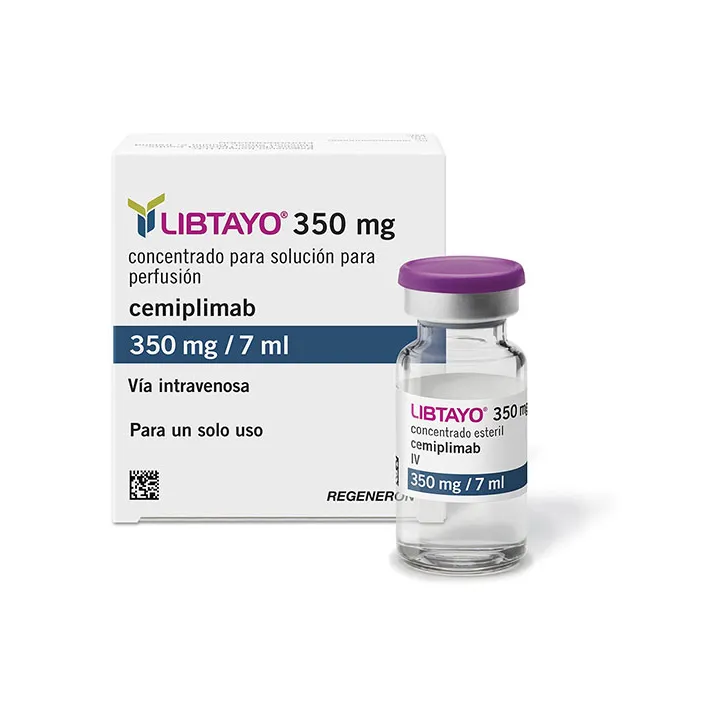
Table of Contents
Package leaflet: Information for the user
Introduction
Package leaflet: information for the patient
LIBTAYO 350 mg concentrate for solution for infusion
cemiplimab
Read the entire leaflet carefully before you are given this medicine, because it contains important information for you.
- Keep this leaflet, as you may need to read it again.
- It is important that you carry the patient card with you during treatment.
- If you have any questions, consult your doctor.
- If you experience any side effects, consult your doctor, even if they are side effects not listed in this leaflet. See section 4.
Contents of the leaflet
- What LIBTAYO is and what it is used for
- What you need to know before being given LIBTAYO
- How LIBTAYO is given
- Possible side effects
- How to store LIBTAYO
- Contents of the pack and other information
1. What LIBTAYO is and what it is used for
LIBTAYO is an anticancer medicine that contains the active substance cemiplimab, which is a monoclonal antibody.
LIBTAYO is used in adults to treat:
-
an advanced type of skin cancer called cutaneous squamous cell carcinoma (CSCC).
-
an advanced type of skin cancer called basal cell carcinoma (BCC) for which you have received treatment with a Hedgehog pathway signaling inhibitor and this treatment did not work well or was not well tolerated.
-
a type of lung cancer called non-small cell lung cancer (NSCLC).
-
a type of cancer called cervical cancer that has worsened during or after chemotherapy.
LIBTAYO is used after surgical removal of CSCC to help prevent the cancer from coming back (adjuvant treatment).
LIBTAYO may be given in combination with chemotherapy for NSCLC. It is important that you also read the package leaflets for the specific chemotherapy you may be receiving. If you have any questions about these medicines, consult your doctor.
LIBTAYO works by helping your immune system fight cancer.
2. What you need to know before LIBTAYO is administered to you
Do not be given LIBTAYO if:
- you are allergic to cemiplimab or any of the other ingredients of this medicine (listed in section 6).
If you think you may be allergic or are unsure, speak with your doctor before receiving LIBTAYO.
Warnings and precautions
Talk to your doctor or nurse before you are given LIBTAYO if:
- you have an autoimmune disease (a condition in which the body attacks its own cells)
- you have had an organ transplant, or have received or are planning to receive a bone marrow transplant using donor marrow (allogeneic hematopoietic stem cell transplant)
- you have lung or breathing problems
- you have liver problems
- you have kidney problems
- you have diabetes
- you suffer from any other illness
If any of the above situations apply to you, or if you are unsure, consult your doctor or nurse before receiving LIBTAYO.
Pay attention to adverse effects
LIBTAYO can cause some serious adverse effects that you must report to your doctor immediately. These problems may occur at any time during treatment or even after your treatment has ended. You may experience more than one adverse effect at the same time.
These serious adverse effects include:
- skin problems
- lung problems (pneumonitis)
- intestinal problems (colitis)
- liver problems (hepatitis)
- problems with hormone-producing glands – especially the thyroid, pituitary, adrenal glands, and pancreas
- type I diabetes, including diabetic ketoacidosis (acid in the blood caused by diabetes)
- kidney problems (nephritis and kidney failure)
- problems of the central nervous system (such as meningitis)
- infusion-related reactions
- muscle problems (inflammation of muscles called myositis)
- inflammation of the heart muscle (myocarditis)
- a condition in which the immune system produces too many normal cells that fight infections, called histiocytes and lymphocytes, which can cause various symptoms (haemophagocytic lymphohistiocytosis) (see list of signs and symptoms in "Possible side effects")
- inflammation of the pancreas, which may include abdominal pain, nausea, and vomiting (pancreatitis)
- problems in other parts of the body (see “Possible side effects”)
Be vigilant for these adverse effects while you are receiving LIBTAYO. See section 4, "Possible side effects". If you experience any of these effects, contact your doctor immediately.
Your doctor may give you other medicines to stop the more serious reactions and reduce your symptoms. Your doctor may also delay your next dose of LIBTAYO or stop your treatment altogether.
Children and adolescents
LIBTAYO must not be used in children and adolescents under 18 years of age.
Other medicines and LIBTAYO
Tell your doctor if you are taking, have recently taken, or might need to take any other medicines.
In particular, inform your doctor if you are taking or have taken any of the following medicines:
- a cancer medicine called idelalisib
- medicines that weaken your immune system; for example, corticosteroids such as prednisone. These medicines may interfere with the effect of LIBTAYO. However, once you start treatment with LIBTAYO, your doctor may give you corticosteroids to reduce any adverse effects you may experience with LIBTAYO.
Pregnancy
If you are pregnant, think you may be pregnant, or plan to become pregnant, consult your doctor before this medicine is administered to you.
- LIBTAYO may harm the unborn baby.
- Inform your doctor immediately if you become pregnant while receiving treatment with LIBTAYO.
- If you are able to become pregnant, you must use an effective method of contraception to prevent pregnancy:
- while you are being treated with LIBTAYO and
- for at least 4 months after the last dose.
- Talk to your doctor about the types of contraception you should use during this time.
Breast-feeding
- If you are breast-feeding or plan to breast-feed, consult your doctor before receiving this medicine.
- Do not breast-feed while receiving treatment with LIBTAYO and for at least 4 months after the last dose.
- It is unknown whether LIBTAYO passes into breast milk.
Driving and using machines
The effect of LIBTAYO on the ability to drive and use machines is negligible or none. If you feel tired, do not drive or operate machinery until you feel better.
Libtayo contains L-proline
This medicine contains 105 mg of L-proline in each 7 ml vial, equivalent to 15 mg/ml. L-proline may be harmful in patients with hyperprolinemia, a rare genetic disorder in which proline accumulates in the body. If you have hyperprolinemia, do not use this medicine unless your doctor recommends it.
Libtayo contains polysorbate 80
This medicine contains 14 mg of polysorbate 80 in each 7 ml vial, equivalent to 2 mg/ml. Polysorbates may cause allergic reactions. Inform your doctor if you have any known allergies.
3. How LIBTAYO is administered
- LIBTAYO will be administered to you at a hospital or clinic, supervised by a doctor experienced in cancer treatment.
- LIBTAYO is given as an intravenous infusion (into a vein).
- The infusion will last approximately 30 minutes.
What dose you will receive
LIBTAYO is generally administered at a dose of 350 mg every 3 weeks.
When administered to help prevent the recurrence of CSCC after surgery, treatment may be given as 350 mg every 3 weeks for 48 weeks, or as 350 mg every 3 weeks for 12 weeks followed by 700 mg every 6 weeks for a total of 48 weeks.
Your doctor will decide the dose of LIBTAYO you will receive and the number of treatments you will need.
Your doctor will perform blood tests to monitor for certain adverse effects during your treatment.
If you miss your appointment
Contact your doctor as soon as possible to schedule another appointment. It is very important not to miss a dose of this medicine.
If you interrupt treatment with LIBTAYO
Do not interrupt treatment with LIBTAYO unless discussed with your doctor. This is because stopping your treatment may interrupt the medicine's effect.
Patient card
The information in this leaflet can be found on the patient card provided by your doctor. It is important that you keep this patient card and show it to your partner or caregivers.
If you have any questions about your treatment, consult your doctor.
4. Possible adverse effects
Like all medicines, this medicine can cause adverse effects, although not everyone experiences them. Your doctor will discuss with you and explain the risks and benefits of your treatment.
LIBTAYO acts on your immune system and may cause inflammation in some parts of your body (see the conditions listed in section 2, "Be alert to adverse effects"). This inflammation can cause serious harm and may require treatment or interruption of treatment with LIBTAYO. Some inflammatory conditions could also lead to death.
Seek urgent medical attention if you experience any of the following signs or symptoms, or if they worsen:
-
Skin problems such as rash or itching, skin blisters, or mouth ulcers or other mucous membranes.
-
Lung problems (pneumonitis) such as new or worsening cough, shortness of breath, or chest pain.
-
Intestinal problems (colitis) such as frequent diarrhea, often with blood or mucus, more bowel movements than usual, black or tarry stools, and severe stomach (abdominal) pain or tenderness.
-
Liver problems (hepatitis) such as yellowing of the skin or whites of the eyes, severe nausea or vomiting, pain on the right side of the stomach (abdomen), feeling unusually sleepy, dark urine (tea-colored), bleeding or bruising more easily than normal, and decreased appetite.
-
Hormonal gland problems such as persistent or unusual headaches, rapid heartbeat, increased sweating, feeling unusually cold or hot, extreme fatigue, dizziness or fainting, weight gain or loss, increased hunger or thirst, hair loss, constipation, deeper voice, very low blood pressure, need to urinate more often than usual, nausea or vomiting, stomach (abdominal) pain, changes in mood or behavior (such as decreased sexual desire, irritability, or frequent forgetfulness).
-
Symptoms of type 1 diabetes or diabetic ketoacidosis such as feeling more hungry or thirsty than usual, needing to urinate more often, weight loss, feeling tired or nauseous, stomach pain, rapid deep breathing, confusion, unusual drowsiness, sweet-smelling breath, sweet or metallic taste in the mouth, or a different odor in urine or sweat.
-
Kidney problems (nephritis and kidney failure) such as urinating less than usual, blood in urine, swelling of ankles, and feeling less hungry than usual.
-
Infusion-related reactions (sometimes these can be serious or fatal) such as chills, tremors or fever, itching or rash, redness or swelling of the face, shortness of breath or wheezing, feeling dizzy or faint, back or neck pain, nausea, vomiting, or abdominal pain.
-
Problems in other parts of the body such as:
-
Nervous system problems such as headache or neck stiffness, fever, fatigue or weakness, cold, vomiting, confusion, memory problems or drowsiness, seizures (fits), seeing or hearing things that are not real (hallucinations), severe muscle weakness, tingling, numbness, weakness or burning pain in arms or legs, paralysis in limbs.
-
Muscle and joint problems such as joint pain or swelling, muscle pain, weakness or stiffness.
-
Eye problems such as changes in vision, eye pain or redness, light sensitivity.
-
Heart and circulatory problems such as changes in heartbeat, rapid heartbeat, sensation of skipped beats or palpitations, chest pain, difficulty breathing.
-
Others: dryness in many parts of the body from mouth to eyes, nose, throat, and upper skin layers, bruising or bleeding, enlarged liver and/or spleen, swollen lymph nodes.
The following adverse effects have been reported in clinical trials of patients treated with cemiplimab alone:
Very common (may affect more than 1 in 10 people):
- feeling tired
- muscle or bone pain
- rash
- diarrhea (loose stools)
- decreased number of red blood cells
- nausea
- decreased appetite
- itching
- constipation
- cough
- stomach pain (abdominal pain)
- upper respiratory tract infection
Common (may affect up to 1 in 10 people):
- vomiting
- difficulty breathing
- fever
- urinary tract infection
- headache
- swelling (edema)
- thyroid gland problems (hyperthyroidism and hypothyroidism)
- high blood pressure
- increased liver enzymes in blood
- rough, scaly, or crusted areas on the skin (actinic keratosis)
- cough, lung inflammation
- infusion-related reactions
- liver inflammation
- intestinal inflammation (diarrhea, more frequent bowel movements, black tarry stools, severe stomach [abdominal] pain or tenderness)
- mouth inflammation
- abnormal kidney function tests
- nerve inflammation causing tingling, numbness, weakness, or burning in arms or legs
- kidney inflammation.
Uncommon (may affect up to 1 in 100 people):
- joint pain, swelling, polyarthritis, and joint effusion
- skin bruising or bleeding
- thyroid inflammation
- inflammation of the heart muscle, which may present as difficulty breathing, irregular heartbeat, fatigue, or chest pain
- decreased secretion of hormones produced by the adrenal glands
- muscle weakness
- inflammation of the pituitary gland located at the base of the brain
- inflammation of the lining of the heart
- dryness in many parts of the body, from mouth to eyes, nose, throat, and upper skin layers
- muscle inflammation that may include muscle pain or weakness (myositis) and may be associated with a rash (dermatomyositis)
- inflammation of the inner lining of the stomach
- muscle pain or stiffness (polymyalgia rheumatica)
- pancreas inflammation (pancreatitis). Signs and symptoms may include stomach (abdominal) pain, nausea, and vomiting.
Rare (may affect up to 1 in 1000 people):
- inflammation of the membranes covering the brain and spinal cord, which may be caused by infection
- type 1 diabetes, which may include increased hunger or thirst, frequent urination, weight loss, feeling tired, or diabetic ketoacidosis
- eye pain, irritation, itching, or redness; inflammation, blurred vision, discomfort due to light sensitivity (uveitis and keratitis)
- temporary nerve inflammation causing pain, weakness, and paralysis in limbs
- a condition in which muscles weaken and tire easily, muscle pain
Other reported adverse effects (frequency not known):
- organ transplant rejection
- bladder inflammation. Signs and symptoms may include frequent and/or painful urination (need to urinate), urgent need to urinate, blood in urine, pain or pressure in the lower abdomen
- hemophagocytic lymphohistiocytosis. A condition in which your immune system produces too many normal infection-fighting cells called histiocytes and lymphocytes. Symptoms may include enlarged liver and/or spleen, skin rash, swollen lymph nodes, breathing problems, easy bruising, kidney and heart problems
- celiac disease (characterized by symptoms such as stomach pain, diarrhea, and bloating after eating foods containing gluten)
- absence or reduced production of digestive enzymes by the pancreas (exocrine pancreatic insufficiency).
The following adverse effects have been reported in clinical trials of patients treated with cemiplimab in combination with chemotherapy:
Very common (may affect more than 1 in 10 people):
- decreased number of red blood cells
- hair loss
- muscle or bone pain
- nausea
- feeling tired
- nerve inflammation causing tingling, numbness, weakness, or burning in arms or legs
- high blood sugar levels
- decreased appetite
- increased liver enzymes in blood
- decreased number of white blood cells (neutrophils)
- constipation
- decreased number of platelets
- difficulty breathing
- rash
- vomiting
- weight loss
- trouble sleeping
- diarrhea (loose stools)
- low blood levels of a protein called “albumin”
Common (may affect up to 1 in 10 people):
- abnormal kidney function tests
- thyroid gland problems (hyperthyroidism and hypothyroidism)
- cough, lung inflammation
- itching
- kidney inflammation
- intestinal inflammation (diarrhea, more frequent bowel movements, black or tarry stools, severe stomach [abdominal] pain or tenderness)
- joint pain, swelling, polyarthritis, and joint effusion
Uncommon (may affect up to 1 in 100 people):
- thyroid inflammation
- infusion-related reactions
- type 1 diabetes, which may include increased hunger or thirst, frequent urination, weight loss, and feeling tired
Other reported adverse effects (frequency not known):
- celiac disease (characterized by symptoms such as stomach pain, diarrhea, and bloating after eating foods containing gluten)
- absence or reduced production of digestive enzymes by the pancreas (exocrine pancreatic insufficiency).
Reporting of adverse effects
If you experience any adverse effect, talk to your doctor, even if it is a possible adverse effect not listed in this leaflet. You can also report them directly through the national reporting system listed in Appendix V. By reporting adverse effects, you can help provide more information on the safety of this medicine.
5. Storage of LIBTAYO
Keep this medicine out of the sight and reach of children.
Do not use this medicine after the expiry date stated on the packaging and vial after EXP. The expiry date refers to the last day of the month indicated.
Store in a refrigerator (between 2 °C and 8 °C).
Do not freeze.
Keep in the original packaging to protect from light.
From a microbiological standpoint, the prepared infusion solution should be used immediately. If the diluted solution is not administered immediately, the storage times and conditions prior to use are the responsibility of the user.
Chemical and physical in-use stability has been demonstrated:
- at room temperature up to 25 °C for no more than 8 hours from the time of preparation of the infusion until completion of the infusion.
Or
- refrigerated between 2 °C and 8 °C for no more than 10 days from the time of preparation of the infusion until completion of the infusion. Allow the diluted solution to reach room temperature before administration.
Do not store any unused portion of the infusion solution for later reuse.
Any unused portion of the infusion solution must not be reused and should be discarded according to local requirements.
6. Contents of the pack and other information
Composition of LIBTAYO
The active substance is cemiplimab:
- one ml of concentrate contains 50 mg of cemiplimab.
- each vial contains 350 mg of cemiplimab in 7 ml of concentrate.
The other components are L-Histidine, L-Histidine monohydrochloride monohydrate, L-proline, sucrose, polysorbate 80, and water for injections.
Nature of the product and pack contents
LIBTAYO concentrate for solution for infusion (sterile concentrate) is supplied as a sterile solution, from clear to slightly opalescent, colourless to pale yellow, which may contain traces of translucent to white particles.
Each pack contains 1 glass vial with 7 ml of concentrate.
Marketing Authorization Holder
Regeneron Ireland Designated Activity Company (DAC)
One Warrington Place,
Dublin 2, D02 HH27
Ireland
Manufacturer
Regeneron Ireland DAC
Raheen Business Park
Limerick
Ireland
More information about this medicinal product is available upon request by contacting the local representative of the Marketing Authorization Holder:
Belgium/Belgium/Belgium Regeneron Ireland DAC Tel/Tel: 0800 89383 | Lithuania Medison Pharma Lithuania UAB Tel: 8 800 33598 |
| Luxembourg/Luxembourg Regeneron Ireland DAC Tél/Tel: 8007-9000 |
Czech Republic Medison Pharma s.r.o. Tel: 800 050 148 | Hungary Medison Pharma Hungary Kft Tel.: 06-809-93029 |
Denmark Regeneron Ireland DAC Tlf: 80 20 03 57 | Malta Genesis Pharma (Cyprus) Ltd Tel: 80065169 |
Germany Regeneron GmbH Tel.: 0800 330 4267 | Netherlands Regeneron Ireland DAC Tel: 0800 020 0943 |
Estonia Medison Pharma Estonia OÜ Tel: 800 004 4845 | Norway Regeneron Ireland DAC Tlf: 8003 15 33 |
Greece GENESIS PHARMA S.A. Tel: 00800 44146336 | Austria Regeneron Ireland DAC Tel: 01206094094 |
Spain Regeneron Spain S.L.U. Tel: 900031311 | Poland Medison Pharma Sp. z o.o. Tel.: 800 080 691 |
France Regeneron France SAS Tél: 080 554 3951 | Portugal Regeneron Ireland DAC Tel: 800783394 |
Croatia Medison Pharma d.o.o. Tel: 0800 787 074 | Romania Medison Pharma SRL Tel: 0800 400670 |
Ireland Regeneron Ireland DAC Tel: 1800800920 | Slovenia Medison Pharma d.o.o. Tel: 0800 83155 |
Iceland Regeneron Ireland DAC Sími: 800 4431 | Slovakia Medison Pharma s.r.o. Tel: 0800 123 255 |
Italy Regeneron Italy S.r.l. Tel: 800180052 | Finland Regeneron Ireland DAC Puh/Tel: 0800 772223 |
Cyprus Genesis Pharma (Cyprus) Ltd Tel: 800 925 47 | Sweden Regeneron Ireland DAC Tel: 0201 604786 |
Latvia Medison Pharma Latvia SIA Tel: 8000 5874 |

Date of the most recent review of this package leaflet:
Detailed information on this medicine is available on the European Medicines Agency website: https://www.ema.europa.eu
This information is intended for healthcare professionals only:
Instructions for use
Preparation
- Before administration, visually inspect the medicinal product for particles and discoloration. LIBTAYO is a solution ranging from clear to slightly opalescent, colorless to pale yellow, which may contain traces of translucent to white particles.
- Discard the vial if the solution is cloudy, discolored, or contains foreign particles other than traces of translucent to white particles.
- Do not shake the vial.
- Withdraw 7 ml (350 mg) from the LIBTAYO vial and transfer it to an intravenous infusion bag containing either 9 mg/ml (0.9%) sodium chloride injection solution or 50 mg/ml (5%) glucose injection solution. Mix the diluted solution by gentle inversion. Do not shake the solution. The final concentration of the diluted solution must be between 1 mg/ml and 20 mg/ml. Use 2 vials for the 700 mg dose.
- LIBTAYO is for single use only. Discard any unused medicinal product or waste material in accordance with local regulations.
Storage of the diluted solution
LIBTAYO does not contain preservatives.
From a microbiological standpoint, the prepared infusion solution should be used immediately. If the diluted solution is not administered immediately, the in-use storage times and conditions prior to use are the responsibility of the user.
Chemical and physical in-use stability has been demonstrated:
- at room temperature up to 25 °C for no more than 8 hours from the time of infusion preparation until completion of the infusion.
Or
- refrigerated between 2 °C and 8 °C for no more than 10 days from the time of infusion preparation until completion of the infusion. Allow the diluted solution to reach room temperature before administration.
Do not freeze.
Administration
- LIBTAYO is administered intravenously. Administer by intravenous infusion over 30 minutes through an intravenous line containing an in-line or add-on sterile, non-pyrogenic, low-protein-binding filter (pore size 0.2 microns to 5 microns).
- Do not co-administer with other medicinal products through the same infusion line.