Lexatin 1.5 mg hard capsules
Spain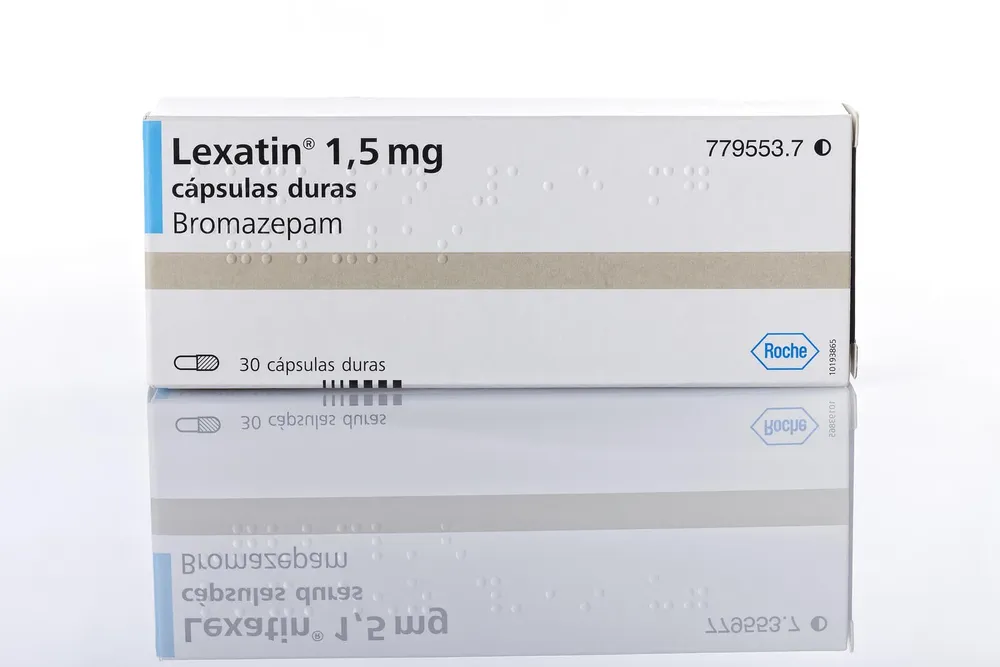
Table of Contents
Package leaflet: Information for the user
Introduction
Package leaflet: information for the user
Lexatin 1.5 mg hard capsules
Bromazepam
Read the entire leaflet carefully before you start taking this medicine, because it contains important information for you.
- Keep this leaflet as you may need to read it again.
- If you have any questions, ask your doctor or pharmacist.
- This medicine has been prescribed for you only, and you should not give it to other people even if they have the same symptoms as you, because it may harm them.
- If you experience any adverse effects, consult your doctor or pharmacist, even if they are adverse effects not listed in this leaflet. See section 4.
Contents of the leaflet:
- What Lexatin is and what it is used for
- What you need to know before taking Lexatin
- How to take Lexatin
- Possible side effects
- How to store Lexatin
- Contents of the pack and other information
1. What Lexatin is and what it is used for
The active substance in Lexatin, bromazepam, belongs to a group of medicines called benzodiazepines. When administered at low doses, bromazepam relieves psychological tension, anxiety, and nervousness. At higher doses, it has a sedative and muscle-relaxant effect.
Doctors prescribe Lexatin for people experiencing symptoms of anxiety, tension, depression, nervousness, agitation, and difficulty sleeping.
Some patients with anxiety or nervousness may also have problems affecting their heart rhythm, breathing, or digestion. Lexatin may also help relieve these symptoms.
In most cases, only short-term treatment with Lexatin is needed, which should not exceed 8 to 12 weeks, including the time required for gradual withdrawal of the medication.
Treatment should be started at the lowest dose. The maximum dose must not be exceeded.
2. What you need to know before taking Lexatin
Do not take Lexatin
- If you are allergic (hypersensitive) to bromazepam or to any of the other components of this medicine (listed in section 6).
- If you are allergic (hypersensitive) to benzodiazepines in general.
- If you have severe breathing difficulties.
- If you have severe liver problems.
- If you have a disease called "myasthenia gravis", which is characterized by muscle weakness and fatigue.
- If you have sleep apnea, a condition in which your breathing is irregular and may even stop briefly during sleep.
- If you suffer from drug or alcohol dependence, you should not take Lexatin unless your doctor specifically instructs you to do so. If you have any doubts about this, consult your doctor.
Warnings and precautions
Talk to your doctor or pharmacist before starting to take Lexatin:
- If you have any liver or kidney disorders,
- If you suffer from muscle weakness,
- If you have any respiratory disease,
- If you have other illnesses,
- If you have allergies,
- If you have problems with drug addiction or alcoholism,
- If you have or have had depression and/or have attempted suicide,
- If you are taking other medicines, especially painkillers (analgesics), and/or medicines for mental disorders.
If during treatment you experience restlessness, agitation, or other symptoms, you must consult your doctor immediately, who will assess whether treatment should be discontinued.
If during treatment you experience memory disturbances, you should discuss this with your doctor. Your doctor will provide you with specific recommendations to reduce this risk.
If you are epileptic and are undergoing long-term treatment with Lexatin, the use of the benzodiazepine antagonist Anexate (flumazenil) to reverse the effect of Lexatin is not recommended, as seizures may occur.
Children
Lexatin should not be administered to children unless your doctor has carefully evaluated the need for treatment.
Taking Lexatin with other medicines
Inform your doctor or pharmacist if you are using or have recently used any other medicines.
This is extremely important because taking more than one medicine at the same time may increase or decrease its effect. Therefore, you should not take other medicines at the same time as Lexatin unless your doctor is aware and has approved it beforehand.
For example, sedatives, sleep-inducing medicines, medicines used to treat psychiatric disorders, anxiolytics/sedatives, certain antidepressants (fluvoxamine), opioids, anticonvulsants, and sedating antihistamines act on the brain and nerves and may enhance the effect of Lexatin, including sedation and breathing difficulties.
Some antacids (cimetidine) and certain medicines used to treat high blood pressure (propranolol) may prolong the effect of Lexatin.
Taking Lexatin with food, drinks and alcohol
During treatment, avoid alcoholic drinks. Alcohol may enhance sedation, which could affect your ability to drive or operate machinery. If you need further information on this point, consult your doctor.
Food may reduce the absorption of bromazepam, that is, it may reduce the effect of Lexatin.
Pregnancy and breastfeeding
If you are pregnant or breastfeeding, think you may be pregnant, or are planning to become pregnant, consult your doctor or pharmacist before using this medicine.
If this product is administered during the late stages of pregnancy due to strict medical necessity, effects on the newborn such as hypothermia (abnormally low body temperature), hypotonia (loss of muscle tone), difficulty sucking, and breathing difficulties may be expected. A few days after birth, the newborn should be closely monitored for withdrawal symptoms such as hyperexcitability, agitation, tremors, or loss of muscle tone.
Since Lexatin is excreted in breast milk, breastfeeding is not recommended during treatment. Your doctor will advise you on the most appropriate course of action.
Driving and using machines
Lexatin may impair your ability to drive or operate machinery, as it may cause drowsiness, memory loss, reduced attention, reduced reaction capacity, or muscle weakness. These effects are more likely at the beginning of treatment or when the dose is increased. Do not drive or operate machinery if you experience any of these effects. In addition, insufficient sleep and alcohol consumption may further impair your level of alertness.
Lexatin contains lactose
If your doctor has diagnosed you with an intolerance to certain sugars, consult him before taking this medicine.
3. How to take Lexatin
Follow exactly the administration instructions for this medicine as given by your doctor. If in doubt, consult your doctor or pharmacist again.
Depending on the nature of your illness, your age and weight, your doctor will prescribe the appropriate dose.
Remember to take your medicine.
If you have any liver or kidney disorder, respiratory difficulties, or suffer from muscle weakness, your doctor will decide whether you should take a lower dose of Lexatin or should not take it at all.
Follow these instructions unless your doctor has given you different ones.
The usual doses are as follows:
Most patients do not require more than three capsules (4.5 mg) per day, although your doctor may prescribe higher doses.
In the case of patients who have been hospitalized, a higher dose may be needed, but it must always be prescribed by the doctor.
No individual dose should exceed the stated limits, nor should the total daily dose, unless your doctor prescribes a higher dose.
Lexatin capsules should be taken before or with meals and must be swallowed whole, without chewing, with a little water or a non-alcoholic drink.
The total daily amount of Lexatin should be divided into two or three doses.
Your doctor will advise you on the duration of treatment with Lexatin. Do not stop the treatment prematurely.
In most cases, only a short-term treatment with Lexatin is needed, which should not exceed 8 to 12 weeks, including the time required for gradual withdrawal of the medication.
To avoid withdrawal symptoms, you must not stop taking Lexatin abruptly, especially if you have been taking it for a long time.
Use in children
Lexatin must not be administered to children unless their doctor has carefully assessed the need for treatment.
Use in elderly patients
Elderly patients are more sensitive to Lexatin than younger patients. If you belong to this patient group, your doctor may prescribe a lower dose and monitor your response to treatment. Please follow your doctor's instructions carefully.
If you take more Lexatin than you should
The signs of benzodiazepine overdose, in mild cases, usually consist of drowsiness, lethargy (drowsiness), and mental confusion. Ingestion of high doses, especially in combination with other centrally-acting substances, may cause ataxia (inability to coordinate voluntary muscle movements), hypotonia (reduced muscle tone or flaccidity), hypotension (low blood pressure), respiratory depression (slow and shallow breathing), occasionally coma, and very rarely death.
In case of overdose or accidental ingestion, consult your doctor, pharmacist immediately, or call the Toxicology Information Service at telephone number: 91 562 04 20, indicating the medicine and the amount ingested.
If you forget to take Lexatin
Do not take a double dose to make up for missed doses.
If you stop treatment with Lexatin
When stopping treatment, symptoms such as restlessness, anxiety, insomnia, difficulty concentrating, headache, and hot flushes may occur, especially if you have been taking it for a long time. Abrupt discontinuation of the medication is generally not recommended; instead, the dose should be gradually reduced according to your doctor's instructions.
Never change the prescribed dose on your own. If you think the effect of the medicine is too strong or too weak, consult your doctor.
Remember that Lexatin is not indicated for long-term treatment; after a few weeks of treatment, your doctor will gradually reduce the dose until treatment is discontinued.
If you have any doubts about the use of this medicine, ask your doctor or pharmacist.
4. Possible adverse effects
Like all medicines, Lexatin may produce adverse effects, although not everyone experiences them.
Most patients tolerate Lexatin well, but at the beginning of treatment the following adverse effects may occur: confusion, drowsiness, emotional disturbance, headache, dizziness, reduced alertness, ataxia (lack of coordination), diplopia (double vision), nausea, vomiting, muscle weakness, and fatigue. These symptoms usually disappear with continued treatment.
The adverse effects that may occur during treatment with this medicine, and which have been observed with an unknown frequency (cannot be estimated from the available data), are:
Immune system disorders: hypersensitivity (allergy), anaphylactic shock, angioedema (swelling of the face).
Psychiatric disorders: confusion, disorientation, emotional and mood disturbances, libido disorders (altered sexual desire), physical and psychological dependence on the medicine, medicine abuse, withdrawal symptoms, depression (the use of this medicine may unmask pre-existing depression), restlessness, agitation, hyperactivity, nervousness, anxiety, irritability, aggressiveness, delirium, rage attacks, nightmares, abnormal dreams, hallucinations, psychosis, inappropriate behavior, and memory disturbances.
Nervous system disorders: drowsiness, headache, dizziness, reduced alertness (slowed reflexes), and ataxia (lack of motor coordination).
Eye disorders: diplopia (double vision).
Cardiac disorders: cardiac failure (the heart does not pump blood properly), including cardiac arrest (heart attack).
Respiratory disorders: respiratory depression (slow and shallow breathing).
Gastrointestinal disorders: nausea, vomiting, constipation.
Skin and subcutaneous tissue disorders: skin rash, pruritus (itching), and urticaria.
Musculoskeletal disorders: muscle weakness.
Renal and urinary disorders: urinary retention.
General disorders: fatigue.
Injury-related events: falls and fractures, with increased risk in elderly patients and in patients taking other sedatives concomitantly (including alcoholic beverages).
If you consider any of the adverse effects you experience to be severe, or if you notice any adverse effect not listed in this leaflet, inform your doctor or pharmacist.
The use of benzodiazepines may lead to physical dependence, even at therapeutic doses. This occurs mainly after prolonged, uninterrupted use of the medicine. To minimize the risk of dependence, the following precautions should be observed:
-
Benzodiazepines should only be taken on a doctor's prescription (never because they worked for other patients), and should never be recommended to other people.
-
Do not increase the doses prescribed by the doctor, or extend the treatment beyond the recommended duration.
-
Consult your doctor regularly so they can decide whether the treatment should continue.
Discontinuation of treatment may lead to withdrawal or rebound phenomena (reappearance of symptoms that led to starting the treatment, although more pronounced), and may result in psychological dependence.
Reporting of adverse effects
If you experience any type of adverse effect, consult your doctor or pharmacist, even if it is an effect not listed in this leaflet. You may also report them directly via the Spanish Pharmacovigilance System for Human Medicines: www.notificaRAM.es. By reporting adverse effects, you can help provide more information on the safety of this medicine.
5. Storage of Lexatin
Keep this medicine out of sight and reach of children.
Do not store above 25°C.
Do not use this medicine after the expiry date stated on the packaging after EXP. The expiry date refers to the last day of the month indicated.
Medicines must not be disposed of via wastewater drains or household waste. Unused containers and medicines should be returned to the SIGRE collection point at your pharmacy. If you have any doubts, ask your pharmacist how to dispose of containers and medicines you no longer need. This will help protect the environment.
6. Contents of the pack and other information
Composition of Lexatin
- The active substance is bromazepam.
- The other components are lactose, corn starch, talc, magnesium stearate, indigo carmine E-132, erythrosine E-127, titanium dioxide E-171 and gelatin.
Appearance of the product and contents of the pack
Each capsule contains 1.5 mg of bromazepam.
Hard capsules, white and red in colour, marked with “LEX-1.5” on one half of the capsule.
Lexatin 1.5 mg is available in boxes containing 30 capsules in blister packs.
Other presentations:
Lexatin 3 mg is available in boxes containing 30 capsules in blister packs.
Marketing Authorisation Holder and Manufacturer
Marketing Authorisation Holder:
CHEPLAPHARM Arzneimittel GmbH
Ziegelhof 24
17489 Greifswald
Germany
Local representative:
Laboratorios Rubió, S.A.
C/ Industria, 29 – Pol. Ind. Comte de Sert
08755 Castellbisbal (Barcelona)
Spain
Manufacturer:
Recipharm Leganés, S.L.U.
Calle Severo Ochoa nº 13,
Leganés
28914 Madrid
Spain
Date of the most recent revision of this leaflet: November 2019
Detailed and up-to-date information on this medicine is available on the website of the Spanish Agency for Medicines and Health Products (AEMPS) http://www.aemps.gob.es/.