Levodopa/carbidopa/entacapone Abdi 125 mg/31.25 mg/200 mg film-coated tablets EFG
Spain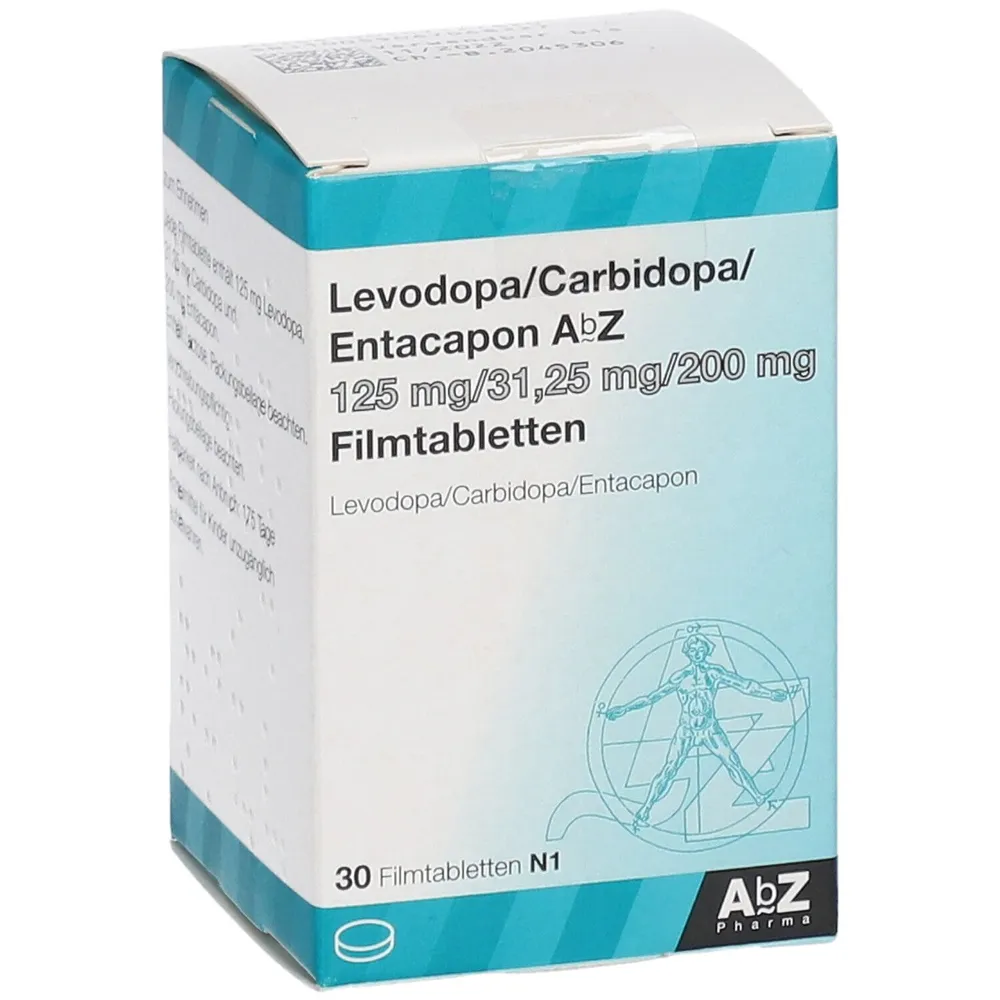
Table of Contents
- Package leaflet: Information for the user
- Introduction
- **Read the entire leaflet carefully before you start taking this medicine, as it contains important information for you.**
- **Package leaflet**
- 1. What Levodopa/Carbidopa/Entacapone Abdi is and what it is used for
- 2. What you need to know before taking Levodopa/Carbidopa/Entacapone Abdi
- **Do not take Levodopa/Carbidopa/Entacapone Abdi if:**
- **Warnings and precautions**
- **Children and adolescents**
- **Taking Levodopa/Carbidopa/Entacapone Abdi with other medicines**
- **Taking Levodopa/Carbidopa/Entacapone Abdi with food and drinks**
- **Pregnancy, lactation and fertility**
- **Driving and operating machinery**
- **Levodopa/Carbidopa/Entacapone Abdi contains lactose and sodium**
- 3. How to take Levodopa/Carbidopa/Entacapona Abdi
- **If you take more Levodopa/Carbidopa/Entacapone Abdi than you should**
- **If you forget to take Levodopa/Carbidopa/Entacapona Abdi**
- **If you interrupt treatment with Levodopa/Carbidopa/Entacapone Abdi**
- 4. Possible adverse effects
- **Reporting of adverse reactions**
- 5. Storage of Levodopa/Carbidopa/Entacapone Abdi
- 6. Contents of the pack and other information
- **Composition of Levodopa/Carbidopa/Entacapone Abdi**
- **Appearance of the product and contents of the pack**
Package leaflet: Information for the user
Introduction
Package leaflet: information for the user
Levodopa/Carbidopa/Entacapone Abdi 125 mg/31.25 mg/200 mg film-coated tablets EFG
Levodopa/carbidopa/entacapone
Read the entire leaflet carefully before you start taking this medicine, as it contains important information for you.
- Keep this leaflet, as you may need to read it again.
- If you have any questions, consult your doctor or pharmacist.
- This medicine has been prescribed for you only, and you should not give it to others, even if they have the same symptoms as you, because it may harm them.
- If you experience any adverse effects, consult your doctor or pharmacist, even if the effects are not listed in this leaflet. See section 4.
Package leaflet
-
What Levodopa/Carbidopa/Entacapona Abdi is and what it is used for
-
What you need to know before taking Levodopa/Carbidopa/Entacapona Abdi
-
How to take Levodopa/Carbidopa/Entacapona Abdi
-
Possible side effects
-
How to store Levodopa/Carbidopa/Entacapona Abdi
-
Contents of the pack and other information
1. What Levodopa/Carbidopa/Entacapone Abdi is and what it is used for
This medicine contains three active substances (levodopa, carbidopa and entacapone) in a film-coated tablet. This medicine is used to treat Parkinson's disease.
Parkinson's disease is caused by low levels in the brain of a substance called dopamine. Levodopa increases the amount of dopamine and thereby reduces the symptoms of Parkinson's disease. Carbidopa and entacapone enhance the anti-Parkinson effects of levodopa.
2. What you need to know before taking Levodopa/Carbidopa/Entacapone Abdi
Do not take Levodopa/Carbidopa/Entacapone Abdi if:
- you are allergic to levodopa, carbidopa, or entacapone, or to any of the other ingredients of this medicine (listed in section 6)
- you have narrow-angle glaucoma (an eye disorder)
- you have a tumor of the adrenal glands
- you are taking certain medicines for depression (combinations of selective MAO-A and MAO-B inhibitors, or non-selective MAO inhibitors)
- you have ever experienced neuroleptic malignant syndrome (NMS – a rare reaction to medicines used to treat serious mental disorders)
- you have ever experienced non-traumatic rhabdomyolysis (a rare muscle disorder)
- you have severe liver disease.
Warnings and precautions
Consult your doctor or pharmacist before starting to take Levodopa/Carbidopa/Entacapone Abdi if you have or have ever had:
- a heart attack or any other heart or blood vessel disease, including arrhythmias
- asthma or any other lung disease
- a liver problem, as your dose may need to be adjusted
- any kidney disease or hormone-related disorder
- stomach ulcer or seizures
- prolonged diarrhea. Consult your doctor, as this may be a sign of inflammation of the colon
- any form of serious mental disorder, such as psychosis
- open-angle glaucoma, as your dose may need to be adjusted and intraocular pressure monitored.
Consult your doctor if you are taking:
- antipsychotics (medicines used to treat psychosis)
- any medicine that may cause a drop in blood pressure when standing up from a chair or bed. Be aware that this medicine may worsen these reactions.
Consult your doctor if, during treatment with Levodopa/Carbidopa/Entacapone Abdi, you:
- experience severe muscle stiffness or violent muscle contractions, or develop tremors, agitation, confusion, fever, rapid pulse, or large fluctuations in blood pressure. If any of these occur, contact your doctor immediately
- feel depressed, have suicidal thoughts, or notice unusual changes in your behavior
- notice sudden episodes of falling asleep or feel excessively sleepy. If this occurs, you must not drive or operate tools or machinery (see also section “Driving and use of machines”)
- begin to experience uncontrolled movements or worsening of such movements. If this occurs, your doctor may need to adjust your dose
- experience diarrhea; monitoring body weight is recommended to prevent excessive weight loss
- experience progressive loss of appetite, asthenia (weakness, exhaustion), and weight loss over a relatively short period. In such cases, a full medical evaluation including liver function tests should be considered
- are considering stopping treatment with this medicine; refer to the section "If you stop taking Levodopa/Carbidopa/Entacapone Abdi".
Inform your doctor if you, or your family/caregiver, notice that you are developing symptoms resembling addiction, leading to a desire for high doses of Stalevo and other medicines used to treat Parkinson's disease.
Inform your doctor if you, or your family/caregiver, notice that you are developing symptoms resembling addiction, leading to a desire for high doses of this medicine and other medicines used to treat Parkinson's disease.
Inform your doctor if you or your family/caregiver notice that you are developing urges or a tendency to behave in ways that are unusual for you or that you cannot resist the impulse, drive, or temptation to carry out certain activities that may cause harm to yourself or others. These behaviors are known as impulse control disorders and may include gambling addiction, compulsive eating, excessive spending, or abnormally increased sexual urges or preoccupation with heightened sexual thoughts or sensations. Your doctor may need to review your treatment.
During long-term treatment with this medicine, your doctor may carry out regular blood tests.
If you are scheduled for surgery, you must inform your doctor that you are taking this medicine.
This medicine is not recommended for the treatment of extrapyramidal symptoms (e.g., involuntary movements, agitation, muscle rigidity, and muscle contractions) caused by other medicines.
Children and adolescents
Experience with the use of this medicine in patients under 18 years of age is limited. Therefore, administration in children or adolescents is not recommended.
Taking Levodopa/Carbidopa/Entacapone Abdi with other medicines
Inform your doctor or pharmacist if you are taking, have recently taken, or might need to take any other medicines.
Do not take this medicine if you are taking certain medicines used to treat depression (combinations of selective MAO-A and MAO-B inhibitors, or non-selective MAO inhibitors).
This medicine may increase the effect, and also the adverse effects, of certain medicines. These include:
- medicines used to treat depression, such as moclobemide, amitriptyline, desipramine, maprotiline, venlafaxine, and paroxetine
- rimiterol and isoprenaline, used to treat respiratory diseases
- adrenaline, used for severe allergic reactions
- noradrenaline, dopamine, and dobutamine, used to treat heart conditions and low blood pressure
- alpha-methyldopa, used to treat high blood pressure
- apomorphine, used to treat Parkinson's disease.
Certain medicines may reduce the effects of this medicine. These medicines are:
- dopamine antagonists used to treat mental disorders, nausea, and vomiting
- phenytoin, used to prevent seizures
- papaverine, used to relax muscles.
This medicine may interfere with iron absorption in the digestive tract. Therefore, you should not take this medicine at the same time as iron supplements. If you take either, you should wait at least 2 to 3 hours before taking the other.
Taking Levodopa/Carbidopa/Entacapone Abdi with food and drinks
- This medicine may be taken with or without food.
- In some patients, this medicine may not be well absorbed if taken with high-protein foods (meat, fish, dairy products, cereals, and nuts) or shortly after consuming them.
Consult your doctor if you think this applies to you.
Pregnancy, lactation and fertility
If you are pregnant or breastfeeding, think you may be pregnant or plan to become pregnant, consult your doctor or pharmacist before using this medicine.
You must not breastfeed your child during treatment with this medicine.
Driving and operating machinery
This medicine may lower your blood pressure, which can cause dizziness or fainting. Therefore, take special care when operating tools or machinery.
If you feel very tired or notice that you occasionally fall asleep suddenly, wait until you are fully awake again before driving or performing any other activity requiring alertness. Otherwise, you may put yourself and others at risk of serious or even fatal accidents.
Levodopa/Carbidopa/Entacapone Abdi contains lactose and sodium
- This medicinal product contains lactose. If your doctor has informed you of an intolerance to certain sugars, consult with him before taking this medicine.
- This medicinal product contains less than 23 mg of sodium (1 mmol) per film-coated tablet; essentially "sodium-free".
3. How to take Levodopa/Carbidopa/Entacapona Abdi
Follow exactly the instructions for use of this medicine given by your doctor or pharmacist. If in doubt, consult your doctor or pharmacist again.
Adults and elderly
- Your doctor will tell you the exact number of Levodopa/Carbidopa/Entacapona Abdi tablets you should take each day.
- The tablets must not be split or divided into smaller pieces.
- Take only one tablet at a time.
- Depending on your response to treatment, your doctor may instruct you to increase or decrease the dose.
- Do not take more than 10 tablets per day.
Talk to your doctor or pharmacist if you think the effect of this medicine is too strong or too weak, or if you experience possible adverse effects.
If you take more Levodopa/Carbidopa/Entacapone Abdi than you should
If you have accidentally taken more tablets of this medicine than you should, speak to your doctor or pharmacist immediately. In case of an overdose, you may feel dizzy or restless, your heart rate may become slower or faster than normal, or the color of your skin, tongue, eyes, or urine may change.
In the event of an overdose or accidental ingestion, consult your doctor or pharmacist or call the Toxicology Information Service at telephone number: 91 562 04 20, indicating the medicine and the amount ingested.
If you forget to take Levodopa/Carbidopa/Entacapona Abdi
Do not take a double dose to make up for missed doses.
If more than 1 hour remains until the next dose:
Take one tablet as soon as you remember, and take the next one at the usual time.
If less than 1 hour remains until the next dose:
Take one tablet as soon as you remember, wait 1 hour, and then take another tablet. After that, continue as usual.
There must always be an interval of 1 hour between doses of this medication to avoid possible adverse effects.
If you interrupt treatment with Levodopa/Carbidopa/Entacapone Abdi
Do not stop taking this medicine unless your doctor tells you to. In such a case, your doctor may need to adjust the dose of your other Parkinson's medications, especially levodopa, to ensure adequate control of your symptoms. If you stop taking this medicine and other Parkinson's medications abruptly, you may experience unwanted adverse effects.
If you have any further questions about the use of this medicine, ask your doctor or pharmacist.
4. Possible adverse effects
Like all medicines, this medicine can cause adverse effects, although not everyone will experience them. Many of these can be relieved by adjusting the dose.
If you experience any of the following symptoms during treatment with this medicine, contact your doctor immediately:
- severe muscle stiffness or violent muscle contractions, tremors, agitation, confusion, fever, rapid pulse, or large fluctuations in blood pressure. These may be symptoms of neuroleptic malignant syndrome (NMS, a rare but serious reaction to medicines used to treat disorders of the central nervous system) or rhabdomyolysis (a rare and serious muscle disorder).
- allergic reaction characterized by signs such as hives, itching, rash, or swelling of the face, lips, tongue, or throat. This reaction may cause difficulty breathing or swallowing.
Very common (may affect more than 1 in 10 people):
- uncontrolled movements (dyskinesias)
- feeling unwell (nausea)
- harmless reddish-brown discoloration of the urine
- muscle pain
- diarrhea
- urinary tract infections
Common (may affect up to 1 in 10 people):
- fainting or collapse due to low blood pressure, hypertension
- worsening of parkinsonism symptoms, dizziness, drowsiness
- vomiting; abdominal pain and discomfort; heartburn; dry mouth; constipation
- inability to sleep; hallucinations; confusion; abnormal dreams (including nightmares); fatigue
- changes in mental state, including memory problems, anxiety, and depression (possibly with suicidal thoughts)
- heart or arterial problems (e.g., chest pain), irregular heart rate
- more frequent falls
- shortness of breath
- increased sweating, rashes
- muscle cramps, swelling of the legs
- blurred vision
- anemia
- decreased appetite, weight loss
- headache, joint pain
Uncommon (may affect up to 1 in 100 people):
- heart attack
- intestinal bleeding
- changes in blood cell counts that may lead to bleeding and abnormalities in liver function tests
- seizures
- feeling of restlessness
- psychotic symptoms
- colitis (inflammation of the colon)
- changes in pigmentation other than in urine (e.g., skin, nails, hair, sweat)
- difficulty swallowing
- inability to urinate
Frequency not known (cannot be estimated from available data):
A desire for high doses of this medicine exceeding those required to control motor symptoms, known as dopamine dysregulation syndrome. Some patients may experience severe abnormal involuntary movements (dyskinesias), mood changes, or other adverse effects after taking high doses of this medicine.
The following adverse effects have also been reported:
- hepatitis (inflammation of the liver)
- itching
You may experience the following adverse effects:
- Inability to resist the impulse to carry out an action that could be harmful, which may include:
- a strong urge to gamble excessively despite serious personal or family consequences
- increased or altered interest in sex and behavior that is concerning to you or others, such as increased sexual urges
- excessive or uncontrolled spending or shopping
- eating excessively (consuming large amounts of food in short periods of time) or compulsively (eating more food than usual and more than needed to satisfy appetite).
Inform your doctor if you experience any of these behaviors; they will discuss ways to manage or reduce these symptoms.
Reporting of adverse reactions
If you experience any type of adverse reaction, consult your doctor or pharmacist, even if it is a possible adverse reaction not listed in this leaflet. You may also report them directly through the Spanish Pharmacovigilance System for Human Medicinal Products at www.noticaRAM.es. By reporting adverse reactions, you can help provide more information on the safety of this medicine.
5. Storage of Levodopa/Carbidopa/Entacapone Abdi
Keep this medicine out of the sight and reach of children.
Do not use this medicine after the expiry date stated on the carton after EXP. The expiry date refers to the last day of the month indicated.
Store below 30°C.
Keep in the original container and keep the bottle tightly closed to protect from moisture.
Medicines must not be disposed of via wastewater or household waste. Return unused medicines and their containers to the SIGRE Point at your pharmacy. If you are unsure, ask your pharmacist how to dispose of medicines and containers you no longer need. This will help protect the environment.
6. Contents of the pack and other information
Composition of Levodopa/Carbidopa/Entacapone Abdi
- The active substances in this medicine are levodopa, carbidopa, and entacapone.
- Each tablet contains 125 mg of levodopa, 31.25 mg of anhydrous carbidopa (equivalent to 33.74 mg of carbidopa monohydrate), and 200 mg of entacapone.
- The other components of the tablet core are sodium croscarmellose E 468, magnesium stearate E 470b, microcrystalline cellulose E 460, poloxamer 188, hypromellose E 463, lactose monohydrate.
- The ingredients of the tablet film coating are
Hypromellose type 2910
Titanium dioxide E 171
Glycerol E 422
Iron oxide red E 172
Iron oxide yellow E 172
Magnesium stearate E 470b
Polysorbate 80 E 433
Hypromellose E 463
Appearance of the product and contents of the pack
Oval, biconvex, film-coated tablets, light reddish-brown in colour, with "125" engraved on one side and the other side plain. Size: 14.3 mm x 9.4 mm.
This medicine is available in three different pack sizes (containing 30, 100 or 175 film-coated tablets). The packs consist of HDPE bottles with an aluminium induction seal and a desiccant container as a loose component inside the bottle containing silica gel. The HDPE bottle is packed in an outer cardboard box.
Only certain pack sizes may be marketed.
Marketing Authorization Holder
Abdi Farma GmbH
Donnersbergstraße 4,
64646 Heppenheim,
Germany
Manufacturer
Pharmadox Healthcare Limited
Kkw46 Kordin Industrial Park,
Paola, PLA 3000
Malta
Further information on this medicinal product is available upon request by contacting the local representative of the Marketing Authorization Holder:
Spain:
Xentenel Pharma Europe, S.L.
Camí Can Camps, 17
Vallsolana Garden Business Park
08174 Sant Cugat del Vallès (Barcelona)
Spain
Date of the most recent review of this leaflet: August 2024
Other sources of information
Detailed and up-to-date information on this medicinal product is available on the website of the Spanish Agency for Medicines and Health Products (AEMPS): http://www.aemps.gob.es/