Leustatin 1 mg/ml solution for infusion
Spain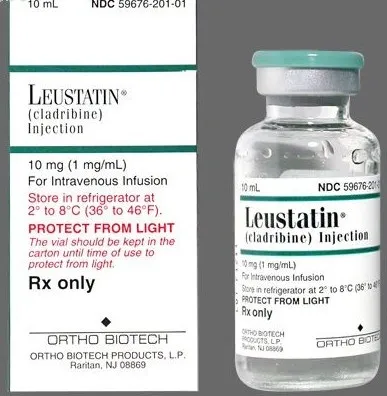
Table of Contents
Package leaflet: Information for the user
Introduction
Package leaflet: information for the user
LEUSTATIN 1mg/ml solution for infusion
cladribine
Read the entire leaflet carefully before you start using the medicine.
- Keep this leaflet, as you may need to read it again.
- If you have any questions, consult your doctor or pharmacist.
- This medicine has been prescribed for you and must not be given to other people, even if they have the same symptoms, as it could harm them.
- If you consider any of the side effects you experience to be severe, or if you notice any side effects not mentioned in this leaflet, inform your doctor or pharmacist.
Leaflet contents:
- What Leustatin is and what it is used for
- What you need to know before using Leustatin
- How to use Leustatin
- Possible side effects
- How to store Leustatin
Pack contents and additional information
1. What Leustatin is and what it is used for
Leustatin belongs to a group of medicines called synthetic antineoplastic agents.
Leustatin is indicated:
? for the treatment of active hairy cell leukemia.
? for the treatment of patients with B-cell chronic lymphocytic leukemia who have not responded, or whose disease has progressed, during or after treatment with a standard regimen containing at least one alkylating agent.
2. What you need to know before using Leustatin
Do not use Leustatin
- if you are allergic (hypersensitive) to cladribine or to any of the other ingredients listed in section 6.
- if you are pregnant or suspect you might be pregnant.
Warnings and precautions
Consult your doctor or pharmacist or nurse before starting Leustatin
- This medicine must always be administered under medical supervision, and various checks should be performed during treatment to monitor the progression of the disease and possible adverse effects caused by Leustatin.
- This medicine causes a reduction in the bone marrow's ability to produce blood cells. Your doctor may carry out careful blood monitoring, even after treatment with Leustatin has ended.
- Use with caution if administered after or concurrently with other drugs that reduce the bone marrow's capacity to produce blood cells.
- Serious infections (e.g., respiratory infections, pneumonia, and skin viral infections), even fatal ones (e.g., systemic infection), have been reported. To prevent possible infections, patients should be closely monitored. If you have an infection, it must be treated before starting treatment with Leustatin.
- This medicine commonly causes fever, especially during the first month, and in hairy cell leukemia it is not associated with any type of infection.
- If you have any severe bone marrow disorder, regardless of cause.
- If you have kidney problems.
- If you have liver problems.
At any time during or after treatment, inform your doctor or nurse immediately if you experience:
blurred vision, loss of vision, or double vision; difficulty speaking; weakness in one arm or leg; changes in the way you walk or problems with balance; persistent numbness, reduced sensation, or loss of sensation; memory loss, or confusion. All of these may be symptoms of a serious and potentially life-threatening brain disease known as progressive multifocal leukoencephalopathy (PML).
If you had any of these symptoms before starting treatment with cladribine, inform your doctor if you notice any changes in these symptoms.
Other medicines and Leustatin
Inform your doctor or pharmacist if you are taking, have recently taken, or might need to take any other medicines.
The effects of Leustatin on the action of other medicines are not known. Your doctor will advise which medicines can be used together with Leustatin. Exercise special caution with:
- Fludarabine (a medicine used to treat a type of cancer): Patients who have received treatment with fludarabine should not use Leustatin, as no positive outcome is expected from its use.
- Other medicines that reduce blood cell production.
- Concomitant administration of nucleoside analogues (a type of medicine used to treat certain viral diseases) with Leustatin is not recommended.
- Live attenuated vaccines: The use of this type of vaccine together with Leustatin is not recommended, as their combined use increases the risk of developing infections.
- Antiviral agents, adenosine reuptake inhibitors (a type of medicine used to treat certain viral diseases): These should not be administered together with Leustatin, as they may alter (increase or decrease) its effects.
Pregnancy, breastfeeding, and fertility
If you are pregnant or breastfeeding, think you might be pregnant, or plan to become pregnant, consult your doctor or pharmacist before using this medicine.
Leustatin must not be administered during pregnancy or if you suspect you are pregnant, as there is a potential risk to the fetus.
Both men and women using Leustatin must use effective contraception during treatment and for at least 6 months after the end of treatment.
It is not known whether Leustatin passes into breast milk. Breastfeeding must not be initiated during treatment with Leustatin and for at least 6 months after the last dose.
Use in children and adolescents
Leustatin should be administered with caution in children and adolescents. The efficacy and safety of Leustatin have not been established in this age group.
Use in patients aged 65 years and older
Patients aged 65 years and older should be treated only after individual assessment. Their blood tests, kidney function, and liver function should be closely monitored. Risk assessment should be performed on a case-by-case basis.
Driving and use of machines
Due to the patient's physical condition and the potential adverse effects of Leustatin, driving and operating dangerous machinery are not recommended.
Leustatin contains sodium
This medicine contains 38.2 mg of sodium (the main component of table/cooking salt) per vial. This corresponds to 1.91% of the maximum daily recommended sodium intake for an adult.
3. How to use Leustatin
Follow exactly the instructions for administering Leustatin as given by your doctor. If you have any doubts, consult your doctor or pharmacist.
Your doctor will determine the dosing regimen and duration of your treatment with Leustatin depending on your condition.
If you use more Leustatin than you should
If you have used more Leustatin than recommended, contact your doctor or pharmacist immediately.
There is no known specific antidote. It is not known whether an overdose can be removed by any technique resembling a normal physiological process. If an overdose greater than the recommended dose has been administered, treatment with Leustatin should be discontinued, careful observation carried out, and appropriate supportive measures taken.
In case of overdose or accidental ingestion, contact the Toxicology Information Service. Telephone (91) 562 04 20.
4. Possible adverse effects
Like all medicines, Leustatin can cause adverse effects, although not everyone will experience them.
If you consider any of the adverse effects you experience to be severe, or if you notice any adverse effect not listed in this leaflet, inform your doctor or pharmacist.
Leustatin is a potent antineoplastic agent (a substance that inhibits the growth of malignant tumor cells) capable of causing adverse effects.
Leustatin must be administered under the supervision of a physician experienced in the use of antineoplastic therapies.
Suppression of bone marrow function should be anticipated, including neutropenia (low white blood cells), anemia (low red blood cells), and thrombocytopenia (low platelets). This effect on the bone marrow is generally reversible and appears to be dose-dependent.
The effect of Leustatin on bone marrow is most pronounced during the first month after treatment. Patients with chronic lymphocytic leukemia treated with Leustatin experienced more severe bone marrow suppression than patients with hairy cell leukemia.
Since most episodes of fever occurred in patients with neutropenia (low white blood cells), these patients should be closely monitored during the first month of treatment.
Patients with Hairy Cell Leukemia:
The following adverse effects have been observed during clinical trials in patients with hairy cell leukemia and during post-marketing use of the medicine (regardless of indication).
Adverse effects may occur with certain frequencies, defined as follows:
- Very common: affects more than 1 in 10 people
- Common: affects 1 to 10 in 100 people
- Uncommon: affects 1 to 10 in 1,000 people
- Rare: affects 1 to 10 in 10,000 people
- Very rare: affects less than 1 in 10,000 people
- Not known: frequency cannot be estimated from available data
Very common adverse effects (affects more than 1 in 10 people)
- Headache
- Nausea
- Skin rash, including spotted or diffuse redness of the skin (erythema), macular rash (maculopapular exanthem), rash with spots and papules (maculopapular exanthem), papular rash (papular exanthem), itchy rash (pruritic exanthem), pustular rash (pustular exanthem), and red, spotted, or diffuse skin rash (erythematous exanthem)
- Fever, fatigue, and reaction at the administration site, including reaction at the site where the medicine is administered through a tube (catheter), with development of skin infection with blister formation (cellulitis), skin redness (erythema), bleeding (hemorrhage), and pain. Also includes infusion site reaction with redness (erythema), fluid accumulation (edema), and pain.
Common adverse effects (affects 1 to 10 in 100 people)
-
Severe systemic infection
-
Secondary malignant neoplasms (secondary malignant tumors), primary hematological neoplasms (primary blood-origin tumors)
-
Hemolytic anemia (a disorder causing a decrease in the mass of blood cells called red blood cells) and autoimmune hemolytic anemia (when the immune system attacks the body's own cells)
-
Anemia, febrile neutropenia (severe decrease in the number of blood cells called neutrophils, which may cause fever)
-
Allergic reaction
-
Confusion, disorientation
-
Difficulty sleeping, anxiety
-
Dizziness
-
Conjunctivitis
-
Increased heart rate (tachycardia), heart murmur, insufficient blood flow to the heart (myocardial ischemia)
-
Pulmonary interstitial infiltrates (accumulation of foreign substances within lung tissue)
-
Pulmonary infiltration (accumulation in the lung of a substance foreign to it)
-
Interstitial lung disease (an inflammatory disorder of the lower airways)
-
Pneumonitis (inflammation of lung tissue)
-
Pulmonary fibrosis (a disease characterized by scarring of the lungs)
-
Cough, difficulty breathing including breathlessness during physical activity, and high-pitched whistling sounds when breathing (wheezing), abnormal breathing sounds, whistling sounds when breathing (rales)
-
Vomiting, abdominal pain including abdominal discomfort and lower and upper abdominal pain, diarrhea, constipation, flatulence
-
Urticaria
-
Excessive sweating, bruising, small pinhead-sized red skin spots (petechiae), itching
-
Pain, back pain, muscle pain, joint pain, chest pain, bone pain, limb pain, pain due to joint inflammation
-
Renal failure (kidneys no longer functioning properly), acute renal failure (rapid and progressive loss of kidney function), and renal dysfunction (impaired kidney function)
- Generalized fatigue (asthenia), general malaise, chills, superficial fluid accumulation (peripheral edema), muscle weakness, decreased appetite
- Minor trauma (contusion)
Uncommon adverse effects (affect 1 to 10 in 1,000 people)
- Infections occurring when the immune defenses are low (opportunistic infections)
- Prolonged deficiency of all blood cell components due to suppression of bone marrow function (bone marrow suppression with prolonged pancytopenia)
- A disease in which the bone marrow does not function properly and fails to produce enough normal red blood cells (aplastic anemia)
- Persistent elevation of a type of blood cell called eosinophils (hyper eosinophilia)
- Incomplete and defective development of cells formed in the bone marrow (myelodysplastic syndrome)
- Massive destruction of cancer cells (tumor lysis syndrome)
- Decreased level of consciousness
- Nervous system disorders (neurological toxicity), including: peripheral sensory neuropathy, motor neuropathy (paralysis), polyneuropathy, and paraparesis (mild paraplegia)
- Increased bilirubin and transaminases (substances and proteins in the body that indicate liver function)
- Stevens-Johnson syndrome (a serious disorder affecting the skin, mucous membranes, and internal organs)
Rare adverse effects (affect 1 to 10 in 10,000 people)
- Heart failure, disturbance in the heart's rhythm (arrhythmia)
Since the medicine has been commercially available, the following additional adverse effects have been reported:
As a consequence of prolonged immune system suppression associated with the use of nucleoside analogs such as Leustatin, cases of neoplasms have been observed. Primary hematological malignancies are also a risk factor for secondary malignant neoplasms.
Patients with Chronic Lymphocytic Leukemia:
The following adverse effects have been observed during clinical trials in patients with chronic lymphocytic leukemia and during post-marketing use of the medicine (regardless of indication).
Very common adverse effects (affects more than 1 in 10 people)
- Headache
- Fever, fatigue, reaction at the administration site, including reaction at the site where the medicine is administered through a tube (catheter), with development of redness (erythema) and skin infection. Also includes infusion site reaction with development of skin infection with blister formation (cellulitis), redness (erythema), irritation, fluid accumulation (edema), pain, infection, and inflammation of the wall of a vein (phlebitis).
Common adverse effects (affect 1 to 10 in 100 people)
- Severe systemic infection
- Pneumonia, presence of bacteria in the blood (bacteremia), skin infection with blister formation (cellulitis), localized infection
- Secondary malignant neoplasms (secondary malignant tumors), primary hematological neoplasms (primary blood-origin tumors)
- Hemolytic anemia (a disorder causing a decrease in the mass of blood cells called red blood cells) and autoimmune hemolytic anemia (anemia caused when the immune system attacks the body's own red blood cells)
- Decreased number in blood of cells called platelets (thrombocytopenia), leading to bleeding or small pinhead-sized red skin spots (petechiae), anemia
- Allergic reaction
- Confusion, disorientation
- Inflammation of the wall of a vein (phlebitis)
- Pulmonary interstitial infiltrates (accumulation of foreign substances within lung tissue)
- Pulmonary infiltration (accumulation in the lung of a substance foreign to it)
- Interstitial lung disease (an inflammatory disorder of the lower airways)
- Pneumonitis (inflammation of lung tissue)
- Pulmonary fibrosis (a disease characterized by scarring of the lungs)
- Cough, difficulty breathing including breathlessness during physical activity, abnormal breathing sounds, whistling sounds when breathing (rales)
- Nausea, diarrhea, vomiting
- Urticaria
- Skin rash including maculopapular rash (maculopapular exanthem), itchy rash (pruritic exanthem), pustular rash (pustular exanthem), and red, spotted, or diffuse skin redness (erythema), excessive sweating, formation of red skin spots (purpura)
- Pain, joint pain, back pain, bone pain, bone and muscle pain, limb pain
- Renal failure (kidneys no longer functioning properly), acute renal failure (rapid and progressive loss of kidney function), and renal dysfunction (impaired kidney function)
- Generalized fatigue (asthenia), muscle weakness, fluid accumulation (edema), localized fluid accumulation (localized edema), superficial fluid accumulation (peripheral edema), abnormal fixed bubbling lung sound (crepitations)
Uncommon adverse effects (affect 1 to 10 in 1,000 people)
- Infections occurring when the immune defenses are low (opportunistic infections)
- Prolonged deficiency of all blood cell components due to suppression of bone marrow function (bone marrow suppression with prolonged pancytopenia)
- A disease in which the bone marrow does not function properly and fails to produce enough normal red blood cells (aplastic anemia)
- Persistent elevation of a type of blood cell called eosinophils (hyper eosinophilia)
- Incomplete and defective development of cells formed in the bone marrow (myelodysplastic syndrome)
- Massive destruction of cancer cells (tumor lysis syndrome)
- Decreased level of consciousness
- Nervous system disorders (neurological toxicity), including: peripheral sensory neuropathy, motor neuropathy (paralysis), polyneuropathy, and paraparesis (mild paraplegia)
- Conjunctivitis
- Increased bilirubin and transaminases (substances and proteins in the body that indicate liver function)
- Stevens-Johnson syndrome (a serious disorder affecting the skin, mucous membranes, and internal organs)
Herpes-related infections (herpetic retinitis: retinal infection caused by the herpes virus, herpes zoster) have been observed months or even years after treatment with Leustatin.
Since the medicine has been commercially available, the following additional adverse effects have been reported:
As a consequence of prolonged immune system suppression associated with the use of nucleoside analogs such as Leustatin, cases of neoplasms have been observed. Primary hematological malignancies are also a risk factor for secondary malignant neoplasms.
Reporting of adverse effects
If you experience any adverse effect, consult your doctor or pharmacist, even if it is a possible adverse effect not listed in this leaflet. You may also report them directly via the Spanish Pharmacovigilance System for Human Medicines: https://www.notificaram.es. By reporting adverse effects, you can help provide more information on the safety of this medicine.
5. Storage of Leustatin
Keep this medicine out of the sight and reach of children.
Store in a refrigerator (between 2°C and 8°C).
Keep in the original packaging to protect from light.
Do not use this medicine after the expiry date stated on the container following EXP. The expiry date is the last day of the month indicated.
6. Package contents and other information
Composition of Leustatin
- The active substance is cladribine. Each vial (10 millilitres) contains 10 milligrams of cladribine.
- The other components are sodium chloride and water for injections.
- Phosphoric acid and/or disodium phosphate E339 are added to adjust the pH to a range of 5.5 – 8.0.
Nature and contents of the container
Leustatin is presented as buffered, sterile solution in vials containing 10 milligrams (1 milligram/millilitre) of 2-chloro-2'-deoxy-β-D-adenosine (cladribine), for dilution and subsequent continuous intravenous infusion.
Each pack contains seven vials of Leustatin.
Marketing Authorisation Holder and Manufacturer
Marketing Authorisation Holder
Atnahs Pharma Netherlands B.V.
Copenhagen Towers
Ørestads Boulevard 108, 5.tv
DK-2300 Copenhagen S
Denmark
Manufacturer
Eurofins Analytical Services Hungary Kft.
Kerulet, Anonymus Utca 6/IV, IV Kerulet,
Budapest, 1045, Hungary
Janssen Pharmaceutica N.V.
Turnhoutseweg 30, B-2340 Beerse
Belgium
Local representative:
Pharmanovia A/S
Copenhagen Towers
Ørestads Boulevard 108, 5.tv
DK-2300 Copenhagen S
Denmark
Date of the most recent revision of this leaflet: October 2021.
Other sources of information
Detailed and up-to-date information on this medicinal product is available on the website of the Spanish Agency of Medicines and Health Products (AEMPS) (http://www.aemps.gob.es/).
INFORMATION FOR MEDICAL OR HEALTHCARE PROFESSIONALS ONLY:
Dosage
Hairy cell leukaemia: The recommended treatment for hairy cell leukaemia is a single cycle of Leustatin, administered as a continuous intravenous infusion over 7 consecutive days at a dose of 0.09 milligrams/kilogram/day (3.6 milligrams/square metre/day). Deviation from this dosing regimen is not recommended. If a patient with hairy cell leukaemia does not respond to initial treatment with Leustatin, it is unlikely that subsequent cycles will provide benefit. However, limited experience indicates that additional cycles may be beneficial in patients who relapse after an initial response to Leustatin administration.
Chronic Lymphocytic Leukaemia: In patients with Chronic Lymphocytic Leukaemia, the recommended treatment consists of a continuous infusion of Leustatin over 2 hours on days 1 to 5 in 28-day cycles, at a dose of 0.12 milligrams/kilogram/day (4.8 milligrams/square metre/day). It is recommended that patients who respond to Leustatin treatment receive a maximum of 6 monthly cycles, and patients who do not respond should not receive more than 2 cycles of treatment.
Instructions for use
Before administration, Leustatin must be diluted. Since the product contains no antimicrobial preservative or bacteriostatic agent, aseptic techniques and appropriate environmental precautions must be observed during the preparation of the Leustatin solution.
Leustatin is stable until the expiry date indicated on the container when stored under appropriate refrigerated conditions between 2°C and 8°C, protected from light, and in sealed vials. Freezing does not damage the solution. If frozen, it should be thawed naturally at room temperature. LEUSTATIN MUST NOT BE HEATED OR PLACED IN A MICROWAVE OVEN. If, after thawing, the vial is returned to the refrigerator, the Leustatin vial remains stable until its expiry date. IT MUST NOT BE RE-FROZEN.
Once diluted, solutions containing Leustatin should be administered immediately or stored in the refrigerator between 2°C and 8°C prior to administration for no longer than 8 hours.
Parenteral medicinal products should be visually inspected for particulate matter and discoloration prior to administration, whenever solution and container permit. When Leustatin is exposed to low temperatures, precipitates may appear; this can be resolved by allowing the solution to reach room temperature and shaking vigorously. LEUSTATIN MUST NOT BE HEATED OR PLACED IN A MICROWAVE OVEN.
Care must be taken to ensure sterility of prepared solutions. Once diluted, Leustatin solutions should be administered immediately or stored in the refrigerator between 2°C and 8°C prior to administration for no longer than 8 hours. Leustatin vials are for single use only. Any unused portion should be properly discarded.
The potential risks associated with cytotoxic agents are well documented; therefore, appropriate precautions should be taken when handling, preparing, and administering Leustatin. Disposable gloves and protective clothing are recommended. If Leustatin comes into contact with the skin or mucous membranes, the affected area should be immediately washed with copious amounts of water.
If accidental extravasation of the administered medication occurs, local tissue damage is unlikely. If extravasation does occur, administration should be stopped and resumed in another vein. Other local measures include elevating the arm and applying ice to reduce swelling.
Due to limited data on compatibility, it is recommended to use only the recommended diluents and infusion systems.
Solutions containing Leustatin must not be mixed with other drugs or intravenous additives, nor should they be administered simultaneously via the same intravenous line, as compatibility studies have not been conducted.
If the same intravenous line is used for sequential infusion of different drugs, the line should be flushed with a compatible diluent before and after Leustatin infusion.
The use of 5% dextrose as a diluent is not recommended, as it increases the degradation of cladribine.
Additives used in the mixture with Leustatin are physically and chemically stable for at least 24 hours, provided they are maintained at room temperature, under normal fluorescent lighting conditions, and in most commonly used PVC infusion containers.
Hairy cell leukaemia: Preparation of a single daily dose for intravenous administration: Prior to each daily infusion and prior to introduction into the infusion bag, Leustatin must pass through a sterile, disposable, hydrophilic syringe filter of 0.22 µm. Add the calculated dose (0.09 milligrams/kilogram or 0.09 millilitres/kilogram) of Leustatin through the sterile filter to an infusion bag containing 100 to 500 millilitres of 0.9% Sodium Chloride for Injection, Ph. Eur. The infusion should be administered continuously over 24 hours. This should be repeated daily for a total of 7 consecutive days.
Chronic Lymphocytic Leukaemia: Preparation of a single daily dose for intravenous administration: Prior to each daily infusion and prior to introduction into the infusion bag, Leustatin must pass through a sterile, disposable, hydrophilic syringe filter of 0.22 µm. Add the calculated dose (0.12 milligrams/kilogram or 4.8 milligrams/square metre) of Leustatin through the sterile filter to an infusion bag containing 100 to 500 millilitres of 0.9% Sodium Chloride, Ph. Eur. The infusion should be administered continuously over 2 hours. This should be repeated daily for a total of 5 consecutive days. The use of 5% dextrose as a diluent is not recommended, as it increases the degradation of cladribine.