Leqvio 284 mg solution for injection in pre-filled syringe
Spain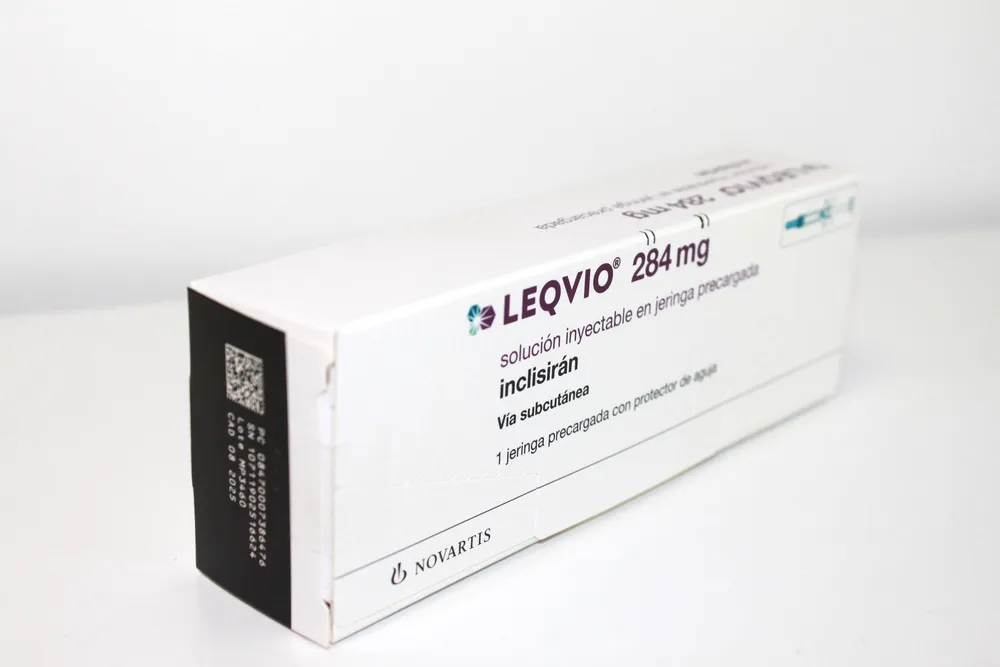
Table of Contents
Package leaflet: Information for the user
Introduction
Package leaflet: Information for the patient
Leqvio 284 mg solution for injection in pre-filled syringe
Pre-filled syringe with needle guard
inclisiran
Read the entire leaflet carefully before you are given this medicine, as it contains important information for you.
- Keep this leaflet, as you may need to read it again.
- If you have any questions, ask your doctor, pharmacist or nurse.
- If you experience any side effects, talk to your doctor, pharmacist or nurse, even if they are not listed in this leaflet. See section 4.
Contents of the leaflet
- What Leqvio is and what it is used for
- What you need to know before you are given Leqvio
- How Leqvio is administered
- Possible side effects
- How to store Leqvio
- Contents of the pack and other information
1. What Leqvio is and what it is used for
What Leqvio is and how it works
Leqvio contains the active substance inclisiran. Inclisiran reduces levels of LDL cholesterol (so-called "bad" cholesterol), which can cause heart and circulatory problems when levels are high.
Inclisiran works by interfering with RNA (responsible for carrying genetic information in the body's cells) to limit the production of a protein called PCSK9. This protein can increase LDL cholesterol levels, and by preventing its production, inclisiran helps reduce LDL cholesterol levels.
What Leqvio is used for
Leqvio is used together with a cholesterol-lowering diet in adults who have high cholesterol levels in the blood (primary hypercholesterolaemia, including heterozygous familial and non-familial forms, or mixed dyslipidaemia).
Leqvio is given:
- in combination with a statin (a type of medicine used to treat high cholesterol), sometimes together with another cholesterol-lowering treatment, when the maximum dose of statin is not effective enough, or
- alone or in combination with other cholesterol-lowering medicines when statins are not effective enough or cannot be used.
2. What you need to know before you are given Leqvio
Do not administer Leqvio to you
- if you are allergic to inclisiran or to any of the other components of this medicine (listed in section 6).
Warnings and precautions
Talk to your doctor, pharmacist, or nurse before you are given Leqvio:
- if you are undergoing dialysis
- if you have severe liver disease
- if you have severe kidney disease
Children and adolescents
Do not use this medicine in children and adolescents under 18 years of age, as there is no experience with the use of this medicine in this age group.
Other medicines and Leqvio
Tell your doctor, pharmacist, or nurse if you are taking, have recently taken, or might need to take any other medicines.
Pregnancy and breastfeeding
If you are pregnant or breastfeeding, think you may be pregnant, or are planning to become pregnant, consult your doctor, pharmacist, or nurse before using this medicine.
The use of Leqvio should be avoided during pregnancy.
It is not yet known whether Leqvio passes into breast milk. Your doctor will help you decide whether to continue breastfeeding or to start treatment with Leqvio. Your doctor will consider the potential benefits of treatment for you compared to the benefits for your baby's health and the risks associated with breastfeeding.
Driving and using machines
Leqvio is not expected to have any effect on your ability to drive or use machines.
Leqvio contains sodium
This medicine contains less than 1 mmol of sodium (23 mg) per dose; i.e., essentially “sodium-free”.
3. How Leqvio is administered
The recommended dose of Leqvio is 284 mg administered as an injection under the skin (subcutaneous injection). The next dose is given after 3 months, followed by subsequent doses every 6 months.
Before starting Leqvio, you should already be following a cholesterol-lowering diet and are likely taking a statin. You should continue the cholesterol-lowering diet and keep taking the statin throughout the time you receive Leqvio.
Leqvio is administered as a subcutaneous injection into the abdomen. Alternative administration sites are the upper arm or thigh. Leqvio will be administered by a doctor, pharmacist, or nurse (healthcare professional).
If more Leqvio has been administered than you should receive
This medicine will be administered by a doctor, pharmacist, or nurse (healthcare professional). In the unlikely event that you are given too much (an overdose), the doctor or other healthcare professional will monitor you for any adverse effects.
If you miss a dose of Leqvio
If you miss an appointment for your Leqvio injection, contact your doctor, pharmacist, or nurse as soon as possible to reschedule your next injection.
If you have any further questions about the use of this medicine, ask your doctor, pharmacist, or nurse.
4. Possible adverse effects
Like all medicines, this medicine may cause adverse effects, although not everyone will experience them.
Frequent (may affect up to 1 in 10 people)
- Reactions at the injection site, such as pain, redness, or rash.
Reporting of adverse effects
If you experience any type of adverse effect, consult your doctor, pharmacist, or nurse, even if it is a possible adverse effect not listed in this leaflet. You may also report them directly through the national reporting system included in Appendix V. By reporting adverse effects, you can help provide more information on the safety of this medicine.
5. Storage of Leqvio
Keep this medicine out of the sight and reach of children.
Do not use this medicine after the expiry date stated on the label and the carton after CAD/EXP. The expiry date refers to the last day of the month indicated.
This medicine does not require any special storage conditions. Do not freeze.
Your doctor, pharmacist, or nurse will check this medicine and discard it if it contains particles.
Medicines must not be disposed of via wastewater or household waste. Your doctor, pharmacist, or nurse will dispose of any medicines you no longer need. This will help protect the environment.
6. Contents of the pack and other information
Composition of Leqvio
- The active substance is inclisiran. Each pre-filled syringe contains inclisiran sodium equivalent to 284 mg of inclisiran in 1.5 ml of solution. Each ml contains inclisiran sodium equivalent to 189 mg of inclisiran.
- The other components are water for injections, sodium hydroxide (E524) (see section 2 “Leqvio contains sodium”), and concentrated phosphoric acid (E338).
Nature of the product and pack contents
Leqvio 284 mg solution for injection in pre-filled syringe is a clear, colourless to slightly yellow solution, practically free from particles.
Each pack contains one pre-filled syringe with a single-use needle protector.
Marketing Authorization Holder
Novartis Europharm Limited
Vista Building
Elm Park, Merrion Road
Dublin 4
Ireland
Manufacturer
Novartis Pharmaceutical Manufacturing GmbH
Biochemiestrasse 10
6336 Langkampfen
Austria
Novartis Pharma GmbH
Sophie-Germain-Strasse 10
90443 Nürnberg
Germany
For more information about this medicine, please contact the local representative of the Marketing Authorization Holder:
Belgium/Belgium/Belgium Novartis Pharma N.V. Tel/Tel: +32 2 246 16 11 | Lithuania SIA Novartis Baltics Lithuania Branch Tel: +370 5 269 16 50 |
Novartis Bulgaria EOOD Tel: +359 2 489 98 28 | Luxembourg/Luxembourg Novartis Pharma N.V. Tel/Tel: +32 2 246 16 11 |
Czech Republic Novartis s.r.o. Tel: +420 225 775 111 | Hungary Novartis Hungária Kft. Tel.: +36 1 457 65 00 |
Denmark Novartis Healthcare A/S Tlf.: +45 39 16 84 00 | Malta Novartis Pharma Services Inc. Tel: +356 2122 2872 |
Germany Novartis Pharma GmbH Tel: +49 911 273 0 | Netherlands Novartis Pharma B.V. Tel: +31 88 04 52 111 |
Estonia SIA Novartis Baltics Estonia Branch Tel: +372 66 30 810 | Norway Novartis Norge AS Tlf: +47 23 05 20 00 |
Greece Novartis (Hellas) A.E.B.E. Tel: +30 210 281 17 12 | Austria Novartis Pharma GmbH Tel: +43 1 86 6570 |
Spain Novartis Farmacéutica, S.A. Tel: +34 93 306 42 00 | Poland Novartis Poland Sp. z o.o. Tel.: +48 22 375 4888 |
France Novartis Pharma S.A.S. Tél: +33 1 55 47 66 00 | Portugal Novartis Farma - Produtos Farmacêuticos, S.A. Tel: +351 21 000 8600 |
Croatia Novartis Hrvatska d.o.o. Tel: +385 1 6274 220 | Romania Novartis Pharma Services Romania SRL Tel: +40 21 31299 01 |
Ireland Novartis Ireland Limited Tel: +353 1 260 12 55 | Slovenia Novartis Pharma Services Inc. Tel: +386 1 300 75 50 |
Iceland Vistor ehf. Tel: +354 535 7000 | Slovakia Novartis Slovakia s.r.o. Tel: +421 2 5542 5439 |
Italy Novartis Farma S.p.A. Tel: +39 02 96 54 1 | Finland Novartis Finland Oy Puh/Tel: +358 (0)10 6133 200 |
Cyprus Novartis Pharma Services Inc. Tel: +357 22 690 690 | Sweden Novartis Sverige AB Tel: +46 8 732 32 00 |
Latvia SIA Novartis Baltics Tel: +371 67 887 070 |
Date of the most recent review of this leaflet:
Other sources of information
Detailed information on this medicine is available on the European Medicines Agency website: http://www.ema.europa.eu.
This information is intended for healthcare professionals only:
Leqvio 284 mg solution for injection in pre-filled syringe
Pre-filled syringe with needle guard
inclisiran
Healthcare professionals should refer to the Summary of Product Characteristics for complete prescribing information.
Indication (see section 4.1 of the Summary of Product Characteristics)
Leqvio is indicated in adults with primary hypercholesterolemia (heterozygous familial and non-familial) or mixed dyslipidemia, as an adjunct to diet:
- in combination with a statin or a statin and other lipid-lowering therapies in patients who do not achieve LDL-C (low-density lipoprotein cholesterol) goals with the maximum dose of a statin, or
- alone or in combination with other lipid-lowering therapies in patients who are statin intolerant or for whom statins are contraindicated.
Dosage (see section 4.2 of the Summary of Product Characteristics)
The recommended dose is 284 mg of inclisiran administered as a single subcutaneous injection given at initiation, again at 3 months, and thereafter every 6 months.
Missed doses
If administration of a scheduled dose is delayed by less than 3 months, inclisiran should be administered and the original dosing schedule maintained.
If administration of a scheduled dose is delayed by more than 3 months, a new dosing schedule should be initiated – inclisiran should be administered as an initial dose, another at 3 months, and thereafter every 6 months.
Transition from monoclonal antibody inhibitors of proprotein convertase subtilisin/kexin type 9 (PCSK9)
Inclisiran may be administered immediately after the last dose of a monoclonal antibody inhibitor of PCSK9. To maintain LDL-C reduction, it is recommended to administer inclisiran 2 weeks after the last dose of the monoclonal antibody inhibitor of PCSK9.
Special populations
Elderly
Dose adjustment is not required in elderly patients (see section 5.2 of the Summary of Product Characteristics).
Hepatic impairment
Dose adjustment is not required in patients with mild (Child-Pugh class A) or moderate (Child-Pugh class B) hepatic impairment. No data are available in patients with severe hepatic impairment (Child-Pugh class C) (see section 5.2 of the Summary of Product Characteristics). Inclisiran should be used with caution in patients with severe hepatic impairment.
Renal impairment
Dose adjustment is not required in patients with mild, moderate, or severe renal impairment or in patients with end-stage renal disease (see section 5.2 of the Summary of Product Characteristics). Experience with inclisiran is limited in patients with severe renal impairment. Inclisiran should be used with caution in these patients. See section 4.4 of the Summary of Product Characteristics for precautions regarding hemodialysis.
Paediatric population
The safety and efficacy of inclisiran in children under 18 years of age have not yet been established. No data are available.
Method of administration (see section 4.2 of the Summary of Product Characteristics)
For subcutaneous use.
Inclisiran is administered subcutaneously in the abdomen; alternative injection sites include the upper arm or thigh. Injections should not be administered in areas with active skin disease or wounds such as sunburn, rash, inflammation, or skin infections.
Each 284 mg dose is administered using a pre-filled syringe. Each pre-filled syringe is for single use only.
Inclisiran is intended to be administered by a healthcare professional.
Contraindications (see section 4.3 of the Summary of Product Characteristics)
Hypersensitivity to the active substance or to any of the excipients.
Special warnings and precautions for use (see section 4.4 of the Summary of Product Characteristics)
Hemodialysis
The effect of hemodialysis on the pharmacokinetics of inclisiran has not been studied. Given that inclisiran is eliminated via the renal route, hemodialysis should not be performed until at least 72 hours after administration of Leqvio.
Storage (see section 6.4 of the Summary of Product Characteristics)
No special storage conditions required. Do not freeze.
Instructions for Use of Leqvio Pre-filled Syringe with Needle Guard
This section contains information on how to inject Leqvio.
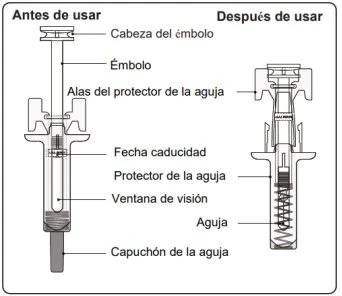
Important information you need to know before injecting Leqvio
- Do not use the pre-filled syringe if the seals on the outer packaging or the seal on the plastic tray are broken.
- Do not remove the needle cap until you are ready to inject.
- Do not use if the pre-filled syringe has been dropped onto a hard surface or has been dropped after removing the needle cap.
- Do not attempt to reuse or disassemble the pre-filled syringe.
- The pre-filled syringe has an activated needle guard that will cover the needle once the injection is complete. The needle guard will help prevent needle-stick injuries to anyone handling the pre-filled syringe after injection.
Step 1. Inspect the pre-filled syringe
You may see air bubbles in the liquid, which is normal. Do not attempt to remove the air.
- Do not use the pre-filled syringe if it appears damaged or if any of the injectable solution has leaked out of the pre-filled syringe.
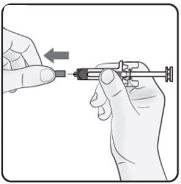
Step 2. Remove the needle cap Firmly and steadily pull to remove the needle cap from the pre-filled syringe. You may see a drop of liquid at the tip of the needle. This is normal. Do not recap the needle. Discard the cap. Do not remove the needle cap until you are ready to inject. Removing the cap too early before injection may cause the product to dry inside the needle, which could lead to needle blockage. |
|
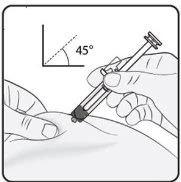
Step 3. Insert the needle Gently pinch the skin at the injection site and keep pinching throughout the injection. With the other hand, insert the needle into the skin at an approximate angle of 45 degrees, as shown in the image. |
|
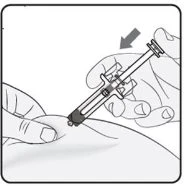
Step 4. Begin the injection Continue pinching the skin. Gently push the plunger as far as it will go. This will ensure that the full dose is injected. Note: If you are unable to push the plunger after inserting the needle, use a new pre-filled syringe. |
|
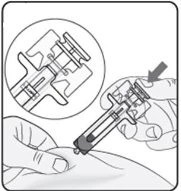
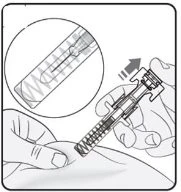
Step 5. Complete the injection Ensure that the plunger head is positioned between the wings of the needle guard, as shown in the image. This ensures that the needle guard has been activated and will cover the needle after the injection is complete. |
|
Step 6. Release the plunger While keeping the pre-filled syringe in place at the injection site, slowly release the plunger until the syringe is covered by the needle guard. Remove the pre-filled syringe from the injection site. |
|
Step 7. Dispose of the pre-filled syringe Dispose of the pre-filled syringe according to local regulations. |