Leptoprol Trimestral 5 mg implant in pre-filled syringe
Spain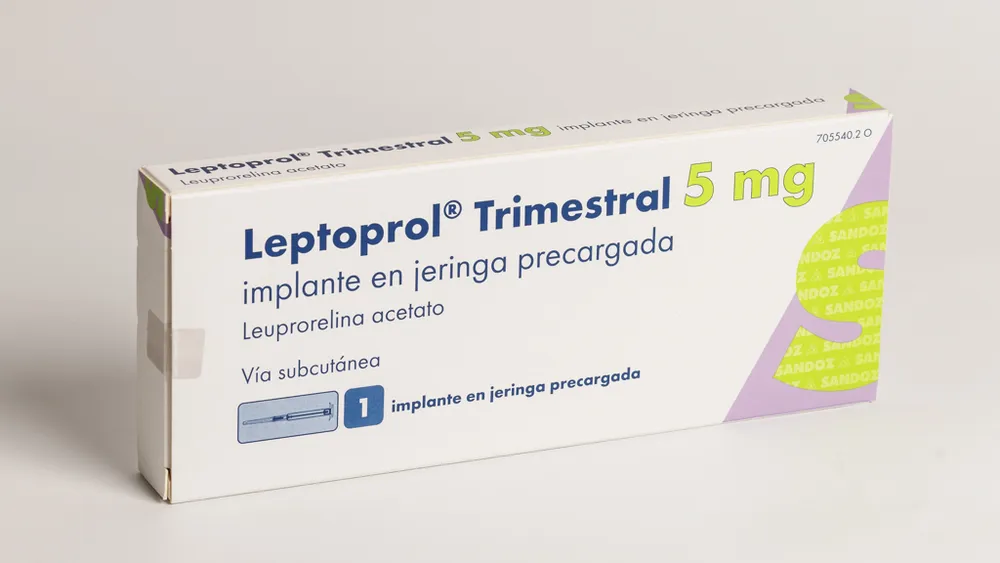
Table of Contents
- Package leaflet: Information for the user
- Introduction
- 1. What Leptoprol Trimestral is and what it is used for
- 2. What you need to know before using Leptoprol Trimestral
- 3. How to use Leptoprol Trimestral
- 4. Possible adverse effects
- 5. Storage of Leptoprol Trimestral
- 6. Contents of the pack and other information
Package leaflet: Information for the user
Introduction
Package leaflet: information for the user
Leptoprol Trimestral 5 mg implant in pre-filled syringe
leuprorelin acetate
Read all of this leaflet carefully before you start using this medicine, because it contains important information for you.
- Keep this leaflet, as you may need to read it again.
- If you have any questions, ask your doctor, pharmacist or nurse.
- This medicine has been prescribed for you only, and you should not give it to other people, even if they have the same symptoms as you, because it may harm them.
- If you experience any side effects, talk to your doctor, pharmacist or nurse, even if the side effects are not listed in this leaflet. See section 4.
Contents of the leaflet
- What Leptoprol Trimestral is and what it is used for
- What you need to know before using Leptoprol Trimestral
- How to use Leptoprol Trimestral
- Possible side effects
- How to store Leptoprol Trimestral
- Contents of the pack and other information
1. What Leptoprol Trimestral is and what it is used for
The active substance of Leptoprol Trimestral (leuprorelin acetate) belongs to the group of inhibitors of certain sex hormones.
Leuprorelin acts on the pituitary gland, briefly stimulating it and then suppressing the production of hormones that control the secretion of sex hormones in the testes.
This results in a decrease in the concentration of sex hormones, which remains low during continued administration. After discontinuation of leuprorelin treatment, the concentrations of sex hormones and pituitary hormones return to normal levels.
Leptoprol Trimestral is used for the symptomatic treatment of advanced hormone-dependent prostate tumours in adult males (prostate carcinoma).
Leptoprol Trimestral is also used for the treatment of locally advanced and localized hormone-dependent prostate tumours, either in combination with or following radiotherapy.
2. What you need to know before using Leptoprol Trimestral
Do not use Leptoprol Trimestral:
- if you are allergic to leuprorelin or to any of the other ingredients of this medicine (listed in section 6),
- if you are allergic to substances similar to leuprorelin, such as goserelin or buserelin,
- if your cancer is not hormone-sensitive,
- if you are a woman or a child.
Warnings and precautions
Consult your doctor or nurse before starting Leptoprol Trimestral if:
- you have high blood pressure. In this case, your doctor will monitor you periodically,
- you have had your testicles surgically removed. In this case, leuprorelin will not cause any additional decrease in male sex hormone levels in the blood,
- before starting treatment you had neurological symptoms (spinal cord compression, spinal metastases) or urinary difficulties due to displacement of the urinary tract. You must inform your doctor immediately: he or she will perform a thorough examination during the first few weeks, preferably in a hospital setting,
- if symptoms of the disease reappear (such as pain, difficulty urinating, or leg weakness) during prolonged use of leuprorelin. In this case, your doctor will regularly assess treatment effectiveness through clinical evaluations (digital rectal examination of the prostate, scanning) and blood tests (alkaline phosphatase, prostate-specific antigen (PSA), and male sex hormone (testosterone)),
- if there is a risk of developing osteoporosis. Your doctor will provide additional medication when possible to prevent bone loss,
- if you have diabetes. In this case, your doctor will perform periodic checks,
- you have fatty liver (a condition in which excess fat accumulates in the liver).
Contact your doctor immediately if you experience severe or recurrent headaches, visual disturbances, tinnitus, or ringing in the ears.
Cases of depression, which may be severe, have been reported in patients treated with leuprorelin. If you develop depression while taking leuprorelin, inform your doctor.
Inform your doctor if you have any of the following conditions: blood vessel or heart problems, including cardiac rhythm disorders (arrhythmia), or if you are being treated with medications for these conditions. The risk of cardiac rhythm disturbances may be increased when using leuprorelin.
Severe skin reactions, including Stevens-Johnson syndrome/toxic epidermal necrolysis (SJS/TEN), have been reported in association with leuprorelin. Discontinue use of leuprorelin and seek immediate medical attention if you notice any symptoms related to these severe skin reactions described in section 4.
Important information for athletes
Athletes should be aware that this medicinal product contains a component that may result in a positive doping test.
Other medicines and Leptoprol Trimestral
Inform your doctor, pharmacist, or nurse if you are taking, have recently taken, or might need to take any other medicines.
Leuprorelin may interfere with certain medications used to treat heart rhythm problems (e.g.: quinidine, procainamide, amiodarone, and sotalol), or may increase the risk of heart rhythm disturbances when used with other medicines (e.g.: methadone (used for pain relief and as part of drug addiction detoxification treatment), moxifloxacin (an antibiotic), antipsychotics used for serious mental illnesses).
Children and adolescents
Leuprorelin is indicated only for adult patients.
Pregnancy and breastfeeding
Leuprorelin is intended only for male patients.
Driving and using machines
This medicine and the underlying tumour disease may cause fatigue. This effect may be more pronounced when alcohol is consumed.
Therefore, do not drive or operate machinery without your doctor's approval if this applies to you.
3. How to use Leptoprol Trimestral
Use of Leptoprol Trimestral
- Clean the area where the implant is to be injected,
- A local anesthetic may be applied to relieve the discomfort of the implant injection,
- Inject Leptoprol Trimestral under the skin (subcutaneously) in the abdominal area.
- Leptoprol Trimestral must only be administered by your doctor or nurse. They will be responsible for preparing the product.
How much should be administered
The recommended dose is 1 implant of Leptoprol Trimestral containing 5 mg of leuprorelin every 3 months.
- Follow your doctor's instructions regarding when to use Leptoprol Trimestral and the interval between each injection,
- Leptoprol Trimestral injections will be administered every 3 months. If the next injection is delayed by up to 4 weeks in exceptional cases, the therapeutic effect is usually not affected,
- Inject the contents of one pre-filled syringe,
- The syringe contains an implant with a dose of 5 mg of leuprorelin.
Blood tests
Your doctor will need to perform regular blood tests to monitor the effect of this medicine. After 3 months of treatment, your doctor will usually determine whether your prostate cancer is responsive to leuprorelin. Your doctor should also monitor prostate-specific antigen (PSA) and testosterone levels.
Duration of treatment
This will be determined by your doctor. Treatment should be continued, even if symptoms related to cancer have decreased or the cancer has improved.
Prostate cancer can be treated with this medicine for several years. Therefore, if it is effective and well tolerated, it may be continued long-term. Your doctor will perform regular tests to evaluate the treatment, particularly if symptoms recur, such as:
- Pain,
- Difficulty urinating,
- Weakness in the legs.
If you use more Leptoprol Trimestral than you should
It is unlikely that your doctor or nurse will administer too much medication.
If an excessive amount is accidentally administered, your doctor will monitor you and provide appropriate treatment if necessary.
In case of overdose or accidental ingestion, contact your doctor or pharmacist immediately or call the Toxicology Information Service at 91 562 04 02, indicating the medication and the amount ingested.
If you forget to use Leptoprol Trimestral
Speak with your doctor if you think your quarterly dose of leuprorelin has been missed.
If you stop treatment with Leptoprol Trimestral
If treatment is stopped without your doctor's consent, symptoms related to your disease may worsen.
Treatment must not be stopped prematurely without your doctor's approval.
If you have any further questions about the use of this medicine, consult your doctor or nurse.
4. Possible adverse effects
Like all medicines, this medicine can cause adverse effects, although not everyone will experience them.
Contact your doctor or go immediately to the nearest hospital if you experience the following serious adverse effects:
- allergic reactions (anaphylactic reactions). Symptoms may include:
- sudden onset of: feeling of warmth, rash, itching or hives on the skin and/or mucous membranes,
- swelling of the face, lips, or tongue, or other parts of the body,
- shortness of breath, wheezing, or difficulty breathing,
- drop in blood pressure, rapid pulse, seizures, and in severe cases,
- cardiovascular collapse that may be life-threatening,
- swelling and pain in one part of the body due to a blood clot in a vein,
- difficulty breathing, chest pain, fainting, rapid heartbeat, bluish skin
- and discoloration due to a blood clot in the lungs.
Rare adverse effects (may affect up to 1 in 1,000 people)
There is initially a short-term increase in male sex hormones (testosterone) in the blood.
As a result, the following disease-related symptoms may temporarily worsen:
- appearance or increase in bone pain,
- difficulty urinating due to displacement of the urinary tract,
- pressure on the spine,
- muscle weakness in the legs,
- swelling due to fluid accumulation in the tissues impairing circulation
- (lymphoedema).
This increase in symptoms usually resolves after discontinuation of treatment with this medicine.
At the beginning of treatment, administration of an antagonist (anti-androgen) of male sex hormones should be considered to minimize possible consequences of the initial rise in male sex hormones.
During treatment, male sex hormone levels drop to very low levels. As a consequence, the following adverse effects may occur in certain patients:
Very common: may affect more than 1 in 10 people
- hot flushes,
- increased sweating,
- bone pain,
- reduced or loss of sexual desire and potency,
- reduction in testicle size,
- weight gain,
- -local skin reactions such as redness or hardening, pain, swelling, and
- itching at the injection site, which usually subsides when treatment continues;
- in isolated cases, abscesses have occurred.
Common: may affect up to 1 in 10 people
- enlargement of male breasts,
- decreased appetite,
- increased appetite,
- depression, mood changes,
- sleep disturbances,
- headaches,
- unusual sensations such as tingling and/or numbness,
- nausea/vomiting,
- back or joint pain,
- muscle weakness,
- increased need to urinate at night,
- excessive frequency of urination during the day,
- difficulty and pain when urinating,
- fatigue,
- swelling of ankles, feet, or fingers (peripheral oedema),
- weight loss,
- increased levels of liver enzymes in blood (ALT, AST, gamma-GT) and other enzymes (LDH, alkaline phosphatase).
Uncommon: may affect up to 1 in 100 people
- general allergic reactions such as fever, itching, increase in eosinophilic blood cells, skin rash,
- diarrhoea,
- dry skin or mucous membranes,
- testicular pain,
- inability to completely empty the bladder spontaneously,
- increased night sweating.
Rare: may affect up to 1 in 1,000 people
- increase or decrease in blood sugar levels,
- dizziness,
- transient changes in taste sensation,
- increase or decrease in blood pressure,
- hair loss.
Very rare: may affect up to 1 in 10,000 people
- as with other medicines belonging to this class of substances: pituitary apoplexy (infarction of the pituitary gland) after the first administration in patients with pituitary tumour.
Frequency not known: frequency cannot be estimated from available data
- non-infectious lung disease (pneumonitis) (mainly reported in Japan),
- in isolated cases, an abscess has occurred at the injection site,
- changes in the electrocardiogram (ECG) (QT prolongation),
- inflammation of the lungs, lung disease,
- seizures,
- idiopathic intracranial hypertension (increased intracranial pressure around the brain characterized by headaches, diplopia and other visual symptoms, tinnitus or ringing in one or both ears),
- if you notice circular or target-shaped, reddish, flat spots on the trunk, often with central blisters, skin peeling, and ulcers in the mouth, throat, nose, genitals, and eyes. These severe skin rashes may be preceded by fever and flu-like symptoms (Stevens-Johnson syndrome/toxic epidermal necrolysis),
- redness of the skin and itchy rash (toxic skin eruption),
- a skin reaction causing pimples or red spots on the skin, which may resemble a target, with a dark red center surrounded by rings of lighter red (erythema multiforme).
Special information:
The effect of treatment with Leptoprol Trimestral can be monitored by measuring the blood concentration of the male sex hormone (testosterone) and performing other blood tests (acid phosphatase, PSA = prostate-specific antigen). Testosterone levels first rise at the beginning of treatment and then decrease over the following two weeks. After 2 to 4 weeks, the testosterone concentration achieved is similar to that observed after surgical removal of both testicles, remaining constant throughout the entire treatment period.
Temporary increases in blood levels of acid phosphatase may occur during the initial phase of treatment. Normal or near-normal levels are reached after a few weeks.
The reduction in the male sex hormone testosterone, as occurs after removal of the testicles or with treatment using medicines that suppress sex hormones (such as leuprorelin), may lead to decreased bone density with a high risk of bone fractures (see Warnings and precautions). However, the reduction in bone density after removal of the testicles is more pronounced than after leuprorelin administration. Your doctor will consider prescribing a medicine to regulate calcium metabolism (known as bisphosphonates).
Reporting of adverse effects
If you experience any type of adverse effect, talk to your doctor or pharmacist, even if it is a possible adverse effect not listed in this leaflet. You can also report them directly via the Spanish Pharmacovigilance System for Human Medicines: https://www.notificaram.es. By reporting adverse effects, you can help provide more information on the safety of this medicine.
5. Storage of Leptoprol Trimestral
Keep this medicine out of the sight and reach of children.
Do not store above 30°C.
Do not use this medicine after the expiry date stated on the carton, the sterile bag, and the syringe label following EXP. The expiry date refers to the last day of the month indicated.
Medicines must not be disposed of via wastewater or household waste. Dispose of unused medicines and their containers at the SIGRE collection point at your pharmacy. If you are unsure, ask your pharmacist how to properly dispose of unused medicines and their packaging. This will help protect the environment.
6. Contents of the pack and other information
Composition of Leptoprol Trimestral
The active substance is leuprorelin (as leuprorelin acetate).
1 implant contains 5 mg of leuprorelin (as leuprorelin acetate).
The other component is polylactic acid.
Appearance of the product and contents of the pack
Pre-filled plastic syringes made of polycarbonate, with a plunger made of acrylonitrile-butadiene-styrene copolymer and a needle, contained in a sealed polyethylene terephthalate/aluminum/PE pouch.
Pack sizes:
1x1 implant containing 5 mg of leuprorelin (as leuprorelin acetate)
2x1 implants containing 5 mg of leuprorelin (as leuprorelin acetate)
3x1 implants containing 5 mg of leuprorelin (as leuprorelin acetate)
5x1 implants containing 5 mg of leuprorelin (as leuprorelin acetate)
Only certain pack sizes may be commercially available.
Marketing Authorization Holder and Manufacturer
Marketing Authorization Holder
Sandoz Farmacéutica, S.A.
Parque Norte Business Park
Roble Building
C/ Serrano Galvache, 56
28033 Madrid
Spain
Manufacturer
EVER Pharma Jena GmbH
Otto-Schott-Strasse 15
07745 Jena
Germany
or
EBEWE Pharma Ges.m.b.H Nfg. KG
Mondseestrasse 11
4866 Unterach
Austria
or
Sandoz GmbH
Biochemiestraße 10
6250 Kundl
Austria
or
EVER Pharma Jena GmbH
Brüsseler Strasse 18
07747 Jena
Germany
or
Lek Pharmaceuticals d.d.
Verovškova ulica 57
SI – 1526 Ljubljana
Slovenia
Local Representative:
EVER Pharma Therapeutics Spain S.L.
C/ Toledo 170
28005 Madrid
Spain
Tel.: 0034 669596174
This medicinal product is authorized in the Member States of the European Economic Area under the following names:
Czech Republic: Leptoprol 5 mg
Finland: Leuprorelin Sandoz 5 mg implantaatti
France: Leptoprol
Germany: Leptoprol
Greece: Leuprorelin/Sandoz
Latvia: Leptoprol 5 mg implants pilnšlirce
Romania: Leptoprol
Slovenia: Leptoprol 5 mg implantat v napolnjeni injekcijski brizgi
Spain: Leptoprol Trimestral 5 mg implante en jeringa precargada
Date of the most recent review of this leaflet: August 2024.
“Detailed information on this medicinal product is available on the website of the Spanish Agency of Medicines and Health Products (AEMPS) http://www.aemps.gob.es.”
You can access detailed and up-to-date information on how to administer this medicine by scanning with your mobile phone (smartphone) the QR code included in the packaging. You can also access this information at the following web address: www.cima.aemps.es/info/79581.
This information is intended for healthcare professionals only:
Read the instructions carefully, as the applicator provided with this medicine may differ from others you have used previously.
Instructions for use
- Disinfect the injection site on the anterior abdominal wall below the umbilical line.
- Remove the applicator from the sterile pouch and check that the implant is visible in the reservoir (see highlighted area). To verify, examine the applicator against the light or gently shake it.
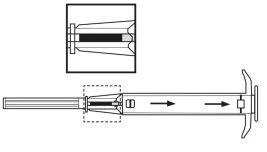
- Pull the applicator plunger fully backward until a complete line is visible in the second window.
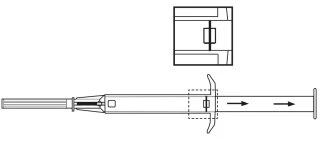
Note: The plunger can only be pushed forward to inject the implant if it has been pulled fully backward first.
-
Remove the needle cap.
-
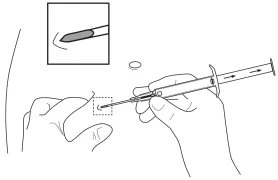
Hold the main body of the applicator in one hand. With the other hand, pinch the patient’s skin on the anterior abdominal wall below the umbilical line. See illustration.
With the needle opening facing upward, insert the entire needle into the subcutaneous tissue at a slight angle, almost parallel to the skin.
-
Carefully withdraw the applicator approximately 1 cm backward. This creates the puncture channel for the implant.
-
Inject the implant into the puncture channel by pushing the plunger fully forward until it clicks into place.
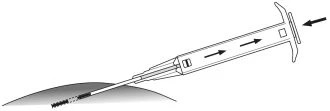
- Remove the needle. To confirm that the implant has been correctly injected, check that the light blue tip of the plunger is visible at the needle tip.
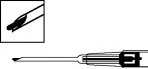
For information on dosage, refer to section 3 “How to use Leptoprol Trimestral”.