Lecigon 20 mg/ml + 5 mg/ml + 20 mg/ml intestinal gel
Spain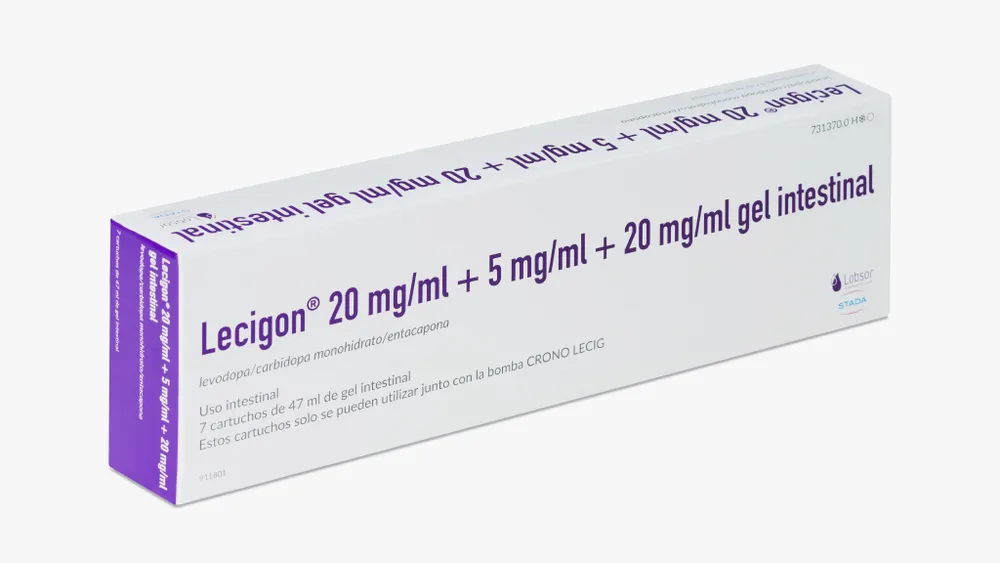
Table of Contents
Package leaflet: Information for the user
Introduction
Package leaflet: information for the patient
Lecigon 20 mg/ml + 5 mg/ml + 20 mg/ml intestinal gel
Levodopa/carbidopa monohydrate/entacapone
Read this entire leaflet carefully before you start using this medicine, because it contains important information for you.
- Keep this leaflet, as you may need to read it again.
- If you have any questions, ask your doctor, pharmacist or nurse.
- This medicine has been prescribed for you only, and you should not give it to other people, even if they have the same symptoms as you, because it may harm them.
- If you experience any adverse reactions, consult your doctor, pharmacist or nurse, even if they are adverse reactions not listed in this leaflet. See section 4.
Leaflet contents
- What Lecigon is and what it is used for
- What you need to know before using Lecigon
- How to use Lecigon
- Possible adverse effects
- How to store Lecigon
- Contents of the pack and other information
1. What Lecigon is and what it is used for
Lecigon is used for the treatment of Parkinson's disease. It is used in advanced cases when oral medications (medicines taken by mouth) are no longer providing sufficient effect.
Lecigon is a gel for continuous administration delivered via a pump and a tube directly into the small intestine. Lecigon contains three active substances:
- Levodopa
- Carbidopa (as carbidopa monohydrate)
- Entacapone
How Lecigon works
In a person with Parkinson's disease, dopamine levels in the brain are low. Levodopa is converted into dopamine in the brain, thereby relieving the symptoms of Parkinson's disease. Carbidopa and entacapone enhance the effect of levodopa on Parkinson's disease.
2. What you need to know before using Lecigon
Do not use Lecigon
- if you are allergic to levodopa, carbidopa, entacapone, or any of the other components of this medicine (listed in section 6).
- You have an eye condition called narrow-angle glaucoma (a type of acute glaucoma).
- You have severe heart problems.
- You have severe irregular heartbeats (arrhythmia).
- You recently had a stroke.
- You have severe liver problems.
- You are taking antidepressant medicines called selective MAO-A inhibitors (such as moclobemide) or non-selective MAO inhibitors (such as phenelzine). Treatment with these medicines must be stopped at least two weeks before starting treatment with Lecigon. See also section “Other medicines and Lecigon”.
- You have a tumor of the adrenal gland causing overproduction of adrenaline and noradrenaline (pheochromocytoma).
- Your body produces too much cortisol (Cushing's syndrome).
- Your thyroid hormone levels are too high (hyperthyroidism).
- You have ever had neuroleptic malignant syndrome (a serious and rare reaction that may occur when starting or stopping certain medicines).
- You have ever had rhabdomyolysis (a rare, severe muscle disease affecting the kidneys).
- You have ever had skin cancer, or have moles or unusual marks on the skin that have not been examined by your doctor.
Warnings and precautions
Talk to your doctor before starting to use this medicine if you have or have ever had:
- A heart attack or any other cardiovascular disease, including angina pectoris and irregular heartbeats.
- Asthma or any other lung problem.
- A kidney or liver disease.
- A hormonal disorder.
- A stomach ulcer.
- Seizures (fits).
- A serious psychological disorder, such as psychosis.
- An eye condition called open-angle glaucoma.
- Surgery on the upper part of the stomach.
- Polyneuropathy or a medical condition associated with polyneuropathy. Progressive weakness, pain, numbness, or loss of sensation in fingers or feet.
- (Symptoms of polyneuropathy) in patients treated with levodopa/carbidopa intestinal gel. Your doctor will check for signs and symptoms of polyneuropathy before starting treatment with Lecigon and periodically thereafter.
Contact your doctor immediately if you experience any of the following symptoms during your treatment with this medicine:
- Neuroleptic malignant syndrome:
A serious condition with a combination of muscle rigidity, cramps, tremors, sweating, fever, rapid pulse, severe blood pressure fluctuations, abnormal behavior, confusion, or loss of consciousness.
- Rhabdomyolysis:
A serious condition with unexplained muscle pain, cramps, or muscle weakness. Rhabdomyolysis may be caused by neuroleptic malignant syndrome.
-
For more information on neuroleptic malignant syndrome and rhabdomyolysis, see section 3 “If you stop or reduce the dose of Lecigon” and section 4 “Possible side effects”.
-
Problems with the tube or surgery:
Stomach pain, nausea, or vomiting. This may be due to serious complications from the tube or surgery, such as blockage, injury, or intestinal damage.
Talk to your doctor if you experience any of the following symptoms during treatment with this medicine:
- You feel depressed, have suicidal thoughts, or you or others notice any mental changes.
- You notice unusual birthmarks or skin moles that have suddenly appeared or worsened.
- You develop involuntary movements (dyskinesia). If you have not previously been treated with entacapone (one of the active substances in Lecigon), symptoms may be due to entacapone enhancing the effects of levodopa and carbidopa (other active substances in Lecigon). Your doctor may need to reduce your dose.
- You feel that the effect of treatment worsens suddenly or gradually, for example, difficulty moving or slow movements (bradykinesia). This could be due to the tube becoming dislodged from its position in the small intestine or becoming blocked. It could also be due to the pump not working properly.
- You develop diarrhea. Your weight may need to be monitored to prevent significant weight loss, or treatment may need to be interrupted. Prolonged or persistent diarrhea may be a sign of intestinal inflammation. In such cases, your doctor should review your treatment with Lecigon.
- You experience a loss of appetite that worsens over time, a feeling of weakness, and weight loss within a short period. A general medical examination may be required, including liver function tests.
If you cannot manage the pump and tube yourself, you must get help from a caregiver (e.g., nurse, nursing assistant, or family member) to avoid complications (problems).
Impulse control disorders – Changes in your behavior
Inform your doctor if you, your family, or caregiver notice that you are developing impulses or urges to behave unusually, or if you cannot resist the impulse or temptation to carry out certain activities that could harm you or others. These behaviors are called “impulse control disorders” and may include compulsive gambling, excessive eating or spending, abnormally increased sex drive, or increased sexual thoughts or feelings. Your doctor may need to adjust your dose or stop your treatment. For more information, see section 4 “Possible side effects”.
Dopamine dysregulation syndrome
Inform your doctor if you or your family/caregiver notice that you are developing symptoms similar to addiction, leading to a desire to take increasingly higher doses of Lecigon and other medicines used to treat Parkinson’s disease.
Regular monitoring
With long-term treatment with Lecigon, your doctor may need to perform regular checks of your liver and kidney function, blood counts, heart and blood vessels, and examine your skin for any changes.
Lecigon and cancer
Lecigon contains hydrazine, which forms when carbidopa (an active substance in Lecigon) breaks down. Hydrazine could damage your genes, which might possibly lead to cancer. However, it is not known whether the amount of hydrazine produced when taking the recommended dose of Lecigon can cause harm or disease.
Surgery
Before undergoing any surgery, including dental surgery, inform your doctor or dentist that you are using Lecigon.
Urine tests
The active substances levodopa and carbidopa may cause misleading results in urine tests. Inform the healthcare professional that you are using Lecigon if you are asked to provide a urine sample.
Children and adolescents
Lecigon must not be given to children or adolescents under 18 years of age.
Other medicines and Lecigon
Tell your doctor or pharmacist if you are taking, have recently taken, or might need to take any other medicines.
Do not use Lecigon if you are taking:
- Antidepressant medicines called selective MAO-A inhibitors (such as moclobemide) or non-selective MAO inhibitors (such as phenelzine). Treatment with these medicines must be stopped at least two weeks before starting treatment with Lecigon.
Lecigon may increase the effect and side effects of other medicines, and other medicines may increase the effect and side effects of Lecigon. Inform your doctor if you are taking:
- Antidepressant medicines called tricyclic antidepressants (such as clomipramine, amitriptyline, and nortriptyline). Other types of antidepressants may also affect or be affected by Lecigon.
- Medicines for Parkinson’s disease called selective MAO-B inhibitors (such as selegiline), amantadine, dopamine agonists (such as piribedil), and anticholinergics (such as biperiden).
- Medicines for urinary incontinence (such as oxybutynin), asthma, and chronic obstructive pulmonary disease (COPD) (such as ipratropium and tiotropium). These medicines are known as anticholinergics.
- Medicines to lower blood pressure (called antihypertensives). Using these together with Lecigon may cause drops in blood pressure when standing up after sitting or lying down. Your antihypertensive medicine dose may need to be adjusted.
- Warfarin (a medicine to prevent blood clots). If you are being treated with Lecigon, the effect of warfarin should be monitored.
Some medicines may reduce the effect of Lecigon. Inform your doctor if you are taking:
- Any oral iron product (tablets, capsules, solution). Iron may affect the absorption of levodopa from the gastrointestinal tract (and vice versa). Therefore, you should take Lecigon and your iron supplement at least 2–3 hours apart. If you are not using your pump at night, you may take the iron supplement before bedtime.
- Medicines for psychosis (such as phenothiazines, butyrophenones (e.g., haloperidol), and risperidone).
- Medicines for nausea (such as metoclopramide).
- Medicines for epilepsy (such as clonazepam and phenytoin).
- Medicines for anxiety and sleeping pills, known as benzodiazepines (such as diazepam, oxazepam, and nitrazepam).
- Medicines for tuberculosis (isoniazid).
- Medicines for gastrointestinal cramps (papaverine).
Use of Lecigon with food and drinks
Lecigon is not well absorbed if administered immediately after consuming protein-rich foods (e.g., meat, fish, dairy products, nuts, and seeds). Inform your doctor if you follow a high-protein diet.
Pregnancy, breastfeeding, and fertility
If you are pregnant or breastfeeding, think you may be pregnant, or plan to become pregnant, consult your doctor or pharmacist before using this medicine.
Lecigon is not recommended during pregnancy or in women of childbearing potential who are not using contraception, unless the doctor determines that the benefits to the mother outweigh the possible risks to the fetus.
You must not breastfeed while being treated with Lecigon.
Driving and using machines
Lecigon may have a major influence on the ability to drive and use machines. Do not drive or operate machinery until you are certain how Lecigon affects you.
- Lecigon may make you feel very sleepy or, occasionally, you may suddenly fall asleep (sleep attacks).
- Lecigon may lower your blood pressure, for example when standing up after sitting or lying down, which may make you feel dizzy.
Wait until you feel fully awake or until dizziness has resolved before driving, using tools or machinery, or performing any activity where lack of concentration could put you or others at risk.
Lecigon contains sodium
This medicine contains 166 mg of sodium (the main component of table/cooking salt) per cartridge. This corresponds to 8.3% of the maximum recommended daily intake of sodium for adults.
3. How to use Lecigon
Follow exactly the administration instructions for this medicine given by your doctor or pharmacist. If in doubt, consult your doctor or pharmacist again.
How Lecigon is administered
Lecigon is a gel that is delivered via a portable pump (Crono LECIG) and tubing directly into the upper part of your intestine. The pump is connected to a tube surgically placed into your intestine through the abdominal wall.
The pump delivers a small dose continuously throughout the day. This means that the level of the medicine in your blood remains constant. It also means that certain side effects, such as those affecting movement, are reduced compared to medicines taken orally.
Before the tube is inserted into the small intestine, your doctor may choose to test whether treatment with Lecigon works for you. In such cases, the gel is administered through a tube passed through the nose, throat, and stomach into the small intestine.
An instruction manual for the pump is supplied with the pump.
Dosage
Your doctor will individually adjust your dose based on your previous medication. Dose adjustments may be necessary during the first weeks of treatment.
Typically, a higher dose (called a bolus dose) is administered in the morning at the start of treatment to rapidly achieve the correct medicine levels in the blood. After this, a continuous maintenance dose is administered during waking hours (usually about 16 hours). If necessary, your doctor may decide to administer Lecigon for up to 24 hours per day.
Additional doses may also be given as needed. Some people may also need to increase or decrease the continuous maintenance dose during the day. Your doctor will decide how and when you will receive additional doses or whether dose adjustments during the day are necessary.
The total daily dose, including the morning bolus dose, the maintenance dose, and additional doses, must not exceed 100 ml (corresponding to 2,000 mg of levodopa, 500 mg of carbidopa, and 2,000 mg of entacapone).
If the patient has dementia, the doctor may decide that only a healthcare professional or a caregiver should operate the pump. The pump can be locked to prevent accidental overdose.
Opened cartridge
The medicine cartridge is for single use and must not be used for more than 24 hours, even if medicine remains. The dosing pump with the cartridge installed can be worn close to the body for up to 16 hours. During nighttime treatment, the pump should not be worn close to the body but may, for example, be placed on a bedside table. If treatment was interrupted during the night, you may continue using the opened cartridge the following day, but only until 24 hours after its first opening. Do not remove the cartridge from the pump until it has been fully used (i.e., after 24 hours from first opening or when it is empty, whichever occurs first).
The gel may turn slightly yellowish/reddish towards the end of its shelf life. This does not affect the treatment’s effectiveness.
If you use more Lecigon than you should
In case of overdose, contact your doctor or pharmacist immediately or call the Toxicology Information Service at: 91 562 40 20, indicating the medicine and the amount taken.
Signs of overdose may include:
- Eyelid spasms or cramps making it difficult to open the eyes.
- Involuntary and persistent muscle contractions causing repetitive twisting movements or abnormal body posture (dystonia).
- Involuntary movements (dyskinesia).
- Unusually fast, slow, or irregular heartbeat.
- Confusion or anxiety/restlessness.
- Discoloration of the skin, tongue, eyes, or urine.
If you forget to use Lecigon
Turn on the pump as prescribed as soon as possible. Do not take a double dose to make up for missed doses.
If you stop using Lecigon
Do not stop using Lecigon or reduce your dose without consulting your doctor.
This is because a sudden reduction in dose or stopping treatment with Lecigon too quickly may cause serious conditions known as neuroleptic malignant syndrome and rhabdomyolysis. The risk of these conditions is high if you are also being treated with a medicine for a serious psychiatric condition. For more information about these conditions, see section 4 “Possible side effects”.
If treatment is interrupted, you will be given an alternative treatment. If Lecigon treatment is permanently discontinued, the tube will be removed and the wound allowed to heal.
If you have any further questions about the use of this medicine, ask your doctor, pharmacist, or nurse.
4. Possible adverse effects
Like all medicines, this medicine may cause adverse effects, although not everyone experiences them. To reduce the risk of adverse effects, it is important that the medicine dose is individually adjusted with the proper pump settings.
Serious adverse effects of Lecigon
Contact a doctor immediately if you experience any of the following symptoms during treatment with Lecigon – you may require urgent medical treatment:
-
Itching, hives, swelling of the face, lips, tongue or throat, which may make breathing or swallowing difficult. Drop in blood pressure. This could be a sign of a severe allergic reaction (rare adverse effect).
-
A combination of muscle rigidity, cramps, tremors, sweating, fever, rapid pulse, severe fluctuations in blood pressure, abnormal behavior, confusion, loss of consciousness. These may be symptoms of a serious condition called neuroleptic malignant syndrome (frequency unknown (cannot be estimated from available data)).
-
Unexplained muscle pain, muscle cramps or muscle weakness that may be a sign of rhabdomyolysis , a rare and serious muscle disorder involving the breakdown of muscle cells, which could severely affect the kidneys (frequency not known (cannot be estimated from available data)). Rhabdomyolysis may be caused by neuroleptic malignant syndrome.
For further information on neuroleptic malignant syndrome and rhabdomyolysis, see section 3 “If you stop or reduce your dose of Lecigon”.
-
Stomach pain, nausea or vomiting. This may be due to serious problems caused by the tube or surgery , such as blockage, injury or damage to the intestine (common side effect).
-
Infection with symptoms such as fever accompanied by a severely deteriorated general condition, or fever with signs of local infection such as sore throat/mouth or difficulty urinating. This may be a sign that white blood cells are affected, a condition called agranulocytosis (frequency not known (cannot be estimated from available data)). Your doctor will take a blood sample to check for this.
-
Suicidal thoughts or suicide attempts (uncommon adverse effect).
Other side effects of Lecigon
Very common (may affect more than 1 in 10 people):
- Weight loss.
- Anxiety, depression, insomnia.
- Involuntary movements (dyskinesia).
- Worsening of Parkinson’s disease symptoms.
- Dizziness when standing up or changing position (orthostatic hypotension): this is due to low blood pressure.
- Nausea, constipation, diarrhea.
- Pain in muscles, tissues and skeleton.
- Abnormal urine color (chromaturia).
- Risk of falling.
- Urinary tract infections.
Common (may affect up to 1 in 10 people):
- Anemia.
- High levels of amino acids (e.g., homocysteine) in blood, vitamin B6 and B12 deficiency.
- Loss of appetite, weight gain.
- Nightmares, discomfort, restlessness, confusion, hallucinations, psychotic disorders.
- Sleep attacks, somnolence, sleep disorders.
- Dizziness, fainting, headache.
- Decreased sensation of touch, tingling or numbness in the skin.
- Nerve disorder, with discomfort, pain and tingling, particularly in the feet (polyneuropathy).
- Involuntary and persistent muscle contractions causing repetitive twisting movements or abnormal body posture (dystonia), excessive movements (hyperkinesia), tremors.
- Fluctuations in effect on Parkinson’s symptoms (ON/OFF episodes).
- Blurred vision.
- Irregular heartbeat, cardiovascular disease other than heart attack (e.g., angina pectoris).
- High or low blood pressure.
- Breathing difficulties, lung pneumonia due to foreign material in the lungs.
- Mouth or throat pain.
- Abdominal distension, abdominal pain, abdominal discomfort, tender stomach with pain, heartburn, bloating, vomiting.
- Dry mouth, altered taste perception.
- Difficulty swallowing, sore throat.
- Contact dermatitis, itching, skin rash.
- Excessive sweating.
- Pain, joint pain, neck pain, muscle spasms.
- Urinary leakage (urinary incontinence), difficulty urinating.
- Feeling of weakness, fatigue, chest pain.
- Gait disorder.
- Swelling in legs or feet.
Impulse control disorders – Changes in your behavior. This is a common adverse effect (may affect up to 1 in 10 people):
Inability to resist the temptation to perform an action that may be harmful, including:
- A strong urge to gamble excessively, despite serious consequences for you or your family.
- A change or increase in sexual thoughts and behaviors that greatly concern you or others. This could include increased sexual desire.
- Uncontrollable and excessive need to buy things and spend money.
- Binge eating (consuming large amounts of food in a short time) or compulsive eating (eating more food than normal and more than needed to satisfy hunger).
Inform your doctor if you, your family, or caregiver notice any of these behaviors. Your doctor will explain ways to manage or reduce the symptoms.
Uncommon (may affect up to 1 in 100 people):
- Lower number of white blood cells or platelets in blood, which may cause bleeding.
- Suicide.
- Confusion, elevated mood (euphoric mood), fear, nightmares.
- Difficulty coordinating muscle movements, seizures.
- Eyelid spasms or cramps making it difficult to open the eyes, double vision, optic nerve damage, narrow-angle glaucoma (acute high pressure in the eye).
- Palpitations, heart attack.
- Inflammation of veins.
- Voice changes.
- Inflammation of the large intestine, gastrointestinal tract bleeding.
- Abnormally high saliva production.
- Abnormal liver function test results.
- Skin redness, hives.
- Hair loss, discoloration of nails, skin, hair or sweat.
- Malaise.
Rare (may affect up to 1 in 1,000 people):
- Abnormal thoughts.
- Abnormal breathing pattern.
- Teeth grinding, tongue pain, discolored saliva.
- Hiccups.
- Skin cancer (malignant melanoma) (see section 2 “Do not use Lecigon”).
- Persistent and painful erection.
Reported (frequency unknown, cannot be estimated from available data):
- Inflammation of the liver (hepatitis).
- Abnormal laboratory results in blood and urine samples.
- Memory impairment, dementia.
- Craving for high doses of Lecigon, higher than needed to control motor symptoms, known as dopamine dysregulation syndrome. Some patients experience severe abnormal involuntary movements (dyskinesias), mood changes, or other side effects after taking high doses of Lecigon.
Side effects of the pump, tube or surgery
Very common (may affect more than 1 in 10 people):
- Abdominal pain.
- Wound infection after surgery.
- Thick scars at the incision site.
- Problems with tube insertion, such as pain or swelling in the mouth or throat, difficulty swallowing, stomach discomfort, pain or swelling, injury to throat, mouth or stomach, internal bleeding, vomiting, stomach bloating, anxiety.
- Problems at the incision site: redness, pain, stoma leakage, pain or irritation.
Common (may affect up to 1 in 10 people):
- Abdominal discomfort, upper abdominal pain.
- Infection at the surgical site or in the intestine, infection after surgery when the tube was placed in the intestine.
- Inflammation of the peritoneum (peritonitis).
- The tube shifts position from the intestine to the stomach, for example, or becomes blocked, which may lead to reduced treatment response.
- Gastrointestinal problems due to the stoma (where the tube enters the abdomen), incision pain, cessation of bowel movements after surgery, and problems, discomfort or bleeding resulting from the treatment procedure.
Uncommon (may affect up to 1 in 100 people):
- Inflammation of the large intestine or pancreas.
- Inflammation of the pancreas (pancreatitis).
- The tube penetrates the wall of the large intestine.
- Blockage in the intestines, bleeding or ulcer in the small intestine.
- Part of the intestine folds into the adjacent section (intussusception).
- Blockage of the tube due to undigested food stuck around the tube.
- Abscess after tube insertion into the intestine.
Reported (frequency unknown, cannot be estimated from available data):
- Reduced blood flow in the small intestine.
- The tube penetrates the wall of the stomach or small intestine.
- Blood infection (sepsis).
Adverse effects when levodopa and carbidopa are taken orally
The following adverse effects have been reported with levodopa and carbidopa (the same active substances as in Lecigon) when taken orally. These side effects may also occur with Lecigon.
Rare (may affect up to 1 in 1,000 people):
- Anemia due to increased breakdown of red blood cells.
- Inability to fully open the mouth.
- Symptoms affecting one side of the face, including drooping eyelids (Horner’s syndrome).
- Pupil dilation in the eye, convulsive eye movements to a fixed position, usually upward.
- Inflammation of small blood vessels causing, among other things, raised bruises (Henoch-Schönlein purpura).
Very rare (may affect up to 1 in 10,000 people):
- Altered blood count.
Reporting of adverse effects
If you experience any adverse effect, talk to your doctor, pharmacist, or nurse, even if it is a possible adverse effect not listed in this leaflet. You can also report them directly via the Spanish Pharmacovigilance System for Human Medicines: www.notificaRAM.es. By reporting adverse effects, you can help provide more information on the safety of this medicine.
5. Storage of Lecigon
Keep this medicine out of the sight and reach of children.
Do not use this medicine after the expiry date stated on the label of the cartridge and the outer carton following EXP.
Unopened cartridge: Store and transport refrigerated (between 2°C and 8°C). Do not freeze. Keep in the original packaging to protect from light.
Opened cartridge: Use immediately. The medicine can be used for up to 24 hours after removal from the refrigerator. The dosing pump with the installed cartridge may be worn close to the body for up to 16 hours. During nighttime treatment, the pump should not be worn next to the body, but may, for example, be kept on a bedside table. Discard any unused amount after 24 hours.
Cartridges are intended for single use only. Do not reuse an opened cartridge.
Medicines must not be disposed of via wastewater or household waste. Return unused medicines and their packaging to the SIGRE collection point at your pharmacy. If you are unsure, ask your pharmacist how to dispose of medicines and packaging you no longer need. This will help protect the environment.
6. Contents of the pack and other information
Composition of Lecigon
- The active substances are levodopa, carbidopa monohydrate, and entacapone. 1 ml contains 20 mg of levodopa, 5 mg of carbidopa monohydrate, and 20 mg of entacapone.
- The other excipients are sodium carmellose, hydrochloric acid (for pH adjustment), sodium hydroxide (for pH adjustment), and water.
Appearance of the product and contents of the pack
Lecigon intestinal gel is an opaque, viscous yellow or yellowish-red gel contained in a plastic cartridge holding 47 ml of intestinal gel.
One pack contains 7 cartridges.
Marketing Authorization Holder and Manufacturer
Marketing Authorization Holder
LobSor Pharmaceuticals AB
Kålsängsgränd 10 D
SE-753 19 Uppsala, Sweden
Manufacturer:
Bioglan AB
Borrgatan 31, Malmo S.t. Petri
Malmö, Skane Lan
211 24, Sweden
or
STADA Arzneimittel AG
Stadastrasse 2-18
61118 Bad Vilbel
Germany
For further information about this medicinal product, please contact the local representative of the Marketing Authorization Holder:
Laboratorio STADA, S.L.
Frederic Mompou, 5
08960 Sant Just Desvern (Barcelona)
Spain
This medicinal product is authorized in the Member States of the European Economic Area under the following names:
Austria Lecigimon 20 mg/ml + 5 mg/ml + 20 mg/ml Gel zur intestinalen Anwendung
Belgium Lecigimon 20 mg/ml + 5 mg/ml + 20 mg/ml, gel intestinal
Lecigimon 20 mg/ml + 5 mg/ml + 20 mg/ml gel voor intestinaal gebruik
Lecigimon 20 mg/ml + 5 mg/ml + 20 mg/ml Gel zur intestinalen Anwendung
Bulgaria ??????? 20 mg/ml + 5 mg/ml + 20 mg/ml ??? ?? ????????? ? ???????
Croatia Lecigon 20 mg/ml + 5 mg/ml + 20 mg/ml intestinalni gel
Czech Republic Lecigimon 20 mg/ml + 5 mg/ml + 20 mg/ml intestinální gel
Denmark Lecigon enteralgel
Finland Lecigon 20 mg/ml + 5 mg/ml + 20 mg/ml geeli suoleen
France Lecigimon 20 mg/ml + 5 mg/ml + 20 mg/ml, gel intestinal
Germany Lecigon 20 mg/ml + 5 mg/ml + 20 mg/ml Gel zur intestinalen Anwendung
Hungary Lecigon 20 mg/ml + 5 mg/ml + 20 mg/ml intesztinális gél
Ireland Lecigon 20 mg/ml + 5 mg/ml + 20 mg/ml intestinal gel
Italy Lecigimon 20 mg/ml + 5 mg/ml + 20 mg/ml gel intestinale
Netherlands Lecigon 20 mg/ml + 5 mg/ml + 20 mg/ml gel voor intestinaal gebruik
Norway Lecigon 20 mg/ml + 5 mg/ml + 20 mg/ml intestinalgel
Poland Lecigon 20 mg/ml + 5 mg/ml + 20 mg/ml zel dojelitowy
Portugal Lecigon 20 mg/ml + 5 mg/ml + 20 mg/ml gel intestinal
Romania Lecigon 20 mg/5 mg/20 mg/ml gel intestinal
Slovakia Lecigon 20 mg/ml + 5 mg/ml + 20 mg/ml intestinálny gél
Slovenia Lecigon 20 mg/5 mg/20 mg v 1 ml intestinalni gel
Spain Lecigon 20 mg/ml + 5 mg/ml + 20 mg/ml gel intestinal
Sweden Lecigon 20 mg/ml + 5 mg/ml + 20 mg/ml intestinal gel
Date of the most recent review of this leaflet: October 2023
Other sources of information
Detailed information on this medicinal product is available on the website of the Spanish Agency of Medicines and Health Products (AEMPS) (http://www.aemps.gob.es/).