Lavestra HCT 100 mg/25 mg film-coated tablets EFG
Spain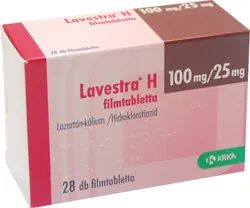
Table of Contents
Package leaflet: Information for the user
Introduction
Package leaflet: information for the patient
Lavestra HCT 100 mg/25 mg film-coated tablets EFG
losartan potassium/hydrochlorothiazide
Read the entire leaflet carefully before you start taking this medicine, because it contains important information for you.
- Keep this leaflet, as you may need to read it again.
- If you have any questions, ask your doctor or pharmacist.
- This medicine has been prescribed for you only, and you must not give it to other people even if they have the same symptoms as you, because it could harm them.
- If you experience any adverse effects, consult your doctor or pharmacist, even if they are adverse effects not listed in this leaflet. See section 4.
Contents of the leaflet
- What Lavestra HCT is and what it is used for
- What you need to know before taking Lavestra HCT
- How to take Lavestra HCT
- Possible adverse effects
- How to store Lavestra HCT
- Contents of the pack and other information
1. What Lavestra HCT is and what it is used for
Lavestra HCT is a combination of an angiotensin II receptor antagonist (losartan) and a diuretic (hydrochlorothiazide). Angiotensin II is a substance produced in the body that binds to receptors present in blood vessels, causing them to narrow. This leads to an increase in blood pressure. Losartan blocks angiotensin II from binding to these receptors, causing blood vessels to relax, thereby lowering blood pressure. Hydrochlorothiazide causes the kidneys to eliminate increased amounts of water and salts. This also helps reduce blood pressure.
Lavestra HCT is indicated for the treatment of essential hypertension (high blood pressure).
2. What you need to know before taking Lavestra HCT
Do not take Lavestra HCT
- if you are allergic to losartan and/or hydrochlorothiazide or to any of the other ingredients of this medicine (listed in section 6);
- if you are allergic to other sulfonamide-derived substances (e.g. other thiazides, certain antibacterial medicines such as cotrimoxazole; ask your doctor if you are unsure);
- if you are more than three months pregnant. (It is also advisable to avoid Lavestra HCT during the first trimester of pregnancy – see Pregnancy);
- if you have severe liver impairment;
- if you have severe renal impairment or your kidneys do not produce urine;
- if you have low levels of potassium or sodium, or high levels of calcium that cannot be corrected with treatment;
- if you have gout;
- if you have diabetes or kidney impairment and are being treated with a blood pressure-lowering medicine containing aliskiren.
Warnings and precautions
Consult your doctor or pharmacist before starting to take Lavestra HCT.
If you suspect you are pregnant (or could be), you must inform your doctor. The use of Lavestra HCT is not recommended during early pregnancy and must not be taken after the third month of pregnancy, as it may cause serious harm to your baby if used during this period (see Pregnancy section).
It is important that you inform your doctor before taking Lavestra HCT:
-
if you have previously experienced swelling of the face, lips, tongue, or throat,
-
if you are taking diuretics (medicines to increase urine production),
-
if you are on a low-salt diet,
-
if you have or have had excessive vomiting and/or diarrhoea,
-
if you have heart failure,
-
if you have impaired kidney function (see section 2 “Do not take Lavestra HCT”),
-
if you have narrowing of the arteries leading to the kidneys (renal artery stenosis), if you only have one functioning kidney, or if you have recently undergone a kidney transplant,
-
if you have narrowing of the arteries (atherosclerosis), angina pectoris (chest pain due to poor heart function),
-
if you have “aortic or mitral valve stenosis” (narrowing of heart valves) or “hypertrophic cardiomyopathy” (a condition causing thickening of the heart muscle),
-
if you are diabetic,
-
if you have had gout,
-
if you have or have had an allergic disorder, asthma, or a condition causing joint pain, skin rashes, and fever (systemic lupus erythematosus),
-
if you have high levels of calcium or low levels of potassium, or if you are on a low-potassium diet,
-
if you require anesthesia (including at the dentist) or before surgery, or if you are undergoing tests to assess parathyroid function, you must inform your doctor or healthcare provider that you are taking losartan potassium and hydrochlorothiazide tablets,
-
if you have primary hyperaldosteronism (a syndrome associated with excessive secretion of the hormone aldosterone by the adrenal gland due to gland dysfunction),
-
if you are taking other medicines that may increase serum potassium (see section 2 “Other medicines and Lavestra HCT”),
-
if you have had skin cancer or develop an unexpected skin lesion during treatment. Treatment with hydrochlorothiazide, particularly long-term use at high doses, may increase the risk of certain types of skin and lip cancer (non-melanoma skin cancer). Protect your skin from exposure to sunlight and UV rays while taking Lavestra HCT,
-
if you have had respiratory or pulmonary problems (such as inflammation or fluid in the lungs) after taking hydrochlorothiazide in the past. If you experience dyspnea or severe difficulty breathing after taking Lavestra HCT, seek medical attention immediately.
-
if you experience decreased vision or eye pain. These could be symptoms of fluid accumulation in the vascular layer of the eye (choroidal effusion) or increased intraocular pressure, which may occur within hours to weeks after taking this medicine. This may lead to permanent vision loss if not treated. If you previously had an allergy to penicillin or sulfonamides, you may have a higher risk of developing this condition.
-
if you are taking any of the following medicines used to treat high blood pressure (hypertension):
- an angiotensin-converting enzyme inhibitor (ACE inhibitor) (e.g. enalapril, lisinopril, ramipril), especially if you have kidney problems related to diabetes,
- aliskiren.
Your doctor may monitor your kidney function, blood pressure, and blood electrolyte levels (e.g. potassium) at regular intervals.
See also the information under the heading “Do not take Lavestra HCT”.
Consult your doctor if you experience abdominal pain, nausea, vomiting, or diarrhoea after taking Lavestra HCT. Your doctor will decide whether to continue treatment. Do not stop taking Lavestra HCT on your own.
Children and adolescents
There is no experience with the use of Lavestra HCT in children. Therefore, Lavestra HCT should not be given to children.
Use in elderly patients
Lavestra HCT works with equal effectiveness and is similarly well tolerated by most elderly and younger patients. Most elderly patients require the same dose as younger patients.
Other medicines and Lavestra HCT
Inform your doctor or pharmacist if you are taking, have recently taken, or might need to take any other medicines.
Inform your doctor if you are taking potassium supplements, salt substitutes containing potassium, potassium-sparing medicines, or other medicines that may increase serum potassium (e.g. medicines containing trimethoprim), as combination with Lavestra HCT is not recommended.
Diuretics such as hydrochlorothiazide contained in Lavestra HCT can interact with other medicines.
Lithium-containing preparations should not be taken with Lavestra HCT unless your doctor performs careful monitoring.
Special precautionary measures (e.g. blood tests) may be appropriate if you are taking diuretics (water tablets), certain laxatives, gout treatments, medicines to control heart rhythm, or diabetes medicines (oral agents or insulin).
Your doctor may need to adjust your dose and/or take other precautions:
- If you are taking an angiotensin-converting enzyme inhibitor (ACE inhibitor) or aliskiren (see also information under the headings “Do not take Lavestra HCT” and “Warnings and precautions”).
It is also important that your doctor knows if you are taking:
- other medicines that lower blood pressure,
- corticosteroids,
- cancer treatment medicines,
- painkillers,
- antifungal medicines,
- arthritis medicines,
- cholesterol-lowering resins such as cholestyramine,
- muscle relaxants,
- sleeping tablets,
- opioid medicines such as morphine,
- vasoactive amines such as adrenaline or other medicines in the same group,
- oral antidiabetic medicines or insulin.
Please inform your doctor if you are planning to undergo iodinated contrast media administration while taking Lavestra HCT.
Taking Lavestra HCT with food, drinks, and alcohol
You are advised not to drink alcohol while taking these tablets: alcohol and Lavestra HCT tablets may increase each other's effects.
Excessive dietary salt intake may counteract the effect of losartan/hydrochlorothiazide tablets.
Lavestra HCT may be taken with or without food.
Grapefruit juice should be avoided while taking losartan/hydrochlorothiazide tablets.
Pregnancy and breastfeeding
If you are pregnant or breastfeeding, think you may be pregnant, or plan to become pregnant, consult your doctor or pharmacist before using this medicine.
Pregnancy
Inform your doctor if you think you are pregnant (or could be). Your doctor will usually advise you to stop treatment with Lavestra HCT before becoming pregnant or as soon as you know you are pregnant, and will recommend an alternative medicine instead of losartan/hydrochlorothiazide. Lavestra HCT is not recommended during early pregnancy, and must not be taken after the third month of pregnancy, as it may cause serious harm to your unborn child if used beyond the third month of pregnancy.
Breastfeeding
Inform your doctor if you are breastfeeding or about to start breastfeeding. The use of Lavestra HCT is not recommended for breastfeeding mothers, and your doctor may choose another treatment if you wish to breastfeed.
Driving and using machines
When starting treatment with this medicine, do not perform tasks requiring special attention (e.g. driving a car or operating dangerous machinery) until you know how you react to the medicine.
Lavestra HCT contains lactose
If your doctor has informed you that you have an intolerance to certain sugars, consult with your doctor before taking this medicine.
3. How to take Lavestra HCT
Follow exactly the instructions for using this medicine as given by your doctor or pharmacist. If you are unsure, consult your doctor or pharmacist again.
Your doctor will decide the appropriate dose of Lavestra HCT based on your condition and whether you are taking other medicines. It is important to keep taking Lavestra HCT as prescribed by your doctor to maintain consistent blood pressure control.
High blood pressure
For most patients with high blood pressure, the recommended dose is 1 tablet of Lavestra HCT 50 mg/12.5 mg once daily to control blood pressure over 24 hours. Your doctor may increase the dose to 2 tablets of Lavestra HCT 50 mg/12.5 mg daily or to 1 tablet of Lavestra HCT 100 mg/25 mg daily. The maximum dose is 2 tablets of Lavestra HCT 50 mg/12.5 mg daily or 1 tablet of Lavestra HCT 100 mg/25 mg daily.
If you take more Lavestra HCT than you should
In case of overdose, contact your doctor immediately or go directly to the hospital to receive immediate medical attention. Overdose may cause low blood pressure, palpitations, slow pulse, changes in blood composition, and dehydration.
In case of overdose or accidental ingestion, contact your doctor or pharmacist immediately or call the Toxicology Information Service at telephone number 91 562 04 20, indicating the medicine and the amount ingested.
If you forget to take Lavestra HCT
Do not take a double dose to make up for forgotten doses.
Try to take Lavestra HCT every day as prescribed. However, if you miss a dose, do not take an extra dose. Simply return to your regular schedule.
If you have any further questions about the use of this medicine, ask your doctor or pharmacist.
4. Possible adverse effects
Like all medicines, this medicine can cause adverse effects, although not everyone will experience them.
If you experience the following, stop taking Lavestra HCT tablets immediately and contact your doctor right away or go to the nearest hospital emergency department:
A severe allergic reaction (skin rash, itching, swelling of the face, lips, mouth or throat, which may cause difficulty swallowing or breathing).
This is a rare but serious adverse effect, which may affect more than 1 in 10,000 people. It may require urgent medical attention or hospitalization.
The following adverse effects have been reported:
Common (may affect up to 1 in 10 people)
- Cough, respiratory infection, nasal congestion, sinusitis, sinus disorder,
- Diarrhea, abdominal pain, nausea, indigestion,
- Muscle pain or cramps, leg pain, back pain,
- Insomnia, headache, dizziness,
- Weakness, fatigue, chest pain,
- Elevated potassium levels (which may cause abnormal heart rhythm), decreased hemoglobin levels,
- Changes in kidney function including kidney failure,
- Too low blood sugar (hypoglycemia).
Uncommon (may affect up to 1 in 100 people)
- Anemia, red or brown spots on the skin (sometimes especially on the feet, legs, arms and buttocks, with joint pain, swelling of hands and feet, and abdominal pain), bruising, reduced white blood cell count, coagulation disorders and reduced platelet count,
- Loss of appetite, elevated uric acid levels or overt gout, elevated blood glucose levels, abnormal blood electrolyte levels,
- Anxiety, nervousness, panic disorders (recurrent panic attacks), confusion, depression, abnormal dreams, sleep disturbances, drowsiness, memory impairment,
- Tingling or similar sensations, limb pain, tremor, migraine, fainting,
- Blurred vision, burning or itching in the eyes, conjunctivitis, worsening of vision, seeing things in yellow,
- Ringing, buzzing, noises or crackling in the ears or vertigo,
- Low blood pressure which may be associated with postural changes (feeling dizzy or weak when standing up), angina (chest pain), abnormal heartbeats, stroke (transient ischemic attack, "mini-stroke"), heart attack, palpitations,
- Inflammation of blood vessels, often associated with a skin rash or bruising,
- Sore throat, shortness of breath, bronchitis, pneumonia, fluid in the lungs (which may cause difficulty breathing), nosebleed, runny nose, congestion,
- Constipation, chronic constipation, gas, stomach disorders, stomach spasms, vomiting, dry mouth, inflammation of a salivary gland, toothache,
- Jaundice (yellowing of the eyes and skin), inflammation of the pancreas,
- Hives, itching, skin inflammation, skin rash, redness of the skin, photosensitivity, dry skin, flushing, sweating, hair loss,
- Pain in arms, shoulders, hip, knee or other joints, joint swelling, stiffness, muscle weakness,
- Frequent urination, even at night, abnormal kidney function including kidney inflammation, urinary tract infection, sugar in the urine,
- Decreased sexual desire, impotence,
- Facial swelling, localized swelling (edema), fever.
Rare (may affect up to 1 in 1,000 people)
- Hepatitis (inflammation of the liver), abnormal liver function tests.
- Intestinal angioedema: swelling in the intestine has been reported, presenting with symptoms such as abdominal pain, nausea, vomiting and diarrhea.
Very rare (may affect up to 1 in 10,000 people)
- Acute breathing difficulty (signs include severe shortness of breath, fever, weakness and confusion).
Frequency not known (cannot be estimated from available data)
- Skin and lip cancer (non-melanoma skin cancer),
- Flu-like symptoms,
- Unexplained muscle pain with dark urine (tea-colored) (rhabdomyolysis),
- Low sodium levels in blood (hyponatremia),
- Feeling of general discomfort (malaise),
- Disturbance of taste (dysgeusia),
- Decreased vision or eye pain due to elevated pressure (possible signs of fluid accumulation in the vascular layer of the eye (choroidal effusion) or acute angle-closure glaucoma).
Reporting of adverse effects
If you experience any type of adverse effect, consult your doctor or pharmacist, even if it is a possible adverse effect not listed in this leaflet. You can also report them directly via the Spanish Pharmacovigilance System for Human Medicines: www.notificaram.es. By reporting adverse effects, you can help provide more information on the safety of this medicine.
5. Storage of Lavestra HCT
Keep this medicine out of the sight and reach of children.
Do not use this medicine after the expiry date stated on the packaging after EXP. The expiry date refers to the last day of the month indicated.
Do not store above 30°C.
Keep in the original packaging to protect from moisture.
Medicines must not be disposed of via wastewater or household waste. Dispose of unused medicines and their containers at the SIGRE Point at your pharmacy. Ask your pharmacist how to dispose of medicines and containers you no longer need. This will help protect the environment.
6. Contents of the container and other information
Composition of Lavestra HCT
- The active substances are losartan potassium and hydrochlorothiazide.
Each film-coated tablet contains 100 mg of losartan potassium (equivalent to 91.52 mg of losartan) and 25 mg of hydrochlorothiazide.
- The other components are pregelatinized corn starch, microcrystalline cellulose, lactose monohydrate and magnesium stearate in the tablet core, and hypromellose, macrogol 4000, quinoline yellow (E104), talc and titanium dioxide (E171) in the film coating. See section 2: "Lavestra HCT contains lactose".
Appearance of the product and contents of the container
The film-coated tablets are yellow, oval-shaped, slightly biconvex, with dimensions of 8 mm x 15 mm (oval shape) and thickness of 5.1–6.1 mm.
The tablets are supplied in boxes containing 10, 28, 30, 50, 56, 60, 90 and 98 film-coated tablets in PVC/PVDC//Al blisters.
Only some pack sizes may be marketed.
Marketing Authorization Holder and Manufacturer
KRKA, d.d., Novo mesto, Šmarješka cesta 6, 8501 Novo mesto, Slovenia
For more information about this medicine, contact the local representative of the Marketing Authorization Holder:
KRKA Farmacéutica, S.L., Calle Anabel Segura 10, Pta. Baja, Oficina 1, 28108 Alcobendas, Madrid, Spain
This medicine is authorized in the European Economic Area member states under the following names:
Member State | Medicinal product name |
Czech Republic | Losartan/Hydrochlorothiazid Krka |
France, Hungary | Losartan/Hydrochlorothiazide Krka |
Netherlands | Losartan kalium/Hydrochloorthiazide HCS |
Poland | Losartan Hydrochlorotiazyd Krka |
Spain | Lavestra HCT |
Date of the last review of this leaflet: June 2025
Detailed information about this medicine is available on the website of the Spanish Agency of Medicines and Medical Devices (AEMPS): http://www.aemps.gob.es/