Laroscorbine 1000 mg/5 ml solution for injection
Spain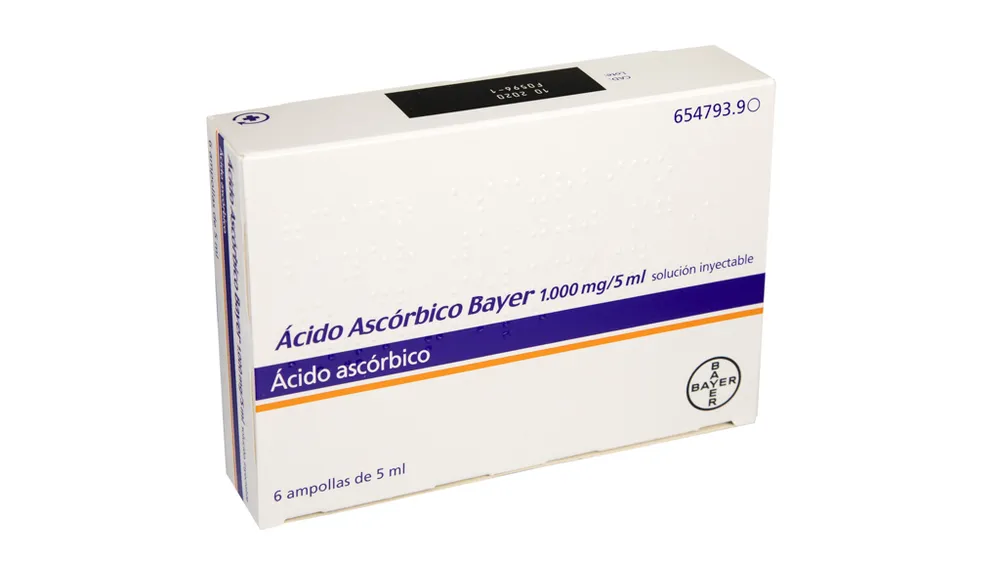
Table of Contents
- Package leaflet: Information for the user
- Introduction
- 1. What Laroscorbine injectable solution is and what it is used for
- 2. What you need to know before using Laroscorbine injectable solution
- 3. How to use Laroscorbine injectable solution
- 4. Possible adverse effects
- 5. Storage of Laroscorbine injectable solution
- 6. Contents of the container and other information
Package leaflet: Information for the user
Introduction
Package leaflet: information for the user
Laroscorbine 1000 mg/5 ml injection solution
Read all of this leaflet carefully before you start using this medicine, because it contains important information for you.
- Keep this leaflet, as you may need to read it again.
- If you have any questions, ask your doctor or pharmacist.
- This medicine has been prescribed for you only, and you should not give it to other people even if they have the same symptoms as you, because it may harm them.
- If you experience any adverse effects, consult your doctor or pharmacist, even if they are adverse effects not listed in this leaflet. See section 4.
Contents of this leaflet:
- What Laroscorbine injection solution is and what it is used for
- What you need to know before using Laroscorbine injection solution
- How to use Laroscorbine injection solution
- Possible adverse effects
- Storage of Laroscorbine injection solution
- Contents of the pack and other information
1. What Laroscorbine injectable solution is and what it is used for
This medicine contains ascorbic acid (vitamin C), which belongs to the group of water-soluble vitamins. This vitamin is important, among other functions, for the formation of collagen and intercellular material (between cells), and acts as an antioxidant.
This medicine is indicated for the treatment of severe vitamin C deficiency states, when oral administration is not feasible or in cases of absorption disorders, in adults and adolescents aged 14 years and older.
2. What you need to know before using Laroscorbine injectable solution
Do not use Laroscorbine
- If you are allergic to ascorbic acid or to any of the other ingredients of this medicine (listed in section 6).
- If you have nephrolithiasis or a history of nephrolithiasis (formation of kidney stones).
- If you have hyperoxaluria (increased oxalic acid levels in urine).
- If you have severe kidney disease.
- If you have haemochromatosis (excess iron in the body).
Warnings and precautions
Consult your doctor before starting to use Laroscorbine.
- This medicine must not be administered at higher doses or for longer than recommended in section 3, How to use Laroscorbine, as long-term use of high doses may be harmful.
- If you have any kidney disease, high doses of this medicine could be harmful.
- If you currently have or have previously had kidney stones (calculi) or gout (deposits of uric acid in the joints, especially in the feet), you should exercise caution, as these conditions could recur.
- If you have glucose-6-phosphate dehydrogenase deficiency (an inherited disorder affecting red blood cell metabolism), haemolysis (destruction of red blood cells) may occur.
- Patients with sickle cell anaemia (an inherited disorder affecting the shape of red blood cells) should exercise caution, as they may experience a crisis.
- If you are being treated with anticoagulants, see the section Using Laroscorbine with other medicines.
- If you have any condition involving iron overload (high iron levels in the blood), taking this medicine could be harmful.
Interference with diagnostic tests: If you are scheduled for any diagnostic tests (including blood and urine tests), inform your doctor that you are taking this medicine, as it may alter test results.
Children and adolescents
Do not administer this medicine to children under 14 years of age due to lack of usage data in this population.
Using Laroscorbine with other medicines
Inform your doctor or pharmacist if you are taking, have recently taken, or might need to take any other medicines.
Ascorbic acid may interact with the following medicines:
- Deferoxamine (used to treat iron poisoning or iron overload)
- Indinavir (used to treat HIV infection or AIDS)
- Cyanocobalamin (vitamin B12): its levels may be reduced
- Oral anticoagulants such as acenocoumarol and warfarin (used for blood circulation)
- Cyclosporine (used to prevent transplant rejection)
- Disulfiram (used to treat chronic alcoholism)
- Iron (used to treat iron deficiency)
Administration of ascorbic acid, especially at high doses, may promote or delay the elimination of certain medicines.
Pregnancy, breastfeeding, and fertility
If you are pregnant or breastfeeding, think you might be pregnant, or are planning to become pregnant, consult your doctor or pharmacist before using this medicine.
As a precautionary measure, Laroscorbine injectable solution should not be used during pregnancy or breastfeeding.
Driving and using machines
This medicine has no or negligible effect on the ability to drive or operate machinery.
Laroscorbine contains sodium
This medicine contains 130.5 mg of sodium (the main component of table/cooking salt) per ampoule. This corresponds to 6.5% of the maximum daily recommended sodium intake for an adult.
3. How to use Laroscorbine injectable solution
Follow exactly the administration instructions for this medicine as indicated by your doctor. If in doubt, consult your doctor again.
The recommended dose is:
Intravenous route
Adults and adolescents from 14 years of age: 1 ampoule per day.
This dose must not be exceeded (1000 mg of vitamin C/day).
Intravenous route.
This medicine must only be administered by qualified healthcare personnel. The administration of the product and handling of needles must be performed with caution.
Use in children and adolescents
Do not use in children under 14 years of age due to lack of safety data.
If you use more Laroscorbine than you should
Prolonged use of high doses of ascorbic acid may be harmful.
If you have been administered more Laroscorbine than recommended, i.e. excessive doses of ascorbic acid, kidney stones, elevated blood glucose, urinary tract irritation, or acute gout attack may occur; high doses of ascorbic acid may cause hemolysis (destruction of red blood cells) in patients with glucose-6-phosphate dehydrogenase deficiency (an inherited disorder).
Other disorders are gastrointestinal, such as: diarrhea or constipation, nausea, vomiting, abdominal cramps or colic.
If these symptoms occur, you must stop taking the medicine immediately and consult a healthcare professional.
Treatment will be symptomatic, and administration of this medicine must be discontinued.
In case of overdose or accidental ingestion, contact your doctor or pharmacist immediately, or call the Toxicology Information Service, Telephone 91 562 04 20, stating the medicine and the amount taken (or go to a medical center).
4. Possible adverse effects
Like all medicines, Laroscorbine injectable solution may cause adverse effects, although not everyone experiences them.
During the period of use of the active substance in this medicine, the following adverse reactions have been reported, particularly at doses higher than those recommended, for which the frequency cannot be accurately estimated:
- Hypersensitivity reactions have been reported, with laboratory and clinical manifestations, including allergic asthma syndrome, and mild to moderate reactions that may affect the skin, respiratory system, gastrointestinal tract, and cardiovascular system, including symptoms such as rash, urticaria (red, itchy rash), allergic edema, and angioedema (rapid swelling beneath the skin, especially in the face and mouth), pruritus (itching), cardio-respiratory difficulty, and, very rarely, severe reactions including anaphylactic shock (severe generalized allergic reaction).
- Administration of ascorbic acid in individuals predisposed to increased stone formation (calculi) (those at higher risk being those with renal impairment) has been associated with the development of urinary stones or precipitation of drugs in the urinary tract.
- Reactions at the injection site, such as redness; rapid intravenous administration may cause transient fainting or dizziness.
- In predisposed patients, gouty arthritis (deposition of uric acid in the joints) could occur.
- Headache, insomnia.
- Gastrointestinal disorders such as diarrhea, nausea, vomiting, abdominal and gastrointestinal pain have been described with oral ascorbic acid.
Reporting of adverse effects
If you experience any type of adverse effect, consult your doctor or pharmacist, even if it is a possible adverse effect not listed in this leaflet. You may also report them directly via the Spanish Pharmacovigilance System for Human Medicines at the website: www.notificaram.es.
By reporting adverse effects, you can help provide more information on the safety of this medicine.
5. Storage of Laroscorbine injectable solution
No special storage conditions are required.
Keep this medicine out of the sight and reach of children.
Do not use this medicine after the expiry date stated on the packaging after EXP. The expiry date is the last day of the month indicated.
Medicines should not be disposed of via wastewater or household waste. Dispose of unused medicines and their containers at the Sigre Point in your pharmacy. If you are unsure, ask your pharmacist how to dispose of medicines and containers you no longer need. This will help protect the environment.
6. Contents of the container and other information
Composition of Laroscorbine injectable solution
- The active substance is Ascorbic acid (vitamin C). Each 5 ml ampoule contains 1,000 mg of ascorbic acid.
- The other components (excipients) are: Sodium hydroxide and water for injections.
Appearance of the medicine and contents of the pack
This medicine is presented as an injectable solution; a clear, yellowish liquid. It is available in packs containing 3 or 6 glass ampoules.
Not all pack sizes may be marketed.
Marketing Authorization Holder and Manufacturer
Marketing Authorization Holder
BAYER HISPANIA, S.L.
Av. Baix Llobregat, 3 – 5
08970 Sant Joan Despí (Barcelona)
Manufacturer
Doppel Farmaceutici S.R.L.
Via Volturno, 48
20089 Quinto de’Stampi, MI (Italy)
Date of the most recent revision of this leaflet: November 2015
Detailed and up-to-date information on this medicine is available on the website of the Spanish Agency of Medicines and Health Products (AEMPS) http://www.aemps.gob.es/