Lansoprazole Flas Stada 15 mg orodispersible tablets EFG
Spain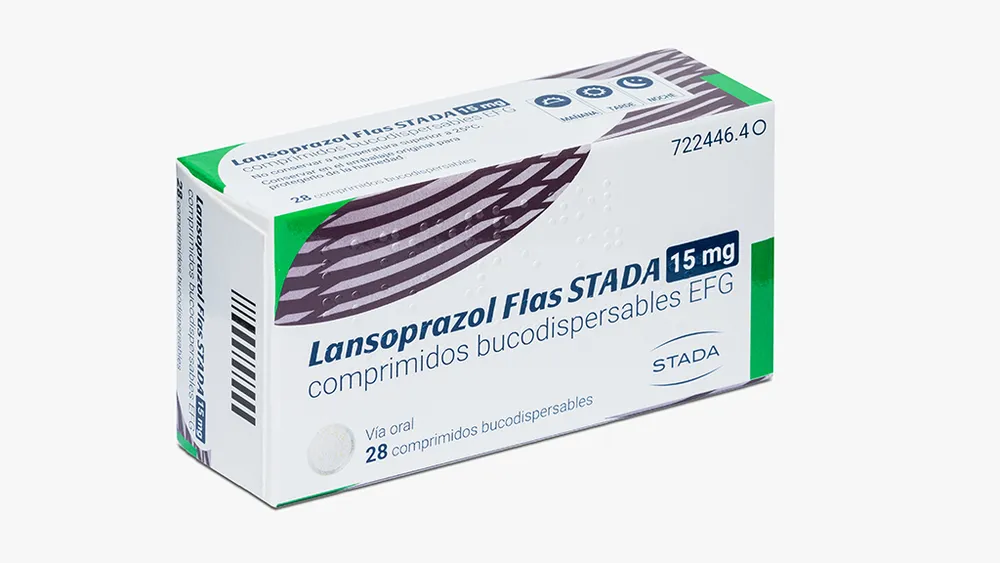
Table of Contents
- Package leaflet: Information for the user
- Introduction
- 1. What Lansoprazol Flas Stada is and what it is used for
- 2. What you need to know before taking Lansoprazol Flas Stada
- 3. How to take Lansoprazol Flas Stada
- 4. Possible adverse effects
- 5. Storage of Lansoprazole Flas Stada
- 6. Contents of the pack and other information
Package leaflet: Information for the user
Introduction
Package leaflet: information for the user
Lansoprazol Flas Stada 15 mg orodispersible tablets EFG
Read the entire leaflet carefully before you start taking this medicine, because it contains important information for you.
- Keep this leaflet, as you may need to read it again.
- If you have any questions, consult your doctor or pharmacist.
- This medicine has been prescribed for you only and must not be given to other people, even if they have the same symptoms as you, because it could harm them.
- If you experience any adverse effects, consult your doctor or pharmacist, even if these effects are not listed in this leaflet. See section 4.
Leaflet contents
- What Lansoprazol Flas Stada is and what it is used for
- What you need to know before taking Lansoprazol Flas Stada
- How to take Lansoprazol Flas Stada
- Possible side effects
- How to store Lansoprazol Flas Stada
- Contents of the pack and other information
1. What Lansoprazol Flas Stada is and what it is used for
The active substance in Lansoprazol Flas Stada is lansoprazole, a proton pump inhibitor. Proton pump inhibitors reduce the amount of acid produced by the stomach.
Lansoprazole is used for treatment in adults.
Your doctor may have prescribed lansoprazole for the following conditions:
- treatment of duodenal and gastric ulcers
- treatment of inflammation of the oesophagus (reflux esophagitis)
- prevention of reflux esophagitis
- treatment of heartburn and acid regurgitation
- treatment of infections caused by the bacterium Helicobacter pylori, in combination with antibiotics
- treatment or prevention of duodenal or gastric ulcers in patients requiring ongoing treatment with non-steroidal anti-inflammatory drugs (NSAIDs) (NSAID therapy is used for pain or inflammation)
- treatment of Zollinger-Ellison syndrome
Your doctor may have prescribed lansoprazole for a different condition or at a different dose than that stated in this leaflet. Follow your doctor's instructions regarding how to take the medicine.
2. What you need to know before taking Lansoprazol Flas Stada
Do not take Lansoprazol Flas Stada
- if you are allergic to lansoprazole or to any of the other ingredients of this medicine (listed in section 6)
Warnings and precautions
Tell your doctor if you have severe liver disease. Your doctor may need to adjust your dose.
Your doctor may have performed or may perform an additional test called endoscopy to diagnose your condition and/or rule out malignant disease.
If you experience severe or persistent diarrhoea during treatment with lansoprazole, contact your doctor immediately, as lansoprazole has been associated with a slight increase in infectious diarrhoea.
If your doctor has prescribed lansoprazole together with other medicines for the treatment of Helicobacter pylori infection (antibiotics) or together with anti-inflammatory medicines for pain or rheumatism, please also read the package leaflets of these medicines carefully.
If you take lansoprazole for more than three months, your blood magnesium levels may decrease. Low magnesium levels can cause fatigue, involuntary muscle contractions, disorientation, seizures, dizziness, and increased heart rate. If you experience any of these symptoms, inform your doctor immediately. Low magnesium levels may also lead to reduced levels of potassium or calcium in the blood. Your doctor may decide to perform regular blood tests to monitor your magnesium levels.
Taking a proton pump inhibitor such as lansoprazole, especially for over a year, may slightly increase the risk of fractures of the hip, wrist, or spine. Inform your doctor if you have osteoporosis (reduced bone density) or if your doctor has told you that you are at risk of developing osteoporosis (for example, if you are taking steroids).
This medicine may affect how your body absorbs vitamin B12, particularly if you need to take it for a long time. Please contact your doctor if you notice any of the following symptoms, as they may indicate low vitamin B12 levels:
- Extreme tiredness or lack of energy
- Tingling
- Red or sore tongue, mouth ulcers
- Muscle weakness
- Blurred vision
- Memory problems, confusion, depression
If you have been taking lansoprazole for a long time (more than 1 year), your doctor will likely perform regular check-ups. During visits to your doctor, you should report any new or unusual symptoms or conditions.
Consult your doctor before starting to take lansoprazole
- If you are scheduled to have a specific blood test (Chromogranin A).
- If you have ever had a skin reaction after treatment with a medicine similar to lansoprazole used to reduce stomach acid.
Severe skin reactions have been reported in association with lansoprazole treatment, including Stevens-Johnson syndrome, toxic epidermal necrolysis, and drug reaction with eosinophilia and systemic symptoms (DRESS). Stop using lansoprazole and contact your doctor immediately if you experience any of the symptoms related to severe skin reactions described in section 4.
If you develop a skin rash, especially in areas of skin exposed to sunlight, consult your doctor as soon as possible, as it may be necessary to discontinue treatment with lansoprazole. Remember to mention any other symptoms you may notice, such as joint pain.
When taking lansoprazole, inflammation of the kidney may occur. Signs and symptoms may include decreased urine volume or blood in the urine and/or hypersensitivity reactions such as fever, rash, and joint stiffness. You should report these signs to your doctor.
Taking Lansoprazol Flas Stada with other medicines
Tell your doctor or pharmacist if you are taking, have recently taken, or might need to take any other medicines.
In particular, inform your doctor or pharmacist if you are taking medicines containing any of the following active substances, as lansoprazole may affect their action:
- HIV protease inhibitors such as atazanavir and nelfinavir (used in HIV treatment)
- methotrexate (used to treat autoimmune diseases and cancer)
- ketoconazole, itraconazole, rifampicin (used to treat infections)
- digoxin (used to treat heart problems)
- warfarin (used to treat blood clots)
- theophylline (used to treat asthma)
- tacrolimus (used to prevent transplant rejection)
- fluvoxamine (used to treat depression and other psychiatric disorders)
- antacids (used to treat heartburn or acid regurgitation)
- sucralfate (used to heal ulcers)
- St. John’s wort (Hypericum perforatum) (used to treat mild depression)
Taking Lansoprazol Flas Stada with food and drinks
For optimal effectiveness, take lansoprazole at least 30 minutes before meals.
Pregnancy and breastfeeding
If you are pregnant, breastfeeding, think you may be pregnant, or are planning to become pregnant, consult your doctor or pharmacist before taking this medicine.
Driving and using machines
Patients taking lansoprazole may occasionally experience side effects such as dizziness, vertigo, fatigue, and visual disturbances. If you experience any of these side effects, you should exercise caution, as your reaction capabilities may be impaired.
You are solely responsible for deciding whether you are fit to drive or perform activities requiring high concentration. Due to its effects or adverse reactions, one of the factors that may reduce your ability to safely carry out these tasks is the use of medicines.
Descriptions of these effects can be found in the following sections.
Please read this leaflet carefully.
If you have any doubts, ask your doctor or pharmacist.
Lansoprazol Flas Stada contains aspartame
This medicine contains 5.25 mg of aspartame in each orodispersible tablet.
Aspartame contains a source of phenylalanine, which may be harmful if you have phenylketonuria (PKU), a rare genetic disorder in which phenylalanine accumulates because the body cannot properly eliminate it.
3. How to take Lansoprazol Flas Stada
Follow exactly the administration instructions given by your doctor. If in doubt, consult your doctor or pharmacist again.
Place the tablet on the tongue and let it dissolve slowly. The tablet dissolves rapidly in the mouth, releasing microgranules which should be swallowed without chewing. Alternatively, the tablet may be swallowed whole with a glass of water.
Your doctor may give you instructions for administering the tablet using a syringe if you have serious difficulty swallowing.
Follow the instructions below for administration via syringe:
It is important to ensure that the syringe selected is appropriate.
- Remove the plunger from the syringe (at least a 5 ml syringe for the 15 mg tablet)
- Place the tablet into the barrel
- Replace the plunger into the syringe
- For the 15 mg tablet: pull the plunger to draw 4 ml of tap water into the syringe
- Turn the syringe upside down and pull the plunger to draw 1 ml of air into the syringe
- Gently shake the syringe for 10–20 seconds until the tablet is dispersed
- The contents can be emptied directly into the mouth
- Refill the syringe with 2–5 ml of water to rinse out any residue and empty into the mouth
If you take lansoprazole once a day, try to take it at the same time each day. You may achieve better results if you take lansoprazole in the morning.
If you take lansoprazole twice a day, take the first dose in the morning and the second in the evening.
The dose of lansoprazole depends on your general condition. The usual doses of lansoprazole for adults are indicated below. Occasionally, your doctor may prescribe a different dose and specify a different treatment duration.
Treatment of heartburn and acid regurgitation: one or two 15 mg orodispersible tablets daily for 4 weeks. If symptoms do not improve after 4 weeks, consult your doctor.
Treatment of duodenal ulcer: two 15 mg orodispersible tablets daily for 2 weeks.
Treatment of gastric ulcer: two 15 mg orodispersible tablets daily for 4 weeks.
Treatment of inflammation of the oesophagus (reflux esophagitis): two 15 mg orodispersible tablets daily for 4 weeks.
Long-term prevention of reflux esophagitis: one 15 mg orodispersible tablet daily; your doctor may adjust your dose to two 15 mg orodispersible tablets daily.
Treatment of Helicobacter pylori infection: The usual dose is two 15 mg orodispersible tablets together with two different antibiotics in the morning and two 15 mg orodispersible tablets together with two different antibiotics in the evening. Treatment is usually given daily for 7 days.
The recommended antibiotic combinations are as follows:
- 30 mg lansoprazole with 250–500 mg clarithromycin and 1,000 mg amoxicillin.
- 30 mg lansoprazole with 250 mg clarithromycin and 400–500 mg metronidazole.
If you are receiving anti-infective treatment for an ulcer, the ulcer is unlikely to recur if the infection is successfully treated. To achieve the best results from your medication, take it at the correct time and do not miss any doses.
Treatment of duodenal or gastric ulcer in patients requiring continuous NSAID therapy: two 15 mg orodispersible tablets daily for 4 weeks.
Prevention of duodenal or gastric ulcer in patients requiring continuous NSAID therapy: one 15 mg orodispersible tablet daily; your doctor may adjust your dose to two 15 mg orodispersible tablets daily.
Zollinger-Ellison syndrome: The usual initial dose is four 15 mg orodispersible tablets daily; subsequently, depending on your response to lansoprazole treatment, your doctor will decide the best dose for you.
Use in children and adolescents
Lansoprazole must not be administered to children.
If you take more Lansoprazol Flas Stada than you should
If you take more lansoprazole than prescribed, contact your doctor immediately or contact the Toxicology Information Service, telephone number 915 620 420.
If you forget to take Lansoprazol Flas Stada
If you forget to take a dose, take it as soon as possible unless it is nearly time for your next dose. In this case, skip the missed dose and take the next dose at the usual time. Do not take a double dose to make up for a missed dose.
If you stop taking Lansoprazol Flas Stada
Do not stop treatment prematurely, even if symptoms improve. Your condition may not be completely healed and may recur if you do not complete the full course of treatment.
If you have any further questions about the use of this medicine, ask your doctor or pharmacist.
4. Possible adverse effects
Like all medicines, this medicine can cause adverse effects, although not everyone will experience them. Stop taking this medicine and inform your doctor immediately or go to the nearest hospital if you think you may have any of the following adverse effects:
- Very rarely, lansoprazole may cause severe hypersensitivity (allergic) reactions. Symptoms of a hypersensitivity reaction may include fever, rash, facial swelling, swollen lymph nodes, swelling of the tongue or pharynx, difficulty swallowing, hives, difficulty breathing, and sometimes a rapid drop in blood pressure.
- Very rarely, serious skin reactions have been reported with lansoprazole that may be life-threatening. Symptoms include reddish spots on the trunk, which are often target-shaped or circular macules, sometimes with central blisters, skin peeling, and ulcers in the mouth, throat, nose, genitals, and eyes. These serious skin rashes may be preceded by fever and flu-like symptoms [(Stevens-Johnson Syndrome (SJS), Toxic Epidermal Necrolysis (TEN)].
- Generalized rash, high body temperature, and enlarged lymph nodes [Drug Reaction with Eosinophilia and Systemic Symptoms (DRESS, frequency not known)].
- If you take lansoprazole for more than three months, your blood magnesium levels may decrease. Low magnesium levels can cause fatigue, involuntary muscle contractions, disorientation, seizures, dizziness, and increased heart rate. If you experience any of these symptoms, inform your doctor immediately. Low magnesium levels may also lead to reduced levels of potassium or calcium in the blood. Your doctor may decide to perform regular blood tests to monitor your magnesium levels.
- Very rarely, lansoprazole may cause a reduction in the number of white blood cells (agranulocytosis), which may reduce your resistance to infection, or coexisting abnormal reductions in the number of red blood cells, white blood cells, and platelets (pancytopenia). If you experience an infection with symptoms such as fever and severe deterioration in your general condition, or fever with symptoms of local infection such as sore throat/pharynx/mouth or urinary problems, or if you experience fatigue, pale skin, unexplained bruising, or bleeding longer than normal, you should consult your doctor immediately. A blood test will be performed to check for possible reduction in blood cells.
- Rarely, lansoprazole may cause inflammation of the pancreas (pancreatitis), with symptoms including sudden, severe pain in the upper middle part of the abdomen that may radiate to the back, possibly causing nausea and vomiting.
- If you develop severe or persistent diarrhea during treatment with lansoprazole, contact your doctor immediately, as lansoprazole has been associated with a small increased risk of infectious diarrhea.
Other possible adverse effects
Common (may affect up to 1 in 10 people):
- headache, dizziness
- constipation, stomach pain, nausea and vomiting, flatulence, dryness or pain in mouth or throat
- skin rash, itching
- changes in liver function test results
- fatigue
- benign polyps in the stomach
Uncommon (may affect up to 1 in 100 people):
- depression
- joint or muscle pain
- fluid retention or swelling
- changes in blood cell counts
- risk of fracture of the wrist, hip, or spine
Rare (may affect up to 1 in 1,000 people):
- fever
- restlessness, drowsiness, confusion, hallucinations, insomnia, visual disturbances, dizziness
- taste disturbances, loss of appetite, inflammation of the tongue (glossitis)
- skin reactions such as burning or itching sensation, bruising, redness, and excessive sweating
- photosensitivity
- hair loss
- tingling sensation (paresthesia), tremor
- anemia (pallor)
- inflammation of the kidneys (tubulointerstitial nephritis); possible symptoms include changes in urine volume, blood in the urine
- liver inflammation (may present as yellowing of the skin or eyes)
- breast swelling in males, impotence
- candidiasis (fungal infection, may affect the mucosa of the esophagus)
Very rare (may affect up to 1 in 10,000 people):
- inflammation of the mouth (stomatitis)
- inflammation of the intestine (colitis)
- increased laboratory values such as cholesterol and triglycerides
- decrease in blood sodium concentration; symptoms include nausea and vomiting, headache, drowsiness and fatigue, confusion, muscle weakness or spasms, irritability, seizures, coma. Your doctor may decide to perform periodic blood tests to monitor your sodium levels.
Frequency not known (frequency cannot be estimated from the available data):
- Lupus-like or lupus-type skin rashes
- skin rash, possibly with joint pain (subacute cutaneous lupus erythematosus)
- visual hallucinations.
Reporting of adverse effects
If you experience any type of adverse effect, consult your doctor or pharmacist, even if they are possible adverse effects not listed in this leaflet. You can also report them directly via the Spanish Pharmacovigilance System for Human Medicines: https://www.notificaram.es. By reporting adverse effects, you can help provide more information on the safety of this medicine.
5. Storage of Lansoprazole Flas Stada
Keep this medicine out of the sight and reach of children.
Do not use this medicine after the expiry date stated on the blister pack and carton, after EXP. The expiry date refers to the last day of the month indicated.
Do not store above 25 °C. Keep in the original packaging to protect from moisture.
Medicines should not be disposed of via wastewater or household waste. Dispose of empty containers and unused medicines at the SIGRE collection point at your pharmacy. Ask your pharmacist how to dispose of containers and medicines you no longer need. This will help protect the environment.
6. Contents of the pack and other information
Composition of Lansoprazol Flas Stada
- The active substance is lansoprazole. One orodispersible tablet contains 15 mg of lansoprazole.
- The other components are:
Tablet core: microcrystalline cellulose, light magnesium carbonate, low-substituted hydroxypropylcellulose, hydroxypropylcellulose (E-463).
Coating: hypromellose 3 cps (E-464), low-substituted hydroxypropylcellulose, talc (E-553b), titanium dioxide (E-171), mannitol (E-241), copolymer dispersion of methacrylic acid and ethyl acrylate (1:1), polyacrylate dispersion, glyceryl monostearate, polyethylene glycol 6000, triethyl citrate, polysorbate 80, citric acid (E-330), yellow iron oxide (E-172), red iron oxide (E-172), talc (E-553b), F-Melt type C (mannitol, xylitol, microcrystalline cellulose, crospovidone, dibasic calcium phosphate), crospovidone, microcrystalline cellulose, aspartame (E-951), strawberry flavour (flavourings, corn maltodextrin, propylene glycol (E-1520)), magnesium stearate (vegetable origin) (E-470b).
Nature of the product and pack contents
Lansoprazol Flas Stada 15 mg orodispersible tablets are uncoated tablets, white to yellowish-white in colour, speckled with orange to dark brown pellets, marked "15" on one side and smooth on the other. Each orodispersible tablet has a strawberry flavour.
Lansoprazol Flas Stada 15 mg orodispersible tablets are available in blister packs contained in cardboard cartons with 7, 14, 28, 30 and 56 tablets.
Only certain pack sizes may be marketed.
Marketing Authorization Holder and Manufacturer
Marketing Authorization Holder
Laboratorio STADA, S.L.
Frederic Mompou, 5
08960 Sant Just Desvern
(Barcelona)
Spain
Manufacturer
STADA Arzneimittel AG
Stadastrasse 2 – 18
61118 Bad Vilbel
Germany
This medicinal product is authorized in the Member States of the European Economic Area under the following names:
Italy: LANSOPRAZOLO EG STADA
Spain: Lansoprazol Flas Stada 15 mg orodispersible tablets EFG
United Kingdom: Lansoprazole 15 mg orodispersible tablets
Date of the most recent review of this leaflet: November 2024
Detailed information on this medicinal product is available on the website of the Spanish Agency of Medicines and Health Products (AEMPS) http://www.aemps.gob.es/.