LanaCordin Pediatric
Spain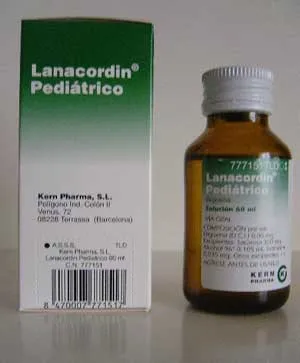
Table of Contents
- Package leaflet: Information for the user
- Introduction
- 1. What Lanacordin Pediatric is and what it is used for
- 2. What you need to know before using Lanacordin Pediatric
- 3. How to use Lanacordin Pediatric
- 4. Possible adverse effects
- 5. Storage of Lanacordin Pediatric
- 6. Package contents and other information
Package leaflet: Information for the user
Introduction
Package leaflet: Information for the user
Lanacordin Pediatric 0.05 mg/ml oral solution
Digoxin
Read the entire leaflet carefully before you start using this medicine, as it contains important information for you.
- Keep this leaflet, as you may need to read it again.
- If you have any questions, ask your doctor or pharmacist.
- This medicine has been prescribed for you only, and you should not give it to other people, even if they have the same symptoms as you, because it may harm them.
- If you experience any adverse effects, consult your doctor or pharmacist, even if they are adverse effects not listed in this leaflet.
Leaflet contents:
- What Lanacordin Pediatric is and what it is used for
- What you need to know before using Lanacordin Pediatric
- How to use Lanacordin Pediatric
- Possible side effects
- How to store Lanacordin Pediatric
- Contents of the pack and other information
1. What Lanacordin Pediatric is and what it is used for
Lanacordin Pediatric belongs to the group of medicines known as cardiotonic glycosides. Its active ingredient is digoxin, which increases the force of contraction of the heart muscle by specifically inhibiting an enzyme called Na+/K+-dependent adenosine triphosphatase.
Lanacordin Pediatric is indicated for the treatment of certain heart conditions, such as:
- Chronic heart failure where the main problem is systolic dysfunction (abnormalities in the heart's contraction).
- When heart failure is accompanied by atrial fibrillation (abnormal heart rate or rhythm originating when the muscle of the upper chambers of the heart (atria) does not contract uniformly).
- In the treatment of certain supraventricular arrhythmias (disorders of heart rate or rhythm originating in the atria), especially atrial flutter (rapid heart rate) and atrial fibrillation (abnormal heart rate or rhythm originating when the muscle of the upper chambers of the heart (atria) does not contract uniformly), with the main benefit being reduction of the ventricular rate (slower heart rhythm).
2. What you need to know before using Lanacordin Pediatric
Do not use Lanacordin Pediatric
- if you are allergic (hypersensitive) to digoxin, to other digitalis glycosides, or to any of the other components of Lanacordin Pediatric,
- if you have been diagnosed with any of the following heart conditions:
- intermittent heart block or second-degree atrioventricular block (abnormalities in the transmission of electrical impulses between the upper and lower chambers of the heart), especially if there is a history of a heart condition called Stokes-Adams syndrome,
- certain types of "supraventricular arrhythmias", such as in Wolff-Parkinson-White syndrome (a hereditary heart disease),
- "ventricular tachycardia" (rapid heartbeat originating in the ventricles) or "ventricular fibrillation" (a highly irregular heart rhythm (arrhythmia) that may be life-threatening),
- "obstructive hypertrophic cardiomyopathy" (a disease characterized by excessive growth of heart muscle),
- if you have arrhythmias caused by poisoning with other cardiac glycosides (heart medications),
- if an accessory pathway (an abnormal electrical connection from the atrium to the ventricle) is known or suspected, and there is no history of previous supraventricular arrhythmias, Lanacordin Pediatric is also contraindicated.
Warnings and precautions
This medicine must be used exclusively under the supervision and control of a physician. Consult your doctor before using this medicine in any of the following cases:
- if you have recently had a myocardial infarction (heart attack), digoxin should be used with caution, although it is not contraindicated in the immediate post-infarction period,
- if you are being treated with diuretics and an ACE inhibitor (medications for heart conditions and hypertension), or only diuretics, since discontinuation of digoxin may lead to worsening of your condition,
- if you have taken cardiac glycosides (heart medications) within two weeks before starting digoxin treatment, your doctor should consider reducing the initial dose,
- if you are elderly or have impaired kidney function, your doctor should consider reducing both the initial and maintenance doses,
- once you are already on digoxin treatment, your doctor should periodically monitor your serum electrolytes and kidney function (serum creatinine enzyme concentration). The frequency of monitoring depends on the severity of your condition,
- if you have severe respiratory disease, as the myocardium (heart muscle) may be more sensitive to digoxin,
- if you have low potassium levels in the blood, as this increases the heart muscle's sensitivity to digoxin,
- if you have hypoxia (low oxygen levels in the blood), hypomagnesemia (low magnesium levels in the blood), or marked hypercalcemia (high calcium levels in the blood), as these conditions increase the myocardium's (heart muscle) sensitivity to digoxin,
- if you have thyroid disease, you should exercise caution when using Lanacordin Pediatric. The initial and maintenance doses of Lanacordin Pediatric should be reduced if thyroid function is impaired. In cases of hyperthyroidism (high levels of thyroid hormone in the blood), there is relative resistance to digoxin (reduced drug activity), and the dose may need to be increased. During treatment of thyrotoxicosis (excess thyroid hormones), the dose should be reduced as the condition is brought under control,
- patients with malabsorption syndrome (difficulty absorbing vitamins, minerals, and other nutrients from food) or gastrointestinal reconstructions may require higher doses of digoxin.
Use of Lanacordin Pediatric with other medicines
Inform your doctor or pharmacist if you are taking or have recently taken any other medicines, including those obtained without a prescription.
The blood levels of digoxin may increase when taken together with the following medicines:
- Amiodarone, flecainide, prazosin, propafenone, quinidine, spironolactone (medicines for the heart),
- Diuretics (medicines to promote fluid elimination),
- Calcium channel antagonists and ACE inhibitors (medicines for hypertension),
- Erythromycin, tetracycline, gentamicin, itraconazole, trimethoprim (antibiotic medicines),
- Quinine (a medicine for the treatment of malaria),
- Alprazolam, lithium salts (a medicine for depression),
- Diphenoxylate with atropine (a combination medicine used as an antidiarrheal),
- Indomethacin, corticosteroids (anti-inflammatory medicines),
- Propantheline (a medicine for treating ulcers),
- Carbenoxolone (a medicine for treating mouth ulcers).
The blood levels of digoxin may decrease when taken together with the following medicines:
- Antacids,
- Some laxatives,
- Kaolin-pectin (an antidiarrheal medicine),
- Neomycin, penicillamine, rifampicin (antibiotic medicines),
- Some cytostatic agents (medicines for cancer treatment),
- Metoclopramide (a medicine for treating vomiting),
- Sulfasalazine (an anti-inflammatory stomach medicine),
- Adrenaline (a hormone),
- Salbutamol (a medicine for treating asthma),
- Cholestyramine (a medicine for treating cholesterol),
- Phenytoin (a medicine for treating epilepsy).
Inform your doctor if you are taking a medicine containing enzalutamide (for prostate cancer treatment). It may interfere with your digoxin tests.
Pregnancy and breastfeeding
Consult your doctor or pharmacist before using any medicine.
The use of digoxin during pregnancy is not contraindicated, but as with all drugs, it should only be considered when the expected clinical benefit to the mother outweighs any potential risk to the fetus.
Although digoxin passes into breast milk, the amounts are minimal and breastfeeding is not contraindicated.
Driving and operating machinery
There are no data available on how Lanacordin Pediatric affects the ability to drive or operate machinery. Therefore, avoid performing tasks requiring special attention until you know how you tolerate the medicine.
Lanacordin Pediatric contains sucrose
This medicine contains sucrose. If your doctor has informed you of an intolerance to certain sugars, consult with him before taking this medicine.
Patients with diabetes mellitus should be aware that this medicine contains 0.16 g of glucose per ml. It may cause tooth decay.
Lanacordin Pediatric contains ethanol (alcohol)
This medicine contains 10% ethanol (alcohol), corresponding to 0.1 mg per ml, equivalent to 2 ml of beer and 0.8 ml of wine.
This medicine is harmful for individuals suffering from alcoholism.
The alcohol content should be taken into account in pregnant or breastfeeding women, children, and high-risk groups such as patients with liver disease or epilepsy.
Lanacordin Pediatric contains tartrazine
This medicine may cause allergic reactions because it contains Tartrazine (E-102). It may trigger asthma, especially in patients allergic to acetylsalicylic acid.
3. How to use Lanacordin Pediatric
Follow exactly the administration instructions for Lanacordin Pediatric as indicated by your doctor. Consult your doctor or pharmacist if you have any doubts.
The dose of Lanacordin Pediatric for each patient must be individually determined based on age, lean body weight, and renal function. The suggested doses are intended only as an initial guide.
Your doctor must take into account the differences in effects between digoxin administration in oral forms versus injectable forms when switching from one pharmaceutical form to another. For example, if a patient is switched from the oral formulation to the intravenous formulation, the dose should be reduced by at least 33%.
Lanacordin Pediatric is supplied with a graduated pipette that must be used to measure all doses.
The normal dose is:
Adults and children over 10 years of age:
Loading dose (initial dose):
- Rapid oral administration:
750 to 1500 micrograms (0.75 to 1.5 mg) as a single dose.
- Slow oral administration:
250 to 750 micrograms (0.25 to 0.75 mg) daily for 1 week.
Maintenance dose:
Your doctor will determine your maintenance dose based on your response to initial treatment with Lanacordin Pediatric.
On average, most patients are maintained on 125 to 750 micrograms (0.125 to 0.75 mg) of digoxin per day. However, in patients showing increased sensitivity to digoxin adverse reactions, a daily dose of 62.5 micrograms (0.0625 mg) or lower may be sufficient.
Newborns, infants, and children under 10 years of age (if they have not received cardiac glycosides in the preceding two weeks):
- Oral loading dose:
Doses in children depend on their weight.
However, these doses range between 25 and 45 micrograms over 24 hours.
The loading dose should be administered in divided doses, with approximately half of the total dose given as the first dose, and additional fractions of the total dose administered at intervals of 4 to 8 hours, with clinical response evaluated before each additional dose.
- Maintenance dose:
Your doctor will determine the maintenance dose based on the child's response to initial treatment with Lanacordin Pediatric.
On average, most patients are maintained at 20% to 25% of the loading dose, administered every 24 hours.
If you use more Lanacordin Pediatric than you should
If you have used more Lanacordin Pediatric than you should, contact your doctor, pharmacist, or call the Toxicology Information Service immediately at telephone number 91 562 04 20, indicating the medication and the amount taken.
If you forget to use Lanacordin Pediatric
Do not use a double dose to make up for missed doses.
If you have any further questions about the use of this product, ask your doctor or pharmacist.
4. Possible adverse effects
Like all medicines, Lanacordin Pediatric can cause adverse effects, although not everyone will experience them.
In general, digoxin-related adverse reactions are dose-dependent and occur at doses higher than those required to achieve a therapeutic effect. Therefore, adverse reactions are less common when digoxin is used within the recommended dose range or within the therapeutic serum concentration range, and when careful attention is paid to concomitant conditions and medications.
Cardiac disorders:
Cardiac arrhythmias and disturbances in the heart's electrical conduction, including:
- Premature ventricular contractions that may progress to bigeminy (a cardiac rhythm disorder in which normal heartbeats alternate with premature beats) or even trigeminy (a cardiac rhythm disorder in which two normal heartbeats alternate with one premature beat).
- Atrial tachycardia (a heart rhythm disorder [pulse], such as excessively rapid beats originating in the upper chambers of the heart). These are often accompanied by atrioventricular block (a disorder in electrical conduction between the atria [upper chambers] and ventricles [lower chambers] of the heart), and the pulse is not always rapid (see section 2. What you need to know before using Lanacordin Pediatric).
- Changes in electrocardiogram (ECG) results.
- Sinus bradycardia (a disorder causing a decreased heart rate). Especially in children, this may be a sign of digoxin toxicity.
- In children, digoxin use may cause any type of arrhythmia. The most common are disturbances in electrical impulse conduction or supraventricular tachyarrhythmias (heart rhythm disturbances not originating in the ventricles).
Gastrointestinal disorders:
Anorexia, nausea, and vomiting, which disappear within a few hours after taking the medicine. Diarrhea may also occur.
Orally administered digoxin has also been associated with intestinal ischemia (interruption of blood supply to the intestine) and, rarely, intestinal necrosis (death of part of the intestine due to interruption of blood supply).
Reproductive system and breast disorders:
Long-term administration may lead to gynecomastia (breast development in males).
Nervous system disorders:
Reported effects include weakness, apathy, fatigue, malaise, headache, visual disturbances, depression, and even psychosis.
Skin and subcutaneous tissue disorders:
Skin rashes such as urticaria (red, itchy skin welts) or scarlatiniform rash (generalized skin redness with small raised lesions).
Blood and lymphatic system disorders:
Marked eosinophilia (increased number of white blood cells in the blood)
Thrombocytopenia (decreased number of platelets in the blood)
If you experience any adverse effects, consult your doctor or pharmacist, even if they are adverse effects not listed in this leaflet.
5. Storage of Lanacordin Pediatric
Keep out of sight and reach of children.
Store below 30°C.
Do not use this medicine after the expiry date stated on the packaging after “EXP”. The expiry date refers to the last day of the month indicated.
Medicines must not be disposed of via wastewater drains or in household waste. Dispose of unused containers and medicines at the SIGRE collection point at your pharmacy. If in doubt, ask your pharmacist how to properly dispose of unused containers and medicines. This will help protect the environment.
6. Package contents and other information
Composition of Lanacordin Pediátrico
- The active substance is digoxin. Lanacordin Pediátrico contains 0.05 mg of digoxin per ml of solution.
- The other components are sucrose, ethanol, tartrazine, anhydrous sodium phosphate, citric acid, methyl hydroxybenzoate, lime essential oil, propylene glycol and purified water.
Appearance of the product and contents of the pack
Oral solution. 60 ml pack supplied with an oral dosing syringe.
Marketing Authorization Holder and Manufacturer
Kern Pharma, S.L.
Polígono Ind. Colón II
Venus, 72
08228 Terrassa (Barcelona)
Spain
Date of the most recent revision of this leaflet: August 2025
Detailed and up-to-date information on this medicine is available on the website of the Spanish Agency of Medicines and Medical Devices (AEMPS) http://www.aemps.gob.es/
This information is intended exclusively for physicians or healthcare professionals
The greatest therapeutic benefit of digoxin is obtained in patients with ventricular dilation.
DIRECTIONS FOR USE:
Intramuscular administration is painful and associated with muscle necrosis (death of cardiac muscle cells). This route is not recommended.
Rapid intravenous injection may cause vasoconstriction leading to hypertension and/or reduced coronary blood flow. Therefore, slow injection rate is important in hypertensive heart failure and acute myocardial infarction.
Adults and children over 10 years of age:
Loading dose (initial dose):
- Rapid oral administration:
750 to 1500 micrograms (0.75 to 1.5 mg) as a single dose.
In less urgent cases, or when there is a higher risk of toxicity (e.g. in elderly patients), the oral loading dose should be administered in divided doses every six hours, with approximately half of the total dose given in the first dose. Clinical response should be evaluated before administering each additional dose (see section 2 “What you need to know before starting to use…”).
- Slow oral administration:
250 to 750 micrograms (0.25 to 0.75 mg) daily for 1 week, followed by an appropriate maintenance dose. A clinical response should be observed within one week.
NOTE: The choice between a slow or rapid oral digitalization regimen depends on the patient's clinical condition and the urgency of the clinical indication.
Maintenance dose:
Your doctor will determine your maintenance dose based on your response to initial treatment with Lanacordin Pediátrico.
On average, most patients will be maintained on 125 to 750 micrograms (0.125 to 0.75 mg) of digoxin per day. However, in patients who show increased sensitivity to digoxin adverse effects, a dose of 62.5 micrograms (0.0625 mg) per day or lower may be sufficient.
The maintenance dose should be based on the percentage of body stores lost each day through elimination. The following formula has been widely used clinically:
Maintenance dose = Maximum body stores × Daily loss (percentage)